


“Energy” can mean two very different things. Caffeine energy is primarily a form of stimulation: it helps you feel more alert by changing how your nervous system interprets fatigue. Honey energy is primarily fuel: it provides carbohydrates your body can break down and use, especially during movement and mental work.
This distinction matters because it changes what you feel, how fast it hits, how long it lasts, and whether you deal with side effects like jitters or an afternoon crash. This guide breaks down caffeine vs honey energy in practical terms, including onset, duration, common use cases, and how to choose the right “boost” for your day.
What “energy” actually means: stimulation vs fuel
The simplest way to compare caffeine stimulation and honey-based carbs is this:
- Caffeine supports perceived energy by increasing alertness and reducing the feeling of tiredness.
- Honey supports available energy by providing carbohydrate calories your body can metabolize.
In real life, many people use “energy” to describe how motivated, focused, or awake they feel. That’s why caffeine is so popular. But if your body is under-fueled, stimulation can feel like revving an engine without enough gas in the tank. Honey, on the other hand, can be useful when you need steady fuel, especially around workouts or long stretches of mental work.
How caffeine works (and why it feels like a “switch”)
Caffeine is a natural stimulant found in coffee, tea, and many energy drinks. Its most talked-about effect is how it interacts with adenosine, a compound involved in your body’s “sleep pressure.” When caffeine blocks adenosine receptors, many people feel less sleepy and more alert.
Common sensations from caffeine energy
- Sharper alertness and quicker “wake-up” feeling
- More drive to start tasks (especially routine or repetitive work)
- Possible jitters, restlessness, or a “wired” sensation in sensitive people
- Appetite changes (some feel less hungry for a while)
Caffeine’s “boost” is often described as clean and productive at the right dose, and uncomfortable at the wrong dose. That dose is individual: body size, tolerance, sleep debt, and timing can all change the experience.
How honey energy works (and why it feels more “body-based”) 🍯
Honey is primarily carbohydrates, mostly a mix of sugars such as fructose and glucose. When you consume honey, those carbs are digested and absorbed, becoming available for your body to use as energy. This is why honey is commonly viewed as a natural energy source rather than a stimulant.
Common sensations from honey-based energy
- More stable physical energy when you are active or under-fueled
- Less “wired” feeling compared to caffeine
- Potential for a dip later if you take a lot of carbs without enough protein, fiber, or overall meal balance
Honey does not “force” alertness the way caffeine can. Instead, it can support energy availability, particularly when your day includes movement, long meetings, errands, or training sessions where you actually burn fuel.
Onset and duration: how fast each boost hits, and how long it tends to last
People often choose caffeine or honey based on timing. The two differ in how quickly they’re felt and how they fade.
Caffeine: faster perceived lift, longer tail
Caffeine onset is often noticeable relatively quickly, especially on an empty stomach or in forms that absorb fast (like coffee or many canned energy drinks). The duration varies widely, but many people report that caffeine has a noticeable “tail” that can carry into the afternoon, and sometimes into the evening if taken late.
Practical implication: caffeine can be excellent for early-day focus, but timing matters if you want to protect sleep quality.
Honey: depends on dose and context, often feels steadier when paired well
Honey energy onset is tied to digestion and blood sugar dynamics. Some people feel a noticeable lift fairly quickly, especially when honey is taken alone or around activity. Others feel it more as a gentle stabilization, particularly when honey is used as part of a snack or drink that includes protein, minerals, or hydration.
Practical implication: honey tends to work best when it is aligned with a real energy need (activity, long gaps between meals, pre-workout, or post-workout refuel).
Jitters, crashes, and “wired-but-tired”: the side effect profile
When shoppers compare caffeine vs honey energy, they are often really asking: “Which one will make me feel good, not shaky?” Here are the most common patterns.
Caffeine jitters: why they happen
Jitters are commonly reported when caffeine is too strong for your current state. That can happen when you:
- Take caffeine on an empty stomach
- Stack multiple sources (coffee plus pre-workout plus an energy drink)
- Use caffeine while sleep-deprived (your body may feel stressed, not energized)
- Are naturally sensitive to stimulants
For many people, caffeine feels best when dose and timing match the task. A smaller serving can improve focus without crossing into anxiety or restlessness.
Honey “crash”: when it’s more likely
Honey is not a stimulant, but it can still contribute to an energy dip if the overall context is unbalanced. A “crash” is more likely when:
- You take a large honey serving as a stand-alone carb hit
- Your meal pattern is irregular, and you swing between very low and very high intake
- You are dehydrated or low on electrolytes (fatigue can masquerade as low energy)
Many wellness-focused shoppers find honey works best when paired with a stabilizer such as protein (yogurt, milk, collagen protein), fiber (fruit, oats), or hydration (water with a pinch of minerals), depending on dietary preferences.
Wired-but-tired: why caffeine can feel “off” when fuel is low
One of the most common experiences with caffeine is feeling alert but not actually better. This often shows up as wired-but-tired: your mind feels switched on, but your body feels heavy, irritable, or depleted.
This is where honey-based carbs can make a difference for some people. If fatigue is partly due to under-fueling, adding carbohydrates can support real energy availability instead of only changing alertness signals.
Best use cases: when caffeine wins, when honey wins
There is no universal “better.” The right choice depends on what you need the boost to do.
Choose caffeine energy when you need alertness and focus
- Morning ramp-up when you want quicker mental sharpness
- Deep work blocks where focus matters more than physical fuel
- Driving or tasks that demand sustained vigilance
If your priority is mental stimulation and you tolerate caffeine well, it is often the most direct tool.
Choose honey energy when you need fuel and steadier output
- Pre-workout when you want readily available carbs
- Midday slump that feels like under-fueling rather than sleepiness
- Long walks, active jobs, errands where you burn energy steadily
- Gentler energy support for people who are caffeine-sensitive
If your priority is physical output, steadiness, or avoiding stimulant side effects, honey often fits more naturally into a “fuel first” routine.
How to choose the right boost for your body (a simple decision framework)
Use this quick framework to decide what to reach for today. It keeps the comparison of caffeine vs honey energy practical rather than ideological.
1) Identify the problem: sleepy, unfocused, or under-fueled?
- Sleepy (heavy eyelids, yawning, low alertness): caffeine may match the need.
- Unfocused (scattered attention, procrastination): caffeine can help, but so can a short walk, hydration, and a snack.
- Under-fueled (hunger, weakness, low stamina): honey or a balanced snack is often more direct.
2) Consider sensitivity: do you get jitters or anxiety?
If you commonly experience jitters, heart-racing sensations, or anxiety with caffeine, honey-based energy (or a lower-caffeine option) can be a more comfortable baseline. Many shoppers do best with smaller caffeine servings rather than high-dose energy products.
3) Match timing to your day
- Earlier in the day: caffeine may be easier to fit without disrupting sleep.
- Later in the day: honey or a non-stimulant energy strategy is often safer for sleep quality.
Sleep is a foundational lever for energy. If your “boost” routinely harms sleep, it can backfire the next day.
Can you combine caffeine and honey? Yes, but do it intentionally
Some people combine a small amount of caffeine with honey because it can feel like a more balanced energy curve: stimulation plus fuel. This is common in formats like sweetened tea or coffee with honey, or a honey-based drink taken alongside a caffeinated beverage.
How to combine them without overdoing it
- Keep caffeine moderate if you are prone to jitters.
- Use honey as a measured carb source, especially if you are pairing it with a sedentary day.
- Add context: hydration, minerals, and a bit of protein can make the experience feel steadier.
From a wellness brand perspective, the goal is not “maximum intensity.” It is the cleanest support for the outcome you want: calm focus, workout output, or a stable afternoon.
Shopping and formulation lens: what to look for in a “clean energy” product
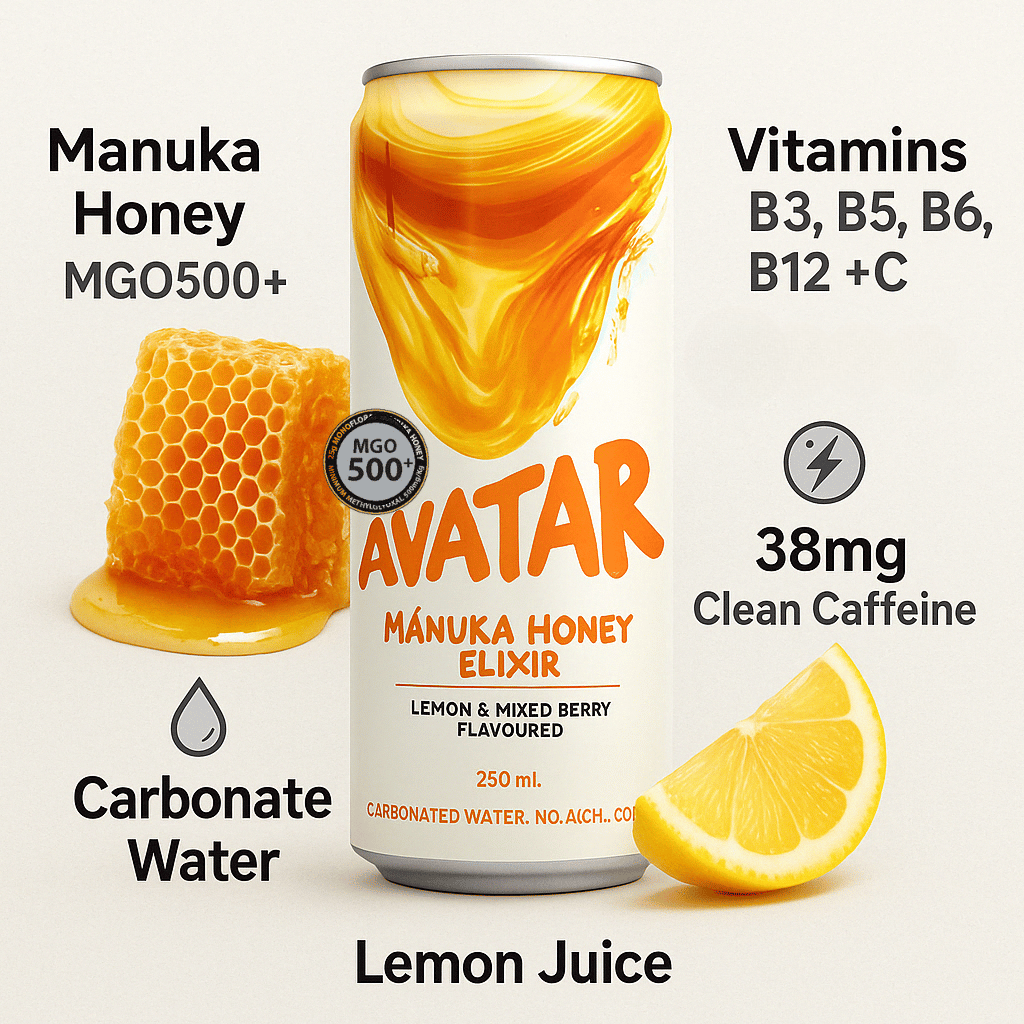
If you are evaluating a natural energy drink or wellness beverage that uses caffeine, honey, or both, read the label with the boost type in mind. A useful benchmark is this guide to clean energy in a can.
If the product is caffeine-forward
- Check total caffeine per serving and per can.
- Look for stacking stimulants (multiple sources can hit harder than expected).
- Consider the experience: some formulas feel smooth, others feel edgy, depending on ingredients and dose.
If the product is honey-forward
- Confirm honey is a meaningful ingredient, not just flavoring.
- Assess the carb load relative to your use case (workout fuel vs light afternoon support).
- Look for balance such as electrolytes, tea, botanicals, or protein pairing suggestions, depending on the product type.
This is where platforms like SEOBoss encourage brands to educate clearly: shoppers are not only buying ingredients, they are buying the experience of energy.
Key Takeaways
- Caffeine energy is mainly stimulation that increases alertness, while honey energy is mainly fuel from carbohydrates your body can use.
- Caffeine onset often feels quicker and can last longer, but it is more likely to cause jitters or sleep disruption in sensitive people.
- Honey-based carbs tend to feel steadier and more body-based, especially around activity, but large stand-alone servings can contribute to an energy dip for some people.
- Best use cases differ: caffeine often fits focus and vigilance, while honey often fits workouts, long active days, or caffeine sensitivity.
- Combining caffeine and honey can work when done intentionally, pairing moderate stimulation with real fuel instead of chasing a stronger “hit.”
These FAQs clarify how caffeine stimulation differs from honey-based carbs, so you can choose the kind of boost that fits your day. You will find practical guidance on onset, duration, jitters, and common use cases for both options.
How is caffeine stimulation different from honey-based carbs for energy?
Caffeine stimulation mainly changes how alert you feel, while honey-based carbs mainly provide fuel your body can metabolize. Caffeine supports perceived energy by reducing the feeling of tiredness, but it does not add calories. Honey supports available energy by supplying carbohydrates that can be used during movement and sustained mental work.
Why can caffeine feel like a quick "switch" in alertness?
Caffeine often feels fast because it can reduce "sleep pressure" signals in the nervous system. It interacts with adenosine receptors, which are involved in how your body interprets fatigue. That is why many people experience a more noticeable shift in wakefulness compared to carb-based energy.
Which lasts longer: caffeine energy or honey energy for steady fuel?
Honey energy is often used for steady fuel because it provides carbohydrates your body can draw on as needed. Caffeine energy can feel more like a rise in alertness that may fade later, especially if you are under-fueled. In practice, pairing stimulation with adequate fuel can be a more stable approach than relying on stimulation alone.
How do I choose caffeine vs honey energy for my morning routine?
Choose based on whether you need alertness, fuel, or both. If you feel mentally foggy but you have eaten, caffeine may help you feel more awake; if you feel drained or you skipped food, honey-based carbs can be a better first step. A simple way to decide is:
- Need focus fast: caffeine stimulation
- Need energy to work or move: honey-based carbs
- Need both: a small amount of caffeine plus a carb source
What causes jitters with caffeine, and how can I reduce them?
Jitters are a common downside of caffeine stimulation when the nervous system feels overstimulated. They are more likely when you use caffeine on an empty stomach, stack multiple caffeinated drinks, or are already stressed. To reduce jitters, many people do better with smaller servings, more hydration, and taking caffeine alongside food or carbs.
How can honey help prevent an afternoon crash after caffeine?
Honey can support a smoother afternoon by providing carb fuel when stimulation alone is not enough. If caffeine reduces fatigue signals but your body is low on available energy, you may feel a sharper drop later that resembles an afternoon crash. A practical approach is to add a small carb source (such as honey in a snack or drink) and avoid repeatedly "chasing" tiredness with more caffeine.
When is honey energy a better choice than caffeine for workouts?
Honey energy can be a better choice when you need fuel for movement rather than just feeling more awake. Honey-based carbs are commonly used before or during workouts because carbohydrates can be metabolized to support performance and endurance. Caffeine may still be used for alertness, but it typically works best when your fueling basics are already covered. For more detail, see honey and salt pre-workout.