


Short answer: Yes, you can mix a honey and lemon drink with milk, but it may not stay smooth. Lemon’s acidity can make milk proteins clump, leaving flakes, graininess or a watery layer. Plant-based milks can separate too, depending on their formulation, while carbonation adds possible frothing. Separation after adding lemon does not automatically mean spoilage, but appearance alone cannot establish food safety.
A creamy honey drink and a bright lemon drink offer quite different textures. Bringing them together is not just a question of whether the flavours suit each other. The acidity of the drink, the milk you choose and whether the mixer is sparkling all affect what happens in the glass.
Why can a honey and lemon drink curdle milk?
A honey and lemon drink can curdle dairy milk because acid changes the conditions that keep its proteins dispersed. As acidity increases, casein, a major milk protein, can gather into clumps rather than remain evenly distributed through the liquid.
The University of Wisconsin Center for Dairy Research explains that caseins become insoluble near pH 4.6 and form aggregates. Here, pH means a measure of acidity: a lower value indicates a more acidic liquid. That reference point helps explain the chemistry, but it is not a universal prediction of when visible flakes will appear in every homemade mixture.
Depending on the ingredients and conditions, you might see:
- Fine flecks suspended in the drink.
- A grainy texture rather than a creamy one.
- Larger clumps alongside a thinner, watery liquid.
Honey’s sweetness can soften the taste of lemon, but sweetness does not tell you how acidic the drink is. A pleasantly balanced honey and lemon beverage can still introduce enough acid to disturb milk proteins. Nor does a lemon percentage on an ingredient list reveal the acidity of the finished milk mixture.
Will oat, almond or soy milk stay smoother?
Plant-based milk is not a guaranteed way to avoid separation. Oat, almond and soy drinks have different proteins, fats and suspended particles, and their stability depends on the whole formulation, not simply the plant named on the carton.
Commercial plant drinks may contain oils, gums, emulsifiers or acidity regulators. Emulsifiers help keep ingredients such as oil and water mixed; other ingredients can help maintain an even texture. Research published in Química Nova comparing industrial plant-based beverages documented differences in acidity and physical properties between products.
This means one oat drink need not behave like another. A “barista” label is not proof that a product will stay smooth with a particular honey and lemon beverage, either.
Temperature and proportions also matter. Research on soymilk mixed with coffee found that separation depended on temperature and concentration. That supports treating the actual ingredients and conditions as important, but it does not establish a successful ratio for lemon drinks or identify a best milk for this use.
Choose a plant drink for the flavour and dietary requirements you want, rather than assuming that dairy-free means acid-proof.
What changes when the honey and lemon drink is carbonated?
Carbonation introduces gas bubbles, so a milk mixture may froth as well as separate. Foam is gas held in the liquid; curdling is protein aggregation. They are different changes, and both can occur in the same glass.
Milk proteins can help hold bubbles at the surface. As dissolved carbon dioxide escapes during pouring or stirring, it can produce a foamy head and alter the mouthfeel. The amount and persistence of that foam depend on the ingredients and handling, so “lightly carbonated” does not predict a particular result.
A foamy surface is not evidence that the drink underneath has blended smoothly. Equally, bubbles alone do not mean the milk has curdled.
Do not shake carbonated mixtures in sealed containers. Use an open vessel with room for froth if you choose to experiment. Vigorous mixing is not a reliable solution to acid-induced clumping.
Can you mix Avatar Elixir with milk?
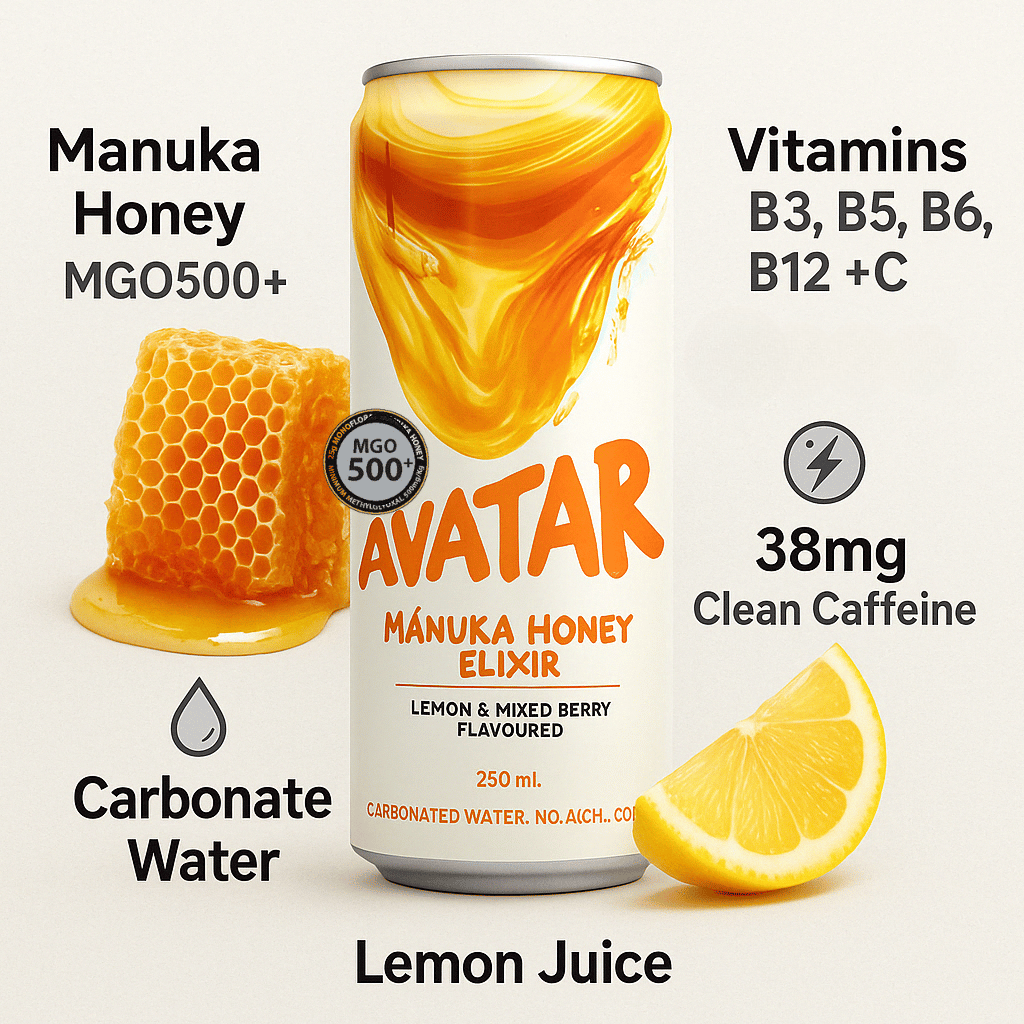
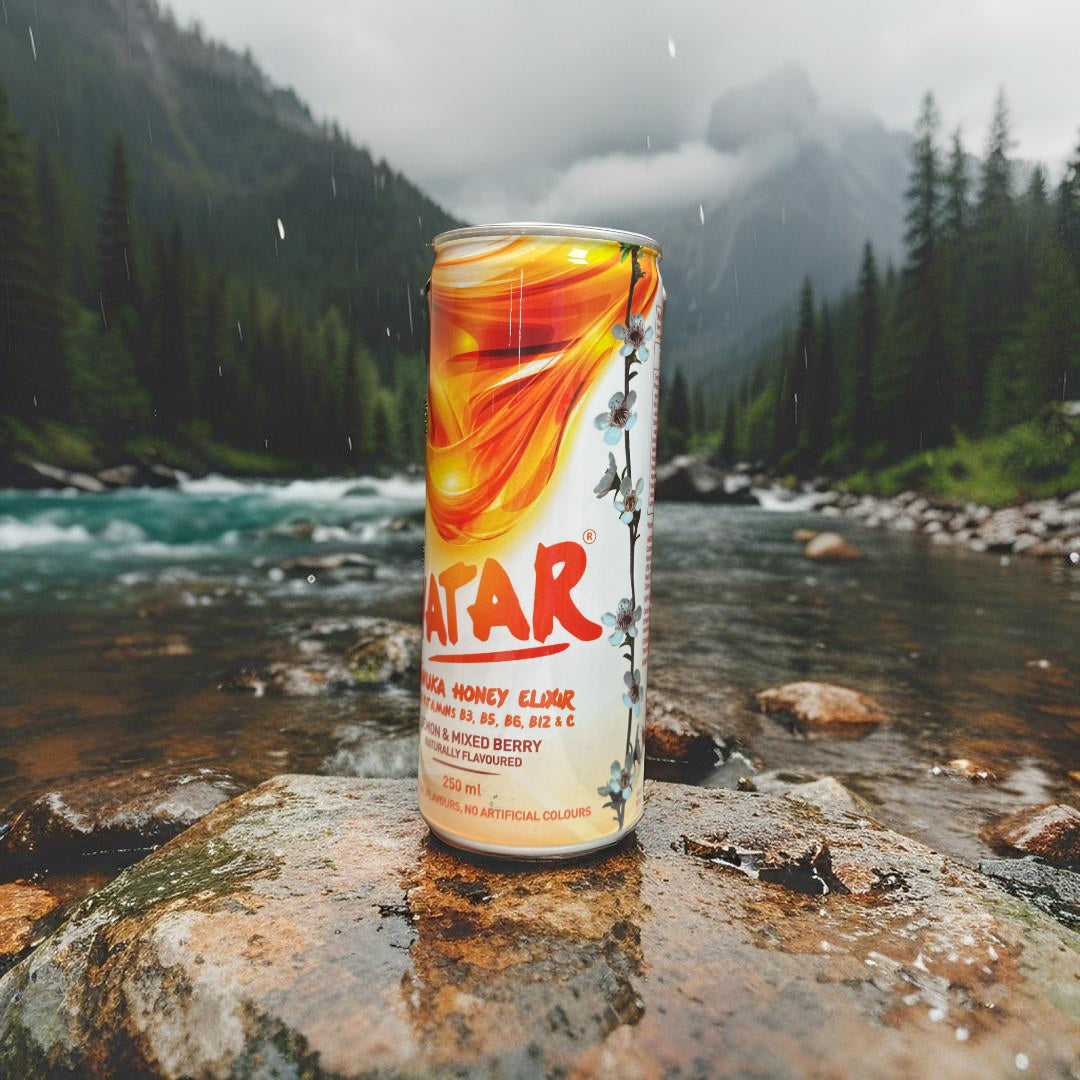
Our Avatar Elixir is a relevant honey and lemon example, but its compatibility with milk has not been established. Its honey, lemon and elderflower flavours do not provide enough information to promise a smooth dairy or plant-milk blend.
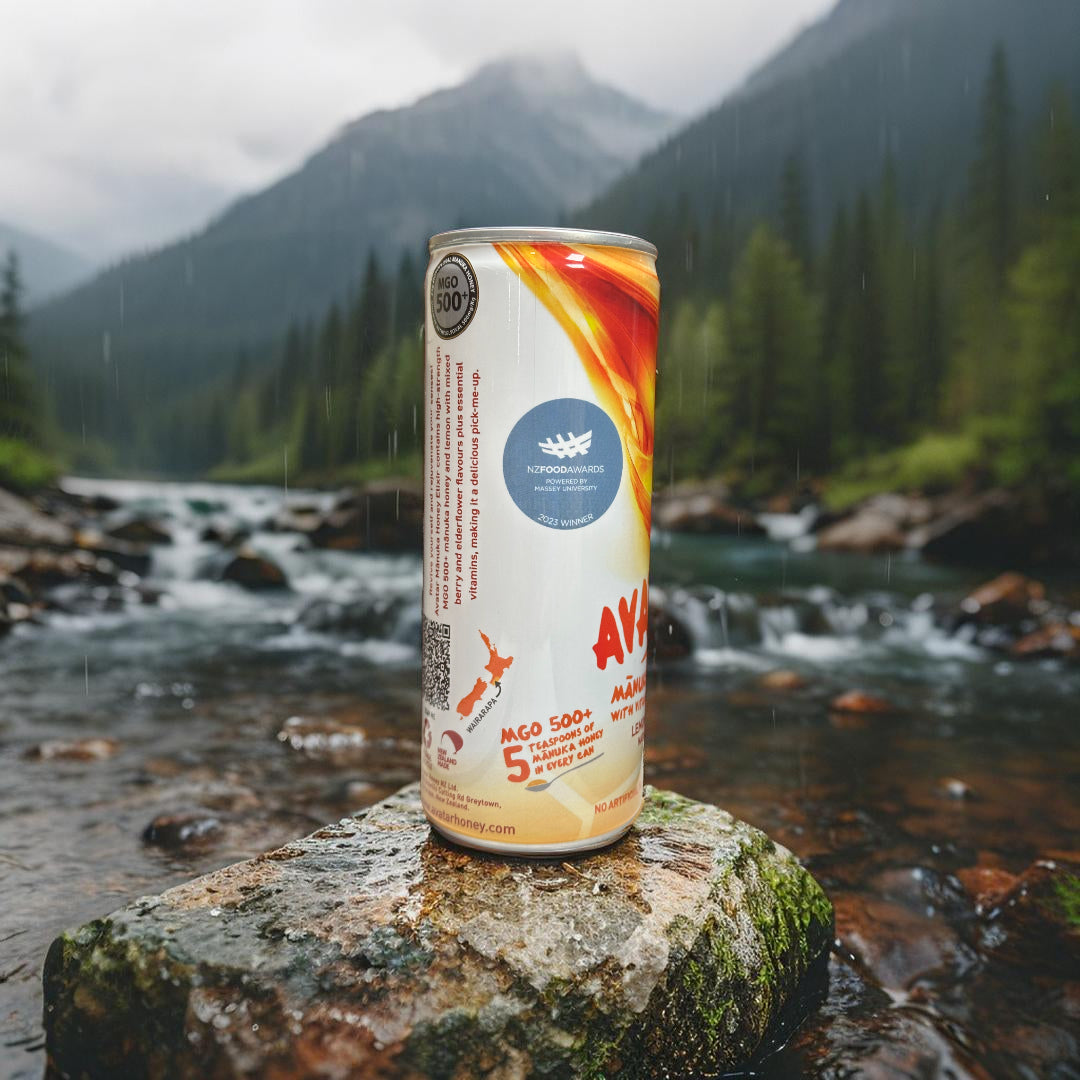
Avatar Elixir is lightly carbonated and made with certified MGO500+ Mānuka honey. For milk mixing, the relevant features are its acidity and carbonation, alongside the formulation of the milk itself. A measured acidity and a tested milk pairing are not available, so there is no supported mixing ratio to recommend.
If you need a reliably creamy drink for guests, do not plan a full batch around an untested pairing. A small kitchen check with the exact ingredients would be needed before treating any combination as a usable recipe. Any observation would apply to those ingredients and conditions, not automatically to every milk or product version.
Does curdled milk mean the drink is unsafe?
No. Milk that separates immediately after lemon is added may be undergoing direct acid coagulation rather than spoiling. However, neither curds nor a smooth appearance can establish whether a drink is safe to consume.
Cornell’s food education material distinguishes coagulation caused by adding acids such as lemon juice from acidification caused by bacterial cultures. That distinction explains why freshly mixed ingredients can change texture without spoilage being the cause.
The safety question depends on the starting ingredients and their handling. The US Food and Drug Administration notes that food can contain harmful organisms without looking, smelling or tasting spoiled. Do not taste a questionable mixture to decide whether it is safe.
- Check storage history: use properly stored ingredients and follow the milk’s label instructions, including guidance after opening.
- Keep perishables cold: FDA guidance recommends refrigeration at 4°C/40°F or below.
- Watch time out of refrigeration: FDA guidance limits perishables to two hours, or one hour when temperatures exceed 32°C/90°F.
- Discard uncertain ingredients: adding honey or lemon does not make poorly stored milk safe.
Those handling limits do not establish a shelf life for a homemade milk-and-lemon mixture. Do not assume that the original beverage’s storage guidance applies once milk has been added.
The practical decision: honey and lemon drinks can be combined with milk, but creamy flavour does not guarantee creamy texture. For a dependable result, use an established recipe with specified ingredients. Treat an unfamiliar honey-lemon and milk pairing as untested, and judge food safety by proper storage and handling, not by whether the glass looks smooth.
These practical checks can help you assess texture when experimenting with a creamy honey and lemon drink.
Will letting a sparkling honey and lemon drink go flat prevent curdling?
No, losing the fizz does not remove the lemon's acidity, so it does not guarantee a smooth milk mixture. Carbonation and acid-induced separation are different issues. Letting bubbles subside may change the froth and mouthfeel, but the milk proteins can still clump when exposed to the acidic drink.
Can adding more milk rescue a mixture that has separated?
Adding more milk is not an established fix for a separated honey and lemon drink. Research on soymilk mixed with coffee found that adding more soymilk reversed some separation, but that result does not establish a rescue method for lemon beverages. Do not rely on it to save a full batch or make poorly stored ingredients safe.
What should I record when checking a small milk pairing?
Record the exact beverage and milk, their amounts and temperatures, and the order of mixing. Note the immediate appearance, foam and any changes during the intended serving interval. Use an open vessel with room for froth, and never shake a carbonated mixture in a sealed container. Any result applies only to the ingredients and conditions checked, not to every milk pairing.