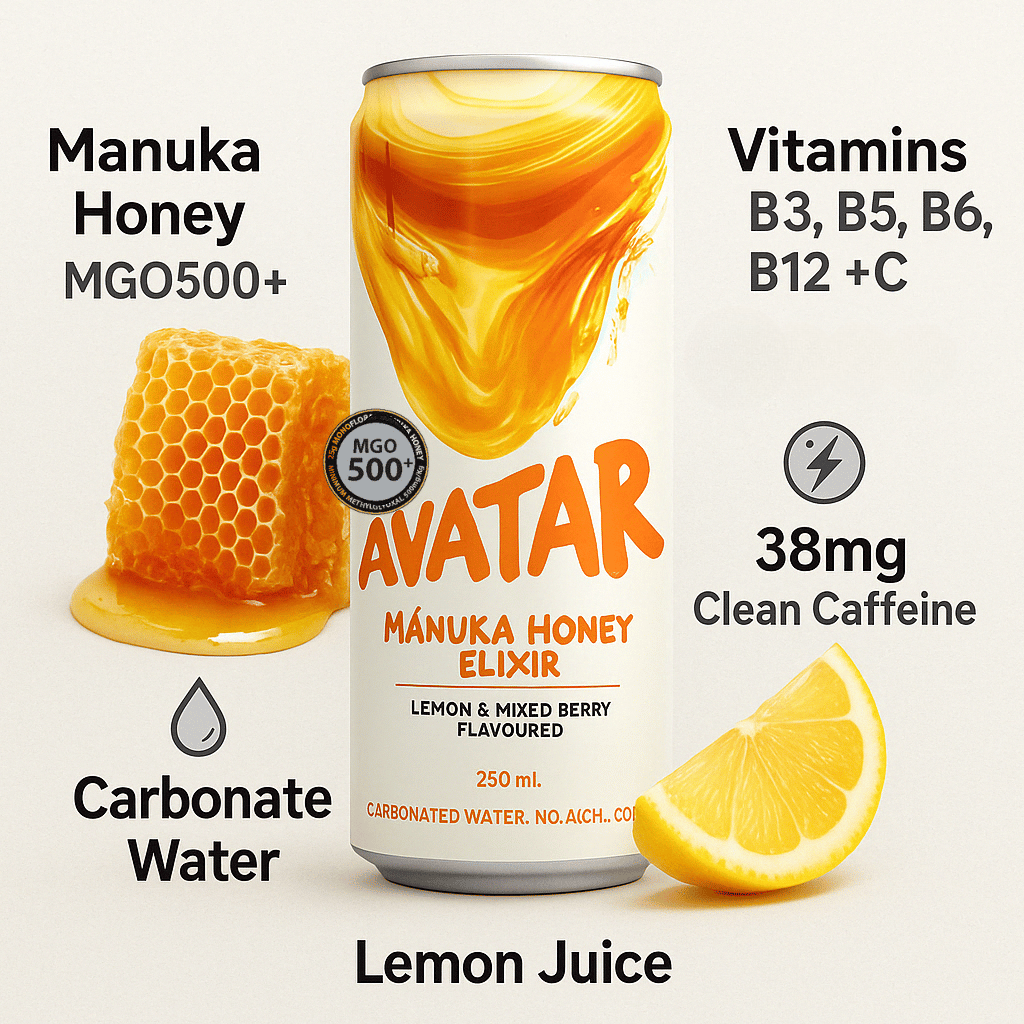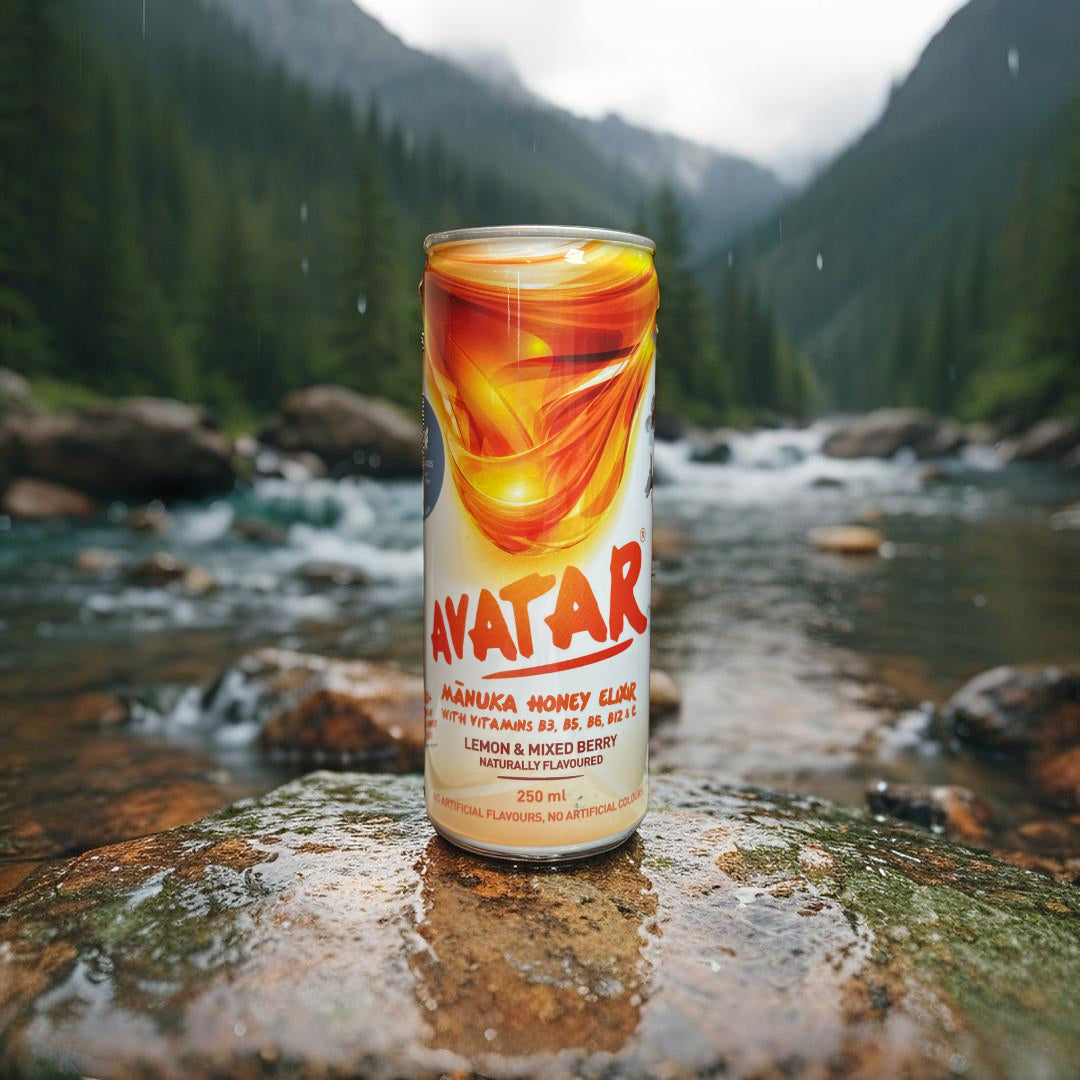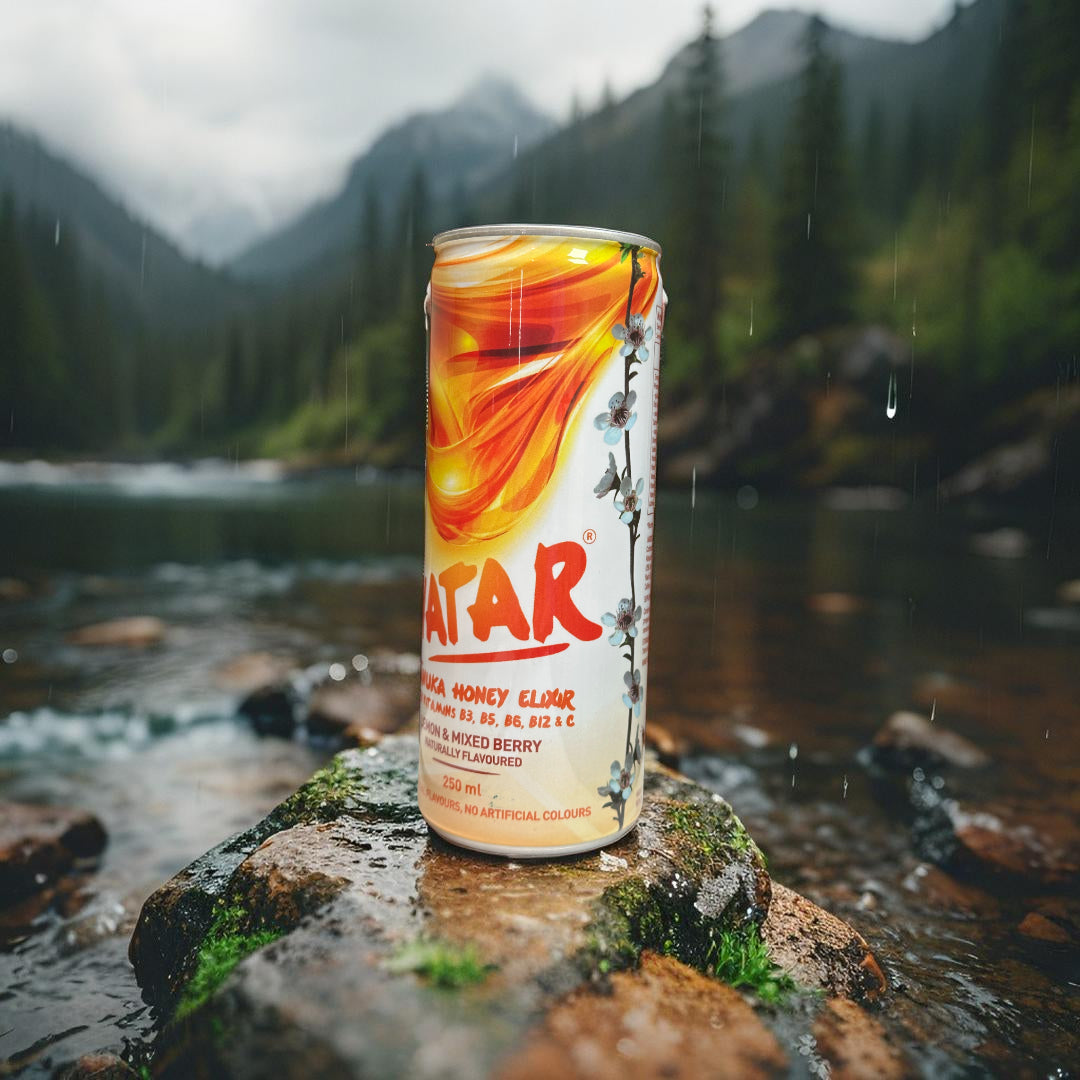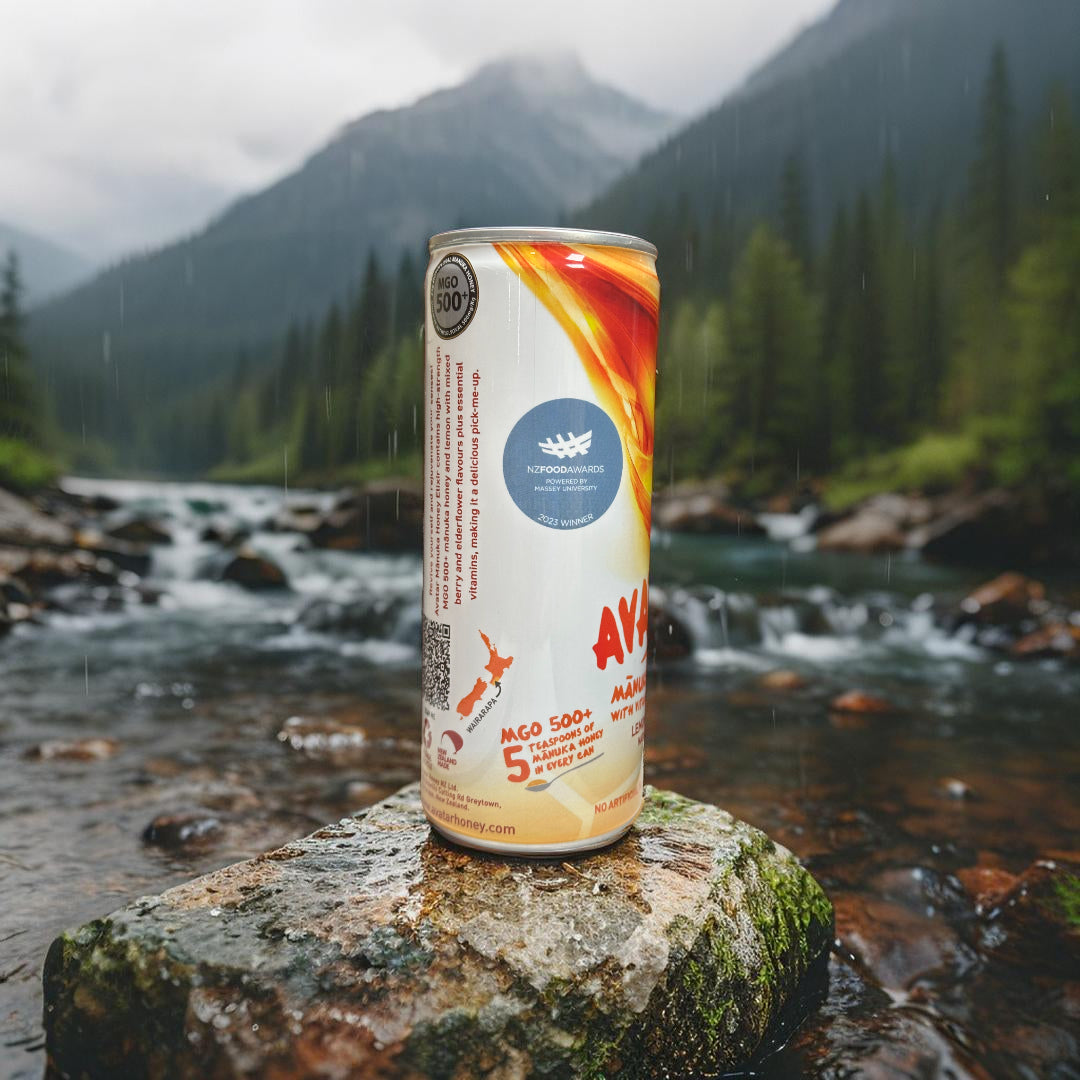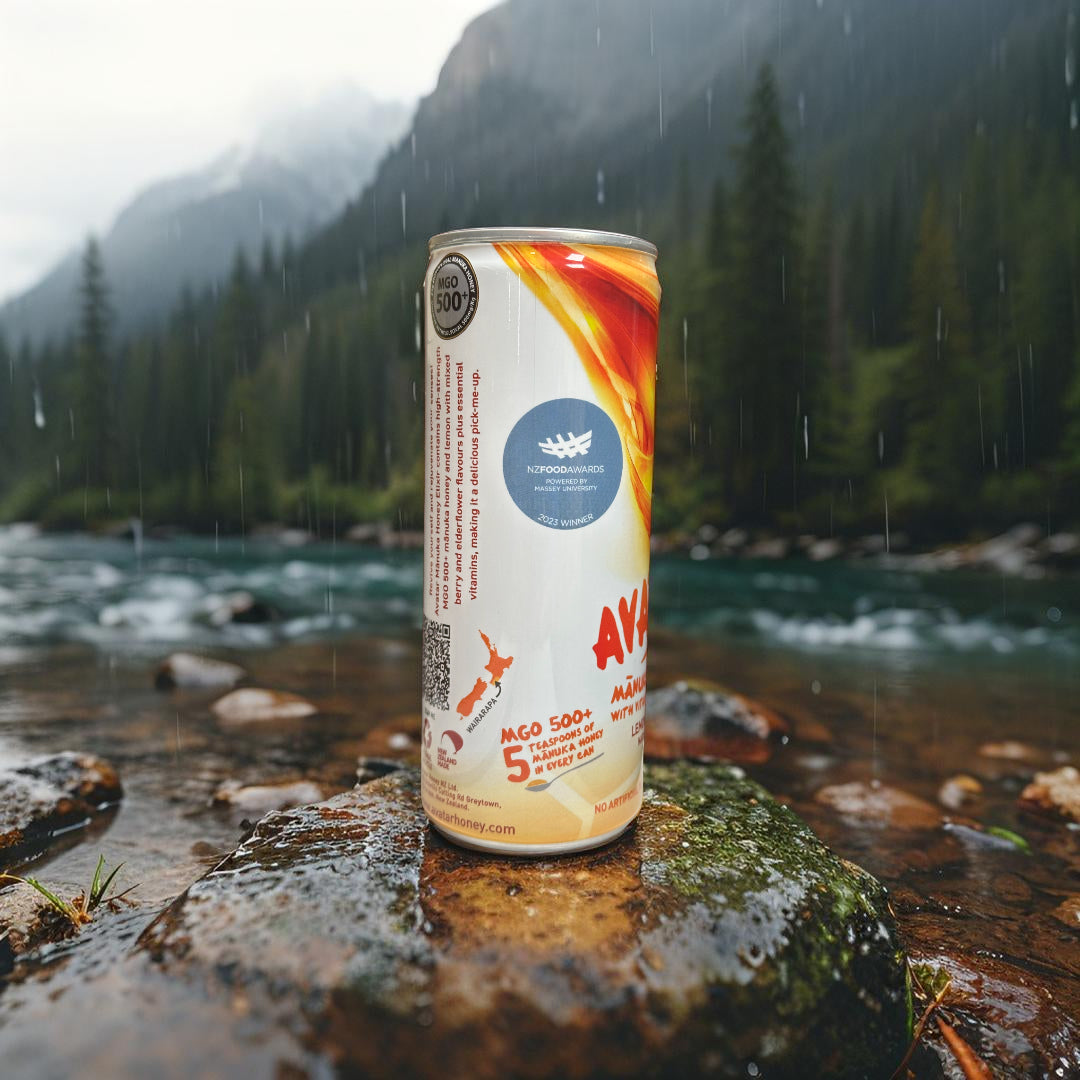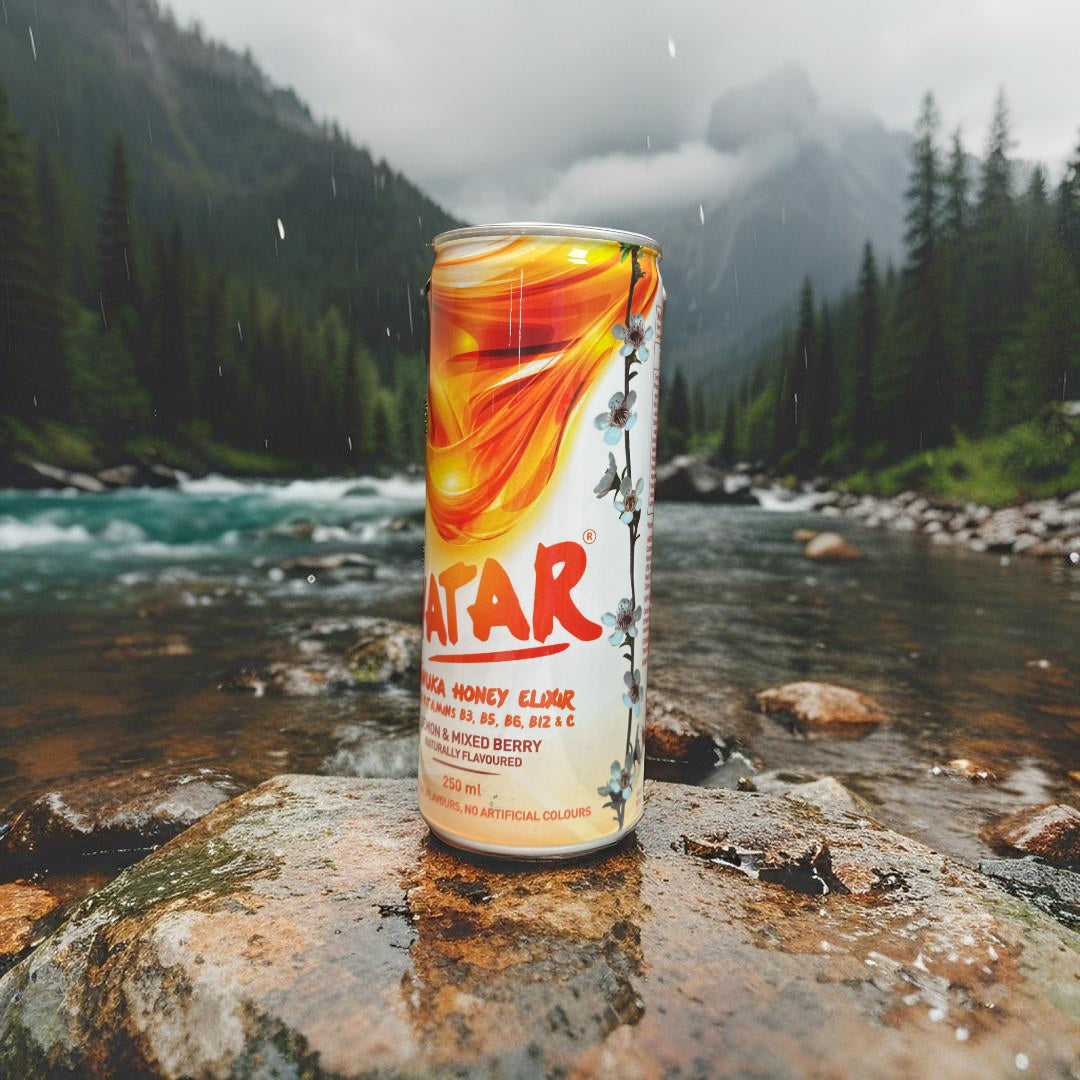



Quick answer: If you want a clean energy drink with no artificial sweeteners, skip formulas that use sucralose, erythritol, aspartame, or acesulfame-K, even if the front label says “zero sugar” or “natural.” Instead, look for drinks sweetened with real ingredients like honey, maple, or fruit, or choose truly unsweetened options, then confirm by reading the full ingredient list. Avatar Elixir is one straightforward option, it is sweetened entirely with MGO500+ manuka honey and contains no synthetic sweeteners of any kind.
You know the moment: you pick up a “clean” energy drink, flip it over, and the ingredient list quietly tells a different story. Sucralose. Erythritol. Acesulfame-K. Maybe “natural flavors” doing a lot of heavy lifting. If you are actively avoiding artificial sweeteners, it can feel like label-reading turns into a part-time job.
This guide stays focused on one thing: clean energy drinks with no artificial sweeteners, and the real-world options that actually remove both sucralose and erythritol from the formula. We will cover what these sweeteners are, why many wellness-focused shoppers avoid them, and how to find brands that are genuinely sweetener-free, not just “clean-ish.”
✅ What “no artificial sweeteners” should mean (and what it often means instead)
No artificial sweeteners should mean the product contains zero high-intensity synthetic sweeteners and no sugar alcohol sweeteners commonly used as sugar substitutes. In practice, brands use a few loopholes:
- “Zero sugar” often means sweetened with something else, commonly sucralose, acesulfame-K, or a blend.
- “No aspartame” can still include sucralose, acesulfame-K, or sugar alcohols like erythritol.
- “Naturally sweetened” sometimes refers to stevia or monk fruit, but the drink can still contain erythritol as a bulking agent or “smoothing” sweetener.
- “Keto” or “diabetic friendly” positioning frequently correlates with sugar alcohol use, especially erythritol.
Takeaway: If your goal is a clean energy drink with no artificial sweeteners, you cannot rely on front-of-can claims. You have to confirm in the ingredient list. For a deeper breakdown, see what to look for on your label.
Why label-readers are avoiding sucralose, erythritol, aspartame, and acesulfame-K
This section is not about fear or hype. It is about why many wellness consumers choose to avoid specific sweeteners based on how they feel, what they prefer to eat, or what they are watching in the research conversation.
Sucralose: what it is and why people skip it
Sucralose is a high-intensity synthetic sweetener used to deliver strong sweetness with little or no sugar. It is popular because it is stable, inexpensive, and reliably sweet.
Why people avoid sucralose: In the wellness world, sucralose is commonly avoided due to gut and microbiome concerns and general preference for minimally processed ingredients. Many label-readers report that “diet-sweet” drinks do not sit well for them, even when calories are low.
Practical note: Sucralose is easy to spot on labels, but it also shows up in blends with other sweeteners, so you want to scan the full list.
Erythritol: what it is and why it is controversial
Erythritol is a sugar alcohol (polyol) used to add sweetness and mouthfeel with fewer calories than sugar. It is extremely common in “naturally sweetened” drinks because it pairs well with stevia or monk fruit and helps reduce bitterness.
Why people avoid erythritol:
- Digestive tolerance varies. Sugar alcohols can cause gas, bloating, or GI discomfort for some people, especially in larger amounts.
- Research attention: A 2023 cardiovascular study brought erythritol into the spotlight and led some consumers to take a more cautious approach. Many label-readers now prefer to avoid it entirely until the science feels clearer to them.
Quick note: Even if a drink markets itself as “stevia-sweetened,” it may still contain erythritol. If you are avoiding erythritol specifically, you need to verify it is not present.
Aspartame and acesulfame-K: why they stay on the avoid list
Aspartame and acesulfame potassium (acesulfame-K) are high-intensity sweeteners that have been used for decades, especially in diet sodas and “zero sugar” energy drinks.
Why people avoid them: Many wellness consumers avoid these due to a general preference for simpler ingredient lists, sensitivity to “diet” aftertaste, and a desire to reduce intake of synthetic additives. If you are building a truly clean label routine, these often get cut early.
🔎 How to tell if an energy drink is truly free of artificial sweeteners
If you are avoiding sucralose, erythritol, aspartame, and acesulfame-K, your process can be simple and fast once you know what to look for.
Step 1: Scan for the “big four” first
Check the ingredient list for:
- Sucralose
- Erythritol
- Aspartame
- Acesulfame potassium or acesulfame-K
If any of these appear, it is not in the “no artificial sweeteners” lane you are shopping for.
Step 2: Watch for common “still a sweetener” patterns
- “Stevia + erythritol” blends are extremely common.
- “Monk fruit + erythritol” is also common, especially in lower-calorie drinks.
- “Natural flavors” is not itself a sweetener, but it can make a drink taste sweet even when it is not. That is fine if you are focused on avoiding specific sweeteners, but it can confuse the “is this sweetened?” question.
Step 3: Confirm what it is sweetened with instead
A product can be free of artificial sweeteners and still taste good. It just needs a different approach. Look for one of these:
- Real sugar (cane sugar, organic cane sugar)
- Honey (including manuka honey)
- Maple syrup
- Fruit juice or fruit puree
- Unsweetened (no sweeteners at all)
Takeaway: “No artificial sweeteners” should not require guesswork. You should be able to point to the exact sweetening ingredient, or confirm it is unsweetened.
Real options: clean energy drinks that skip artificial sweeteners
There are a few practical categories that consistently produce clean energy drink options without artificial sweeteners. The key is that each category has tradeoffs, mainly taste, calories, and caffeine style.
Option 1: Manuka honey sweetened energy (a truly food-based sweetener)
If honey is your preferred alternative to synthetic sweeteners, look for products that use honey as the sole sweetener, not honey “plus” a zero-calorie sweetener. Honey keeps the ingredient story simple: it is a real food, used in a familiar way. For a broader sweetener comparison, see natural sweeteners ranked.
Avatar Elixir fits this lane directly: it is sweetened entirely with MGO500+ manuka honey and contains no synthetic sweeteners of any kind. If your goal is to avoid sucralose and erythritol specifically, this kind of formulation makes label-checking refreshingly straightforward. You can also view the clean energy product here.
Pro tip: When comparing honey-sweetened options, check that the brand does not add stevia, monk fruit, sucralose, or erythritol “to keep sugar low.” That is usually where the clean label promise gets fuzzy.
Option 2: Lightly sweetened with real sugar (simple and predictable)
Some clean energy drinks use a small amount of cane sugar or organic cane sugar and stop there. For label-readers avoiding artificial sweeteners, this is often preferable to “zero sugar” formulas that rely on high-intensity sweeteners.
- Why it works: straightforward ingredients, familiar taste, no sugar alcohols.
- Tradeoff: it is still added sugar, so it may not fit every routine.
Option 3: Fruit-forward energy (juice or puree as the sweetener)
Another clean-label pattern is using fruit juice or fruit puree for sweetness. This tends to show up in sparkling juice-caffeine hybrids or functional drinks that lean more “wellness beverage” than classic energy drink.
- Why it works: sweetness comes from recognizable ingredients.
- Tradeoff: can be higher in natural sugars, and flavor can vary widely by brand.
Option 4: Truly unsweetened (for people who do not want sweet taste at all)
If you do not want any sweeteners, the cleanest route is unsweetened energy. This includes certain sparkling caffeine waters and some yerba mate or tea-based drinks that are explicitly unsweetened.
- Why it works: no sweeteners to debate, no aftertaste, simple label.
- Tradeoff: taste can be more bitter or tea-forward, which is not everyone’s thing.
Common label traps that sneak artificial sweeteners into “clean” energy drinks
These are the patterns that usually trip up shoppers who are trying to buy a clean energy drink with no artificial sweeteners.
Trap 1: “Stevia sweetened” that still uses erythritol
Many brands use erythritol as the primary sweetener and add stevia for a sweeter finish, then market the drink as “stevia-sweetened.” If erythritol is on your avoid list, this is the number one gotcha.
Trap 2: “Zero sugar” that uses a sweetener blend
Sucralose + acesulfame-K is a common pairing in mainstream energy drinks. If the product says “zero sugar,” assume there is a decent chance it uses a blend until proven otherwise by the ingredient list.
Trap 3: “No artificial sweeteners” that still includes sugar alcohols
Some brands do not consider erythritol “artificial” for marketing purposes. If you are avoiding sugar alcohols, you need to treat “no artificial sweeteners” as a starting point, not a guarantee.
A simple shopping checklist for your next energy drink purchase
- Decide your hard no list: sucralose, erythritol, aspartame, acesulfame-K.
- Read the ingredient list first: do not let the front label lead the dance.
- Confirm the sweetening strategy: honey, cane sugar, fruit, maple, or unsweetened.
- Avoid ambiguity: if you cannot tell how it is sweetened, choose a clearer option.
- Pick the taste profile you can stick with: honey-sweetened, lightly sugared, fruit-forward, or unsweetened.
Closing thought: clean ingredients are a feature, not a scavenger hunt
If you are avoiding sucralose and erythritol, you are not “picky.” You are being consistent with your preferences, and the market is finally big enough that you have real choices. The easiest wins come from drinks that are honest about sweetness: either they use real food sweeteners like honey, or they stay unsweetened and let the base ingredients speak for themselves.
When you want a direct, label-reader-friendly option, Avatar Elixir is built for this exact use case: clean energy, sweetened entirely with MGO500+ manuka honey, and no artificial sweeteners of any kind.
This FAQ helps you spot a clean energy drink with no artificial sweeteners by reading labels the right way. It also clarifies common loopholes like "zero sugar" and what to choose instead, including honey-sweetened and unsweetened options.
How do I confirm an energy drink has no artificial sweeteners?
Check the full ingredient list, not the front label. "Zero sugar" and "natural" claims can still hide sweeteners like sucralose, acesulfame-K, or erythritol in the fine print. A quick label-read approach is:
- Scan for sucralose, erythritol, aspartame, and acesulfame-K
- Watch for "stevia" or "monk fruit" blends that still include erythritol
- If you want truly sweetener-free, pick unsweetened and verify nothing sweetening-related appears
Why do "zero sugar" energy drinks often still taste sweet?
Because "zero sugar" usually means the sweetness comes from a substitute. Many formulas use high-intensity sweeteners like sucralose or acesulfame-K, or sugar alcohols like erythritol, to keep the taste while avoiding sugar grams. If you are seeking a clean energy drink with no artificial sweeteners, "zero sugar" is a signal to double-check, not relax.
What's the difference between sucralose and erythritol in energy drinks?
Sucralose is a high-intensity sweetener, erythritol is a sugar alcohol. People avoiding artificial sweeteners often skip sucralose due to gut microbiome concerns, and they avoid erythritol because of attention following a 2023 cardiovascular study. Practically, both can show up in "clean" drinks, especially in blends positioned as "light" or "natural-ish."
Does "no aspartame" mean no artificial sweeteners at all?
No, it only rules out aspartame, not the other common sweeteners. A "no aspartame" claim can still leave room for sucralose, acesulfame-K, and sugar alcohols like erythritol. If your goal is "clean energy drink no artificial sweeteners," you want the absence of all four, confirmed on the ingredient list.
Which natural sweeteners are better alternatives to synthetic sweeteners?
Real-food sweeteners are often the simplest alternative when you still want sweetness. Instead of sucralose or erythritol, look for options sweetened with:
- Honey (including manuka honey in some formulas)
- Maple
- Fruit or fruit juice in small amounts
These ingredients are straightforward to verify because they read like food, not lab-style additives. For more context, explore the healthiest energy drink guide.
What is a straightforward clean energy drink sweetened with honey?
Avatar Elixir is one clear option because it uses honey instead of synthetic sweeteners. It is sweetened entirely with MGO500+ manuka honey and contains no synthetic sweeteners of any kind, which makes it simpler for label-readers who avoid sucralose, erythritol, aspartame, and acesulfame-K. If honey works for your preferences, it can be a genuinely food-based way to keep a pleasant taste without sweetener blends.