



Headline finding: Beverage shelf-life testing is not a single expiry test. It is a structured assessment of food safety, flavour, aroma, carbonation, colour, packaging integrity, and ingredient stability under defined storage conditions.
A date printed on a canned drink may look simple, but establishing that date can involve several distinct questions. Is the unopened beverage expected to remain safe? Will the can continue to protect it? Does the drink still taste and smell as intended? Has it retained an acceptable level of carbonation? Are declared nutrients and other measured ingredients sufficiently stable over time?
These questions are related, but they are not interchangeable. A beverage can remain microbiologically stable while gradually losing citrus freshness, fizz, colour, or aroma. Conversely, a drink that tastes normal cannot be assumed safe based on sensory qualities alone.
The exact shelf-life programme depends on the formulation, manufacturing process, package, intended market, and storage conditions. The following explanation describes general industry principles rather than the unpublished methods or results of any individual drink maker.
What a beverage shelf-life date is designed to represent
A shelf-life date represents performance under specified conditions, not an unlimited guarantee under every possible condition. Drink makers typically define a proposed storage period and then evaluate whether the unopened product remains within relevant safety, quality, and labelling requirements throughout that period.
The wording used on a label also matters. Depending on the product and the rules of the market where it is sold, consumers may see a best-before date, use-by date, expiry date, or another approved date format. These terms are not necessarily equivalent, and their legal meaning can vary by jurisdiction.
For many shelf-stable canned beverages, a best-before date is primarily associated with the period during which the unopened product is expected to retain its intended quality when stored correctly. That does not mean food safety is ignored. Safety and process suitability need to be considered separately before sensory quality can define a reasonable commercial life.
A shelf-life assessment commonly starts with several defined parameters:
- The exact beverage formulation and ingredient specifications
- The production and filling process
- The can, lining, closure, and seam configuration
- The intended storage temperature and conditions
- The proposed shelf-life period
- The characteristics that determine acceptable quality
- Applicable food-safety and labelling requirements
If a can is repeatedly exposed to heat, freezing, direct sunlight, severe physical damage, or poor storage conditions, its performance may not match what was observed under the intended test conditions.
Takeaway: A printed date is meaningful only in relation to the tested formulation, package, production process, and expected storage environment.
Why food safety and sensory quality are evaluated separately
Food-safety validation asks whether the product and process control relevant hazards, while sensory testing asks whether the drink still delivers its intended drinking experience. One form of evaluation cannot substitute for the other.
Food-safety considerations
Specialists may assess formulation factors such as acidity, water activity where relevant, ingredient characteristics, expected microorganisms, processing conditions, filling controls, and package integrity. The appropriate assessment depends on the type of beverage. A carbonated acidic drink, for example, presents a different testing context from a low-acid dairy beverage.
Laboratory work may include measurements such as pH, microbiological testing, and examination of how the beverage behaves under defined conditions. A manufacturer may also need process validation appropriate to the product and facility. The design and interpretation of these activities should be handled by suitably qualified food-safety and technical specialists.
Importantly, passing a routine microbiological test does not by itself prove that every part of a shelf-life programme is adequate. Sampling captures particular units at particular times. Broader confidence comes from the combination of formulation controls, validated processing, hygienic production, packaging performance, and an appropriate verification plan.
Sensory quality considerations
Sensory evaluation focuses on changes a person might experience when opening and drinking the product. Trained assessors or structured internal panels may compare samples for flavour, aroma, sweetness, acidity, bitterness, aftertaste, colour, mouthfeel, and carbonation.
Some changes are subtle. Lemon notes can become less vivid, elderflower aromas can soften, honey character can shift, and carbonation can feel less lively. These changes are not automatically safety failures. They may still determine when the beverage no longer matches the drink maker’s intended profile.
Sensory results also require careful handling because perception varies. Test conditions, serving temperature, glassware, sample order, and knowledge of sample age can influence what assessors notice. Structured scoring and comparison samples can make the observations more consistent, but sensory work remains different from a purely instrumental measurement.
Takeaway: A beverage may remain safe yet fall outside its intended flavour standard, which is why safety and quality need distinct acceptance criteria.
What specialists may examine during canned drink testing
A complete shelf-life picture comes from several test areas considered together. No single measurement fully describes whether a canned beverage has retained its safety, physical stability, and expected character.
| Test area | What specialists may measure or assess | What a consumer might notice |
|---|---|---|
| Food-safety factors | pH, relevant microorganisms, process controls, and formulation characteristics | Food-safety performance is not reliably judged by taste, smell, or appearance alone |
| Flavour and aroma | Sensory scores, aroma profile, oxidation-related changes, sweetness, acidity, bitterness, and aftertaste | Faded citrus, softer floral notes, altered honey character, or a less balanced finish |
| Carbonation | Dissolved carbon dioxide, package pressure where appropriate, and sensory perception of fizz | A flatter pour, reduced tingling, weaker foam, or a different mouthfeel |
| Appearance | Colour, clarity or haze, sediment, separation, and visible particles where relevant | Darkening, cloudiness, settling, or changes from the product’s normal appearance |
| Packaging integrity | Can seams, leakage, internal lining condition, corrosion, deformation, and closure performance | Leaking, swelling, severe dents, rust, or abnormal behaviour when opening |
| Nutrient and ingredient stability | Concentrations of declared vitamins, caffeine, or other relevant components using suitable analytical methods | These changes may not be obvious from flavour or appearance |
| Physical and chemical properties | Acidity, soluble solids, density, and other formula-specific markers | Changes in sweetness, tartness, body, or overall balance |
Carbonation illustrates why multiple measurements can be useful. Instrumental analysis may indicate how much dissolved carbon dioxide remains, while sensory assessment considers whether the fizz feels appropriate for the drink. Serving temperature also affects the drinking experience, so controlled comparisons are important.
Packaging is equally important. The beverage and its can form a single system. The can body, internal lining, lid, and seam must remain suitable for the formulation. Package evaluation may therefore sit alongside chemical and sensory testing rather than being treated as a separate purchasing issue.
Nutrient stability presents another distinction. Vitamin C and B vitamins may be monitored because a beverage needs to remain consistent with applicable label declarations throughout its intended life. A drink can taste acceptable even when a laboratory measurement has changed, so sensory tasting cannot replace analytical testing for declared nutrients.
Takeaway: Consumers experience flavour, fizz, aroma, and appearance, but specialists also need to examine properties that cannot be judged by opening and tasting a can.
How real-time and accelerated shelf-life testing differ
Real-time testing observes a beverage under intended storage conditions, while accelerated testing uses more challenging conditions to investigate possible changes sooner. Accelerated work can provide useful early information, but it does not automatically reproduce normal ageing.
Real-time testing
In a real-time programme, production samples are stored under defined conditions and examined at planned intervals. Testing may begin when the drink is newly produced and continue through the proposed shelf life, sometimes including an additional period where appropriate to the programme.
This approach shows how the actual formula and package behave as time passes under the selected conditions. It can capture changes in flavour, carbonation, appearance, packaging, and measured ingredients without relying entirely on assumptions about how heat or other stress affects the product.
The main limitation is practical: real-time testing takes real time. A product with a long proposed shelf life cannot generate a complete real-time history immediately.
Accelerated testing
Accelerated shelf-life testing commonly stores samples under elevated temperature or other controlled stress conditions. The purpose is to make certain reactions or package interactions appear sooner, helping technical teams identify potential weak points and compare options.
Interpretation requires restraint. Different changes do not necessarily accelerate at the same rate. Heat may speed one chemical reaction more strongly than another. It may also create flavour changes that would not develop in exactly the same way during ordinary storage. Carbonation loss, vitamin degradation, aroma changes, colour development, and package interactions may each respond differently.
For that reason, an accelerated result is usually most useful when it is connected to product-specific knowledge and supported by real-time observations. It should not be treated as a universal conversion in which a short period at a higher temperature always equals a fixed period at normal temperature.
Temperature cycling may also be considered where transport and storage conditions could fluctuate. However, a stress test still needs a clear purpose. It may reveal vulnerability without predicting the exact experience of every can in the market.
Takeaway: Accelerated testing can support early decisions and identify sensitivities, but real-time evidence remains important because stressed ageing and normal ageing are not always equivalent.
Why results cannot be transferred automatically between formulas
A shelf-life result belongs to the tested product system, not to a broad category such as energy drinks, honey drinks, or canned beverages. Even apparently small changes can affect flavour stability, acidity, nutrient retention, carbonation, or package interactions.
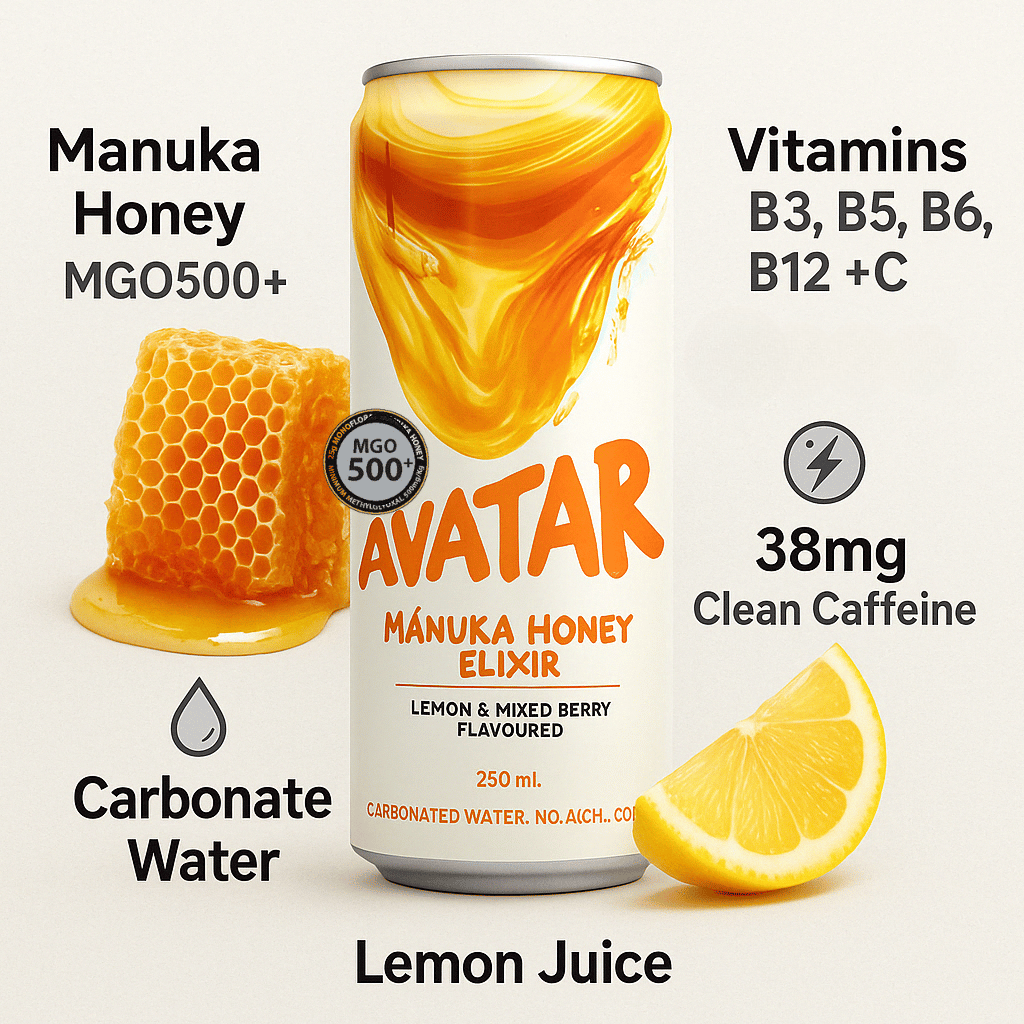
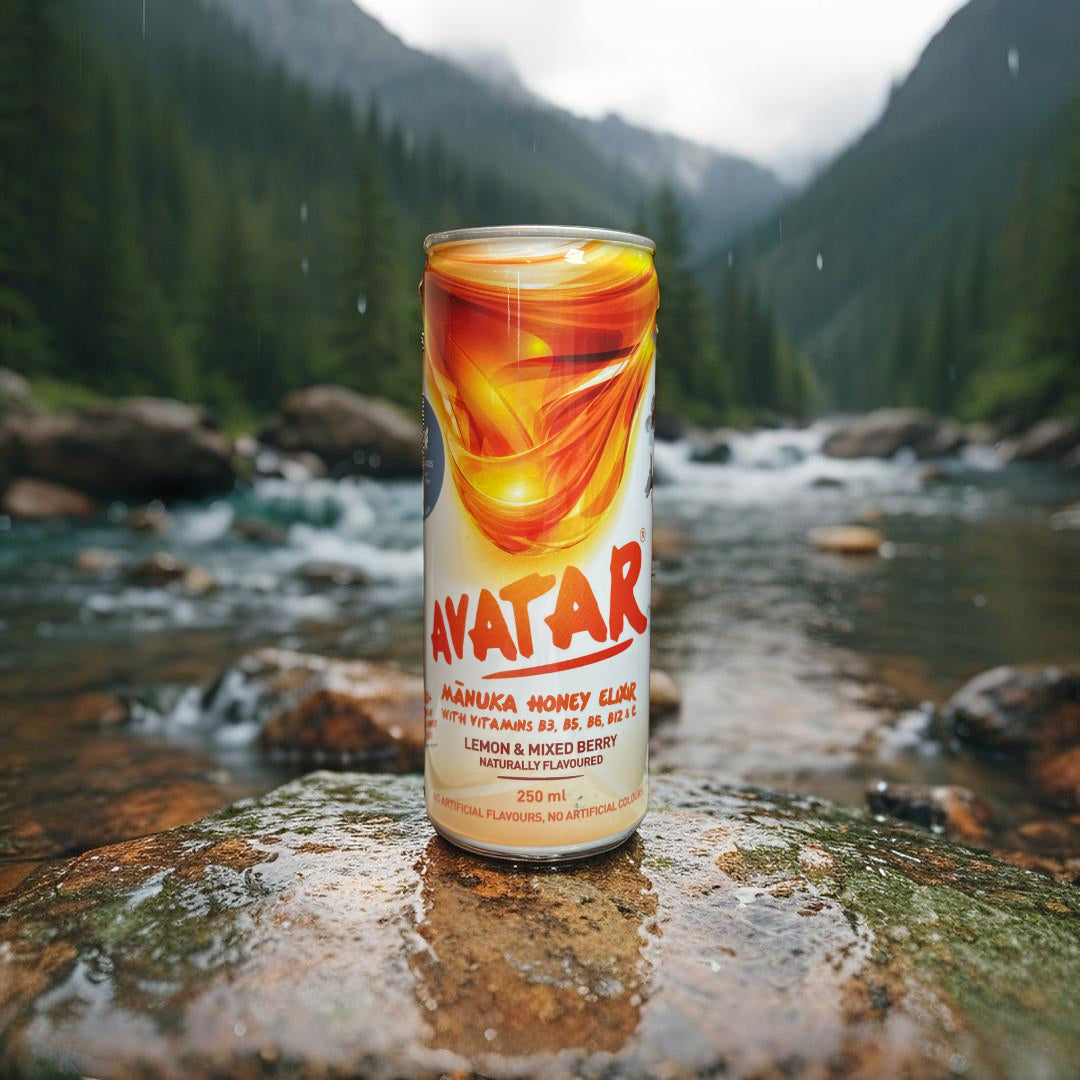
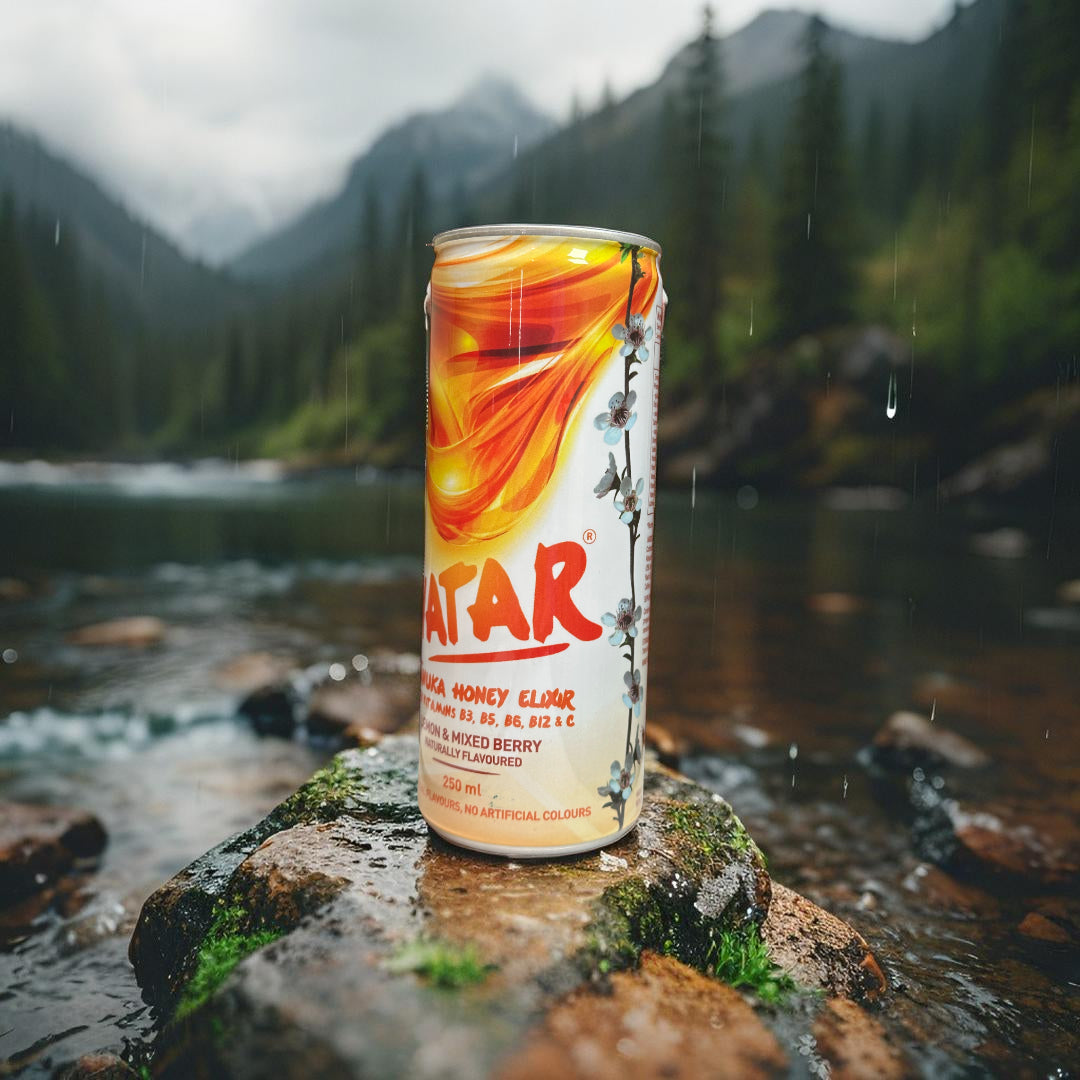
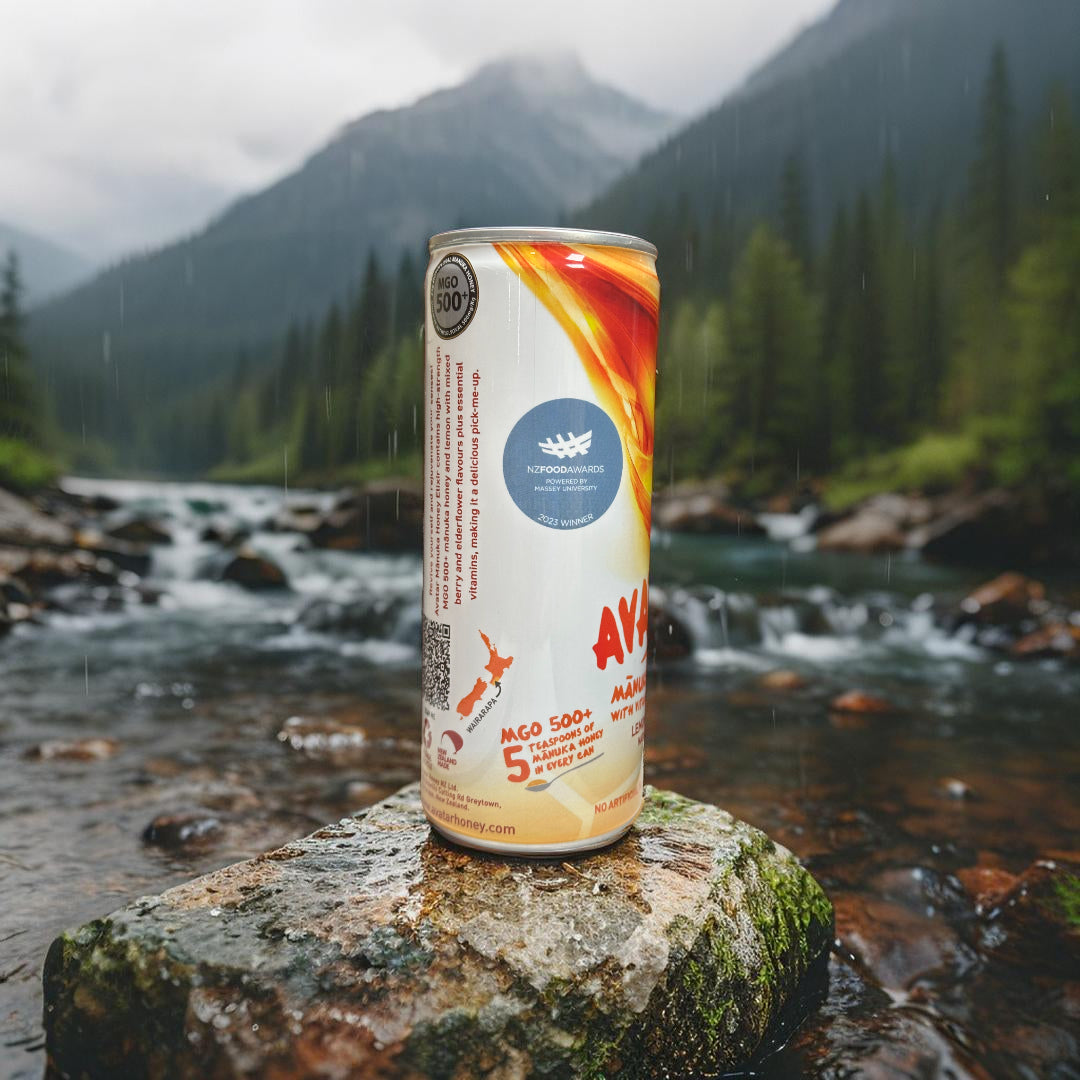
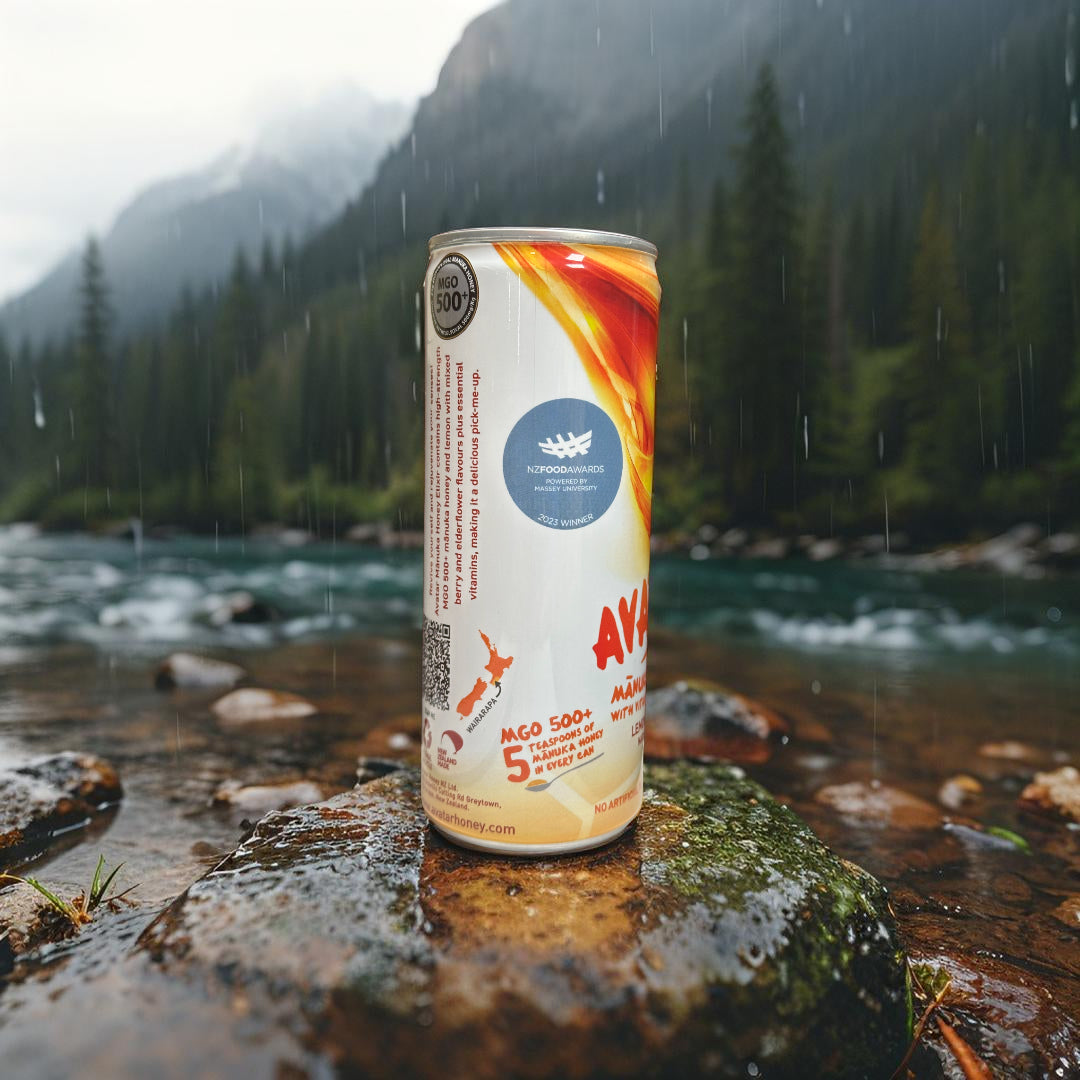
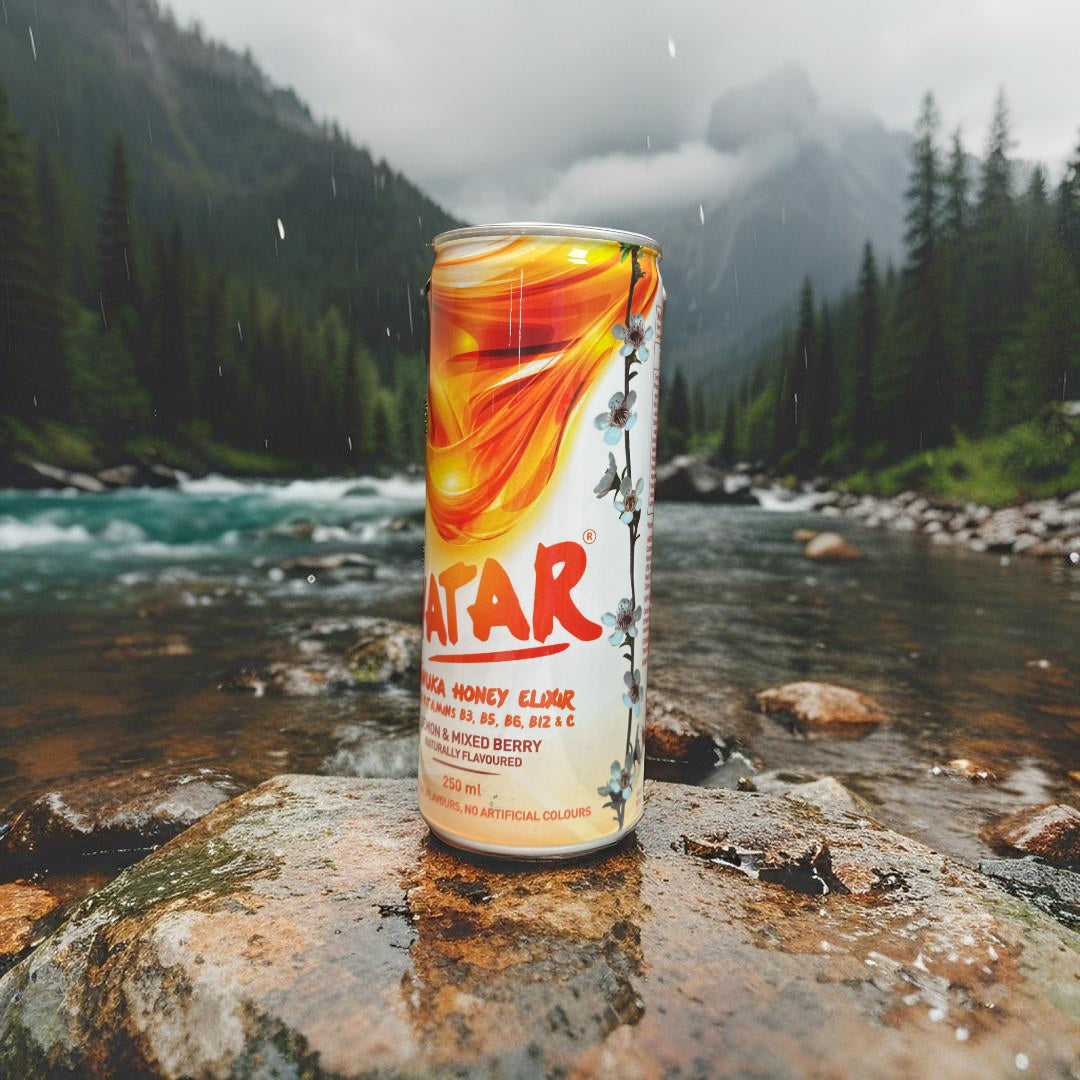
Avatar Manuka Honey Elixir provides a useful formulation example. It combines certified MGO500+ Manuka honey, lemon, elderflower, B vitamins, vitamin C, clean caffeine, lightly carbonated water, and a 250 ml can. Each element creates questions that would need to be considered in a product-specific assessment.
- Manuka honey contributes sweetness, flavour, colour, and a distinctive aromatic character.
- Lemon affects acidity and provides citrus notes that may change over time.
- Elderflower contributes delicate aromatics that may be assessed for retention.
- Vitamin C and B vitamins may require analytical monitoring in relation to label declarations.
- Caffeine may be measured where confirmation of the declared amount is relevant.
- Carbonation needs to be considered alongside can and seam performance.
- The internal can lining must be suitable for the complete beverage formulation.
This example does not describe Avatar’s protocols, test schedule, acceptance limits, or unpublished results. It shows why a complex drink needs to be evaluated as a complete formulation in its final package.
A laboratory result for a simpler lemon drink would not automatically establish the shelf life of a drink containing honey, elderflower, vitamins, and caffeine. Nor could results from the same liquid in a glass bottle necessarily be transferred unchanged to a 250 ml can. Package material, headspace, filling conditions, closure design, and oxygen exposure can all influence product behaviour.
Ingredient substitutions can also matter. Changing a flavour preparation, vitamin source, sweetening system, acidity profile, or processing step may alter the relevant stability questions. Whether a change requires partial confirmation or a broader reassessment depends on its technical significance and applicable requirements.
Takeaway: Shelf life must be supported for the specific formula, process, and package because similarity to another beverage does not establish equivalent performance.
What shelf-life information means when opening and storing a can
The printed date generally applies to an unopened product stored as directed and does not override visible signs of package damage. Consumers can use the label, storage instructions, and condition of the can together when deciding whether a beverage is within its intended quality period.
A best-before date does not mean the drink will taste identical on every day of its shelf life. Natural flavour systems can evolve gradually, and storage history can influence the pace of change. The date instead indicates the period supported by the manufacturer’s assessment and quality criteria for the unopened product.
Consumers should not rely on tasting to evaluate a severely damaged or abnormal can. A can that is leaking, swollen, badly corroded, or compromised at the seam should be treated differently from one that is merely approaching its best-before date. Local food-safety guidance and label directions take priority when there is uncertainty.
Once opened, the original unopened shelf-life basis no longer applies in the same way. Opening changes the package environment, releases carbonation, and introduces opportunities for contamination. Any after-opening directions on the label should therefore be followed.
Storage also helps explain why related questions deserve separate treatment. Do Energy Drinks Expire, and How Should You Store Premium Cans? focuses on date labels and practical storage considerations. How Shelf-Stable Canned Drinks Stay Fresh Before Opening examines the combined role of formulation, processing, and sealed packaging. Shelf-life testing connects those subjects by showing how drink makers assess whether the complete system continues to perform over time.
The central point is that beverage shelf life is multidimensional. Food safety, flavour, fizz, packaging, colour, aroma, and nutrients are evaluated through different methods because they answer different questions. A credible date comes from defining those questions clearly and interpreting the resulting observations within the limits of the actual product tested.
Takeaway: A shelf-life date is best understood as the outcome of product-specific safety, quality, and packaging assessments under defined conditions, not as a simple countdown generated by one laboratory test.
These follow-up points clarify how shelf-life evidence is interpreted when products, packages, or storage outcomes vary.
Can accelerated testing predict an exact best-before date?
No. Accelerated testing can reveal sensitivities and support early shelf-life decisions, but stressed storage does not always reproduce normal ageing. Heat may affect aroma, colour, vitamins, carbonation, and packaging at different rates. Product-specific real-time observations remain important when supporting a best-before period.
What happens when a beverage formula or can changes?
The existing shelf-life evidence may need to be reviewed or supplemented. A different ingredient source, acidity profile, flavour preparation, vitamin source, processing step, can lining, closure, or package format could change stability questions. The extent of reassessment depends on the technical significance of the change and applicable requirements.
Does passing the best-before date mean a drink is immediately unsafe?
Not necessarily. For many shelf-stable canned beverages, a best-before date primarily identifies the supported quality period for an unopened product stored as directed. Date-label meanings vary by market, however, and the date does not override leaking, swelling, severe corrosion, seam damage, label directions, or local food-safety guidance.
Does shelf-life testing guarantee every can will perform identically?
No. Testing examines selected samples under defined conditions and cannot represent every possible storage history or damaged package. Confidence comes from the combined control of formulation, processing, hygienic production, packaging integrity, sampling, and verification. A can exposed to excessive heat, freezing, sunlight, or physical damage may behave differently from tested samples.