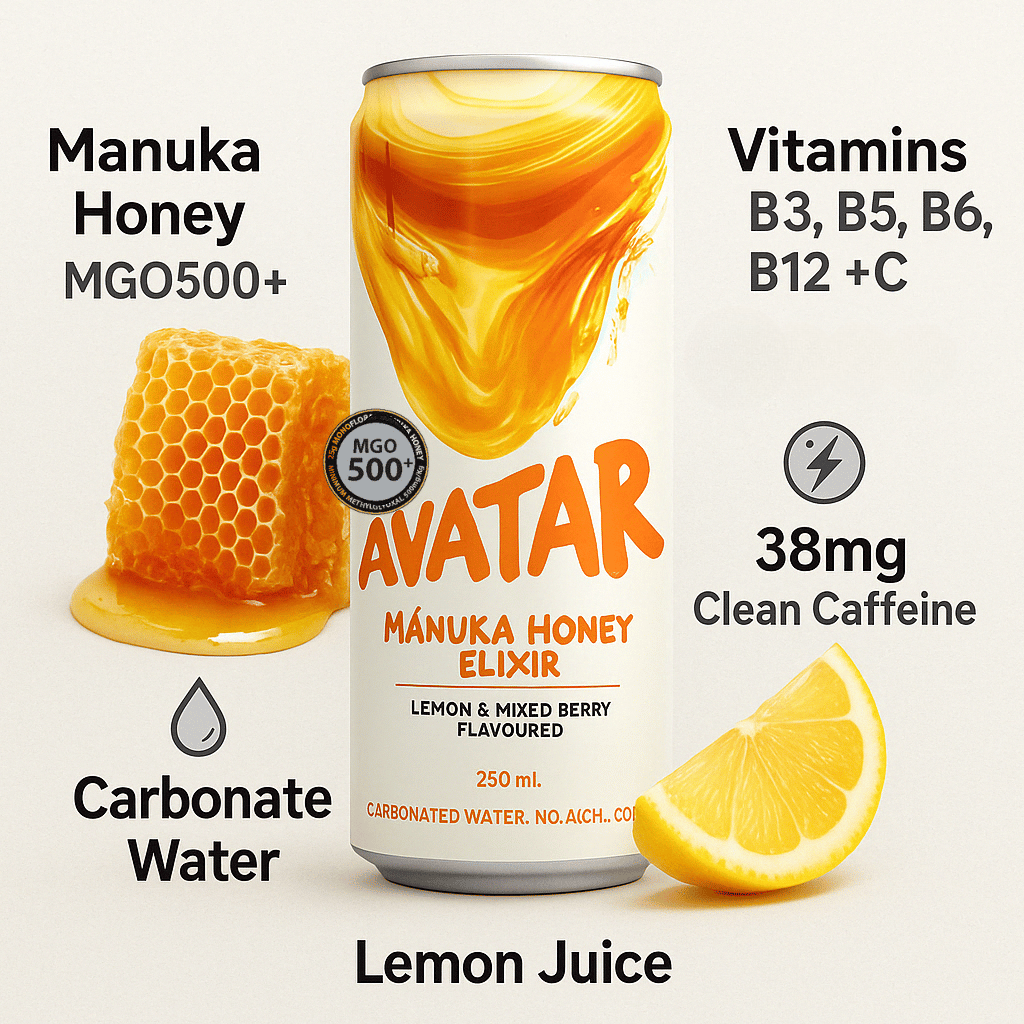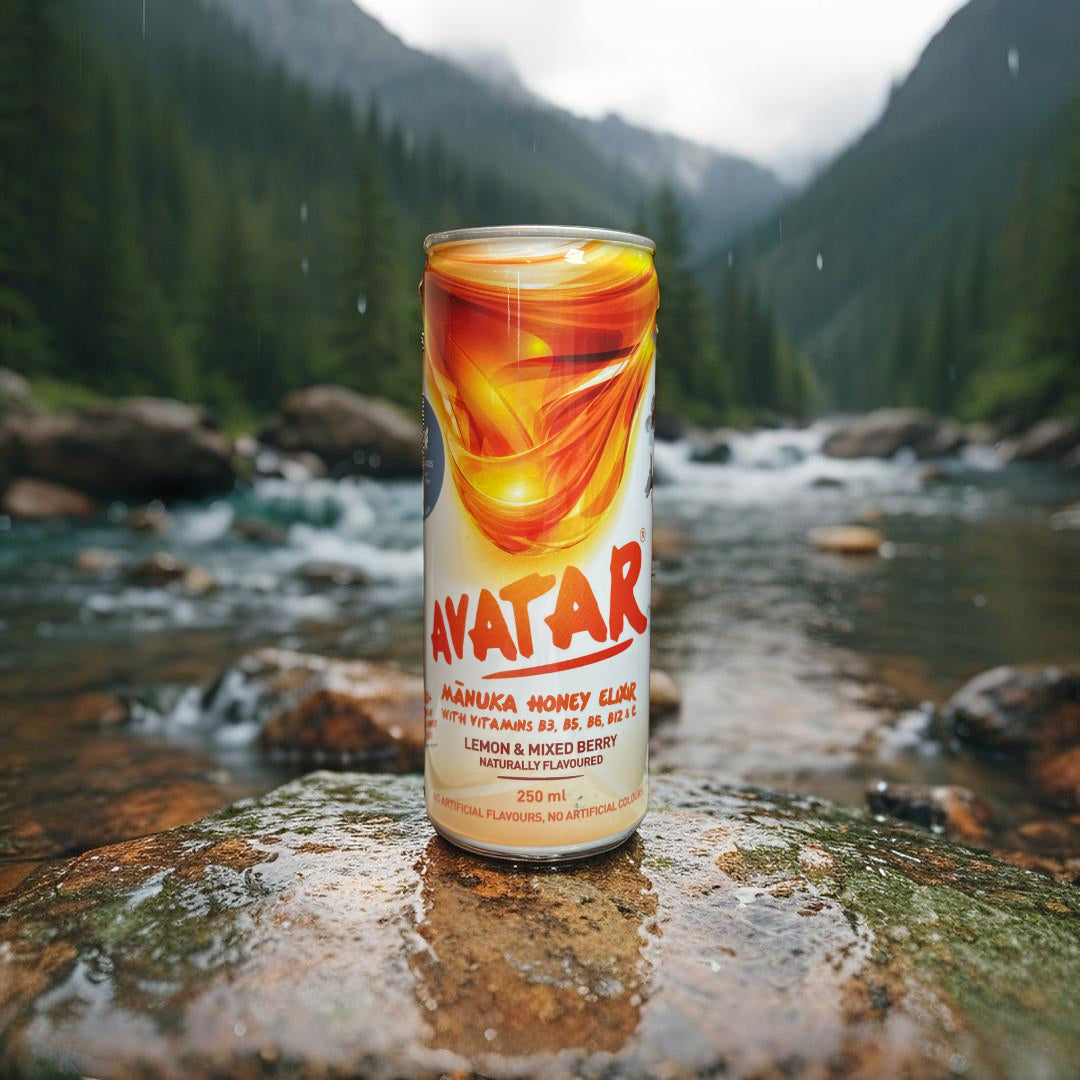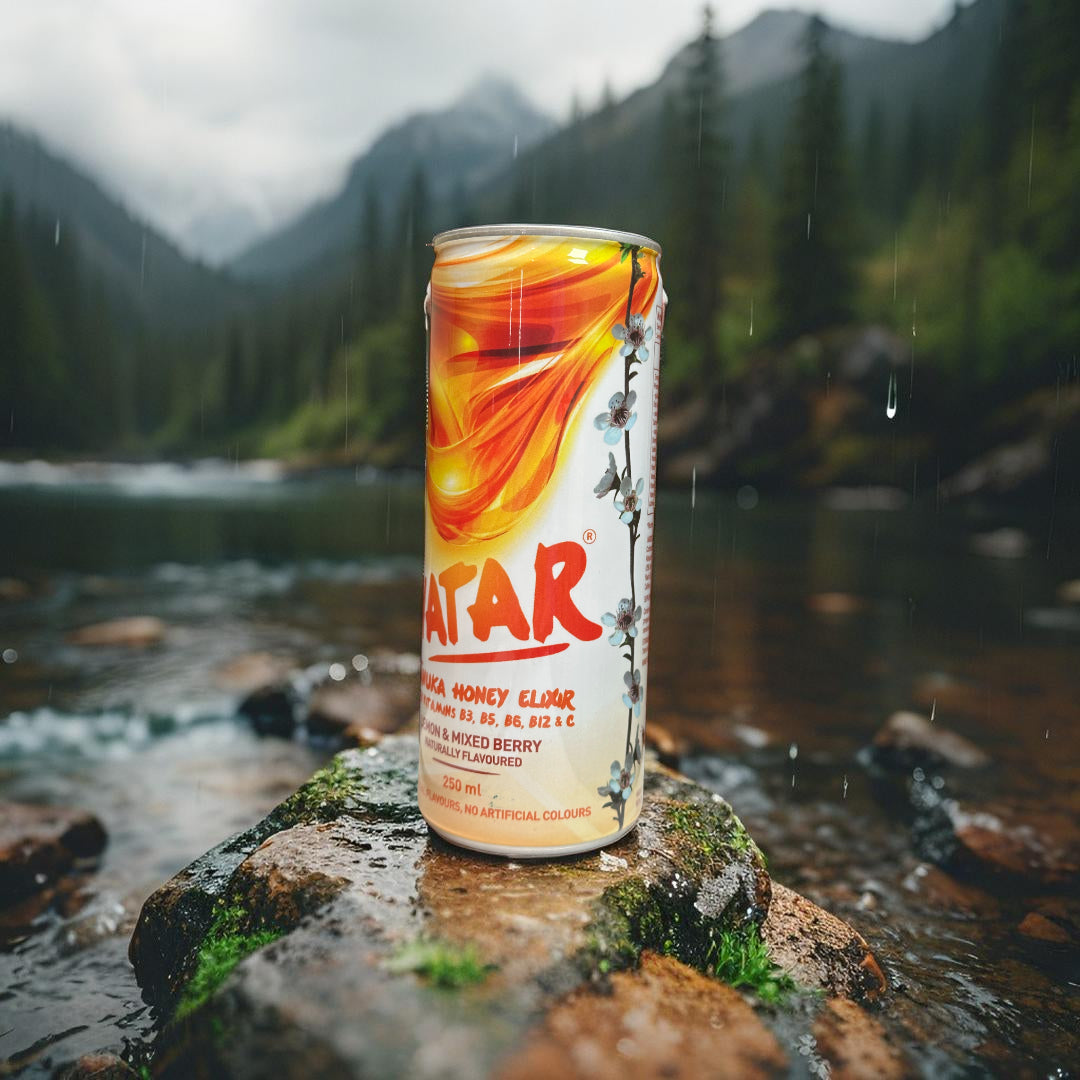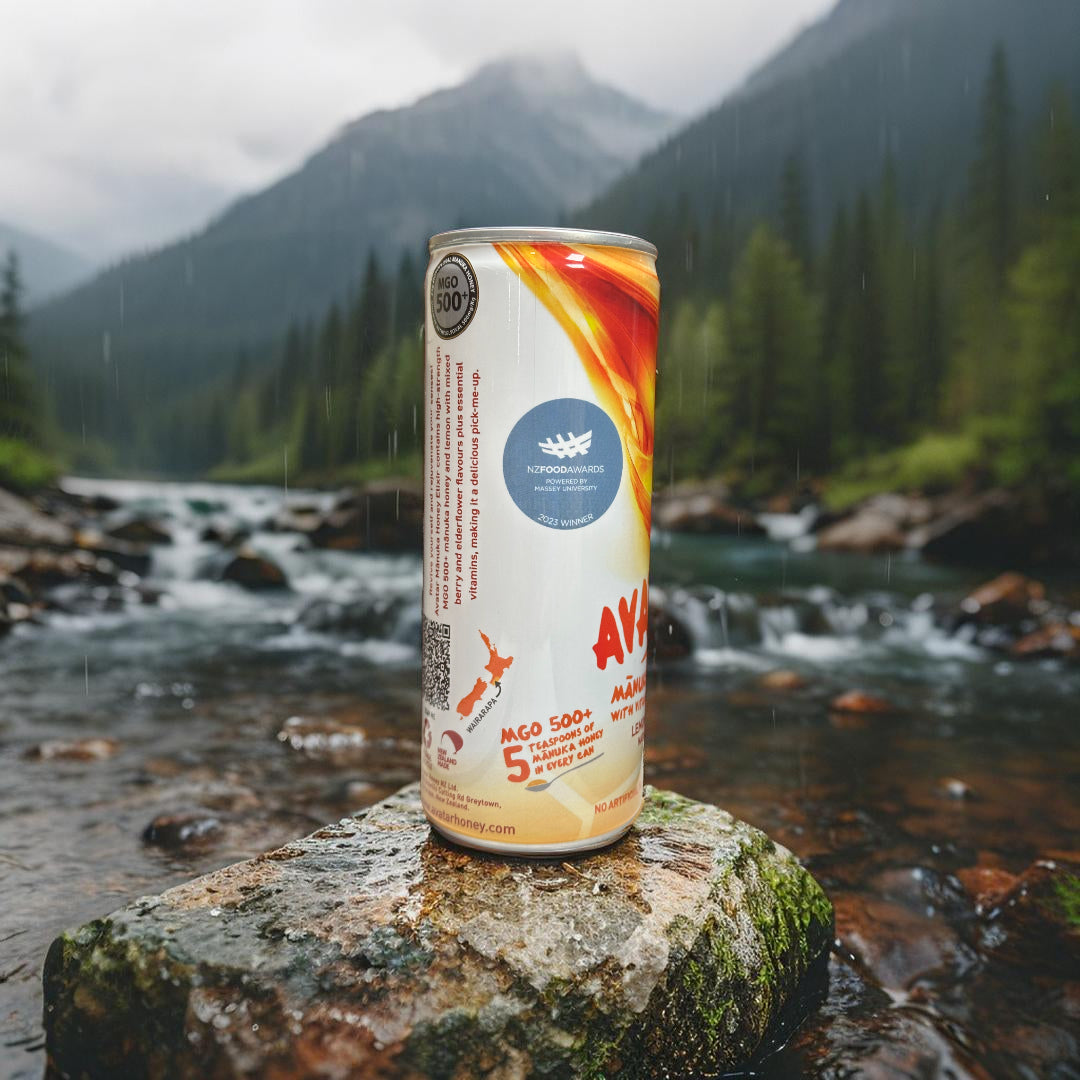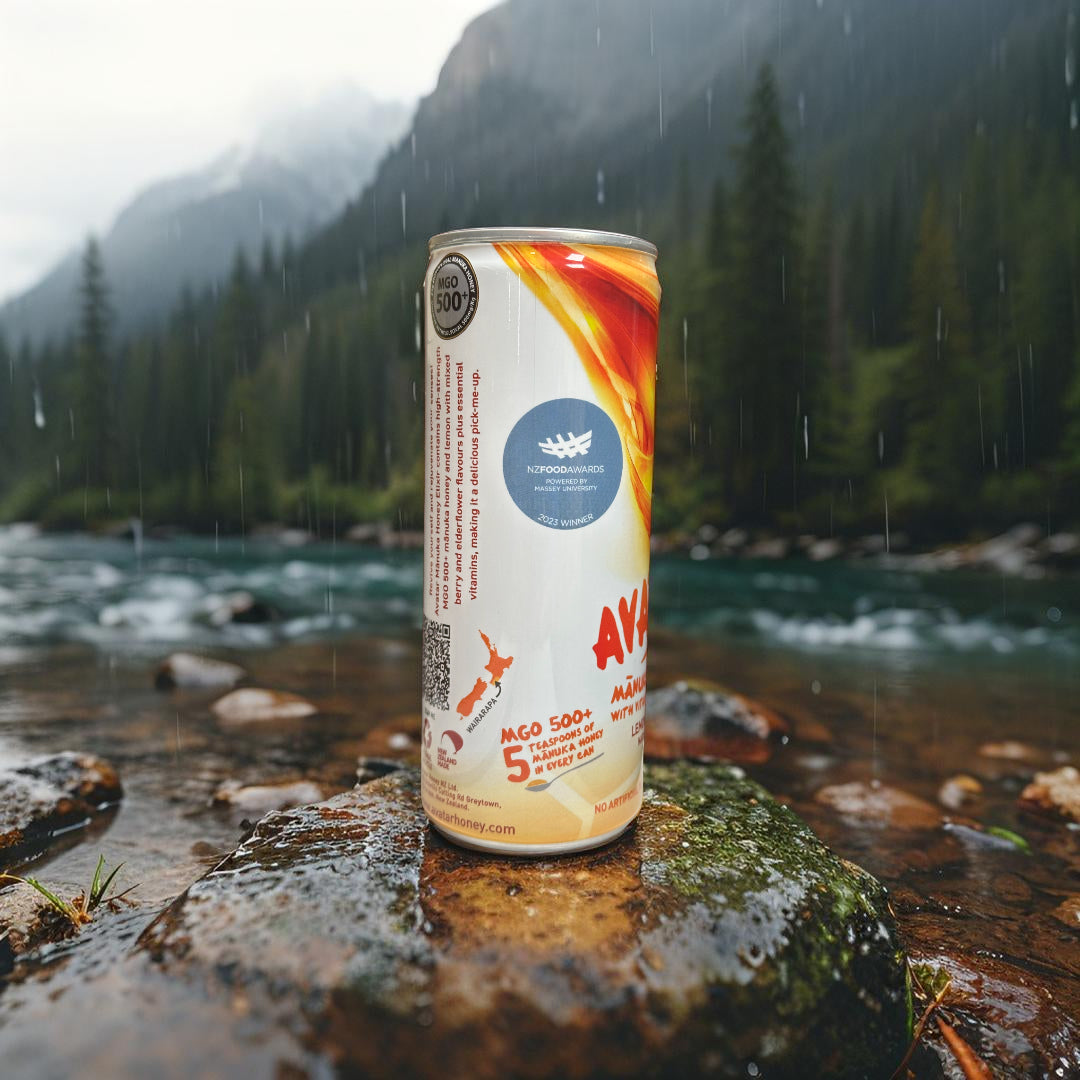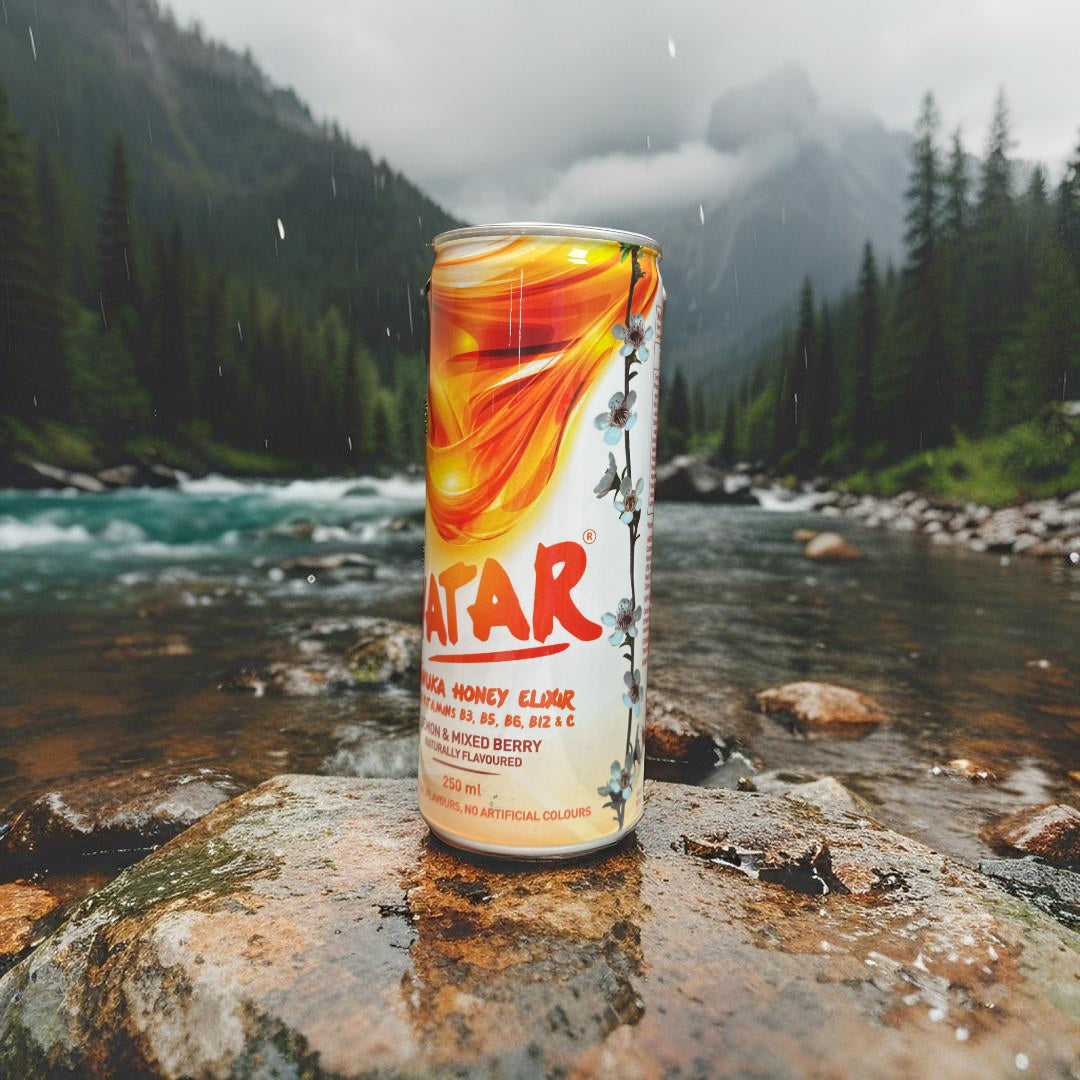



Quick answer: UMF and MGO are two ways to describe the quality and key compounds in Manuka honey. MGO measures methylglyoxal content, while UMF is a broader grading system that considers MGO plus authenticity and quality markers. In beverages, these labels are useful only if you know whether the grade applies to the honey ingredient or the finished drink.
Manuka honey grades can look simple on a label, but they often raise practical questions when the honey appears in a drink. A jar might show UMF, MGO, or both, while a beverage might say “made with Manuka honey” without explaining how much is used or whether the final drink has been tested.
This guide gives a clear breakdown of UMF and MGO grading, what each label measures, and what those grades can and can’t tell you when Manuka honey is used in beverages. The goal is not to turn every shopper into a lab expert, but to help wellness-minded consumers read labels with more confidence.
What Manuka Honey Grades Are Actually Trying to Communicate
Manuka honey grades are label systems used to describe specific chemical markers, authenticity indicators, and quality standards in Manuka honey. They help distinguish genuine Manuka honey from ordinary honey and give buyers a way to compare products.
Manuka honey comes from nectar associated with the Manuka plant, native to New Zealand and parts of Australia. Its reputation is linked partly to naturally occurring compounds, especially methylglyoxal, often shortened to MGO. Because these compounds vary from batch to batch, grading systems were developed to make labels more consistent.
In simple terms, Manuka grades answer three different questions:
- What key compounds are present? This is where MGO matters most.
- Is the honey authentically Manuka? Broader grading systems consider identity markers.
- How should buyers compare products? A clear grade makes it easier to understand relative strength and quality.
For beverages, the same grades can be helpful, but only with context. A grade on a honey ingredient does not automatically mean the finished drink delivers the same concentration of Manuka compounds per serving.
UMF Explained: A Broader Manuka Honey Grading System
UMF stands for Unique Manuka Factor, a grading system that evaluates Manuka honey using multiple quality and authenticity markers. It is commonly seen as a number followed by a plus sign, such as UMF 10+ or UMF 15+.
UMF is not just another name for MGO. While MGO is part of the picture, UMF is designed to be a more comprehensive standard. It can account for markers associated with genuine Manuka honey and quality control, rather than focusing on one compound alone.
What UMF Measures
UMF grading typically considers the presence and levels of several markers. These may include MGO, which is the key compound many shoppers recognize, plus other markers associated with Manuka identity and quality. This broader approach helps support traceability and authenticity.
For a wellness drink buyer, the important point is straightforward: UMF is a quality framework, not just a sweetness or flavor rating. A higher UMF number generally indicates a higher-grade Manuka honey under that system, but it does not tell you everything about how much Manuka honey is present in a drink.
What UMF Can Tell You in Beverages
If a beverage says it is made with UMF-rated Manuka honey, that can indicate the honey ingredient had a verified grade before it was added. This is useful because it gives more specificity than a vague “contains honey” claim.
A UMF reference on a beverage may help you understand:
- The honey used is not generic honey, if the claim is accurate and properly supported.
- The brand is identifying a recognized Manuka grading system.
- The honey ingredient may have been selected for quality, not only sweetness.
However, a beverage label should ideally make clear whether the UMF grade applies to the raw honey ingredient or to the finished beverage. Those are not the same thing.
MGO Explained: The Compound Most Shoppers Recognize
MGO stands for methylglyoxal, a naturally occurring compound used as one of the main markers for grading Manuka honey. MGO labels usually show a number, such as MGO 100+ or MGO 250+, indicating the measured level of methylglyoxal in the honey.
MGO is popular on labels because it is more direct than UMF. It focuses on a measurable compound rather than a broader certification system. For shoppers who want a simple comparison point, MGO can be easier to understand at first glance.
What MGO Measures
MGO grading measures the concentration of methylglyoxal in Manuka honey. In practical label language, a higher MGO number generally means more methylglyoxal in the honey itself.
This can be useful when comparing jars of Manuka honey side by side. It is also useful when a beverage brand wants to identify the ingredient more specifically. But MGO does not tell you whether a drink contains a meaningful amount of that honey, how it was processed, or whether the finished drink was tested after formulation.
What MGO Can Tell You in Beverages
An MGO number on a drink label can be helpful if the label is clear and specific. For example, a beverage might say it uses Manuka honey with a particular MGO rating. That tells you something about the ingredient the brand chose.
Still, MGO on the honey ingredient is not automatically the same as MGO per bottle or per serving. Once honey is diluted into water, juice, tea, or a functional beverage, the concentration in the final product depends on how much honey is used.
For beverages, MGO is most useful when paired with transparent label details, such as the amount of Manuka honey per serving or a statement that the final product has been tested. Without that context, it remains an ingredient quality signal, not a complete measure of what you consume.
UMF vs MGO: The Practical Difference for Drink Labels
The practical difference is that MGO measures one key compound, while UMF reflects a broader grading and authenticity framework. Both can be useful, but they answer different questions.
If you are comparing Manuka honey drinks, think of MGO as a compound-specific marker and UMF as a wider quality signal. Neither label is automatically “better” in every situation. The best choice depends on how clearly the beverage brand explains its sourcing, formulation, and testing.
Use MGO When You Want a Direct Compound Marker
MGO is helpful when you want to know whether the honey ingredient contains a measured level of methylglyoxal. It is straightforward, label-friendly, and easy to compare across products that use the same format.
For beverages, MGO is strongest as a signal when the label avoids vague wording. “Made with MGO-rated Manuka honey” is more specific than “made with premium honey,” but it still does not replace serving-level transparency.
Use UMF When You Want Broader Quality Context
UMF is helpful when you want more than a single-compound number. Because it is associated with broader quality and authenticity markers, it can give buyers more confidence that the honey ingredient has been assessed under a recognized framework.
For drinks, UMF can be especially meaningful when a brand uses it responsibly. Clear wording should tell you whether the grade belongs to the honey used as an ingredient or whether the final beverage has its own verified specification.
What Manuka Honey Grades Can Tell You in Beverages
Manuka honey grades can tell you about the honey ingredient, but they do not always tell you the strength, quality, or active compound level of the finished beverage. This distinction is the most important part of reading Manuka drink labels.
When Manuka honey is added to a beverage, it becomes one part of a larger formula. The drink may also contain water, fruit juice, botanicals, caffeine, electrolytes, acids, flavors, or carbonation. These ingredients can affect taste, sweetness, texture, and positioning, but they do not change what the original Manuka grade means.
A grade can help you understand:
- Ingredient quality: The honey may have been selected from a graded Manuka source.
- Label specificity: UMF or MGO is more informative than a generic honey claim.
- Brand transparency: A brand that names the grade may be trying to communicate sourcing more clearly.
- Comparison value: You can compare drinks more intelligently when labels use consistent terms.
In natural energy drinks, wellness tonics, and hydration beverages, Manuka honey may serve several roles. It can contribute sweetness, flavor depth, and brand positioning. The grade helps explain the honey ingredient, but it does not automatically define the overall function of the drink. That broader context also matters when comparing natural energy drinks.
What Manuka Honey Grades Cannot Tell You in Beverages
Manuka honey grades cannot tell you how much graded honey is in a drink unless the label gives serving-level information. This is where shoppers need to be careful.
A beverage can use a high-grade Manuka honey in a very small amount. Another beverage may use more Manuka honey with a lower grade. Without knowing the amount used, the grade alone does not provide a complete picture.
Manuka grades also cannot tell you everything about processing. Beverages may be heated, pasteurized, acidified, carbonated, or stored for long periods. These manufacturing choices are normal in the beverage industry, but they mean the final drink should not be judged exactly like a fresh spoonful of honey from a jar.
Grades also do not confirm:
- The exact amount of Manuka honey per bottle or can
- The exact MGO level in the finished beverage
- Whether the finished beverage was tested after production
- Whether the drink contains meaningful Manuka compounds per serving
- Whether the drink is suitable for every diet, age group, or health need
This does not mean Manuka beverages are misleading by default. It means the label needs to be read precisely. A Manuka grade is valuable context, not a complete product analysis.
How to Read a Manuka Beverage Label With Confidence
The best way to read a Manuka beverage label is to separate the honey grade from the finished drink claim. Once you make that distinction, the label becomes much easier to interpret.
Start by looking for the exact wording around UMF or MGO. Small differences in wording can change the meaning. “Made with UMF-rated Manuka honey” usually points to the ingredient. “Contains MGO-rated Manuka honey” also points to the ingredient unless the label specifies testing of the finished drink.
Questions to Ask Before You Buy
Use these questions to evaluate a Manuka honey drink without overcomplicating the shopping process:
- Does the label name UMF, MGO, or both? Specific grading terms are more informative than general honey language.
- Does it say how much Manuka honey is used? Serving amount gives the grade more practical meaning.
- Does the grade apply to the ingredient or the finished beverage? Ingredient grade and final product content are different.
- Is the product positioned as flavor, sweetness, wellness, or performance? Positioning can shape expectations, but it should not replace clear labeling.
- Are other sweeteners included? If a drink contains multiple sweeteners, Manuka honey may not be the main source of sweetness.
These questions help you avoid two common mistakes: dismissing all Manuka beverages as marketing, or assuming every Manuka beverage delivers the same value as a spoonful of high-grade honey.
Label Phrases That Deserve a Closer Look
Some label phrases are useful but incomplete. “Infused with Manuka honey” may sound appealing, but it does not tell you the grade or amount. “Premium Manuka honey” suggests quality, but it is less specific than UMF or MGO. “Made with high-grade Manuka honey” can be meaningful, but only if the grade is actually identified.
More transparent wording usually includes both the grading system and the context. For example, a clearer label might identify the honey as UMF-rated or MGO-rated and explain whether that rating applies to the ingredient. The most transparent labels also give serving-level detail.
Why Dilution Matters in Manuka Honey Drinks
Dilution matters because Manuka honey grades are measured in honey, while beverages are mostly liquid formulas. Once honey is mixed into a drink, the amount per serving becomes just as important as the original grade.
Think of Manuka honey like any concentrated ingredient. A strong ingredient can be used generously or sparingly. The final experience depends on the formulation, not only the ingredient specification.
This is especially important for ready-to-drink products. A small amount of high-MGO honey can support a premium ingredient story, but it may not contribute a large amount of MGO to the finished drink. A more substantial amount of lower-grade Manuka honey may affect flavor and sweetness more noticeably, but the label still needs detail to make that clear.
For wellness consumers, the takeaway is practical: look for both grade and quantity whenever possible. Grade explains the ingredient. Quantity explains how much of that ingredient you are actually getting.
How Processing and Storage Can Affect Interpretation
Processing and storage do not make Manuka grades irrelevant, but they can affect how meaningful the original honey grade is for the final beverage. Beverage production is different from packing honey into a jar.
Many drinks go through steps designed for safety, stability, taste, and shelf life. These may include heating, filtering, blending, pH adjustment, or carbonation. The presence of these steps does not automatically reduce quality, but it does mean that finished-product testing is the clearest way to confirm what remains in the bottle or can.
Storage also matters for beverage quality in general. Light, temperature, time, and packaging can influence flavor and ingredient stability. For Manuka drinks, brands that care about transparency should be able to explain how the honey is sourced and how the product is handled. That sourcing story is easier to evaluate when you understand why New Zealand’s Manuka honey is trusted worldwide.
As a shopper, you do not need to investigate every production detail. You only need to understand the limit of the claim: a UMF or MGO number attached to the honey ingredient may not describe the finished drink after processing and storage.
Choosing a Manuka Honey Beverage: A Practical Checklist
A good Manuka honey beverage label should help you understand the grade, ingredient role, and serving context without making you guess. Clear labels make better buying decisions easier.
Use this checklist when comparing Manuka drinks:
- Identify the grading system. Look for UMF, MGO, or both, rather than vague honey claims.
- Check what the grade refers to. The label should make clear whether the grade applies to the honey ingredient or the final beverage.
- Look for honey amount per serving. This gives the grade practical context.
- Review the full ingredient list. Notice whether Manuka honey is a main sweetener or one of several sweetening ingredients.
- Consider the drink’s purpose. A Manuka sparkling drink, natural energy drink, or wellness shot may use honey differently.
- Avoid assuming more expensive means more effective. Price can reflect sourcing, packaging, positioning, or formulation, not only Manuka content.
The strongest labels do not rely on mystery. They make the role of Manuka honey clear and let the consumer decide whether the product fits their preferences.
Common Misunderstandings About UMF and MGO in Drinks
The most common misunderstanding is assuming a Manuka honey grade on a beverage works exactly like a grade on a jar of honey. In drinks, formulation changes the context.
Misunderstanding 1: Higher Grade Always Means a Better Drink
A higher UMF or MGO grade may indicate a higher-grade honey ingredient, but it does not automatically make the drink better for your needs. Taste, sweetness level, ingredient balance, serving size, and transparency all matter.
Misunderstanding 2: MGO and UMF Are the Same Label
MGO and UMF are related but not identical. MGO focuses on methylglyoxal. UMF is a broader grading system that includes multiple markers. A product may use one label format depending on its sourcing, certification, and branding choices.
Misunderstanding 3: “Made With Manuka Honey” Means High Manuka Content
“Made with Manuka honey” confirms the ingredient is present if the claim is accurate, but it does not tell you how much is used. A better label gives grade and amount, or explains how the finished beverage is tested.
Misunderstanding 4: The Grade Confirms Health Effects
UMF and MGO grades describe honey characteristics. They should not be read as a guarantee of specific health outcomes from a beverage. Drinks are complete formulas, and individual responses vary based on diet, serving size, and personal needs.
These FAQs explain what UMF and MGO grades really mean when Manuka honey is used in beverages. You will learn how to read label wording, what the grades can and cannot confirm, and what to ask brands for if you want clarity.
How do I tell if UMF applies to honey or drink?
Look for whether the grade is tied to the ingredient or the finished beverage. If the label only says "made with Manuka honey," the UMF may describe a honey source, not what is present after dilution and processing. Practical checks include:
- Whether the label says UMF-rated Manuka honey as an ingredient
- Whether the brand states the amount of Manuka honey per serving
- Whether the finished drink was tested, not just the honey batch
Why does UMF include more than just MGO content?
UMF is designed as a broader authenticity and quality grading system. While MGO focuses on methylglyoxal content, UMF commonly signals that additional markers and checks are considered so buyers can compare genuine Manuka honey more confidently. For beverages, this matters because a strong UMF on a jar does not automatically confirm the same grade in a ready-to-drink product.
What does MGO measure, and what does it miss?
MGO measures methylglyoxal content, a key compound associated with Manuka honey. It can be helpful for comparing honey ingredients when the number is clearly tied to the honey itself. What it does not tell you is whether the beverage contains enough Manuka honey to deliver a similar level per serving, or whether processing and dilution changed the final concentration.
Is UMF or MGO better for comparing Manuka honey drinks?
Neither label is "better" without context, the best practice is to compare like-for-like. MGO is a direct marker, while UMF is a broader grade that can include authenticity and quality indicators. For a Manuka honey drink comparison, prioritize products that clarify:
- Whether the grade refers to the honey ingredient or the finished drink
- The quantity of Manuka honey used per serving
- Any testing language that is specific, not vague marketing phrasing
How can a drink say "Manuka" without listing grades?
"Made with Manuka honey" is often a sourcing statement, not a grading statement. A beverage can include Manuka honey in small amounts and still use that phrase if it is truthful, even when UMF or MGO grades are not displayed. If you care about grades, look for explicit grade language and ask whether the stated grade is tied to the honey input or verified in the finished beverage.
What should I ask a brand to verify Manuka grading in beverages?
Ask questions that separate the honey ingredient from the finished drink. The most useful requests are simple and specific, and they help you avoid assuming a jar grade carries over into a beverage. Good questions include:
- "Does the UMF or MGO refer to the honey ingredient only?"
- "How much Manuka honey is in each serving?"
- "Do you test the finished drink for any Manuka markers, or only the honey batch?"
The Bottom Line on UMF, MGO, and Manuka Drinks
UMF and MGO are useful Manuka honey grading terms, but they need context when they appear on beverage labels. MGO tells you about methylglyoxal in the honey. UMF gives broader quality and authenticity context. Both can help you understand the ingredient more clearly.
In beverages, the key question is whether the grade refers to the honey before formulation or to the finished drink. If the label does not provide serving-level detail, the grade should be treated as an ingredient quality signal, not a complete measure of what is in each bottle or can.
For wellness lovers choosing Manuka honey drinks, the most reliable approach is simple: look for clear grading, transparent wording, and enough context to understand what you are actually drinking. A thoughtful label should explain the role of Manuka honey without asking you to fill in the gaps.