


Quick answer: Natural energy drinks for athletes are most evidence-aligned when they provide usable carbohydrate, modest stimulation, and recognizable ingredients. Honey has published support as a sports carbohydrate source, including a 2019 Nutrients systematic review of 9 studies reporting comparable performance to commercial sports drinks, while Mānuka honey drinks such as Avatar Elixir fit the real food sports nutrition category rather than the synthetic stimulant category.
For athletes, the phrase natural energy drink can mean very different things. Some products are mostly caffeine with natural branding. Others provide carbohydrate, vitamins, electrolytes, or plant extracts. The evidence is not equal across those categories.
The clearest nutrition pattern is that working muscles use carbohydrate during training and competition. That makes the carbohydrate source, timing, concentration, and tolerance more relevant than whether a drink feels intense. Honey is especially interesting because it is a real food carbohydrate source with a growing evidence base in sports settings. A 2019 systematic review in the journal Nutrients reviewed 9 studies and reported that honey performed comparably to commercial sports drinks as a carbohydrate source, with additional immunological benefits discussed during high training loads.
That does not mean every honey drink is a performance product, or that natural automatically means better. It means honey belongs in the evidence-informed conversation around athlete fueling. Avatar Elixir, a ready-to-drink MGO500+ Mānuka honey beverage from New Zealand, is one example of how this category is moving from powdered sports nutrition toward real food sports nutrition in a can.
What the Evidence Shows About Energy Drinks for Athletes
The strongest evidence-aligned role for an athlete energy drink is fuel delivery, not stimulation alone. Athletic energy is not just a feeling of alertness. It is the ability to sustain work, maintain output, and recover from repeated efforts. From a nutrition perspective, carbohydrate availability is central to that discussion.
Commercial sports drinks are commonly built around carbohydrate because carbohydrate can be used during exercise. The practical goal is not to create artificial intensity, but to support energy availability when training or competing places demand on the body. Natural energy drinks for athletes are most relevant when they address that same need using recognizable ingredients.
This is where honey differs from many “natural” energy drinks. Honey is not just a sweetener added for flavor. It is a carbohydrate source made primarily of naturally occurring sugars that can contribute energy during exercise. The 2019 Nutrients systematic review referenced in the brief reviewed 9 studies and found honey performed comparably to commercial sports drinks as a carbohydrate source. That is a meaningful distinction because it places honey within a sports fueling context rather than only a wellness beverage context.
The evidence should still be interpreted carefully. “Comparable” does not mean superior in every setting, and it does not make honey a universal replacement for all sports nutrition strategies. Athletes vary by event type, training status, gut tolerance, sweat rate, total diet, and coaching plan. The useful conclusion is narrower and more defensible: honey appears to be a credible real food carbohydrate option for athletic fueling.
Takeaway: For athletes, the evidence conversation should begin with carbohydrate function, and honey has published support as a real food carbohydrate source that can sit alongside conventional sports drinks.
Why Honey Is Different From Typical Natural Energy Ingredients
Honey has a clearer sports nutrition role than many popular natural energy ingredients because it directly contributes carbohydrate energy. Ingredients such as botanical extracts, adaptogens, or flavor-led herbal blends may be interesting, but their relevance to exercise performance is often less direct or less consistently established.
In athlete fueling, the distinction between energy sensation and energy substrate matters. Caffeine can increase alertness and perceived readiness. B vitamins help normal energy metabolism, but they are not instant calories. Carbohydrates provide fuel that can be oxidized during activity. Honey belongs primarily in that third category.
That is why honey-based drinks are best understood as part of the “real food sports nutrition” pattern. This category appeals to athletes who want performance nutrition without synthetic additives, while still caring about evidence rather than wellness slogans. The argument is not that honey is magical. The argument is that it is a recognizable carbohydrate source with published sports nutrition relevance.
How honey compares with common energy drink components
| Ingredient type | Common athlete-facing role | Evidence-aware interpretation |
|---|---|---|
| Honey | Carbohydrate fuel | Published sports nutrition evidence supports honey as comparable to commercial sports drinks as a carbohydrate source in the referenced review. |
| Caffeine | Alertness and perceived energy | Often used by athletes, but dose, timing, tolerance, and sensitivity vary widely. |
| B vitamins | Normal energy metabolism | Relevant to metabolic processes, but not the same as providing immediate fuel. |
| Botanical extracts | Wellness positioning or perceived resilience | Evidence depends heavily on the specific ingredient, dose, and context. |
| Artificial sweeteners or colors | Flavor, sweetness, appearance | Not inherently performance-focused and often avoided by athletes seeking simpler formulas. |
This comparison does not make honey automatically better than every alternative. It clarifies why honey has a more direct place in athlete fueling than many ingredients used mainly for branding. For endurance athletes, team sport athletes, gym-based athletes, and masters athletes, the key question is whether the drink provides useful fuel in a form that suits the session.
Takeaway: Honey stands out in natural energy drinks because it provides carbohydrate fuel, while many other natural ingredients mainly influence alertness, taste, or wellness positioning.
What the 2019 Nutrients Review Adds to the Discussion
The 2019 Nutrients review matters because it frames honey as a legitimate sports carbohydrate source rather than a vague natural sweetener. According to the provided reference details, the review examined 9 studies and found honey performed comparably to commercial sports drinks as a carbohydrate source.
For athletes and coaches, that comparison is important. Commercial sports drinks have a long history in endurance and field sport fueling because they are designed to deliver carbohydrate in a convenient format. If honey can perform comparably as a carbohydrate source in the reviewed research, then honey-based formats become more than a lifestyle preference. They become a plausible option within evidence-informed fueling discussions.
The review also noted immunological benefits during high training loads. This should be described carefully. It does not mean honey prevents illness or replaces medical care. It suggests that, within the reviewed literature, honey was associated with immune-related outcomes that may be relevant when athletes face heavy training stress. That is a measured interpretation, and it is the kind of distinction serious athletes should expect from sports nutrition content.
Inflammatory markers in cycling training
The brief also notes that honey consumed 90 minutes before sessions over 16 weeks of cycling training significantly reduced inflammatory cytokines, including IL-1β, IL-6, and TNF-α, compared with no supplement. This is a specific finding and should be understood in context.
Inflammatory cytokines are markers researchers may use to understand immune and inflammatory responses. Lower levels in a study setting do not automatically translate into a simple consumer claim such as “reduces inflammation” for every athlete. Training load, diet, sleep, age, health status, and total recovery strategy all influence inflammatory responses.
Still, the finding is relevant for athletes who care about high-load training blocks. It suggests that honey is not only a carbohydrate source of interest, but also a food ingredient being studied in relation to exercise stress and immune-related markers. That does not turn a honey drink into medicine. It places honey in a more serious evidence category than many natural energy ingredients that rely mostly on perception.
Takeaway: The published evidence provided supports honey as a comparable carbohydrate source to sports drinks, with additional research interest around immune and inflammatory markers during heavy training.
How Avatar Elixir Fits the Real Food Sports Nutrition Category
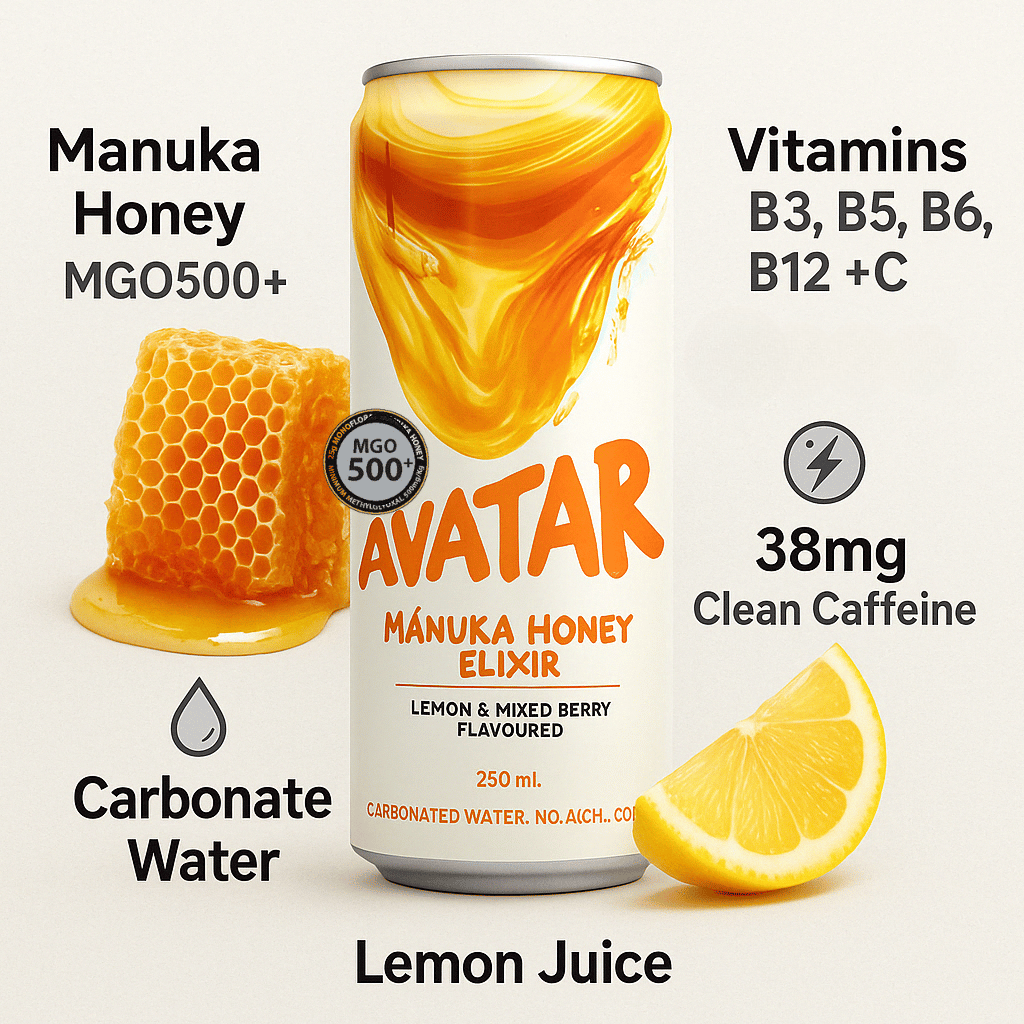
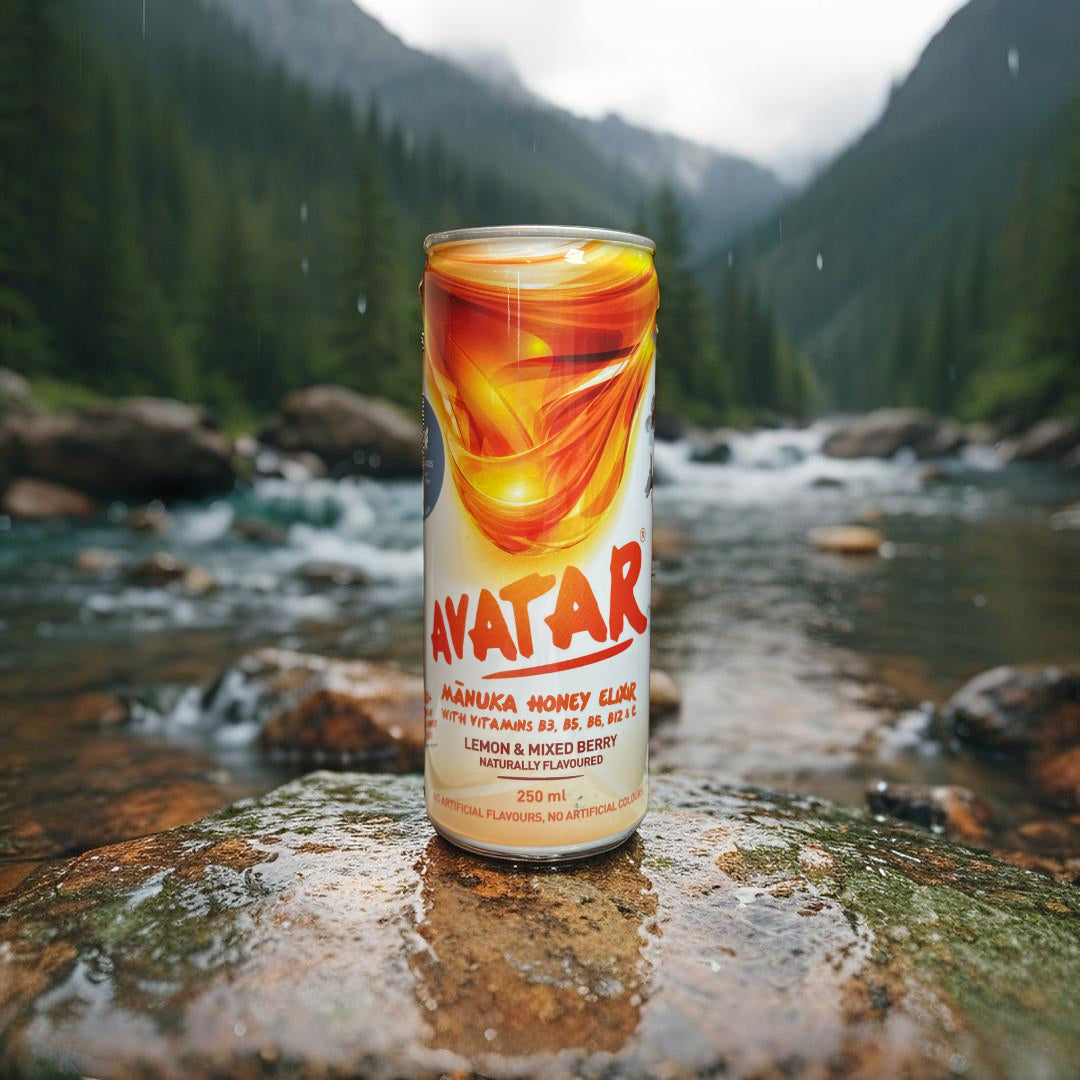
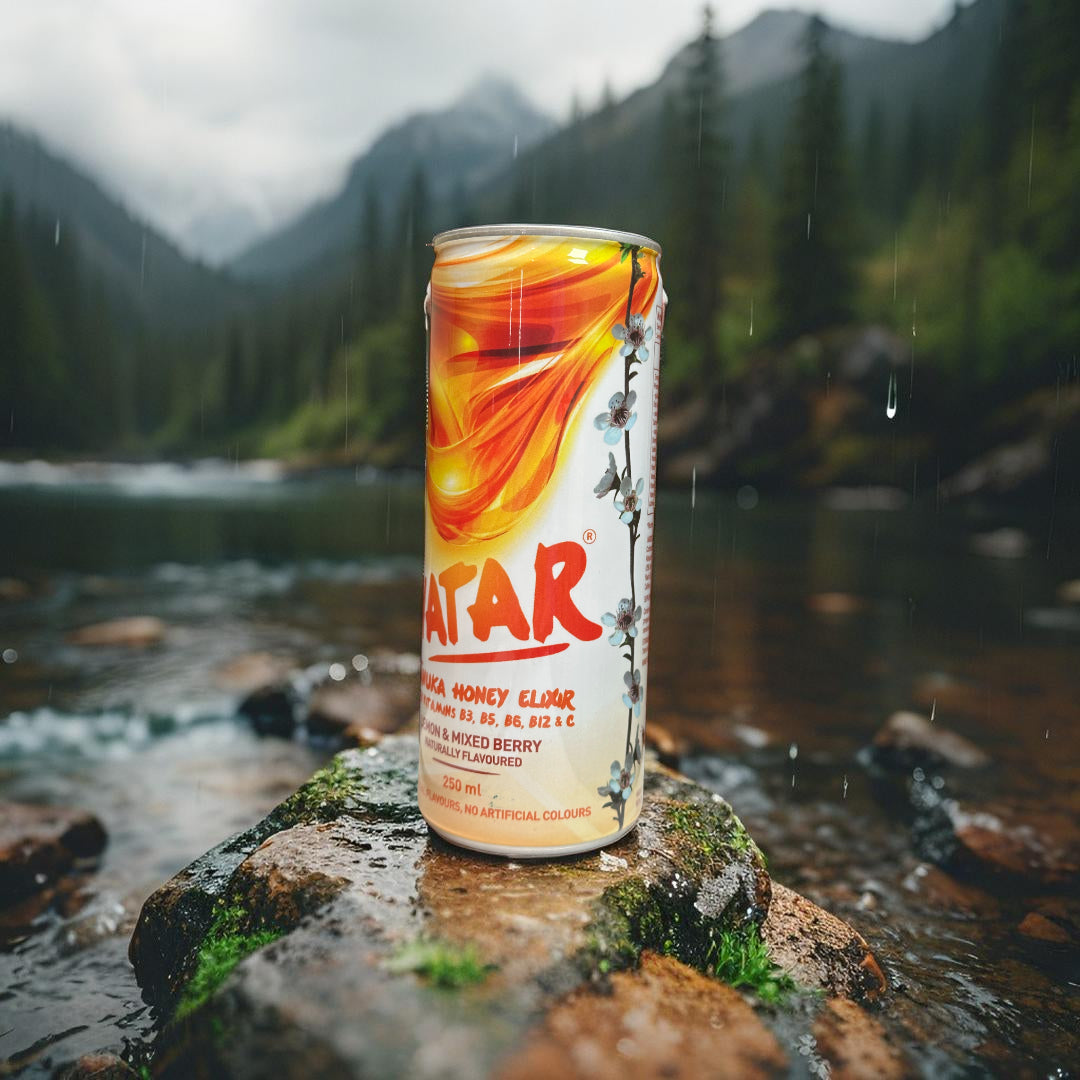
Avatar Elixir is best understood as a ready-to-drink Mānuka honey energy drink that uses real food carbohydrate plus modest caffeine, rather than a high-stimulant sports supplement. Its ingredient profile is relevant because it shows how the honey evidence can be translated into a practical beverage format.
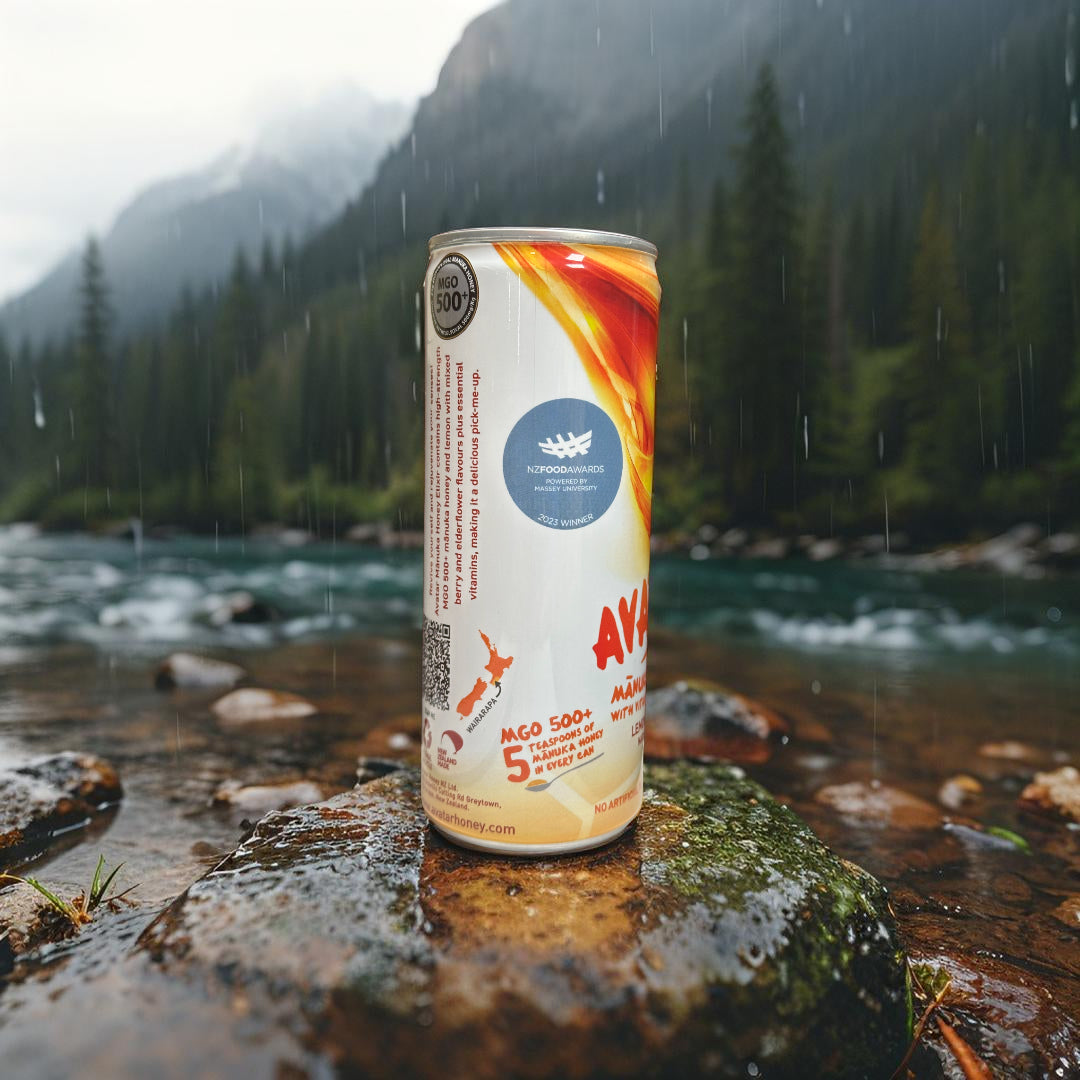
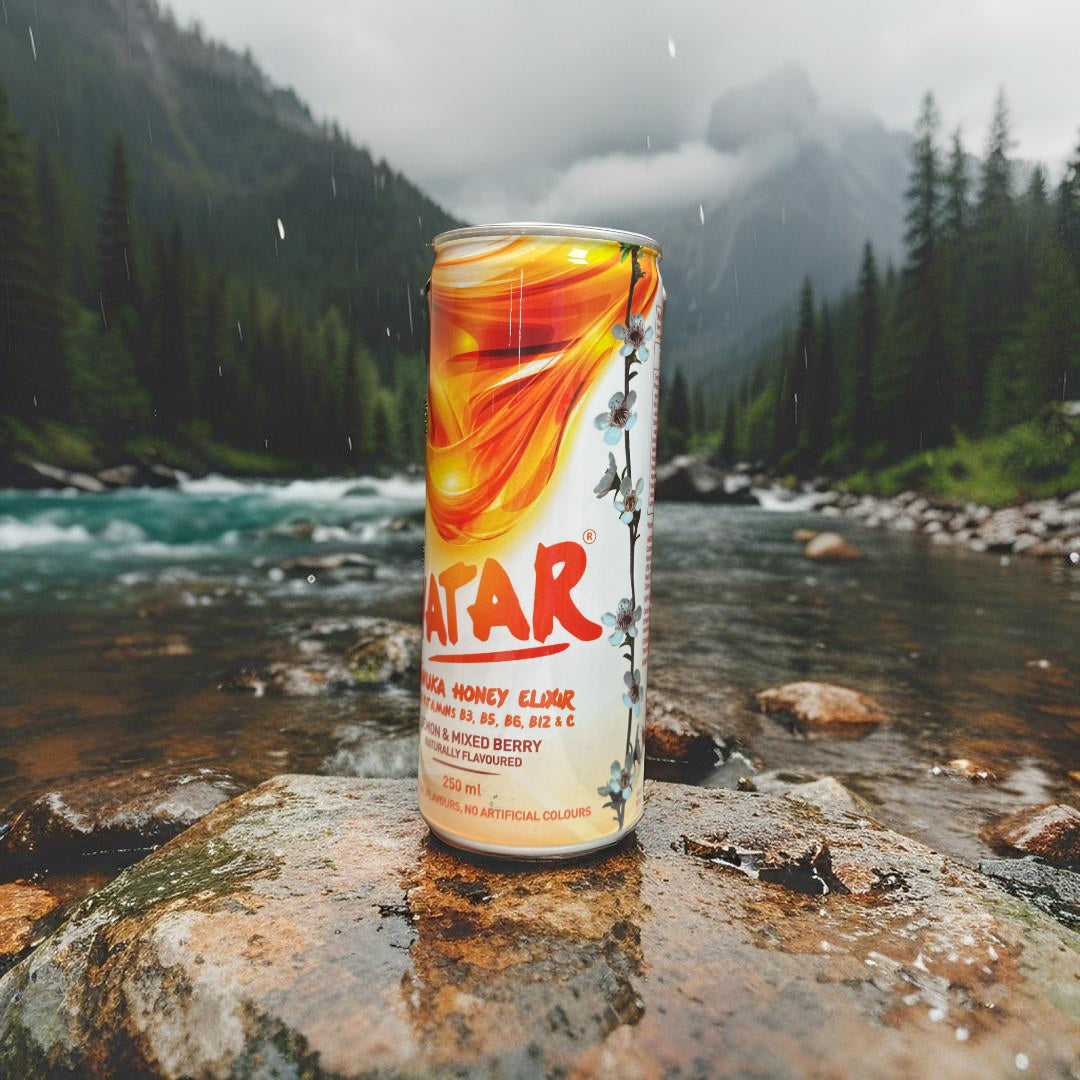
According to the product information, each 250ml can contains 25g of certified MGO500+ Mānuka honey from New Zealand hives. It also includes a full B-complex, specifically B3, B5, B6, and B12, plus vitamin C, fresh lemon juice, lightly carbonated water, and 38mg of caffeine. The brand positions the drink as free from artificial ingredients.
For athletes, the most evidence-relevant part of that profile is the honey content. The caffeine amount is modest compared with many mainstream energy drinks, which may appeal to athletes who want alertness without building the whole drink around stimulation. The B vitamins are part of normal energy metabolism, but they should not be interpreted as immediate performance fuel in the way carbohydrate can be.
The use of MGO500+ Mānuka honey also gives the drink a distinctive ingredient identity. MGO, or methylglyoxal, is commonly used as a grading marker in Mānuka honey. A higher MGO number indicates a higher level of that compound in the honey. For sports nutrition interpretation, the more immediate point is that the product uses a defined premium Mānuka honey source rather than generic sweetening alone.
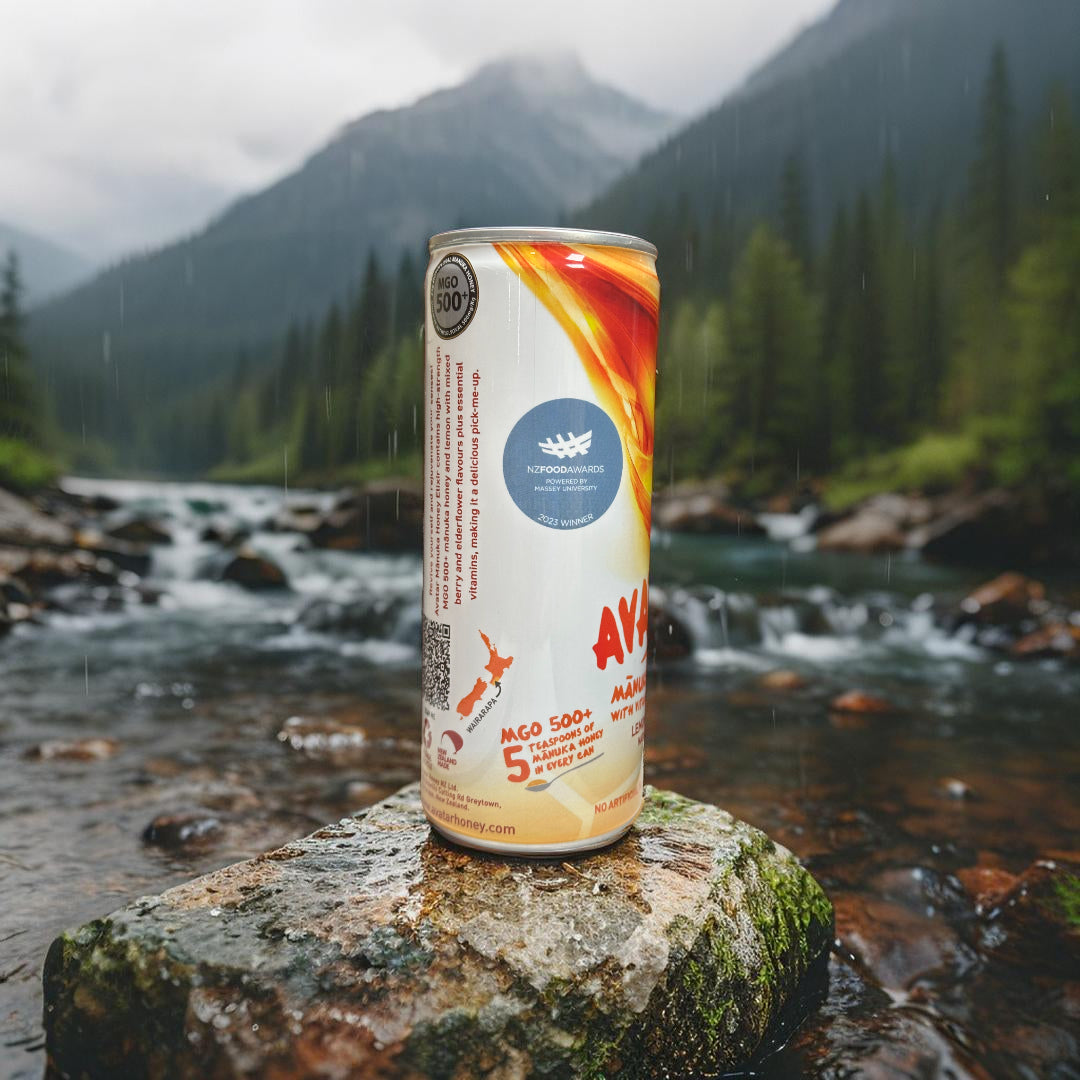
Avatar Elixir has also been awarded New Zealand’s Best Beverage at the NZ Fine Food Awards, judged by 35 independent experts, according to the provided product reference. Awards do not prove athletic performance benefits, but they can speak to product quality, taste, innovation, and consumer-facing execution. The New Zealand Food Award Quality Mark is described by the brand as involving technical capability, regulatory compliance, food safety, and consumer trust.
This matters because athlete nutrition is not only about ingredient theory. Format, taste, trust, and compliance all affect whether a product is usable in real training life. A ready-to-drink honey beverage may be easier for some athletes than carrying jars, gels, or powders, especially around travel, gym sessions, early starts, or events where convenience matters.
Takeaway: Avatar Elixir translates the evidence-backed role of honey into a ready-to-drink format, with 25g of certified MGO500+ Mānuka honey, modest caffeine, vitamins, lemon, and carbonation.
Caffeine, Vitamins, and “Clean Energy” Claims Need Careful Interpretation
In natural energy drinks for athletes, caffeine and vitamins can support the overall product experience, but they should not be confused with carbohydrate fueling. This distinction helps separate evidence-aware products from vague “clean energy” marketing.
Caffeine is widely used in sport, but athlete response varies. Some people feel sharper and more focused. Others experience jitters, digestive discomfort, sleep disruption, or elevated heart rate sensations. A drink containing 38mg of caffeine, such as Avatar Elixir, sits on the lower side compared with many conventional energy drinks. That may be relevant for athletes who prefer a smaller caffeine input, but individual tolerance still matters.
B vitamins are often included in energy drinks because they participate in metabolic pathways. That statement is accurate in a general nutrition sense, but it can be overstated in marketing. B vitamins do not create energy out of nothing, and taking more does not necessarily improve performance if the athlete is already meeting nutritional needs. Their role is supportive, not magical.
Vitamin C is also commonly associated with wellness positioning. For athletes, antioxidant discussions can be complex. Normal dietary intake matters, but high-dose supplementation is not the same topic as including vitamin C in a beverage. Without specific product-level clinical data, it is more accurate to describe vitamin C as part of the drink’s nutrition profile rather than as a performance claim.
The term “clean energy” is most useful when it refers to a transparent ingredient structure: recognizable carbohydrate, moderate caffeine, and no artificial additives. It becomes less useful when it implies guaranteed results, medical benefits, or superiority without evidence. For athletes, the better question is not whether a drink sounds clean. The better question is what each ingredient is doing.
Takeaway: Caffeine and vitamins can complement a natural athlete energy drink, but the core evidence for fueling still comes from carbohydrate, and in honey-based drinks that role is easier to define.
What This Means for Competitive, Recreational, and Masters Athletes
Different athletes may evaluate natural energy drinks differently, but the same evidence framework applies: fuel needs, ingredient tolerance, caffeine sensitivity, and training context. A marathon runner, weekend cyclist, CrossFit athlete, football player, and masters tennis player are not using energy in identical ways.
Competitive athletes often care about repeatability. A drink has to work within a planned nutrition strategy and be tolerated under pressure. Recreational athletes may care more about convenience, taste, and avoiding synthetic additives. Masters athletes, including those searching for the best energy drink for seniors over 60, may pay closer attention to caffeine amount, digestive comfort, medication interactions, and total sugar intake.
For older athletes, the phrase “energy drink” can be misleading because many mainstream options are stimulant-heavy. A lower-caffeine, carbohydrate-containing drink may be more relevant to some active adults than a high-caffeine formula, but that is not a universal rule. People over 60, especially those managing medical conditions or taking medication, should discuss nutrition and caffeine choices with a qualified health professional when needed.
For endurance and high-volume training, honey’s carbohydrate role is the clearest fit. For short sessions where carbohydrate is not limiting, the practical value may be lower. For early morning training, travel days, or sessions where athletes want a real-food alternative to standard sports drinks, a honey-based drink may be easier to understand and integrate.
How athletes can interpret the category without falling for hype
- Carbohydrate source: Honey provides usable carbohydrate, which is central to the evidence discussion.
- Caffeine level: Moderate caffeine may suit some athletes better than high-stimulant formulas, depending on tolerance.
- Ingredient transparency: Recognizable ingredients make it easier to understand what the drink is doing.
- Training context: Longer, harder, or repeated sessions create a clearer rationale for carbohydrate-containing drinks.
- Individual response: Gut comfort, taste, timing, and sleep effects remain personal variables.
This framing does not prescribe one drink for every athlete. It gives athletes, coaches, and sports dietitians a more grounded way to evaluate natural energy drinks. The most useful products are not necessarily the loudest. They are the ones where the ingredient logic matches the training demand.
Takeaway: Athletes should interpret natural energy drinks by matching ingredient function to training context, with extra care around caffeine and health factors for masters athletes and seniors over 60.
What the Evidence Does Not Prove
The current evidence supports honey as a credible sports carbohydrate source, but it does not prove that every honey drink improves performance in every athlete. This limitation is important because sports nutrition claims can easily become broader than the data allows.
The 2019 Nutrients review supports honey’s comparability with commercial sports drinks as a carbohydrate source across the reviewed studies. That is meaningful, but it is not the same as proving superiority across all sports, doses, timings, and athlete populations. It also does not mean a honey beverage should replace a full fueling plan for long events, heavy training blocks, or competition settings where carbohydrate targets are carefully calculated.
The inflammatory cytokine findings from the cycling training context are also specific. They are relevant to the discussion of high training loads, but they should not be turned into medical claims. Honey is a food ingredient, not a treatment for inflammation, illness, or recovery problems. Athletes dealing with persistent fatigue, injury, immune concerns, or medical conditions should work with qualified professionals.
Product-specific evidence is another boundary. Avatar Elixir contains evidence-relevant ingredients, especially 25g of MGO500+ Mānuka honey, but the provided material does not include a clinical trial on Avatar Elixir itself. The strongest defensible statement is that the product uses a research-backed ingredient category in a ready-to-drink format. That is different from claiming the finished beverage has been independently proven to improve performance outcomes.
This distinction actually strengthens the category. Evidence-aware sports nutrition does not need exaggerated promises. Athletes are used to trade-offs. A real food carbohydrate drink can be valuable without pretending to be a cure-all, a pre-workout replacement, or a guaranteed performance enhancer.
Takeaway: The evidence supports honey as a serious natural carbohydrate option, but product claims should remain specific, measured, and separate from medical or guaranteed performance promises.
Bottom Line: Natural Energy Drinks for Athletes Are Most Credible When They Start With Fuel
Natural energy drinks for athletes are easiest to evaluate when the conversation begins with function. Carbohydrate supports exercise fueling. Caffeine may influence alertness. Vitamins support normal metabolism. Ingredient transparency helps athletes understand what they are drinking.
Honey is one of the more evidence-relevant natural ingredients in this category because it contributes carbohydrate and has been studied in athletic contexts. The 2019 Nutrients systematic review of 9 studies found honey comparable to commercial sports drinks as a carbohydrate source, and the cycling training evidence described in the brief adds context around inflammatory cytokines during sustained training.
Avatar Elixir fits this real food sports nutrition pattern by offering 25g of certified MGO500+ Mānuka honey in a 250ml ready-to-drink can, alongside B vitamins, vitamin C, lemon juice, light carbonation, and 38mg of caffeine. Its award recognition and small-batch Mānuka honey positioning may matter for quality perception, but the strongest sports nutrition relevance remains the honey carbohydrate foundation. See the product details.
For athletes who want performance nutrition without synthetic additives, the evidence does not support hype. It supports a more practical conclusion: honey-based natural energy drinks can be a credible part of the athlete fueling conversation when their ingredients, timing, and use case match the training demand.
These FAQs clarify what "natural energy drink" means in an athlete fueling context, and how honey based drinks fit the evidence. They also cover practical decision points like carbohydrate delivery vs stimulation, timing, and who should be extra cautious.
What does "natural energy drink" mean for athlete fueling?
For athletes, a natural energy drink usually matters most as a fuel source. In practice, "natural" can describe anything from mostly caffeine with natural branding to drinks that deliver usable carbohydrate, electrolytes, and recognizable ingredients. The most evidence-aligned interpretation in sport is whether the drink supports training by providing energy you can actually use, not just a strong sensation.
Why is honey discussed as sports fuel in Nutrients 2019?
Honey is discussed because published research supports it as a carbohydrate source for performance. A 2019 Nutrients systematic review that reviewed 9 studies reported honey performed comparably to commercial sports drinks as a carbohydrate source, with additional immunological benefits discussed during high training loads. That evidence does not make every honey beverage a performance product, but it places honey inside the evidence-informed fueling conversation.
How do honey drinks compare to commercial sports drinks for performance?
Based on the review evidence, honey can perform comparably as a carbohydrate source. The key comparison point is not branding, it is whether the drink reliably delivers carbohydrate in a form and concentration you tolerate during exercise. In many cases, athletes evaluate this by looking at carbohydrate amount, gut comfort, and how the drink fits the session demands rather than expecting one "natural" option to universally outperform.
How do you choose a natural energy drink for training sessions?
Choose based on fuel delivery first, then stimulation and ingredient simplicity. For many athletes, a practical screen is whether the drink includes the fundamentals that commonly matter during training, and electrolytes in natural energy drinks can matter depending on sweat losses and session length:
- Carbohydrate content that matches your session length and intensity
- Modest stimulation if you use caffeine, rather than relying on it as the main "energy"
- Recognizable ingredients you can tolerate consistently
How should athletes time honey for workouts without stomach issues?
Timing is usually about balancing energy availability with gut tolerance. The excerpt highlights that carbohydrate timing and tolerance are more relevant than whether a drink feels intense, and it notes a protocol where honey was consumed 90 minutes pre-session in a cycling training context. Many athletes use this idea as a starting point to discuss with a coach or sports dietitian, then adjust the timing and amount based on personal digestion and session demands.
Is the best energy drink for seniors over 60 different?
Often yes, because "best" depends more on medical context and tolerance. The phrase best energy drink for seniors over 60 is frequently less about maximal stimulation and more about a drink that provides gentle, predictable energy without ingredients that can be harder to tolerate. Older athletes and active adults often consider caffeine sensitivity, medications, and blood sugar management with a qualified professional, especially if using honey based carbohydrate drinks.
Is Avatar Elixir more "real food sports nutrition" than stimulant drinks?
It fits the "real food sports nutrition" framing because it centers on honey as carbohydrate. In the excerpt, Avatar Elixir is described as a ready-to-drink MGO500+ Mānuka honey beverage that aligns more with fueling than with the synthetic stimulant category. The practical implication is that it should be assessed like other fuel-forward options, mainly by carbohydrate delivery and tolerance, rather than expecting it to function like a high-stimulant energy drink.