

Quick answer: Research-backed anti-inflammatory drinks include honey-sweetened beverages, manuka honey drinks, turmeric drinks, tart cherry juice, ginger drinks, elderflower drinks, and green tea. The evidence is strongest when these drinks are discussed as part of broader dietary patterns, not as treatments for inflammation-related conditions.
Anti-inflammatory drinks are often discussed in wellness circles, but not every popular beverage has the same level of research behind it. For people with chronic inflammation concerns, athletes thinking about recovery, or readers exploring anti-inflammatory diets, the useful question is not whether a drink is trending. The better question is whether its ingredients have a plausible research basis.
One reason honey-based drinks deserve attention is that manuka honey contains phenolic compounds and flavonoids, which have documented anti-inflammatory activity in peer-reviewed literature. A 2024 Frontiers in Physiology study also reported that honey-sweetened beverages reduced inflammatory markers, including IL-1β, IL-6, and TNF-α, in cyclists over 16 weeks compared with no supplement. That finding does not mean honey drinks treat inflammatory conditions, but it does make them relevant in a research-aware discussion of natural anti-inflammatory drinks.
This article looks at seven anti-inflammatory drinks backed by research signals, ingredient-level evidence, or commonly discussed patterns in nutrition science. It avoids trend-report logic and does not frame any drink as a cure, treatment, or substitute for professional medical advice.
How to Read the Research Behind Anti-Inflammatory Drinks
The most defensible way to evaluate anti-inflammatory drinks is to look at ingredients, biological plausibility, and the type of evidence being discussed. A beverage can be worth knowing because it contains compounds studied for inflammatory pathways, even if the finished drink itself has not been tested in large clinical trials.
Inflammation is a normal immune process. It becomes more complicated when people talk about chronic inflammation, exercise stress, recovery, metabolic health, or inflammatory markers such as IL-6, TNF-α, and IL-1β. These markers are often used in research settings, but a change in a marker is not the same thing as a medical outcome for an individual person.
For drink categories, evidence generally falls into three practical groups:
- Cited evidence: Specific studies or findings that are directly reported, such as the 2024 Frontiers in Physiology cyclist study on honey-sweetened beverages.
- Ingredient-level evidence: Research on compounds within an ingredient, such as polyphenols, flavonoids, gingerols, curcuminoids, or anthocyanins.
- Commonly discussed patterns: Beverages often included in anti-inflammatory diet conversations because their ingredients align with broader nutrition research.
This distinction matters because many drink claims collapse these categories into one. A turmeric latte, a tart cherry juice, and a manuka honey beverage may all be called anti-inflammatory, but the strength and type of support behind each one can differ.
Takeaway: Research-backed does not always mean proven as a treatment. It often means the drink contains ingredients with credible evidence related to inflammatory pathways.
7 Anti-Inflammatory Drinks Worth Knowing
The seven drinks in this section are best understood as research-informed beverage categories. They are not presented as medical interventions, and their relevance depends on ingredient quality, dose, overall diet, and individual context.
1. Honey-Sweetened Beverages
Honey-sweetened beverages are notable because they have both ingredient-level support and a specific exercise-related study behind them. Honey contains phenolic compounds and flavonoids, and these compounds are commonly discussed in peer-reviewed literature for antioxidant and anti-inflammatory activity.
The strongest cited evidence in this category is the 2024 Frontiers in Physiology study reporting that honey-sweetened beverages reduced IL-1β, IL-6, and TNF-α in cyclists over 16 weeks compared with no supplement. These markers are commonly used in inflammation research. For athletes, the finding is relevant because prolonged training can involve inflammatory responses linked to exertion and recovery.
The interpretation should stay measured. This study does not mean every honey drink produces the same effect, and it does not show that honey beverages treat chronic inflammatory conditions. It does suggest that honey-sweetened drinks are more than a wellness trend when discussed in the context of exercise and inflammatory markers.
2. Manuka Honey Drinks
Manuka honey drinks are a more specific version of honey-based beverages. Manuka honey is valued because it contains methylglyoxal, often abbreviated as MGO, along with phenolic compounds and flavonoids. In ingredient-level research, these compounds are part of the reason manuka honey is often discussed in relation to inflammation, oxidative stress, and immune-adjacent wellness.
For consumers comparing natural anti-inflammatory drinks, manuka honey drinks stand out because they combine sweetness, functional ingredient identity, and a defined grading language such as MGO. However, MGO ratings are not the same as clinical outcomes. A higher MGO number describes a property of the honey, not a guaranteed effect in the body.
Manuka honey drinks are most defensible when described as research-informed beverages containing compounds associated with anti-inflammatory activity, rather than as drinks that directly treat inflammation.
3. Turmeric Drinks
Turmeric drinks are commonly associated with anti-inflammatory diets because turmeric contains curcuminoids, especially curcumin. Curcumin is widely discussed in nutrition and biomedical literature for its relationship to inflammatory signaling pathways.
Turmeric drinks can include turmeric tea, golden milk, turmeric shots, or turmeric blended into functional beverages. The key research context is ingredient-based. Much of the attention comes from curcumin itself, not necessarily from every commercial turmeric drink on the shelf.
A practical limitation is bioavailability. Curcumin is often discussed as difficult for the body to absorb efficiently on its own. This does not make turmeric drinks irrelevant, but it does mean the finished product matters. A lightly flavored turmeric beverage and a carefully formulated turmeric drink may not be equivalent.
4. Tart Cherry Juice
Tart cherry juice is one of the most commonly discussed recovery drinks among athletes. Its relevance comes from anthocyanins and other polyphenols found in tart cherries, which are frequently studied in relation to oxidative stress, muscle soreness, and inflammation-related markers after exertion.
The athlete recovery context is important. Tart cherry juice is often discussed less as a general wellness drink and more as a beverage connected with exercise stress and recovery routines. That makes it relevant for cyclists, runners, lifters, and endurance athletes who are already thinking about training load and recovery quality.
The limitation is that tart cherry juice can be naturally high in sugar depending on the product and serving size. That does not remove it from the anti-inflammatory drink category, but it does make context important for people managing total carbohydrate intake.
5. Ginger Drinks
Ginger drinks are included in anti-inflammatory diet conversations because ginger contains gingerols and shogaols. These compounds are commonly discussed for their relationship to inflammatory pathways and oxidative stress.
Ginger tea, ginger shots, ginger water, and ginger-containing functional drinks all fit within this category. The research framing is primarily ingredient-level. Ginger itself has a long history of culinary and wellness use, but a commercial ginger drink may vary widely in actual ginger content.
For people who want natural anti-inflammatory drinks without relying on high sweetness, ginger drinks can be relevant because they can be prepared with minimal sugar. The trade-off is tolerance. Ginger has a strong flavor and may not suit every stomach or palate.
6. Elderflower Drinks
Elderflower drinks are less mainstream than turmeric or tart cherry, but they are relevant because elderflower contains flavonoids and other plant compounds commonly discussed in anti-inflammatory and antioxidant contexts. Elderflower is often used in teas, botanical infusions, sparkling drinks, and wellness beverages.
The evidence context for elderflower is more ingredient-based than beverage-specific. It is reasonable to discuss elderflower as a botanical ingredient with anti-inflammatory properties, but it would be too strong to claim that elderflower drinks treat inflammation-related conditions.
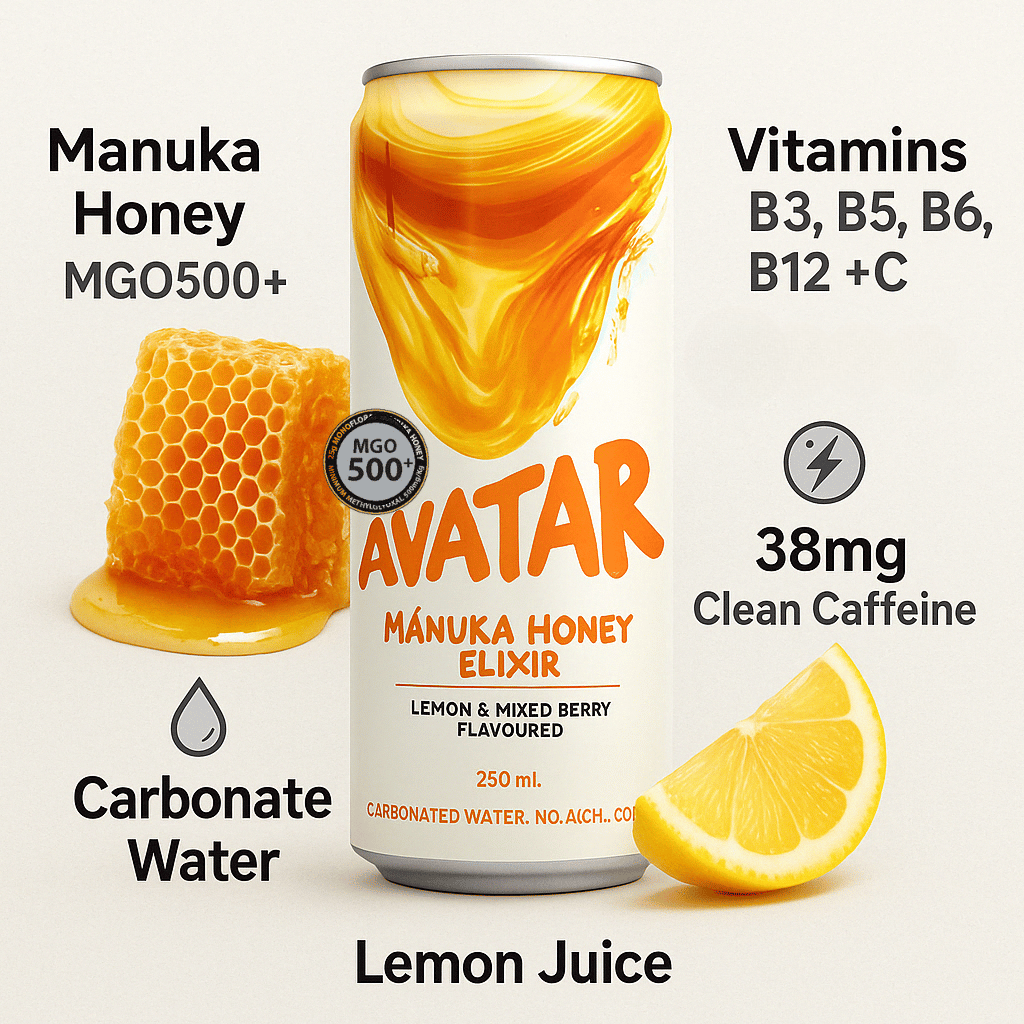
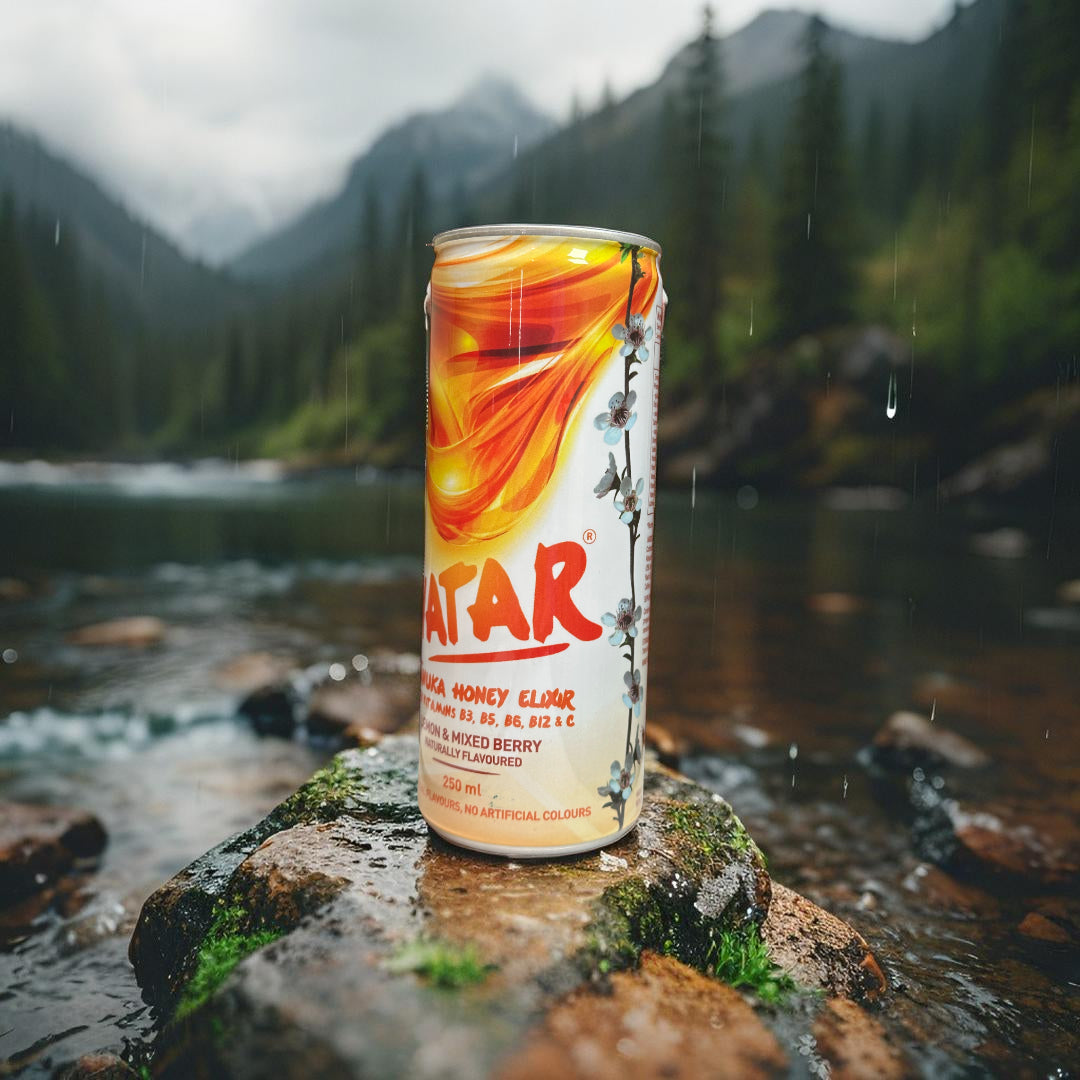
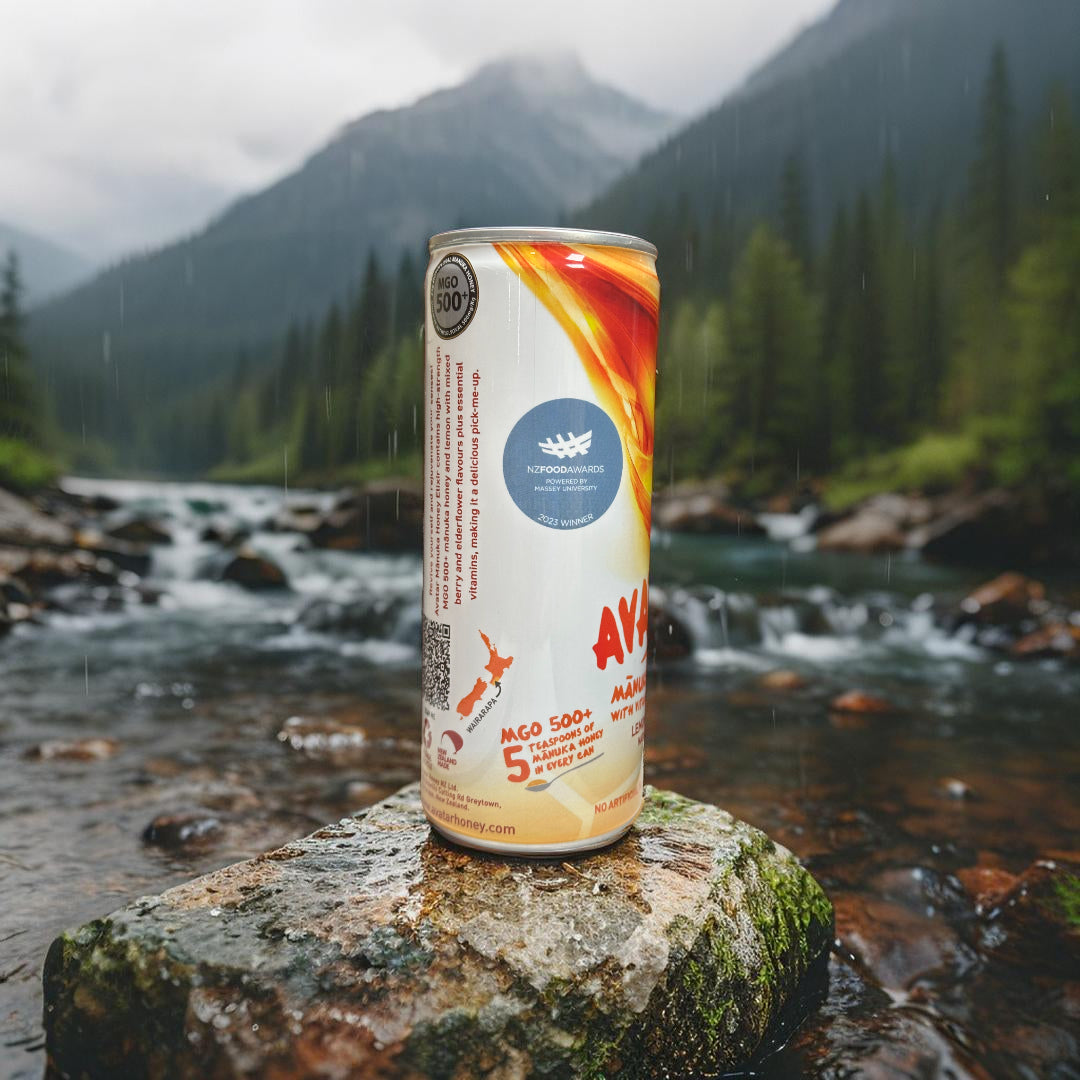
Elderflower is especially interesting in blended beverages because it can contribute floral flavor without relying only on citrus, synthetic flavoring, or heavy sweetness. In ingredient context, Avatar Elixir contains wild elderflower and MGO500+ manuka honey, two ingredients commonly discussed for anti-inflammatory properties. That combination is relevant as a formulation example, not as proof of a medical effect.
7. Green Tea
Green tea is one of the most widely discussed research-backed drinks in the anti-inflammatory category. Its relevance comes from catechins, especially epigallocatechin gallate, commonly known as EGCG. Catechins are polyphenols often studied for antioxidant activity and their relationship to inflammatory signaling.
Green tea is also useful as a comparison point because it shows how everyday beverages can overlap with functional nutrition. It is not positioned only as a supplement-style drink. It is a common dietary beverage that appears in many discussions of long-term dietary patterns.
The main trade-off is caffeine. Green tea usually contains less caffeine than coffee, but it is not caffeine-free. For caffeine-sensitive readers or people monitoring palpitations, sleep, or anxiety, this matters when comparing anti-inflammatory drinks.
Takeaway: The strongest anti-inflammatory drink categories are usually built around polyphenol-rich ingredients, including honey, manuka honey, turmeric, tart cherry, ginger, elderflower, and green tea.
Ingredient Context: Why These Drinks Keep Appearing in Research-Aware Wellness
The common thread across these anti-inflammatory drinks is not a single miracle ingredient. The shared pattern is the presence of plant compounds, honey-derived compounds, or polyphenols that are repeatedly discussed in relation to inflammatory pathways.
| Drink category | Key compounds or ingredient basis | Best research framing |
|---|---|---|
| Honey-sweetened beverages | Phenolic compounds, flavonoids | Cited cyclist study plus ingredient-level evidence |
| Manuka honey drinks | MGO, phenolic compounds, flavonoids | Ingredient-level evidence and honey research context |
| Turmeric drinks | Curcuminoids, especially curcumin | Ingredient-level evidence with bioavailability considerations |
| Tart cherry juice | Anthocyanins and polyphenols | Commonly discussed in athlete recovery research |
| Ginger drinks | Gingerols and shogaols | Ingredient-level evidence and traditional dietary use |
| Elderflower drinks | Flavonoids and botanical polyphenols | Ingredient-level evidence and botanical beverage context |
| Green tea | Catechins, including EGCG | Widely discussed in dietary pattern and polyphenol research |
For wellness consumers, the table highlights an important pattern. A drink can be research-aware because of what it contains, even when the exact branded beverage has not been tested in a clinical setting. This is common in food and beverage research because whole diets, ingredients, extracts, and finished products are not always studied in the same way.
For people comparing options, the most meaningful label is not simply “anti-inflammatory.” It is more useful to ask which ingredient is doing the work in the claim. In honey-based drinks, the relevant context is phenolic compounds, flavonoids, and, for manuka honey, MGO. In turmeric drinks, the relevant context is curcumin. In tart cherry juice, it is anthocyanins. In ginger drinks, it is gingerols and shogaols.
Takeaway: Anti-inflammatory drink claims are easier to evaluate when they are tied to specific compounds rather than broad wellness language.
What Research Can and Cannot Say About These Drinks
Research can support cautious interest in anti-inflammatory drinks, but it cannot justify overstated claims. The most responsible interpretation is that certain drinks contain compounds associated with inflammatory pathways, and some beverage types have been studied in specific contexts such as cycling or recovery.
The 2024 honey-sweetened beverage study is useful because it measured inflammatory markers in cyclists over 16 weeks and compared the results with no supplement. That gives honey beverages a clearer research anchor than many trend-based drinks. Still, the study context matters. Cyclists are not the same as all consumers, and inflammatory markers are not the same as diagnosed inflammatory conditions.
Ingredient-level evidence also has limits. For example, curcumin research does not automatically validate every turmeric latte. Green tea catechin research does not mean every sweetened green tea bottle has the same nutritional profile. Elderflower’s botanical properties do not mean an elderflower soda should be interpreted as a therapeutic product.
This is especially important for readers with chronic inflammation concerns. Dietary choices may be part of a broader lifestyle conversation, but drinks should not be framed as treatments for autoimmune conditions, arthritis, gut disorders, cardiovascular disease, or other inflammation-related diagnoses. People with medical concerns should discuss them with a qualified healthcare professional.
Takeaway: Research-backed anti-inflammatory drinks can be part of an informed nutrition conversation, but they should not be interpreted as medical treatment.
What These Drinks Mean for Athletes, Recovery, and Everyday Wellness
Different readers may interpret anti-inflammatory drinks differently depending on their context. Athletes often care about exercise-induced inflammation, soreness, oxidative stress, and recovery patterns. Wellness-focused readers may care more about daily beverage choices that align with an anti-inflammatory diet. People with chronic inflammation concerns may be looking for practical options without exaggerated claims.
For athletes, honey-sweetened beverages and tart cherry juice are especially relevant because they appear in exercise and recovery conversations. Honey drinks also provide carbohydrates, which may matter in training contexts. Tart cherry juice is frequently discussed around recovery, although product type and serving size can influence how it fits into a diet. For more on honey in training, see natural pre-workout use.
For everyday wellness, green tea, ginger drinks, turmeric drinks, elderflower drinks, and manuka honey drinks may be easier to understand as part of a broader dietary pattern. These drinks are not isolated solutions. Their relevance comes from consistent ingredient themes, especially polyphenols, flavonoids, and other plant compounds.
For readers with chronic inflammation concerns, the most balanced view is to separate interest from expectation. It is reasonable to be interested in drinks containing manuka honey, turmeric, tart cherry, ginger, elderflower, or green tea. It is not reasonable to expect a beverage to manage a medical condition on its own.
Takeaway: Anti-inflammatory drinks are best understood as supportive dietary choices whose relevance depends on the person, the ingredient profile, and the broader nutrition context.
How to Compare Anti-Inflammatory Drinks Without Following Trends
A research-aware comparison focuses on ingredients, evidence type, and trade-offs. Trend reports often rank drinks by popularity. A more useful framework asks what compound is being discussed, what kind of evidence supports it, and what practical limits affect the finished beverage.
Three comparison points are especially useful:
- Ingredient specificity: A stronger claim names the active ingredient context, such as manuka honey phenolics, turmeric curcuminoids, tart cherry anthocyanins, gingerols, elderflower flavonoids, or green tea catechins.
- Evidence category: A drink may have cited beverage research, ingredient-level support, or general dietary pattern relevance. These are not the same level of support.
- Product trade-offs: Sugar content, caffeine, concentration, serving size, and formulation quality can change how a drink fits into a person’s routine.
This framework also helps avoid overvaluing fashionable ingredients. A drink can sound advanced while containing only trace amounts of the ingredient being promoted. Another drink can sound simple, such as honey, ginger, or green tea, yet have a clearer research rationale.
For natural anti-inflammatory drinks, the best analysis is usually modest and specific. The question is not whether a beverage is “the best.” The question is whether the drink’s ingredient profile matches what research commonly discusses.
Takeaway: The most reliable way to compare anti-inflammatory drinks is to look beyond the label and evaluate the ingredient basis, evidence type, and practical trade-offs.
This FAQ expands on the research-aware approach to anti-inflammatory drinks, with a focus on ingredient-level evidence and how to interpret study signals. It covers honey beverages, manuka honey drinks, and other commonly discussed options like turmeric, tart cherry, ginger, elderflower, and green tea.
How do I evaluate anti-inflammatory drinks without trend-report hype?
Focus on ingredients, biological plausibility, and the type of evidence rather than popularity. A practical way to read research-backed anti-inflammatory drinks is to separate what is studied from what is marketed, then look for outcomes that are clearly defined (not vague "detox" language). In many cases, the most defensible interpretation is that these drinks may support broader dietary patterns, not "fix" inflammation on their own.
- Check whether the evidence is on the ingredient or the finished beverage
- Look for specific markers or endpoints (for example, IL-6 or TNF-α), not general claims
- Consider the study context, such as athletes, duration, and comparison group
Why are honey-sweetened beverages discussed in anti-inflammatory research?
They are discussed because there is at least some published human research suggesting a measurable inflammatory-marker signal in a defined context. In a 2024 Frontiers in Physiology study, honey-sweetened beverages were associated with reduced inflammatory markers including IL-1β, IL-6, and TNF-α in cyclists over 16 weeks compared with no supplement. That kind of finding supports research discussion, but it does not mean honey drinks treat inflammation-related conditions.
What makes a manuka honey drink different from regular honey?
A manuka honey drink is different because manuka honey is typically discussed for its unique chemical profile and standardized labeling, rather than sweetness alone. The blog's key point is that manuka honey contains phenolic compounds and flavonoids with documented anti-inflammatory activity in peer-reviewed literature. Practically, this means a manuka honey drink is often evaluated by its ingredient quality and labeling clarity, not just its calorie content.
Which anti-inflammatory drink is best for recovery, honey or tart cherry?
There is no single "best" option across all people because honey beverages and tart cherry juice are usually discussed for different reasons and in different research contexts. Honey-sweetened beverages have a specific study signal for inflammatory markers in endurance athletes, while tart cherry juice is commonly discussed around exercise recovery patterns and polyphenol content. A balanced comparison is to choose based on what you are trying to support, such as overall diet consistency, training load, and tolerance for sweetness.
How should athletes time anti-inflammatory drinks around training sessions?
Most evidence-aware discussions emphasize consistency and context, not strict timing rules. For athletes in recovery, these drinks are often used with meals or around training as part of a broader fueling plan, rather than as a standalone "recovery hack." A practical approach is to consider hydration, carbohydrate needs, and individual tolerance, especially for honey-sweetened beverages and tart cherry juice.
Can turmeric, ginger, elderflower, and green tea be combined safely?
In typical culinary amounts, these ingredients are commonly combined in wellness beverages, but "safe" depends on the person and the dose. The most cautious interpretation is that these are food-based ingredients that may support an anti-inflammatory diet pattern, while concentrated extracts can be more variable. Anyone with medical conditions, pregnancy, or medication concerns should check with a qualified clinician, since even natural ingredients can be inappropriate in some situations.
Bottom Line: Research-Backed Does Not Mean Overclaimed
The most credible anti-inflammatory drinks are not defined by trend reports. They are defined by ingredients that have a plausible research basis, such as honey phenolics, manuka honey compounds, turmeric curcuminoids, tart cherry anthocyanins, gingerols, elderflower flavonoids, and green tea catechins.
Honey-sweetened beverages deserve particular attention because a 2024 Frontiers in Physiology study reported reductions in IL-1β, IL-6, and TNF-α in cyclists over 16 weeks compared with no supplement. Manuka honey drinks also fit the category because manuka honey contains phenolic compounds and flavonoids with documented anti-inflammatory activity in peer-reviewed literature.
The responsible conclusion is measured. These drinks may be worth knowing for athletes, wellness-focused readers, and people exploring anti-inflammatory dietary patterns. They should not be described as treatments, cures, or replacements for medical care. Research-backed, in this category, means evidence-aware and ingredient-specific, not exaggerated.