

Quick answer: Honey drinks can deliver real food-based antioxidants when they are made with meaningful amounts of genuine honey, botanicals, and fruit ingredients, but the antioxidant benefit should be understood as nutritional support, not a medical effect. Manuka honey naturally contains flavonoids and phenolic acids, while ingredients such as elderflower and lemon can add quercetin, rutin, and vitamin C. Marketing becomes questionable when a drink implies disease prevention, exaggerates potency, or relies on synthetic vitamins in a sugar-water base while presenting itself as a whole-food antioxidant product.
Wellness readers often ask a simple question about honey-based beverages: do they actually provide antioxidant value, or is “antioxidant drink” just another label on a sweetened can? The answer depends on the ingredients, the amount of real honey used, and how carefully the brand describes the benefit.
Honey does contain antioxidant compounds, including flavonoids and phenolic acids. Manuka honey is especially discussed in wellness circles because it is a distinctive New Zealand honey with naturally occurring plant-derived compounds, including luteolin, quercetin, kaempferol, and caffeic acid. These compounds are commonly described as antioxidants because they help neutralise free radicals and contribute to the body’s broader handling of oxidative stress.
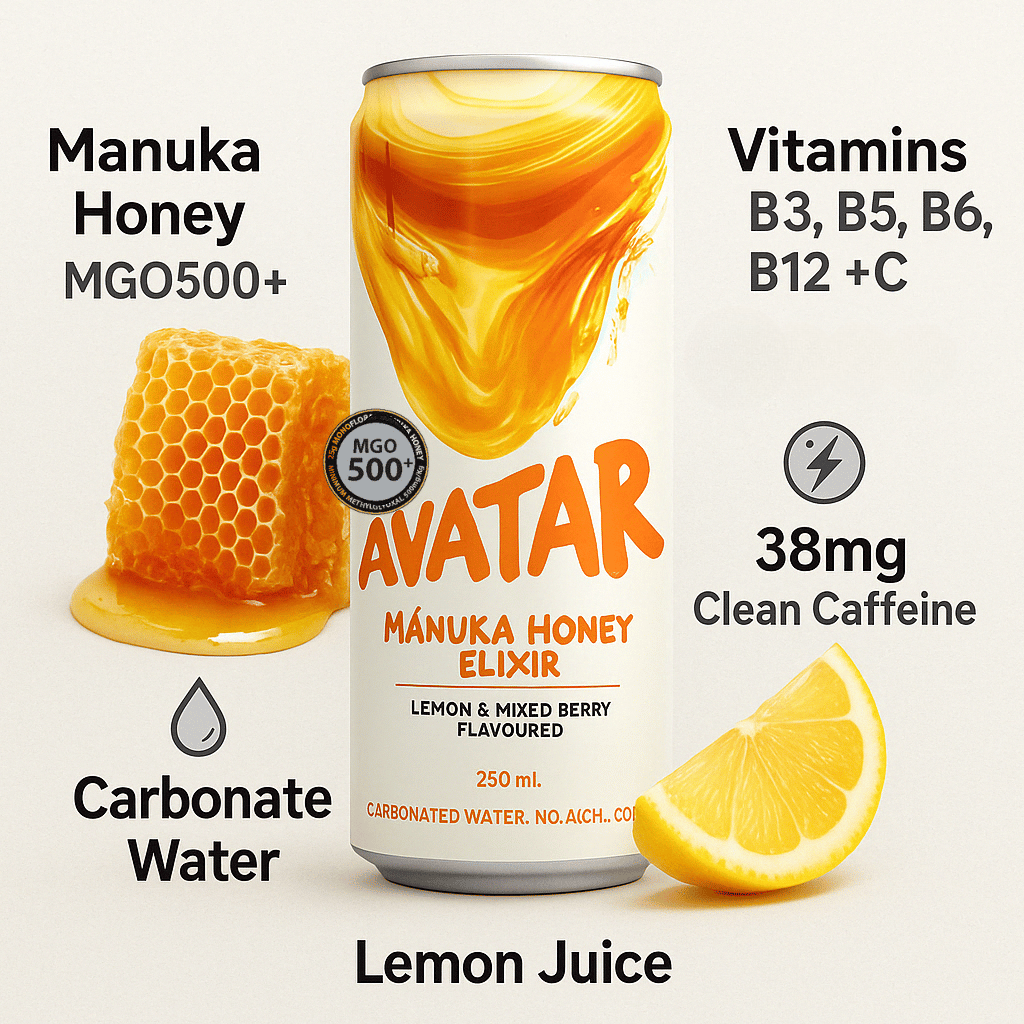
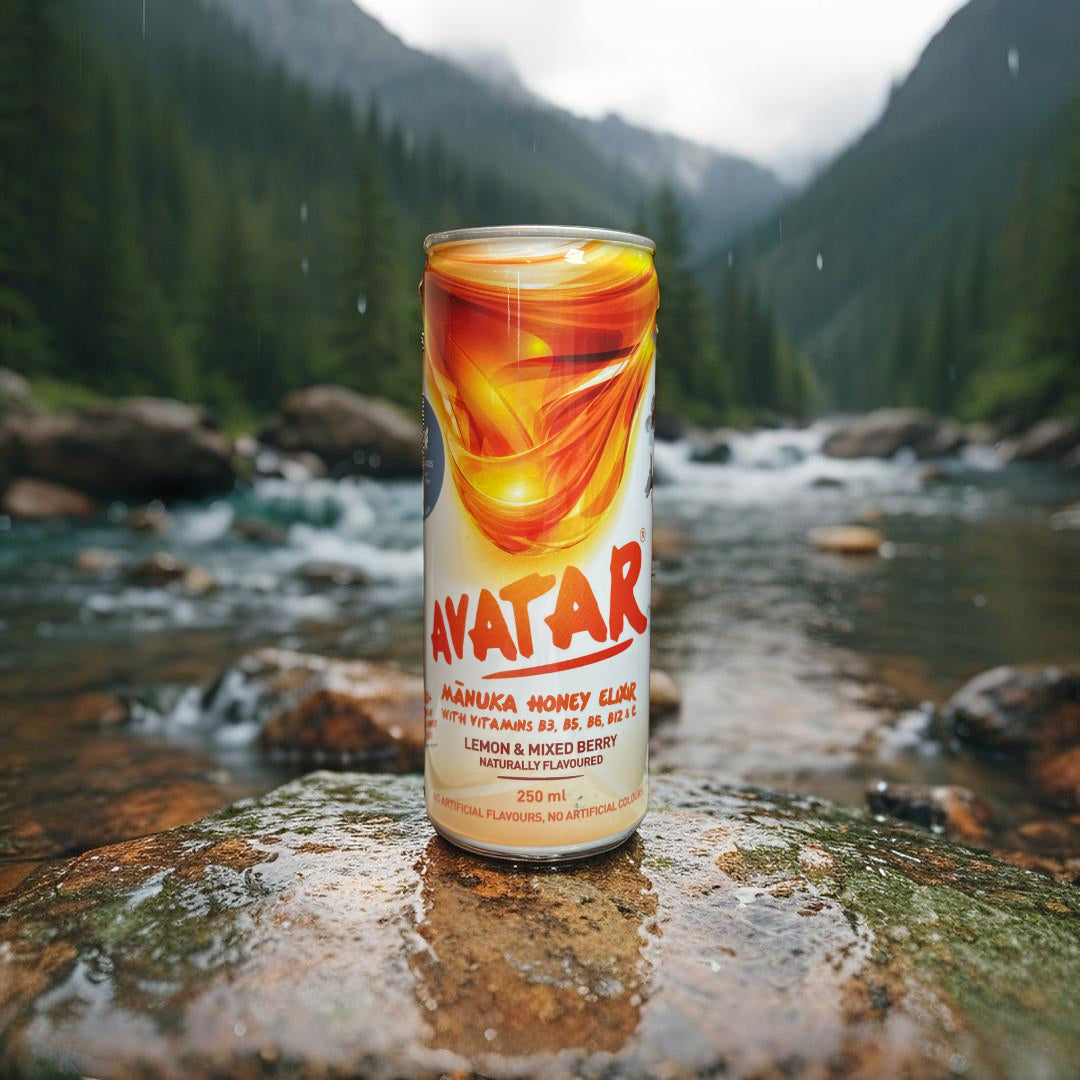
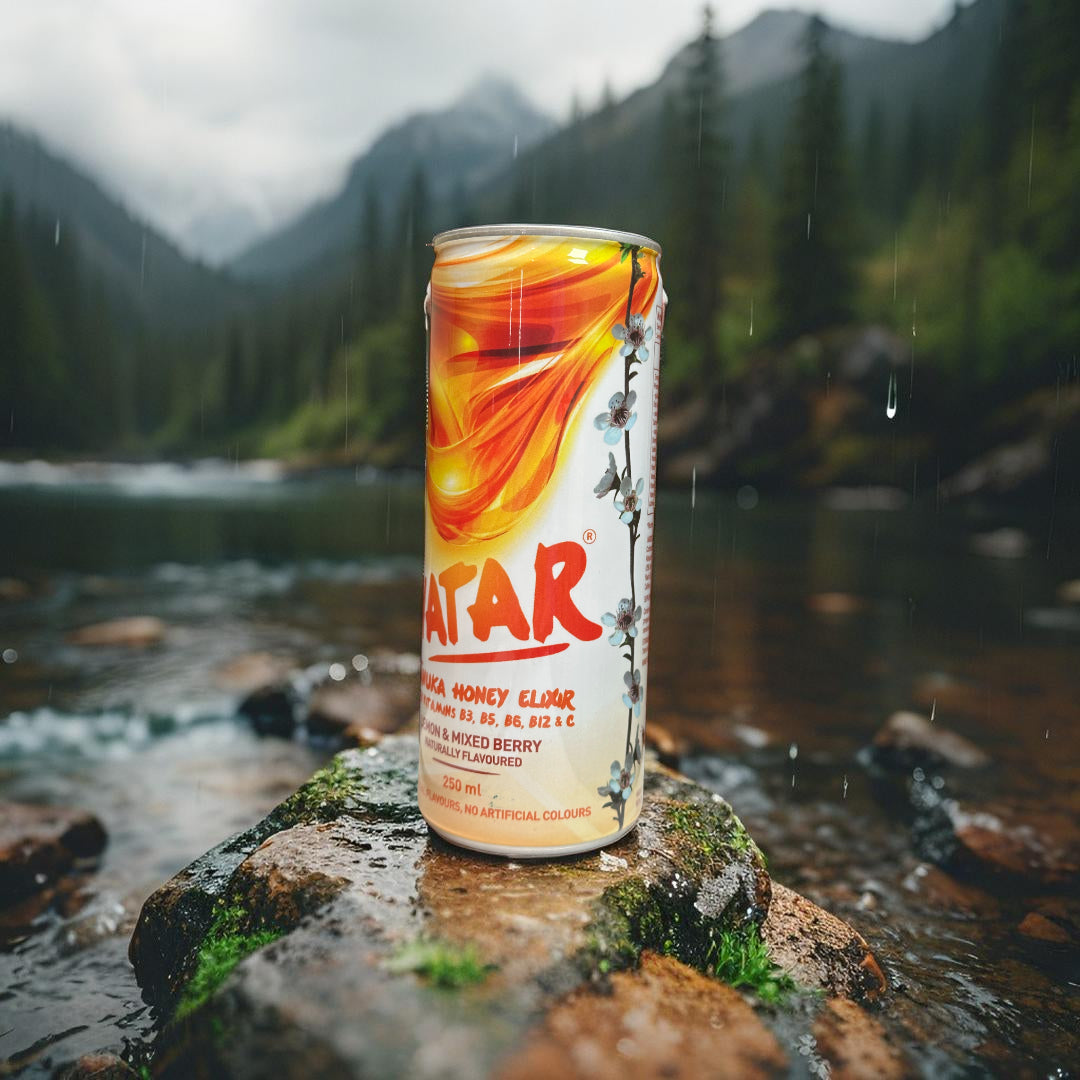
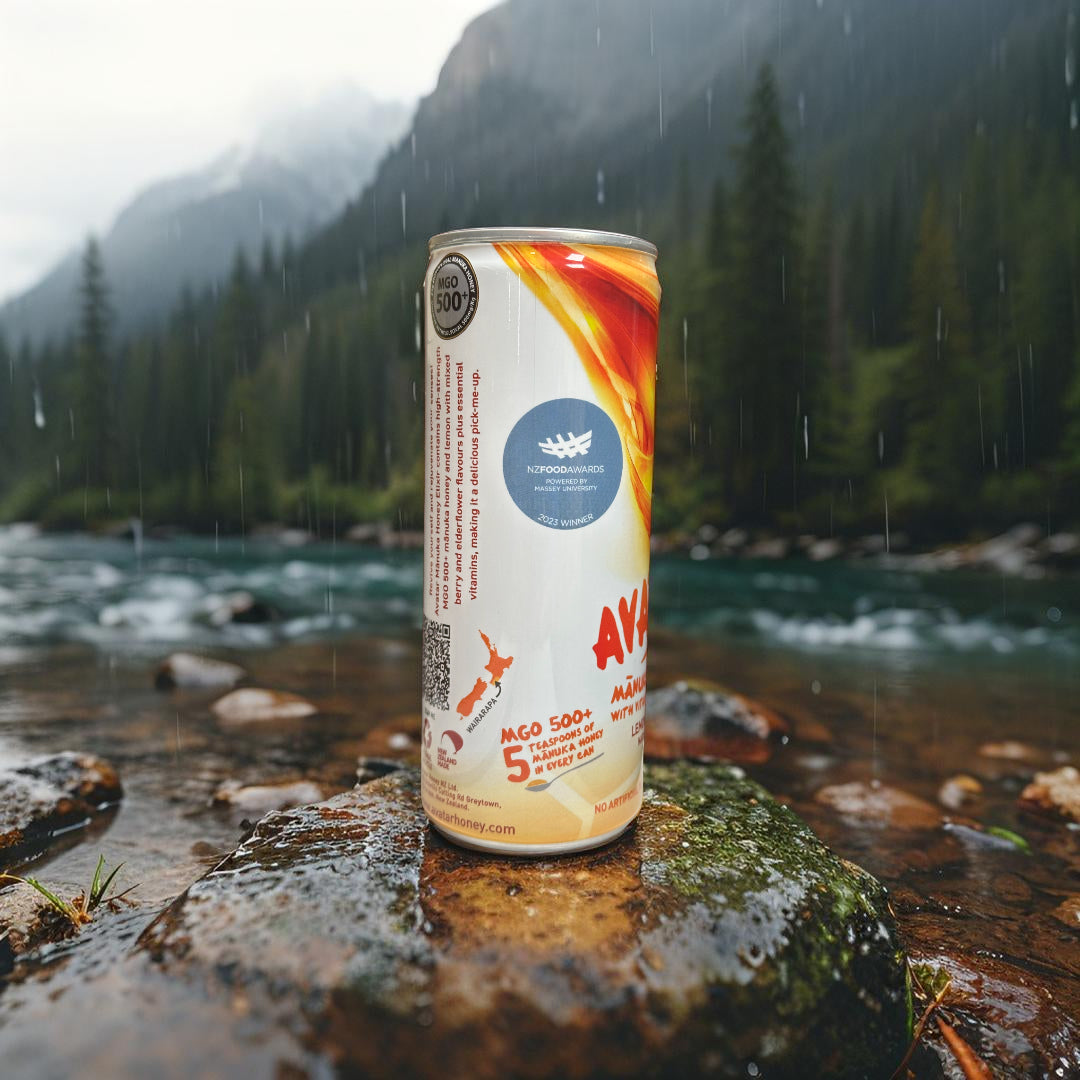
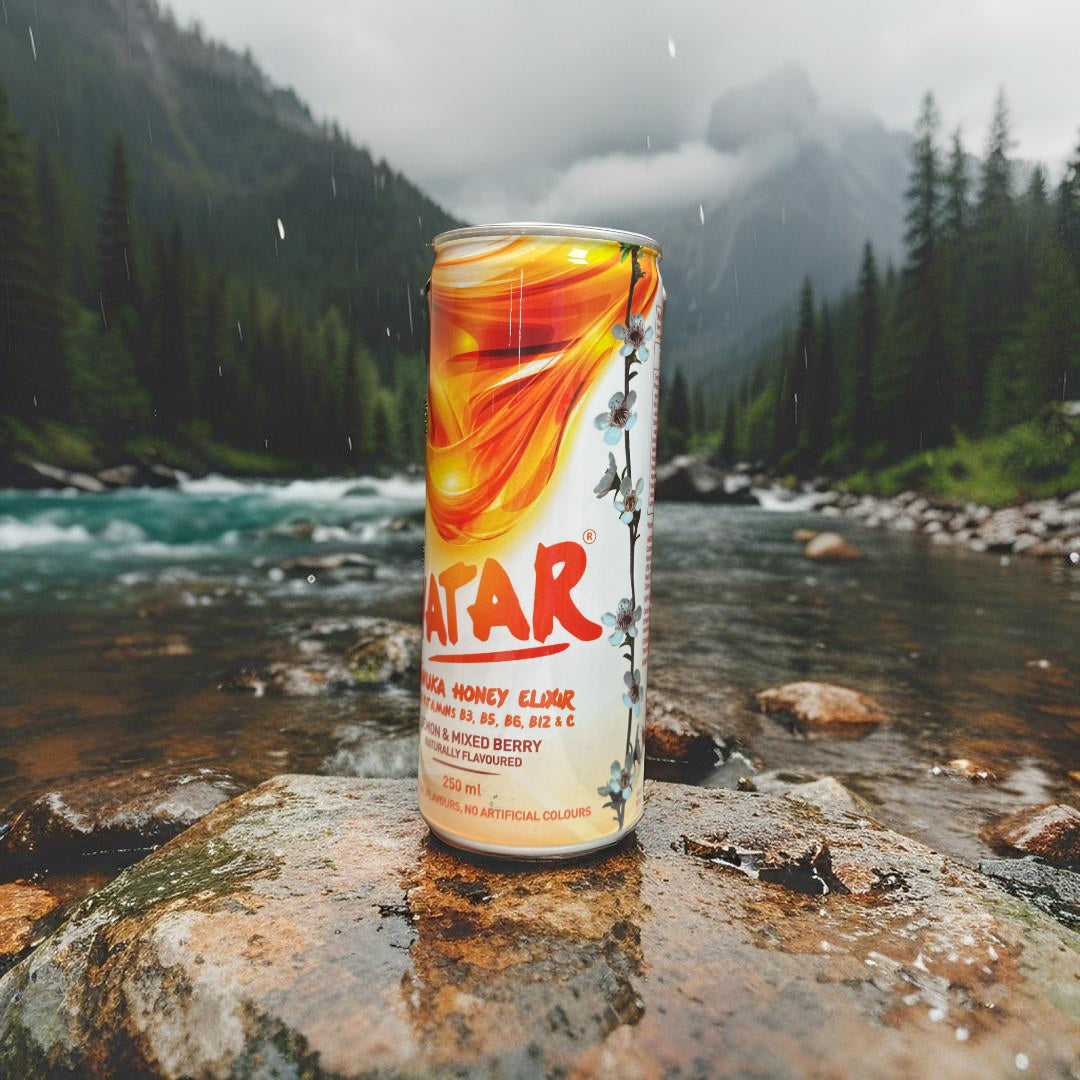
The more difficult question is whether a honey drink delivers a meaningful antioxidant contribution. A beverage made with a token amount of honey is not the same as one built around a substantial honey base. Avatar Elixir, for example, is described as using 25g of certified MGO500+ Mānuka honey in each 250ml can, alongside wild elderflower, cold-pressed lemon, natural caffeine, vitamins, and lightly carbonated water. That ingredient profile is materially different from a drink that uses sugar, flavouring, and added synthetic vitamin C as its main wellness signal.
What Antioxidants Actually Do in the Body
Antioxidants are compounds that help neutralise free radicals, which are unstable molecules produced through normal metabolism and environmental exposure. In general nutrition language, antioxidants are discussed because they can help reduce oxidative stress, a state where free radical activity exceeds the body’s ability to manage it.
This does not mean antioxidants should be framed as a treatment, cure, or prevention strategy for disease. In a beverage context, the more defensible claim is that certain ingredients contribute antioxidant compounds as part of the diet. The body’s antioxidant systems are complex, and no single drink should be presented as a complete solution.
Food-based antioxidants usually come from plant compounds. These include flavonoids, phenolic acids, and vitamins such as vitamin C. Different foods provide different antioxidant profiles, which is why ingredient diversity matters when evaluating a honey drink.
Common antioxidant categories in honey drinks
- Flavonoids: Plant compounds that include quercetin, luteolin, and kaempferol.
- Phenolic acids: Compounds such as caffeic acid, commonly discussed in relation to antioxidant activity.
- Vitamin C: Also known as ascorbic acid, naturally present in citrus ingredients such as lemon.
- Botanical polyphenols: Compounds contributed by flowers, herbs, and plant extracts, depending on the ingredient used.
Takeaway: Antioxidants in honey drinks are real when they come from identifiable food and botanical ingredients, but their role should be described as nutritional support rather than a guaranteed health outcome.
What Is Real About Antioxidants in Honey
Honey is not just a sweetener. It contains small but relevant amounts of plant-derived compounds, including flavonoids and phenolic acids, which are widely discussed for their antioxidant activity. The exact profile can vary depending on floral source, geography, processing, and storage.
Manuka honey is particularly relevant because it comes from the nectar of the Mānuka plant in New Zealand. It is best known commercially for MGO grading, which refers to methylglyoxal content. MGO is not the same thing as total antioxidant content, but a certified Manuka honey grade does indicate that the honey has been tested and identified according to recognised quality markers.
For antioxidant discussion, the important point is that Manuka honey is documented to contain flavonoids and phenolic acids such as luteolin, quercetin, kaempferol, and caffeic acid. These are not invented wellness words. They are recognised plant compounds found across different foods and botanicals.
However, the presence of antioxidant compounds does not automatically prove a strong physiological effect from a beverage. Without product-specific laboratory antioxidant testing, it is more accurate to say that a honey drink can contribute antioxidant compounds, not that it delivers a quantified antioxidant result.
| Compound or ingredient | Where it may come from | Reason it matters in antioxidant discussion |
|---|---|---|
| Luteolin | Manuka honey and other plant foods | A flavonoid commonly discussed for antioxidant activity |
| Quercetin | Manuka honey, elderflower, and other botanicals | A well-known flavonoid found in many plant foods |
| Kaempferol | Manuka honey and other plant sources | A flavonoid associated with plant antioxidant profiles |
| Caffeic acid | Manuka honey and various plant foods | A phenolic acid commonly included in antioxidant analysis |
| Vitamin C | Cold-pressed lemon | A recognised dietary antioxidant, also known as ascorbic acid |
Takeaway: The real antioxidant story in honey comes from naturally occurring plant compounds, but responsible brands should avoid implying that honey antioxidant content has the same meaning as a tested clinical outcome.
Why Ingredient Amounts Matter More Than Antioxidant Language
The phrase “with honey” can mean very different things across beverages. A drink may contain enough honey to define its character, or it may include a small amount mainly for label appeal. For antioxidant relevance, the amount and quality of the honey matter.
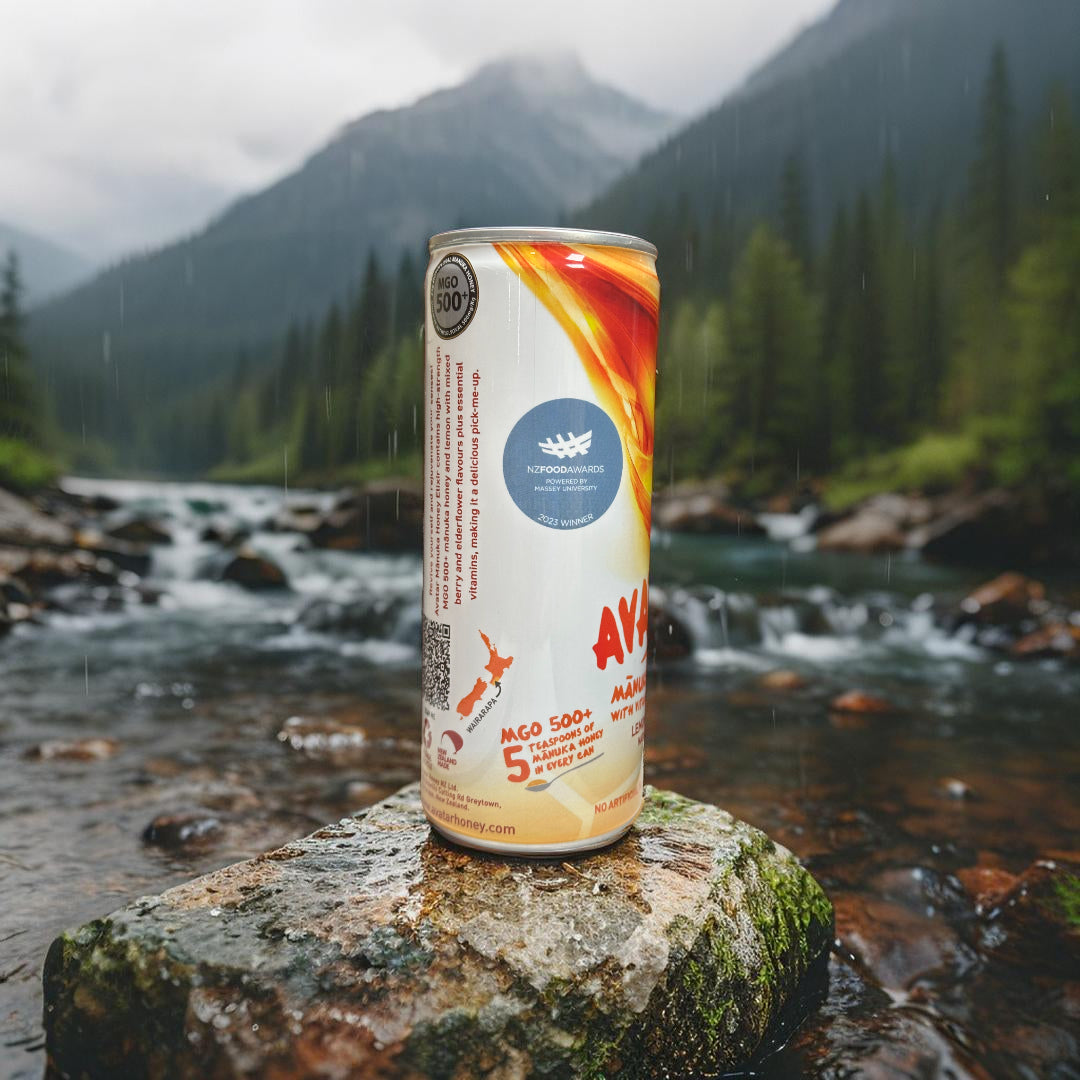
Avatar Elixir provides a useful example because its product description identifies 25g of certified MGO500+ Mānuka honey in every 250ml can. That is a specific formulation detail, not a vague “honey flavour” claim. In antioxidant terms, this matters because the drink is built around a meaningful food ingredient rather than using honey as a minor flavour note.
Still, a higher honey content does not automatically allow precise antioxidant claims unless the finished drink has been tested for that purpose. The strongest evidence-based statement is that a drink made with a substantial amount of real Manuka honey is likely to contain honey-derived antioxidant compounds. The more cautious statement is that the magnitude of antioxidant activity in the finished can is not knowable from ingredient lists alone.
How to interpret honey drink labels without overreading them
- Specific honey amount: A stated quantity, such as grams per can, is more informative than “made with honey.”
- Honey type: Manuka honey, especially when certified, gives more context than generic honey flavouring.
- Processing language: Real juice, botanicals, and honey are more meaningful than flavour systems alone.
- Finished product testing: Antioxidant strength should not be assumed unless the brand provides direct testing.
For wellness readers, the key distinction is between ingredient credibility and outcome certainty. A real honey drink can have credible antioxidant inputs. It should not be marketed as though those inputs guarantee a measurable health result for every person.
Takeaway: Antioxidant language becomes more credible when a honey drink discloses meaningful real-food ingredients, but the finished beverage still should not be treated as a quantified antioxidant intervention without testing.
Where Elderflower and Lemon Add to the Antioxidant Stack
A honey drink’s antioxidant profile can come from more than honey. Botanicals and citrus ingredients may add complementary antioxidant compounds, especially when they are used as real ingredients rather than artificial flavours.
Wild elderflower is relevant because it contributes flavonoids such as quercetin and rutin. These compounds are commonly discussed in plant-based antioxidant nutrition. When elderflower is paired with Manuka honey, the result is a broader plant-compound profile than honey alone.
Cold-pressed lemon adds another layer because lemon naturally contains vitamin C, also known as ascorbic acid. Vitamin C is one of the most familiar dietary antioxidants. The distinction is important: vitamin C from lemon juice sits within a real food ingredient, while synthetic ascorbic acid added to a sugar-water base is a more isolated formulation choice.
This does not mean natural vitamin C is magically superior in every measurable way. It does mean the ingredient context is different. A beverage made with Manuka honey, elderflower, and cold-pressed lemon offers an antioxidant stack from recognisable food sources. That is a legitimate formulation distinction, even if it should not be overstated into a medical claim. For a broader look at real options, compare drinks built on whole ingredients rather than additives.
Food-source antioxidant stack compared with synthetic-positioned drinks
| Formulation approach | Typical antioxidant source | How to interpret the claim |
|---|---|---|
| Real honey and botanical drink | Honey flavonoids, phenolic acids, elderflower compounds, lemon vitamin C | More credible as a food-based antioxidant contribution |
| Sugar-water drink with added vitamin C | Usually isolated ascorbic acid | May contain vitamin C, but the whole-food antioxidant story is narrower |
| Flavoured drink with antioxidant branding | Often unclear without ingredient detail | Requires careful label reading and evidence of real antioxidant sources |
Avatar Elixir’s ingredient description places its antioxidant contributors in the first category: certified MGO500+ Mānuka honey, elderflower, and cold-pressed lemon. The product also includes vitamins, natural caffeine, and lightly carbonated water, but the antioxidant discussion is strongest where it is tied to honey, elderflower, and lemon.
Takeaway: Elderflower and lemon can make a honey-based beverage’s antioxidant profile more credible by adding quercetin, rutin, and vitamin C from real food and botanical sources.
Where Honey Drink Marketing Can Become Misleading
Antioxidant marketing becomes questionable when it turns ingredient facts into implied health promises. A drink can contain antioxidant compounds without being able to claim that it prevents disease, reverses oxidative stress, or produces a specific health outcome.
The most common issue is overextension. A brand may start with a true statement, such as “contains vitamin C” or “made with honey,” then use surrounding language that suggests a much stronger effect than the evidence supports. Wellness readers should separate the ingredient fact from the implied promise.
Marketing is more defensible when it stays close to formulation. For example, saying a drink contains Manuka honey, elderflower, and lemon is a concrete ingredient statement. Saying those ingredients provide a food-based antioxidant profile is also reasonable when phrased carefully. Saying the drink protects the body from specific illnesses would move beyond responsible beverage communication.
More credible antioxidant language
- “Contains real Manuka honey with naturally occurring plant compounds.”
- “Includes elderflower and lemon, which contribute food-based antioxidant compounds.”
- “Made with ingredients commonly discussed for antioxidant content.”
- “Provides antioxidants from recognisable food sources.”
Less credible antioxidant language
- Claims that imply prevention or treatment of specific diseases.
- Claims that promise detoxification without explaining what is meant.
- Claims that use antioxidant language without naming real antioxidant sources.
- Claims that imply a synthetic vitamin addition makes the whole drink nutritionally equivalent to a food-based formula.
There is also a difference between “natural” and “meaningful.” A drink can use natural flavours and still provide little antioxidant relevance. A more meaningful antioxidant drink needs identifiable ingredients that plausibly contribute antioxidant compounds in the finished beverage.
Takeaway: Responsible antioxidant marketing explains ingredient sources and avoids disease-related promises, while weaker marketing relies on vague wellness language without clear formulation evidence.
How Avatar Elixir Fits the Real Versus Marketing Question
Avatar Elixir’s antioxidant credibility comes from its ingredient structure rather than from a single headline claim. The beverage is described as a 250ml can made with 25g of certified MGO500+ Mānuka honey, wild elderflower, cold-pressed lemon, natural caffeine, key vitamins, and lightly carbonated water.
From an antioxidant perspective, the most relevant ingredients are the Manuka honey, elderflower, and lemon. Manuka honey contributes flavonoids and phenolic acids, including compounds such as luteolin, quercetin, kaempferol, and caffeic acid. Elderflower contributes additional quercetin and rutin. Lemon contributes vitamin C.
This combination is reasonably described as a real food-source antioxidant stack. The distinction matters because it differs from a beverage that starts with a sweetened base and adds synthetic vitamin C primarily for label appeal. In Avatar Elixir, the antioxidant story is connected to the core ingredients rather than being added as an isolated afterthought.
At the same time, the most accurate interpretation remains measured. The product details support the view that Avatar Elixir contains antioxidant-contributing ingredients. They do not, by themselves, establish a quantified antioxidant score, a clinical effect, or a specific health outcome. Without finished-product antioxidant testing, the careful conclusion is about ingredient quality and plausibility, not guaranteed biological impact.
The brand’s broader positioning around small-batch production, New Zealand beekeeping, certified MGO500+ honey, and award recognition adds quality context. The New Zealand Food Awards recognition, judged by independent experts according to the store’s reference material, is relevant to product credibility and beverage quality. It should not be confused with a clinical validation of antioxidant benefit.
Takeaway: Avatar Elixir has a stronger antioxidant ingredient basis than many generic wellness drinks, but its benefit is best understood as a real food-based antioxidant contribution, not as a medical or guaranteed performance claim.
From an antioxidant perspective, the most relevant ingredients are the Manuka honey, elderflower, and lemon. Manuka honey contributes flavonoids and phenolic acids, including compounds such as luteolin, quercetin, kaempferol, and caffeic acid. Elderflower contributes additional quercetin and rutin. Lemon contributes vitamin C.
This combination is reasonably described as a real food-source antioxidant stack. The distinction matters because it differs from a beverage that starts with a sweetened base and adds synthetic vitamin C primarily for label appeal. In Avatar Elixir, the antioxidant story is connected to the core ingredients rather than being added as an isolated afterthought.
At the same time, the most accurate interpretation remains measured. The product details support the view that Avatar Elixir contains antioxidant-contributing ingredients. They do not, by themselves, establish a quantified antioxidant score, a clinical effect, or a specific health outcome. Without finished-product antioxidant testing, the careful conclusion is about ingredient quality and plausibility, not guaranteed biological impact.
The brand’s broader positioning around small-batch production, New Zealand beekeeping, certified MGO500+ honey, and award recognition adds quality context. The New Zealand Food Awards recognition, judged by independent experts according to the store’s reference material, is relevant to product credibility and beverage quality. It should not be confused with a clinical validation of antioxidant benefit.
Takeaway: Avatar Elixir has a stronger antioxidant ingredient basis than many generic wellness drinks, but its benefit is best understood as a real food-based antioxidant contribution, not as a medical or guaranteed performance claim.
What Wellness Readers Should Conclude About Honey-Based Antioxidant Drinks
The most balanced conclusion is that honey-based antioxidant drinks can be real, but not all antioxidant marketing is equally meaningful. The difference comes down to ingredient transparency, real-food formulation, and restrained claims.
A credible honey drink should make it clear what type of honey is used, how central honey is to the recipe, and what other antioxidant-contributing ingredients are present. Manuka honey adds a more specific story because it contains documented flavonoids and phenolic acids. Elderflower and lemon can broaden that profile with quercetin, rutin, and vitamin C.
A less credible drink may rely on antioxidant language while giving little detail about ingredient amounts or sources. If the formula is mainly sugar water, flavouring, and a synthetic vitamin addition, it may still contain an antioxidant nutrient, but the whole-food antioxidant positioning is narrower.
For readers who care about wellness without hype, the strongest question is not “Does this drink contain antioxidants?” The better question is: “Are the antioxidant sources real, meaningful, and clearly explained?” In the case of a Manuka honey drink made with a substantial amount of certified honey, elderflower, and lemon, the answer is more grounded than marketing alone.
Takeaway: Honey drinks are most credible as antioxidant beverages when they use real honey, botanicals, and citrus ingredients, and when their claims stay focused on nutritional contribution rather than exaggerated health promises.
These FAQs break down what "antioxidants" in honey drinks can realistically mean, and how to tell a real food-based formulation from marketing language. They focus on ingredient signals like Manuka honey, elderflower, lemon, and the difference between whole-food antioxidants and synthetic vitamin additions.
Do honey drinks actually provide antioxidants, or is it marketing?
Honey drinks can provide real antioxidants when they contain meaningful amounts of genuine honey plus botanical or fruit ingredients. Manuka honey naturally contains flavonoids and phenolic acids, and botanicals like elderflower and citrus can contribute additional antioxidant compounds. Marketing tends to overreach when a drink implies disease prevention, exaggerates potency, or uses a sugar-water base with a vitamin add-on as the main "antioxidant" story.
What antioxidants are found in Manuka honey-based beverages?
Manuka honey is commonly discussed for plant-derived antioxidant compounds, including flavonoids and phenolic acids. Examples often named in this context include luteolin, quercetin, kaempferol, and caffeic acid. In a beverage, these compounds are only part of the picture, the overall antioxidant profile depends on how much real Manuka honey is used and what else is added.
How do elderflower and lemon change a honey drink's antioxidant profile?
Elderflower and lemon can broaden the antioxidant "stack" beyond honey alone. Wild elderflower is often associated with flavonoids such as quercetin and rutin, while cold-pressed lemon contributes vitamin C (ascorbic acid). The practical implication is ingredient diversity, not a guarantee of a specific "strength" or outcome.
How can I check if a honey drink uses meaningful honey?
The most reliable signal is transparency about quantity and honey quality, not just "honey" on the front label. Look for specifics such as grams of honey per can, whether the honey is described clearly (for example, Manuka with an MGO rating), and where honey appears on the ingredient list. If you want a cleaner benchmark, this honest guide helps separate ingredient substance from label positioning.
Why is "food-based antioxidants" different from synthetic vitamin C additions?
Food-based antioxidants come packaged with real ingredients like honey, botanicals, and fruit, rather than relying on a single added nutrient to create a health halo. Synthetic vitamin C can still contribute vitamin C, but it is often used in drinks where the base is primarily sweetener and flavoring. For label-reading, it helps to separate "this contains vitamin C" from "this is a whole-food antioxidant drink."
What should "antioxidants" mean on a honey drink label?
On a label, "antioxidants" should be understood as nutritional support, not a medical claim. Antioxidants are commonly described as compounds that neutralise free radicals and support the body's broader handling of oxidative stress. If a brand suggests its antioxidant drink prevents or treats disease, that is a red flag for overstated marketing rather than careful wellness communication.