


Short answer: Honey energy drinks are not necessarily thick or syrupy. In a ready-to-drink beverage, honey is dissolved into water with other ingredients, so the texture depends on the overall formulation, serving temperature and carbonation rather than the presence of honey alone.
It is reasonable to expect a honey drink to feel sticky if your main reference point is honey from a jar. Spoonable honey is concentrated, slow-moving and coating. A canned honey beverage is a different format, with water providing most of its fluid body and the honey distributed throughout the drink.
The result can be light, rounded and refreshing rather than heavy. However, honey drinks are not all formulated in the same way. The quantity of honey, other dissolved ingredients and whether the drink is still or sparkling can all influence how it feels in the mouth.
Why is jarred honey thick while a honey drink can feel light?
Jarred honey is thick because it is a concentrated food with relatively little water compared with a ready-to-drink beverage. When honey is dissolved into a larger volume of water, its sugars and flavour compounds are dispersed, creating a more fluid drink.
This distinction is similar to the difference between fruit concentrate and a finished fruit drink. The concentrated ingredient may be dense and coating, but that does not mean the prepared beverage will have the same body.
A formulated honey energy drink may still have some roundness or a gentle coating sensation, particularly when compared with plain sparkling water. That is not the same as being syrupy. In sensory terms:
- Light describes a drink that moves easily across the palate and does not feel dense.
- Rounded suggests a smooth, fuller impression without necessarily being thick.
- Coating means the flavour or sweetness lingers slightly on the mouth.
- Syrupy usually suggests a noticeably dense, concentrated or sticky texture.
Individual palates respond differently, so one person may notice more body while another focuses on the citrus, floral aroma or bubbles.
What determines whether a honey energy drink tastes syrupy?
The main influences are the proportion of honey and other dissolved ingredients, the amount of water, the serving temperature and the level of carbonation. No single ingredient determines the complete texture on its own.
Honey quantity and overall concentration
A beverage containing more dissolved sugars and flavouring ingredients may feel fuller or more coating than one with a lower overall concentration. Honey can contribute sweetness and body, but the finished sensation depends on how much is used relative to the complete volume of the drink.
This is why the words “made with honey” do not tell you whether a drink will be thin, rounded or syrupy. The complete recipe matters.
Water and dilution
Water changes honey from a spoonable ingredient into a pourable beverage component. In a canned drink, the honey is incorporated into the liquid rather than sitting in its concentrated jarred form.
Enough water can keep the finished beverage fluid even when honey remains clearly present in the flavour. A drink can therefore have a recognisable honey character without reproducing the physical thickness of honey from a jar.
Other dissolved ingredients
Juices, sugars, acids and flavour ingredients can influence perceived body. Sweetness often makes a drink seem rounder, while acidity can create a sharper, cleaner impression. These sensory effects may change how thick the drink seems, even when its actual flow remains easy and beverage-like.
Caffeine itself should not be treated as a reliable clue to texture. A honey energy drink can contain caffeine while still being formulated as a light ready-to-drink beverage.
Serving temperature
A properly chilled honey drink will generally give a crisper first impression than the same drink served warm. Cold temperature can make sweetness feel less prominent and help carbonation seem more refreshing.
Warmth may make sweet and honeyed notes more noticeable, which can cause a drink to seem heavier to some palates. For a fair first impression, chill the can thoroughly and taste it at the temperature intended for serving.
Carbonation
Carbonation can make a honey beverage feel livelier and less still on the palate. Bubbles provide an effervescent sensation that can balance rounded sweetness and reduce the impression of heaviness.
This does not remove the honey character. It changes the way the drink is experienced, adding lift and a cleaner finish compared with a similar still beverage.
How do common honey drink formats compare?
Honey-based products range from concentrated syrups to sparkling ready-to-drink cans, so their textures should not be judged as one category. The format offers a more useful clue than the word “honey” alone.
| Format | Typical structure | Likely sensory impression |
|---|---|---|
| Jarred honey | Concentrated and spoonable | Dense, slow-moving and coating |
| Honey syrup | Honey diluted for mixing or pouring | Fluid but often intentionally rich and sweet |
| Still honey water | Honey dissolved into non-carbonated water | Can feel soft or rounded, depending on the recipe |
| Sparkling honey drink | Honey in a carbonated ready-to-drink formulation | Often livelier and crisper, although the exact body varies |
These descriptions are practical comparisons, not fixed rules. Two drinks within the same format can feel different because their recipes, sweetness, acidity and carbonation are different.
Does Avatar Elixir feel like honey from a jar?
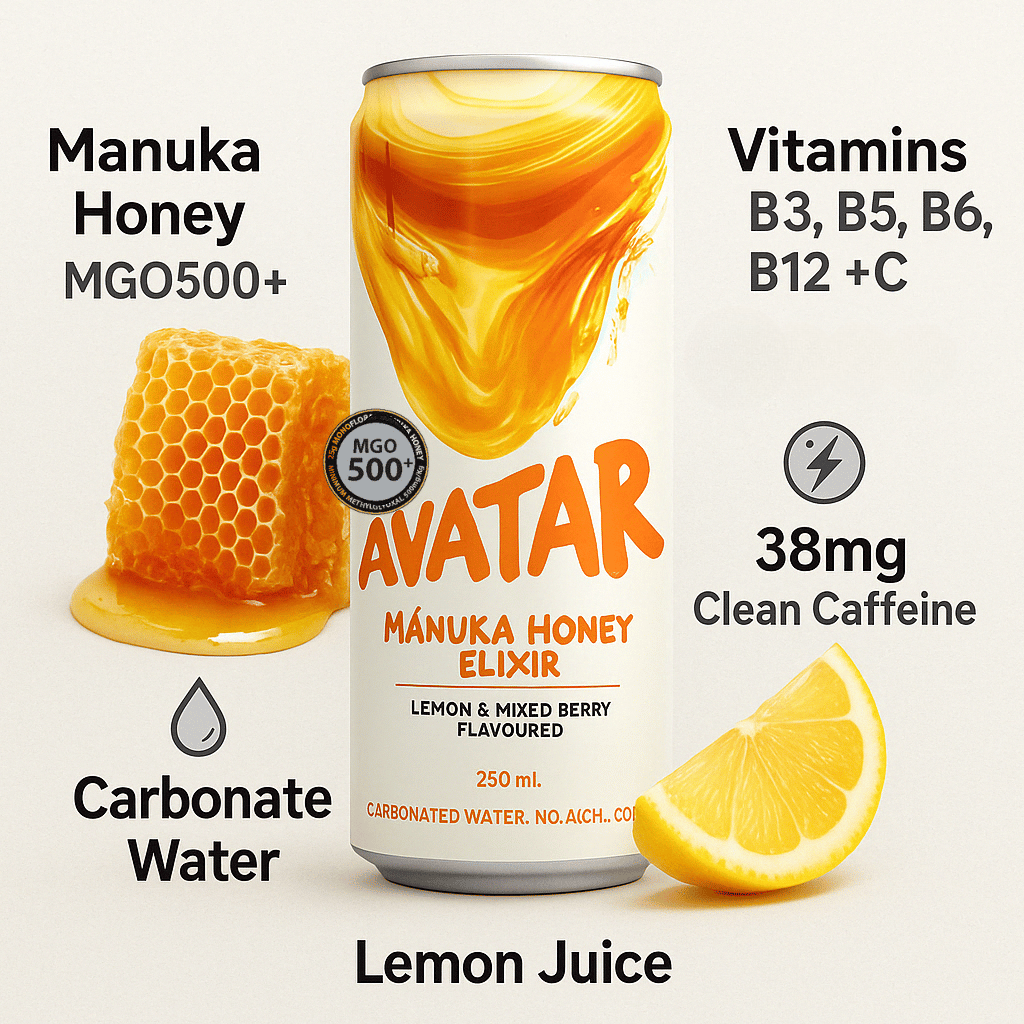
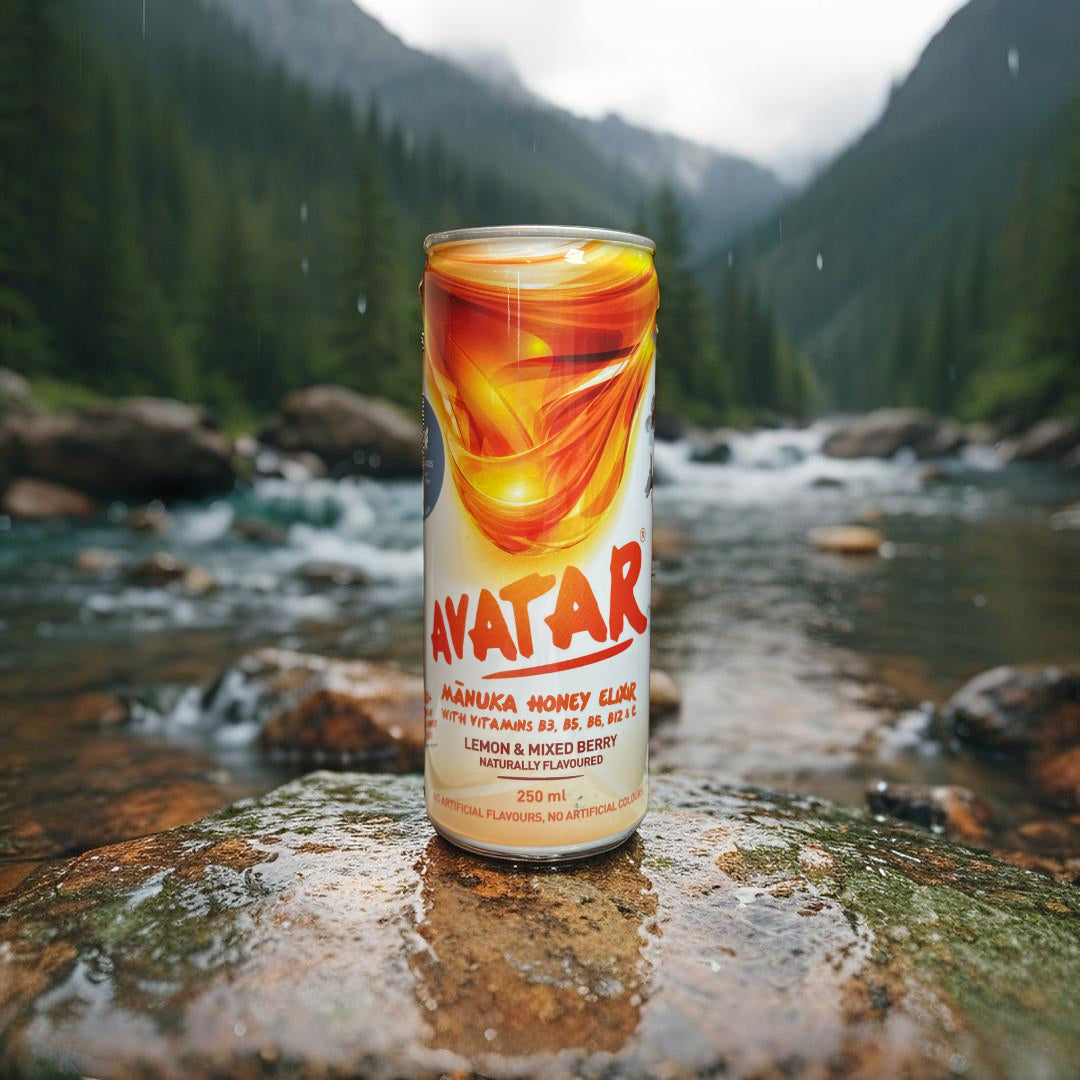
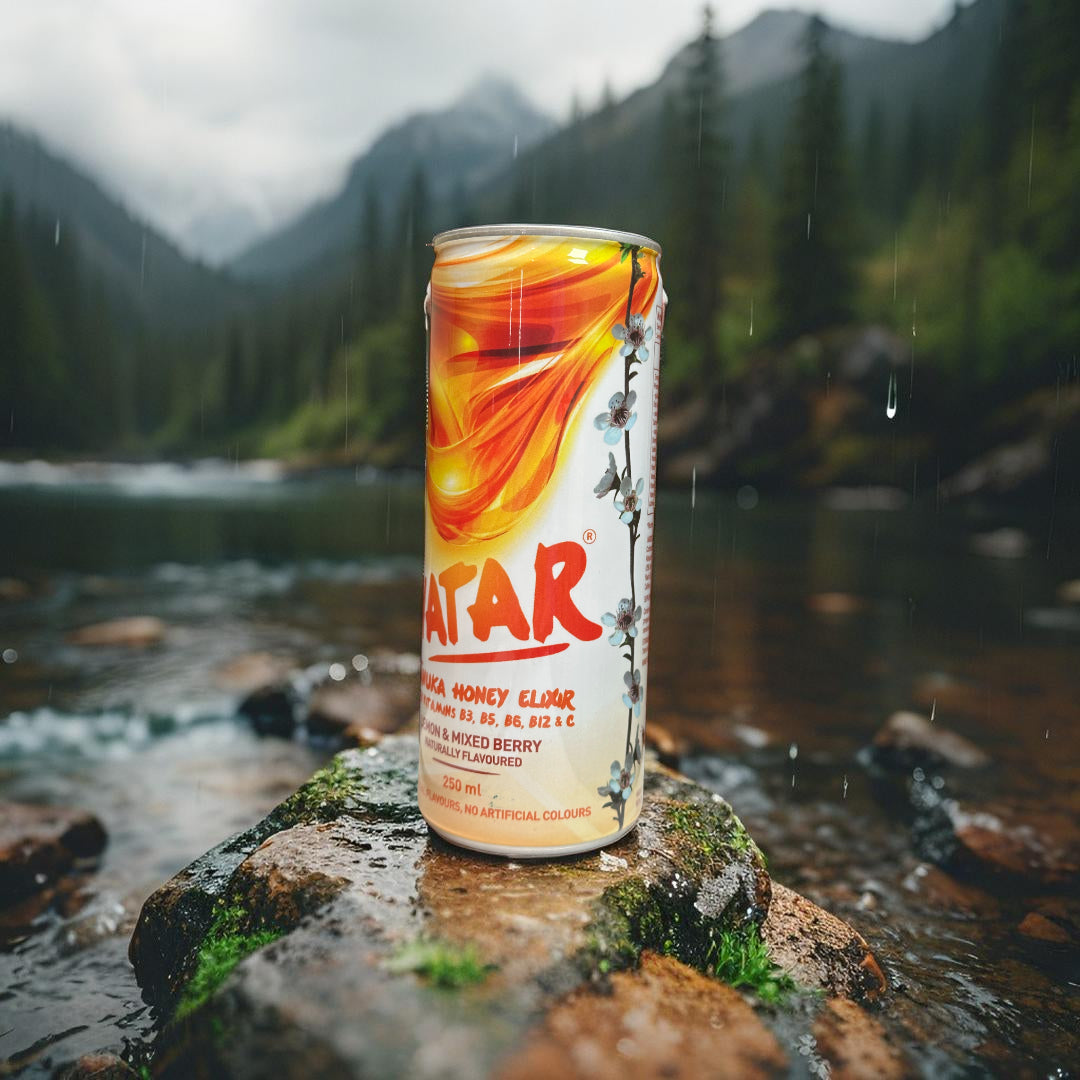
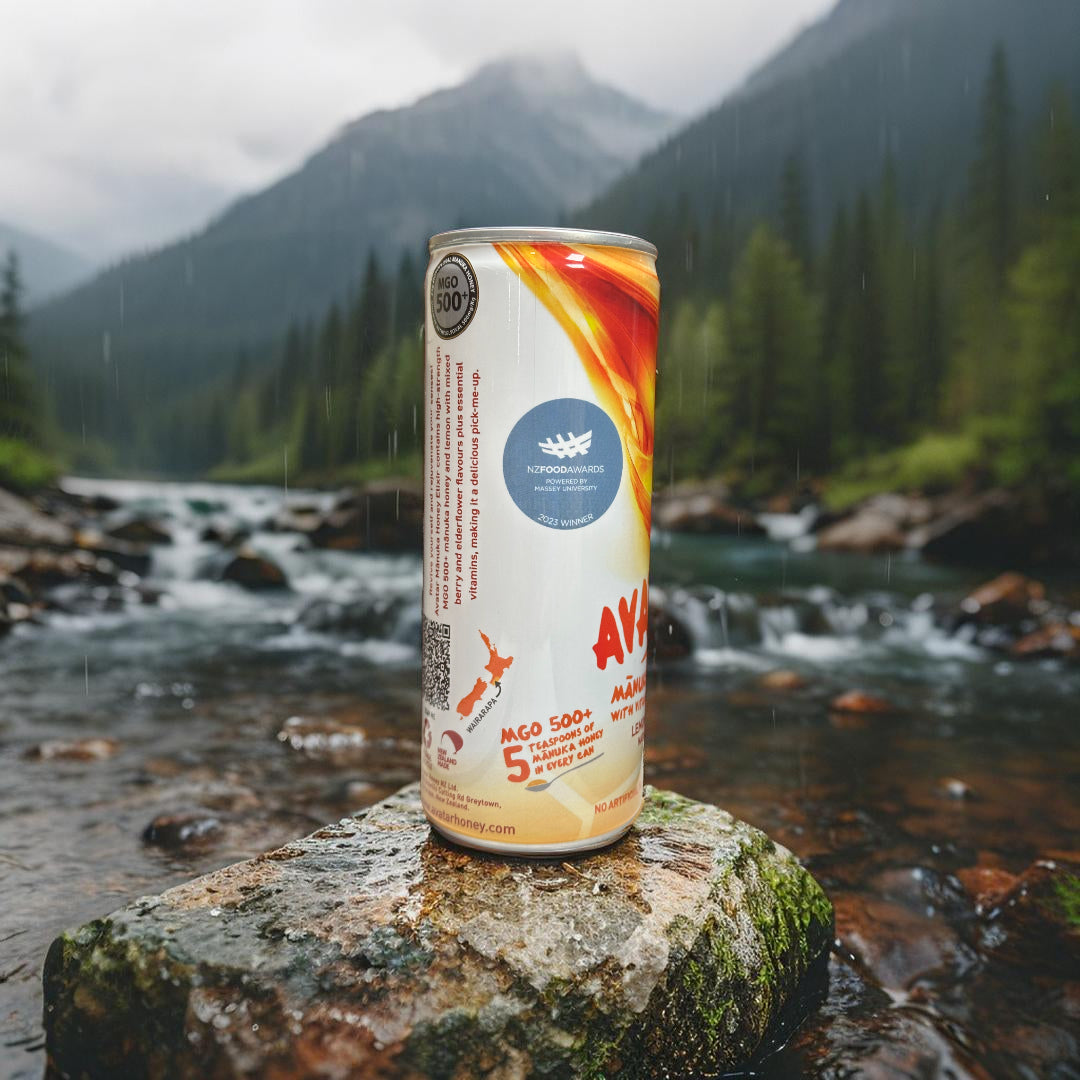
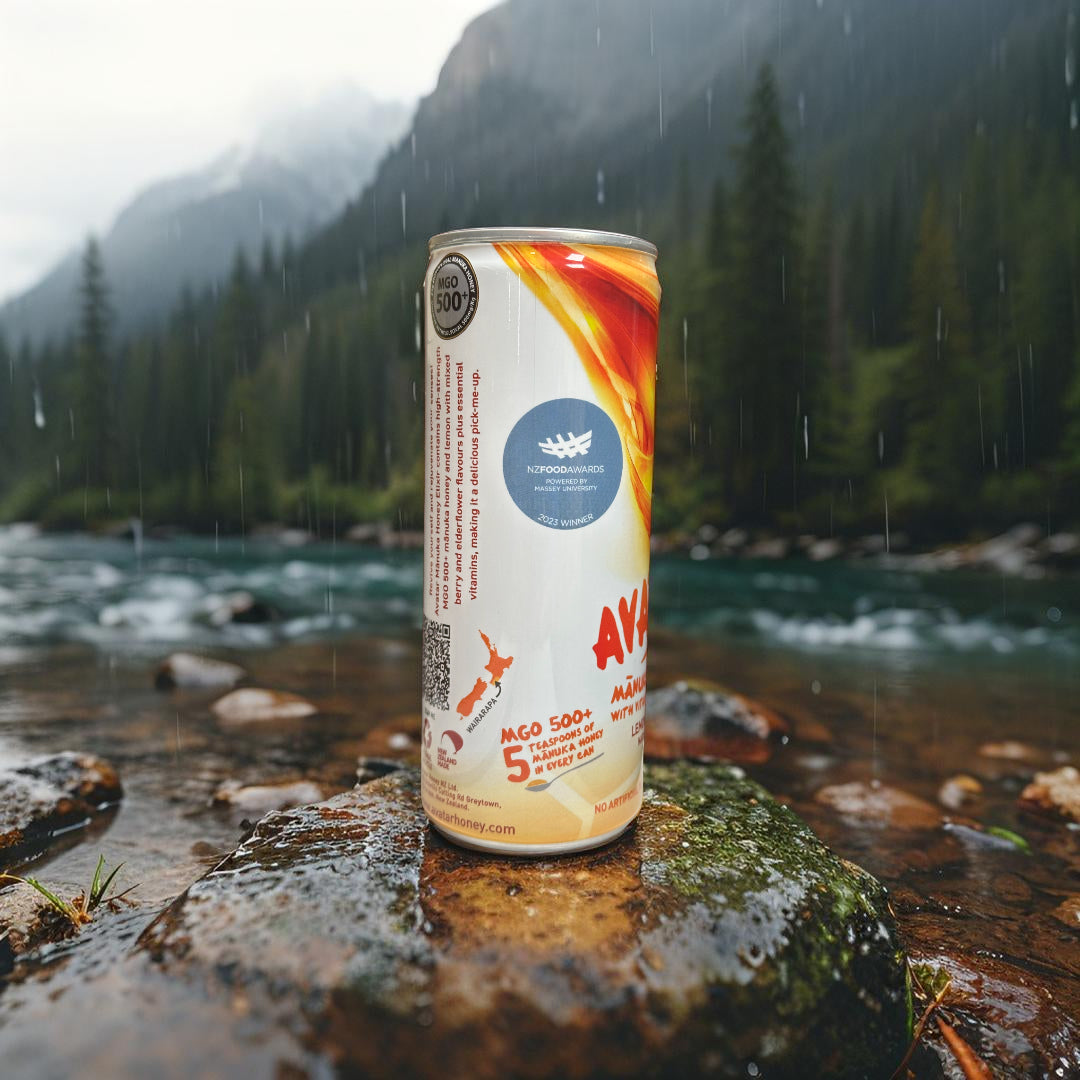
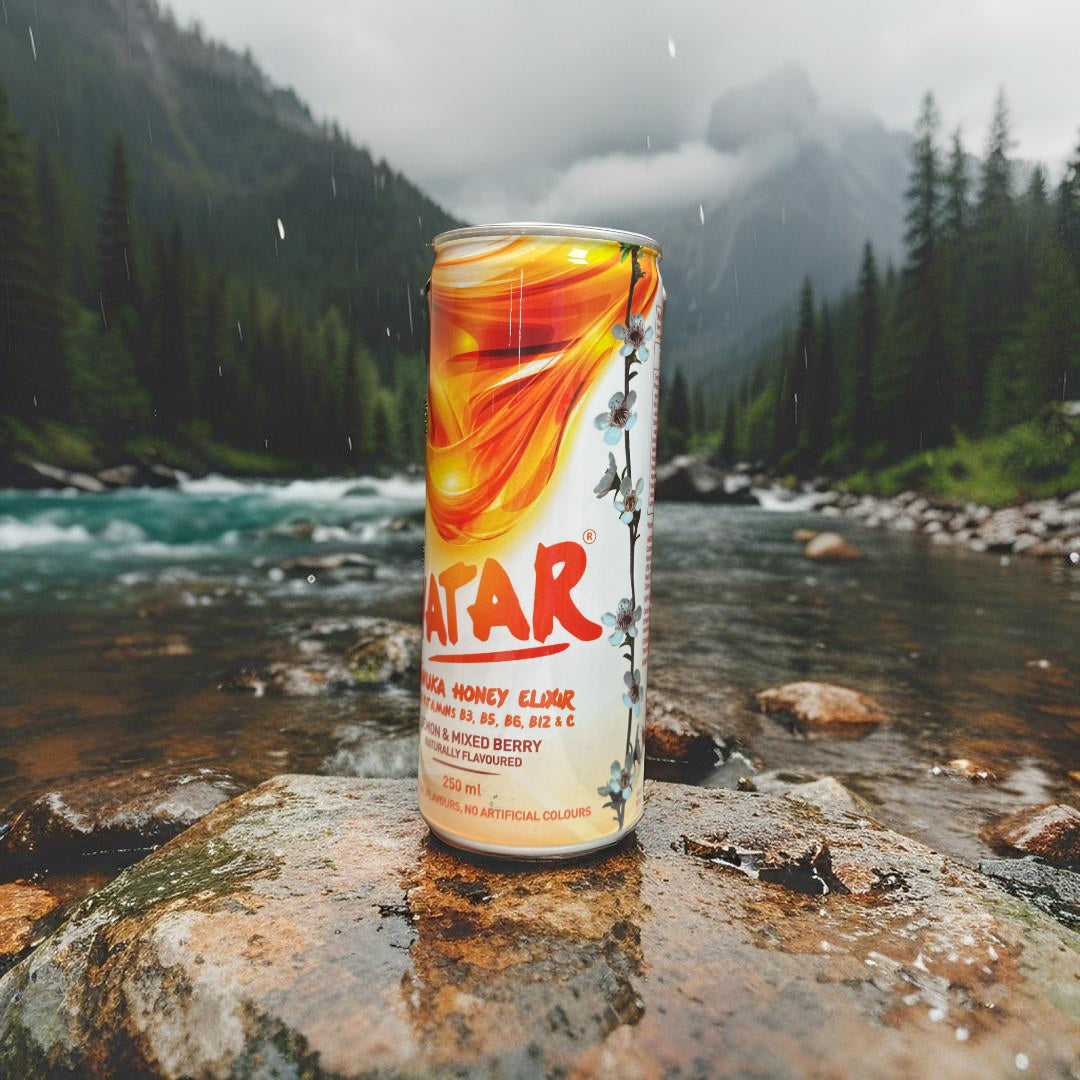
Avatar Elixir should be approached as a formulated sparkling beverage, not as liquid jarred honey. It is a 250 ml, lightly carbonated drink made with certified MGO500+ Manuka honey, lemon and elderflower.
Those known characteristics help frame the tasting experience. The water creates a ready-to-drink consistency, while light carbonation contributes effervescence. Lemon can bring a crisp citrus impression, and elderflower adds an aromatic floral dimension alongside the Manuka honey.
The honey may contribute rounded flavour and some lingering presence, but that does not mean the drink should be expected to have the spoonable thickness of concentrated Manuka honey. Nor does the ingredient list establish a universal sweetness rating. Perceived sweetness and body vary by palate, serving temperature and what the drink is being compared with.
Someone arriving from plain sparkling water may notice more roundness. Someone comparing it with a dense honey syrup may find it considerably lighter. The most useful comparison is with other chilled, ready-to-drink functional beverages rather than with honey straight from the jar.
How should you taste a canned honey drink for the first time?
Serve the can properly chilled, pour it gently if you want to inspect the texture, and take a few sips before deciding whether it feels light or coating. Temperature and carbonation are part of the intended drinking experience.
- Chill the can thoroughly. This supports a crisp, refreshing impression and keeps the carbonation lively.
- Open it carefully without shaking. A sparkling drink can foam when agitated.
- Notice how it pours. A ready-to-drink honey beverage should be assessed as a drink, not compared visually with spoonable honey.
- Take more than one sip. The first sip may highlight carbonation, while later sips can reveal the balance of honey, citrus and floral notes.
- Consider the finish. A little lingering sweetness or flavour is different from a genuinely sticky, syrup-like body.
Can a honey energy drink leave a sweet finish without being thick?
Yes. Flavour persistence and physical thickness are different qualities. A honey drink may leave a rounded or sweet impression after swallowing while remaining light and easy to drink.
Acidity, aroma and carbonation also shape the finish. Lemon can sharpen the overall impression, elderflower can extend the aroma, and bubbles can add lift. The interaction of these elements matters more than assuming honey automatically produces heaviness.
Key takeaway: Honey energy drinks are not inherently thick, sticky or syrupy. Jarred honey is concentrated, while a canned beverage combines honey with water and other ingredients. In a lightly carbonated drink such as Avatar Elixir, the 250 ml ready-to-drink format, chilled serving temperature, lemon, elderflower and effervescence all help define an experience that is distinct from eating Manuka honey by the spoonful.
These follow-up points help you assess Manuka honey drinks and get a fair first impression of their texture.
Does MGO500+ Manuka honey make Avatar Elixir thicker?
No. The MGO500+ designation does not determine the texture of the finished drink. Avatar Elixir uses certified MGO500+ Manuka honey within a 250 ml ready-to-drink formulation containing water, lemon, elderflower and light carbonation. Its perceived body comes from the complete recipe and serving conditions, not the honey designation alone.
What should I look for if I dislike syrupy drinks?
Look at the complete drink format rather than the word "honey" alone. A sparkling ready-to-drink beverage is different from jarred honey or concentrated honey syrup. Carbonation, water and citrus can support a lighter, crisper impression, although the exact texture still depends on the individual recipe and your palate.
Should I taste Avatar Elixir from the can or a glass?
Either is suitable, but a glass makes it easier to observe how the drink pours and how the light carbonation behaves. Keep the can properly chilled and pour gently to preserve its effervescence. Drinking directly from the chilled can is also appropriate if you prefer the intended ready-to-drink experience.