



Quick answer: Most healthy adults can consider a natural energy drink as an occasional or regular part of the day, but drinking one every day depends on caffeine dose, total sugar, serving size, sleep timing, personal sensitivity, hydration, and overall diet. The word natural does not make unlimited daily use safe.
A natural energy drink can fit into a daily routine for some adults, but the answer is not determined by the front of the can. It depends on what is inside the drink, how much you consume, when you consume it, and how your body responds over time.
This is especially relevant for wellness-minded adults who prefer ingredients such as tea caffeine, botanical extracts, fruit juice, honey, or manuka honey. These ingredients may feel more aligned with a natural lifestyle, but they still contribute caffeine, sweetness, calories, acidity, or stimulation. Daily use is a practical question, not a label claim.
This article takes a cautious, evidence-aware look at daily natural energy drink use. It is not medical advice. Adults with health conditions, medication use, pregnancy, breastfeeding, or concerns about caffeine should speak with a qualified health professional for personal guidance.
“Natural” Does Not Decide Whether Daily Use Makes Sense
The key pattern is simple: natural ingredients can still have strong everyday effects. A natural energy drink may use familiar sources such as green tea, yerba mate, guayusa, fruit juice, honey, manuka honey, or plant extracts. These ingredients can be appealing, but they do not remove the need to consider dose and frequency.
For daily use, the main question is not whether the drink is natural. The more useful question is what the drink adds to your day. It may add caffeine, sugar, non-sugar sweeteners, carbonation, acidity, herbal ingredients, or extra fluid. Each of these can be minor in one serving and more noticeable when repeated every day.
Commonly observed consumer behavior shows that people often treat “natural” products as lighter or safer by default. That assumption can be misleading. A naturally sourced caffeine ingredient still contributes to total caffeine intake. Honey or fruit juice still contributes to total sugar intake. A botanical ingredient may still be something to approach with caution if you are sensitive or taking medication.
Natural energy drinks vary widely. Some are closer to sparkling tea with moderate sweetness. Others are highly stimulating drinks with multiple active ingredients. This variation is why daily use should be assessed by the nutrition panel, ingredient list, serving size, and personal response rather than by category alone. For a deeper ingredient-focused framework, see this clean label checklist.
What this means for daily use: a natural energy drink can be part of a regular routine for some adults, but the word “natural” should be treated as a product description, not a safety limit.
Takeaway: Daily use depends on caffeine, sugar, serving size, timing, sensitivity, and diet context, not on the natural positioning of the drink.
Caffeine Dose Is Usually the Main Daily-Use Variable
Caffeine is the first number to check when deciding whether to drink a natural energy drink every day. Even when caffeine comes from tea, coffee fruit, yerba mate, guayusa, or another plant source, it still contributes to your total daily caffeine intake.
Most caffeine guidance is built around total daily intake, not the source of caffeine. That means a natural energy drink should be counted alongside coffee, tea, pre-workout products, cola, chocolate, and any other caffeinated foods or drinks. A person who has a morning coffee and an afternoon energy drink is not just having “one energy drink.” They are combining caffeine sources.
Personal sensitivity also matters. Some adults tolerate caffeine well and notice only mild alertness. Others may feel jittery, anxious, restless, or wired from a smaller amount. Sensitivity can also change with sleep quality, stress, meal timing, hydration, and how often caffeine is used.
Why label reading matters
Natural energy drinks do not all disclose caffeine in the same way. Some list caffeine clearly in milligrams per can or per serving. Others emphasize ingredient sources, such as green tea extract or yerba mate, which may make the caffeine content less obvious to the casual reader.
For daily use, clear caffeine labeling is useful because it helps adults understand whether the drink fits into their usual pattern. If the caffeine amount is unclear, that uncertainty itself is worth considering. Daily habits are easier to manage when the dose is visible.
How caffeine stacking happens
Caffeine stacking happens when multiple everyday sources add up across the day. A natural energy drink may feel moderate on its own, but the pattern changes when combined with morning coffee, a strong tea, a caffeinated supplement, or a second can later in the day.
This is where many people misjudge daily use. They evaluate the drink as a single event rather than part of a full-day caffeine pattern. A better lens is total intake across the day, including products that do not look like energy drinks.
What this means for daily use: the same natural energy drink may be reasonable for one adult and too much for another, depending on total caffeine exposure and sensitivity.
Takeaway: Daily natural energy drink use is most defensible when caffeine amount is clear, total daily intake is considered, and the person feels steady rather than overstimulated.
Sugar, Honey, and Sweeteners Change the Everyday Equation
Sweetness is the second major factor in daily energy drink use. A drink can be natural, lightly caffeinated, and still add meaningful sweetness if consumed every day. This matters because daily habits tend to accumulate quietly.
Natural energy drinks may use cane sugar, fruit juice, agave, honey, manuka honey, stevia, monk fruit, erythritol, or blends of sweeteners. Each approach has trade-offs. Sugar and honey contribute sweetness and energy. Non-sugar sweeteners reduce sugar content but may have a taste or digestive profile that some people notice. Fruit juice can sound gentle, but it still contributes naturally occurring sugars.
For wellness-focused consumers, honey and manuka honey deserve a balanced view. They can be valued for flavor, origin, and product character. In drinks, however, they should still be understood as sweetening ingredients. Their presence does not make sugar intake irrelevant, and it does not turn an energy drink into something that can be consumed without limit.
Honey and manuka honey in energy drinks
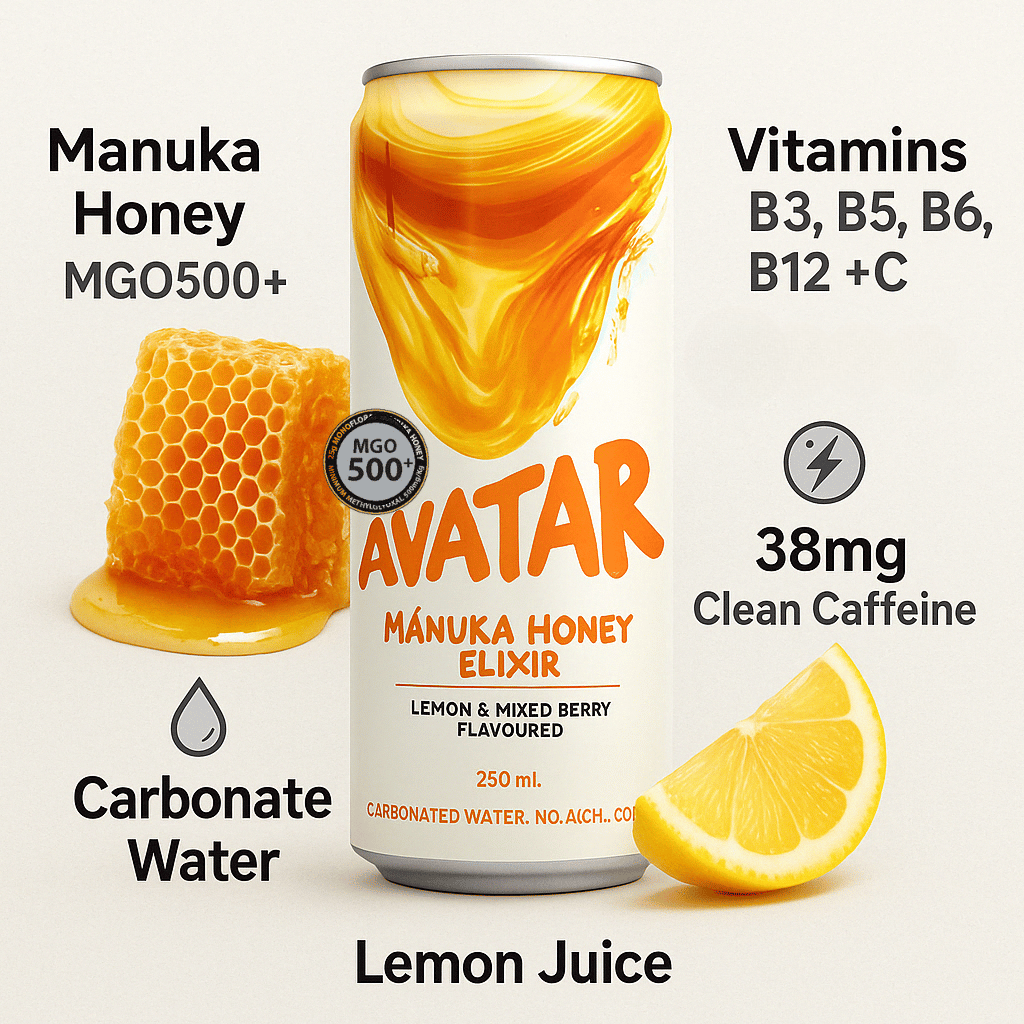
Manuka honey drinks often appeal to adults who prefer recognizable ingredients and a less artificial taste profile. From a daily-use perspective, the key point is moderation. A manuka drink may fit well into a balanced routine, but it should still be counted as part of total daily sweetness.
It is also useful to separate ingredient quality from intake level. A premium sweetener may be carefully sourced and still contribute sugar. This distinction helps avoid the common assumption that better sourcing automatically means unlimited daily use.
Low-sugar does not always mean no trade-offs
Low-sugar natural energy drinks can be helpful for adults trying to reduce total sugar intake. The trade-off is that sweetness may come from non-sugar sweeteners, flavor systems, or acidity. Some people enjoy these easily. Others find certain sweeteners noticeable or less satisfying.
There is no single best sweetener pattern for everyone. The daily-use question is whether the drink supports your overall diet rather than crowding out water, meals, or less sweet beverages.
What this means for daily use: a naturally sweetened energy drink can still be a daily source of sugar or sweetness, so it should be considered within the full day’s food and drink pattern.
Takeaway: Honey, fruit juice, and natural sweeteners can make an energy drink feel more wholesome, but daily use still requires attention to total sugar and sweetness.
Serving Size and Frequency Matter More Than the Can’s Image
Serving size is often overlooked because many people treat one container as one serving. For daily use, the practical serving is the amount actually consumed, not only the amount printed in a nutrition panel.
Some drinks are designed as a single can or bottle. Others may contain more than one labeled serving, or they may be easy to sip quickly because they taste light and refreshing. The everyday effect changes if someone drinks a full container, drinks multiple containers, or uses the drink as a replacement for water throughout the day.
Frequency matters as much as size. Having a natural energy drink on a demanding workday is different from making it the default beverage every morning and afternoon. Daily use can become less intentional when the drink shifts from a functional choice to an automatic habit.
Why “one a day” can mean different things
“One natural energy drink a day” is not a single intake pattern. One person may drink a small, lightly caffeinated beverage with minimal sugar after breakfast. Another may drink a large, highly caffeinated can on an empty stomach. Another may drink one energy drink plus several coffees.
These are different patterns, even if each person says they have one energy drink daily. This is why the question “Can you drink one every day?” needs more context than the number of cans alone.
Empty stomach use can feel different
Many adults report that caffeine feels stronger when consumed without food. This is not the same as saying everyone must pair an energy drink with a meal, but it does explain why the same drink may feel smooth on one day and uncomfortable on another.
Daily use is easier to evaluate when the pattern is consistent. If a drink feels different depending on whether you have eaten, that response is useful information.
What this means for daily use: daily use is more understandable when the actual consumed serving, the number of daily servings, and the surrounding food pattern are all considered together.
Takeaway: A natural energy drink’s everyday impact depends on how much you drink and how often, not just on the fact that it is one can or bottle.
Sleep Timing Is a Major Limit on Daily Energy Drink Use
A natural energy drink can still interfere with sleep if the caffeine is too late for your body. Caffeine timing is one of the most important daily-use factors because poor sleep can increase the desire for more caffeine the next day.
The common pattern is a cycle: a person sleeps poorly, uses caffeine to feel more alert, then consumes caffeine late enough to make sleep less restful again. This does not happen to everyone, and it does not mean caffeine is always a problem. It means timing should be part of the decision when drinking a natural energy drink every day.
Adults vary in how long caffeine feels active. Some people can drink caffeine later in the day without obvious problems. Others notice lighter sleep, delayed sleepiness, or more nighttime restlessness. The most relevant evidence for an individual is often their own repeated sleep pattern.
Late-day caffeine is not only about bedtime
The question is not simply whether you can fall asleep. Some people fall asleep but still feel that sleep quality is reduced after later caffeine use. Others wake earlier, feel less rested, or need more caffeine the next day.
For daily energy drink use, these patterns matter because the goal is not just alertness today. It is also maintaining enough rest that caffeine does not become a substitute for recovery.
Energy drinks should not become a sleep workaround
A daily natural energy drink may be more reasonable when sleep is generally stable. It is more questionable when it becomes a regular workaround for short sleep, late nights, or afternoon crashes caused by under-eating or inconsistent rest.
This is not a judgment about occasional busy days. It is a pattern-based distinction. Using caffeine strategically is different from using it to cover a recurring sleep deficit.
What this means for daily use: a natural energy drink is less likely to fit well every day if it pushes caffeine too close to sleep or reinforces a cycle of tiredness and stimulation.
Takeaway: Sleep response is one of the clearest signals for whether daily energy drink use is working for your body.
Hydration and Overall Diet Set the Context
A natural energy drink should be viewed as one part of the day’s overall fluid and food intake. It is not automatically a problem, but it should not quietly replace water, balanced meals, or rest.
Hydration is often discussed in exaggerated ways around caffeine. A calmer view is more useful: caffeinated drinks still add fluid, but they may not be the best default beverage for every moment of the day. If an energy drink becomes the main fluid someone reaches for, the pattern deserves attention.
Diet context matters too. A natural energy drink alongside regular meals, adequate protein, fiber-rich foods, and sufficient water is different from using the drink to push through missed meals. Some adults experience energy dips because of sleep, stress, meal timing, or overall intake rather than a lack of caffeine.
Daily use should not crowd out basics
The most sustainable daily patterns usually leave room for water, meals, and non-caffeinated beverages. If a natural energy drink fits within that pattern, it may be easier to evaluate calmly. If it displaces those basics, the drink may be doing more work than intended.
This is especially relevant for wellness lovers who choose natural products because they want a cleaner routine. A cleaner label is only one part of the picture. The overall pattern still matters.
Carbonation, acidity, and taste can influence frequency
Some natural energy drinks are sparkling, citrus-forward, or strongly flavored. These features can make the drink enjoyable and refreshing. They can also make daily sipping more likely, especially if the drink is used as a flavored alternative to water.
This does not make sparkling or acidic drinks bad. It simply means taste and format influence behavior. Daily use is partly about ingredients and partly about how easy the product is to consume often.
What this means for daily use: the best question is not whether the drink is allowed every day, but whether it fits into a balanced pattern that still includes water, food, and rest.
Takeaway: Daily natural energy drink use makes more sense when it complements hydration and diet rather than replacing them.
Warning Signs That Daily Use May Need Scaling Back
The body often gives practical feedback when daily energy drink use is not fitting well. These signals are not a diagnosis, and they do not mean caffeine or natural energy drinks are harmful for everyone. They are simply reasons to pause and reassess dose, timing, and frequency.
Commonly reported signs that caffeine or energy drink use may be too much for a person include feeling jittery, shaky, unusually anxious, restless, or wired. Other signals may include headaches when skipping the drink, trouble winding down, disrupted sleep, stomach discomfort, heartburn-like sensations, or relying on the drink to function every day.
Another pattern to notice is escalation. If one serving used to feel sufficient and now more is needed for the same effect, daily use may be shifting from intentional support to dependence on stimulation. This does not require panic, but it does justify a closer look.
A simple daily-use checklist
Use this checklist as a reflection tool, not as medical guidance. A natural energy drink is more likely to fit daily use when most answers are clear and steady.
- Caffeine clarity: Do you know how much caffeine is in the drink and how it fits with coffee, tea, or other caffeinated products?
- Personal sensitivity: Do you feel alert without feeling jittery, anxious, shaky, or uncomfortably wired?
- Sugar awareness: Have you checked whether the drink adds sugar, honey, juice, or other sweeteners to your daily pattern?
- Serving size: Are you drinking the amount you intend to drink, rather than automatically finishing a larger container or having multiple servings?
- Sleep timing: Does the drink leave your sleep timing and sleep quality feeling normal for you?
- Hydration balance: Are you still drinking water and using the energy drink as a specific choice, not your main fluid source?
- Food context: Is the drink part of a normal eating pattern rather than a substitute for meals or recovery?
- Dependence pattern: Can you skip it without feeling that your day cannot function?
If several answers raise concern, moderation may matter more than the natural label. Scaling back can mean reducing frequency, choosing a lower-caffeine option, switching to a lower-sugar version, moving the drink earlier, or reserving it for days when it serves a clear purpose. Adults with persistent symptoms or medical concerns should seek qualified advice.
What this means for daily use: daily natural energy drink use is most reasonable when it remains intentional, moderate, and compatible with sleep, hydration, and overall diet.
Takeaway: Warning signs such as poor sleep, jitters, discomfort, or growing reliance are practical reasons to reduce intake or reconsider daily use.
So, Can You Drink a Natural Energy Drink Every Day?
For many adults, the cautious answer is: possibly, but only if the full daily pattern makes sense. A natural energy drink is not automatically unsafe as a daily beverage, and it is not automatically appropriate either. The difference lies in dose, frequency, timing, and personal response.
A daily natural energy drink is easier to justify when caffeine content is transparent, total caffeine intake is moderate for the individual, sugar is understood, serving size is controlled, sleep remains stable, and the drink does not replace water or meals. It becomes more questionable when it is used to push through chronic tiredness, consumed late in the day, stacked with multiple caffeine sources, or treated as unlimited because it contains natural ingredients.
For wellness-minded adults, the most useful mindset is neither fear nor hype. Natural energy drinks can be enjoyable and functional, especially when made with recognizable ingredients and consumed with awareness. But natural does not cancel the effects of caffeine, sugar, sweeteners, serving size, or timing.
Bottom line: you can consider drinking a natural energy drink every day if it fits your caffeine tolerance, sugar goals, sleep rhythm, hydration habits, and overall diet. If it disrupts any of those areas, moderation is the more realistic choice.
This FAQ expands on what daily natural energy drink use can look like for adults. It focuses on the practical factors that usually matter most, including caffeine dose, sweetness and honey, serving size, sleep timing, hydration, and personal sensitivity.
Can I drink a natural energy drink every day safely?
Daily use depends on your total intake and how you respond, not the word "natural". Many adults can tolerate a natural energy drink as an occasional or regular choice, but the key variables are caffeine dose, total sugar, serving size, sleep timing, and overall diet. If daily use consistently disrupts sleep, increases jitteriness, or crowds out water and balanced meals, it is usually a sign to scale back.
How do I check caffeine dose and serving size properly?
Use the label to confirm caffeine per serving and how many servings are in the container. A common issue with daily energy drink use is assuming "one can" equals one serving, when the container may include more. To keep it practical, check:
- Caffeine per serving and caffeine per container
- Serving size compared with how much you actually drink
- Whether you stack caffeine from coffee, tea, pre-workout, or soda the same day
Why does "natural" not make unlimited daily energy drink use safe?
Natural ingredients can still create strong everyday effects when used repeatedly. Ingredients like tea caffeine, yerba mate, guayusa, botanical extracts, fruit juice, and honey can still contribute stimulation, sweetness, calories, or acidity. The practical question is what the drink adds to your day and what it replaces, especially with daily use.
Is manuka honey better than sugar in a natural energy drink?
Manuka honey can be a preferred sweetener for some people, but it still counts as added sweetness and calories. In a daily natural energy drink routine, what typically matters most is total sugar per day and how it fits with your overall diet, not the "health halo" of the ingredient. If a drink relies on honey or manuka honey for sweetness, it can be helpful to treat it like any other sweetened beverage and watch how it affects cravings, energy swings, and dental exposure over time.
What is the best timing to avoid sleep issues from daily caffeine?
Earlier is usually easier on sleep, while late-day caffeine is more likely to interfere. Many people find that caffeine taken too late can make it harder to fall asleep or reduce sleep quality, even if it does not feel intense at the time. If you want daily use without sleep disruption, a best-practices approach is to keep caffeine earlier in the day and pay attention to whether you feel "tired but wired" at night.
What warning signs mean I should scale back daily energy drinks?
Repeated unwanted effects are a practical signal to reduce frequency or dose. Commonly reported signs include:
- Sleep disruption, especially trouble falling asleep
- Jitters, restlessness, or feeling overly stimulated
- Headaches or "crashes" that feel tied to caffeine or sweetness
- Digestive discomfort that seems worse with carbonation or acidity
If any of these persist, it can be reasonable to reassess caffeine dose, total sugar, and timing, and to speak with a qualified health professional for personal guidance if you have specific health concerns.
How can I fit a natural energy drink into hydration daily?
Hydration works best when the energy drink is not your main fluid source. Many natural energy drinks add fluid, but daily use can still coincide with under-hydration if they replace water or if caffeine intake nudges you toward more stimulation than recovery. A practical approach is to keep water as the baseline, then treat the energy drink as an add-on, especially around exercise, hot weather, or long workdays. If you're comparing formats, this guide on honey energy drink vs sports drink can help.