


Quick answer: Manuka and Mānuka refer to the same familiar New Zealand plant name, but Mānuka includes the macron used in te reo Māori to mark a long vowel. The unmarked spelling remains common on international honey and beverage labels because of established product naming, typography, keyboards, search habits, and export usage. Neither spelling alone proves authenticity, New Zealand origin, certification, or honey quality.
Manuka. Mānuka. If you compare New Zealand honey jars, drinks, gift boxes, and online listings, you are likely to encounter both spellings. The difference is small on the page, but it has an important language explanation.
For international readers, the most useful approach is to understand what the macron means, recognise why the unmarked form persists, and avoid treating spelling as a quality test. Language choices and commercial verification are related to trust, but they are not the same question.
What is the difference between Manuka and Mānuka?
Mānuka is written with a macron above the first “a”, while Manuka is written without one. A macron is the horizontal mark above a vowel. In te reo Māori, it indicates that the vowel is long.
That means the line in Mānuka is not merely a stylistic accent or packaging flourish. It carries pronunciation information and helps preserve the correct written form of a Māori word.
The unmarked spelling Manuka has also become widely established, particularly in international honey markets, product names, website searches, and older digital or printed material. As a result, readers now see both versions in everyday commercial use.
- Mānuka reflects the macron in te reo Māori orthography.
- Manuka is the common unmarked form used across many international labels and product names.
- Both may appear in material referring to the plant, its honey, or drinks made with that honey.
- The presence or absence of the macron does not, by itself, establish product quality or origin.
What does the macron do in te reo Māori?
A macron marks a long vowel in te reo Māori. Vowel length matters because it guides pronunciation and can distinguish words that might otherwise look similar in writing.
In Mānuka, the first vowel is lengthened. An English approximation may help a new reader notice that length, but English spelling cannot represent every sound precisely. If you are learning the pronunciation, listening to a trusted te reo Māori language resource is more useful than relying entirely on an English phonetic spelling.
Using the macron recognises that the word comes from te reo Māori and that its written form contains information beyond the basic Latin letters. It is a small typographic mark with a real linguistic function.
Why the word may look unfamiliar with a macron
Some international consumers first encounter the word through “Manuka honey” on a jar, menu, gift set, or search result. When they later see Mānuka, they may assume it is a different variety, brand, or grade.
It is not a separate honey grade. The spelling difference concerns how the Māori word is written. Commercial grading terms and product specifications belong to a different part of the label.
Why does the unmarked spelling Manuka remain common?
Manuka remains common because the unmarked form has a long-established place in international commerce and digital communication. Packaging conventions, available typefaces, keyboard limitations, database handling, product registration, and familiar search behaviour can all influence how a word appears.
Macrons have not always been easy to reproduce consistently across printing and computer systems. Older typefaces and keyboards often lacked convenient support, while some databases and retail platforms were designed around unaccented characters. These limitations encouraged unmarked spellings to circulate widely.
Digital support has improved, but practical differences remain. A shopper might type “Manuka honey” because that is the spelling they already know. A retailer may preserve the established wording of a product name. An exporter may also use both forms in different contexts so international readers can recognise the product while respectful language is used in editorial material.
These patterns explain why mixed usage can occur without necessarily signalling carelessness. Context matters, particularly when a product name has already been established in the market.
Why established product names may keep Manuka
A brand can acknowledge the te reo Māori spelling while preserving “Manuka” inside an established product name or specification. Product names need consistency across packaging, retail systems, invoices, search listings, and customer communications.
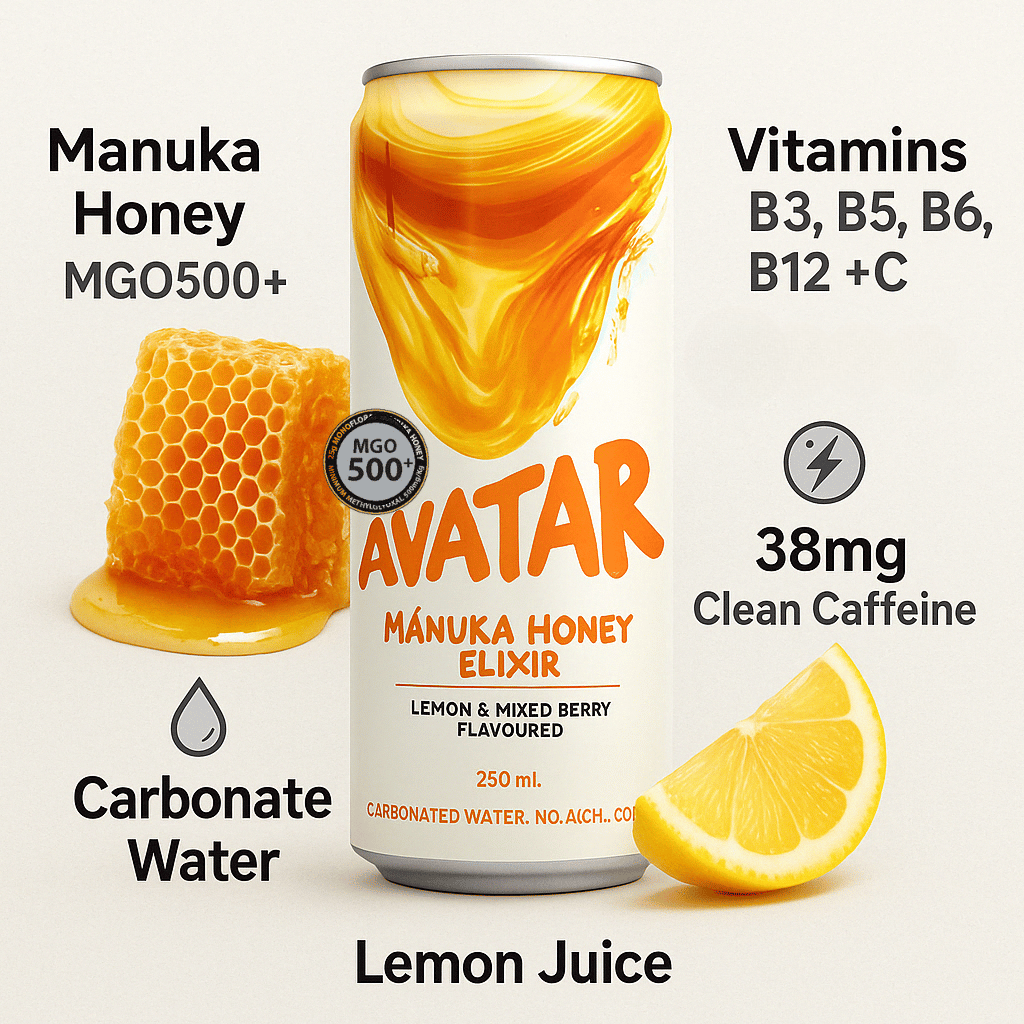
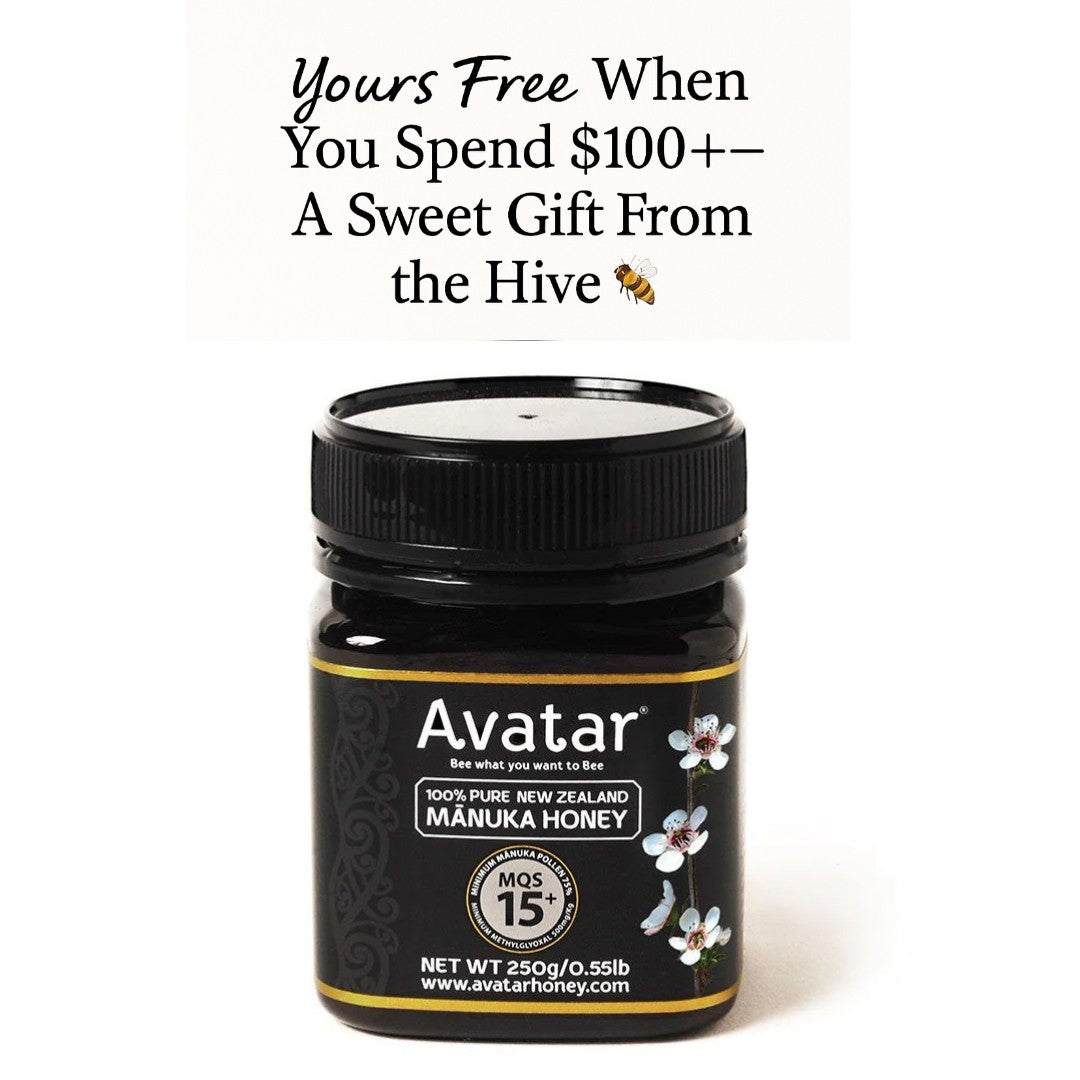
Avatar Honey, a New Zealand beekeeping company, uses the familiar unmarked wording in references to its Manuka honey and in the description of Avatar Elixir, its Manuka honey drink. Avatar Elixir is made with certified MGO500+ Manuka honey, lemon, elderflower, B vitamins, vitamin C, clean caffeine, and lightly carbonated water.
Retaining “Manuka” in this product language does not prevent an article from explaining that Mānuka is the macron-bearing te reo Māori form. The two choices can sit together when the distinction is made clearly and respectfully.
This is similar to other situations in which editorial language evolves while registered, established, or internationally recognised product wording remains stable. Readers benefit most when brands avoid pretending the variation does not exist and explain it in plain language.
Does the spelling prove that honey is authentic?
No. Neither Mānuka nor Manuka is proof of authenticity, origin, certification, potency, or quality. A macron provides language information. It does not function as a certification mark, laboratory result, origin statement, or grading system.
A carefully written label can still require closer inspection, just as an unmarked product name does not automatically indicate poor quality. Buyers should assess the specific commercial information supplied for the product rather than using typography as a shortcut.
Depending on the type of product, useful details may include:
- Country of origin: Look for a clear origin statement rather than inferring origin from imagery or spelling.
- Honey grade or specification: Read the stated grading information and identify what it applies to.
- Verification information: Check who makes the claim and what supporting product information is provided.
- Ingredient list: For a beverage, confirm how Manuka honey fits into the complete recipe.
- Producer transparency: Look for clear information about the beekeeper, maker, and New Zealand connection.
The same principle applies to a functional beverage. A drink should be understood through its full ingredient list, flavour profile, caffeine information, and producer details. The spelling of Manuka is only one part of how the product is presented.
How spelling differs from MGO and UMF information
Language, grading, and product verification answer different questions. The macron explains how a Māori word is written and pronounced. MGO and UMF terminology relates to separate commercial systems and product information used around Manuka honey.
Those subjects should not be collapsed into a single signal of quality. Seeing Mānuka does not tell you an MGO value. Seeing Manuka does not tell you whether a stated grade is valid or what testing sits behind it. Likewise, New Zealand imagery and a plant story do not replace clear origin and verification information.
For example, MGO500+ is a specific piece of information about the Manuka honey used in Avatar Elixir. It is separate from the decision to use the established unmarked spelling in the product description. One detail concerns the honey specification presented by the producer, while the other concerns language and product naming.
This separation helps buyers ask better questions:
- What does the spelling tell me about the word and its pronunciation?
- What does the stated grade tell me about the honey?
- What information supports the product’s New Zealand origin and producer story?
- What ingredients and characteristics matter in the finished drink?
How should international readers use the two spellings?
Use Mānuka when you want to retain the macron in te reo Māori, and preserve Manuka when referring to an established product name that uses that spelling. This approach respects the language context without silently rewriting brand or product terminology.
If your keyboard supports the macron, Mānuka is the more informative spelling because it shows the long vowel. If you are searching for products online, trying both “Manuka” and “Mānuka” may be practical because retailers and publishers do not all use the same form.
It is also reasonable to follow the wording printed on a specific product when discussing that product. Exact names help avoid confusion, especially across packaging, ecommerce listings, and international distribution.
A note on respectful usage
Language respect begins with recognising that the macron has meaning. It also requires a little humility. A honey or beverage producer should not claim cultural authority simply because it uses the macron, and a shopper should not assume that typography settles every question about a product.
Clear explanation is more useful than policing readers who have only encountered the international spelling. Knowing why both forms appear gives people a practical way to read labels more thoughtfully.
A short buyer takeaway
Mānuka is the te reo Māori spelling with a macron marking a long first vowel, while Manuka is the widely established unmarked form seen on many international honey and beverage labels. Both spellings may refer to the same plant and honey tradition, but neither one is a standalone quality seal.
When choosing Manuka honey or a Manuka honey drink, read beyond the typography. Check the origin information, producer details, honey specification, ingredient list, and the nature of the finished product. For established names such as Avatar Honey and Avatar Elixir, preserving “Manuka” keeps the product wording consistent while still allowing the language behind Mānuka to be understood and respected.
These follow-ups cover pronunciation resources, typing, online searches, and accurate spelling around established product names.
How can I type the macron in Mānuka?
Use your device's accented-character menu or a Māori keyboard setting to enter ā, then check that the macron sits above the first a in Mānuka. If a publishing or retail system cannot retain the character, use the established product wording rather than inserting a different symbol or altering an exact product name.
Where can I hear a reliable pronunciation of Mānuka?
Look for audio from a trusted New Zealand government or educational te reo Māori resource. The macron tells you that the first vowel is long, but listening to a knowledgeable speaker is more reliable than depending entirely on an English phonetic approximation.
What should I do when online searches treat the spellings differently?
Search for both Manuka and Mānuka if one version produces limited or different results. Compare exact product names, producer details, origin information, ingredients, and honey specifications rather than assuming spelling differences indicate different quality levels.
Should I write Mānuka when referring to Avatar Elixir?
Preserve Manuka when referring to Avatar Elixir's established product wording. Avatar Elixir is described as a Manuka honey drink made with certified MGO500+ Manuka honey, while Mānuka can be used in broader editorial explanations of the te reo Māori word.