


Short answer: Manuka honey crystallizes because its natural sugars can form solid crystals over time. Crystallization is a physical change and, by itself, does not mean the honey is spoiled, adulterated, or poor quality.
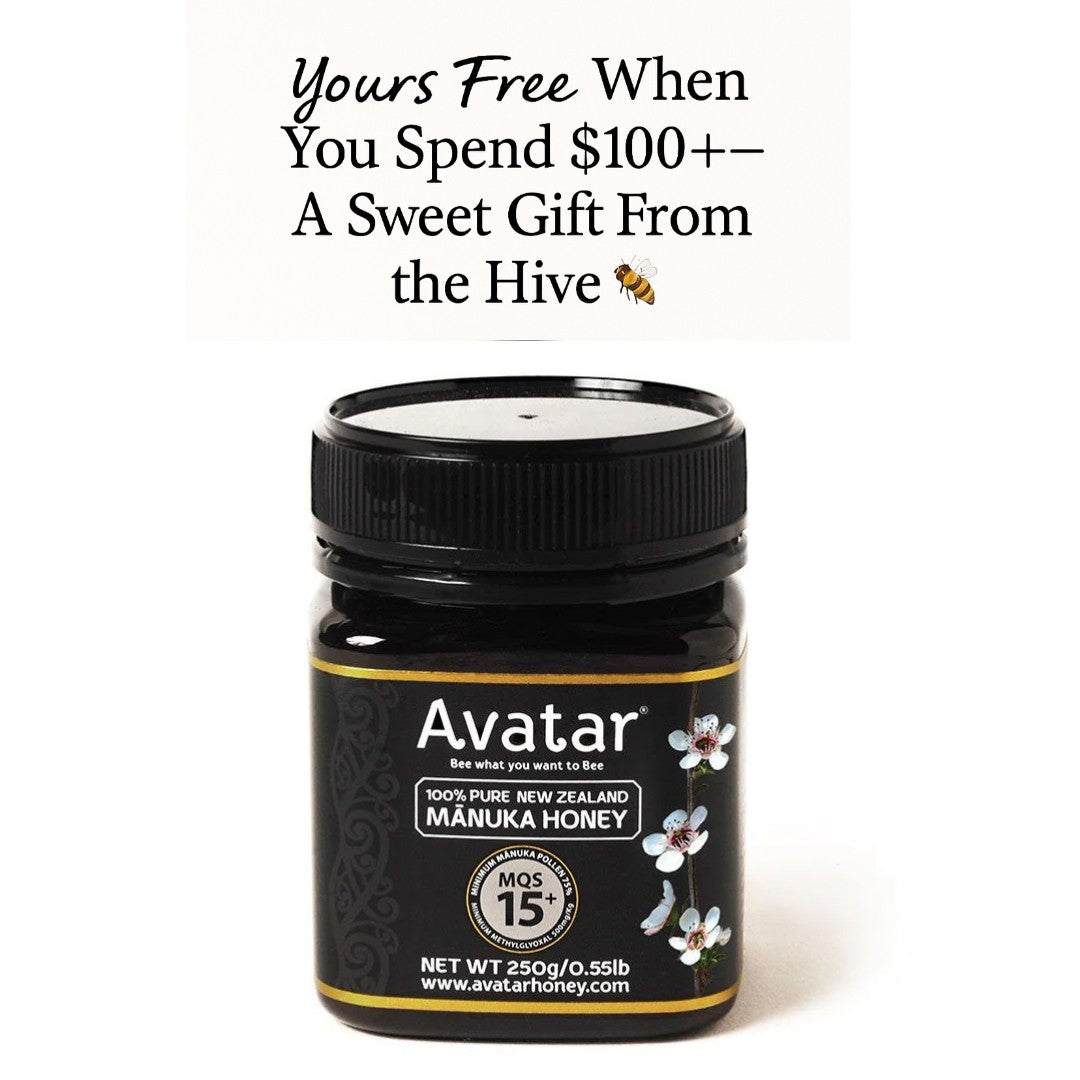
If you open the bonus Manuka honey jar from The Beekeeper's Choice 12Pk or The Founders' Reserve and notice a thicker texture, fine crystals, or uneven consistency, there is usually no reason for alarm. Honey is a naturally variable food, and its appearance can change during storage.
Why does Manuka honey form crystals?
Manuka honey crystallizes when some of its dissolved natural sugars begin arranging themselves into solid crystals. This changes the honey's texture and appearance, but it does not automatically change the honey into an unsafe or inferior product.
Honey contains several natural sugars, including glucose and fructose, along with a relatively small amount of water. Glucose is less soluble than fructose, so it is more likely to separate from the liquid portion and form crystals. Once crystallization starts, it may produce a smooth, creamy texture, fine grains, or larger and more noticeable crystals.
The exact result can vary from jar to jar. Natural honey is not always visually uniform, and crystallization does not follow a reliable schedule. One jar may remain fluid for longer, while another may begin thickening sooner.
What factors influence how quickly honey crystallizes?
Temperature, storage time, the balance between glucose and water, and small particles in the honey can all influence crystallization. These factors interact, so it is not possible to predict an exact crystallization date for an individual jar.
- Temperature: Storage conditions affect how easily sugar molecules move and form crystals. Changes in temperature can also influence texture.
- Time: Honey can gradually crystallize as it sits, even when the jar remains properly sealed.
- Glucose-to-water balance: Honey with more glucose relative to its available water may crystallize more readily.
- Small natural particles: Tiny particles, such as traces of pollen or wax, can provide surfaces where crystals begin forming.
- Existing crystals: Once a few crystals have formed, they can encourage further crystallization around them.
These are general influences rather than a fixed timetable. The texture of the bonus jar in The Beekeeper's Choice 12Pk or The Founders' Reserve may therefore change at a different pace from another jar.
Does crystallization mean Manuka honey has gone bad?
No. Crystallization alone is not evidence that Manuka honey has spoiled. It is usually a normal change in physical structure, especially when the jar is intact, the honey smells normal, and there are no signs of contamination.
The following comparison can help distinguish ordinary texture changes from signs that deserve closer attention.
| What you notice | What it may mean | What to do |
|---|---|---|
| Fine grains or visible sugar crystals | Normal crystallization | Use the honey as it is, or warm it gently if a more fluid texture is preferred. |
| Honey has become thick, creamy, or difficult to pour | A common texture change as crystals form | Check the label and handle the jar gently. |
| Some areas are liquid while others are crystallized | Uneven crystallization within the jar | Stir gently with a clean, dry utensil if desired. |
| A damaged lid, broken seal, cracked jar, or leaking package | The product may have been exposed or compromised | Do not rely on appearance alone. Check the packaging and contact the merchant. |
| Visible foreign material or signs that water or another substance entered the jar | Possible contamination | Avoid using the honey and contact the merchant for guidance. |
| An abnormal or unpleasant odour | This is not explained by crystallization alone | Stop and check the packaging, label, and product condition before use. |
Crystals are therefore different from contamination. If anything about the seal, packaging, smell, or contents seems abnormal, keep the jar and relevant packaging so the merchant can help identify the product and assess the issue.
Does crystallization mean the honey is fake or low quality?
No. Crystallization does not, on its own, establish that honey is adulterated, fake, or low quality. Both genuine honey and different styles of processed honey can change texture, so appearance alone cannot confirm authenticity or grade.
Manuka grading and crystallization answer different questions. An MGO grade relates to the measured methylglyoxal level associated with Manuka honey, while crystallization describes the physical arrangement of sugars in the jar. A crystalline texture does not independently raise, lower, or verify an MGO grade.
For information about a particular jar, use the product label, batch details, and merchant information rather than trying to judge it from texture alone. Broader Manuka grading information and hive-to-can coverage can provide useful context about how Manuka honey is identified and used, but neither should be replaced by a visual crystallization test.
Can crystallized Manuka honey still be eaten?
Yes, crystallized honey can generally be used in its thickened form when the jar is intact and there are no signs of contamination or abnormal odour. Crystallization often changes mouthfeel more than usability.
The firmer texture may work well when:
- spread over toast or crumpets
- spooned onto porridge or yoghurt
- stirred into a drink
- used where a thicker, less drippy honey is convenient
Always use a clean, dry spoon. Introducing water, crumbs, or other food into the jar can affect the contents independently of crystallization.
How can you gently soften crystallized Manuka honey?
To soften crystallized honey, keep the jar closed and warm it gradually rather than exposing it to intense or direct heat. Check the jar label first and follow any product-specific handling or storage instructions printed there.
- Make sure the lid is secure and the jar is not damaged.
- Place the closed jar in comfortably warm water.
- Allow the honey to warm gradually.
- Gently move or stir the honey with a clean, dry spoon once it begins to soften.
- Repeat the gentle warming process if necessary rather than using excessive heat.
Avoid direct flame and unnecessary high heat. Rapid or uneven heating can make the jar difficult to handle and is not needed simply to soften sugar crystals. Do not add water directly to the honey, as that changes the product rather than merely adjusting its texture.
Recrystallization may occur later. That is normal because warming changes the current texture without removing the natural sugar balance that allowed crystals to form.
Should the Manuka honey jar be stored like Avatar Elixir cans?
No. The bonus Manuka honey jar and a sealed can of Avatar Elixir are different products and should not be assumed to have the same storage instructions.
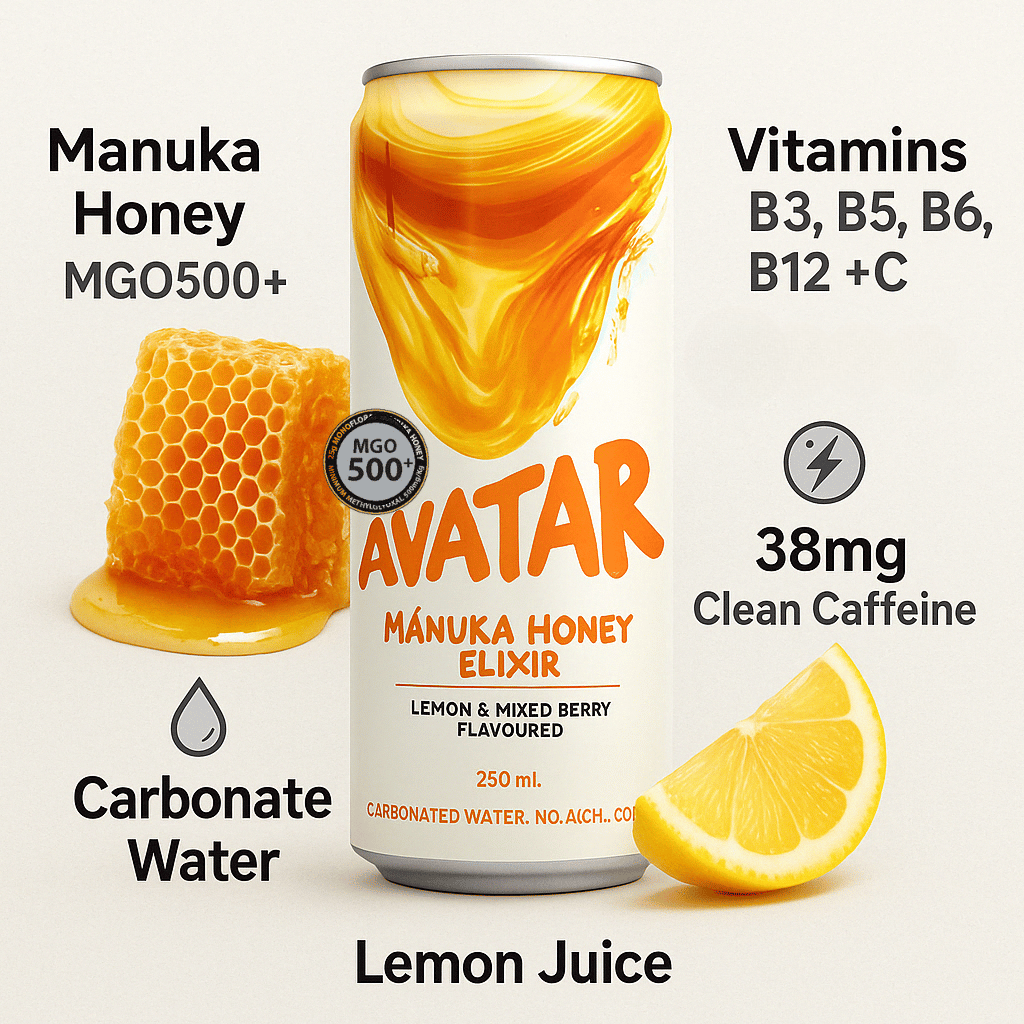
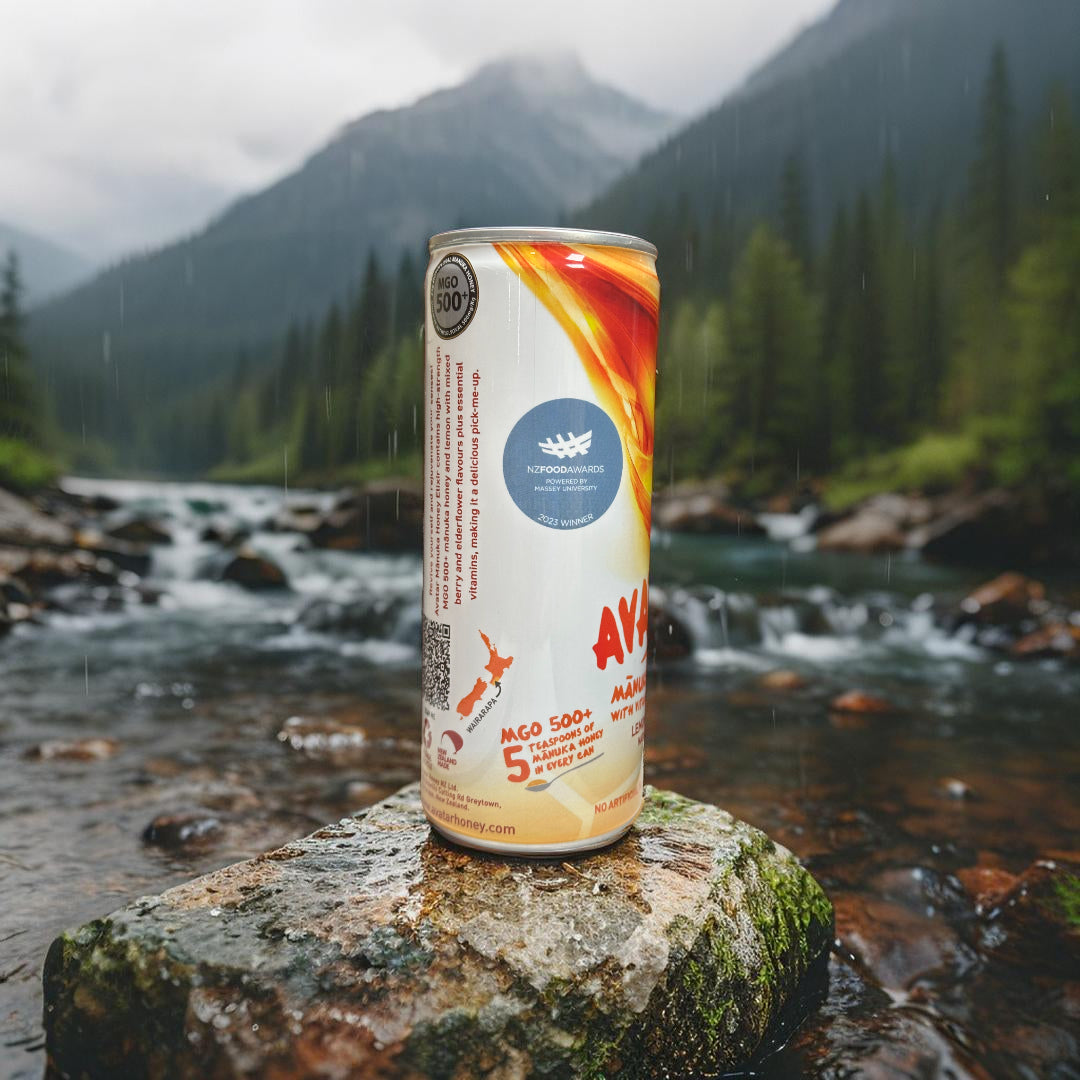
The jar contains Manuka honey, while Avatar Elixir is a lightly carbonated beverage made with certified MGO500+ Manuka honey, lemon, elderflower, B vitamins, vitamin C, and clean caffeine. Keep the jar sealed and follow the directions on its own label. Store sealed Avatar Elixir cans according to the instructions printed on the can or outer packaging.
Do not apply advice about warming crystallized honey to a sealed carbonated can. The jar guidance is only for the honey jar.
When should you contact the merchant about the jar?
Contact the merchant when the concern involves damaged packaging, a compromised seal, possible contamination, foreign material, or an abnormal odour rather than crystallization alone.
It is helpful to retain the jar, lid, outer packaging, and any visible batch information. Clear photographs of the seal, label, and contents can also help the merchant understand what you are seeing. Do not taste the honey merely to investigate a jar that appears damaged or contaminated.
What is the key takeaway about crystallized Manuka honey?
Crystallization is a natural physical change involving honey's sugars. Fine crystals, thickening, creaminess, or a mixture of liquid and solid areas do not by themselves show spoilage, adulteration, or poor quality.
Keep the jar sealed, use clean and dry utensils, follow its label, and use gentle warmth only if you prefer a softer texture. If the packaging is damaged or the honey has signs not explained by normal crystallization, contact the merchant before using it.
These follow-up points explain jar-to-jar texture differences and practical ways to handle crystallized Manuka honey.
Why can two bonus Manuka honey jars look different?
Two jars can develop different textures because crystallization is influenced by temperature, time, glucose-to-water balance, small natural particles, and existing crystals. These factors can interact differently, so one jar may look smooth and fluid while another appears thick, creamy, or grainy. Texture alone does not compare their MGO grade or establish a quality difference.
Will stirring crystallized honey make it stay smooth?
No. Stirring can make unevenly crystallized honey more consistent, but it does not change the natural sugar balance that allows crystals to form. Use a clean, dry spoon, and expect that crystals may return later, including after the honey has been gently warmed.
Should I microwave the honey jar to soften it?
Use gradual warming instead of rapid or intense heating. Check the jar label first, then keep the jar closed and place it in comfortably warm water if the instructions allow. This gently softens the honey without adding water to it. Do not apply this jar guidance to a sealed carbonated Avatar Elixir can.