


Short answer: Yes, a Manuka honey drink can be a better mixer than soda when you want sweetness, citrus, floral aroma, and light carbonation in one pour. It will not replace every soda or tonic, but it can make simple cocktails and mocktails taste more considered without requiring a full collection of juices, syrups, and garnishes.
You are setting out drinks for dinner, a picnic, or a few friends at home. You want the options to feel thoughtful, but you do not want to build a full bar or spend the evening measuring ingredients. This is where a flavour-led Manuka honey drink can be useful.
Unlike plain soda water, it contributes more than bubbles. Unlike a heavy syrup, it also lengthens the drink. Lemon provides brightness, elderflower adds a soft floral note, and honey brings rounded sweetness. Together, these elements can turn a straightforward pour into a complete-tasting drink with very little effort.
When is a Manuka honey drink better than soda as a mixer?
A Manuka honey drink is often the better mixer when the drink needs flavour, sweetness, acidity, aroma, and sparkle at the same time. Soda is better when you only want dilution and carbonation without changing the original flavour very much.
The choice depends on the role you need the mixer to play. Most mixers do one or more of the following:
- Lengthen: Increase the volume and soften the intensity of the base drink.
- Sweeten: Balance sharp, bitter, or strong flavours.
- Add acid: Bring the freshness commonly associated with lemon, lime, or other citrus.
- Add aroma: Introduce floral, herbal, fruity, or spiced notes.
- Create sparkle: Add carbonation and a lively finish.
Plain soda water is excellent at lengthening and adding sparkle, but it contributes little sweetness, acidity, or aroma. A Manuka honey drink can cover all five roles, depending on its ingredients and flavour balance. That makes it particularly useful when you want a simple serve to taste complete rather than merely diluted.
It is not automatically better in every glass. Delicate spirits, wines, or alcohol-free aperitifs may need the neutrality of soda. A flavoured honey drink is more suitable when its citrus, floral, and gently sweet character complements the base.
How does a Manuka honey drink compare with soda, tonic, juice, and syrup?
A Manuka honey drink sits between several familiar mixer categories. It is more flavourful than soda, generally lighter and more sparkling than juice, less concentrated than syrup, and softer in character than a distinctly bitter tonic.
Is it more flavourful than soda water?
Yes. Soda water primarily adds dilution and carbonation, while a Manuka honey drink can also add sweetness, citrus, and aroma. Choose soda when the ingredients already taste balanced. Choose the honey drink when the glass needs more shape and personality.
For example, soda may suit a botanical spirit that already contains prominent citrus and floral notes. A Manuka honey mixer may work better with a simpler base that benefits from a ready-made layer of lemon, honey, and elderflower.
Is it softer than tonic water?
It can be. Tonic water is defined by its characteristic bitterness, while a Manuka honey drink can provide a rounder balance of sweetness, citrus, and florals. This makes it useful for people who enjoy carbonation but do not want bitterness to dominate the drink.
Tonic remains the stronger choice when a crisp, bitter edge is central to the serve. A honey-based mixer is a different option, not a direct imitation.
Is it lighter than using juice?
A lightly carbonated Manuka honey drink can feel lighter and more lifted than a juice-based mixer. Juice usually adds fuller fruit flavour and more body, but it does not provide sparkle unless it is combined with another carbonated ingredient.
A honey, lemon, and elderflower drink is useful when you want citrus freshness without turning the serve into a fruit-heavy drink. It can also reduce the number of open bottles on the table because the flavour and carbonation come together.
Is it easier to balance than syrup?
Yes, particularly for casual home serving. Syrup is concentrated and usually needs to be balanced with citrus, water, soda, or another mixer. A ready-to-pour Manuka honey drink already combines sweetness with dilution and carbonation.
Syrup offers more control for precise cocktail making. A complete honey drink offers more convenience when the goal is a relaxed, balanced serve rather than a carefully measured recipe.
What does Manuka honey contribute to a mixed drink?
Manuka honey contributes a rounded sweetness and distinctive honey character that can feel more layered than plain sugar. In a finished beverage, its effect depends on the complete recipe, including the amount of honey and the presence of citrus, florals, water, and carbonation.
Honey sweetness is often perceived as warm and rounded rather than sharply sugary. Lemon can keep that sweetness from becoming heavy, while elderflower adds a fragrant top note. Light carbonation lifts those aromas and gives the drink a cleaner finish.
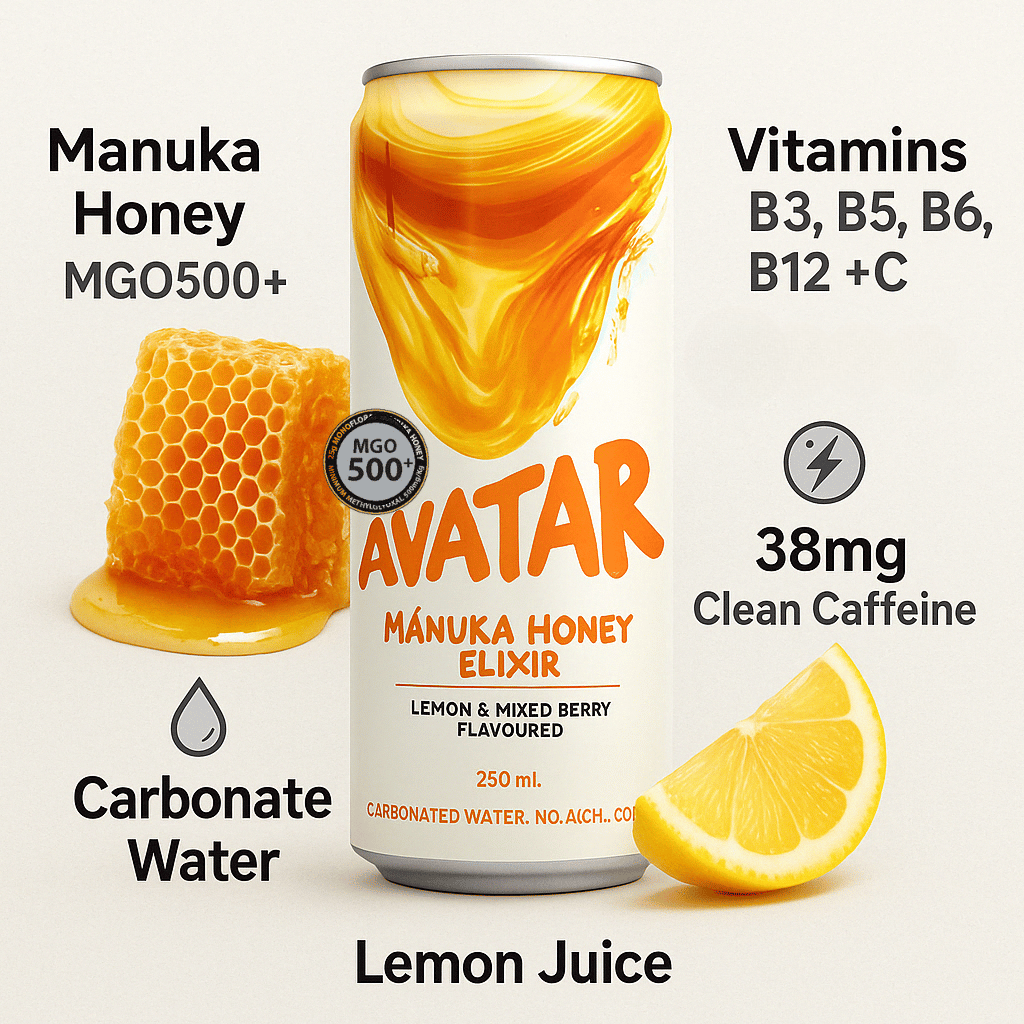
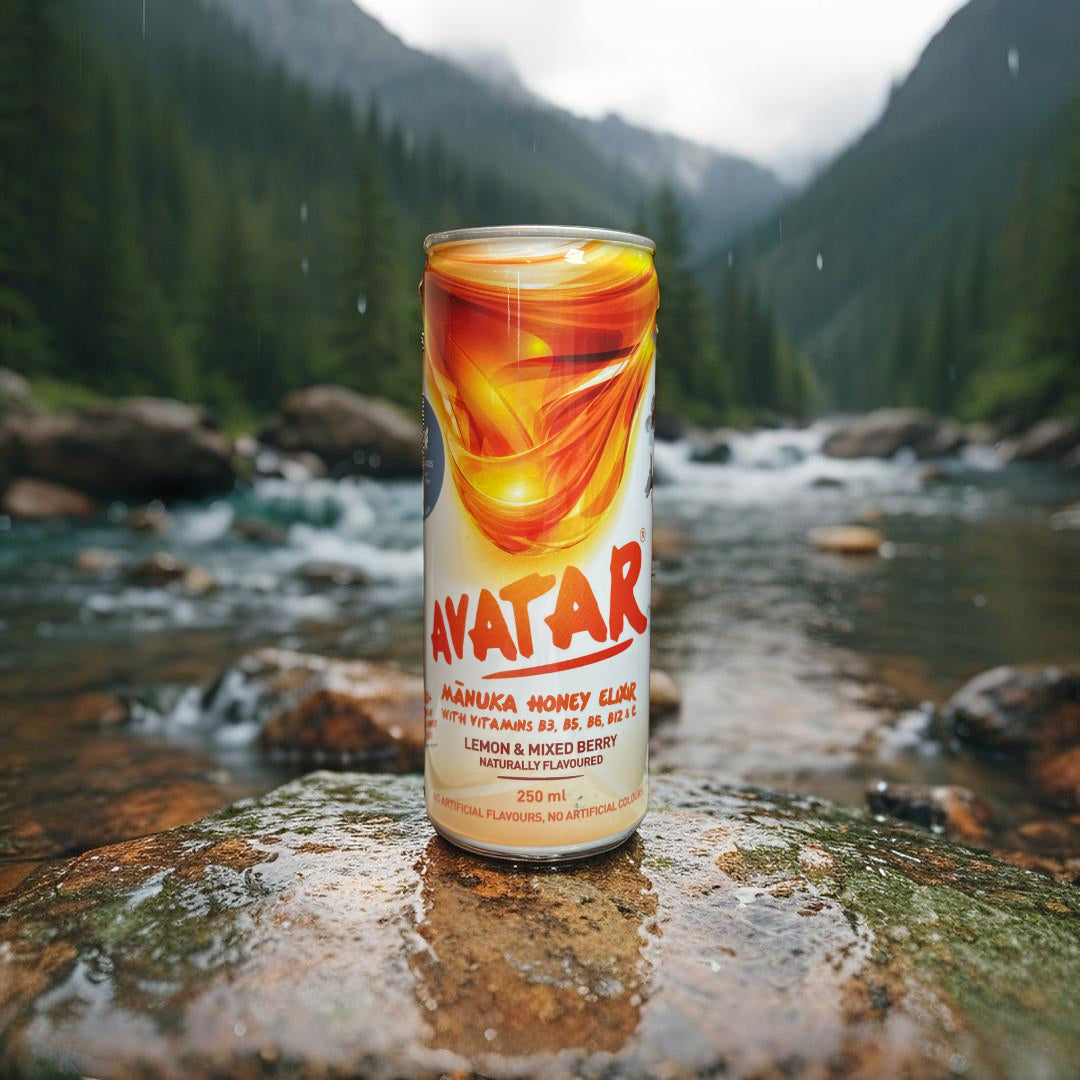
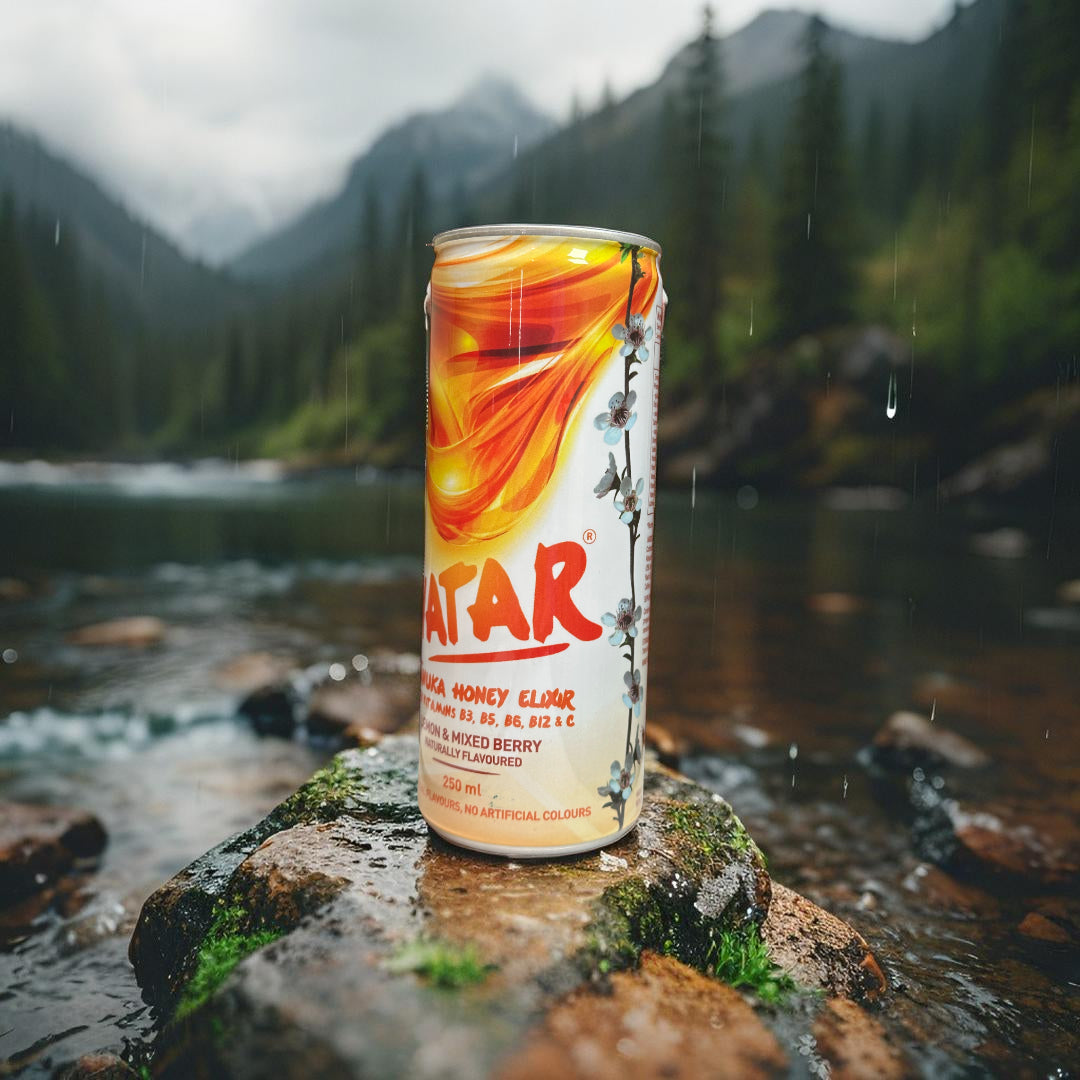
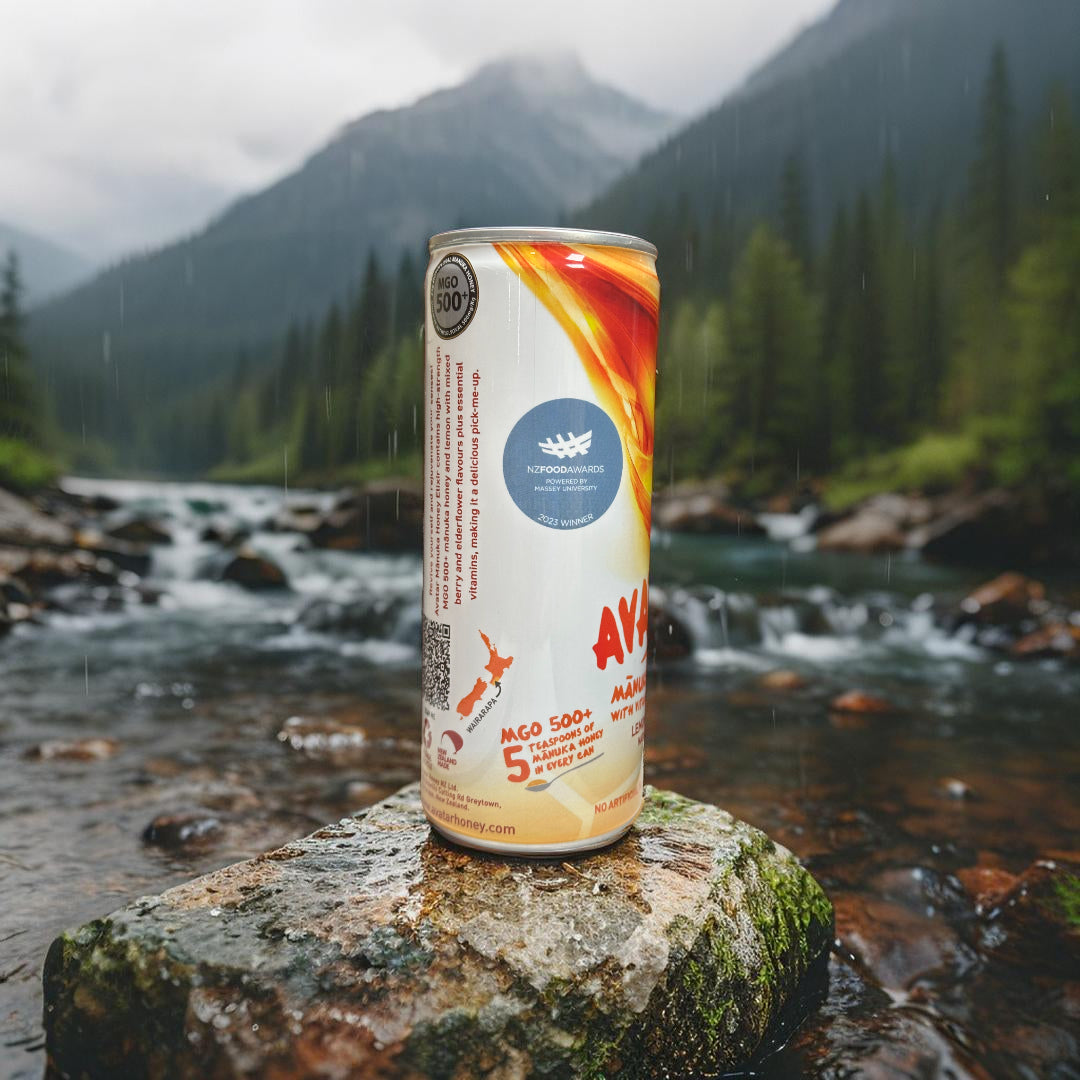
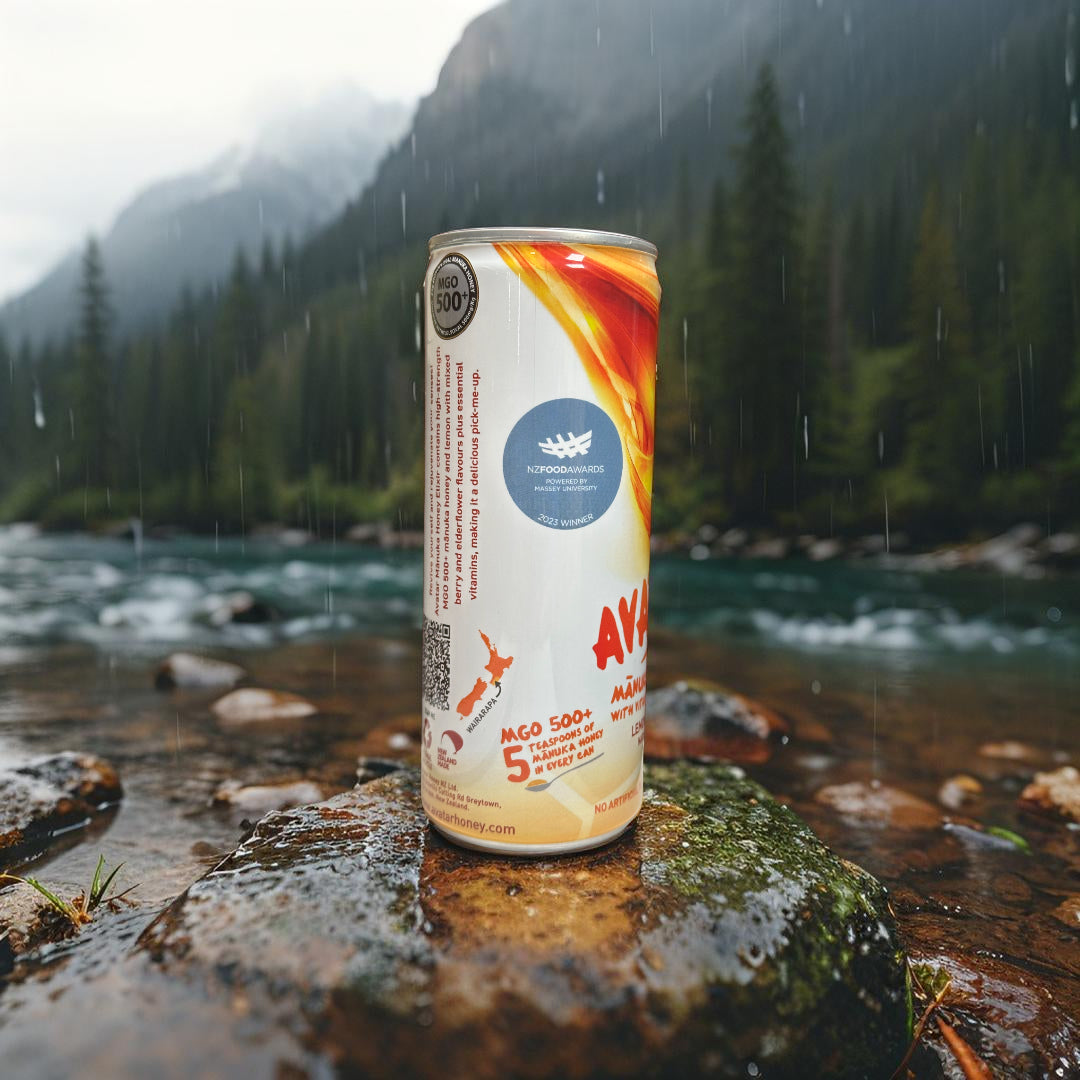
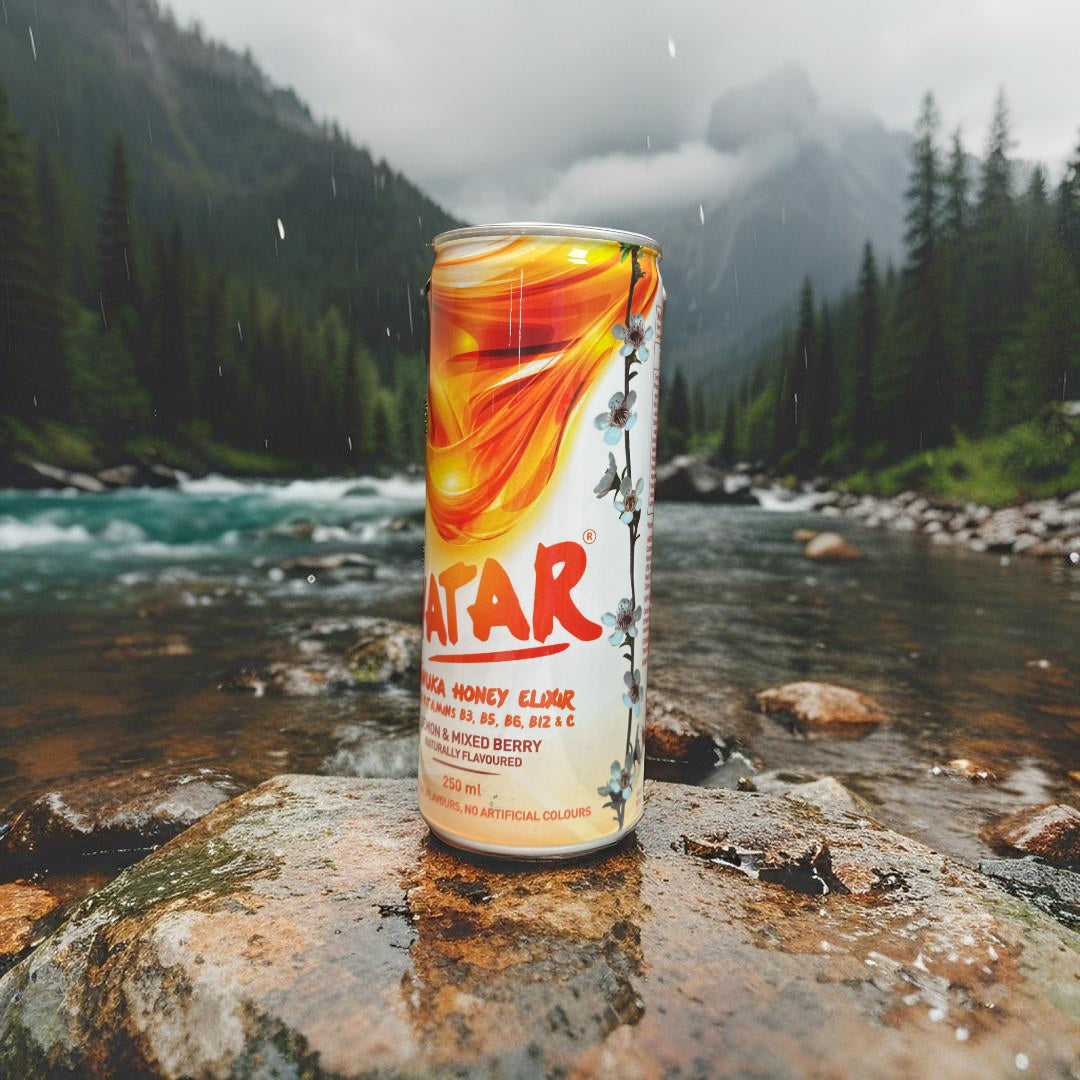
Avatar Elixir brings these elements together as a New Zealand Manuka honey, lemon, and elderflower mixer. It is made with certified MGO500+ Manuka honey, alongside lemon, elderflower, B vitamins, vitamin C, clean caffeine, and lightly carbonated water. From a mixing perspective, the important point is that it brings sweetness, citrus, florals, and sparkle in a single chilled can.
Because Avatar Elixir contains caffeine, check the label and consider the preferences of your guests before serving it. This is especially relevant when planning evening drinks or combining it with alcohol. A good host should make the caffeine content clear rather than treating it like an unflavoured soda.
Which mocktails work well with a Manuka honey drink?
Manuka honey drinks work particularly well in simple mocktails built around fresh herbs, tart fruit, cucumber, or alcohol-free botanical bases. The mixer already provides several balancing elements, so additional ingredients can stay minimal.
- Cucumber and mint: Add cucumber ribbons and lightly pressed mint to ice, then top with the honey drink. The cucumber keeps the serve fresh while mint complements the elderflower.
- Berry and lemon: Gently crush a few raspberries or blackberries in the glass, add ice, and top with the mixer. Tart berries provide contrast to the rounded honey note.
- Ginger and citrus: Add a small splash of ginger juice or an alcohol-free ginger concentrate, then top with the honey drink. Ginger brings warmth while lemon maintains brightness.
- Botanical spritz: Combine an alcohol-free botanical aperitif with the honey drink over plenty of ice. Choose a base with herbal or gently bitter notes to balance the sweetness.
- Apple and elderflower highball: Use a modest splash of cloudy apple juice and top with the honey drink. Apple adds body without covering the floral aroma.
Keep additions restrained. Because the mixer already contains honey, lemon, elderflower, and carbonation, large amounts of syrup or juice can make the result overly sweet or mask its more delicate flavours.
Which simple cocktails pair with a Manuka honey mixer?
A Manuka honey mixer pairs best with clean, botanical, herbal, or gently aged flavours that leave room for its lemon and elderflower notes. Simple highball-style serves are usually more suitable than complex cocktails containing several sweet ingredients.
- Gin: Botanical gin is a natural partner for lemon and elderflower. Serve a modest measure over ice and lengthen with the honey drink.
- Vodka: A neutral vodka allows the honey, citrus, and floral flavours to remain prominent. Add a lemon peel or cucumber slice if desired.
- White rum: A light rum can add soft sugarcane character without overwhelming the mixer. Mint can bring a fresh aromatic contrast.
- Blanco tequila: Tequila’s earthy and citrus-friendly profile can work with lemon and honey. A small pinch of salt around part of the rim can sharpen the overall flavour.
- Whisky: A lighter whisky can pair with honey and lemon, particularly when served long over ice. Avoid adding extra syrup until you have tasted the drink.
The simplest approach is to begin with a chilled glass, plenty of ice, a modest amount of the chosen base, and enough Manuka honey drink to lengthen it. Taste before adding citrus or sweetener. The mixer may already provide the balance you need.
How should you serve a Manuka honey mixer for guests?
Serve it well chilled, with ice and a small selection of optional garnishes. This keeps hosting easy while allowing guests to customise their drinks without turning the table into a complicated cocktail station.
- Chill the cans thoroughly. Cold temperature helps the carbonation feel crisp and keeps honey sweetness from seeming too prominent.
- Provide plenty of ice. Large cubes are useful for slow dilution during dinner or a relaxed evening.
- Offer two or three garnishes. Lemon wheels, cucumber ribbons, mint, rosemary, or fresh berries are enough for most serves.
- Include alcohol-free bases. Alcohol-free aperitifs, chilled tea, cucumber, and tart fruit give non-drinkers options that feel equally considered.
- Keep the cans visible. Guests can see the ingredients and caffeine information, and they can decide how much mixer they would like.
For a small gathering, the Avatar: Award Winning Elixir 12pk provides a practical format for stocking the fridge or filling an ice bucket. Whole cans also make it easy to offer the same mixer for both cocktails and mocktails, rather than buying separate bottles for each type of drink.
How can you prevent a honey-based mixed drink from becoming too sweet?
Use a dry or tart base, add plenty of ice, and avoid extra syrup until you have tasted the finished drink. Honey-based mixers are easiest to balance when the other ingredients contribute freshness, bitterness, herbs, or acidity rather than more sweetness.
A few practical adjustments can help:
- Choose unsweetened botanical or tea-based ingredients.
- Use fresh cucumber, mint, rosemary, or citrus peel for aroma without added sugar.
- Add a small squeeze of lemon if the finished drink needs more sharpness.
- Avoid combining several sweet elements, such as juice, liqueur, syrup, and a flavoured mixer.
- Use soda water alongside the honey drink if you want a drier, longer serve.
That final option is especially useful for guests with different preferences. A half-and-half pour of Manuka honey drink and soda water keeps the lemon, elderflower, and honey character while reducing its flavour intensity.
So, can a Manuka honey drink be a better mixer than soda?
Yes, when you want the mixer to do more than add bubbles. A Manuka honey drink can lengthen a serve while also contributing gentle sweetness, citrus brightness, floral aroma, and light carbonation. It is particularly useful for simple cocktails and mocktails that need to taste balanced without several separate ingredients.
Soda remains better when neutrality is the priority. Tonic is better when you want firm bitterness, juice when you want fuller fruit flavour, and syrup when you want precise control over sweetness. A Manuka honey drink earns its place when convenience and layered flavour matter most.
For dinner, a picnic, or a low-key night at home, that combination can make hosting easier. Chill the cans, put out ice and a few fresh garnishes, and let the mixer provide the honey, lemon, elderflower, and sparkle.
These practical details can help you serve a Manuka honey mixer with the right balance, sparkle, and guest information.
Can I replace simple syrup with a Manuka honey drink one-for-one?
No. A ready-to-drink Manuka honey mixer is less concentrated than syrup and also adds water, carbonation, lemon, and floral flavour. Use it to lengthen the whole drink rather than swapping it directly for a syrup measure. If the original serve contains syrup, leave that out first, add the mixer, then taste before adding extra sweetness.
Can Avatar Elixir work as a complete alcohol-free serve?
Yes. Avatar Elixir can be served chilled over ice as a simple mocktail-style option, with lemon, cucumber, mint, or berries if desired. Its Manuka honey, lemon, elderflower, and light carbonation already provide sweetness, acidity, aroma, and sparkle, so an alcohol-free aperitif or extra juice is not required.
Can I prepare a Manuka honey mixer pitcher in advance?
Partly. Prepare any still ingredients ahead and keep them cold, then add the carbonated mixer and ice close to serving. This helps retain sparkle and avoids unnecessary dilution. Taste the finished pitcher before adding juice or syrup, because a honey, lemon, and elderflower mixer already contributes sweetness and acidity.
Should guests know that Avatar Elixir contains caffeine?
Yes. Avatar Elixir contains clean caffeine, so keep the can visible or mention the caffeine when serving it. Guests can then consider their own preferences, particularly for evening drinks or when combining the mixer with alcohol.