



Guarana is a plant whose seeds contain caffeine. When you see it on an energy drink label, it identifies a botanical ingredient, not the amount of caffeine in the finished drink. That distinction matters: a plant name, an extract weight and a caffeine quantity answer different questions.
What is guarana?
Guarana, known botanically as Paullinia cupana, is a South American climbing shrub. Its caffeine-containing seeds are the part relevant to this ingredient discussion. “Botanical” simply means relating to a plant; it does not describe a particular strength or effect.
On a beverage label, you may encounter the name guarana or guarana extract. Neither is just another name for pure caffeine. Guarana is the plant ingredient, while caffeine is a substance found within it.
Why does guarana appear in energy drinks?
Guarana can serve as a caffeine-bearing ingredient in a beverage. That provides a straightforward reason for its use in energy drinks, without needing to assign it special properties beyond the information available.
It also explains why “guarana versus caffeine” can be a misleading comparison. The two are not separate, interchangeable measures of strength: one names a botanical ingredient and the other names a constituent. To compare two drinks meaningfully, you need information about the finished beverages, not just which one features a plant name on the front of the can.
What the ingredient name cannot tell you
The caffeine quantity is not the extract weight
Milligrams measure mass, so the important question is what is being measured? A number beside “guarana extract” describes the amount of that extract. A number beside “caffeine” describes the amount of caffeine. Those entries are not automatically interchangeable.
To work out the caffeine contribution from an extract weight, you would need explicit information about the caffeine content of that particular extract. The name “guarana extract” does not supply that relationship, and its weight alone is not enough to calculate it.
For a buying decision, the more useful figure is the total caffeine in the finished drink, including any contributed by guarana. An ingredient quantity should not be treated as a substitute for that total.
Natural origin does not establish gentler effects
“Natural” describes origin. It does not, on its own, establish that a drink will feel gentler, produce less intense stimulation or guarantee an absence of jitters. Likewise, a botanical name does not establish how long a drink’s effects will last.
This distinction also matters when comparing natural and synthetic caffeine. An origin description is not evidence of a difference in effects. You can value a drink’s ingredient choices without treating those choices as a promise about how you will feel.
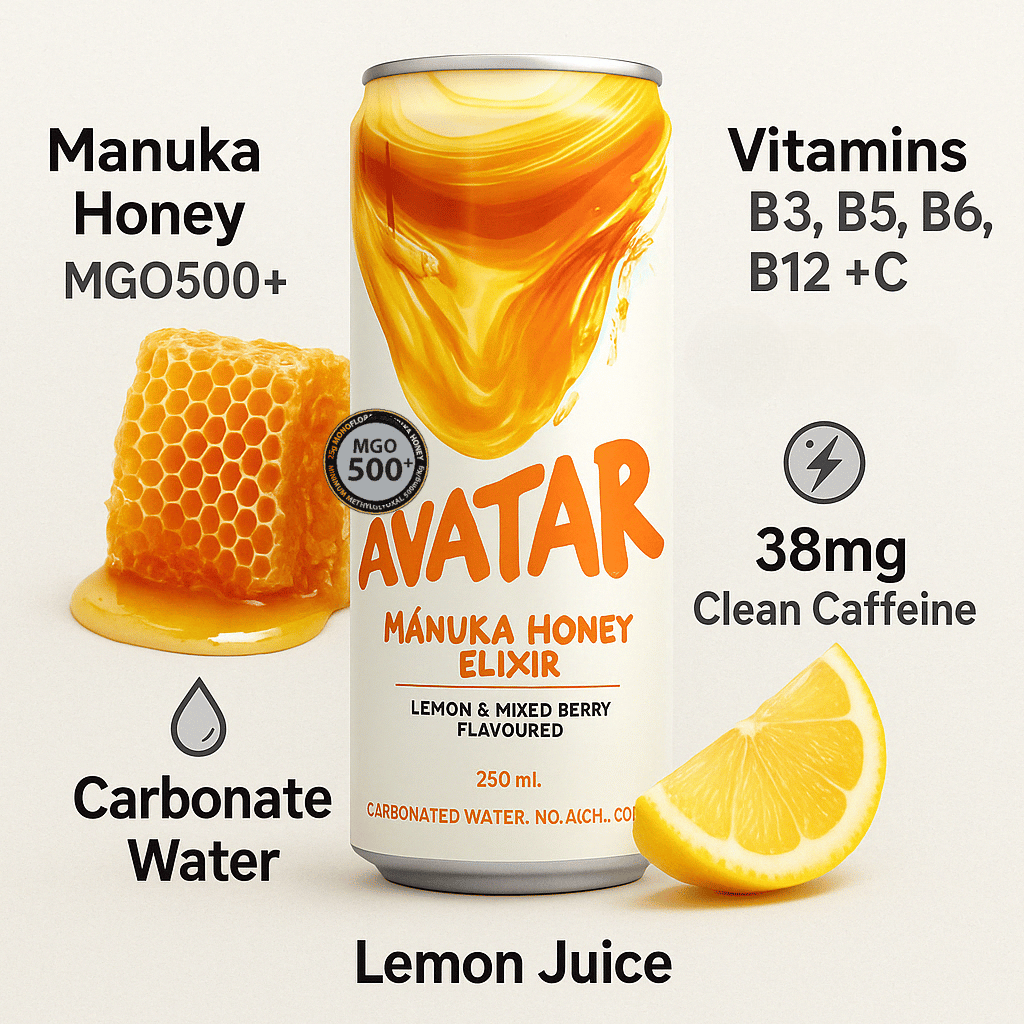
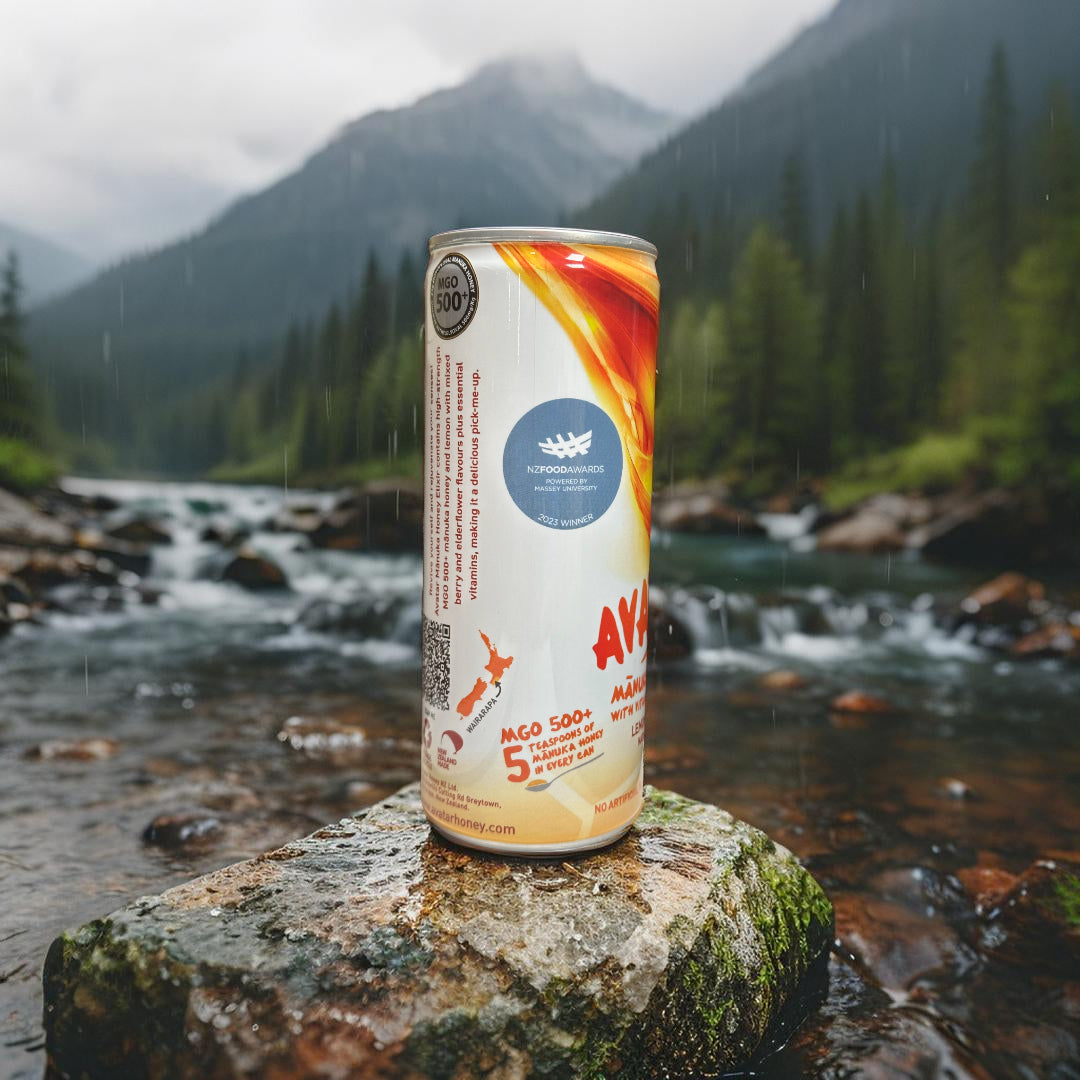
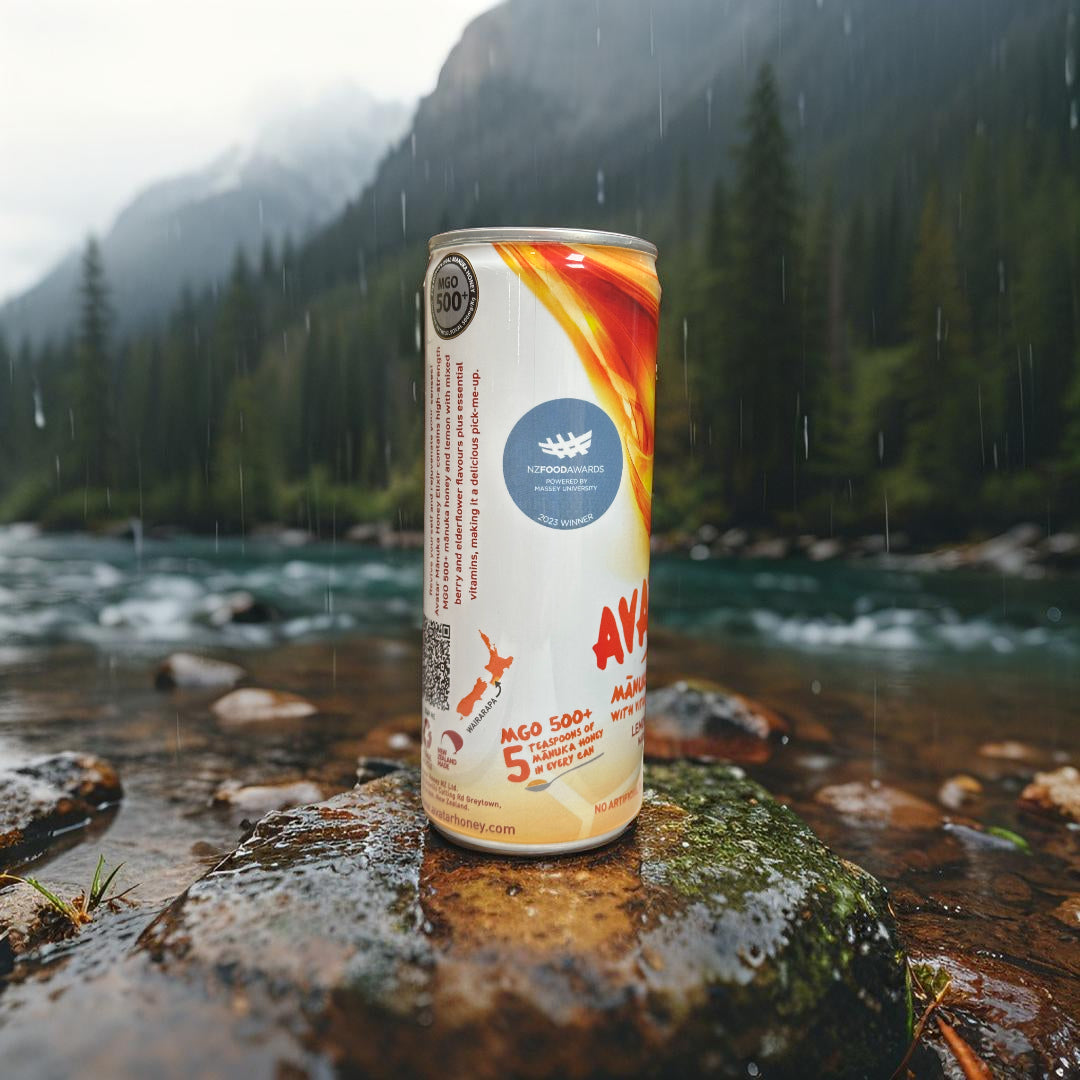
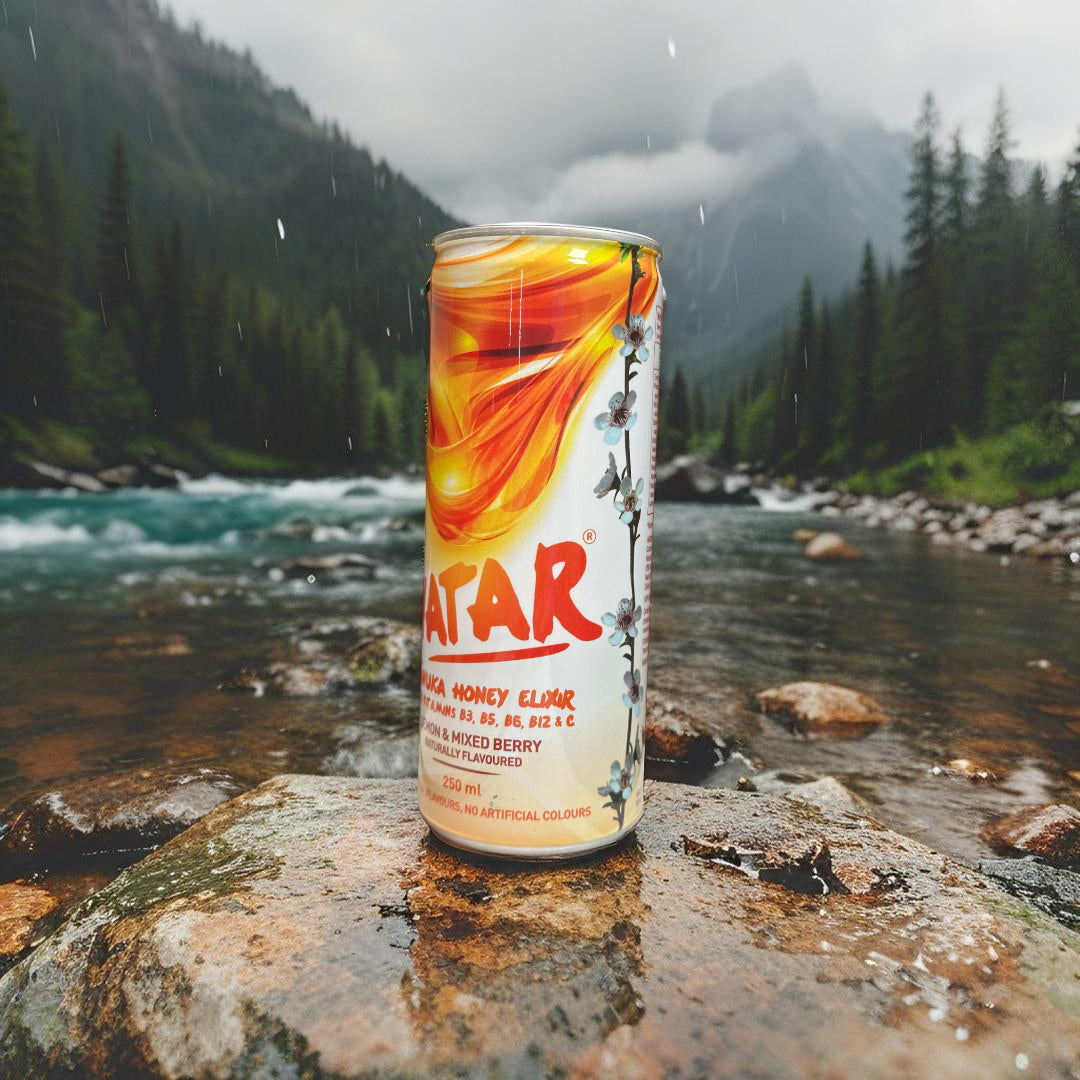
For example, we describe Avatar Elixir as containing natural caffeine, alongside MGO500+ Mānuka honey, lemon and elderflower. That wording does not specify a botanical caffeine source, so it should not be read as a claim that Avatar Elixir contains guarana.
How to turn the label into a useful comparison
Once you recognise guarana, the next step is not to guess its strength. Look for the finished-drink information that lets you compare like with like:
- Find the total caffeine quantity. Distinguish a caffeine declaration from the weight of guarana or another ingredient.
- Check the volume it applies to. A figure per serving, per 100 ml or per container describes a different basis. Check whether a stated serving matches the amount in the can or bottle.
- Ask a specific question if the information is unclear. “How many milligrams of total caffeine, including any from guarana, are in the full can?” is more useful than asking whether a drink is strong or gentle.
That approach lets you appreciate the botanical ingredient while making your comparison using the drink’s actual caffeine information. For a broader comparison, read our article How Much Caffeine Is in Coffee, Tea, and Natural Energy Drinks?
One practical clarification when a label lists both guarana and caffeine.
Should I add the guarana amount to the stated total caffeine?
No. If the figure is explicitly the finished drink’s total caffeine, it already includes caffeine contributed by guarana. Adding the guarana extract weight would mix two different measurements and would not give a valid caffeine total. If the label does not make clear whether its caffeine figure is a total, ask the maker before calculating.