


Quick answer: Honey, bee pollen and royal jelly are different ingredients, not interchangeable names. Honey is made mainly from nectar, bee pollen is collected flower pollen, and royal jelly is a secretion made by worker bees. A drink containing honey does not automatically contain added bee pollen, royal jelly or propolis.
Three bee ingredients at a glance
The shared connection to bees can make these ingredients sound more alike than they are. Their origins are different, and those differences matter when you read a beverage label.
| Ingredient | What it is | What to look for on a drink label |
|---|---|---|
| Honey | A sugar-rich food bees make, usually from nectar, by processing it and reducing its water content. | Honey or a named honey, such as Mānuka honey, identifies the honey ingredient used. |
| Collected bee pollen | Flower pollen gathered by bees and packed into small pellets for transport to the hive. | A bee pollen ingredient declaration, rather than an assumption based on the presence of honey. |
| Royal jelly | A milky secretion produced by worker bees as food for the queen and young larvae. | A royal jelly ingredient declaration, including the preparation or form where stated. |
Honey and bee pollen: natural traces are not an added ingredient
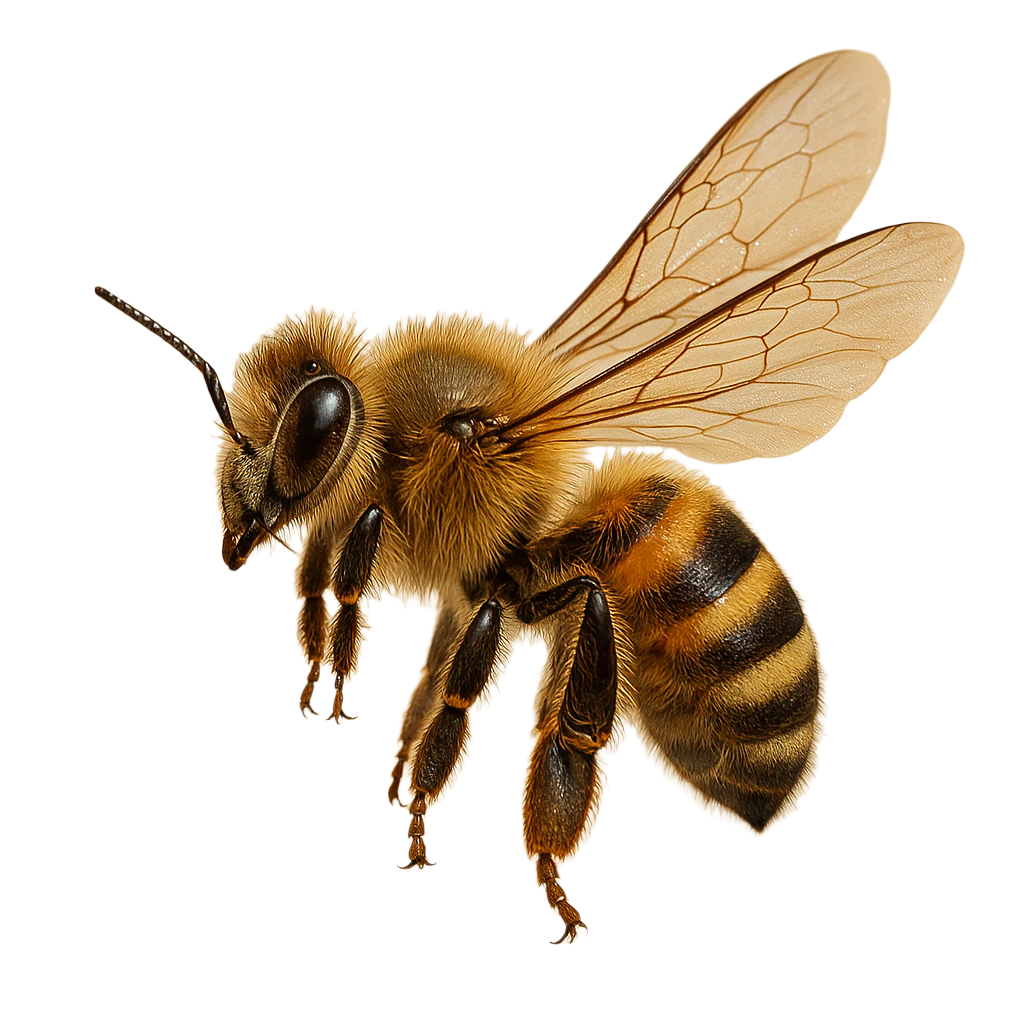
Honey begins with a sugary liquid collected by bees. Flower pollen, by contrast, consists of tiny grains produced by plants for reproduction. Bees gather pollen as a food resource for the colony. The collected pellets are the material commonly sold as bee pollen.
In drinks, honey contributes sweetness and flavour. Stirring honey into tea or using it in a bottled beverage is therefore a different recipe choice from adding collected bee pollen.
Honey can naturally contain small amounts of pollen. That does not mean a beekeeper or drink maker has added a bee pollen preparation. Pollen can accompany honey through the bees’ contact with flowers and the collection process; its presence and amount can vary.
Think of the distinction as a naturally occurring constituent versus a deliberately added ingredient. A beverage made with honey may contain pollen carried within that honey, but this does not make its recipe equivalent to one formulated with collected bee pollen.
Equally, an ingredient list is not a microscopic inventory. It describes the ingredients used in the recipe, not every naturally occurring trace within them.
Royal jelly is not a richer version of honey
Royal jelly has a different biological origin. Worker bees produce it from glands, rather than collecting it from flowers. Its role as food within the colony does not make it a type of honey or a form of pollen.
For a beverage, adding royal jelly is a separate formulation choice. The word honey on a label does not declare a royal jelly ingredient, and a honey grade does not indicate royal jelly content.
Propolis is separate again. It is a resinous material bees make using collected plant resins and other hive materials. Honey’s presence in a drink is not evidence that a propolis preparation has been added either.
How to read a bee-related beverage label
Start with the named ingredients, not the hive imagery or broad wellness language on the front of the pack.
- Identify the bee ingredient actually named. Honey, bee pollen and royal jelly describe different materials. One name should not be treated as shorthand for all three.
- Read any preparation or blend details. If the label specifies a powder, extract or blended ingredient, keep that distinction in mind. Different preparations are not automatically interchangeable.
- Separate ingredient identity from quantity. Knowing that an ingredient is present does not tell you how much is used unless an amount is also declared.
- Ask about unclear wording. If a blend description leaves you unsure, ask the maker which bee-derived ingredients have been deliberately added.
If bee-product allergies affect your choices, discuss the specific drink and its ingredients with a qualified clinician. These terminology distinctions alone cannot establish personal suitability.
Avatar Elixir: a Mānuka honey drink example
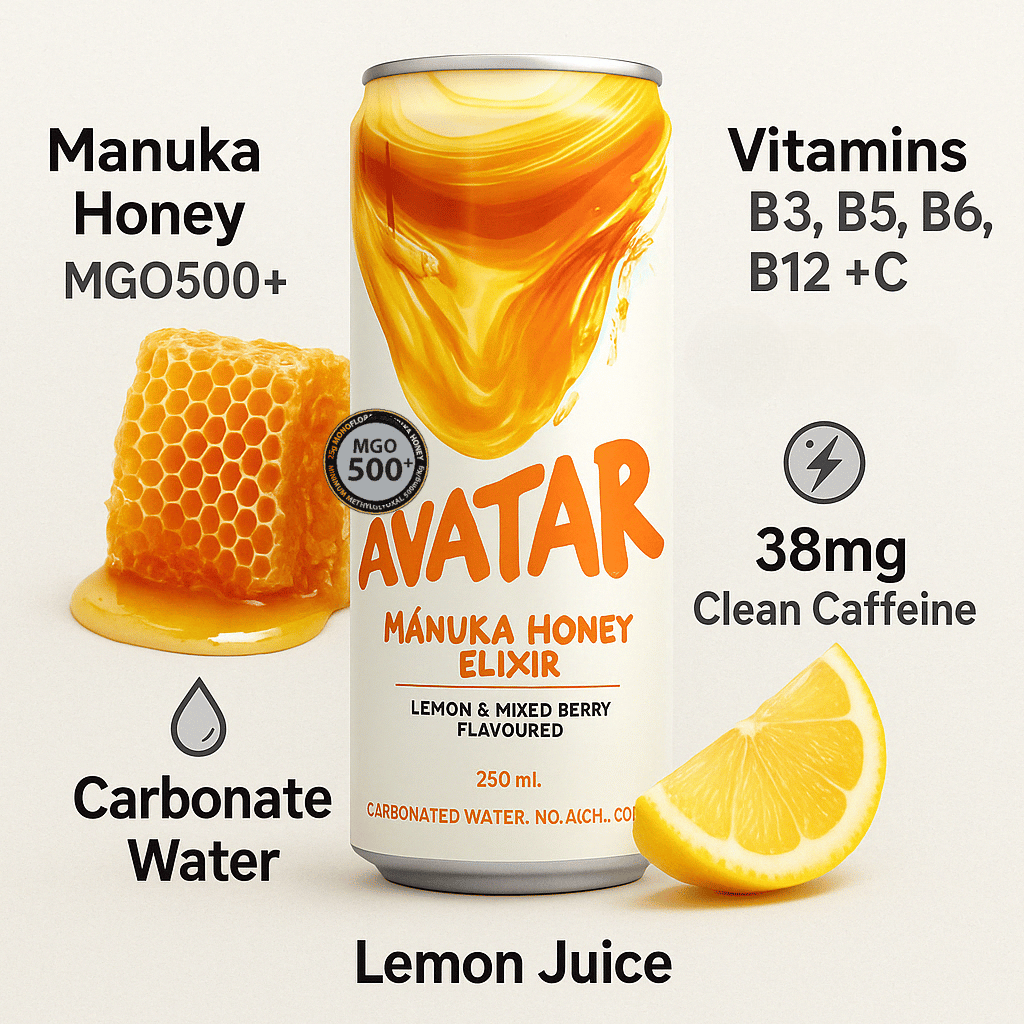
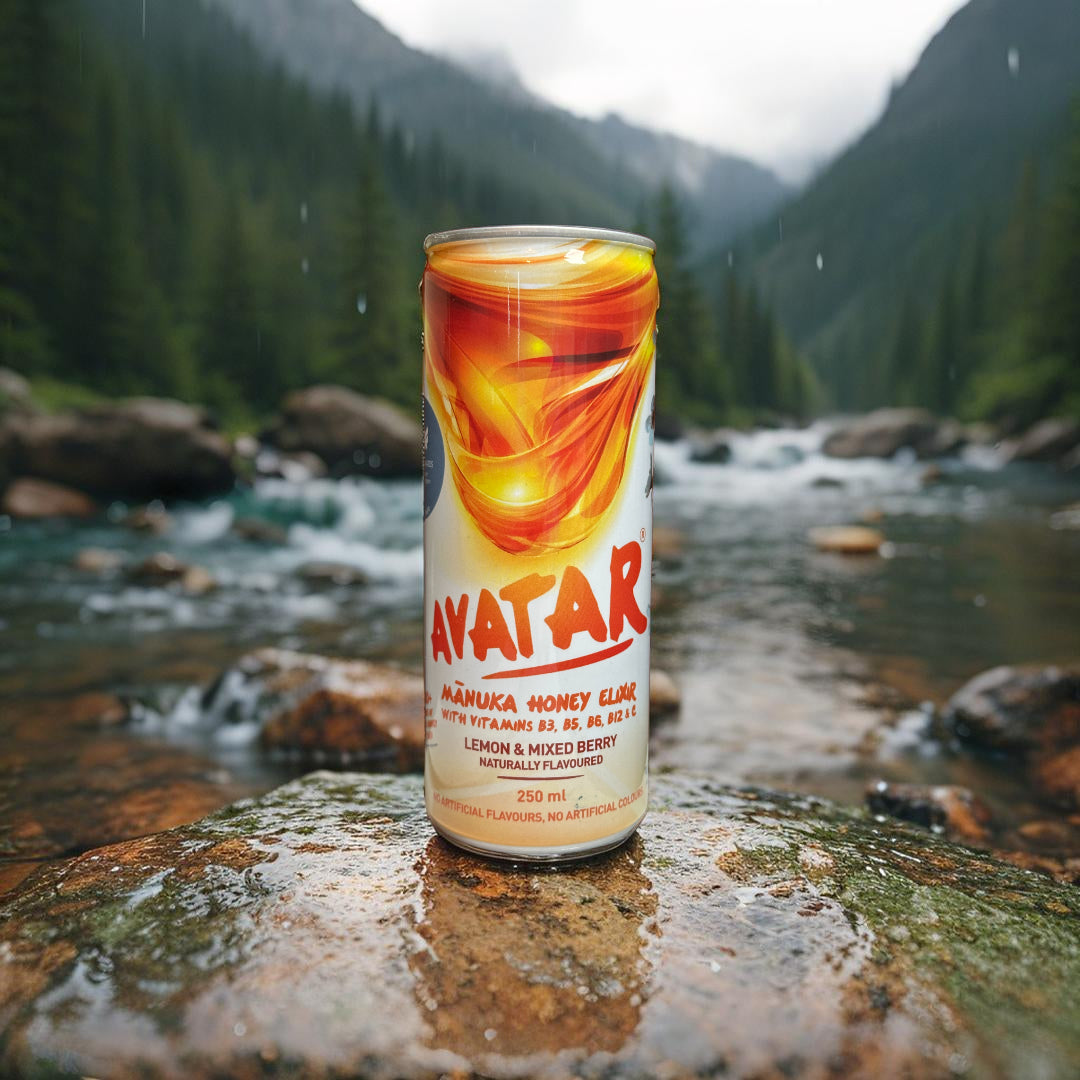
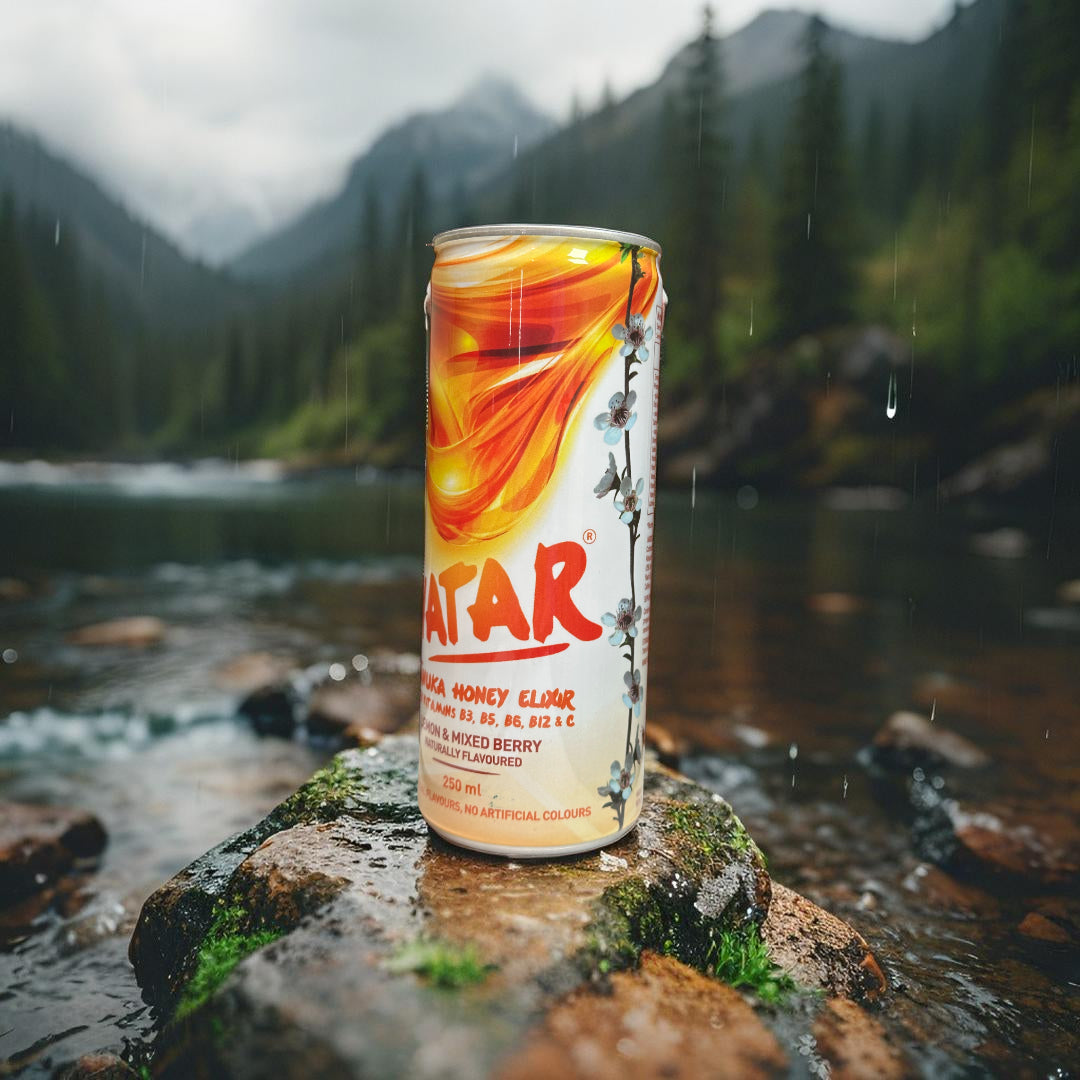
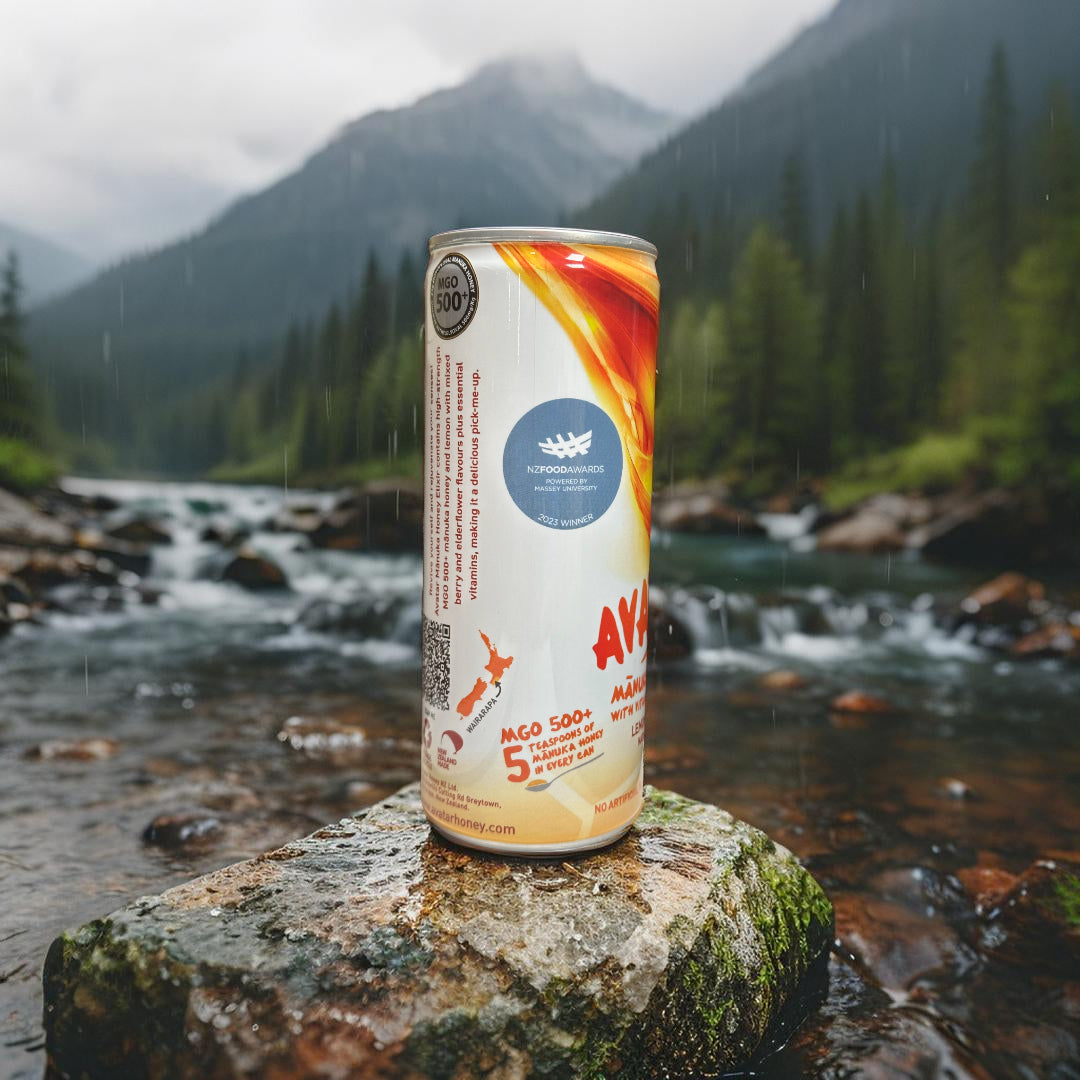
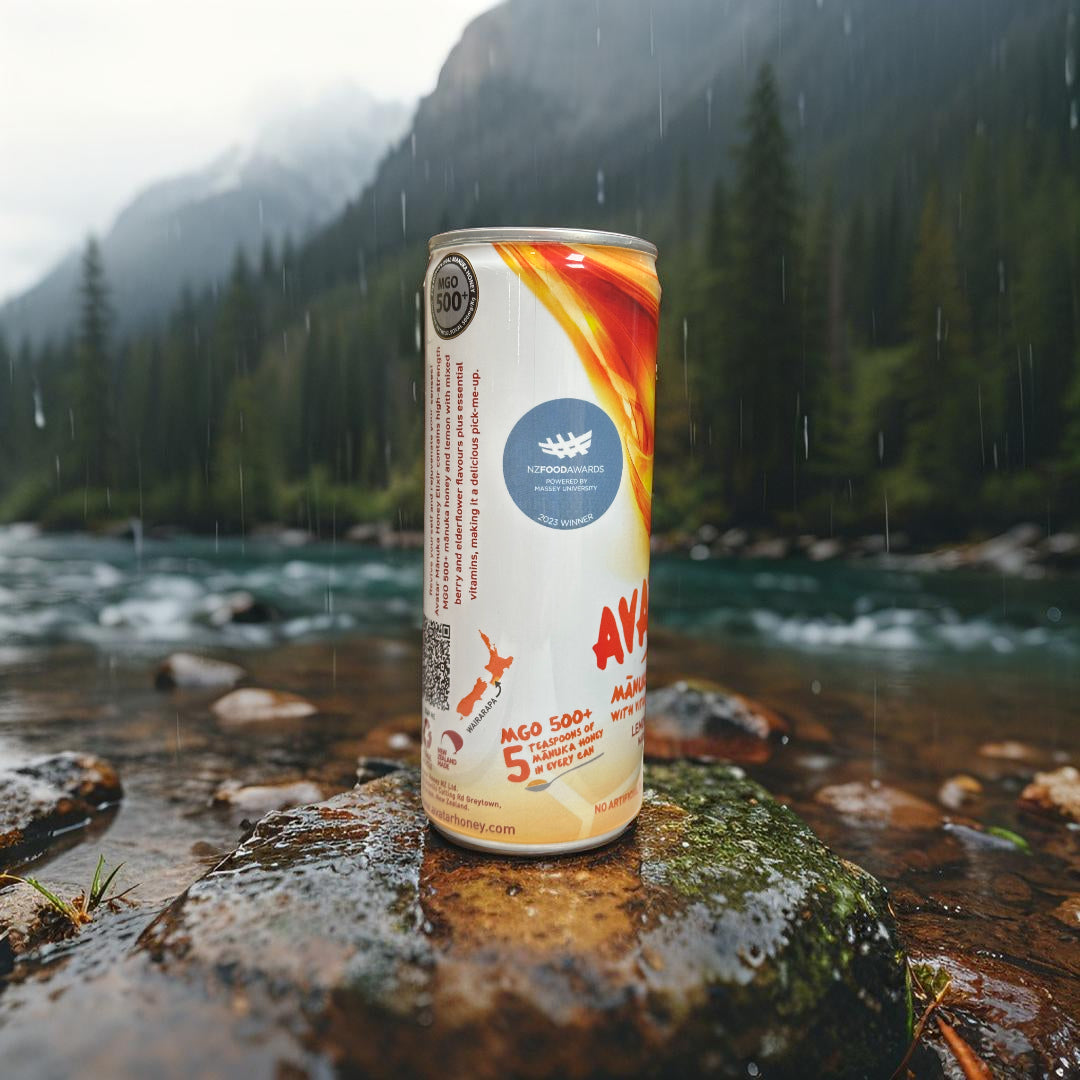
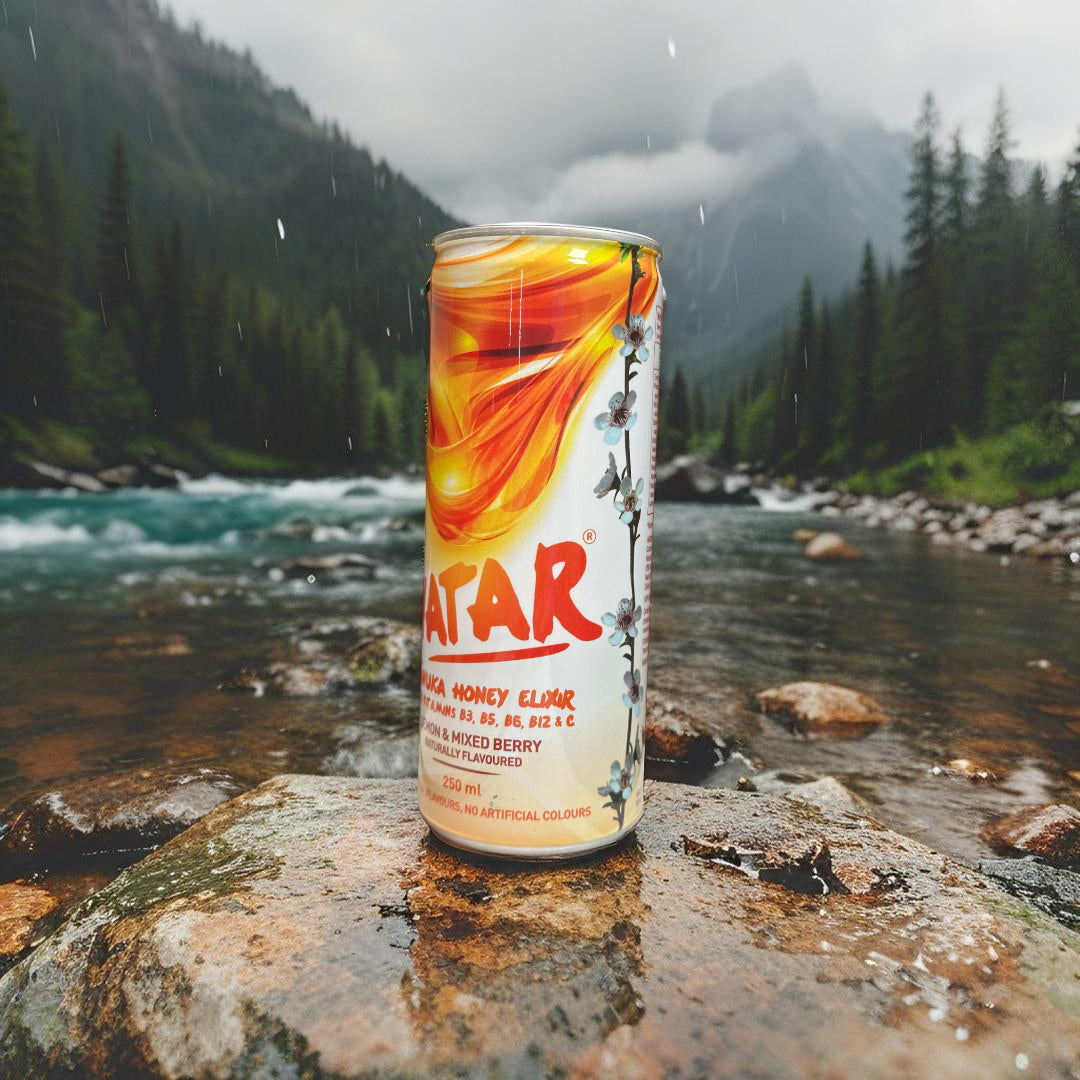
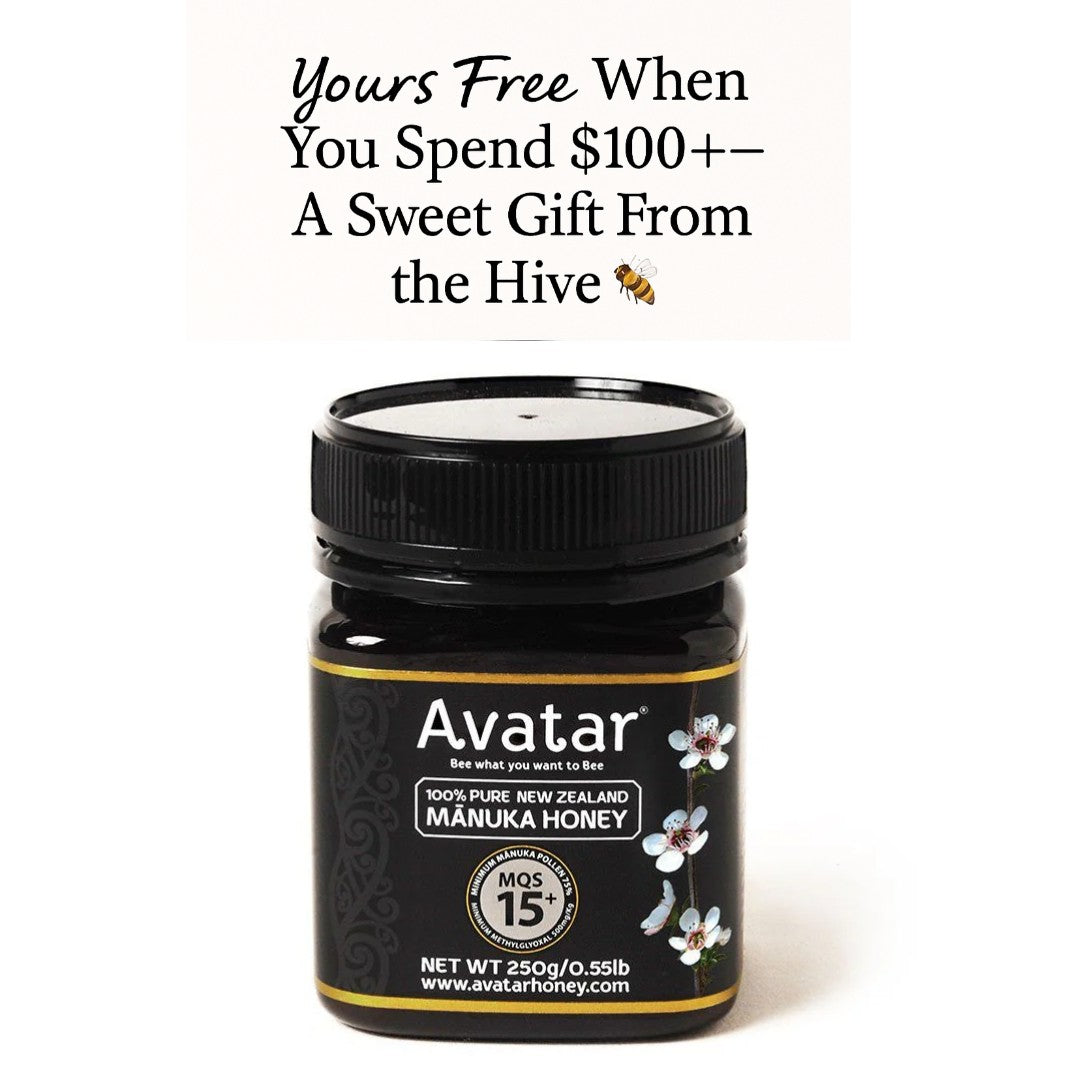
Avatar Elixir is made with MGO500+ Mānuka honey, alongside lemon, elderflower, B vitamins, vitamin C, caffeine and lightly carbonated water. It is a food and beverage product, sold in a 250 ml can.
For this comparison, the important detail is its declared Mānuka honey ingredient. Honey brings sweetness and its own flavour to the citrus and floral combination. The MGO500+ designation describes the honey ingredient; it is not a statement about bee pollen or royal jelly content.
Read that declaration as information about the honey used, not as a claim that the drink contains every material associated with a hive.
Why evidence about one bee product cannot be transferred to another
A shared origin does not make these ingredients chemically equivalent. Evidence about royal jelly is not automatically evidence about honey, and information about collected bee pollen does not establish the properties of pollen traces within honey.
When assessing a claim, three distinctions are especially useful:
- The material: Was the evidence about honey, collected pollen, royal jelly or something else?
- The preparation and amount: Was it the same form, used in a comparable quantity?
- The context: Was the work relevant to a finished beverage, or to an ingredient under different conditions?
Even evidence about a particular honey needs to be assessed for relevance to the amount used and the finished drink. Simply including a bee-derived ingredient does not establish a health benefit.
The practical takeaway is straightforward: choose a honey drink for its declared recipe and the flavour you want. Treat added bee pollen and royal jelly as separate ingredient choices, not hidden extras that the word honey promises.
A few practical clarifications on comparing labels, choosing ingredients and handling bee-based drinks.
Can I substitute bee pollen for honey in a drink?
Do not assume they are interchangeable. Honey contributes sweetness and flavour, while collected bee pollen is a different material, commonly supplied as pellets or granules. Replacing one with the other changes the recipe. Use instructions written for the ingredient you have rather than assuming equal quantities will give the same result.
Does fresh royal jelly storage advice apply to bottled drinks?
Not automatically. Fresh royal jelly is perishable, but its handling guidance does not establish storage requirements for a finished beverage. Follow the drink’s own storage and after-opening instructions. If those are unclear, ask the maker rather than applying advice intended for fresh royal jelly.
What should I ask about an unspecified bee ingredient blend?
Ask which bee-derived ingredients have been deliberately added, what form each takes and whether amounts are available. A broad blend name may not resolve those details. If your question concerns an allergy, ask for product-specific information and discuss suitability with a qualified clinician; an ingredient explanation alone is not a safety assessment.
Does Avatar Elixir’s MGO500+ designation describe the whole beverage?
The MGO500+ designation describes the Mānuka honey ingredient used in Avatar Elixir, not a grade assigned to the finished beverage. It does not specify bee pollen or royal jelly content. For the drink itself, consider the full declared recipe rather than treating the honey designation as a description of every ingredient.