


Short answer: Honey-based energy drinks and yerba mate drinks can both feel like more natural alternatives to mainstream energy drinks, but they come from different beverage cultures. Honey-based energy drinks are usually built around sweetness, flavour, and blended functional ingredients, while yerba mate drinks are built around a naturally caffeinated tea-like leaf infusion with a more herbal, earthy character.
You are standing in front of the fridge, looking for something that feels a bit more considered than a standard energy drink. On one side, a honey-based energy drink promises a smoother, ingredient-led option with citrus, botanicals, and clean caffeine. On the other, a yerba mate drink feels rooted in tea culture, natural caffeine, and a less conventional flavour profile.
Both options can sit comfortably in the modern wellness drink space, but they are not the same kind of drink. The real difference comes down to caffeine character, flavour, sweetness, ingredient story, tradition, and the moments they fit best.
How do honey-based energy drinks and yerba mate drinks compare?
Honey-based energy drinks usually combine honey with other ingredients such as citrus, botanicals, vitamins, carbonation, and added caffeine, while yerba mate drinks are based on an infusion of yerba mate leaves, which naturally contain caffeine. Honey-based drinks tend to taste rounder, sweeter, and more familiar, while yerba mate drinks tend to taste herbal, earthy, grassy, or tea-like.
| Comparison point | Honey-based energy drinks | Yerba mate drinks |
|---|---|---|
| Caffeine source | Usually added caffeine, sometimes described as clean caffeine, depending on the product. | Naturally occurring caffeine from yerba mate leaves. |
| Caffeine character | Designed by the drink maker, often blended with flavour, vitamins, or botanicals for a balanced drinking experience. | More tea-like in origin, with caffeine naturally present in the brewed or extracted plant ingredient. |
| Flavour | Often smooth, bright, floral, citrusy, or lightly sweet, depending on the honey and supporting ingredients. | Often earthy, grassy, herbal, roasted, bitter, or tannic, depending on how it is brewed and flavoured. |
| Sweetness | Honey is part of the flavour story and usually contributes natural sweetness. | Can be unsweetened, lightly sweetened, or heavily flavoured, depending on the brand. |
| Ingredient story | Often focuses on honey origin, flavour pairing, and functional drink design. | Often focuses on plant tradition, tea-style brewing, and natural caffeine from leaves. |
| Tradition | Connected to honey, beekeeping, and modern functional beverage making. | Connected to South American mate drinking traditions. |
| Best-fit occasions | Work, study, travel, gifting, social occasions, mocktails, mixers, and everyday energy moments. | Work, study, active days, alternative tea or coffee moments, and people who enjoy earthy herbal drinks. |
In short, a honey-based energy drink is usually a crafted beverage built around honey, flavour, and a chosen caffeine profile. A yerba mate drink is usually a plant infusion beverage built around the natural caffeine and taste of yerba mate.
What is the main difference in caffeine character?
The main caffeine difference is that yerba mate naturally contains caffeine from its leaves, while most honey-based energy drinks use added caffeine because honey itself is not a caffeine source. This means yerba mate starts with a naturally caffeinated base, while honey-based drinks are formulated to create a particular energy drink experience.
Yerba mate is often compared with tea because it is made from a plant infusion. Its caffeine is part of the leaf ingredient, along with the flavour compounds that give mate its distinctive herbal taste. For people who like the idea of caffeine coming directly from a brewed plant, that can be part of the appeal.
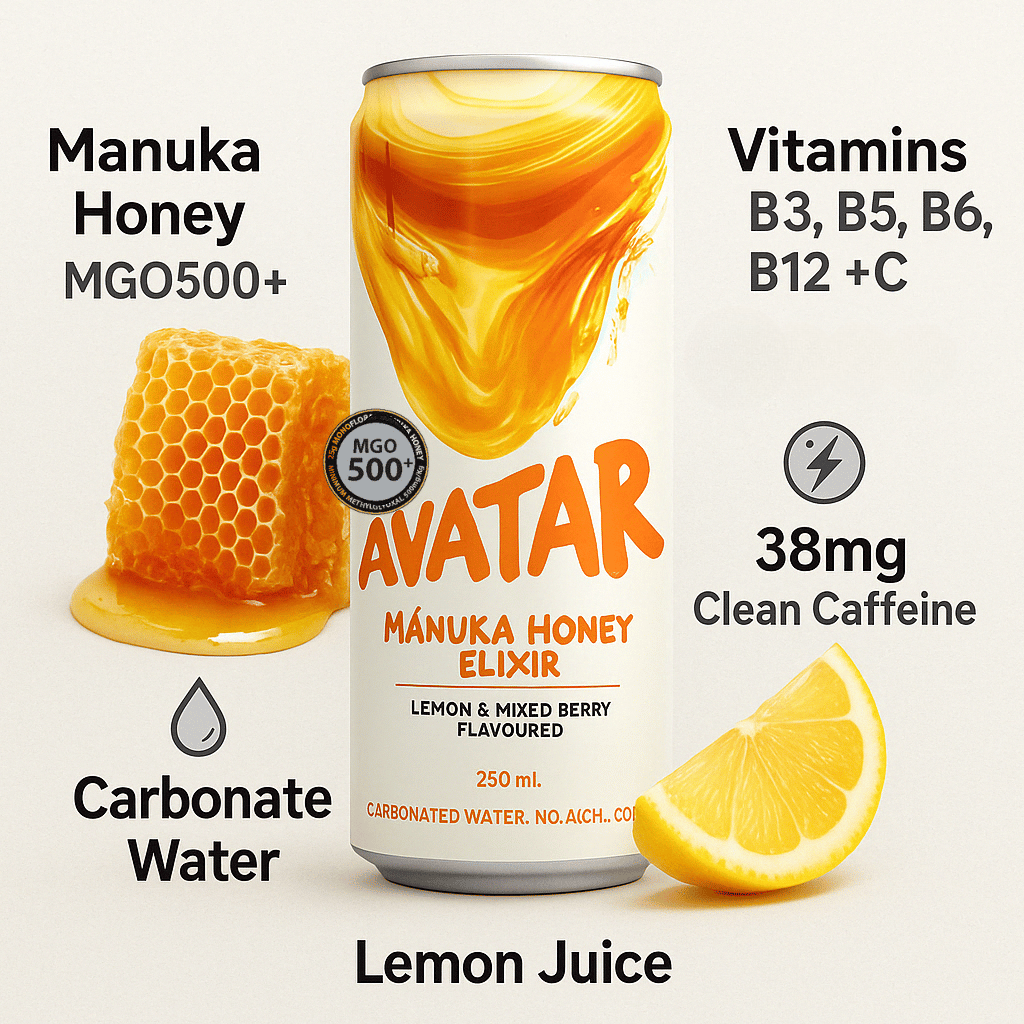
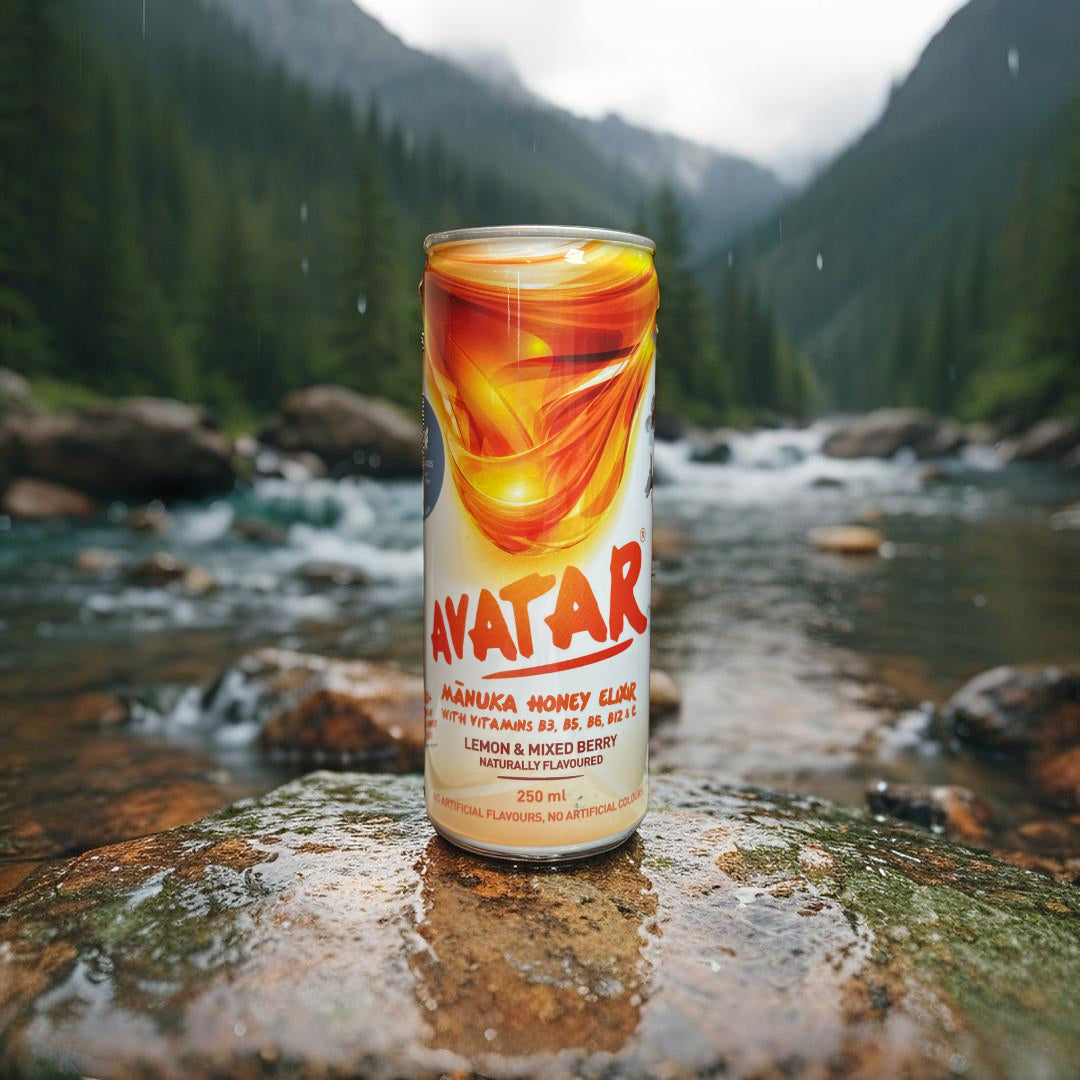
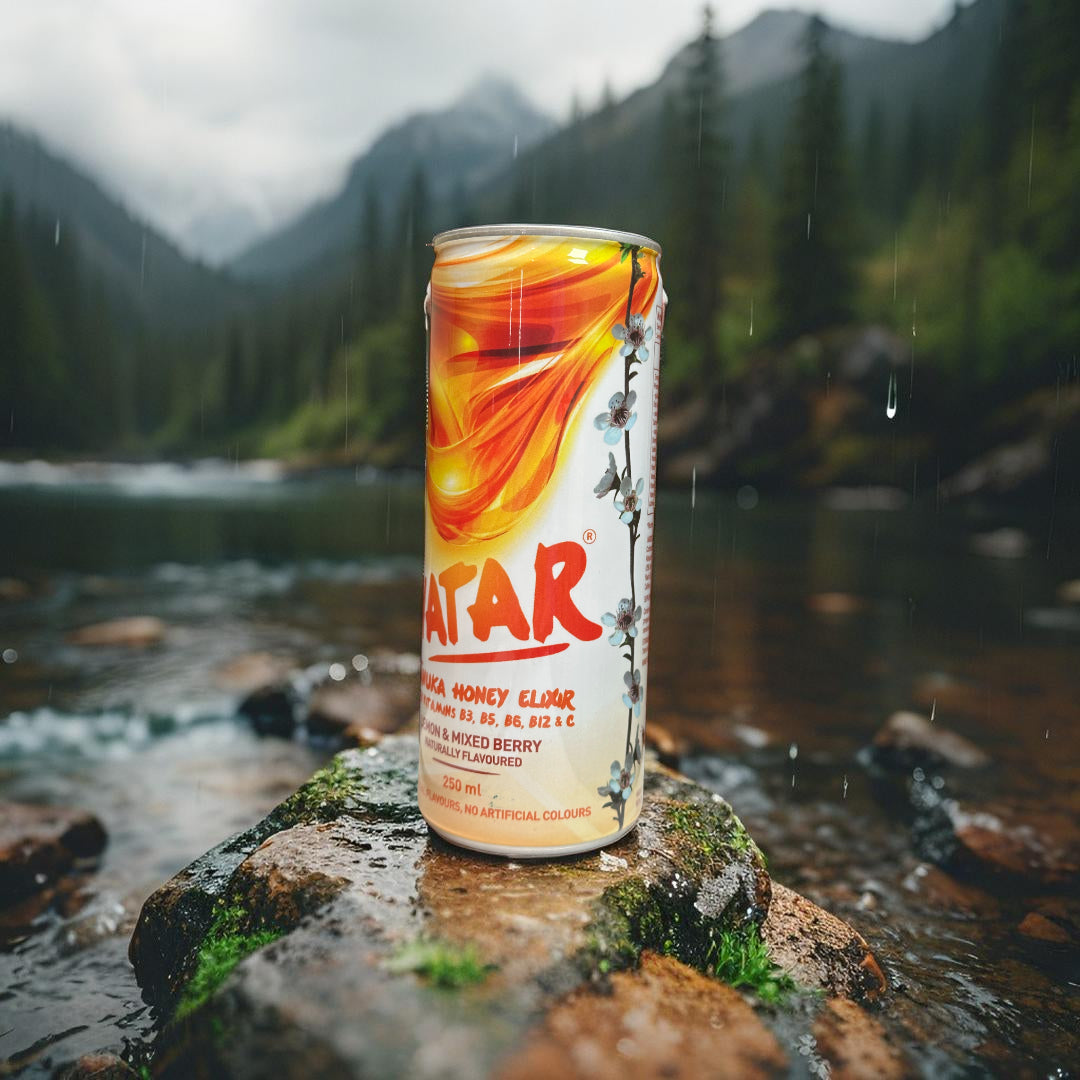
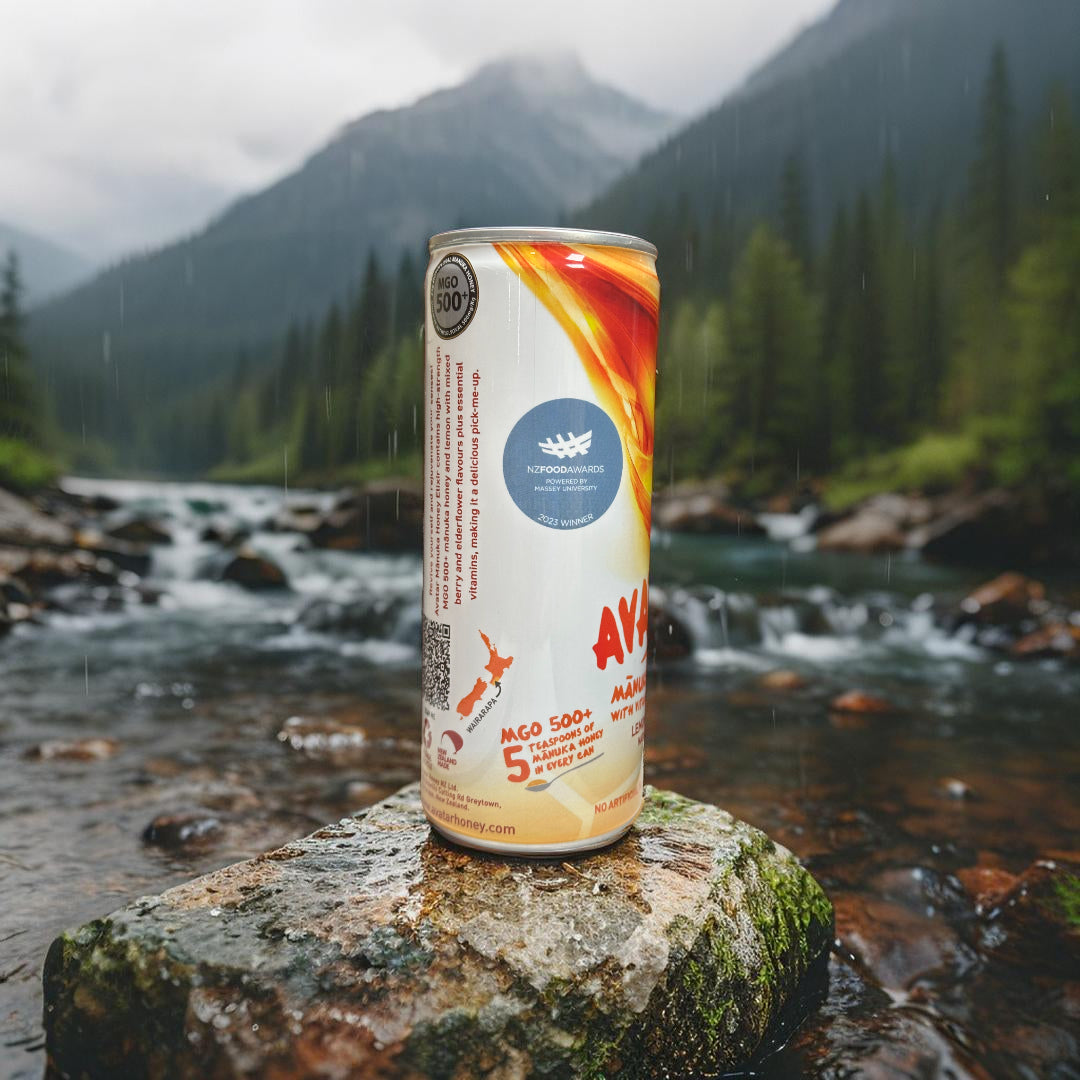
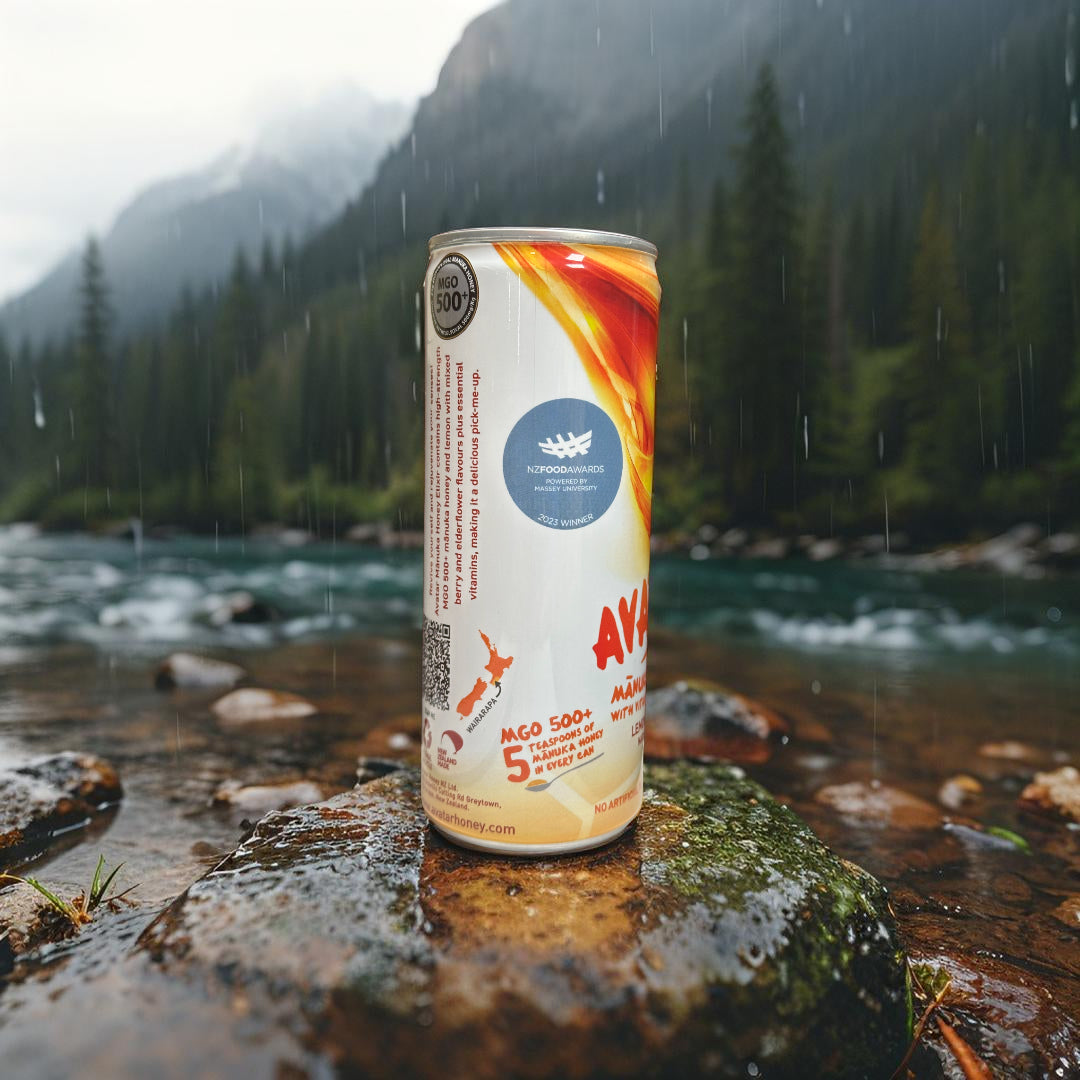
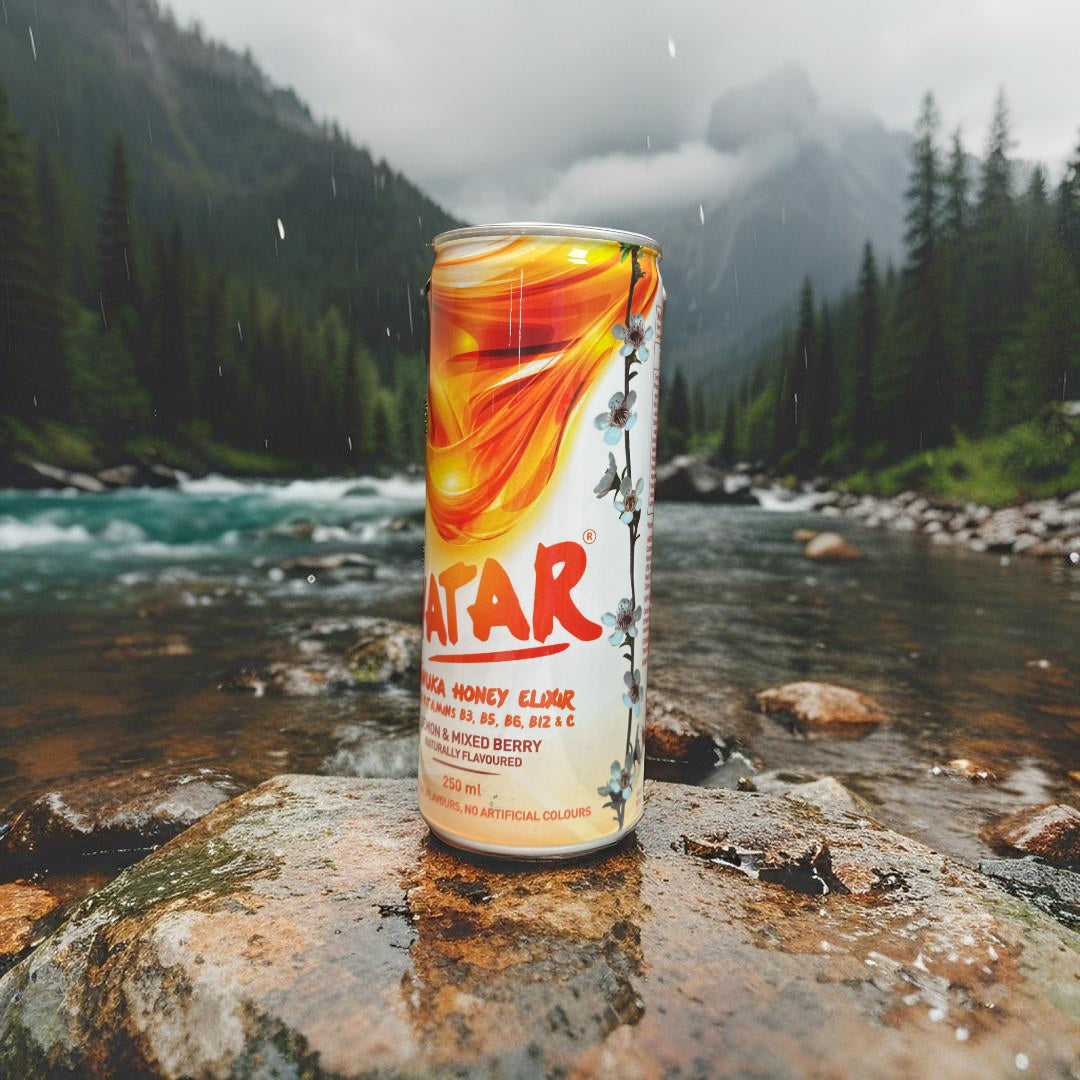
Honey-based energy drinks work differently. Honey provides sweetness, body, aroma, and ingredient identity, but the caffeine is usually added separately. That gives the drink maker more control over the final taste and caffeine profile. For example, Avatar Elixir is a Manuka honey-based drink made with certified MGO500+ Manuka honey, lemon, elderflower, B vitamins, vitamin C, clean caffeine, and lightly carbonated water. The caffeine is part of the formulation, while the Manuka honey shapes the flavour, mouthfeel, and ingredient story.
Neither approach is automatically better. A yerba mate drink may suit someone who wants a tea-like caffeine source. A honey-based energy drink may suit someone who wants a more familiar sparkling drink experience with honey, citrus, and carefully chosen supporting ingredients.
How do the flavours differ?
Honey-based energy drinks usually taste smoother, sweeter, and more rounded, while yerba mate drinks usually taste more herbal, earthy, and sometimes bitter. The flavour difference is one of the clearest ways to choose between them.
Honey naturally brings body and softness to a drink. Depending on the honey and the recipe, it can taste floral, warm, golden, or slightly caramel-like. When paired with lemon, elderflower, and light carbonation, as in Avatar Elixir, the result is more sparkling elixir than traditional energy drink. The honey gives depth, the citrus adds lift, and the elderflower brings a gentle botanical note.
Yerba mate has a more distinctive plant character. It can taste grassy, green, smoky, roasted, tannic, or mineral, depending on the source and preparation. Some ready-to-drink yerba mate beverages soften that profile with fruit flavours or sweeteners, while others keep it closer to a tea-style experience.
If you enjoy kombucha, green tea, herbal tea, or less sweet drinks, yerba mate may feel familiar. If you prefer sparkling citrus drinks, premium mixers, honey-lemon flavours, or softer botanical notes, a honey-based energy drink may be the easier fit.
How does sweetness compare between honey-based drinks and yerba mate drinks?
Honey-based drinks are generally sweeter because honey is a central ingredient, while yerba mate drinks vary widely from unsweetened and bitter to fruit-flavoured and quite sweet. The sweetness in honey-based drinks is usually part of the identity of the beverage, not just a way to cover bitterness.
In a honey-based energy drink, sweetness can support the whole drinking experience. Honey can round off citrus sharpness, soften carbonation, and create a fuller mouthfeel. This is different from simply adding sugar to make a drink taste sweet. The honey contributes flavour as well as sweetness.
Yerba mate drinks do not need to be sweet, but many commercial versions are sweetened to make the earthy taste more approachable. An unsweetened mate drink may be closer to tea. A flavoured mate drink may sit closer to a sparkling functional beverage. The label usually tells you more than the category name alone.
For shoppers comparing natural energy drinks, the key question is not only how much sweetness there is, but where the sweetness comes from and how it affects the flavour. A Manuka honey-based drink puts honey at the centre of the experience. A yerba mate drink puts the leaf infusion first, with sweetness added or withheld depending on the style.
What traditions sit behind each drink?
Honey-based energy drinks are shaped by honey, beekeeping, and modern functional beverage design, while yerba mate drinks come from a long South American mate-drinking tradition. Both have natural ingredient stories, but those stories come from different places.
Yerba mate has a strong cultural background, especially in countries such as Argentina, Uruguay, Paraguay, and parts of Brazil. Traditionally, it is prepared from dried mate leaves and shared from a gourd using a metal straw. Ready-to-drink mate beverages are a modern format, but the ingredient itself carries a recognisable tea-like heritage.
Honey-based drinks draw from a different tradition. Honey has long been used in drinks, tonics, cooking, and hospitality across many cultures. In New Zealand, Manuka honey adds another layer because it is strongly connected with place, native flora, and beekeeping craft. A drink such as Avatar Elixir reflects that modern New Zealand direction: Manuka honey, citrus, botanicals, vitamins, clean caffeine, and sparkling water brought together as a premium functional beverage.
The difference is not just historical. It affects how each drink feels on the shelf. Yerba mate often signals plant-based caffeine and tea culture. Honey-based energy drinks often signal flavour craft, natural sweetness, and a more polished sparkling drink occasion.
Which drink is better for taste pairing and mixing?
Honey-based energy drinks are usually more flexible for food pairing, mocktails, and mixer-style occasions, while yerba mate drinks are best for people who enjoy their herbal flavour as the main feature. Honey, citrus, florals, and carbonation tend to blend easily with other flavours.
A honey-based drink can work well in social settings because the flavour is often approachable. Lemon and honey pair naturally with mint, ginger, berries, citrus, stone fruit, and fresh herbs. A lightly carbonated Manuka honey elixir can also feel grown-up enough for a non-alcoholic option without tasting like a standard soft drink.
Yerba mate can also be used creatively, but its earthy, tannic profile is more assertive. It can pair well with tropical fruit, lime, mint, ginger, or roasted flavours, but it may not disappear into a mixer as easily. For people who love mate, that character is the point. For people who are new to it, the flavour can take a little getting used to.
If you are choosing a drink for a picnic, fridge restock, dinner party, mocktail base, or gift, a premium honey-based drink may feel more broadly accessible. If you are choosing a drink for yourself and already like bold herbal beverages, yerba mate may be more distinctive.
Who may prefer a honey-based energy drink?
A honey-based energy drink may suit someone who wants a naturally inspired sparkling drink with a smoother sweetness, a clear flavour story, and a more premium alternative to ordinary energy drinks or soft drinks. It is especially suitable for people who like honey, citrus, botanical flavours, and drinks that feel appropriate beyond the gym bag or office desk.
Honey-based drinks can fit well when the occasion matters as much as the caffeine. They can feel at home during work, study, travel, afternoon refreshment, social gatherings, mocktails, and gifting. The flavour profile often feels more polished and food-friendly than traditional energy drinks.
Avatar Elixir is a good example of this style. It uses certified MGO500+ Manuka honey, lemon, elderflower, B vitamins, vitamin C, clean caffeine, and lightly carbonated water. That makes it a Manuka honey-based functional drink rather than a leaf-infusion drink. The focus is on a fresh, honeyed, citrus-floral drinking experience with caffeine included as one part of the formulation.
This style may appeal if you want something that feels natural and premium, but still easy to drink straight from the can or glass.
Who may prefer a yerba mate drink?
A yerba mate drink may suit someone who wants naturally occurring caffeine from a plant infusion and enjoys earthy, herbal, tea-like flavours. It is often a good fit for people who already like green tea, black tea, herbal infusions, or less conventional functional drinks.
Yerba mate can feel more ingredient-minimal when it is presented simply as brewed mate with little else added. It can also feel bold and refreshing when paired with fruit flavours. The best choice depends on whether you want mate’s natural bitterness and herbal depth, or a sweeter ready-to-drink version that softens those edges.
Some shoppers choose yerba mate because they like its tradition and the idea of a naturally caffeinated leaf. Others choose it because it feels different from coffee, soft drinks, and conventional energy drinks. The main consideration is taste: mate has a stronger personality than many honey-citrus beverages.
Which should you choose if both look like natural energy drinks?
Choose a honey-based energy drink if you want a smooth, sparkling, flavour-led drink with natural sweetness and a premium ingredient story. Choose a yerba mate drink if you want a tea-like drink built around naturally occurring caffeine from mate leaves and do not mind an earthy or herbal flavour.
The easiest way to decide is to match the drink to the moment:
- For a polished everyday energy drink: A honey-based option may feel smoother and more familiar.
- For a tea-style caffeine moment: Yerba mate may feel more direct and plant-led.
- For mocktails or social occasions: Honey, lemon, elderflower, and carbonation are often easier to pair.
- For bold herbal flavour: Yerba mate offers a more distinctive taste profile.
- For gifting or a premium fridge option: A Manuka honey-based drink can feel more special and occasion-ready.
The short version is that honey-based energy drinks and yerba mate drinks are not competing versions of the same idea. They are two different routes into better beverage choices. One starts with honey, flavour craft, and modern functional drink design. The other starts with a naturally caffeinated leaf and a strong tea-like tradition.
If your ideal drink is bright, lightly sparkling, citrus-floral, and honeyed, a Manuka honey-based energy drink such as Avatar Elixir is likely the closer fit. If your ideal drink is earthy, herbal, and rooted in mate culture, yerba mate is likely the better match.
These FAQs compare honey-based energy drinks and yerba mate drinks by caffeine, taste, sweetness, and best-fit occasions.
Are honey-based energy drinks the same as yerba mate drinks?
Honey-based energy drinks and yerba mate drinks are not the same, even though both can feel more natural than mainstream energy drinks. Honey-based energy drinks are usually crafted around honey, flavour pairings, carbonation, vitamins, botanicals, and added caffeine. Yerba mate drinks are based on an infusion or extract of yerba mate leaves, which naturally contain caffeine and bring a more tea-like, herbal ingredient story.
Which has a more natural caffeine source, honey-based drinks or yerba mate?
Yerba mate has the more direct natural caffeine source because its caffeine occurs in the mate leaves themselves. Honey does not naturally contain caffeine, so most honey-based energy drinks use added caffeine to create their energy drink profile. That does not make one automatically better than the other. The fuller comparison depends on the whole ingredient list, flavour approach, sweetness, and how the drink fits your routine.
What do honey-based energy drinks taste like compared with yerba mate?
Honey-based energy drinks usually taste smoother, rounder, and sweeter, while yerba mate drinks usually taste more herbal, earthy, grassy, or tea-like. A honey-based drink can carry citrus, floral, and botanical notes especially well, because honey adds body and aroma. Yerba mate has a more distinctive plant character, which suits people who enjoy less conventional flavours with bitter or tannic edges.
Are honey-based energy drinks sweeter than yerba mate drinks?
Honey-based energy drinks are usually sweeter because honey is part of the flavour structure, not just a background ingredient. Yerba mate drinks vary widely. Some are unsweetened and quite earthy, while others are flavoured and sweetened to make the herbal taste more approachable. If you prefer a rounded, naturally sweet flavour, honey-based drinks will likely feel more familiar on the first sip.
Which drink is better for work or study moments?
The better choice for work or study depends on your taste preference and caffeine style, not on a guaranteed performance outcome. A honey-based energy drink suits people who want a smoother, more crafted flavour with citrus, floral, or lightly sparkling notes. Yerba mate suits people who enjoy tea-like drinks and prefer caffeine that comes directly from a brewed or extracted leaf ingredient.
When would Avatar Elixir fit better than a yerba mate drink?
Avatar Elixir fits best when you want a premium Manuka honey-based drink with a polished flavour profile rather than an earthy tea-style drink. It is made with certified MGO500+ Manuka honey, lemon, elderflower, B vitamins, vitamin C, clean caffeine, and lightly carbonated water. That makes it a strong fit for work breaks, travel, gifting, social occasions, mocktails, and moments where flavour matters as much as energy.
Can honey-based energy drinks and yerba mate drinks be used as mixers?
Both honey-based energy drinks and yerba mate drinks can work as mixers, but they create different styles of serve. Honey-based drinks pair naturally with citrus, herbs, sparkling water, and alcohol-free cocktail ingredients because honey adds sweetness and body. Yerba mate drinks bring a more herbal, tannic, tea-like base, which suits sharper, drier, or more botanical combinations.