



Short answer: Wellness sodas are usually made for refreshing, feel-good sipping, while natural energy drinks are made to provide a cleaner caffeine option using more ingredient-led formulas. The main differences are purpose, caffeine level, sweetness, functional ingredients, flavour profile, and when you would choose each drink.
You are standing at the fridge door. One can promises light refreshment with a wellness angle. Another promises cleaner energy without the harsh feel of a conventional energy drink. At first glance, wellness sodas and natural energy drinks can look similar: colourful cans, botanical flavours, lighter carbonation, and better-for-you language.
The real difference is not just the label. Wellness sodas and natural energy drinks are built for different occasions. One is usually about a more interesting soft drink moment. The other is about giving adults a more natural-feeling caffeine choice for work afternoons, study sessions, travel, social plans, and long days.
Are wellness sodas and natural energy drinks the same thing?
No, wellness sodas and natural energy drinks are not the same thing, although they can overlap in flavour, format, and better-for-you positioning. A wellness soda is usually a sparkling soft drink with a functional or botanical angle, while a natural energy drink usually contains caffeine and is designed as an alternative to coffee, conventional energy drinks, or sugary soft drinks.
The easiest way to separate them is to ask one question: is the drink primarily for refreshment, or is it primarily for energy? If the main promise is a grown-up soda experience with botanicals, fibre, probiotics, prebiotics, fruit flavours, or lower sugar, it is likely a wellness soda. If the drink contains caffeine and is positioned for alertness, work, study, or sustained adult routines, it is closer to a natural energy drink.
This distinction matters because the right choice depends on the moment. A wellness soda may be ideal when you want something interesting with lunch or an alcohol-free drink at a barbecue. A natural energy drink may make more sense when you want a lighter caffeine option during an afternoon work block, before an evening class, or while travelling.
What is the main difference between a wellness soda and a natural energy drink?
The main difference is purpose. Wellness sodas are typically made to replace or upgrade soft drinks, while natural energy drinks are made to offer caffeine in a more ingredient-conscious way.
| Category | Wellness soda | Natural energy drink |
|---|---|---|
| Main purpose | Refreshing soft drink alternative | Cleaner caffeine and everyday energy option |
| Caffeine | Often caffeine-free, though some may include tea or plant caffeine | Usually contains caffeine from sources such as tea, coffee fruit, yerba mate, guarana, or added clean caffeine |
| Sweetness | Often low sugar, fruit-sweetened, or sweetener-led | Can range from low sugar to naturally sweetened, depending on the formula |
| Functional ingredients | May include botanicals, fibre, prebiotics, probiotics, or adaptogen-style ingredients | May include caffeine, B vitamins, vitamin C, botanicals, minerals, or natural sweeteners |
| Flavour style | Soda-like, fruity, botanical, cola-style, or tonic-inspired | Often citrus, tea, berry, honey, tropical, or botanical with a sharper energy-drink cue |
| Best occasions | Lunch, social sipping, alcohol-free hosting, casual refreshment | Work afternoons, study, travel, long days, pre-social energy, alcohol-free alternatives |
In short, a wellness soda often asks, “Do you want a better soft drink?” A natural energy drink asks, “Do you want a better caffeine drink?”
How does caffeine separate natural energy drinks from wellness sodas?
Caffeine is usually the clearest dividing line. Most natural energy drinks contain caffeine, while many wellness sodas do not.
A wellness soda can still feel grown-up and functional without caffeine. It may use sparkling water, fruit, herbs, botanical extracts, vinegar notes, fibre, or prebiotic ingredients to create a more interesting alternative to ordinary soda. These drinks are often chosen when people want refreshment rather than stimulation.
Natural energy drinks, by contrast, normally include caffeine as a central ingredient. The caffeine may come from natural sources or be described as clean caffeine, meaning it is presented in a simpler, more transparent formula than a conventional energy drink. The term “clean caffeine” is not a regulated category, so the label matters. A clear can should tell you how much caffeine is included and what other ingredients sit alongside it.
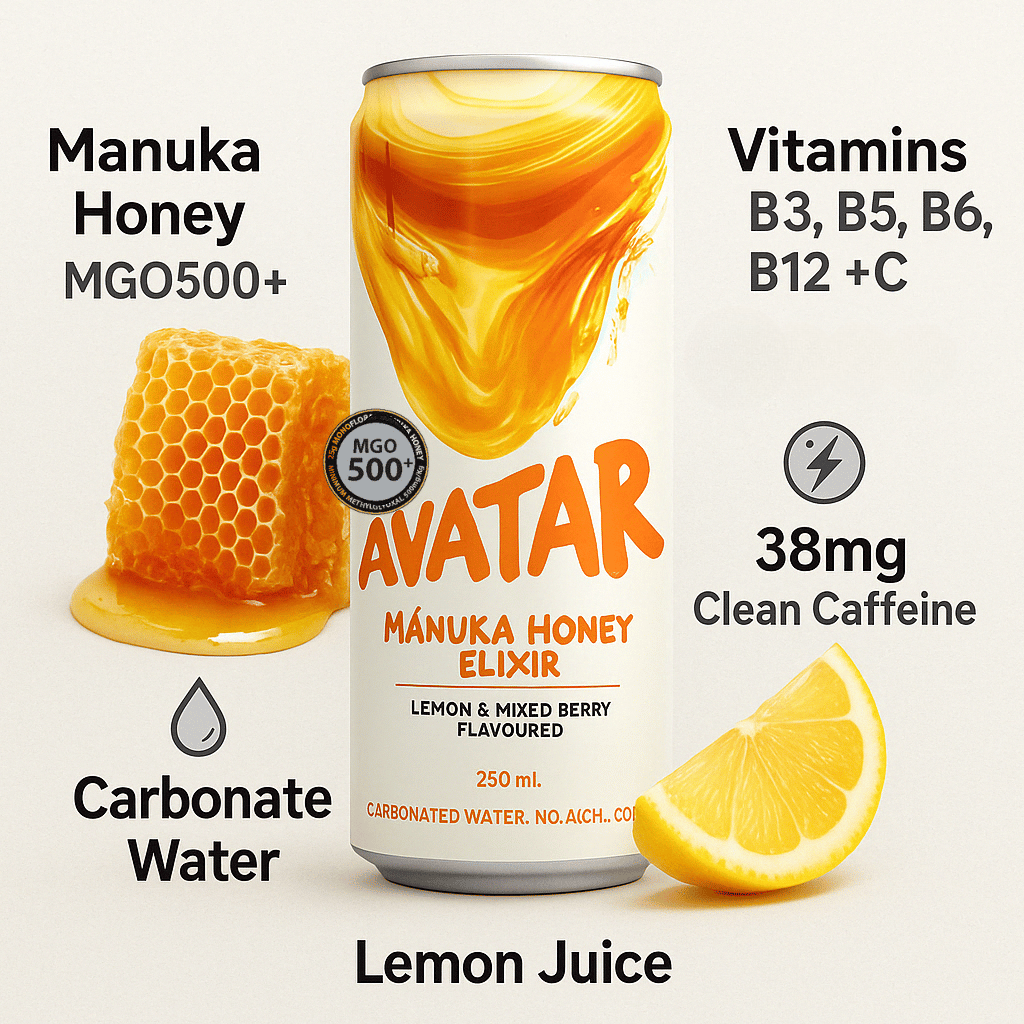
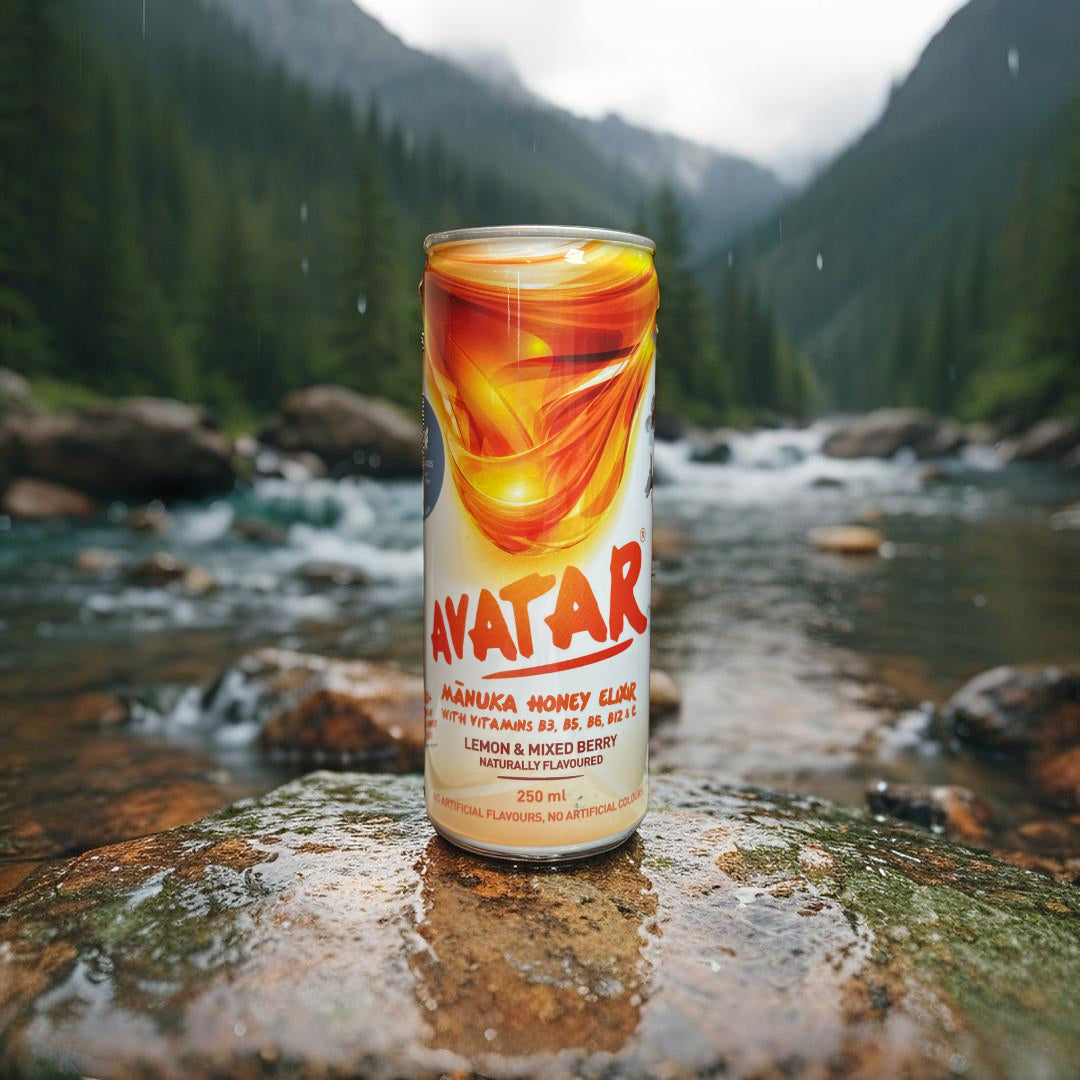
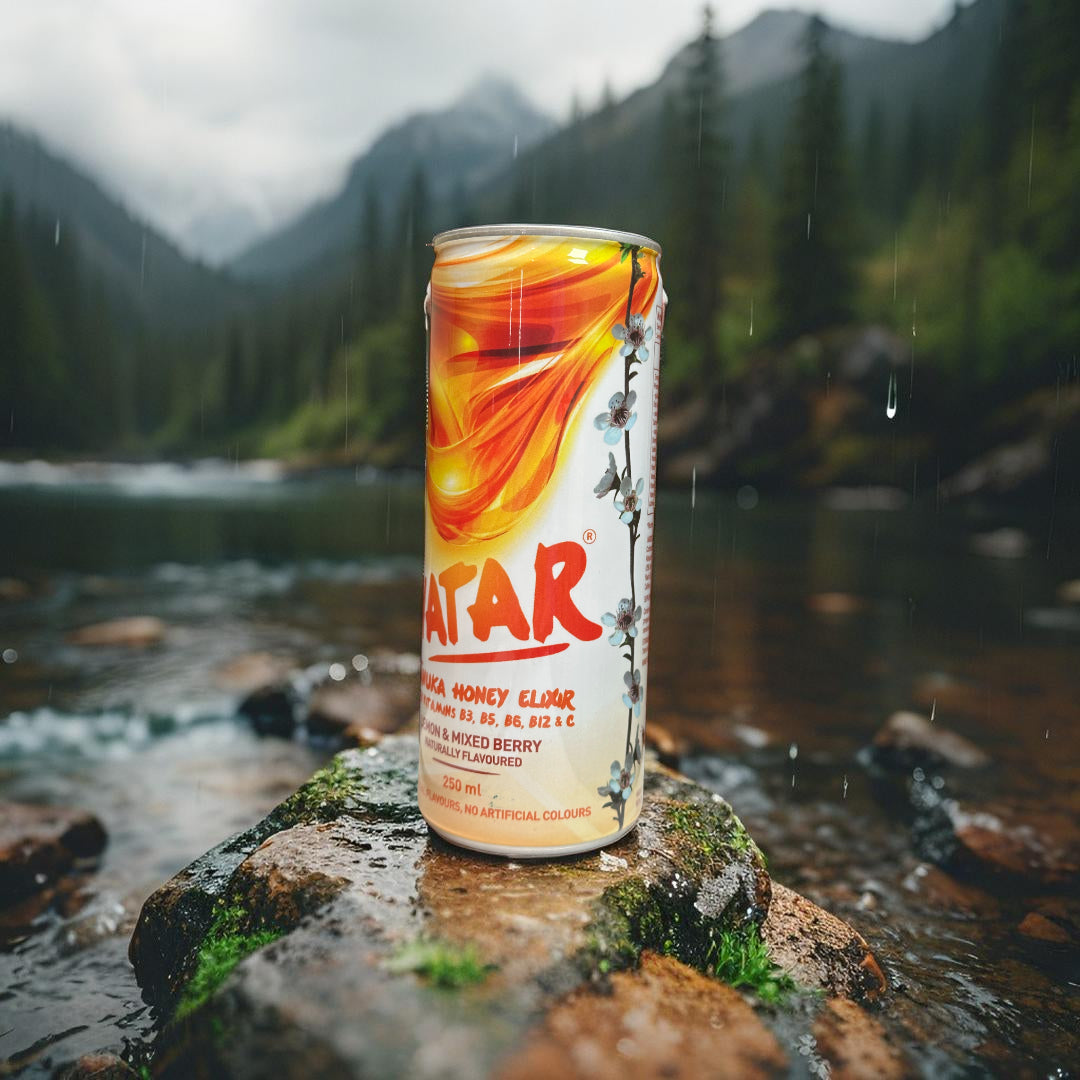
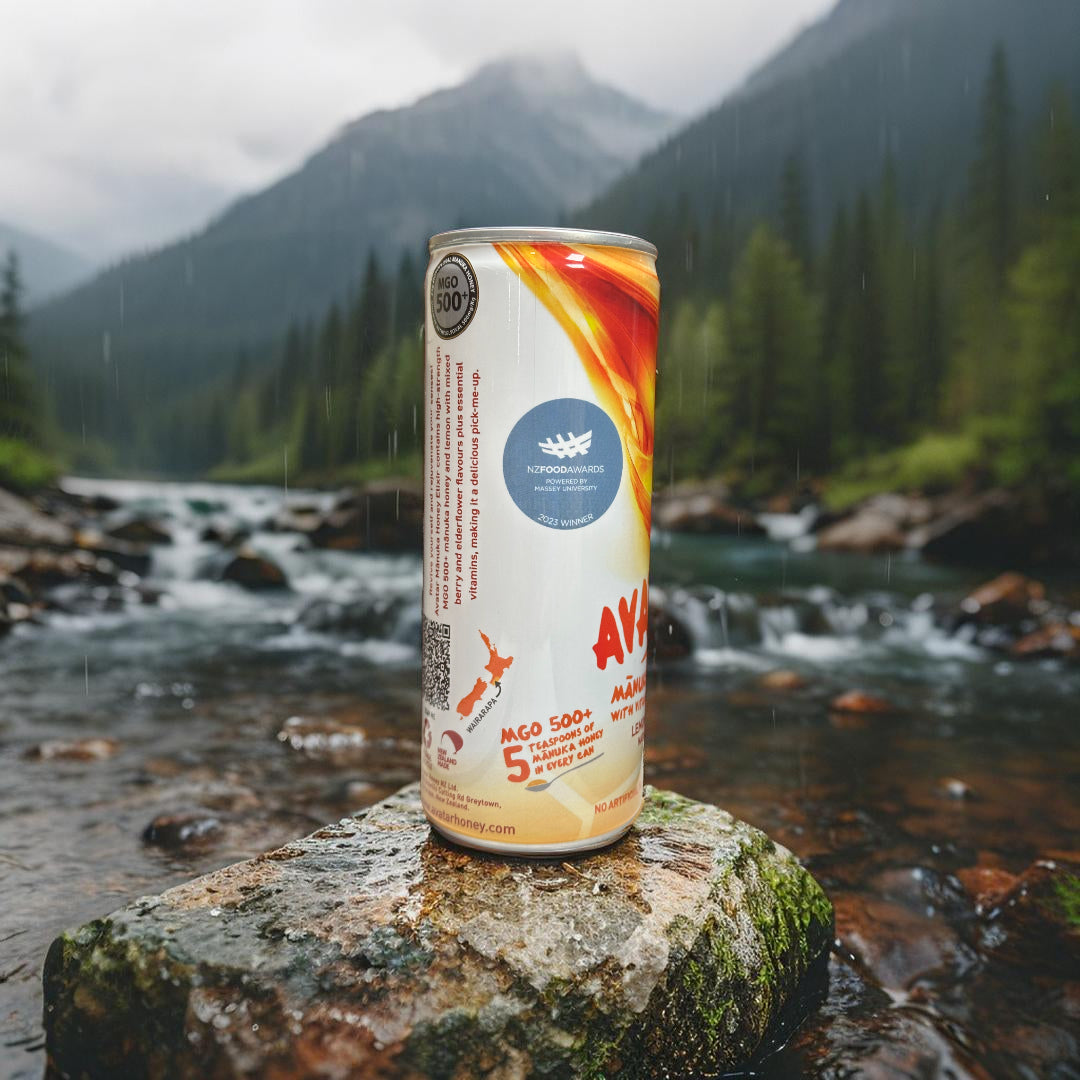
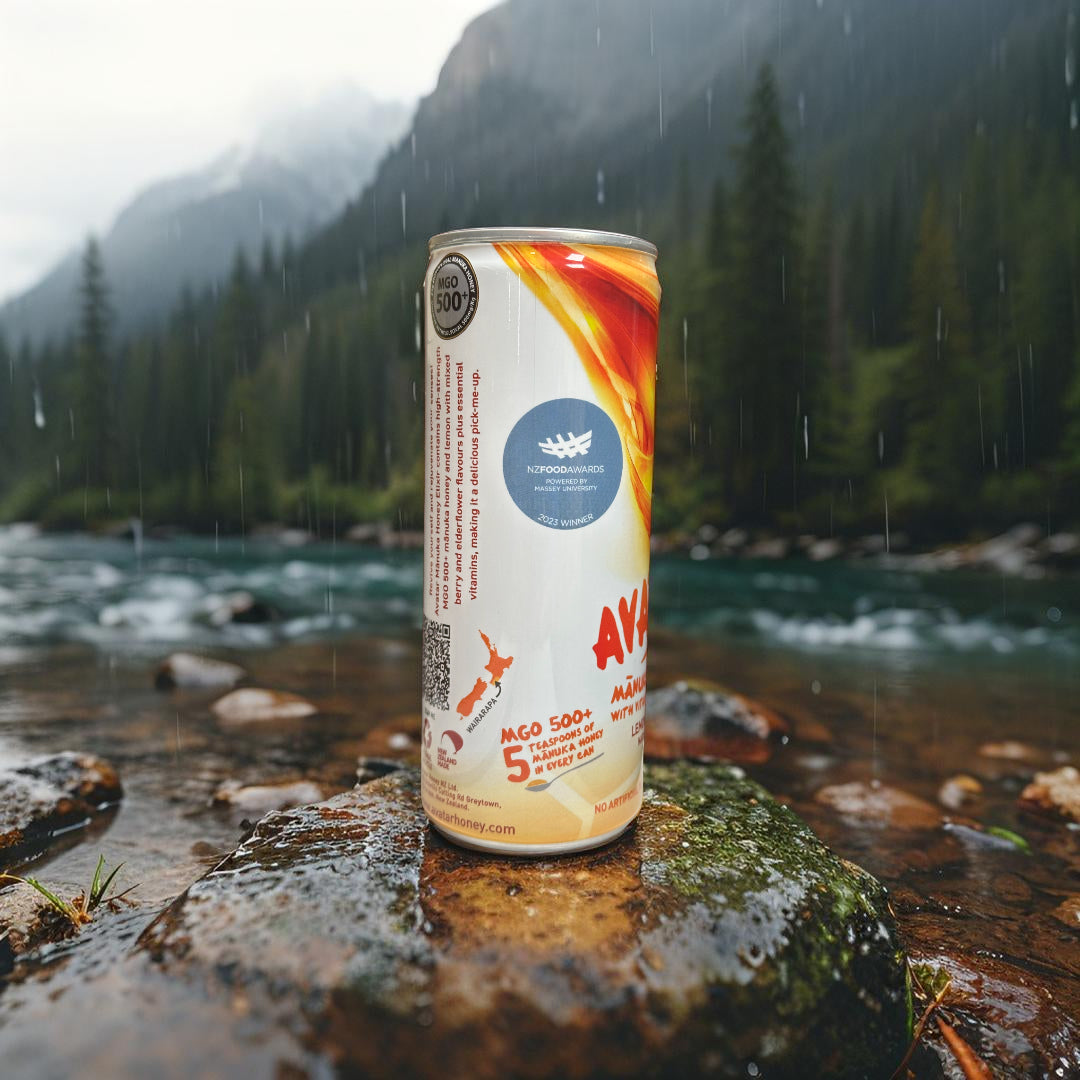
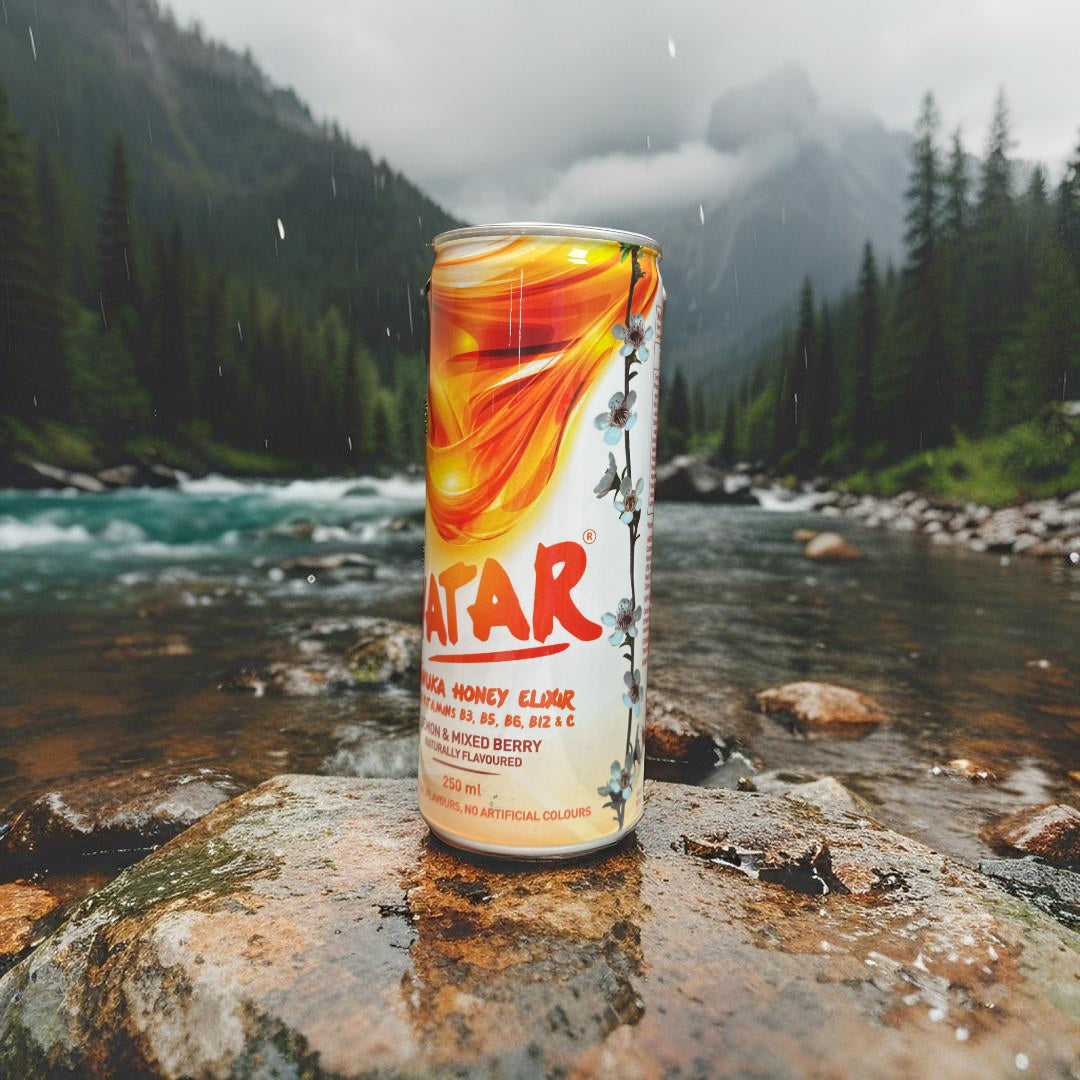
For example, Avatar Elixir fits the natural energy drink side of the comparison because it includes clean caffeine along with certified MGO500+ Manuka honey, lemon, elderflower, B vitamins, vitamin C, and lightly carbonated water. It is not just a sparkling wellness soda with a honey note. It is a caffeine-containing, ingredient-led drink made for adults who want a more premium alternative to ordinary energy drinks or another coffee.
Are wellness sodas usually less sweet than natural energy drinks?
Wellness sodas are often designed to taste lighter or less sugary than traditional soft drinks, but they are not automatically less sweet than natural energy drinks. Sweetness depends on the recipe, the sweetener, and the flavour style.
Some wellness sodas use fruit juice, stevia, monk fruit, erythritol, cane sugar, agave, or a blend of sweeteners. Others lean dry, botanical, or tonic-like. Their sweetness is usually part of a refreshment experience, meaning they should be easy to sip with food or on their own.
Natural energy drinks vary widely. Some are very sweet and close to conventional energy drinks. Others use fruit juice, honey, or lighter sweetness to create a cleaner finish. A premium natural energy drink may aim for balance rather than intensity: enough sweetness to round out the caffeine and acidity, but not so much that it feels syrupy.
This is where ingredient source matters. A Manuka honey drink, for instance, has a different sweetness character from a drink built around artificial sweeteners or generic sugar syrup. In Avatar Elixir, Manuka honey brings rounded honey depth, while lemon adds brightness and elderflower gives a floral lift. The result is a different kind of sweetness from a typical candy-like energy drink.
Do wellness sodas and natural energy drinks use different functional ingredients?
Yes, wellness sodas and natural energy drinks often use different functional ingredients because they are built for different roles. Wellness sodas tend to focus on digestive, botanical, or soft drink replacement cues, while natural energy drinks focus on caffeine, vitamins, and energy occasion cues.
A wellness soda might include ingredients such as:
- Prebiotic fibre
- Probiotic cultures, depending on the product format
- Botanicals such as ginger, hibiscus, mint, or chamomile
- Apple cider vinegar or shrub-style acidity
- Fruit extracts or natural flavours
- Lower sugar or alternative sweeteners
A natural energy drink might include ingredients such as:
- Caffeine from coffee, tea, yerba mate, guarana, or a clearly listed caffeine source
- B vitamins
- Vitamin C
- Electrolytes or minerals, depending on the drink
- Botanicals for flavour or positioning
- Natural sweeteners such as fruit juice or honey
These ingredients do not make one category automatically better than the other. They simply show the intention behind the can. A wellness soda is usually closer to a functional soft drink. A natural energy drink is closer to a caffeine drink made with a more thoughtful ingredient list.
How do the flavours usually differ?
Wellness sodas usually taste like elevated soft drinks, while natural energy drinks usually taste like caffeine drinks with fruit, citrus, tea, honey, or botanical notes. The flavour difference often reflects the drink occasion.
Wellness sodas often lean into familiar refreshment styles: berry, cola, lemon-lime, ginger, tropical fruit, orange, grapefruit, or botanical tonic. The goal is usually easy drinking. A good wellness soda should feel comfortable beside lunch, snacks, or a casual catch-up.
Natural energy drinks often need to balance more elements. Caffeine can bring bitterness, so the flavour has to manage acidity, sweetness, aroma, and finish. This is why citrus is common in energy drinks. Lemon, lime, yuzu, grapefruit, and orange can sharpen the drink and keep it bright.
Avatar Elixir is a useful example of a natural energy drink with a more premium flavour structure. Lemon gives a clean citrus lift. Elderflower adds a fragrant, lightly floral note. Certified MGO500+ Manuka honey gives body and depth. Light carbonation keeps the drink fresh rather than heavy. That combination feels closer to a refined sparkling drink than a loud, candy-style energy can.
Which drink is better for work afternoons and study?
A natural energy drink is usually the more relevant choice for work afternoons and study because it contains caffeine, while many wellness sodas are caffeine-free. If you are choosing a drink for a focused desk session, label clarity matters more than category language.
For work afternoons, many adults want something that feels lighter than another coffee and more considered than a standard energy drink. A natural energy drink can fit that occasion if it clearly lists caffeine, avoids an overly sweet profile, and tastes pleasant enough to sip rather than rush.
For study, the same logic applies. A caffeine-containing drink may suit the moment if you already know caffeine works for you and you are comfortable with the amount listed on the can. A wellness soda can still be a good study companion if you mainly want flavour, hydration, and a break from plain water, but it should not be confused with a caffeine drink unless the label says it contains caffeine.
The practical rule is simple: choose by ingredient panel, not by front-of-can language. If caffeine is the reason you are buying the drink, check the caffeine content first.
Which drink is better for social sipping and alcohol-free hosting?
Wellness sodas are often a natural fit for social sipping and alcohol-free hosting, but natural energy drinks can also work when the flavour is refined and the caffeine level suits the occasion. The better choice depends on whether guests want refreshment only or refreshment with caffeine.
For an alcohol-free lunch, baby shower, afternoon garden gathering, or casual dinner, wellness sodas can be easy to offer because they usually sit in the soft drink space. They feel familiar, colourful, and approachable. Caffeine-free options are especially useful when guests may not want caffeine later in the day.
Natural energy drinks are better suited to social occasions where adults may appreciate a lift before heading out, travelling, or staying engaged through a long event. A premium natural energy drink can also work as a grown-up alternative to ordinary soft drinks, especially when it has a flavour profile that suits glassware, ice, citrus garnish, or simple mocktails.
Avatar Elixir can sit comfortably in this second role. Its Manuka honey, lemon, and elderflower profile makes it feel more like a crafted sparkling drink than a standard energy can, while its clean caffeine keeps it clearly in the natural energy drink category. For alcohol-free hosting, that distinction is useful: it offers a more elevated option for guests who want caffeine, while wellness sodas can cover the caffeine-free side of the table.
How should you choose between a wellness soda and a natural energy drink?
Choose a wellness soda when you want a refreshing soft drink alternative, and choose a natural energy drink when you want a caffeine-containing drink with a more ingredient-conscious formula. The best choice is the one that matches the occasion, not the one with the trendier label.
Use this quick decision guide:
- Choose a wellness soda if you want a flavourful sparkling drink with lunch, a caffeine-free social option, or a lighter alternative to conventional soda.
- Choose a natural energy drink if you want caffeine for a work afternoon, study session, travel day, or long stretch away from home.
- Check caffeine first if you are sensitive to caffeine, buying for later in the day, or stocking a shared fridge.
- Check sweetness second because “natural” does not always mean low sugar, and “wellness” does not always mean unsweetened.
- Read the ingredient list to see whether the drink is built around real flavour ingredients, vitamins, botanicals, honey, fruit, or sweeteners.
- Think about the serving moment because a desk drink, dinner drink, mocktail base, and road trip drink do not need to do the same job.
The clearest comparison is this: wellness sodas are usually better soft drinks, while natural energy drinks are usually better caffeine drinks. Both can be premium, refreshing, and enjoyable. They simply answer different needs at the fridge door.
What is the final takeaway?
Natural energy drinks and wellness sodas differ most in purpose, caffeine, and occasion. A wellness soda is usually a sparkling refreshment with a better-for-you or botanical angle. A natural energy drink is usually a caffeine-containing drink made for adults who want a more thoughtful alternative to coffee, conventional energy drinks, or sugary soft drinks.
If you want something crisp and social, a wellness soda may be enough. If you want clean caffeine with a more premium ingredient story, a natural energy drink is the category to look at. Avatar Elixir is one example of that side of the shelf: a New Zealand Manuka honey drink with lemon, elderflower, B vitamins, vitamin C, clean caffeine, and light carbonation, made for adults who want their energy drink to feel as considered as the rest of their day.
These answers explain how wellness sodas and natural energy drinks differ when you are choosing a better drink for energy, refreshment, flavour, or social occasions.
Are wellness sodas and natural energy drinks the same?
No, wellness sodas and natural energy drinks are not the same category. A wellness soda is usually a sparkling soft drink with a botanical, low-sugar, prebiotic, or better-for-you angle. A natural energy drink usually contains caffeine and is made for adults looking for a more ingredient-led alternative to coffee, conventional energy drinks, or sugary soft drinks.
What is the biggest difference between wellness soda and natural energy drinks?
The biggest difference is purpose. Wellness sodas are mainly built for refreshment, while natural energy drinks are mainly built around caffeine and everyday energy occasions. If the drink is designed to upgrade a soft drink moment, it sits closer to wellness soda. If it is designed as a cleaner caffeine choice for work afternoons, study, travel, or long days, it sits closer to natural energy drinks.
Do wellness sodas usually have caffeine?
Many wellness sodas are caffeine-free, although some include tea, yerba mate, guarana, or other caffeine sources. The category is broad, so the label matters more than the name on the can. If caffeine is central to the drink's purpose, it is closer to a natural energy drink. If refreshment, botanicals, fibre, or low sugar are the main features, it is closer to wellness soda.
Which drink is better for an afternoon work drink?
A natural energy drink is usually the better fit for an afternoon work drink if you specifically want caffeine. Look for a clear caffeine source, a flavour you enjoy, and an ingredient list that suits your preferences. A wellness soda is a better choice when you want a sparkling drink at your desk without making caffeine the main reason for choosing it.
Which option works better for social sipping or alcohol-free hosting?
Wellness sodas are a natural fit for social sipping because they usually feel like grown-up soft drinks with fruit, botanical, cola-style, or tonic-inspired flavours. Natural energy drinks also work in alcohol-free hosting when guests want a more energising option, especially before dinner, at a barbecue, or as a premium mixer-style serve. The best choice depends on whether the occasion is about refreshment or caffeine.
What should I check on the label before choosing one?
Check the label for caffeine, sweetness, flavour style, and functional ingredients before choosing between a wellness soda and a natural energy drink. Caffeine tells you whether the drink is likely built for energy. Sweeteners and sugar level shape how it drinks. Ingredients such as botanicals, vitamins, fibre, prebiotics, honey, citrus, or tea help explain whether the drink is more about refreshment, function, or both.
Where does Avatar Elixir fit in this comparison?
Avatar Elixir fits on the natural energy drink side because it includes clean caffeine alongside certified MGO500+ Manuka honey, lemon, elderflower, B vitamins, vitamin C, and lightly carbonated water. It is a premium New Zealand-made example for people who want a honey-based caffeine drink with a more ingredient-led feel. It suits moments such as work afternoons, study, travel, social plans, and alcohol-free occasions.