



Short answer: Between study blocks, students are usually best served by a drink that hydrates, feels light, and matches the next study task. Water, tea, a smaller coffee, or a lightly sparkling natural energy drink can all work, depending on how much caffeine you have already had, how late it is, and whether you need something refreshing rather than heavy.
The moment usually arrives after the first coffee has worn off. You have finished one block of reading, notes, practice questions, or writing, and another cup feels like too much. You still want something that helps you reset for the next block, but not a drink that feels heavy, overly sweet, or likely to interfere with sleep later.
A good study break drink should do three simple things: refresh your mouth, support hydration, and fit your caffeine timing for the day. Coffee can still have a place, but it is not the only option. Water, tea, natural energy drinks, light food pairings, bubbles, citrus, and honey-based drinks can all be useful choices when you want a smoother transition back into study.
What should students drink between study blocks instead of another coffee?
Students should choose a drink between study blocks based on hydration, caffeine timing, flavour, and how the next study block feels. Good options include water, herbal tea, green or black tea, a smaller coffee, sparkling water with citrus, or a lightly caffeinated natural energy drink.
The best drink is not always the strongest one. If the next block is light review, flashcards, or reading, water or tea may be enough. If the next block is longer writing, problem-solving, or practice exams, a drink with a modest amount of caffeine may feel more suitable, especially earlier in the day.
Between study blocks, it helps to ask four quick questions:
- Am I actually thirsty? If yes, start with water or a hydrating drink before adding more caffeine.
- How much coffee have I already had? If the answer is more than usual, choose a lighter option.
- How late is it? If sleep matters tonight, avoid pushing caffeine too far into the afternoon or evening.
- What does the next block require? Reading, writing, revision, and practice questions can call for different levels of refreshment.
A useful rule of thumb is to avoid treating every dip in energy as a signal for more coffee. Sometimes the better answer is water, a short walk, fresh air, a small snack, or a drink that feels crisp and clean without being intense.
Is water enough between study blocks?
Yes, water is often enough between study blocks, especially when tiredness is partly from sitting still, talking less, staring at a screen, or forgetting to drink during a long session. Water is the simplest reset drink because it refreshes without adding caffeine, sweetness, or heaviness.
Plain water is a strong choice when you are already caffeinated from morning coffee or tea. It is also the safest default in the late afternoon or evening when another caffeinated drink may not suit your sleep plans.
If plain water feels too flat during exam prep, small flavour cues can make it more appealing without turning it into a heavy drink. Try chilled water, sparkling water, lemon slices, cucumber, mint, or a splash of unsweetened fruit flavour. The aim is not to make water complicated. It is to make it easy to keep drinking while you move from one study block to the next.
Key takeaway: If you are unsure what to drink, choose water first. If you still want something with more flavour or caffeine after that, make the next choice more deliberately.
Is tea a good coffee alternative for study breaks?
Tea can be a good coffee alternative between study blocks because it is usually lighter in feel than coffee and offers a slower, calmer break ritual. Black tea, green tea, peppermint tea, ginger tea, and herbal blends can all suit different study moments.
Black tea can be useful when you want some caffeine but do not want another full coffee. Green tea is often chosen by students who prefer a lighter taste and a less coffee-like break. Herbal teas are better when you want warmth, flavour, and a pause without more caffeine.
Which tea should you choose for the next study block?
Choose black or green tea if you still want caffeine, and choose herbal tea if you want a non-caffeinated break. Peppermint can feel fresh after snacks, ginger can feel warming, and lemon-based herbal teas can feel bright without being rich.
Tea works especially well for students who want the comfort of a hot drink but find that another coffee makes them feel too full, too wired, or too close to their caffeine limit for the day.
Should students have another coffee during a study day?
Students can have another coffee during a study day if it suits their caffeine tolerance, timing, and sleep schedule, but it is not always the best choice between every study block. A second coffee may be useful earlier in the day, while a smaller serve or a different drink may be better later.
Coffee is familiar, accessible, and often part of a productive routine. The issue is not coffee itself. The issue is using coffee automatically whenever attention dips. If the first coffee has worn off, another full cup may feel appealing, but it may also be more than you need.
If you do choose coffee, consider making it lighter:
- Choose a smaller cup rather than repeating your first coffee.
- Drink it with water if you have been sitting for a long time.
- Pair it with a light snack instead of having it on an empty stomach.
- Avoid using coffee late in the day if you know caffeine affects your sleep.
For students doing evening revision, decaf coffee can keep the ritual without adding much caffeine. It gives the feeling of a coffee break while making it easier to wind down when study is finished.
Can a natural energy drink work between study blocks?
Yes, a natural energy drink can work between study blocks if it is light, clearly labelled, not overly sweet, and made with ingredients that suit how you want to feel during the next session. It should be treated as a drink choice, not as a shortcut for better grades or guaranteed concentration.
For study breaks, the most useful natural energy drinks are not the loudest or strongest ones. Look for drinks that feel refreshing, have a clean flavour profile, and make caffeine easy to understand. A lightly carbonated drink with citrus can feel more refreshing than a heavy canned coffee or syrupy soft drink, especially during long periods at a desk.
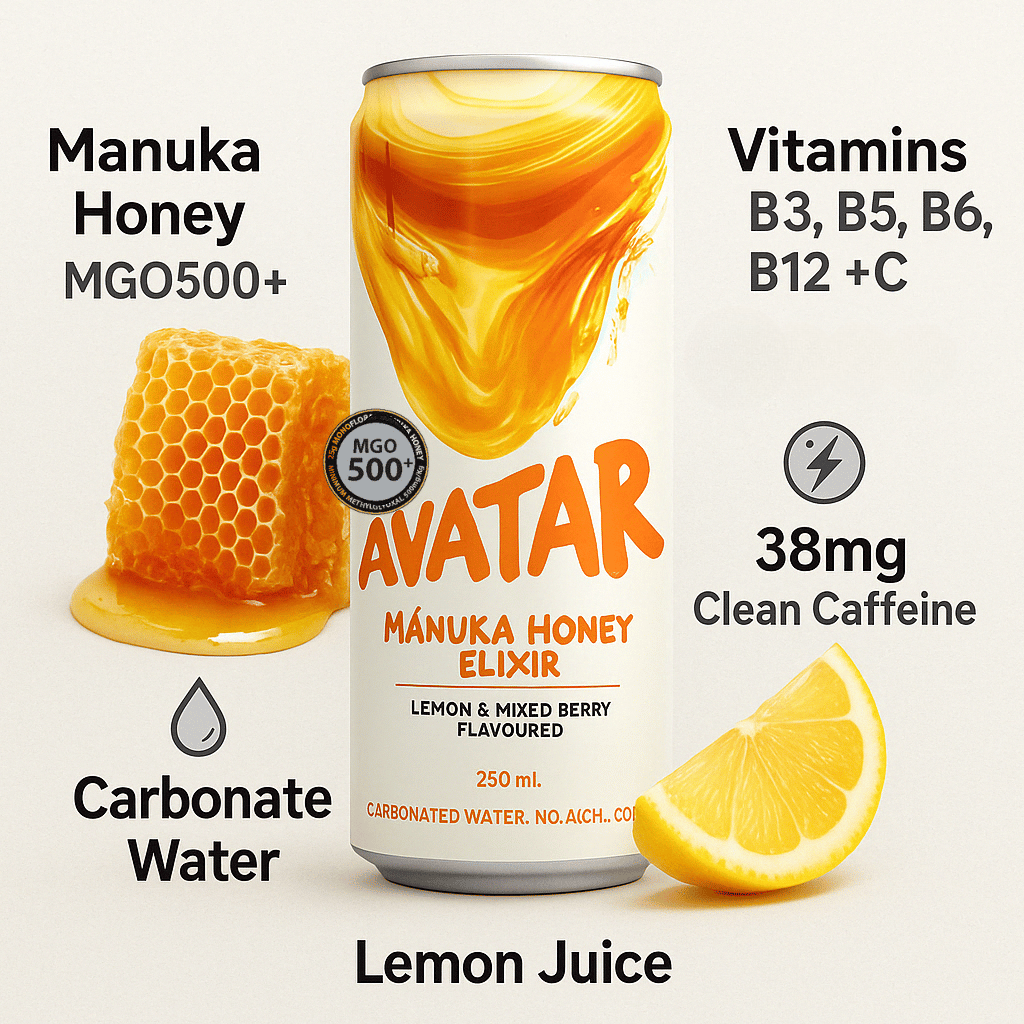
Avatar Elixir is one example of a lighter Manuka honey drink that can fit this kind of study break. It is made with certified MGO500+ Manuka honey, lemon, elderflower, B vitamins, vitamin C, clean caffeine, and lightly carbonated water. The flavour leans bright and floral, with honeyed depth, citrus lift, and gentle bubbles rather than a thick or heavy mouthfeel.
For students buying ahead for exam weeks, the Beekeeper's Apprentice 8pk can be a practical option to keep in the fridge for planned breaks. It is best used thoughtfully, such as between daytime study blocks, rather than as a replacement for water, meals, rest, or sleep.
How should students time caffeine between study blocks?
Students should time caffeine so it supports the next study block without pushing too close to sleep. In practical terms, caffeine is usually better earlier in the day, while non-caffeinated drinks are usually better for late afternoon or evening study.
Caffeine timing matters because study days often stretch longer than expected. A drink that feels helpful at 3 pm may be less helpful if you are trying to sleep early before an exam, placement, shift, or morning lecture. Individual tolerance varies, so the best approach is to notice your own pattern rather than copy someone else’s.
What is a simple caffeine plan for a study day?
A simple caffeine plan is to use coffee or caffeinated drinks earlier, switch to lighter caffeinated options if needed, and move to non-caffeinated drinks later. This keeps caffeine more intentional and reduces the chance of stacking coffee on top of coffee without thinking.
For example, a student might have coffee in the morning, tea or a light natural energy drink around midday or early afternoon, then water, herbal tea, or sparkling water with lemon in the evening. The exact pattern depends on schedule, tolerance, and sleep needs.
What should students eat with a drink between study blocks?
Students should pair study break drinks with light, steady snacks when they need more than liquid refreshment. Good options include yoghurt, fruit, toast, nuts, crackers with cheese, boiled eggs, or a simple sandwich, depending on appetite and time.
A drink alone may not be enough if you have skipped a meal or studied through lunch. In that case, another coffee can mask the problem without solving it. A small food pairing can make the break feel more complete and help you return to the desk without feeling weighed down.
Useful pairings include:
- Water and fruit: Good for a short reset after reading or screen work.
- Tea and toast: Simple, warm, and not too heavy before writing or revision.
- Coffee and yoghurt: Better than coffee alone if breakfast was small.
- Sparkling citrus drink and crackers: Crisp and light when you want flavour without a large snack.
- Manuka honey drink and nuts: A balanced study break pairing with sweetness, bubbles, and a savoury contrast.
The goal is not to create a perfect study diet. It is to avoid running a long study day on caffeine alone.
Why do bubbles and citrus feel useful during a study break?
Bubbles and citrus can feel useful during a study break because they give the mouth a fresh, bright reset without needing a heavy drink. Light carbonation adds texture, while lemon or other citrus flavours can make a drink feel cleaner and more refreshing.
This sensory side of study drinks matters more than people often realise. After coffee, snacks, or hours indoors, a crisp drink can help mark the break and make the next block feel distinct from the last one. That does not mean bubbles or citrus create guaranteed focus. It simply means the drinking experience can feel more refreshing and easier to enjoy.
Lightly carbonated drinks are especially useful for students who want something more interesting than water but less rich than a milk coffee, smoothie, or thick flavoured drink. Lemon, elderflower, and honey can also make a drink feel more grown-up and less like a standard soft drink.
What is the best drink choice for different study blocks?
The best drink choice depends on the type of study block, the time of day, and how much caffeine you have already had. Water suits most blocks, tea suits lighter caffeine moments, coffee suits earlier higher-energy work, and a natural energy drink can suit a planned daytime reset.
Use this simple guide:
- Morning reading block: Coffee, tea, or water can all work, depending on your usual routine.
- Midday revision block: Water, green tea, iced tea, or a lightly sparkling natural energy drink can feel refreshing.
- Afternoon writing block: A smaller coffee, black tea, or clean caffeine drink may suit some students if sleep timing allows.
- Evening flashcards: Water, herbal tea, decaf coffee, or sparkling water with citrus is usually a better fit.
- Post-practice exam reset: Water first, then a light snack and a drink that feels refreshing rather than heavy.
This approach keeps the drink matched to the task. It also helps students avoid turning every break into another coffee by default.
What should students avoid drinking between study blocks?
Students should generally avoid drinks that feel too heavy, too sugary, too caffeinated for the time of day, or unclear about their caffeine content. These drinks may not suit a long study routine, especially when sleep and steady pacing matter.
This does not mean every sweet drink or strong coffee is off limits. It means the drink should match the moment. A large creamy coffee may be enjoyable, but it might feel too heavy before another hour of reading. A highly caffeinated drink may feel unnecessary late in the day. A very sweet soft drink may be refreshing for a few minutes but may not be the best default for repeated study breaks.
When choosing a drink, check:
- Whether it contains caffeine, and whether that suits the time.
- Whether the sweetness level feels right for repeated study breaks.
- Whether it feels refreshing or leaves you feeling heavy.
- Whether you are using it instead of food, water, or rest.
A good study drink should support the rhythm of the day, not become the whole strategy.
What is the simplest study break drink plan?
The simplest study break drink plan is to start with water, use caffeine intentionally, choose lighter drinks later in the day, and pair drinks with food when hunger is part of the energy dip. This gives students a practical way to avoid automatic extra coffees.
A calm, useful pattern could look like this:
- Begin with water. Have a few minutes away from the screen or page.
- Check the time. If it is late, choose non-caffeinated options.
- Match the drink to the next block. Use coffee for earlier demanding work, tea for a lighter lift, and sparkling or citrus drinks for refreshment.
- Add food if needed. If you are hungry, a drink alone is unlikely to be enough.
- Keep it repeatable. Choose drinks you can use across a full week of study without feeling overdone.
Final takeaway: Instead of reaching for another coffee by habit, choose a study break drink that fits the next block. Water, tea, a smaller coffee, a light snack, or a refreshing natural energy drink such as Avatar Elixir can all have a place when chosen thoughtfully.
These answers help students choose lighter, more refreshing drinks between study blocks without automatically reaching for another coffee.
What should I drink between study blocks instead of coffee?
Between study blocks, choose a drink that hydrates, feels light, and fits your caffeine timing. Good options include water, herbal tea, green or black tea, sparkling water with citrus, or a lightly caffeinated natural energy drink. The best choice depends on how much caffeine you have already had, how late it is, and whether the next block is reading, writing, revision, or practice questions.
Is water enough during a long study day?
Yes, water is enough for many study breaks, especially when you are already caffeinated from coffee or tea. Tiredness during study can come from sitting still, screen time, or forgetting to drink, not just from needing more caffeine. Chilled water, sparkling water, lemon slices, mint, or cucumber can make water feel fresher without making the break feel heavy.
Is tea better than another coffee for studying?
Tea is a good alternative when another coffee feels too strong, too rich, or too late in the day. Black tea and green tea give a lighter caffeinated option, while herbal teas offer warmth and flavour without more caffeine. Tea also works well as a short break ritual because it feels calm, simple, and easier to pace than a large coffee.
When should students avoid caffeine between study blocks?
Students should avoid extra caffeine when it is late in the day, when they have already had more than usual, or when sleep matters more than pushing through another block. Caffeine timing is personal, but adding it too close to bedtime can make a study day feel harder to recover from. In those moments, water, herbal tea, or a citrusy sparkling drink is usually a better fit.
Are natural energy drinks suitable for study breaks?
Natural energy drinks can suit study breaks when they are light, ingredient-led, and not overly sweet or heavy. Look for clear caffeine information, refreshing flavours, and a drink that feels easy to sip between tasks. Avatar Elixir is one example of a lighter Manuka honey drink made with certified MGO500+ Manuka honey, lemon, elderflower, B vitamins, vitamin C, clean caffeine, and lightly carbonated water.
What snacks pair well with study break drinks?
Study break snacks should be simple, not too rich, and easy to return from. Good pairings include fruit, yoghurt, toast, nuts, crackers, cheese, or a small sandwich, depending on the time of day. A lighter drink with citrus, bubbles, tea, or honeyed notes works well when you want a clean mouthfeel before going back to reading, writing, or revision.