


Short answer: Honey, fruit juice, and cane sugar can all sweeten natural energy drinks, but they change the drink in different ways. Honey often adds round floral depth, fruit juice adds fruit character and acidity, cane sugar gives a cleaner straightforward sweetness, and non-caloric sweeteners add sweetness with few or no calories but can leave a different aftertaste. The source of sweetness does not automatically make a drink low sugar or high quality, so the best comparison comes from reading both the ingredient list and the nutrition panel.
You are standing in front of the chilled drinks shelf. Several natural energy drinks look clean, bright, and wellness-minded. One is sweetened with honey. Another uses fruit juice. Another lists cane sugar. A fourth says zero sugar and uses non-caloric sweeteners. From the front label, they may all seem like similar choices, but the sweetener source changes the taste, calories, label clarity, and overall sip experience.
The key is not to assume that one sweetener is automatically better. Honey can still contribute sugar. Fruit juice can still raise total sugars. Cane sugar can be easy to understand on a label. Non-caloric sweeteners can reduce sugar but may change the finish. A natural energy drink is best judged by how the sweetener works with the full formula, including caffeine source, acidity, carbonation, flavor, and serving size.
What is the main difference between honey, fruit juice, and cane sugar in energy drinks?
The main difference is that honey, fruit juice, and cane sugar bring different flavors, sweetness profiles, and label meanings to an energy drink, even though they can all contribute sugar and calories. Honey tends to taste rounder and more aromatic, fruit juice adds fruit flavor and tartness, and cane sugar provides a familiar, direct sweetness.
In practical terms, the sweetener source affects more than whether the drink tastes sweet. It influences how quickly sweetness appears on the palate, how clean or lingering the finish feels, how much fruit or floral character comes through, and how transparent the label feels to someone reading ingredients carefully.
It also affects perception. A drink sweetened with honey may feel more crafted or ingredient-led. A drink sweetened with fruit juice may feel closer to a sparkling juice or fruit-forward refreshment. A cane sugar drink may feel simple and familiar. A no sugar drink may feel lighter, but the sweetness may come across differently depending on the sweetener blend.
How do honey, fruit juice, cane sugar, and non-caloric sweeteners compare?
Honey, fruit juice, cane sugar, and non-caloric sweeteners differ most clearly by flavor, sweetness intensity, calories, label transparency, and the way they shape the sip. The table below gives a practical comparison for natural energy drinks.
| Sweetener source | Typical flavor effect | Sweetness intensity | Calories and sugar | Label clarity | Sip experience |
|---|---|---|---|---|---|
| Honey | Rounded, floral, sometimes earthy or caramel-like depending on the honey | Moderate to strong, with a fuller feel | Contributes sugar and calories | Usually easy to recognize, but amount still matters | Can soften acidity and make the drink feel smoother or more layered |
| Fruit juice | Fruity, tart, bright, sometimes pulpy or juicy | Varies by fruit and concentration | Contributes sugar and calories unless used only in very small amounts for flavor | Can be clear, but terms like juice concentrate need closer reading | Can make the drink feel more refreshing, tangy, or fruit-forward |
| Cane sugar | Clean, neutral, familiar sweetness | Predictable and direct | Contributes sugar and calories | Very clear and easy to identify | Can make flavors pop without adding much flavor of its own |
| Non-caloric sweeteners | Sweet without sugar, sometimes with a noticeable aftertaste depending on the sweetener | Often very high, so only small amounts are needed | Usually few or no calories from the sweetener itself | Depends on whether the label names the sweetener plainly | Can feel lighter, but may taste less rounded than sugar-based sweetness |
This comparison shows why sweetener choice is not just a nutrition detail. It is also a flavor design decision. Two drinks with the same grams of sugar can taste quite different if one uses honey and the other uses fruit juice or cane sugar.
Does honey make an energy drink healthier or lower in sugar?
No, honey does not automatically make an energy drink healthier or lower in sugar. Honey is a recognizable ingredient and can add distinctive flavor, but it still contributes sugars and calories when used as a sweetener.
For wellness-minded shoppers, honey can be appealing because it is familiar and ingredient-led. It may also give a drink a more rounded flavor than plain sugar. That does not mean the drink is automatically low sugar, better for everyone, or medically superior. The total sugar per can, serving size, caffeine level, and full ingredient list still matter.
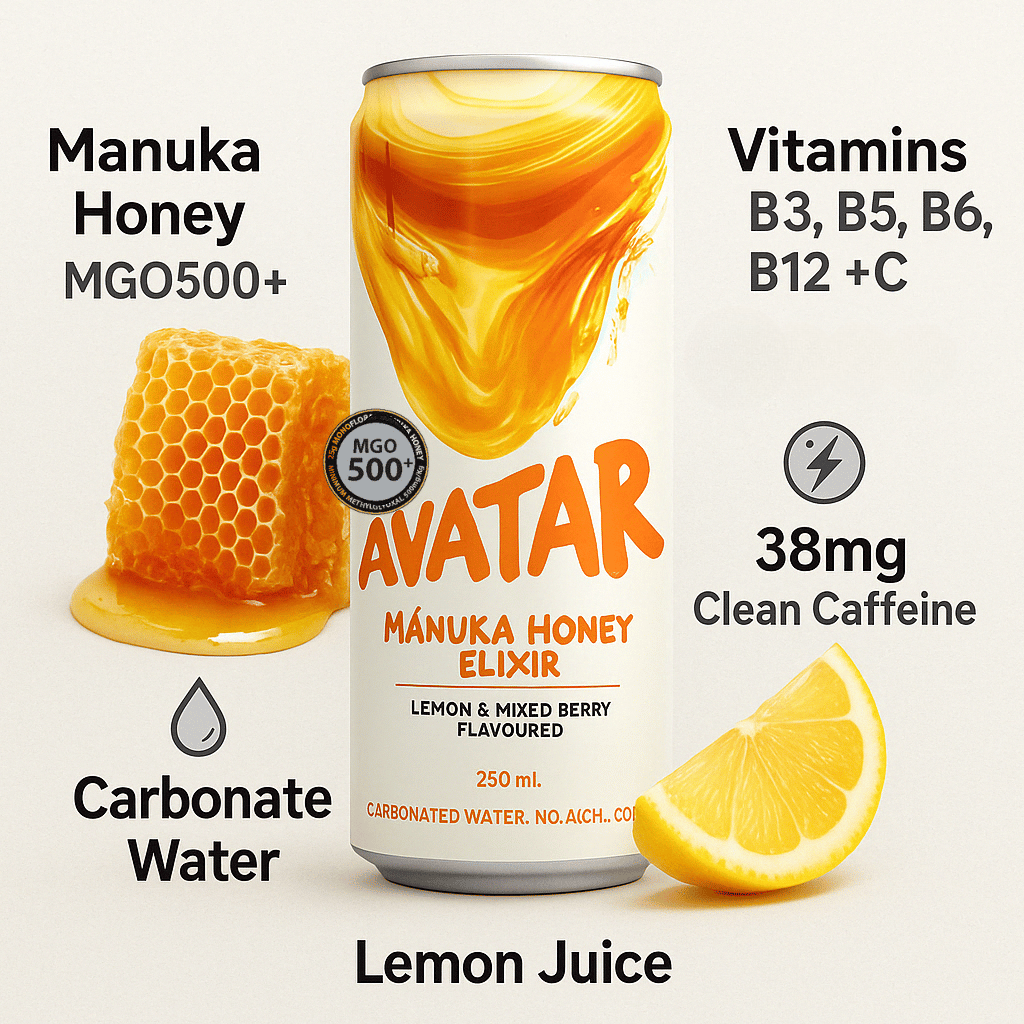
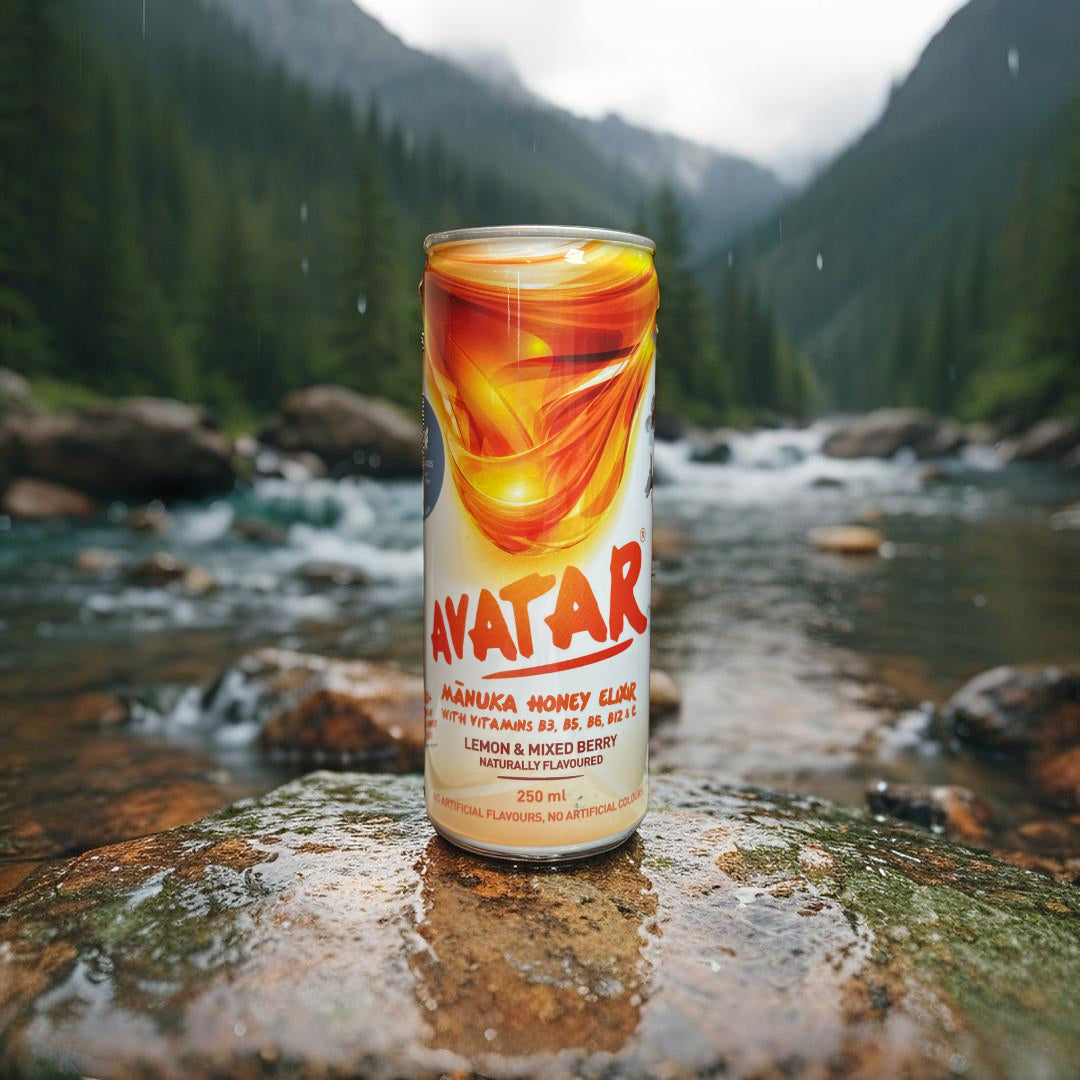
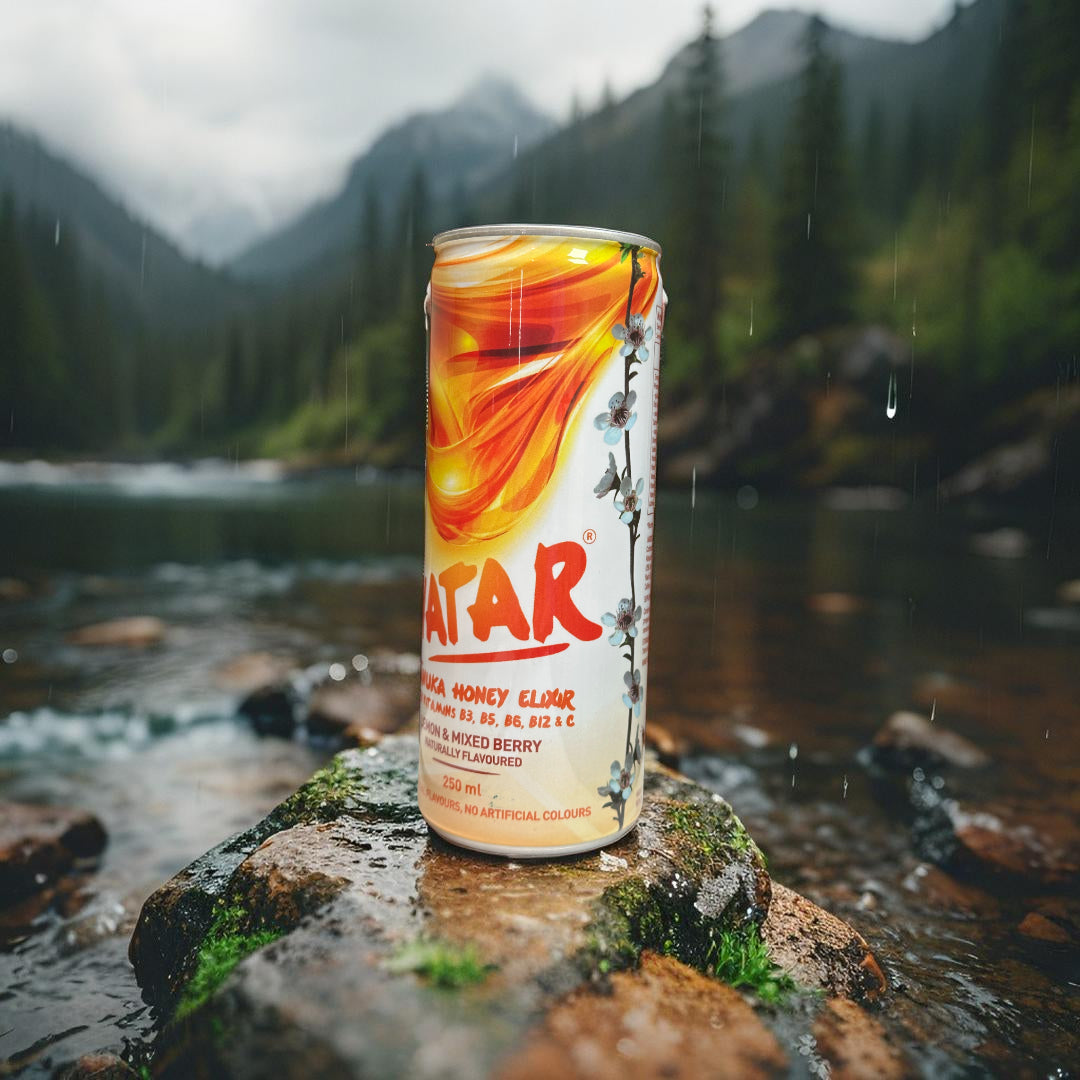
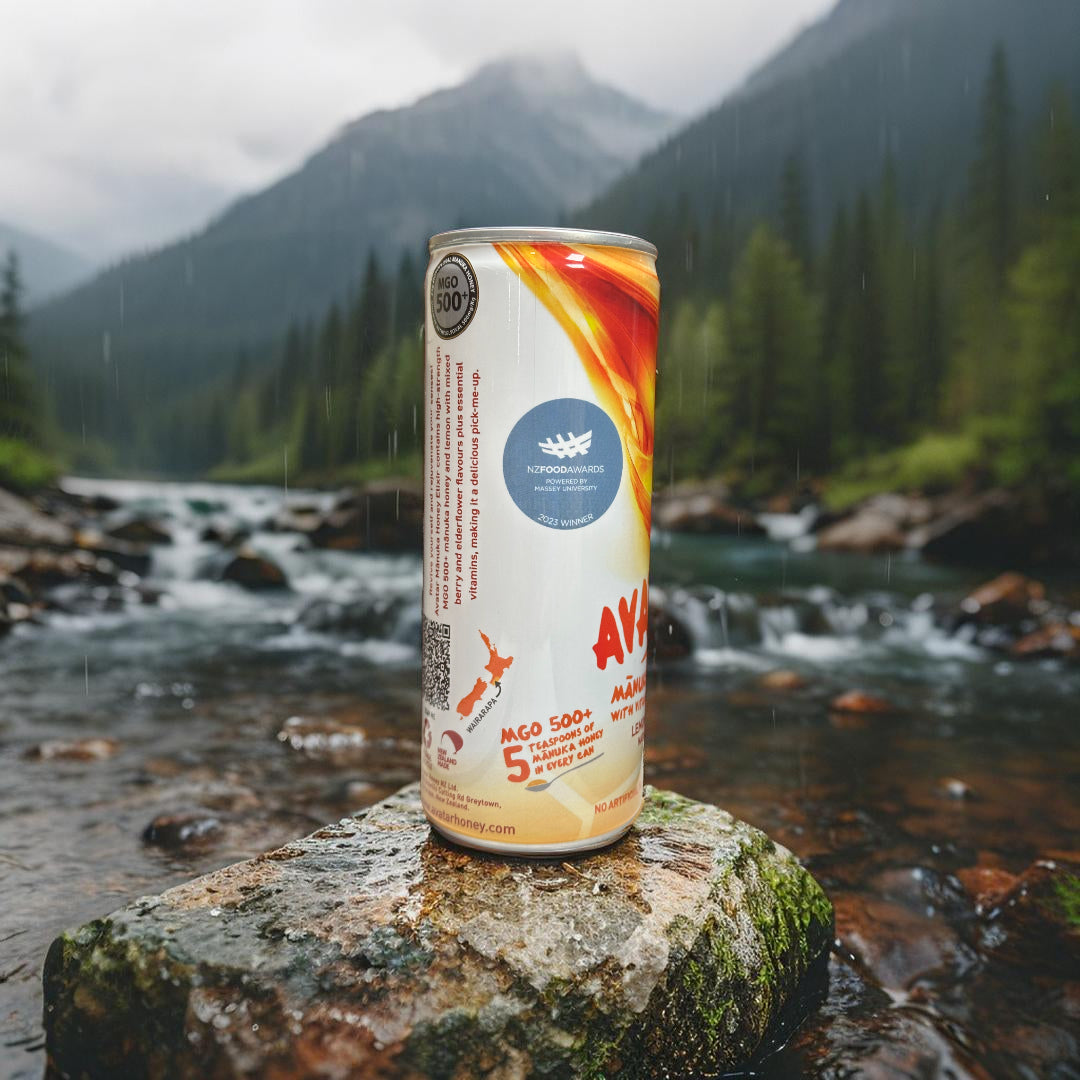
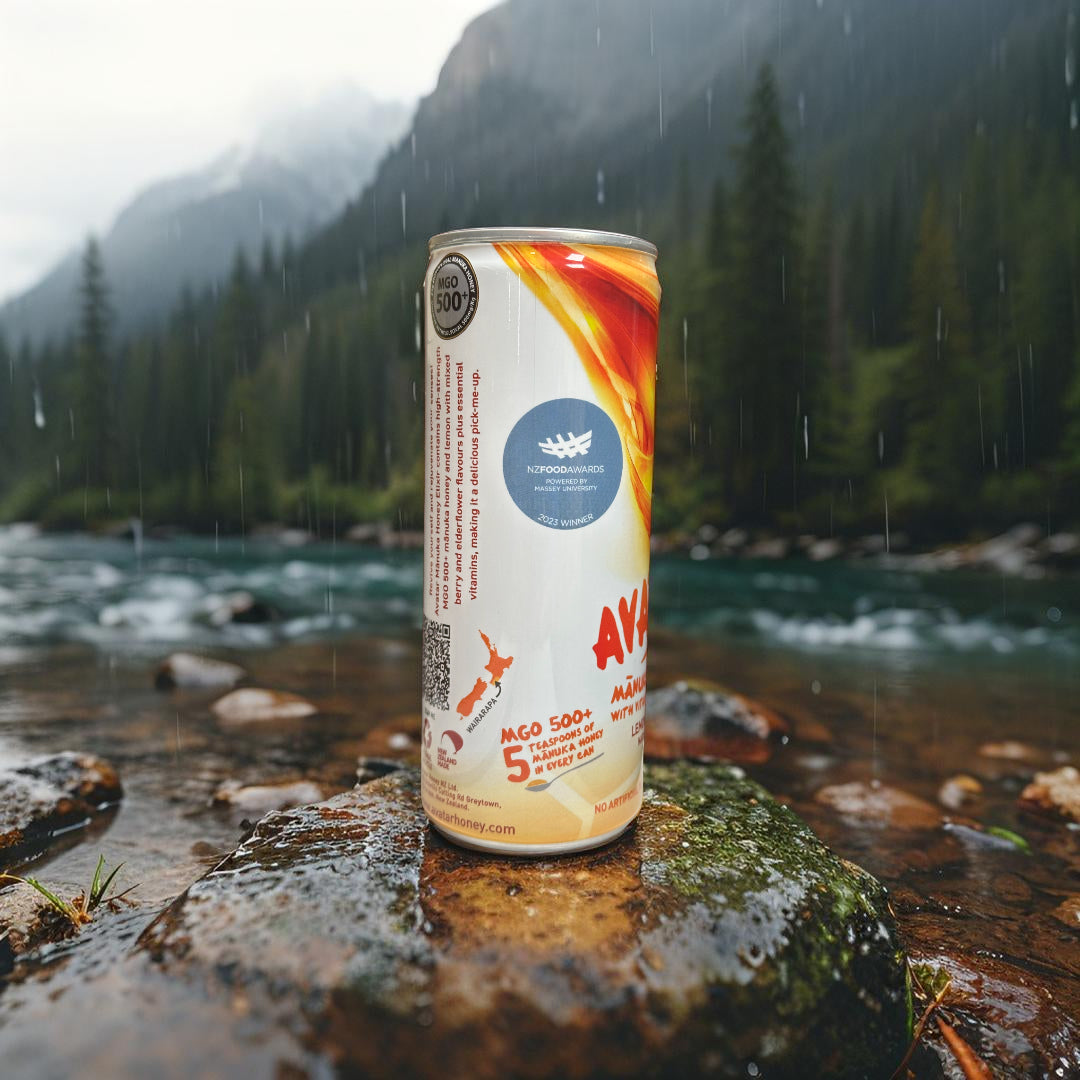
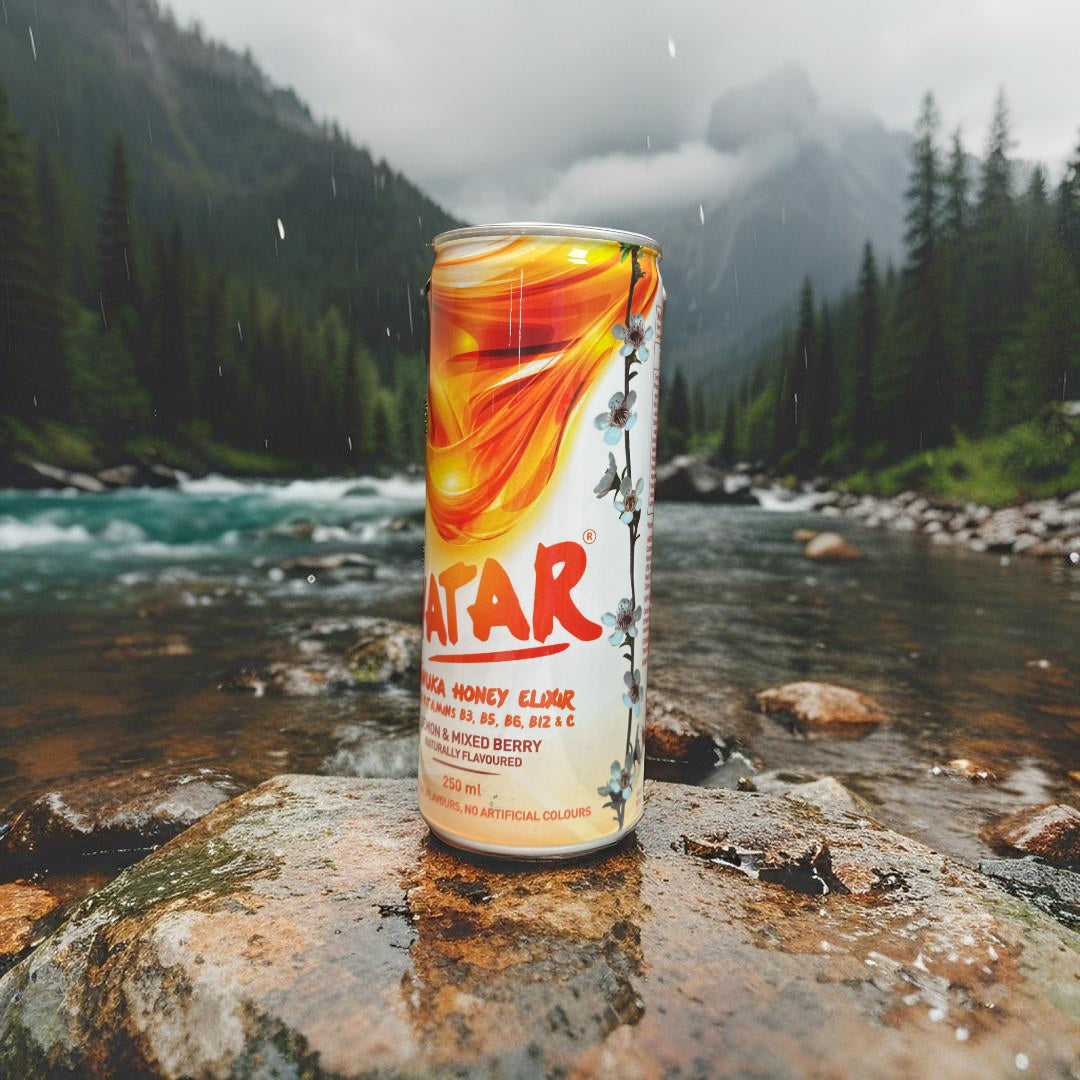
Manuka honey is a useful example of how a sweetener can shape a drink’s identity. In a beverage such as Avatar’s Manuka honey positioning, the choice of Manuka honey signals a specific flavor direction and ingredient philosophy. It can help create a smoother, more distinctive profile. The important point is that this is a taste and positioning choice, not proof that the drink is automatically low sugar or a health product.
If you are comparing honey-sweetened energy drinks, look for the actual grams of sugar on the nutrition panel. A honey-based drink can be moderate in sugar, high in sugar, or blended with other sweeteners. The word “honey” on the front label is only the starting point.
Does fruit juice make an energy drink more natural?
Fruit juice can make an energy drink feel more natural and fruit-forward, but it does not automatically make the drink lower in sugar or higher quality. Fruit juice adds flavor, acidity, color, and sweetness, depending on how much is used and whether it appears as juice, juice concentrate, or a small flavor component.
Fruit juice works especially well when a drink is built around citrus, berry, tropical fruit, apple, or pomegranate notes. It can make sweetness feel brighter because fruit acids balance sugar. That balance is one reason a juice-sweetened drink may taste refreshing even when it contains a meaningful amount of sugar.
The label still needs context. If fruit juice or fruit juice concentrate is one of the first ingredients, it may be a major source of sweetness. If it appears lower on the ingredient list, it may be used more for flavor. The nutrition panel will tell you how much total sugar is present in the finished drink.
For label readers, the phrase “sweetened with fruit juice” is helpful but incomplete. It tells you the source of sweetness, not the amount. A fruit juice energy drink can be a thoughtful choice when the flavor is balanced and the sugar level fits your preferences, but the juice source alone does not guarantee a lighter formula.
What does cane sugar do differently in an energy drink?
Cane sugar gives an energy drink a clean, direct sweetness without adding much flavor of its own. It is often used when a brand wants sweetness that feels familiar and predictable while letting fruit, botanical, or caffeine notes remain the main flavor focus.
Compared with honey, cane sugar is usually less aromatic. Compared with fruit juice, it does not bring tartness, fruit identity, or natural color. This can be an advantage in formulas where the brand wants a crisp finish or a specific flavor to stay clear. For example, a lemon, ginger, or berry drink may use cane sugar because it supports the flavor without making the profile taste like honey or juice.
Cane sugar is also easy to understand on a label. Most shoppers know what it is. That transparency can be useful for people who prefer short, recognizable ingredient lists. However, clear labeling does not mean low sugar. Cane sugar contributes sugar and calories, so the amount matters as much as the source.
In the drinking experience, cane sugar often creates a straightforward sweetness curve. It tends to arrive quickly, taste familiar, and finish cleanly when used in balance. If overused, it can make a drink feel heavy or candy-like, especially in a carbonated energy drink.
How do non-caloric sweeteners change the comparison?
Non-caloric sweeteners change the comparison because they can create a sweet taste with few or no calories from the sweetener itself, but they do not taste or behave exactly like honey, fruit juice, or cane sugar. They can make a drink lower in sugar, yet they may also change the mouthfeel, aftertaste, and perceived smoothness.
Common non-caloric or very low-calorie sweetening strategies are often chosen for zero sugar or low sugar energy drinks. These formulas can be useful for people who want sweetness without a higher sugar count. The tradeoff is that some sweeteners have a delayed sweetness, a lingering finish, or a taste that some people notice more than others.
Non-caloric sweeteners also do not bring the same body as sugar-based sweeteners. Honey, fruit juice, and cane sugar can add weight and roundness to a drink. A zero sugar drink may need acidity, carbonation, natural flavors, or other ingredients to create a satisfying sip without feeling thin.
The best way to evaluate these drinks is to separate nutrition from taste. A no sugar label tells you something useful about sugar content. It does not tell you whether the flavor will feel rounded, crisp, bitter, fruity, or clean. For that, the full ingredient list and your own taste preference matter.
Why does sweetener source affect the overall sip experience?
Sweetener source affects the sip experience because sweetness interacts with acidity, bitterness, carbonation, aroma, and mouthfeel. In an energy drink, the sweetener is not just there to make the drink sweet. It helps balance sharper ingredients and shape how the drink feels from first sip to finish.
Energy drinks often include ingredients that can taste bitter, tart, herbal, or mineral-like. Caffeine can bring bitterness. Citrus acids can feel sharp. Botanical flavors can be earthy or aromatic. Sweetness helps bring these elements into balance.
Honey may round off edges and add aromatic depth. Fruit juice may make the drink feel bright and juicy. Cane sugar may lift the flavor without changing its identity much. Non-caloric sweeteners may keep the drink lighter, but they may need careful blending to avoid a thin or lingering finish.
This is why two “clean” energy drinks can feel very different even when they appear similar on the shelf. The sweetener source changes not only nutrition facts, but also the rhythm of the drink: how it opens, how it balances caffeine and acidity, and how it finishes.
How should you read the label when comparing sweeteners in natural energy drinks?
To compare sweeteners in natural energy drinks, read the ingredient list and the nutrition panel together. The ingredient list tells you the source of sweetness, while the nutrition panel tells you the amount of sugar and calories in the finished drink.
- Start with total sugars. This tells you how much sugar is in the serving, regardless of whether it comes from honey, fruit juice, cane sugar, or another source.
- Check serving size. Make sure you are comparing can to can, not a smaller serving against a larger one.
- Find the sweetener in the ingredient list. Ingredients are typically listed in order by weight, so earlier placement may suggest a larger role in the formula.
- Look for multiple sweeteners. A drink may use honey plus fruit juice, cane sugar plus juice, or sugar plus non-caloric sweeteners.
- Notice the flavor goal. Honey, fruit juice, cane sugar, and non-caloric sweeteners each create a different taste experience, even when the sugar number looks similar.
A clear label makes comparison easier, but it does not make the decision for you. A lower sugar drink may be your preference if you want a lighter option. A honey or juice-sweetened drink may be your preference if you want a fuller flavor. A cane sugar drink may be your preference if you want direct sweetness and simple label recognition.
Which sweetener source is best in a natural energy drink?
The best sweetener source in a natural energy drink depends on what you value most: flavor depth, fruit brightness, simple sweetness, lower sugar, or a lighter finish. No single sweetener source is automatically the best choice for every drink or every person.
Choose honey if you like a rounder, more aromatic sweetness and want the sweetener to contribute to the drink’s identity. Choose fruit juice if you want a brighter, more fruit-forward sip. Choose cane sugar if you prefer a clean and familiar sweetness that does not add much flavor of its own. Choose non-caloric sweeteners if reducing sugar is your main priority and you are comfortable with the taste profile.
The most useful rule is simple: judge the finished drink, not just the sweetener name. A thoughtful formula should make the sweetness feel balanced with the caffeine, acidity, carbonation, and flavor. Source matters, but amount and balance matter just as much.
People also ask
Is honey better than cane sugar in energy drinks?
Honey is not automatically better than cane sugar in energy drinks. Honey adds more flavor character, while cane sugar gives a cleaner and more neutral sweetness. Both contribute sugar and calories, so the better choice depends on the drink’s flavor design and your personal nutrition preferences.
Is fruit juice sugar still sugar in an energy drink?
Yes, sugar from fruit juice still counts as sugar in an energy drink. Fruit juice can add appealing flavor, acidity, and a more fruit-forward profile, but the total sugar on the nutrition panel is still the most useful number for comparison.
Can a natural energy drink be clean label and still contain sugar?
Yes, a natural energy drink can have a clean label and still contain sugar. Clean label usually refers to recognizable ingredients and label transparency, not necessarily zero sugar. Honey, fruit juice, and cane sugar can all fit a simple ingredient approach while still contributing sweetness and calories.
Why do some low sugar energy drinks taste less smooth?
Some low sugar energy drinks taste less smooth because sugar adds body, roundness, and balance. When sugar is reduced or replaced, the formula may need careful use of acidity, carbonation, flavor, and non-caloric sweeteners to avoid a thin taste or lingering aftertaste.
What is the final takeaway on sweeteners in energy drinks?
The final takeaway is that honey, fruit juice, cane sugar, and non-caloric sweeteners each shape a natural energy drink in a different way. Honey can add rounded depth, fruit juice can add brightness, cane sugar can provide clean sweetness, and non-caloric sweeteners can reduce sugar while changing the finish.
Source matters, but it does not tell the whole story. A honey-sweetened drink is not automatically low sugar. A fruit juice drink is not automatically lighter. A cane sugar drink is not automatically less thoughtful. A zero sugar drink is not automatically better tasting. The clearest comparison comes from reading the ingredient list, checking total sugars and calories, and deciding which sip experience fits what you want from the drink.
These answers clarify how sweetener choices affect flavor, sugar, calories, and label reading in natural energy drinks.
What's the difference between honey, fruit juice, and cane sugar in energy drinks?
Honey, fruit juice, and cane sugar all sweeten energy drinks, but they change flavor, label meaning, and mouthfeel differently. Honey brings rounded floral or earthy notes, fruit juice adds fruit character and acidity, and cane sugar gives a cleaner, more neutral sweetness. All three can add sugar and calories, so the nutrition panel matters as much as the ingredient source.
Is honey in an energy drink healthier than cane sugar?
Honey is not automatically healthier than cane sugar in an energy drink. Honey contributes sugar and calories, just as cane sugar does, so the amount used matters. The main difference is flavor and identity: honey gives a drink a more rounded, ingredient-led profile, while cane sugar gives a simpler and more direct sweetness.
Does fruit juice make an energy drink lower in sugar?
Fruit juice does not automatically make an energy drink lower in sugar. Juice and juice concentrates contribute naturally occurring sugars and calories unless they are used only in small amounts for flavor. To compare drinks accurately, check total sugars, added sugars, serving size, and whether the ingredient list names juice, juice concentrate, or another sweetener.
Why do zero sugar energy drinks taste different from sweetened ones?
Zero sugar energy drinks taste different because non-caloric sweeteners provide sweetness without the same body and roundness that sugar-based sweeteners bring. These sweeteners are usually very intense, so only small amounts are needed. The result can feel lighter, sharper, or slightly lingering, depending on the sweetener blend, acidity, carbonation, and flavor system.
Which sweetener fits a smoother, more crafted energy drink?
Honey fits a smoother, more crafted energy drink when the goal is sweetness with aromatic depth. Avatar's Manuka honey positioning is one example of a sweetener shaping flavor identity rather than making a medical claim. The choice signals a rounded taste profile, but shoppers should still check the sugar grams and full formula before judging quality.
What should I read first on a natural energy drink label?
Read the ingredient list and nutrition panel together when comparing natural energy drinks. The ingredient list tells you where sweetness comes from, such as honey, fruit juice, cane sugar, or non-caloric sweeteners. The nutrition panel tells you how much sugar, added sugar, and calories are in the serving, which is the clearest way to compare options.