



Quick answer: Inspect packed cans first, then leave undamaged cans upright and still, chill them in a refrigerator, and open one gently over a sink or washable tray. This can reduce foaming, but cannot guarantee a spray-free opening. Never use resting or chilling to make a damaged can acceptable.
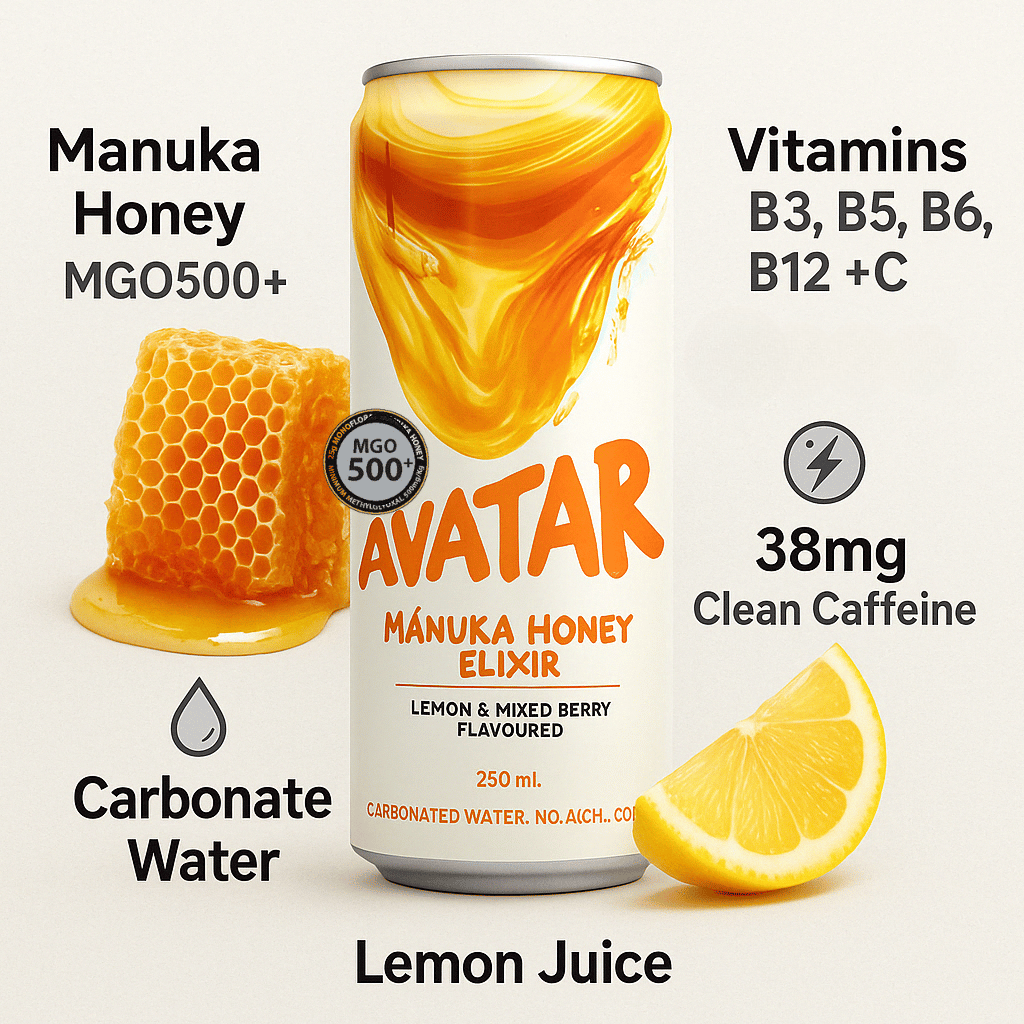
You’ve reached your hotel or home, put down your luggage, and want a cold drink straight away. Before pulling the tab, give your packed cans a little attention. Our lightly carbonated 250 ml Avatar Mānuka Honey Elixir is a practical example: even a lightly sparkling drink deserves gentle handling after a journey.
Before you start
You’ll need a refrigerator, a stable place to stand the cans upright, and a sink or washable tray for opening. Keep the cans away from electronics, clothing and anything you would rather not splash.
Open your packed cans carefully after arrival
-
Inspect each can before chilling it. Look for leaks, splits, bulging, deep dents or severe deformation, especially around the top rim, bottom edge and seams. Do not open or drink from a can with these warning signs. USDA guidance on canned-food safety identifies leaking, bulging and badly dented cans as unsuitable for use. Resting cannot make a bulging, leaking, split or otherwise unsafe can acceptable.
-
Stand undamaged cans upright and let them rest. Choose a stable surface where they won’t roll or be knocked. Luggage handling can agitate a carbonated drink. As the American Chemical Society explains, shaking disperses gas into small bubbles that allow rapid carbon dioxide release when the container opens. Leaving the can still gives those bubbles time to settle; there is no universal post-flight waiting time that guarantees success.
-
Chill the cans normally in a refrigerator. Move them gently, keep them upright and leave them undisturbed while they cool. The University of Illinois Physics Van explains that carbon dioxide stays dissolved more readily in cold drinks, so chilling can reduce rapid gas release on opening. Focus on temperature and handling rather than a countdown to “release cabin pressure”.
-
Carry one chilled can gently to your opening surface. Keep it upright and avoid shaking, rolling or bouncing it. Don’t treat tapping the lid as a dependable substitute for resting and chilling.
-
Open slowly over the sink or tray. Set the can upright, keep your face away from the opening and lift the tab gently rather than snapping it back. If foam rises, pause and let it subside before moving or pouring. A pull tab is not a precision pressure valve, so keep the opening over the washable surface even when the can feels cold.
If you’re considering the Beekeeper’s Apprentice 8pk as a purchase for a trip, its eight-can pack size is purchase context, not a luggage recommendation. Transport permissions are a separate question, covered in Can You Pack Canned Energy Drinks in Checked Luggage? and “Can You Bring Canned Energy Drinks in Carry-On Luggage?”
You’re done when your inspected, chilled can is open and any foam has settled. Enjoy your drink, and leave the remaining undamaged cans upright in the refrigerator until needed.
A few practical clarifications can help you judge can damage, combine resting with chilling, and understand unexpected foam after travel.
Can I let the cans rest while they chill?
Yes, undamaged cans can rest upright in the refrigerator while they cool. You do not need a separate resting period on the counter. Choose a stable spot where they can stay undisturbed, and handle them gently when you take one out.
Does a small dent mean I should discard the can?
A small, shallow dent is not the same as deep damage, but its location matters. USDA canned-food guidance distinguishes minor dents from deep dents and warns about sharp dents at seams. Do not use a can with a damaged seam, deep dent, leak, split or bulge. If you cannot confidently assess the damage, leave that can out of use.
Does foam when I open a can mean the drink is spoiled?
Foam alone does not show that a carbonated drink is spoiled. Agitation and warmth can cause rapid gas release when the can opens. Equally, foaming cannot confirm that a drink is safe: it does not override warning signs such as leaking, bulging, splits or severe can damage.