


Quick answer: Percent Daily Value (%DV) shows how much a nutrient in one labeled serving contributes to a standardized daily reference. It is not your personal intake prescription, a measure of immediate energy, or a score for the whole drink. A bigger percentage does not automatically mean a better beverage.
What percent Daily Value measures
On a US Nutrition Facts label, the nutrient amount and its %DV answer two different questions:
- The amount tells you how much of that nutrient is in the labeled serving, usually in grams, milligrams (mg), or micrograms (mcg).
- The %DV compares that amount with the Daily Value established for that particular nutrient.
The FDA describes Daily Values as reference amounts of nutrients to consume or not exceed each day. They give labels a shared basis for comparison, rather than setting an individual target for every person.
Each nutrient has its own reference amount. Equal percentages for two different vitamins therefore do not mean equal quantities in milligrams or micrograms. Compare the same nutrient across drinks, not one vitamin’s percentage with another’s.
This article focuses on US Nutrition Facts labels. If you are also comparing products with a different panel, our Nutrition Facts vs Supplement Facts guide provides a separate starting point for understanding those label formats.
Start with the serving, not the size of the percentage
Before reading the vitamin numbers, check the serving size and the number of servings per container. A percentage stated per serving applies to that serving, which is not necessarily the entire bottle or can. If the label has both per-serving and per-container columns, make sure you are reading the intended column.
A hypothetical 50% DV example
Imagine a beverage label that states 50% Daily Value for vitamin C per serving and lists two servings per bottle. Drinking the whole bottle would provide:
2 servings × 50% DV per serving = 100% DV for vitamin C.
This is a hypothetical label calculation, not Avatar’s nutrient information or a recommendation to drink that quantity. It simply shows why serving information changes the meaning of the number.
The same principle matters when comparing drinks. As the FDA advises, check that serving sizes are the same before comparing %DV figures. Otherwise, a higher percentage may partly reflect a larger serving rather than more nutrient in an equal volume.
What a high vitamin percentage does not tell you
More than 100% is not a usefulness or safety verdict
A vitamin value above 100% DV means the labeled serving contains more than that vitamin’s daily reference amount. It does not establish that the extra amount is more useful to you.
Nor is 100% DV an upper safety limit. The percentage alone cannot determine whether an intake is safe or excessive. That question depends on the particular nutrient, the actual amount, your overall intake, and individual circumstances. Foods, other fortified drinks, and supplements can all contribute to the day’s total.
Think of %DV as a reference for understanding a contribution, not a target you must reach through beverages.
Vitamin percentages are not an immediate-energy meter
A vitamin’s %DV does not measure calories, caffeine, or how alert you will feel. A larger B-vitamin percentage therefore does not establish a stronger or faster energy effect.
Keep those label questions separate: vitamin figures describe nutrient content, calories describe food energy, and caffeine information describes a different ingredient altogether. None of them alone rates the whole drinking experience.
Why this matters when looking at Avatar Elixir
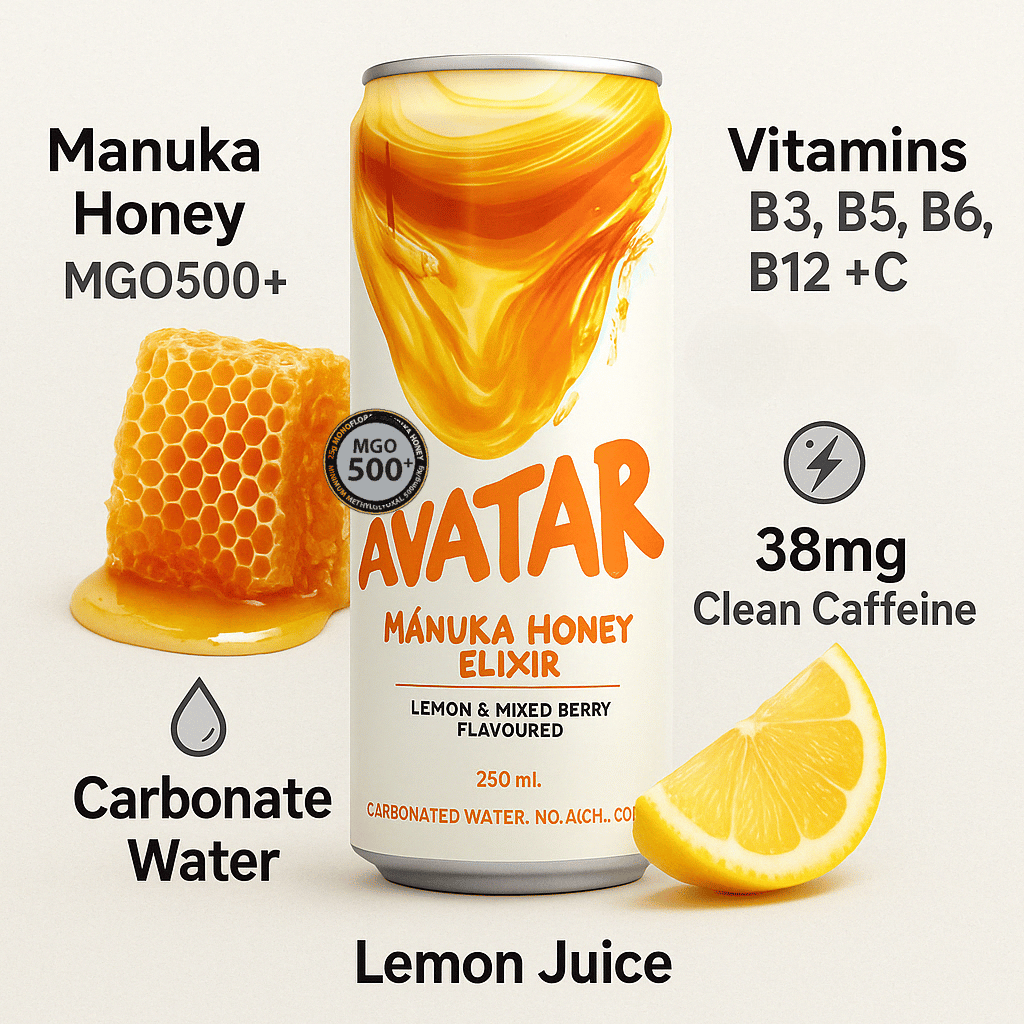
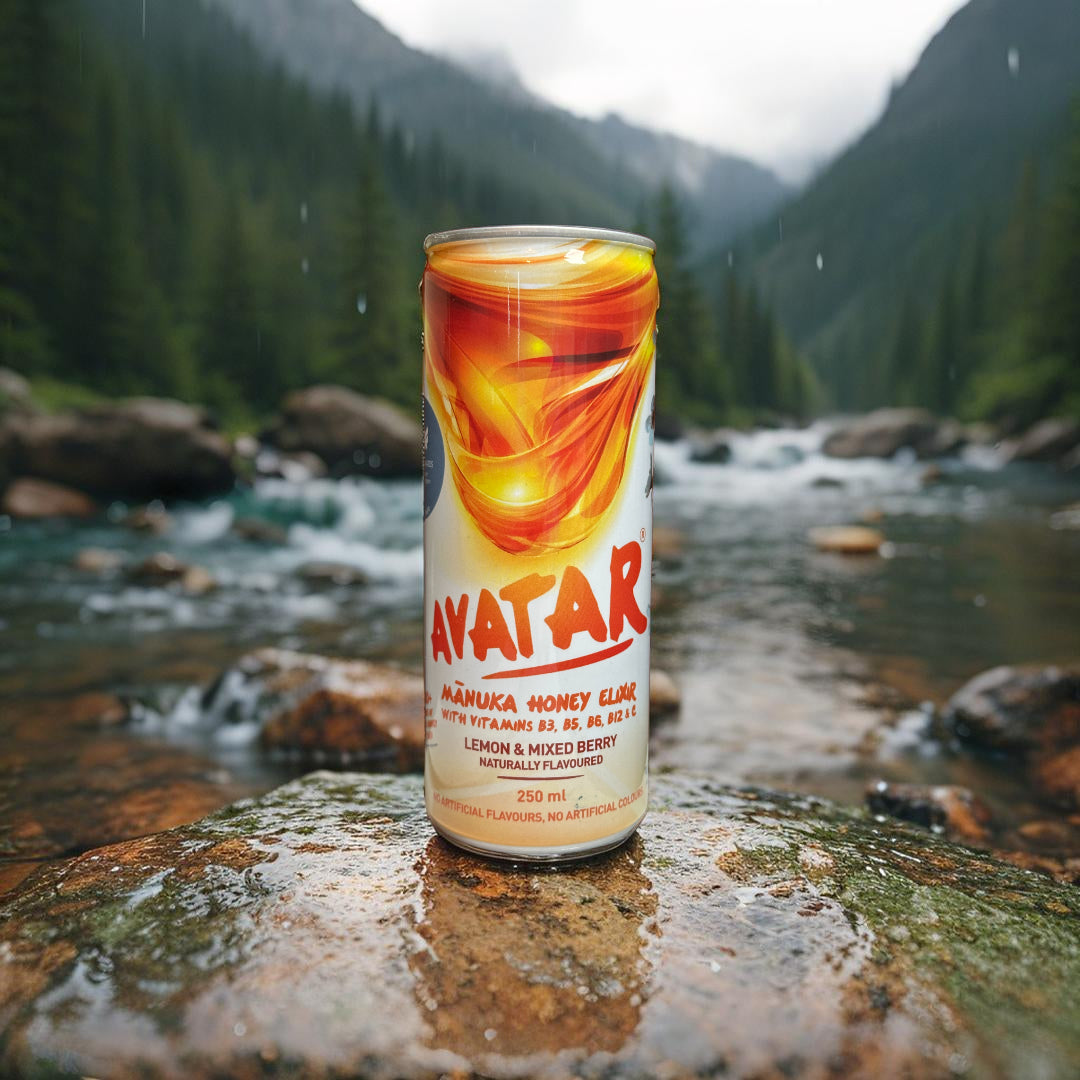
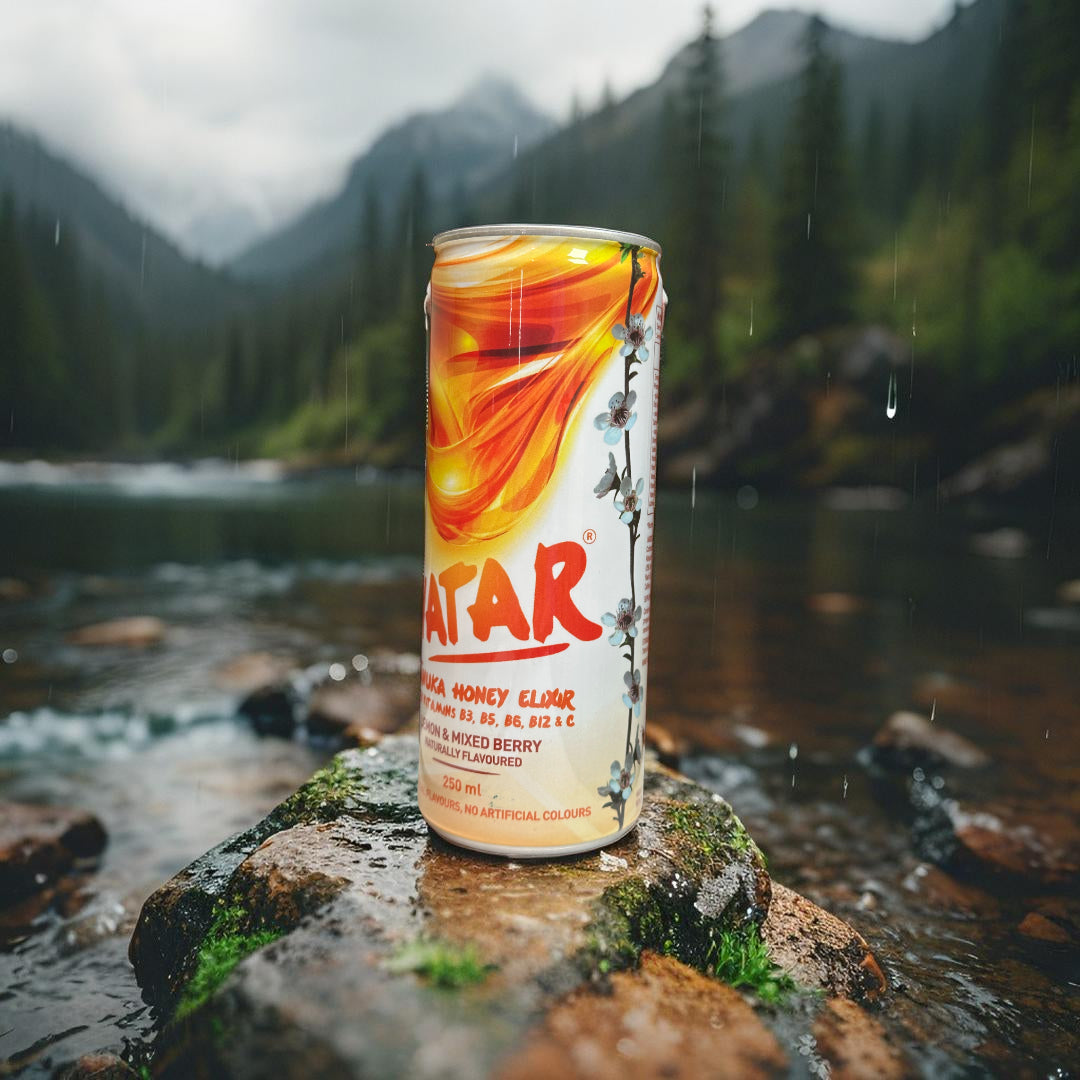
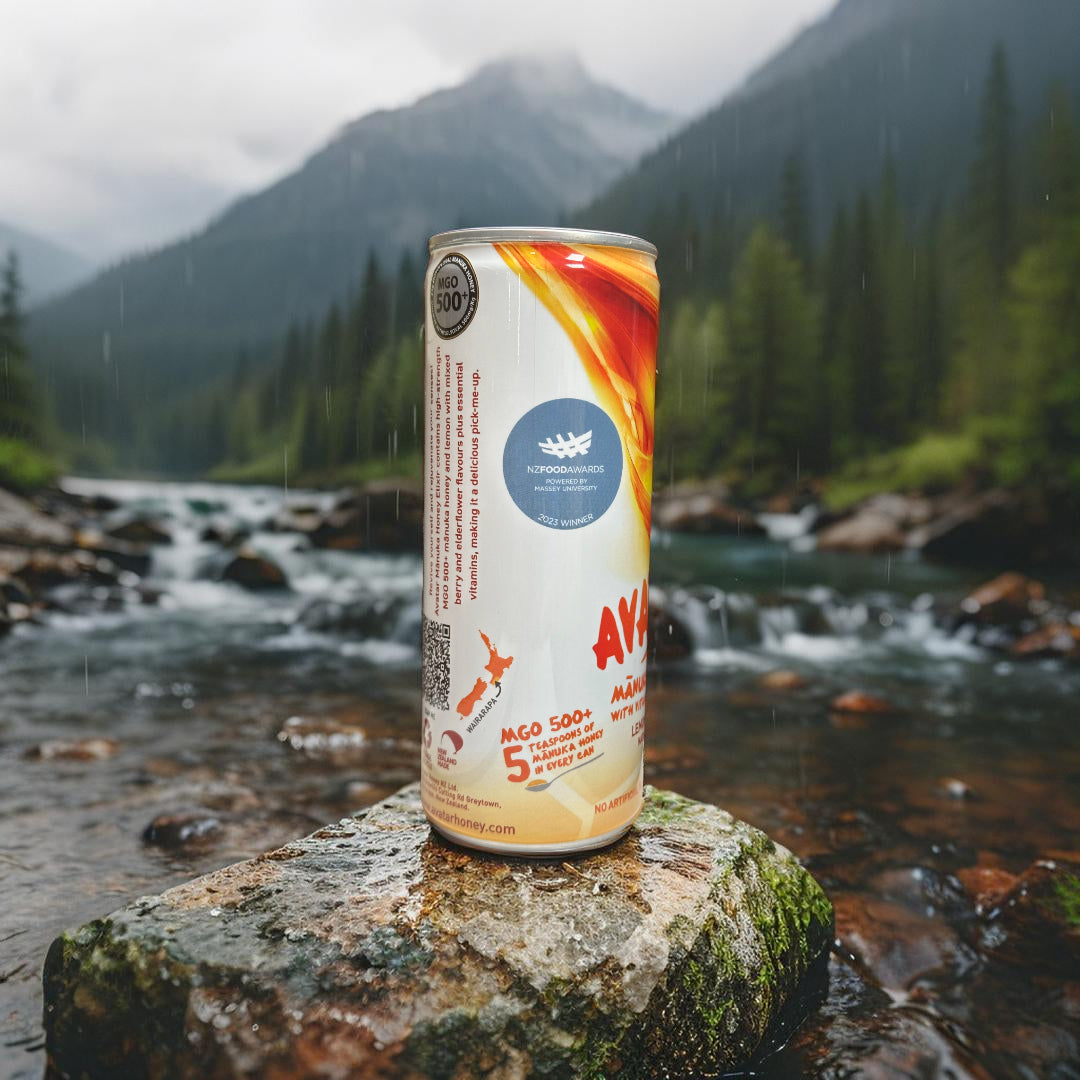
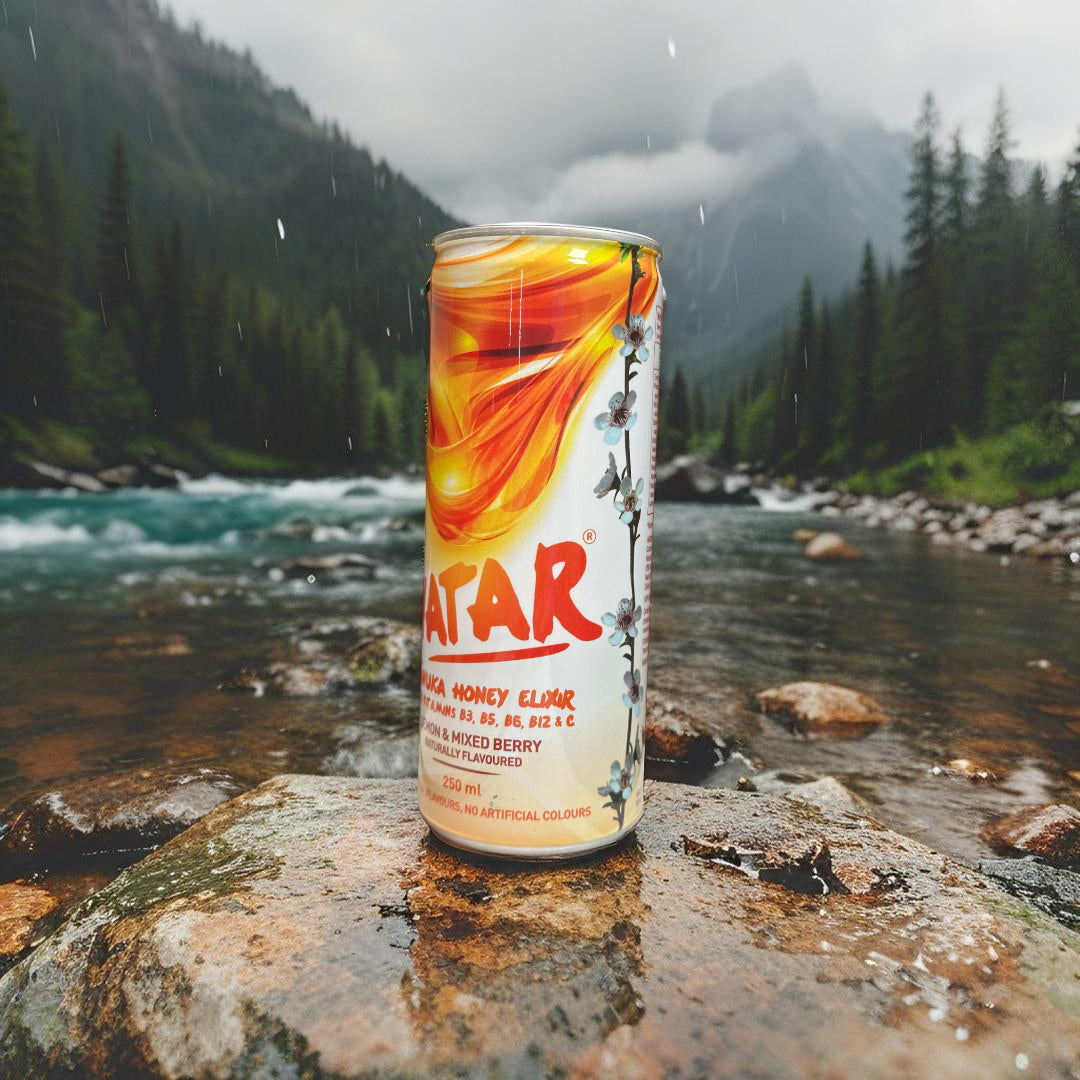
Avatar Mānuka Honey Elixir contains B3, B5, B6, B12, and vitamin C and is sold in a 250 ml can. Those vitamins make label-reading relevant when comparing Avatar Elixir with other vitamin-containing beverages.
Use the nutrient amounts, percentages, and serving information shown on the label you are reading. Knowing that a drink contains a vitamin does not, by itself, tell you its quantity or %DV. For more context on the nutrients themselves, see our articles on B vitamins and vitamin C.
A short checklist for comparing drinks
The FDA’s general guide considers 5% DV or less per serving low and 20% DV or more per serving high. These descriptions apply to an individual nutrient, not the overall quality of a drink. Whether a higher value is desirable depends on which nutrient you are considering.
- Check the portion: Read serving size and servings per container, then consider how much you plan to drink.
- Compare like with like: Look at the same nutrient in the same volume, using both its amount and its %DV.
- Read beyond vitamins: Check calories, sugars, and caffeine information where provided. Total sugars have no %DV, so compare their gram amounts instead.
- Consider the whole day: One drink’s contribution sits alongside the nutrients in your other food, drinks, and any supplements.
The practical goal is not to find the largest number. It is to understand what the serving contributes, then choose a drink whose ingredients, flavor, and overall nutrition suit what you want from it.
These follow-ups clarify how to compare vitamin quantities, read missing percentages, and put a drink’s label in daily context.
Can I add percentages for different vitamins into one total?
No. Each vitamin’s percentage uses its own Daily Value as the reference. Adding B12’s percentage to vitamin C’s percentage would not produce a meaningful overall nutrition score. Compare each nutrient separately, using both its listed amount and the serving size.
Does a missing percent Daily Value mean a nutrient is absent?
No. Some nutrients do not have a percent Daily Value. Total sugars, for example, are listed in grams but have no %DV. Check the amount column rather than treating a blank percentage as zero. When comparing total sugars across drinks, use gram amounts for equivalent portions.
Does the label’s 2,000-calorie footnote describe my personal needs?
No. The Nutrition Facts footnote uses 2,000 calories a day for general nutrition advice, not as an individualized calorie recommendation. Likewise, the Daily Values provide standardized label references. They do not establish how much you personally need or should obtain from a vitamin-containing drink.
How should I compare a vitamin drink with my supplement?
Start by identifying overlapping nutrients and checking their actual amounts and labeled servings. A drink and a supplement can both contribute to the same nutrient’s daily total. Adding percentages is not a safety assessment, and the labels alone cannot establish whether the combination suits you. If you need personalized guidance, discuss the actual labels with a qualified healthcare professional.