


Short answer: Yes. When honey is added to a packaged beverage, its sugars generally count as added sugars on the US Nutrition Facts label. Manuka honey is treated the same way for this purpose. Its source, quality, and grading may matter to the character of the drink, but they do not remove those sugars from the Added Sugars line.
The label can seem contradictory at first. Honey is a naturally produced food, yet a beverage made with honey can still show added sugars. That is because the US Food and Drug Administration, or FDA, uses added to describe how sugar enters a packaged food or drink, not whether the sweetening ingredient originally came from nature.
For shoppers, the practical point is simple: look at the Added Sugars line to understand quantity, then use the ingredient list to understand the source.
Why does honey count as added sugar in a packaged beverage?
Honey generally counts as added sugar when a beverage manufacturer incorporates it into the drink during production. Under the FDA labeling framework, added sugars include sugars added while a food or beverage is being processed, including sugars from ingredients such as honey and syrups.
The word added describes the manufacturing step. It does not mean that honey is artificial, refined, or identical in every respect to other sweeteners. A beverage maker may choose honey for its floral flavor, aroma, provenance, or role in the overall recipe. Those qualities do not change how its sugar contribution is classified on a US beverage label.
This distinction also applies to premium varieties. Certified MGO500+ Manuka honey remains honey, and its sugars generally contribute to added sugars when it is used as an ingredient in a packaged drink. The Manuka source and MGO grade provide information about the ingredient, while the Nutrition Facts panel reports how much sugar is in the finished beverage.
In short, natural source and added sugar classification answer two different questions:
- The ingredient list asks: What was used to make this beverage?
- The Nutrition Facts panel asks: How much sugar does a serving contain, and how much of it was added during processing?
What is the difference between Total Sugars and Added Sugars?
Total Sugars includes all sugars in a serving, while Added Sugars identifies the portion added during processing or supplied by ingredients that the FDA classifies as added sugar. Added Sugars is included within Total Sugars, not added on top of it.
| Label term | What it means | What to remember |
|---|---|---|
| Total Sugars | All sugars present in one labeled serving, including naturally occurring and added sugars | This is the overall sugar amount |
| Includes Added Sugars | The amount within Total Sugars that comes from sugars added during processing | Honey added to a beverage generally contributes here |
| % Daily Value for Added Sugars | How much one serving contributes toward the FDA Daily Value for added sugars | Use it to compare products with different serving sizes carefully |
Imagine a Nutrition Facts panel that lists Total Sugars and directly underneath says that the total includes a certain number of grams of Added Sugars. You should not combine those two figures. The added sugar amount is already part of the total.
For example, if a hypothetical beverage showed 12 grams of Total Sugars and stated that this includes 10 grams of Added Sugars, the drink would contain 12 grams overall. It would not contain 22 grams. The remaining 2 grams would come from sugars not classified as added sugars in that particular recipe.
Total Sugars usually does not display a percentage Daily Value, but Added Sugars does. The percentage can make comparisons easier, particularly when two drinks have similar can or bottle sizes. Serving size still matters because the listed figures may apply to one serving rather than the entire container.
Does every naturally sourced sweet ingredient count the same way?
No. FDA classification depends on the ingredient and how it is used, not simply whether it came from a plant, fruit, flower, or bee. Honey added to a beverage generally counts as added sugar, but sugars naturally present in some intact food ingredients may be treated differently.
For instance, sugars naturally present in fruit or vegetable juice can be handled differently from honey under labeling rules. Concentrated juices used to sweeten a product may also require different treatment from the sugars naturally present in an equivalent amount of regular juice. These details are one reason shoppers should use the finished product’s Nutrition Facts panel rather than trying to calculate added sugars from the ingredient list alone.
The ingredient list is still useful. Ingredients generally appear in descending order by weight, so it can show whether honey, cane sugar, juice concentrate, or another sweetening ingredient is part of the formulation. However, it does not normally tell you the exact number of grams contributed by each ingredient.
A practical label-reading sequence is:
- Check the serving size. Confirm whether the figures apply to the whole bottle or can.
- Read Total Sugars. This is the complete amount of sugar per serving.
- Read Includes Added Sugars. This shows how much of the total is classified as added sugar.
- Check the percentage Daily Value. Use it as additional context when comparing beverages.
- Read the ingredient list. This tells you whether the sweetness comes from honey, sugar, juice concentrate, artificial sweeteners, or a combination.
Does an Added Sugars line tell you whether a honey drink is healthy?
No. Added Sugars is a regulatory label category, not a complete judgment about whether a beverage is healthy, unhealthy, premium, natural, or suitable for a particular person. It provides important quantity information, but it does not describe the entire product.
A useful evaluation separates two questions:
- What ingredients does the beverage use? Consider the type of sweetener, flavor ingredients, caffeine source, vitamins, carbonation, and any artificial sweeteners or colors.
- How much does one serving provide? Check sugar, added sugar, calories, caffeine, serving size, and the number of servings in the container.
Honey can be chosen as an ingredient for reasons beyond basic sweetness. It can contribute floral depth, aroma, body, and a rounded flavor that differs from plain cane sugar or an artificially sweetened formula. Manuka honey can also provide a distinct ingredient story and New Zealand provenance. None of those qualities makes the quantity irrelevant.
The reverse is also true. Seeing added sugar on a label does not tell you that the beverage is poorly made or that all sweetened drinks are interchangeable. Two products may show similar added sugar figures while using very different ingredients and delivering different flavors and drinking experiences.
The most useful approach is to avoid treating either source or quantity as the whole answer. A premium source does not erase the amount, and the amount does not fully explain the source.
How should you compare a Manuka honey drink with other beverages?
Compare the Nutrition Facts figures on an equivalent serving basis, then compare ingredient lists separately. This prevents a premium honey source from distracting you from quantity, while also preventing the Added Sugars line from hiding meaningful formulation differences.
When reviewing a honey beverage, consider these points:
- Is the listed serving the entire container?
- How many grams of Total Sugars are in that serving?
- How many grams are identified as Added Sugars?
- What percentage Daily Value is shown for added sugars?
- Does the product use honey alone for sweetness, or a blend of sweetening ingredients?
- Are there artificial sweeteners in the ingredient list?
- What else does the drink contain, such as caffeine, fruit ingredients, vitamins, or botanical flavors?
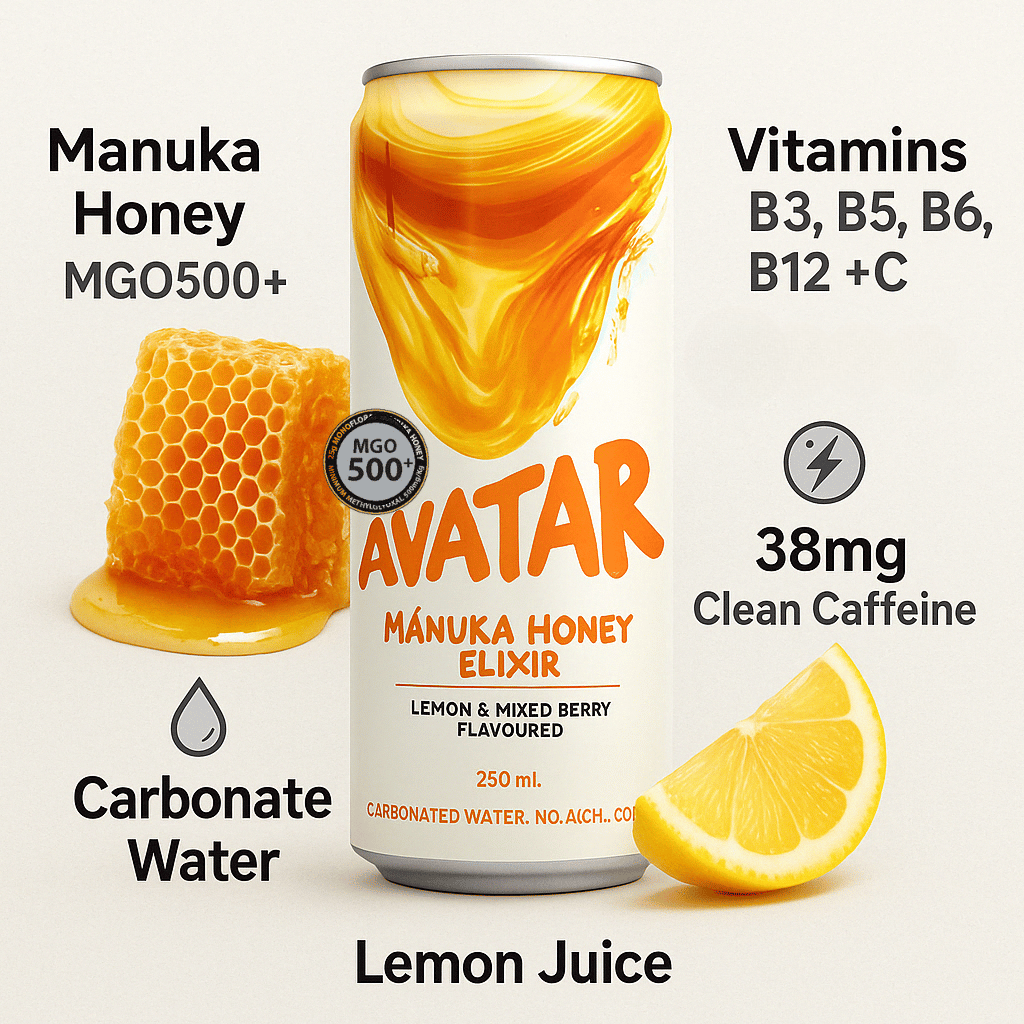
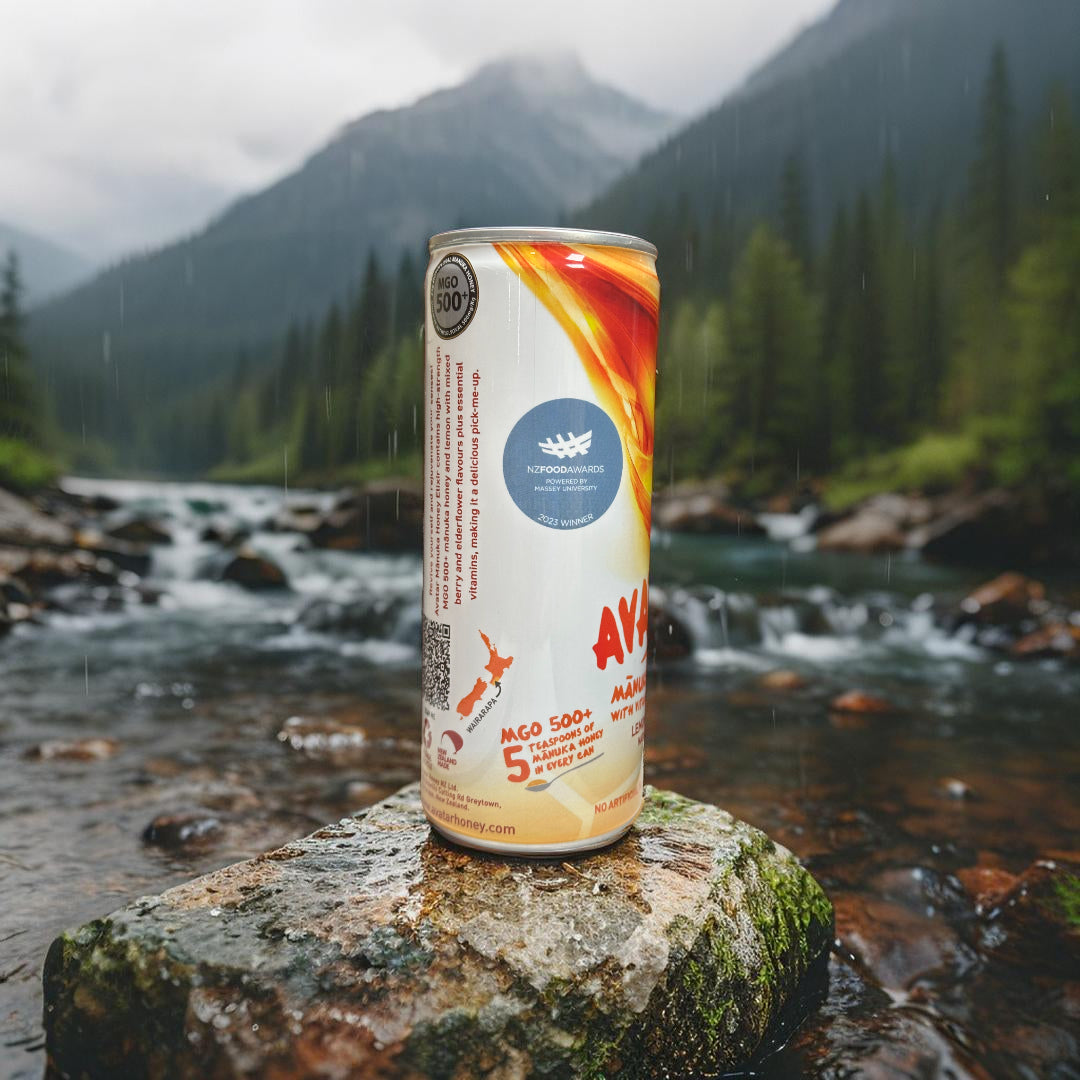
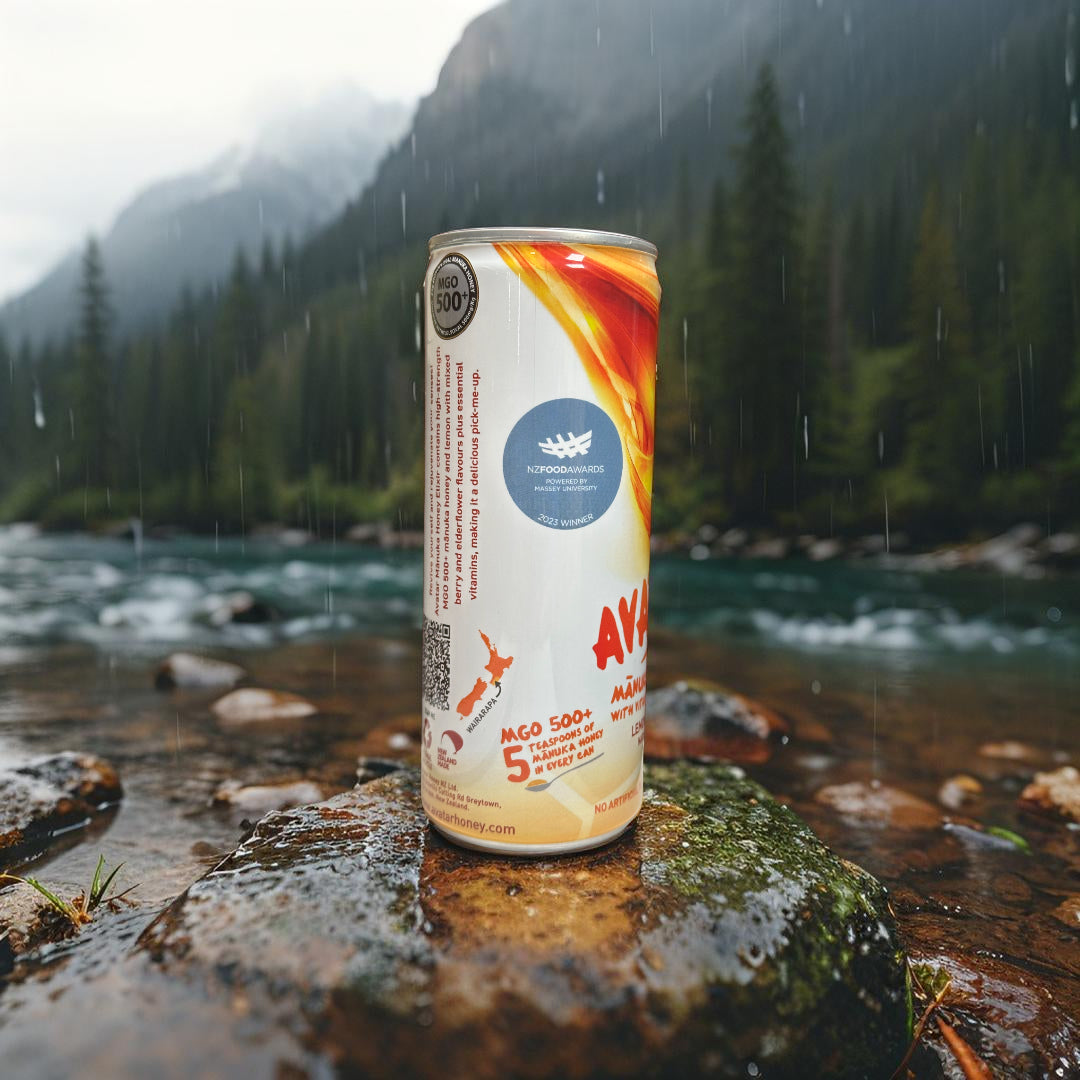
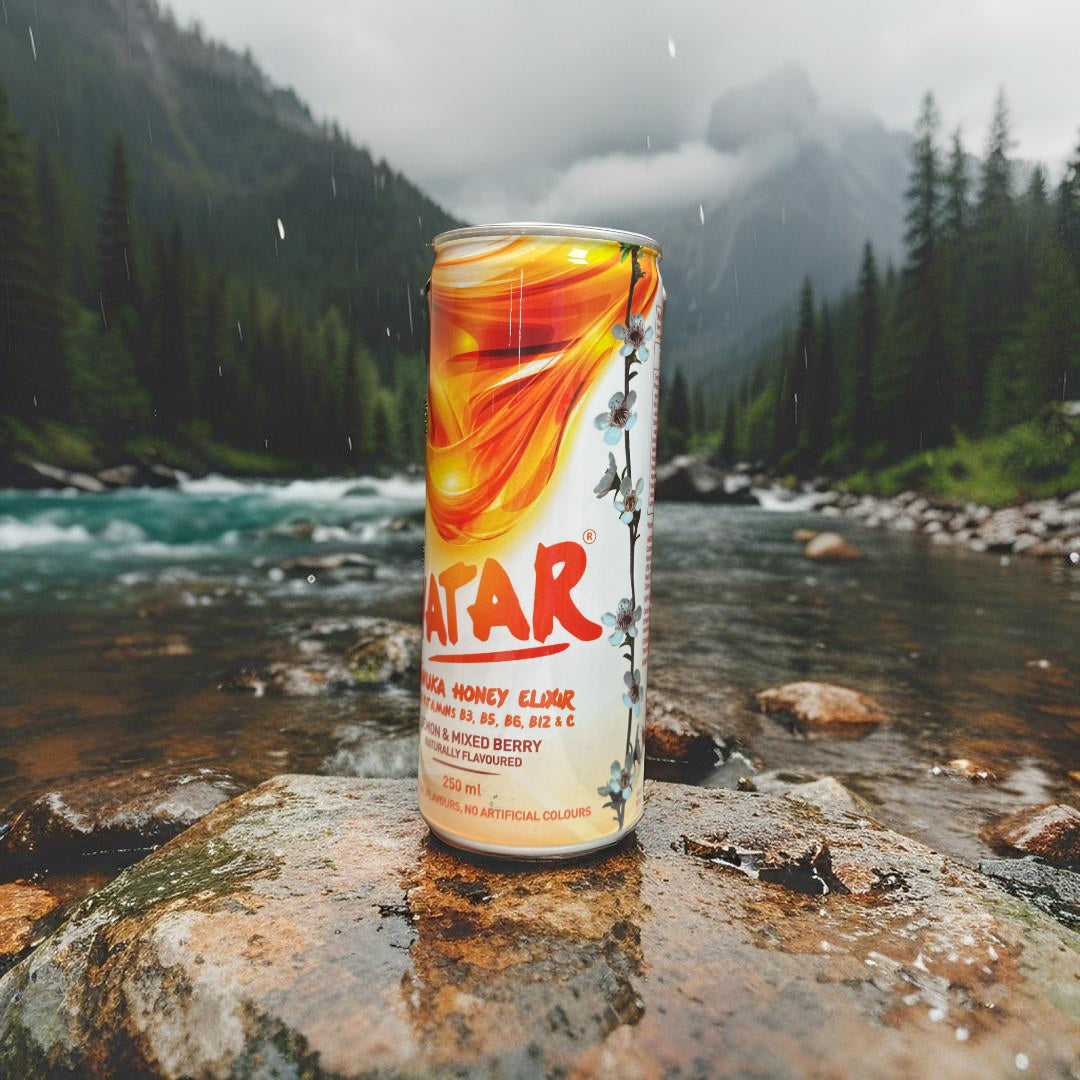
Avatar Elixir is an ingredient-led New Zealand beverage made with certified MGO500+ Manuka honey, lemon, elderflower, B vitamins, vitamin C, clean caffeine, and lightly carbonated water. Its Manuka honey helps explain what the drink is made with and contributes to its flavor profile. For exact Total Sugars, Added Sugars, serving size, and percentage Daily Value, inspect the current package label rather than relying on general information about honey drinks.
That same method works when comparing Avatar Elixir with coffee drinks, ordinary energy drinks, sodas, juice-based beverages, or products made with artificial sweeteners. Compare like-sized servings first, then decide how much the ingredients and flavor experience matter to you.
What is the clearest way to interpret honey on a US beverage label?
Treat the label as two complementary sources of information. The ingredient list tells you that honey was used, while the Nutrition Facts panel tells you how its sugars contribute to the finished drink.
Honey is natural, but when it is incorporated into a packaged beverage, its sugars generally count as added sugars under US labeling rules. Manuka honey’s premium origin or MGO grade does not change that classification. It may change why the ingredient was selected and how the beverage tastes, but shoppers should still check the amount per serving.
The clearest decision rule is: use the ingredient list to judge source and the Added Sugars line to judge quantity. Considering both gives you a more complete comparison than relying on words such as natural, honey-sweetened, or premium alone.
These follow-up points clarify how to interpret honey-related sugar figures when comparing US beverage labels.
Can a label show how much sugar comes specifically from Manuka honey?
Not usually. The Nutrition Facts panel reports Total Sugars and Added Sugars for the finished beverage, not grams from each sweetening ingredient. The ingredient list can confirm that Manuka honey is used, but it generally cannot isolate its sugar contribution. For Avatar Elixir's current overall figures, check the package label.
How do I read added sugars for a multi-serving bottle?
If you drink the entire container, first check how many servings it contains. Multiply the grams of Added Sugars per serving by the number of servings consumed. Do the same for Total Sugars and calories if those figures are relevant to your comparison. Do not assume one bottle equals one serving.
Should I compare added sugar grams or percent Daily Value?
Use both, but for different purposes. Compare grams only after putting products on an equivalent serving basis, because container sizes can differ. Then use the percent Daily Value to see how much one labeled serving contributes toward the FDA Daily Value for added sugars. Neither figure identifies the sweetener source, so check the ingredient list separately.