


Quick answer: A premium Manuka honey drink is built like a recipe, not simply a caffeine delivery system. Manuka honey provides depth and a rounded sweetness, lemon adds brightness, elderflower brings a floral lift, vitamins support the functional character, caffeine suits alert occasions, and light carbonation keeps the finished drink crisp rather than heavy.
The ingredient list is where a premium functional beverage reveals its character. Two drinks may both contain caffeine and sweetness, yet taste completely different because of the ingredients chosen, their balance, and the way they behave together in the can.
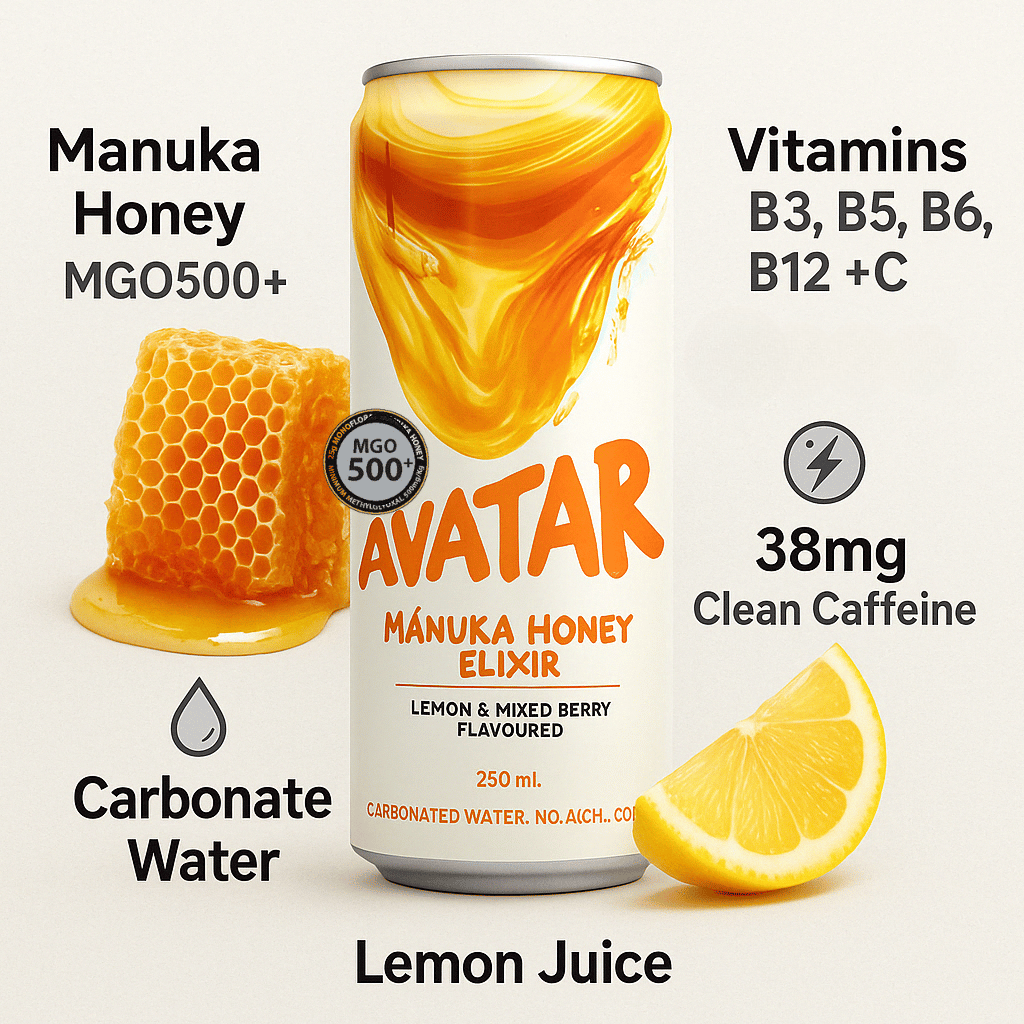
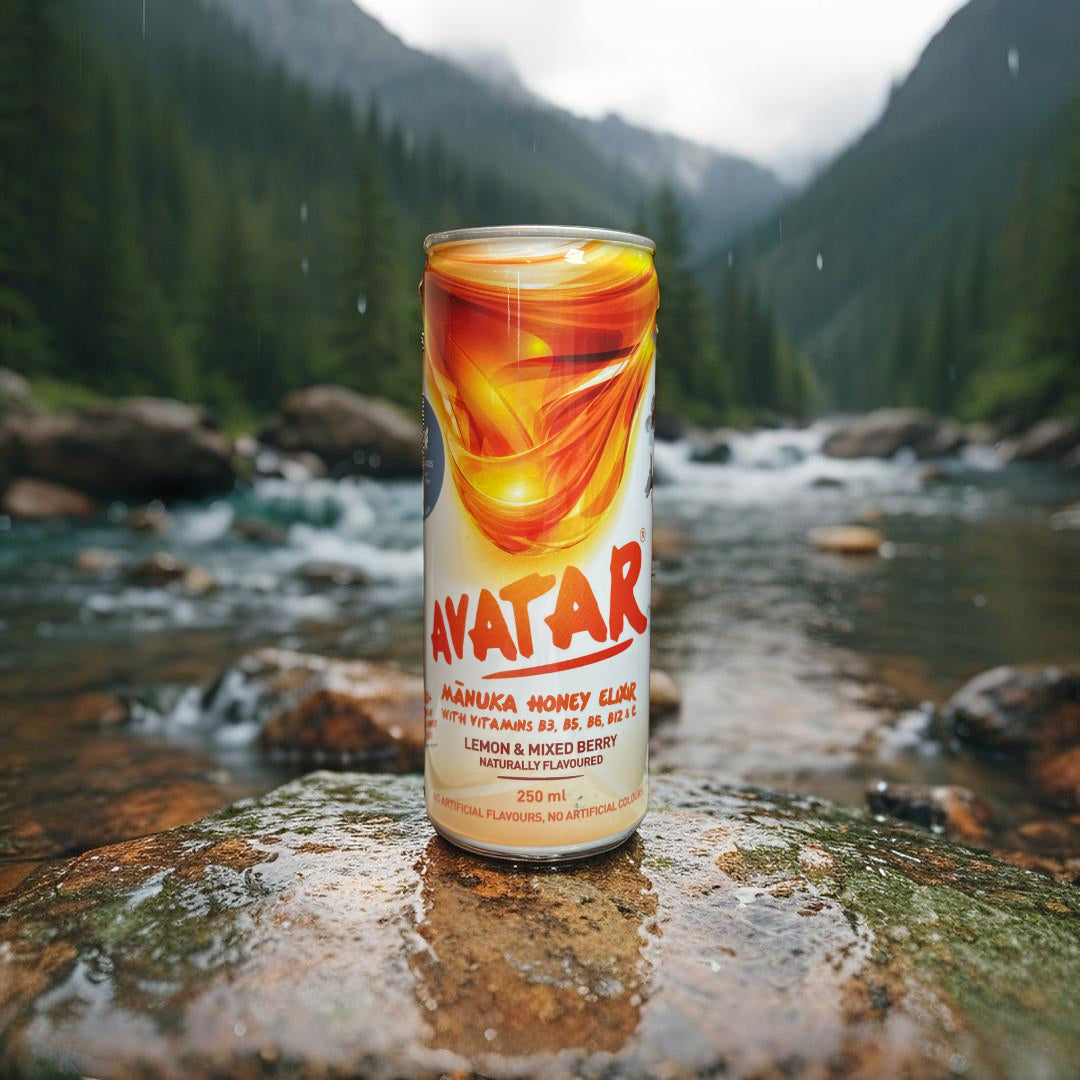
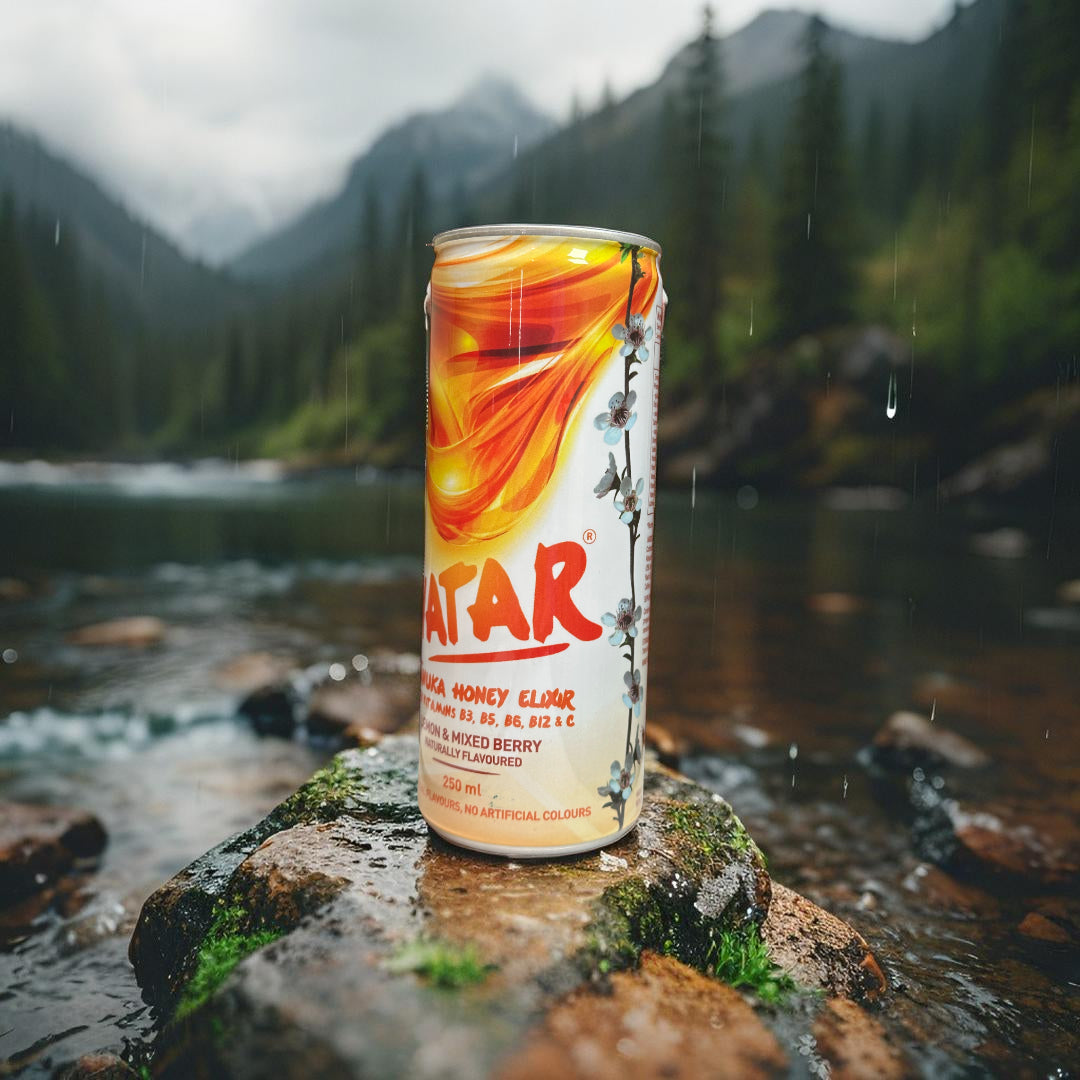
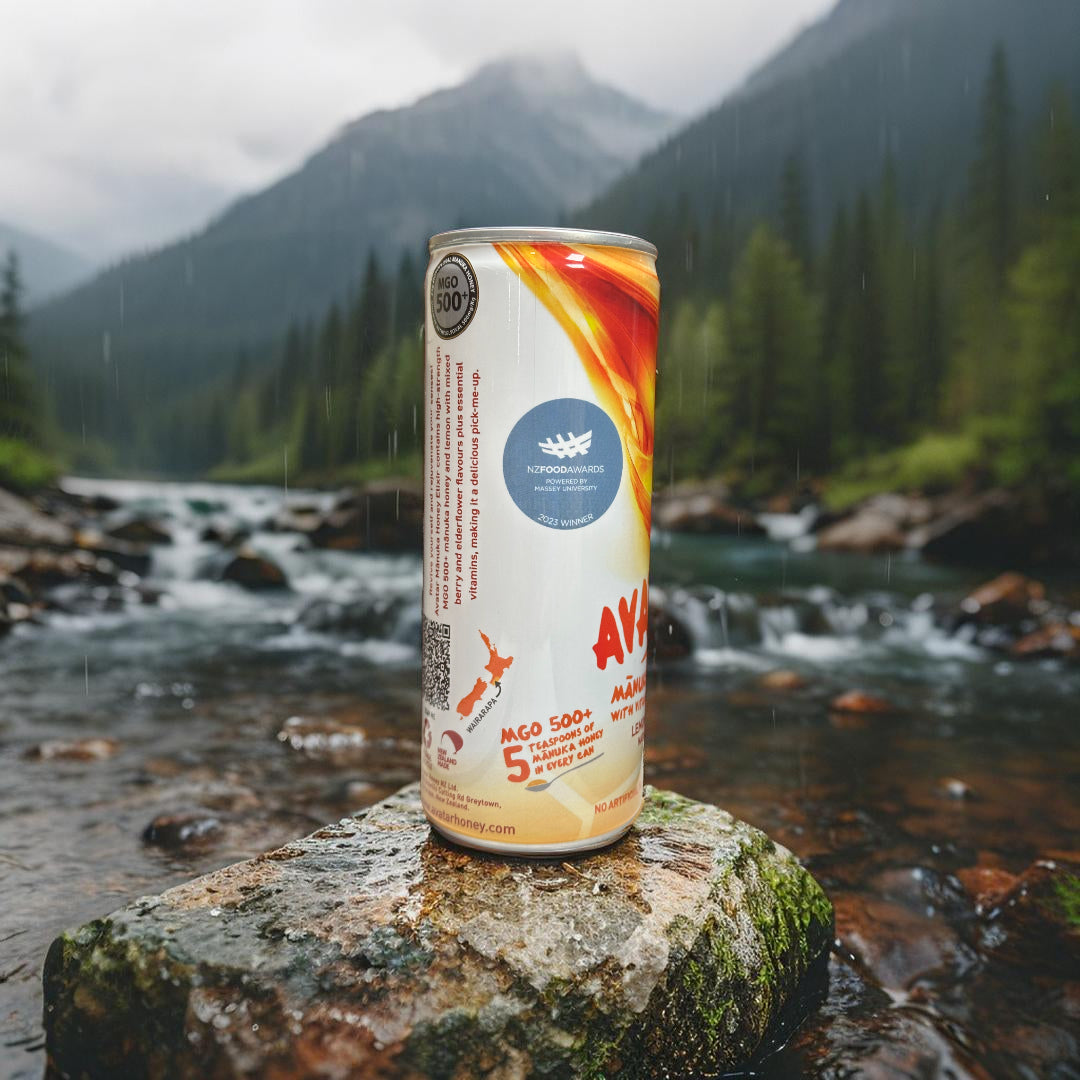
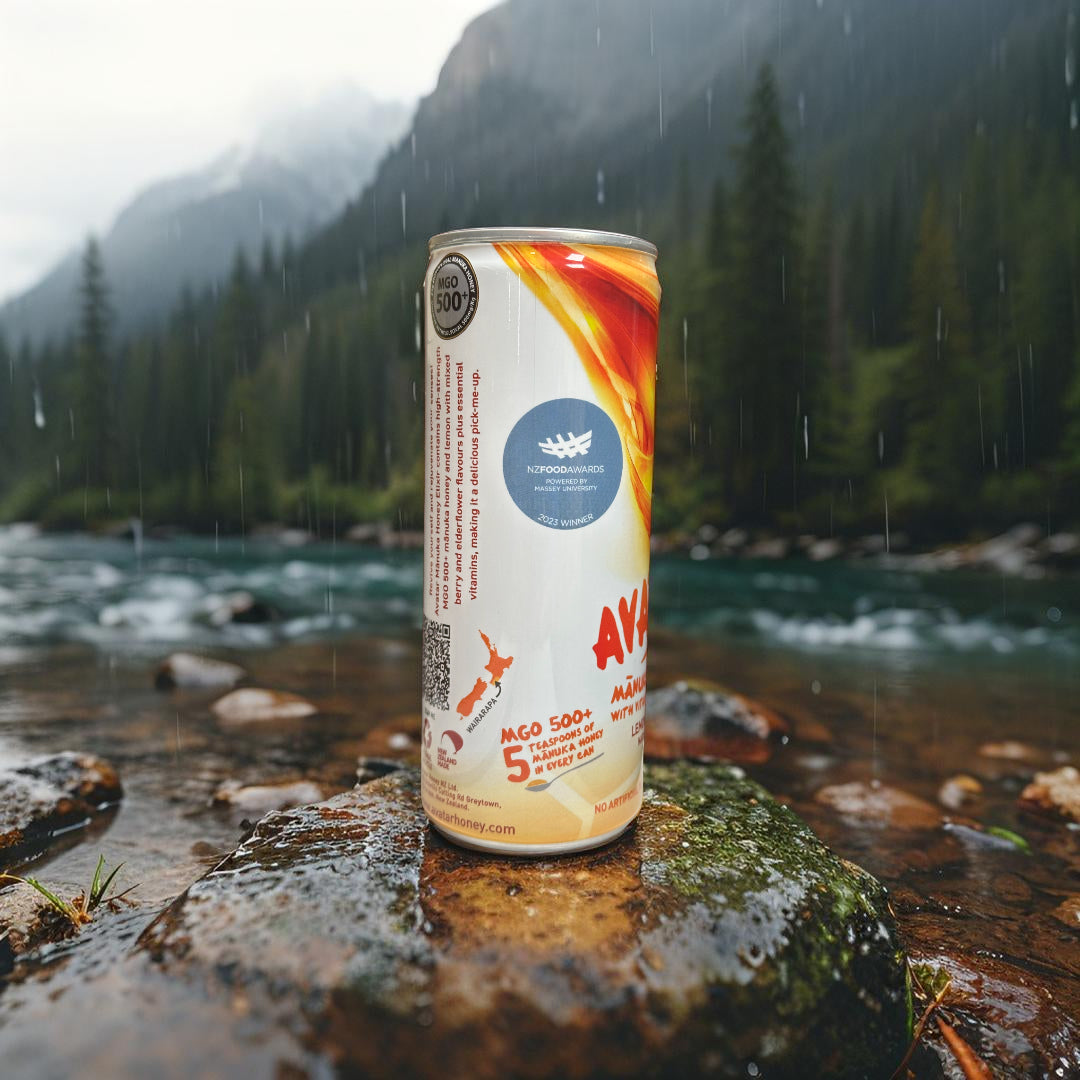
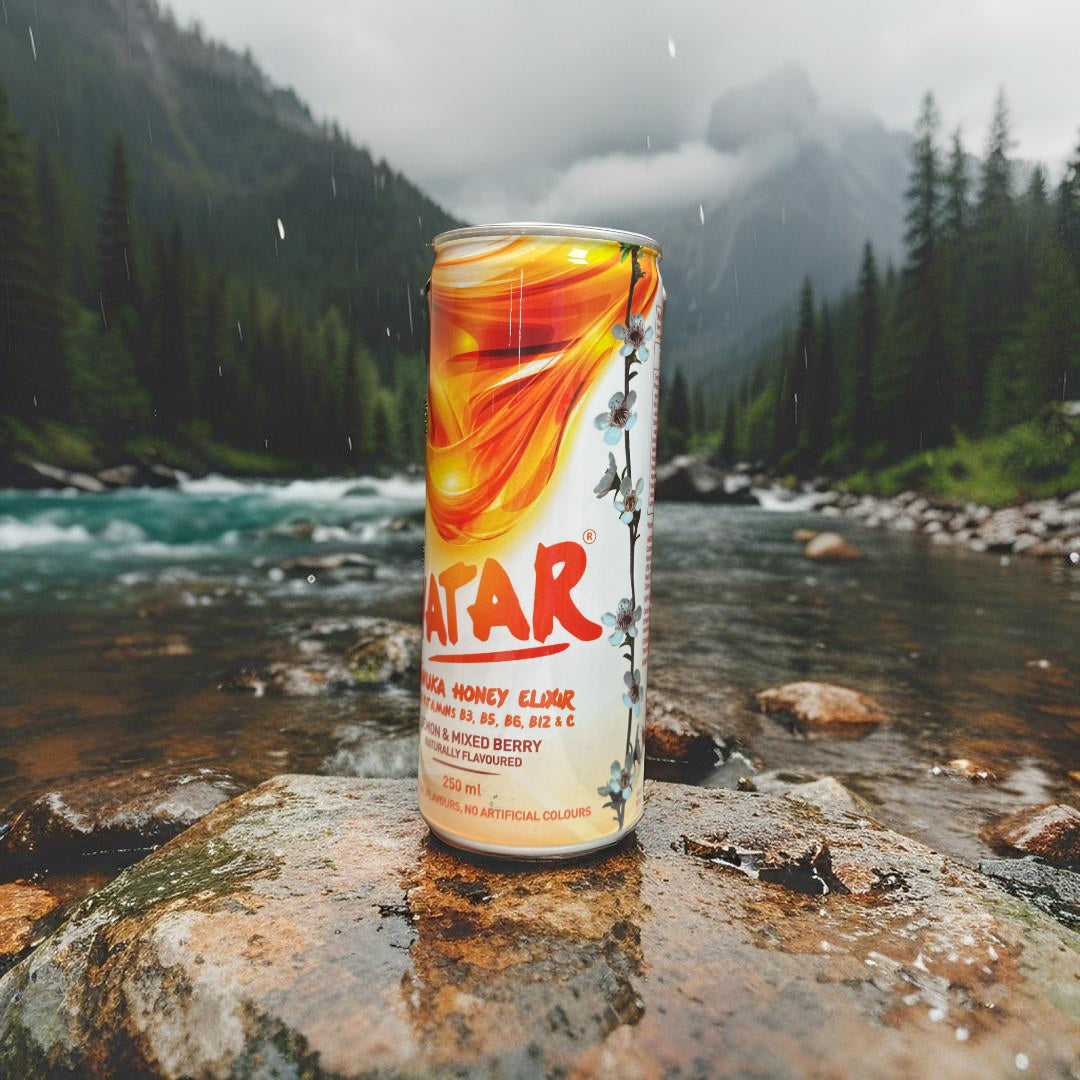
Avatar Elixir is a New Zealand-made example of this ingredient-led approach. Created by Avatar Honey, it combines certified MGO500+ Manuka honey with lemon, elderflower, B vitamins, vitamin C, clean caffeine, and lightly carbonated water. Each component has a distinct job, from shaping aroma and texture to determining when and how you might enjoy the drink.
This guide explains what those ingredients bring to a premium Manuka honey drink, without treating the beverage like medicine or reducing it to a list of functional claims.
What Makes a Manuka Honey Drink Feel Premium?
A premium Manuka honey drink should have more than a recognisable name on the front of the can. Its ingredients should create a coherent drinking experience. Sweetness, acidity, aroma, bitterness, texture, and carbonation all need to work together.
Balance matters because every ingredient affects another. Honey can soften lemon's sharpness. Lemon can prevent honey from feeling too rich. Elderflower can lift the aroma, while carbonation sharpens the finish and carries those aromas towards the nose as you drink.
The functional components also need to fit the recipe. Caffeine naturally introduces some bitterness, and vitamins can influence the overall ingredient profile. A well-made drink accounts for those qualities rather than trying to cover them with excessive sweetness or heavy flavouring.
When comparing cans, consider the entire recipe rather than focusing on one headline ingredient. A high-grade honey may provide the foundation, but the surrounding ingredients determine whether the final drink feels refreshing, balanced, and suitable for real-life occasions.
Certified MGO500+ Manuka Honey: The Foundation of the Drink
Manuka honey gives a premium honey drink its central flavour identity. Unlike a simple sugar syrup, honey contributes sweetness alongside aroma, body, and a more layered finish. Manuka honey is particularly distinctive, often bringing deeper, earthier notes than mild everyday honeys.
MGO is a grading marker used for Manuka honey, and the number communicates the stated methylglyoxal level associated with that grade. In Avatar Elixir, certified MGO500+ Manuka honey signals a specific, premium honey choice rather than a generic honey flavour.
Inside a carbonated drink, however, Manuka honey does not necessarily taste the same as it does straight from a spoon. Water, citrus, floral ingredients, chilling, and carbonation all change how sweetness and aroma are perceived. The honey becomes part of a composed flavour rather than sitting alone at the centre of every sip.
What Manuka honey contributes
- Rounded sweetness: Honey can feel softer and more dimensional than a sharply sweet syrup.
- Body: It helps give the drink a little more substance than plain flavoured sparkling water.
- Aromatic depth: Manuka honey adds a recognisable honeyed character beneath the brighter citrus and floral notes.
- New Zealand identity: For a drink made by an experienced New Zealand beekeeping company, the honey is part of the product's origin and craft.
Manuka honey should still be understood as a food ingredient. Its role in the can is primarily about recipe, provenance, flavour, and product character. A beverage containing Manuka honey is not the same thing as consuming honey on its own, and it should not be treated as a medicine.
Lemon: Brightness, Acidity, and a Cleaner Finish
Lemon provides the contrast that helps honey feel refreshing. Without acidity, a honey-based drink could become broad, sweet, or tiring over the course of a can. Lemon tightens the flavour and gives the palate a clearer finish.
Its role is not limited to making the drink taste overtly lemony. Acidity can make sweetness seem more controlled, bring definition to floral aromas, and help the carbonation feel livelier. This is why citrus is common in recipes that include rich or aromatic sweeteners.
Lemon also gives the drink familiar reference points. Most people understand the combination of honey and lemon, so elderflower and Manuka honey can feel distinctive without making the overall flavour difficult to approach.
What to notice when tasting
Take a sip while the drink is properly chilled and notice the order of flavours. You may first perceive the lemon and bubbles, followed by honeyed depth and a softer floral note. The citrus often returns at the finish, reducing the sense of lingering sweetness.
This balance makes a lemon-led Manuka honey drink versatile. It can fit beside lunch, offer a brighter alternative during a long work session, or serve as a premium non-alcoholic option at a social occasion.
Elderflower: A Floral Lift Without Heavy Sweetness
Elderflower adds aroma and elegance rather than weight. Its light floral character sits naturally between honey and lemon, connecting the deeper sweetness of the honey with the fresh top notes of citrus.
Aroma strongly influences how a drink tastes. Elderflower can make a recipe seem more fragrant and expansive even when it is used with restraint. Light carbonation helps release that aroma as bubbles rise and break at the surface.
The important word is balance. Too much floral flavour could make a beverage feel perfumed. In an ingredient-led recipe, elderflower should support the Manuka honey and lemon rather than dominate them.
This floral note also changes the occasion fit. A straightforward citrus energy drink may feel purely practical, while elderflower gives the drink a more grown-up character. That makes it easier to serve in a glass, pair with food, use as a mixer, or offer as an alternative to ordinary soda.
B Vitamins: Part of the Functional Beverage Profile
B vitamins help define the drink as a functional beverage rather than a standard flavoured soda. Their presence is part of the product formulation, but they should not be confused with flavour ingredients such as honey, lemon, or elderflower.
In practical terms, B vitamins usually have less influence on the drink's recognisable aroma than the botanical and citrus components. Their role is more closely connected to the functional character communicated by the ingredient list.
It is useful to keep that role in perspective. A drink containing B vitamins is still a food and beverage product, not a replacement for varied meals or professional health advice. If you want exact details about which B vitamins are included or how much a serving contains, the can's nutrition information and ingredient panel are the appropriate places to check.
This label-first approach is especially valuable when comparing premium drinks with standard energy beverages. Look beyond broad front-of-can language and consider the complete formulation, serving size, caffeine information, and how the beverage fits your routine.
Vitamin C: A Familiar Addition to the Recipe
Vitamin C complements the citrus-led identity of a lemon and honey drink. It is a familiar ingredient in functional beverages and contributes to the formulation without needing to carry a medical or therapeutic promise.
Lemon flavour and added vitamin C should not automatically be treated as the same thing. The ingredient list and nutrition panel explain what the finished beverage contains. This distinction helps you assess the actual drink rather than relying on assumptions created by citrus imagery.
From a product-character perspective, vitamin C feels at home in a bright, fresh-tasting recipe. It supports the impression of an ingredient-conscious beverage, while lemon, honey, elderflower, and carbonation do most of the obvious sensory work.
Avoid judging a drink by a single vitamin callout. The better question is whether the complete product suits what you want to drink, including its flavour, sweetness, caffeine content, serving format, and occasion.
Clean Caffeine: Energy Without Making Caffeine the Whole Story
Caffeine gives the beverage its place in work, study, travel, and long-day routines. It is the ingredient that separates a caffeinated Manuka honey drink from an ordinary sparkling honey soda or botanical soft drink.
The phrase clean caffeine generally communicates a simpler, more ingredient-conscious style of energy drink. It does not mean caffeine affects every person identically, nor does it guarantee focus or performance. Your response can vary with your usual caffeine intake, food, sleep, timing, and individual sensitivity.
Caffeine also matters to flavour. It can introduce bitterness, which the rest of the recipe must manage carefully. Honey rounds the profile, lemon supplies contrast, and elderflower adds aromatic lift. When those elements are balanced, the drink can taste composed rather than like sweetness added solely to disguise caffeine.
What to check before choosing a caffeinated drink
- Caffeine per serving: Read the can so you know how much you are consuming.
- Serving size: Confirm whether the listed amount applies to the whole can.
- Your other caffeine: Consider coffee, tea, and other caffeinated products consumed that day.
- Timing: Choose the occasion based on your own routine and sensitivity.
- Overall recipe: Check whether you actually enjoy the flavour, sweetness, and finish.
A premium caffeinated drink is most useful when you choose it deliberately. It may suit an afternoon at work, a study session, a travel day, or a social setting where you want something more distinctive than coffee or standard soda.
Lightly Carbonated Water: Texture, Aroma, and Refreshment
Light carbonation gives the drink structure without overwhelming its more delicate ingredients. Bubbles add movement across the palate, sharpen the impression of acidity, and help carry lemon and elderflower aromas.
The carbonation level matters. Aggressive fizz can dominate a nuanced honey recipe and make acidity feel harsher. A lighter level allows the Manuka honey's rounded quality to remain noticeable while keeping the finish lively.
Carbonated water also prevents the drink from feeling too close to honey syrup or juice. It creates space between the sweeter and more aromatic components, making each sip feel cleaner. That texture can be particularly appealing when the drink is served cold.
For social occasions, carbonation gives a premium honey drink a natural place in glassware. Pouring it over ice can emphasise its sparkle and aroma, although melting ice gradually softens both flavour and carbonation. It can also work as an ingredient-led mixer, with lemon and elderflower offering more complexity than plain soda water.
How the Ingredients Work Together in the Can
The quality of a premium Manuka honey drink lies in the relationship between its ingredients. No single component should have to do every job.
- Manuka honey provides the rounded foundation and honeyed depth.
- Lemon supplies acidity, brightness, and a cleaner finish.
- Elderflower adds floral aroma and a more refined flavour profile.
- B vitamins and vitamin C establish the functional side of the formulation.
- Clean caffeine makes the drink relevant to alert, caffeinated occasions.
- Lightly carbonated water creates lift, texture, and refreshment.
This combination helps explain why a premium honey drink feels different from a conventional energy drink. The experience is not centred only on sweetness and caffeine. It includes provenance, aroma, acidity, texture, and a flavour that can move comfortably between practical and social occasions.
Avatar Elixir demonstrates this complete recipe approach, while The Beekeeper's Choice 12Pk is another example from the store's ingredient-led drink range. When considering either option, the useful question is not simply, “Does it contain Manuka honey?” It is, “How has the whole drink been built around that honey?”
How to Read a Premium Manuka Honey Drink Label
A good label check separates meaningful formulation details from broad marketing language. Start with the ingredient list, then use the nutrition and caffeine information to understand the complete can.
- Identify the honey: Look for the type and stated grade rather than assuming all honey ingredients are equivalent.
- Review the flavour structure: Citrus, botanicals, and carbonation tell you whether the drink is likely to feel bright, floral, rich, or soda-like.
- Check the caffeine: Confirm the amount per serving and whether the can contains one serving.
- Read the nutrition panel: Use the actual label to assess sugars, vitamins, and other listed nutrients.
- Consider the occasion: Decide whether you want the drink for work, study, travel, meals, mixing, or social serving.
A long ingredient list is not automatically inferior, and a short one is not automatically premium. What matters is whether the ingredients are clearly presented, sensibly balanced, and appropriate for the drink you want.
The Final Pour
A premium Manuka honey drink succeeds when its ingredients create a complete experience. Certified MGO500+ Manuka honey can provide a distinctive foundation, but lemon, elderflower, vitamins, caffeine, and light carbonation determine how that foundation tastes and where the drink fits.
Approach the can as you would any thoughtfully made recipe. Notice the opening citrus, the floral aroma, the rounded honey character, the restrained bitterness, and the sparkling finish. Then check the label for the practical details that matter to you.
That combination of sensory quality and clear formulation is what separates an ingredient-led New Zealand honey beverage from a drink that uses honey as little more than a headline.
The details below clarify MGO grading, caffeinated occasion fit, serving options, and how to compare drinks in the range.
Does MGO500+ describe the honey or the finished drink?
MGO500+ describes the certified Manuka honey used in Avatar Elixir, not a medical rating for the finished beverage. In the can, that honey is combined with lemon, elderflower, vitamins, caffeine, and lightly carbonated water, so the finished drink should be considered as a complete recipe.
Can Avatar Elixir replace coffee for work or study?
Avatar Elixir can be a caffeinated alternative to coffee when you prefer a cold, lightly sparkling drink with honey, citrus, and floral flavours. Choose between them based on taste, format, timing, and your total caffeine intake, rather than expecting either drink to guarantee focus or performance.
How can I serve a Manuka honey drink as a mixer?
Serve it properly chilled in a glass, over ice if preferred, or use it as an ingredient-led mixer. The lemon, elderflower, honeyed depth, and light carbonation provide more flavour structure than plain soda water. Remember that Avatar Elixir contains caffeine when choosing the occasion and considering your other caffeine sources.
How should I compare Avatar Elixir and The Beekeeper's Choice 12Pk?
Use the current product information for each option rather than assuming they have the same formulation. Compare the listed ingredients, caffeine per serving, serving size, flavour profile, and intended occasion. Both are presented as examples of the store's ingredient-led drink range.