



Short answer: If coffee makes you feel shaky before a presentation, choose a drink that is lower in caffeine, gentler in acidity, lightly sweet rather than syrupy, and easy to sip, such as water, mild tea, or a lightly sparkling natural energy drink with clean caffeine and real ingredients.
The pre-presentation ritual is familiar: you want to feel alert, prepared, and switched on, but you do not want the sharp edge that a strong coffee can bring. Before a pitch, interview, client call, or important meeting, the best drink is not always the one with the biggest caffeine hit. It is the one that feels steady in your body, suits your stomach, and does not distract you while you speak.
A good pre-presentation drink comes down to a few practical cues: caffeine level, acidity, carbonation, sweetness, temperature, timing, and whether you have eaten something light. The aim is not to find a magic drink. The aim is to choose something measured, comfortable, and appropriate for the moment.
What should you drink before a presentation if coffee makes you feel shaky?
You should drink something with less caffeine than your usual coffee, low to moderate acidity, gentle sweetness, and a format you can sip slowly. Good options include still water, mild tea, or a natural energy drink with clean caffeine if you still want a lift without the intensity of coffee.
Coffee can feel sharp before speaking because it is often concentrated, acidic, hot, and easy to drink quickly. If you are already mentally switched on before a presentation, that combination may feel too much. A better pre-presentation drink is usually one that supports alertness without feeling heavy, sour, overly sweet, or fizzy enough to become distracting.
Think of your choice in simple terms:
- If you feel naturally alert: water may be enough.
- If you want warmth and gentleness: mild tea may suit better than coffee.
- If you want caffeine but not a hard hit: a lightly sparkling natural energy drink can be a useful middle ground.
- If your stomach feels empty: pair your drink with a small, familiar snack.
The best drink before presenting is the one you already tolerate well. Avoid experimenting with a completely new drink five minutes before you stand up to speak.
How much caffeine should you have before a presentation?
If coffee makes you feel shaky, choose no caffeine or a lower-caffeine option before a presentation. A smaller amount of caffeine, sipped slowly, is usually a more measured choice than a strong coffee taken quickly.
Caffeine affects people differently. Some adults feel comfortable with coffee before a big meeting, while others find that it feels too sharp, especially on an empty stomach or under time pressure. If you are sensitive to caffeine, the practical move is not to chase a stronger drink. It is to reduce the intensity.
Before a presentation, consider these caffeine cues:
- Avoid stacking caffeine. Having coffee, then tea, then an energy drink can easily become too much.
- Choose a drink you can sip. A slow drink gives you more control than a quick shot or large takeaway coffee.
- Match caffeine to the occasion. A morning client call may not need the same lift as a long afternoon pitch.
- Respect your own pattern. If coffee often feels harsh before speaking, that is useful information.
Clean caffeine drinks can be a good option for some people because they are designed around a more ingredient-led drinking experience rather than the roasted intensity of coffee. Clean caffeine simply means caffeine presented in a simpler, more transparent drink format, usually with fewer artificial-tasting flavours or heavy syrup notes. It does not mean caffeine affects everyone the same way.
Does acidity matter when choosing a drink before speaking?
Yes, acidity matters because sharp, acidic drinks can feel less comfortable before speaking, especially if you have not eaten. If coffee feels too sharp, choose a drink with a smoother flavour profile or balance acidity with gentle sweetness and food.
Coffee naturally has roasted bitterness and acidity. Citrus drinks can also be acidic, but the overall drinking experience depends on balance. Lemon with honey, for example, can taste bright without feeling as severe as black coffee for some people. The key is whether the drink feels clean and refreshing or sour and mouth-drying.
Before a presentation, avoid drinks that leave your mouth feeling coated, dry, or overly tangy. A drink that makes you reach for more water immediately may not be ideal when you are about to speak for several minutes.
A balanced pre-presentation drink should feel easy on the palate. Freshness is helpful. Harshness is not.
Is a sparkling drink a good idea before a presentation?
A lightly sparkling drink can be a good choice before a presentation if it feels refreshing and you sip it slowly. Very fizzy drinks may be less suitable if carbonation makes you feel bloated or likely to burp while speaking.
Carbonation is not automatically good or bad. Light bubbles can make a drink feel bright, clean, and more grown-up than a flat soft drink. They can also help a drink feel satisfying without needing heavy sweetness. For some people, that makes a lightly sparkling drink a good pre-presentation option.
The caution is intensity. A heavily carbonated drink, especially one served very cold and consumed quickly, may feel uncomfortable right before you speak. If you choose sparkling, go for light carbonation and give yourself time to sip rather than rushing it at the meeting room door.
A practical rule is simple: if bubbles feel refreshing to you, they can work. If they make your stomach feel unsettled, choose still water or tea instead.
How sweet should a pre-presentation drink be?
A pre-presentation drink should be lightly sweet or not sweet at all. Very sweet drinks can feel heavy, sticky, or distracting, while a small amount of natural sweetness can make a drink feel smoother and more enjoyable to sip.
Sweetness matters because presentation moments are often sensory. You notice dry mouth, strong flavours, stickiness, and aftertaste more than usual. A drink that is syrupy or candy-like may not be the best companion for a polished meeting or formal pitch.
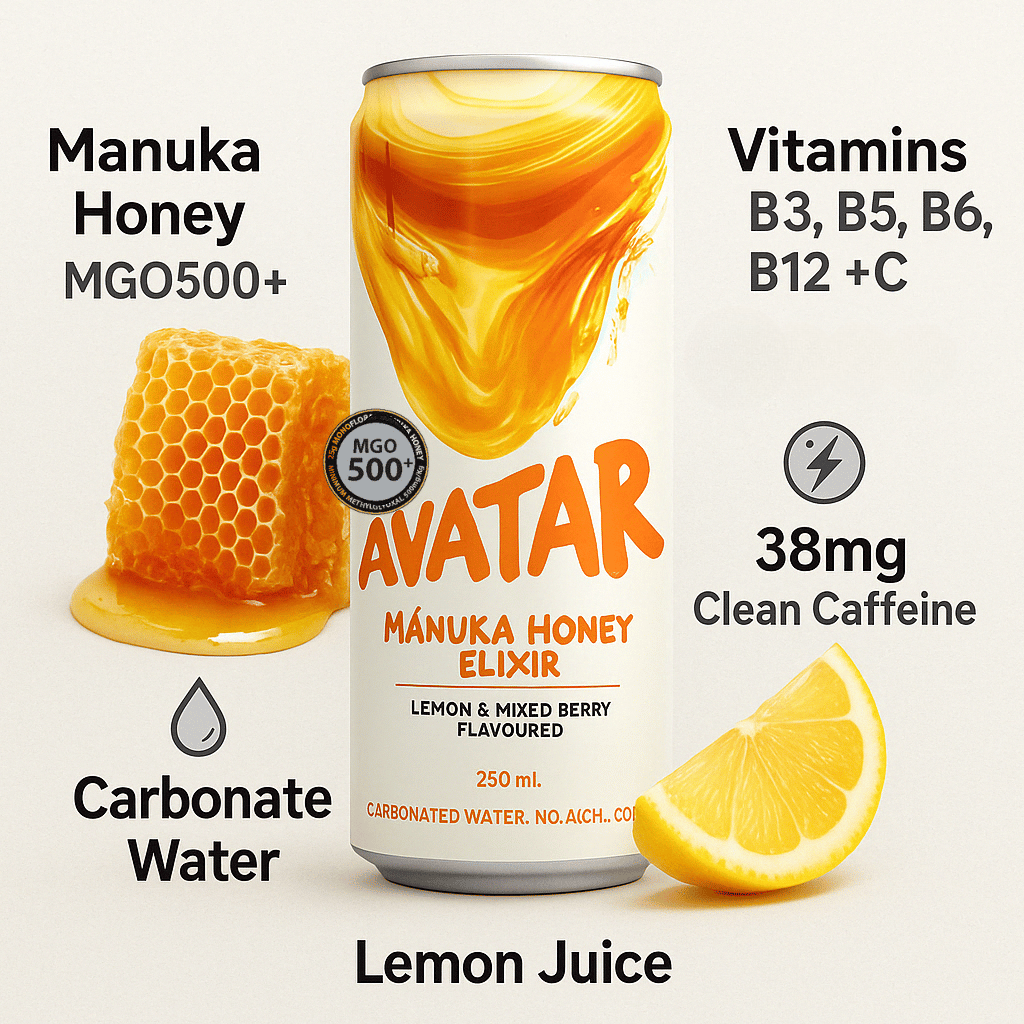
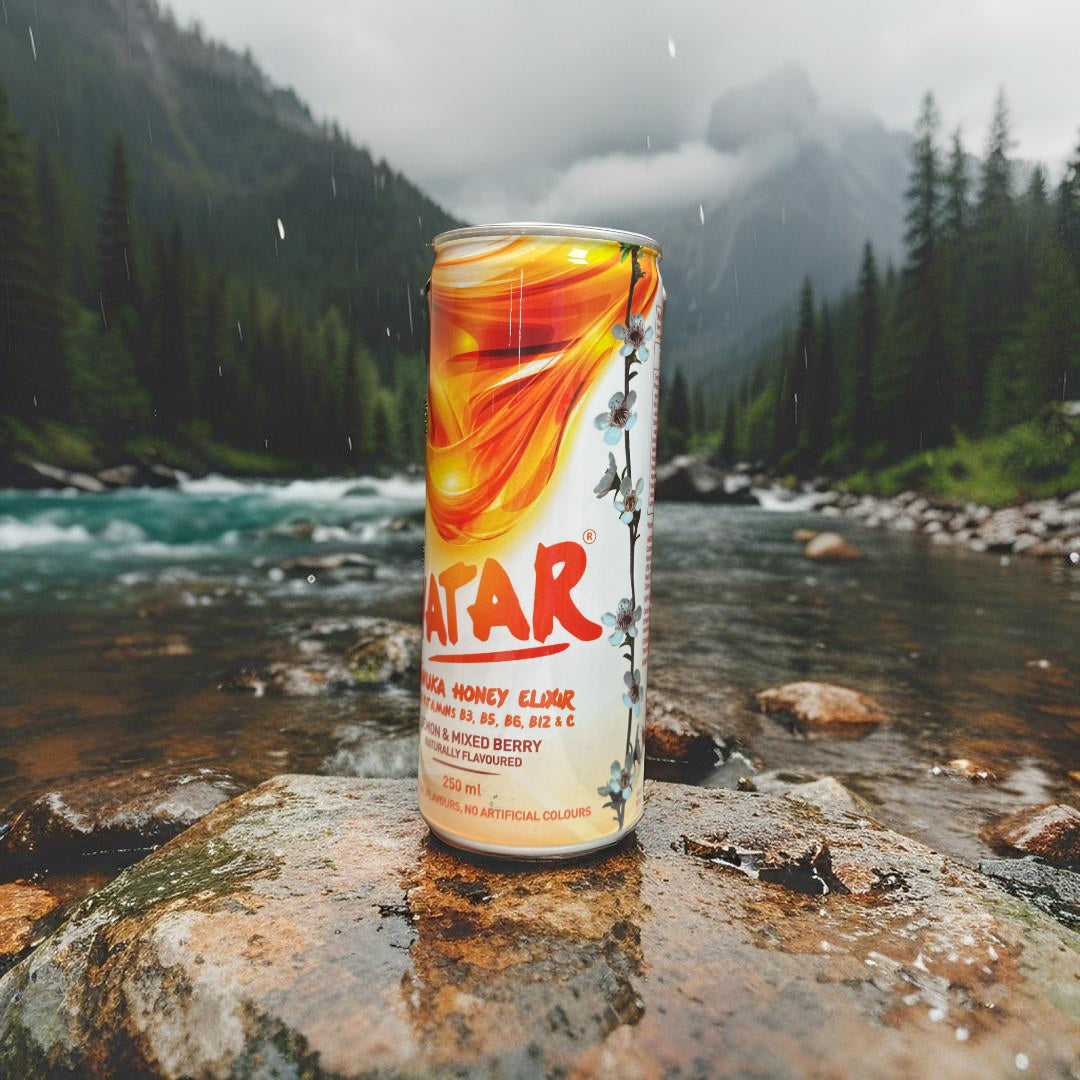
Natural sweetness from ingredients such as honey can feel more rounded than heavy artificial sweetness, especially when paired with citrus or florals. In a drink like Avatar Elixir, certified MGO500+ Manuka honey is combined with lemon, elderflower, B vitamins, vitamin C, clean caffeine, and lightly carbonated water. For someone who wants a natural energy drink before a presentation, that style of flavour can feel more refined than a standard high-sugar energy drink.
The important point is balance. You want enough flavour to enjoy the drink, but not so much sweetness that it becomes the main thing you notice.
Should your drink be hot, cold, or room temperature before speaking?
Your pre-presentation drink should be at a temperature that feels comfortable to sip and does not shock your throat or stomach. Room temperature water, warm tea, or a gently chilled drink are usually safer choices than very hot coffee or ice-cold fizzy drinks right before speaking.
Temperature changes how a drink feels. Hot coffee can feel intense when you are already keyed into the moment. Very cold drinks can feel refreshing, but if they are also highly carbonated, they may be too much immediately before speaking.
For most presentation settings, moderate is best. Warm tea can feel steady and familiar. Still water at room temperature is simple and reliable. A lightly chilled sparkling drink can work well if you have time to sip it calmly before the call or meeting begins.
If you are walking into a boardroom, joining a video call, or standing at the front of a room, choose a drink that will not demand attention. Comfort matters more than novelty.
Should you eat something with your drink before a presentation?
Yes, pairing your drink with a small, familiar snack can be helpful, especially if caffeine feels sharper on an empty stomach. Choose something light and easy, rather than a heavy meal or unfamiliar food.
An empty stomach can make strong coffee feel more noticeable. Before a presentation, a small food pairing can make your drink feel more settled. This does not need to be complicated. A piece of toast, a banana, yoghurt, a handful of nuts, or a simple oat bar can be enough for many people.
Avoid using the presentation moment to test something new. Rich, greasy, spicy, or very heavy foods can create their own distractions. The best pairing is ordinary, familiar, and easy to digest.
If you choose a caffeinated drink, food becomes even more worth considering. A lighter caffeine drink with a small snack is often a more measured choice than a strong coffee on its own.
When is water enough before a presentation?
Water is enough before a presentation when you are already alert, have slept reasonably well, or mainly need to avoid dry mouth. It is the simplest choice when you do not want caffeine, sweetness, bubbles, or strong flavour.
Water is often underrated before speaking because it does not feel like a ritual. But for many presentation moments, the most useful drink is simply the one that keeps things uncomplicated. Still water is neutral, familiar, and unlikely to interfere with your voice, stomach, or timing.
Choose water if you are presenting early in the day and already feel awake, if caffeine has been bothering you, or if your presentation is short and you do not need a noticeable lift. Keep it nearby, but avoid drinking large amounts immediately before you begin.
When is tea a better choice than coffee?
Tea is often a better choice than coffee when you want warmth and a gentler ritual, but do not want the strong roasted flavour or intensity of coffee. Mild black tea, green tea, or herbal tea can all work, depending on whether you want caffeine.
Tea suits presentation moments where you want something familiar and steady. A warm cup can feel less abrupt than coffee, and many teas are easier to sip slowly. If caffeine is the concern, choose a lower-caffeine tea or a caffeine-free herbal option.
The main thing is to avoid very strong brews if you are trying to move away from the sharpness of coffee. A heavily brewed black tea may still feel intense for some people. Keep it mild, and allow it to cool enough that you can drink comfortably.
When does a natural energy drink fit before a presentation?
A natural energy drink fits before a presentation when you want some caffeine, a more refreshing format than coffee, and a drink that feels adult, balanced, and easy to sip. It is most useful when water feels too plain and coffee feels too sharp.
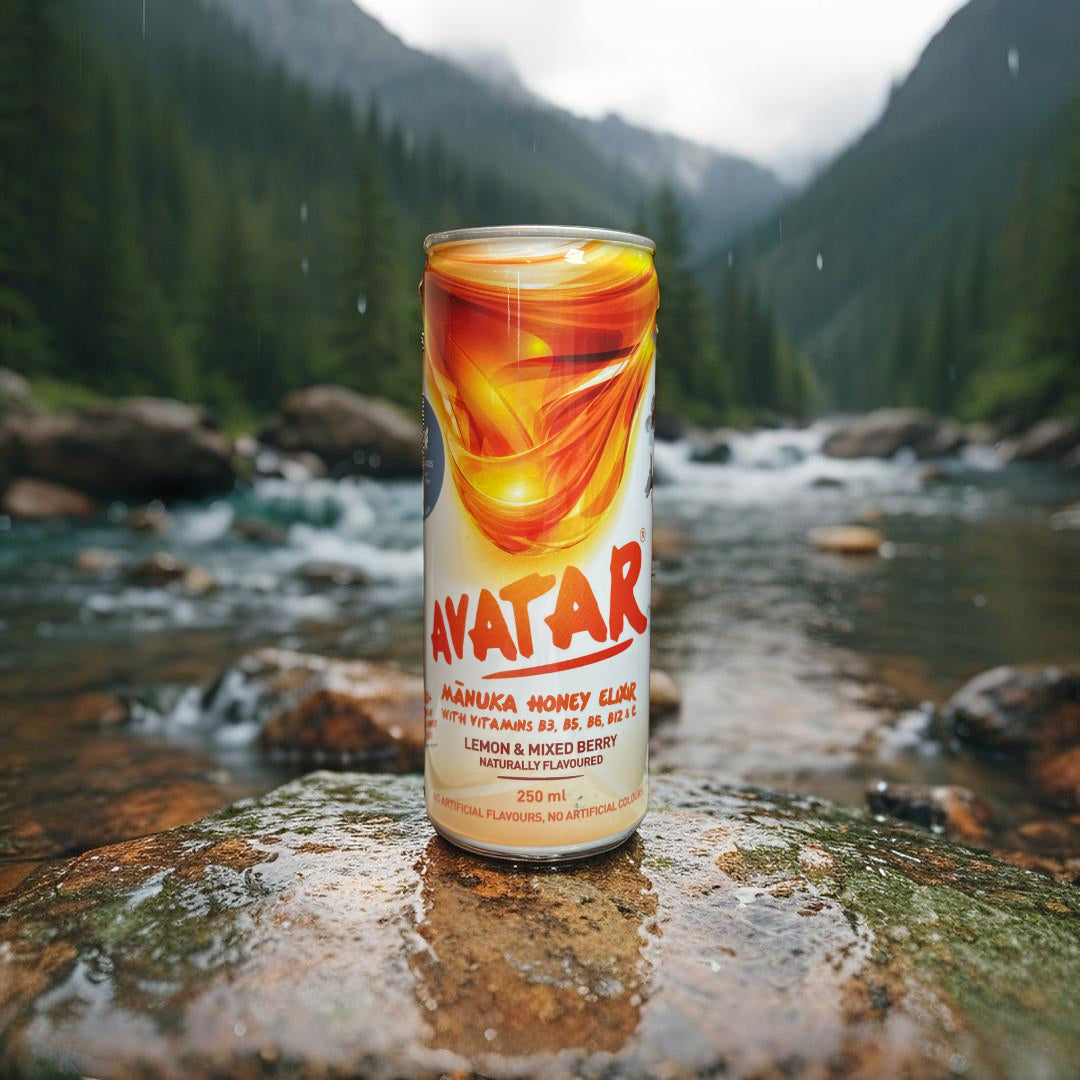
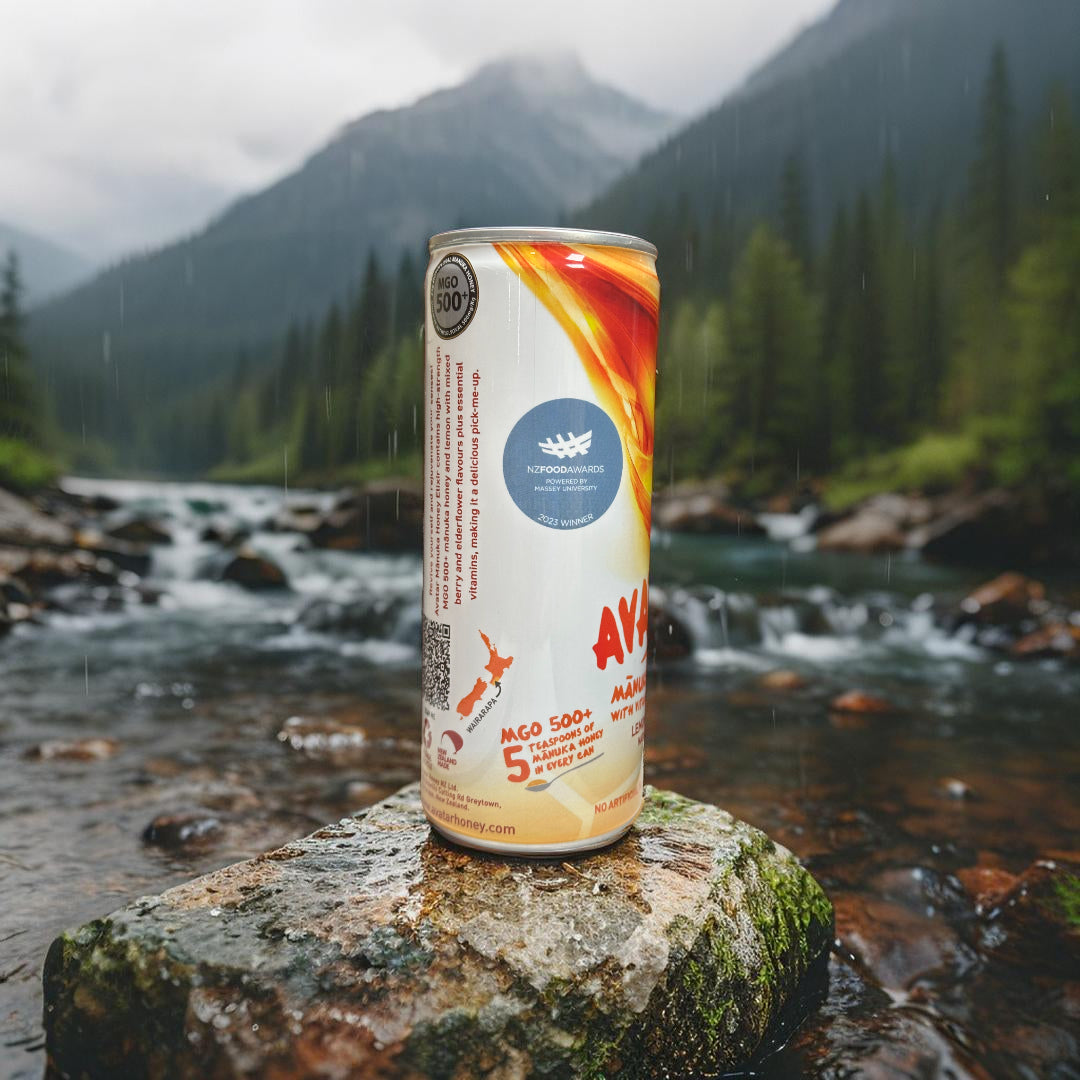
This is where an ingredient-led drink can make sense. Avatar Elixir is one example: a New Zealand Manuka honey drink made with certified MGO500+ Manuka honey, lemon, elderflower, B vitamins, vitamin C, clean caffeine, and lightly carbonated water. It offers a bright honey-citrus flavour with gentle florals and light bubbles, which may suit someone looking for a more measured pre-presentation drink than a standard coffee or sugary energy drink.
It is still a caffeinated drink, so the same practical rules apply. Sip it slowly, do not stack it with other caffeine, and choose it when you know caffeine suits the timing of your day. The benefit is not a promised outcome. The benefit is having another drink style to consider when coffee is not the right fit.
What should you avoid drinking right before a presentation?
Before a presentation, avoid drinks that are too strong, too fizzy, too sweet, too acidic, too hot, or unfamiliar. The wrong drink is usually the one that draws your attention away from speaking.
Common drinks to be careful with include:
- Strong coffee: especially if it often makes you feel shaky or overly wired.
- Large energy drinks: especially if they are high in caffeine, very sweet, or unfamiliar.
- Very fizzy soft drinks: especially right before standing up to speak.
- Very cold drinks: especially if they make your throat feel tight or uncomfortable.
- Heavy smoothies: especially if they feel filling or coat your mouth.
- Alcohol: not a good fit for professional speaking moments.
The goal is to reduce distractions. If a drink makes you think about your stomach, your mouth, your temperature, or your energy level too much, choose something simpler.
How long before a presentation should you drink it?
For most people, the best time to have a pre-presentation drink is early enough to sip calmly, rather than immediately before speaking. Give yourself a small window so the drink feels settled and you are not rushing.
Timing matters because presentation preparation is not only about the drink. It is about the whole ritual: reviewing your notes, arriving on time, checking the room or video setup, and taking a few steady sips. A rushed drink can feel sharper simply because the moment is rushed.
A practical approach is to have your main drink before the final few minutes, then keep water nearby during the presentation if appropriate. If you choose caffeine, avoid adding more caffeine at the last second because you are nervous about the meeting. More is not always better before speaking.
What is the simplest pre-presentation drink plan?
The simplest plan is to choose one familiar drink, keep caffeine moderate or skip it, sip slowly, and pair it with a light snack if your stomach is empty. If coffee makes you feel shaky, do not force coffee into the ritual just because it is familiar.
Use this quick decision guide:
- If you mainly need hydration: choose still water.
- If you want warmth without intensity: choose mild tea.
- If you want caffeine in a fresher format: choose a lightly sparkling natural energy drink.
- If your stomach is empty: add a small, familiar snack.
- If the drink is new to you: save it for a lower-stakes day first.
In short, the best drink before a presentation is not the strongest one. It is the one that feels measured, comfortable, and suited to the way you want to show up. For some adults, that will be water. For others, it will be tea. And for those who want clean caffeine with a more refined flavour, a honey, lemon, elderflower, and lightly sparkling drink like Avatar Elixir can be a thoughtful option to consider.
These answers explain how to choose a measured drink before presenting when coffee feels too sharp.
What should I drink before a presentation instead of coffee?
You should drink water, mild tea, or a lower-caffeine natural energy drink if coffee feels too sharp before a presentation. The best choice is easy to sip, not overly acidic, not too sweet, and familiar to your body. A measured drink matters more than a strong one when you are about to speak.
Is tea better than coffee before public speaking?
Tea is a better pre-speaking choice than coffee for many people who find coffee too intense. Mild black, green, or herbal tea usually feels gentler because it is less concentrated, easier to sip slowly, and often lower in caffeine than a strong coffee. Choose a tea you already know suits you.
Are sparkling drinks a good choice before a client call?
Lightly sparkling drinks are a good choice before a client call when they feel refreshing without being too fizzy. Gentle bubbles can make a drink feel crisp and clean, especially when served chilled. Avoid very carbonated drinks if they feel distracting, heavy, or uncomfortable while speaking.
How much caffeine is sensible before an important pitch?
A sensible caffeine choice before an important pitch is less than your usual coffee if coffee makes you feel shaky. Choose no caffeine, mild tea, or a lower-caffeine drink you can sip slowly. Avoid stacking caffeine from multiple drinks, because the total amount matters more than the format.
Should I eat something with my pre-presentation drink?
You should eat a small, familiar snack with your pre-presentation drink if your stomach feels empty. Food can make coffee, tea, or a lightly caffeinated drink feel more comfortable than drinking it alone. Choose something simple and known to you, not a new or heavy food right before speaking.
When does a natural energy drink fit before speaking?
A natural energy drink fits before speaking when you want some caffeine but do not want the sharpness of coffee. Look for a drink with a lower, sip-friendly feel, balanced acidity, light sweetness, and real ingredients. Avatar Elixir is one illustrative option, with clean caffeine, certified MGO500+ Manuka honey, lemon, elderflower, B vitamins, vitamin C, and light bubbles.