



Quick answer: Brix is commonly used to describe soluble solids in a drink, while pH describes how acidic or alkaline it is. Both measurements help beverage makers manage formulation and consistency, but neither number alone reveals how sweet, refreshing, flavourful, safe, sugary, or healthy a functional drink will be.
Brix and pH often appear in beverage development conversations because they turn parts of a drink into measurable numbers. These figures are useful for comparing batches, adjusting recipes, and checking whether a finished beverage matches its intended specification.
For the person drinking it, however, the sensory experience is more complex. Honey, citrus, floral aroma, carbonation, serving temperature, and the type of acids and sweeteners used can all change how a beverage tastes. Understanding what Brix and pH actually measure makes it easier to interpret formulation language without treating either metric as a taste rating or wellness score.
What Does Brix Mean in a Functional Drink?
Brix is commonly used as a measure of soluble solids in a liquid. In simple sugar-and-water solutions, one degree Brix broadly corresponds to one gram of sucrose per 100 grams of solution. Beverage formulations are rarely that simple, so real-world Brix readings require more careful interpretation.
A functional drink may contain sugars, honey components, fruit solids, acids, vitamins, minerals, flavour ingredients, and other substances dissolved in water. A refractometer, which is commonly used to measure Brix, responds to the way those dissolved materials affect light passing through the sample. The displayed reading is usually expressed as a sucrose-equivalent value, even when sucrose is not the only dissolved substance present.
This means Brix can be useful for monitoring the overall concentration of a recipe, but it is not automatically the same as the drink's labelled sugar content.
What a Brix reading can help reveal
- Batch consistency: If a recipe is intended to remain consistent, Brix can help identify whether one batch is more or less concentrated than another.
- Changes during formulation: Adding honey, juice concentrate, syrup, or other dissolved ingredients will often affect the reading.
- Dilution or concentration: A reading can help a beverage maker notice whether too much or too little water may have entered a formulation.
- A useful production reference: When used alongside an established recipe and other quality checks, Brix can support repeatable manufacturing.
Why Brix is not simply a sweetness score
Sweetness is a sensory perception, not just a count of soluble solids. Different sugars do not necessarily taste equally sweet at the same concentration. Honey is also more than a single sugar dissolved in water. Its natural composition and distinctive aroma can influence the way sweetness is experienced.
Acidity can make sweetness feel less prominent, while aroma can make a drink seem sweeter or more flavourful before the tongue has fully assessed it. Carbonation may sharpen the overall impression, and a colder serving temperature can change how strongly sweetness and aroma are perceived.
Two functional drinks can therefore have similar Brix readings yet taste noticeably different. One might seem round and honeyed, while another feels lean, citrus-led, or sharply carbonated.
What Does pH Mean in a Beverage?
pH describes the concentration of hydrogen ions and indicates how acidic or alkaline a liquid is. A pH below 7 is acidic, 7 is neutral, and a value above 7 is alkaline. Most citrus-style soft drinks and functional beverages sit on the acidic side of the scale, although the precise value depends on the formulation.
The pH scale is logarithmic. In practical terms, the numerical distance between two readings does not represent a simple, equal step in acidity. This is one reason pH should be treated as a technical measurement rather than an intuitive flavour scale.
Beverage makers may use pH to monitor recipe consistency, understand part of a drink's chemical environment, and inform broader decisions about processing and product stability. It remains only one part of the formulation picture.
Measured acidity is not the same as perceived tartness
A pH meter measures a specific aspect of acidity, but your palate experiences sourness and tartness through a broader sensory system. The amount and type of acid matter, as do sugar, aroma, temperature, carbonation, and the drink's other ingredients.
Another beverage measurement, known as titratable acidity, estimates the total amount of acid available to react during a controlled test. It answers a different question from pH. Two drinks can have the same pH while containing different amounts or types of acid, which can contribute to different tartness, length, and flavour balance.
For this reason, a lower pH does not always mean a drink will taste proportionally more sour. It may suggest a more acidic environment, but it cannot fully predict the sensory result.
What Brix and pH Can and Cannot Tell You
Brix and pH are most useful when interpreted as formulation measurements, not verdicts. Each provides a defined piece of information, and each leaves important questions unanswered.
| What the metric can indicate | What it cannot establish on its own |
|---|---|
| Brix: The approximate concentration of soluble solids expressed as a sucrose-equivalent reading. | Brix: Exact sugar content in a complex beverage containing honey, acids, vitamins, minerals, or other dissolved ingredients. |
| Brix: Whether batches appear similar in overall concentration when measured consistently. | Brix: How sweet, balanced, refreshing, premium, or enjoyable the drink will taste. |
| pH: Whether a drink is acidic, neutral, or alkaline, and where it sits numerically on the pH scale. | pH: The exact intensity of tartness a person will perceive. |
| pH: One useful input for formulation, processing, stability, and quality-control decisions. | pH: Product safety without considering the complete recipe, manufacturing process, packaging, storage conditions, and shelf-life controls. |
| Both metrics: Whether a beverage remains within defined production specifications. | Both metrics: Whether a drink is healthy, functional, naturally made, low in sugar, or appropriate for an individual's needs. |
Why Honey, Lemon, Aroma, and Carbonation Change the Experience
A drink is experienced as a complete sensory system. Formulation numbers can describe parts of that system, but the interaction between ingredients determines whether the finished beverage feels soft, bright, dry, floral, sweet, or refreshing.
Honey adds sweetness and aromatic depth
Honey contributes dissolved solids and sugars, so it can affect a Brix reading. Its flavour contribution is not captured by that number, however. Honey can bring floral, herbal, caramel-like, or earthy notes depending on its character, and these aromas influence the perception of sweetness and body.
This is especially relevant when comparing honey with a neutral refined sweetener. A similar analytical concentration does not guarantee a similar flavour experience. The honey may give the drink greater aromatic length or a more rounded impression even when the numerical reading alone does not explain why.
Lemon connects acidity with recognisable flavour
Lemon can contribute acids as well as a familiar citrus aroma. The acid affects the beverage's measured characteristics, while the aroma tells the brain to expect brightness and tartness. Those two effects work together but are not identical.
A lemon note can make a sweet drink feel cleaner and more lifted. If the citrus becomes dominant, the drink may seem sharper. Balance depends on the complete recipe rather than achieving one supposedly ideal pH.
Elderflower influences flavour without defining either metric
Elderflower is valued mainly for its delicate floral and lightly fruity aromatic character. It can make a drink seem more fragrant and layered without necessarily producing a dramatic change in Brix or pH.
This shows why laboratory values cannot replace tasting. Some of the ingredients that shape a drink's identity have a greater effect on aroma than on the headline measurements used during production.
Carbonation can sharpen and lighten the finish
Carbon dioxide dissolved in water forms carbonic acid, which can contribute to the acidic impression of a carbonated beverage. Bubbles also create physical sensations on the tongue and can help carry aroma as the drink is poured and sipped.
Light carbonation may make a honey-based drink feel brighter and less heavy. Stronger carbonation can emphasise bite or dryness. The result depends on carbonation level, temperature, sweetness, acid profile, and serving style.
A Qualitative Example: Avatar Elixir
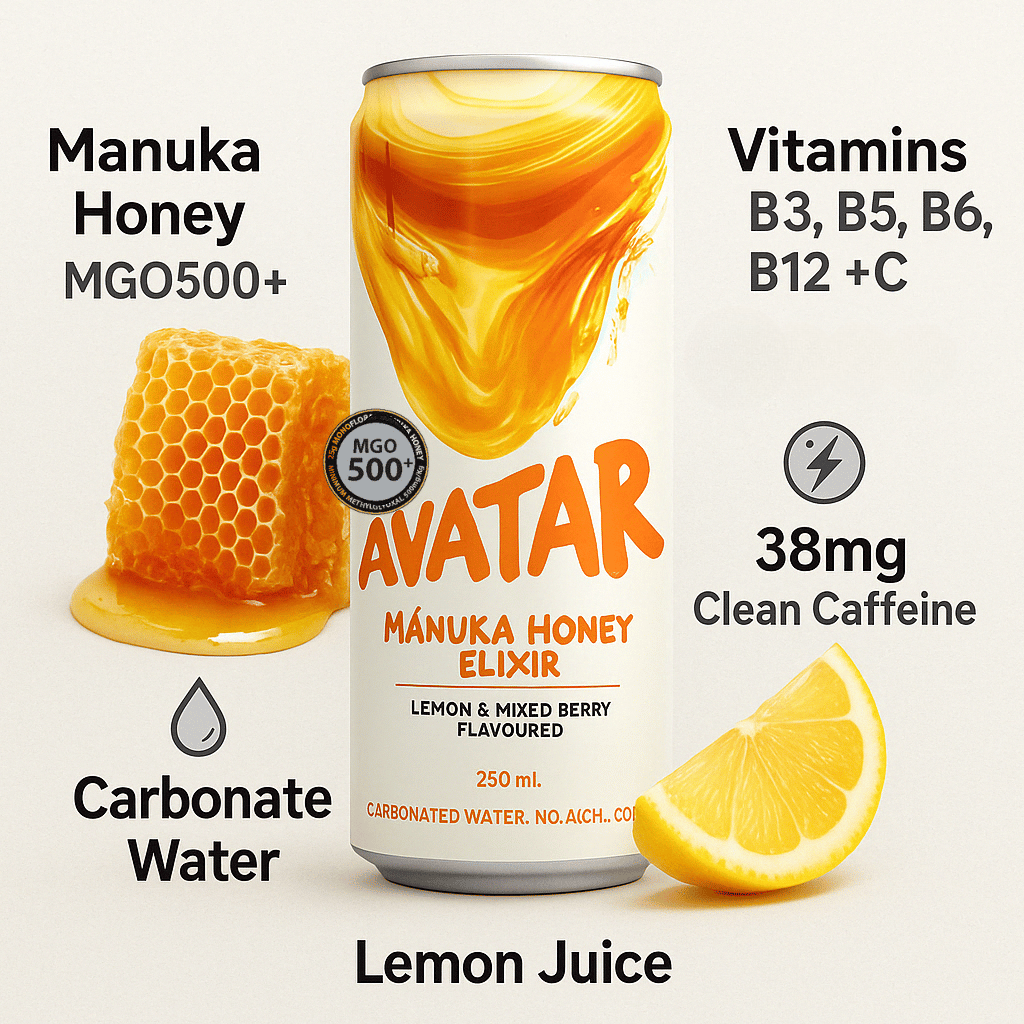
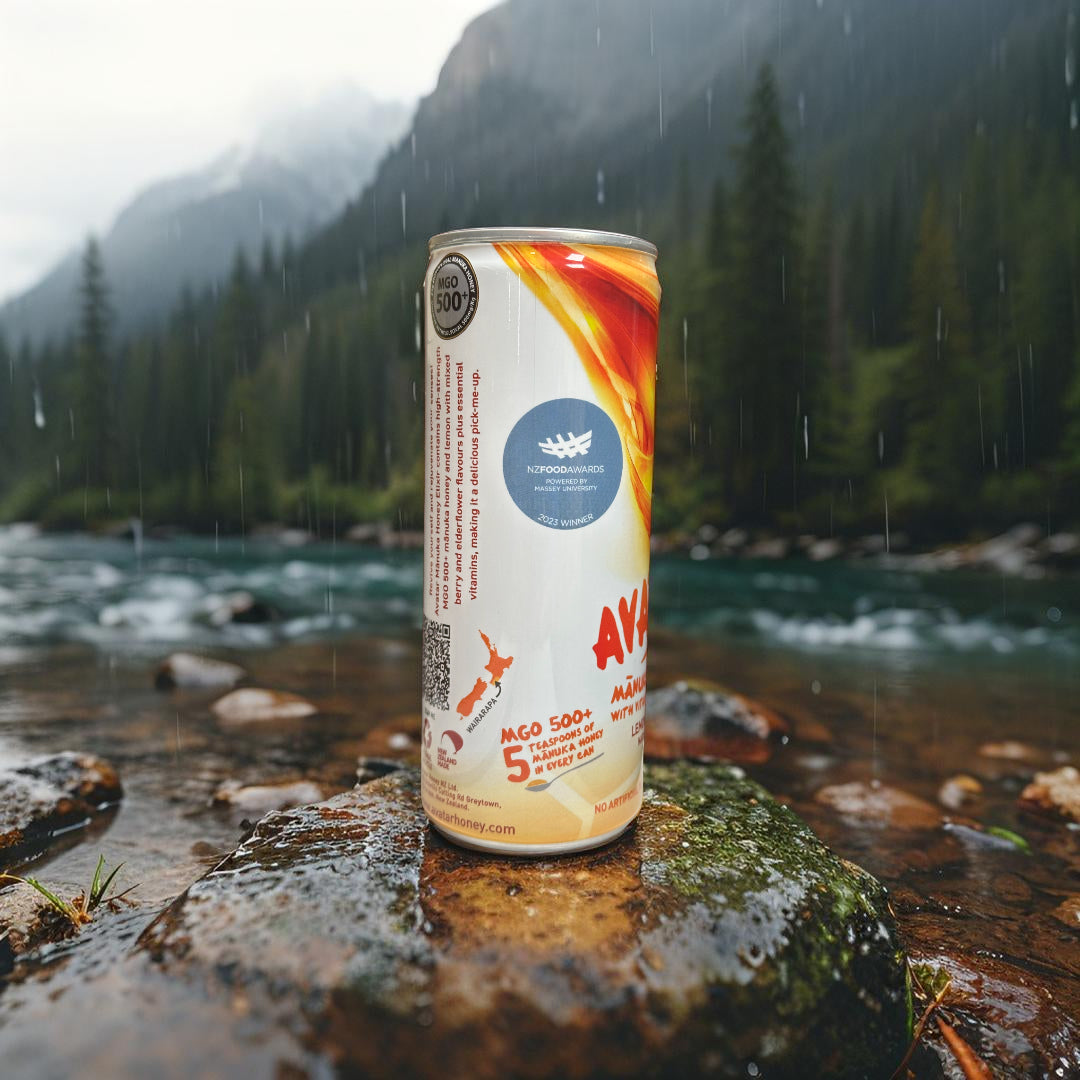
Avatar Elixir illustrates why Brix and pH should not be treated as standalone flavour descriptions. It combines certified MGO500+ Manuka honey, lemon, elderflower, B vitamins, vitamin C, clean caffeine, and lightly carbonated water. These ingredients create several overlapping sensory signals.
The Manuka honey contributes sweetness and a distinctive honey character. Lemon brings citrus brightness, elderflower adds a floral top note, and light carbonation helps lift the finish. Serving the drink chilled can further influence how the sweetness, aroma, acidity, and bubbles are perceived.
No responsible conclusion about Avatar Elixir's proprietary Brix or pH should be drawn from its ingredient list or flavour description. Those values would need to come from the product's actual formulation and controlled measurements. More importantly for the drinker, neither value by itself would explain the full first-sip experience.
Why Neither Metric Is a Health or Safety Score
Brix and pH are formulation tools, not measures of overall healthfulness. A higher Brix reading does not automatically make a drink unhealthy, just as a lower reading does not automatically make it a better everyday choice. The reading may include soluble materials other than sugar, and it says nothing by itself about serving size, caffeine, ingredient quality, or the wider diet.
Likewise, pH is not a wellness rating. It describes acidity in the liquid, not whether the beverage provides a particular health outcome. Calling a drink “alkaline” or highlighting a specific pH does not provide a complete nutritional assessment.
pH can be relevant to product safety and stability, but it cannot establish either one alone. Beverage safety depends on the full formulation and professionally managed controls, including ingredient handling, processing, packaging, hygiene, storage, and shelf-life validation. Consumers should rely on the product's label, storage directions, and information supplied by the maker rather than attempting to judge safety from a single number.
How to Read Brix and pH Claims More Critically
When a beverage brand discusses Brix or pH, the most useful question is not whether the number is high or low. Ask what the measurement is being used to explain.
- Look for context: A Brix value is more meaningful when the maker explains whether it is a production target, a batch check, or part of a sensory balance.
- Do not substitute Brix for label information: Use the nutrition panel when you want declared sugar information rather than trying to calculate it from a complex drink's Brix reading.
- Separate pH from tartness: Remember that acid type, total acidity, sweetness, aroma, and carbonation all influence how tart the drink tastes.
- Avoid wellness conclusions: Neither metric proves that a product is healthy, natural, functional, or suitable for you.
- Trust complete evaluation: Beverage makers combine analytical measurements with recipe controls and sensory tasting because no single test captures the finished experience.
The Practical Takeaway
Brix and pH reveal useful but limited information. Brix helps describe soluble solids and concentration, while pH describes the acidic or alkaline environment of a drink. Used consistently, both can help beverage makers maintain a recipe and compare production batches.
Neither metric can independently predict sweetness, tartness, flavour quality, refreshment, sugar content, safety, or healthfulness. In a layered functional drink, honey, lemon, floral aroma, temperature, and carbonation can change the sensory balance in ways that a single number cannot capture.
The best interpretation combines technical measurements with the ingredient list, nutrition information, serving context, and actual tasting experience. Numbers help define a beverage, but they do not replace the glass in front of you.
These follow-up points explain how to use Brix and pH information when comparing, testing, and choosing functional drinks.
Are Brix values comparable between different functional drink brands?
Not necessarily. Brix is most useful as a production reference within an established recipe because different drinks may contain different sugars, acids, vitamins, minerals, honey components, and flavour ingredients. Two products with similar readings may still differ in labelled sugar content, sweetness, aroma, body, and overall flavour.
Can home pH strips or a refractometer confirm drink safety?
No. These tools can provide limited measurements, but they cannot confirm the safety of a finished beverage. Safety depends on the complete formulation, ingredient handling, processing, packaging, hygiene, storage, and shelf-life controls. Follow the maker's label and storage directions rather than relying on a home reading.
What should I compare when choosing between functional drinks?
Compare the ingredient list, nutrition panel, serving information, caffeine information, storage directions, and intended drinking occasion. Taste also matters because honey, citrus, floral aromas, temperature, and carbonation can shape the experience in ways that Brix and pH cannot fully describe.
Can two drink batches taste different if their Brix and pH match?
Yes, matching Brix and pH readings do not capture every part of flavour. Differences in aroma, carbonation, temperature, ingredient character, or the types and amounts of acids can affect perceived sweetness, tartness, body, and finish. Beverage makers therefore use sensory tasting alongside analytical measurements and recipe controls.