



Short answer: Yes, but only if the manufacturer explicitly approves your reusable bottle and its lid for carbonated drinks. “Lightly carbonated” still means the drink contains dissolved gas that can create pressure in a sealed container. If compatibility is uncertain, keep the drink in its original can until you are ready to enjoy it.
A reusable bottle can be convenient for a commute, a workday or an outing. With a fizzy energy drink, though, the important question is not whether the bottle keeps liquids cold or fits in your bag. It is whether the complete bottle, including its closure, is designed to handle carbonation.
How can you tell whether your reusable bottle is suitable?
Check the manufacturer’s instructions for the exact bottle model and lid. Look for explicit permission to use carbonated beverages, not simply descriptions such as “leakproof,” “stainless steel” or “vacuum insulated.” Those features alone do not establish carbonation compatibility.
Some reusable bottles prohibit carbonated liquids because pressure can cause leaks or eject contents or closure components. For example, the Thermos Foogo straw-bottle care instructions exclude carbonated drinks. Other containers are purpose-designed for carbonation, with specific pressure-handling features. These differences are about design, not a recommendation for a particular brand.
- Check the lid as well as the bottle. Do not assume that an interchangeable straw, sports or screw-top lid has the same permissions as another closure.
- Read the restrictions. Follow the approved container’s filling, temperature, carrying and opening instructions.
- Do not improvise. A tightly sealed jar or an ordinary water bottle is not a substitute for a carbonation-approved container.
- If the instructions are unclear, leave the drink in its can. Ask the bottle manufacturer before using it for fizzy drinks.
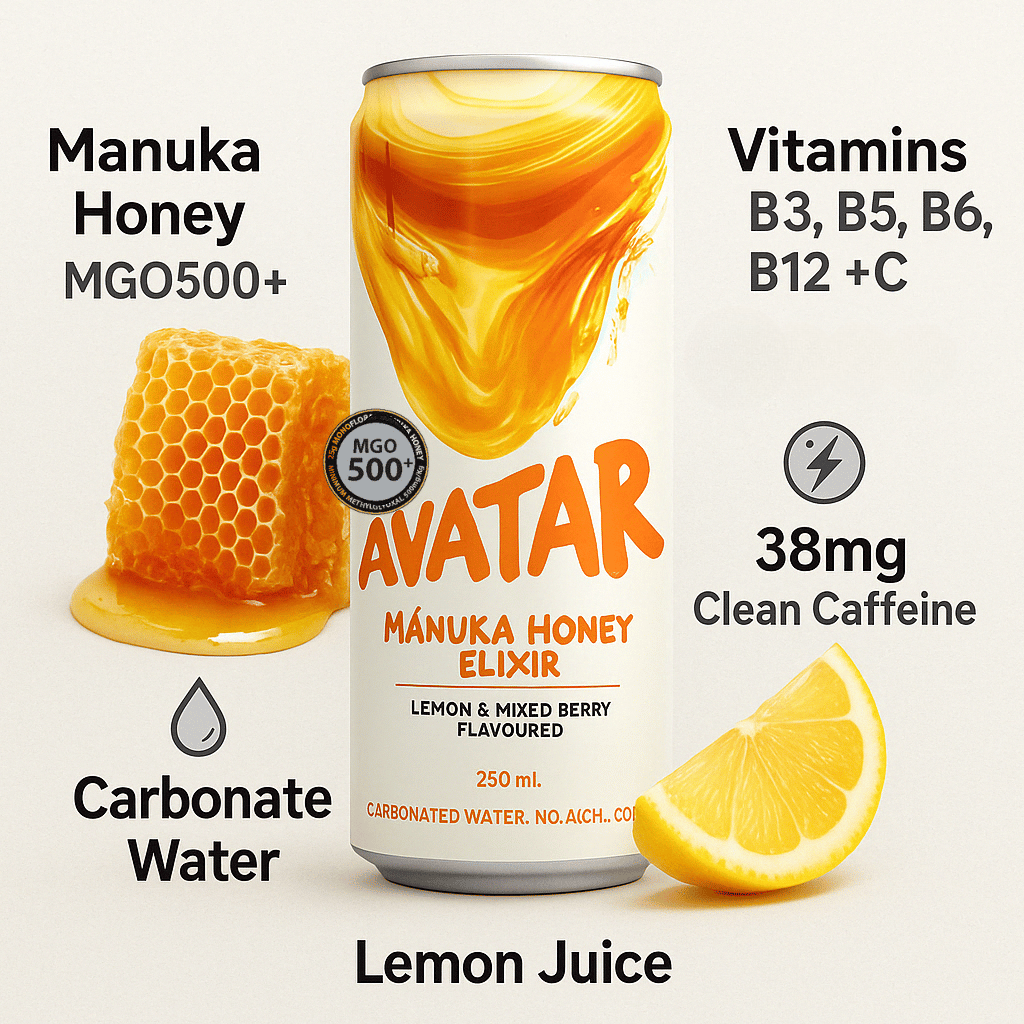
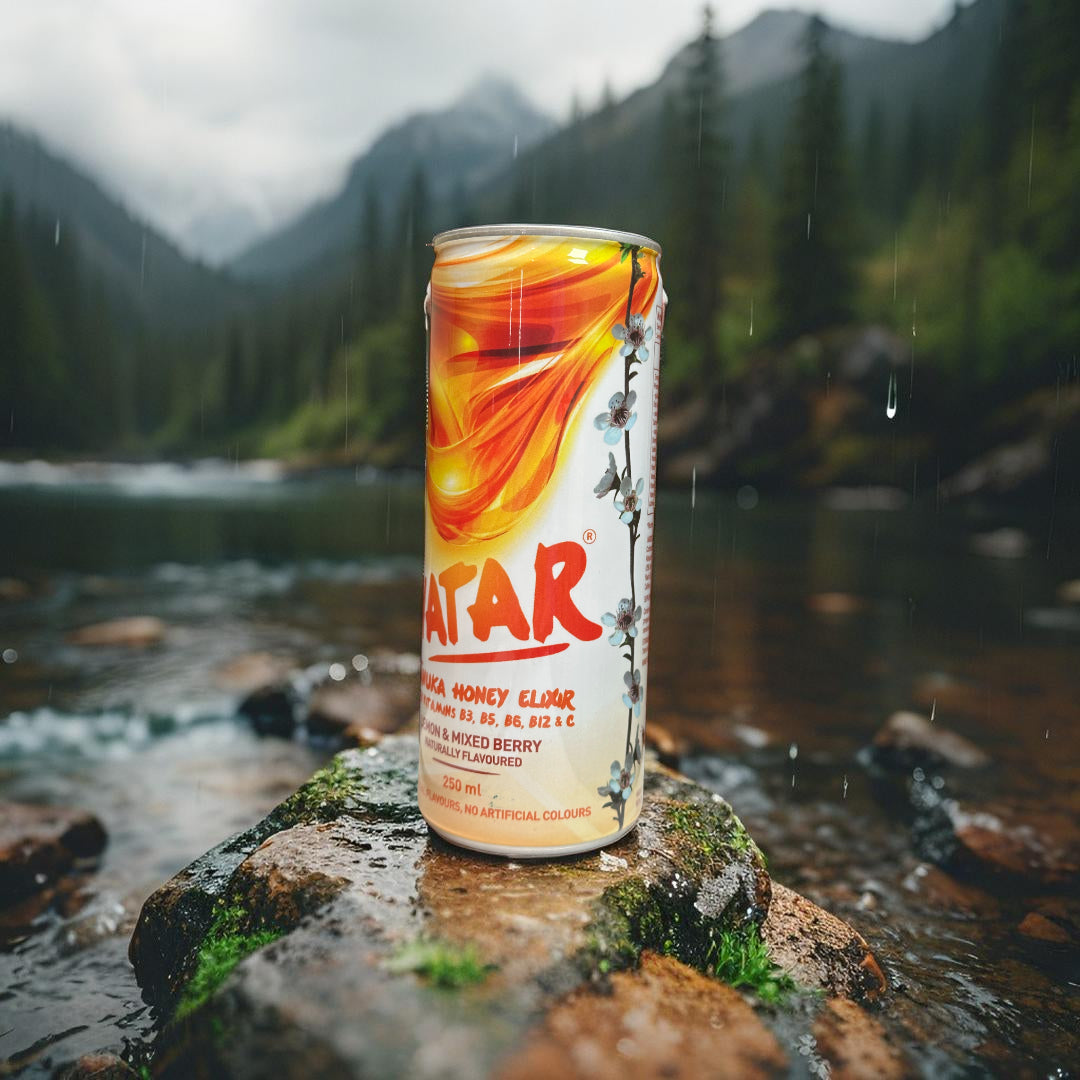
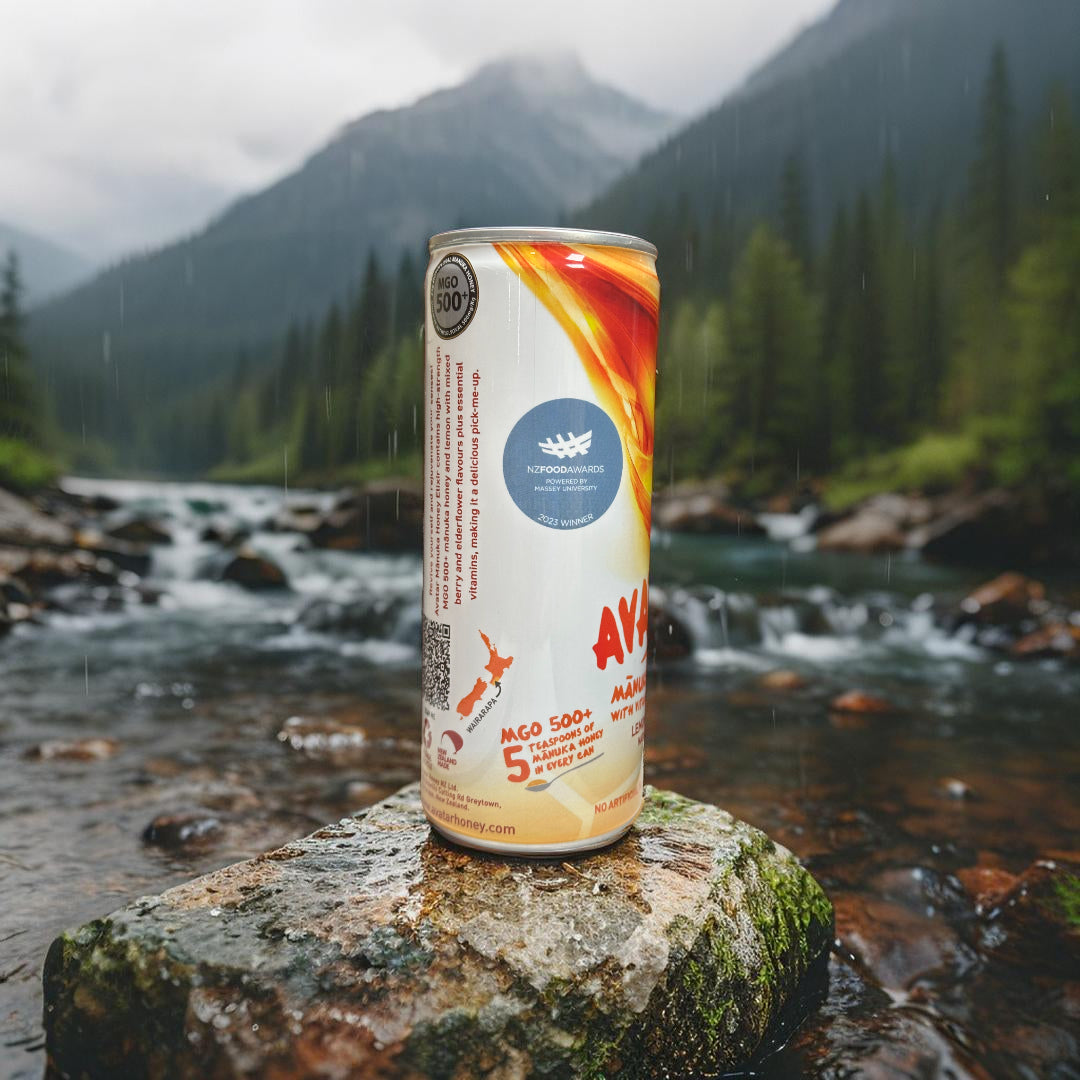
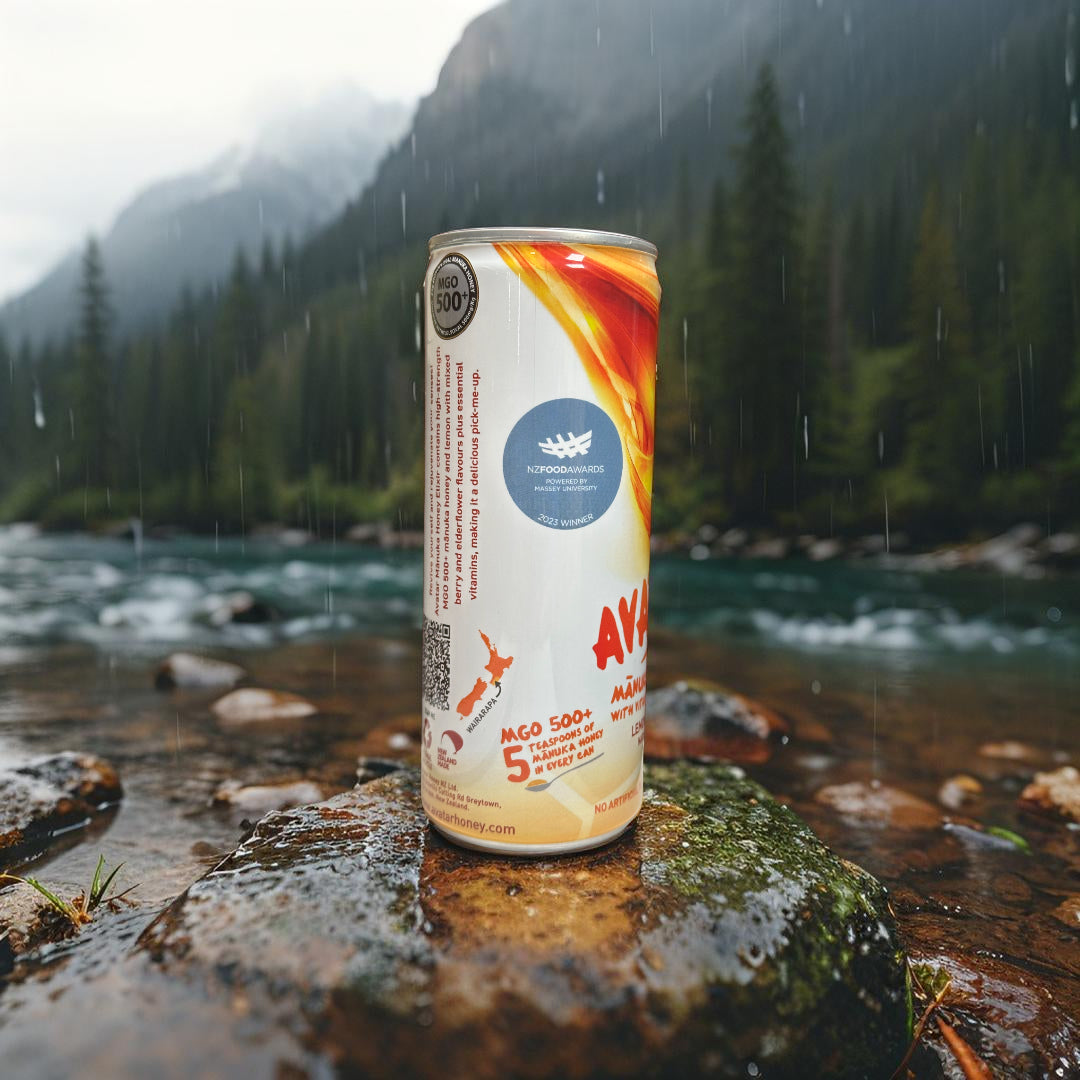
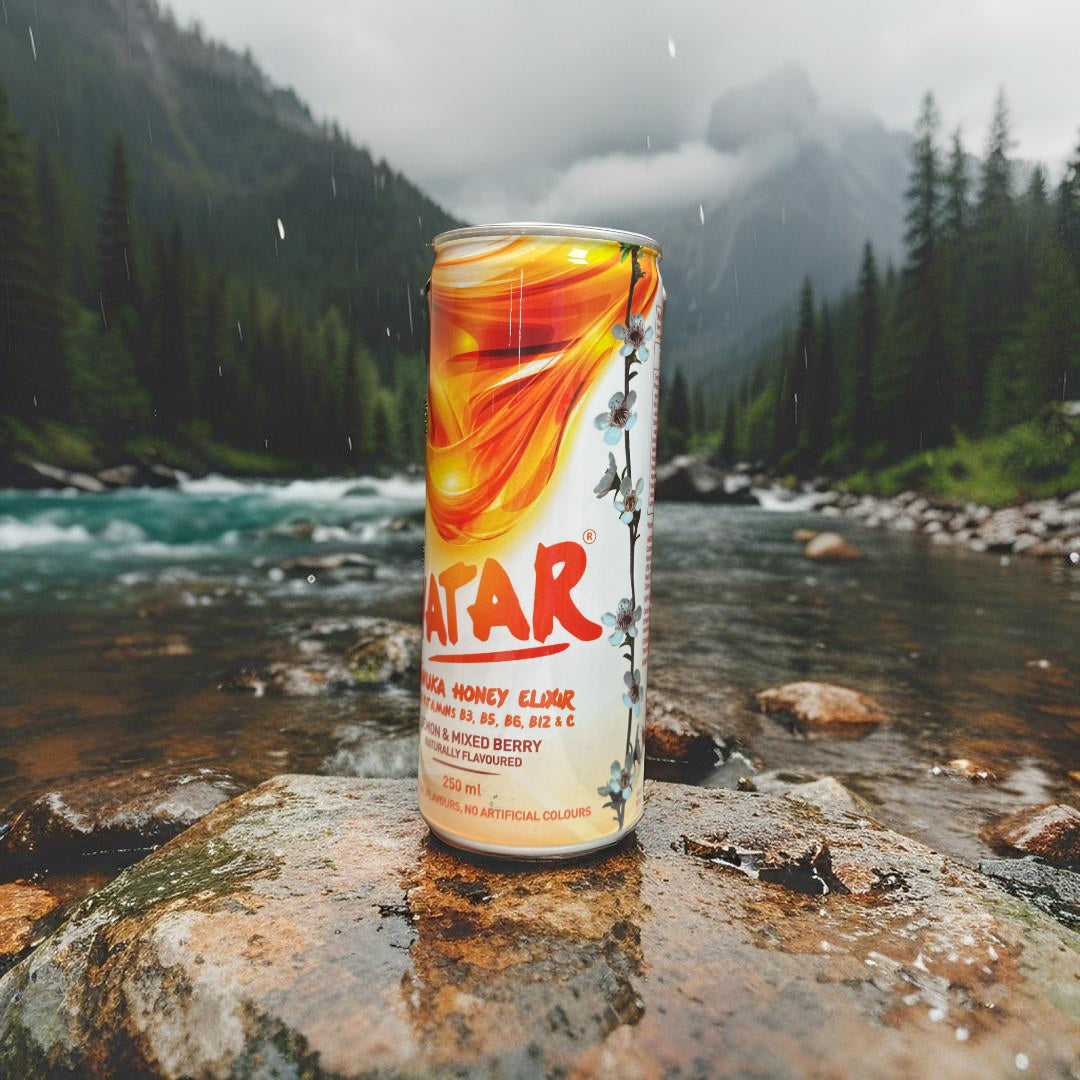
Our Avatar Mānuka Honey Elixir is lightly carbonated and sold in a 250 ml can. Its gentle sparkle does not remove the need to check bottle compatibility. For travel, carrying the unopened can and opening it when you want it is the simplest alternative to transferring.
Why do warming and shaking matter with a lightly carbonated drink?
Warming makes dissolved carbon dioxide less able to stay in the liquid, while shaking encourages bubbling and can make the drink foam or spray when opened. In a sealed container, gas released from the drink can contribute to pressure. Light carbonation is not a guarantee against these effects.
The American Chemical Society explains that cold liquid holds more dissolved carbon dioxide than warm liquid, and that warmed or shaken fizzy drinks can discharge gas and liquid when opened. Warming and shaking are therefore both worth avoiding, but they are not the same process.
Keep the drink cool and minimise unnecessary agitation. Do not leave a filled container in a hot car or direct sun. For an outing, packing the original can in a cooler avoids an unnecessary transfer while helping it stay chilled.
Insulation can help maintain temperature, but it does not make an unsuitable bottle safe for carbonation. Likewise, leaving extra space or waiting for foam to settle cannot override a manufacturer’s prohibition.
How should you transfer and open the drink in an approved bottle?
Start with a chilled drink and a clean, carbonation-approved bottle. Pour gently, follow the manufacturer’s filling and closure instructions, and use its specified pressure-release procedure when opening. Open slowly, with the outlet directed away from faces, electronics and valuables.
- Check the container’s condition. Make sure the lid and seals are correctly fitted and that no components appear damaged.
- Pour gently. Where the bottle’s shape permits, pour down the inside wall rather than splashing the drink into the bottom. This can reduce avoidable bubbling, but it will not prevent all foam.
- Respect the filling instructions. Use the manufacturer’s fill limit rather than guessing a universal amount of headspace.
- Close and carry as directed. Avoid shaking the bottle to mix the drink, and protect it from heat.
- Open carefully. Keep it away from your face and other people. Use any specified venting procedure, and do not force the closure.
A carbonation-compatible bottle can still hiss or foam when opened. Before taking a sip at your desk, move it away from your laptop and paperwork. Approval means the container is intended for that use, not that spills are impossible.
Will transferring the drink affect its fizz or flavour?
Yes, transferring can release some carbonation, leaving the drink less sparkling. Residue or odours in the bottle can also affect its flavour. A gentle pour into a clean, approved container helps avoid unnecessary foaming and flavour carryover, but cannot guarantee unchanged fizz.
Opening the can allows carbon dioxide to escape, and pouring provides another opportunity for gas to leave the liquid. Repeated opening and transferring can cost more sparkle. There is no universal fizz-retention time that applies to every drink and bottle.
For a honey drink with lemon and elderflower, yesterday’s coffee or a trace of washing-up liquid is an unwelcome addition. Smell the clean bottle and lid before filling, and rinse thoroughly if any detergent remains.
For more on enjoying the drink’s flavour and sparkle, see How Should You Serve a Premium Honey Energy Drink So It Tastes Its Best?
What should you label and clean after transferring an energy drink?
Keep the caffeine identification visible, and clean every permitted removable component promptly after use. An unmarked reusable bottle can look like it contains water, while drink residue can remain in seals, threads and drinking outlets.
If someone else might pick up your bottle, a clear label such as “Avatar Elixir: contains caffeine” helps identify the contents. Keep access to the original ingredient information, particularly when sharing. This is a practical precaution, not a replacement for the can’s label.
Follow your bottle’s own cleaning instructions. Thermos’s cleaning guidance highlights removable gaskets, straws and lid parts, thorough rinsing and complete drying. Only dismantle parts intended to be removed, and check dishwasher compatibility rather than assuming it.
If an odour lingers, inspect and clean the closure and seals before refilling. Use only cleaning methods permitted by the manufacturer.
The practical choice: use a reusable bottle only when its exact bottle-and-lid combination is approved for carbonation. Otherwise, keep your energy drink in its original can, carry it cool and open it when you are ready.
These follow-up tips cover storage time, pressure-release routines and using an open cup instead of a sealed bottle.
How long can I keep Avatar Elixir after transferring it?
No specific post-transfer storage limit has been established for Avatar Elixir. Follow any storage instructions on the can and the approved bottle's care guidance rather than assuming an insulated bottle extends storage time. If you are packing it for later, keeping the can unopened avoids an unnecessary transfer.
Should I open the bottle regularly to release pressure?
Follow the carbonation-approved bottle manufacturer's pressure-release instructions rather than setting your own venting schedule. There is no universal interval that applies to every bottle and drink. Periodically loosening a lid does not make an unsuitable bottle appropriate for carbonation, and repeated opening can also reduce the drink's sparkle.
Can I use an open reusable cup instead of a bottle?
Yes, a clean, open cup is an option if you are pouring the drink to enjoy straightaway rather than carrying it in a bag. An open cup does not trap gas like a sealed container, although pouring can still cause foam and reduce fizz. Adding a tightly sealing lid changes the situation and requires checking carbonation compatibility.