


Quick answer: To read a natural energy drink label in 60 seconds, scan in this order: serving size, caffeine amount, caffeine source, sweetener type, functional ingredients, flavor cues, carbonation, and caution notes. This helps you compare what is actually in the can before you decide whether it suits the moment.
You are holding two similar looking cans in a store fridge, office kitchen, online cart, or pantry. Both say “natural energy drink,” both look refreshing, and both promise a better choice than the usual soft drink. The fastest way to choose is to ignore the front-of-can buzzwords for a moment and read the label in a simple order.
What you need before you scan
You only need the can or product page in front of you. Look for three places: the nutrition information panel, the ingredients list, and any caffeine or caution statement near the back or side of the label.
- The nutrition panel shows serving size and key nutrition details.
- The ingredients list shows what the drink is made from, usually in descending order by weight.
- The caffeine statement helps you compare caffeine amount and decide whether it suits your day.
The 60-second scan order
Use this sequence whenever you read a natural energy drink label. It keeps the scan practical, fast, and focused on what you are actually buying.
- Check the serving size first.
Start with the stated serving size, because every other number depends on it. A can may be one serving, or it may show information per serving and per package. Compare drinks using the same basis so you do not accidentally compare half a can with a full can.
- Find the caffeine amount.
Look for the caffeine amount per serving or per can. This is one of the most useful numbers on a natural energy drink label, especially if you are choosing a drink for work, study, travel, or an afternoon lift. Choose based on your own caffeine preference and tolerance.
- Identify the caffeine source.
Check whether the label names the caffeine source, such as coffee, tea, guarana, yerba mate, or added clean caffeine. “Clean caffeine” usually means the drink is presenting caffeine in a simpler, more ingredient-led way, but the amount still matters more than the phrase on its own.
- Read the sweetener type.
Scan the ingredients list for the sweetener, such as honey, fruit juice, cane sugar, stevia, erythritol, or artificial sweeteners. The sweetener type affects taste, texture, and how premium or natural the drink feels. It also helps you compare whether the drink is honey-led, juice-led, sugar-led, or sweetener-led.
- Note the functional ingredients.
Look for added ingredients such as B vitamins, vitamin C, minerals, botanicals, amino acids, or adaptogen-style ingredients. Treat these as part of the drink’s formulation, not as a guarantee of a specific result. A good label makes these ingredients easy to find and easy to understand.
- Scan the flavor cues.
Read the ingredients that shape the drinking experience, such as lemon, elderflower, ginger, berry, citrus, mint, or honey. Flavor cues tell you whether the drink will likely taste bright, floral, sharp, sweet, mellow, or botanical before you open it.
- Check the carbonation and format.
Look for still, sparkling, lightly carbonated, or highly carbonated wording. Carbonation changes how refreshing the drink feels and how well it suits different occasions, including a desk drink, a travel drink, a social serve, or a mixer.
- Read any caution notes.
Finish by checking any label guidance about caffeine, age suitability, pregnancy, or sensitivity. This is especially important if you are comparing energy drinks for different people, stocking a shared fridge, or choosing something for later in the day.
The compact 60-second label checklist
This checklist is the quickest version of the scan order. Use it when you are comparing two cans side by side.
- Serving size: Is the information per serving or per can?
- Caffeine amount: How much caffeine is listed?
- Caffeine source: Where does the caffeine come from?
- Sweetener type: Is it honey, juice, sugar, stevia, or another sweetener?
- Functional ingredients: Are vitamins or other added ingredients clearly named?
- Flavor cues: What ingredients create the taste?
- Carbonation: Is it still, sparkling, or lightly carbonated?
- Caution notes: Are there any caffeine or suitability notes to consider?
Example walkthrough: reading Avatar Elixir
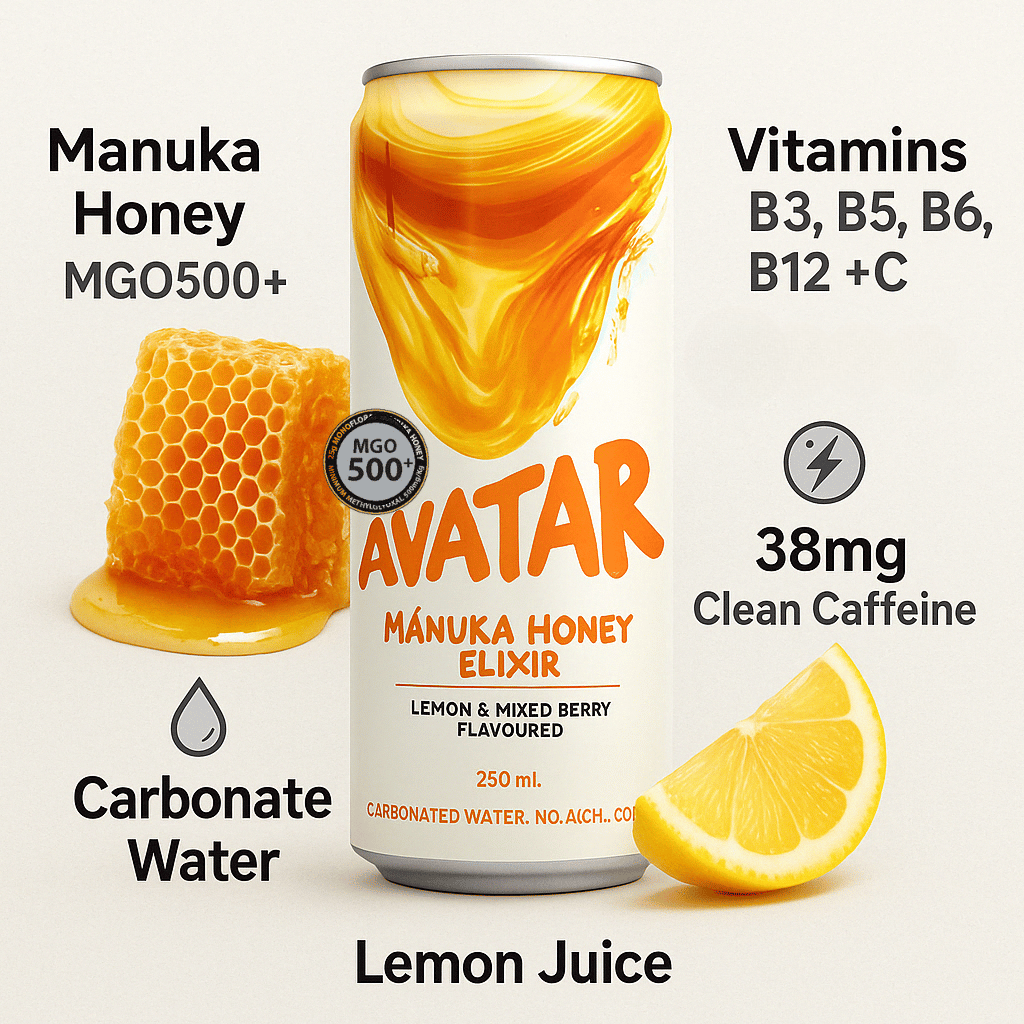
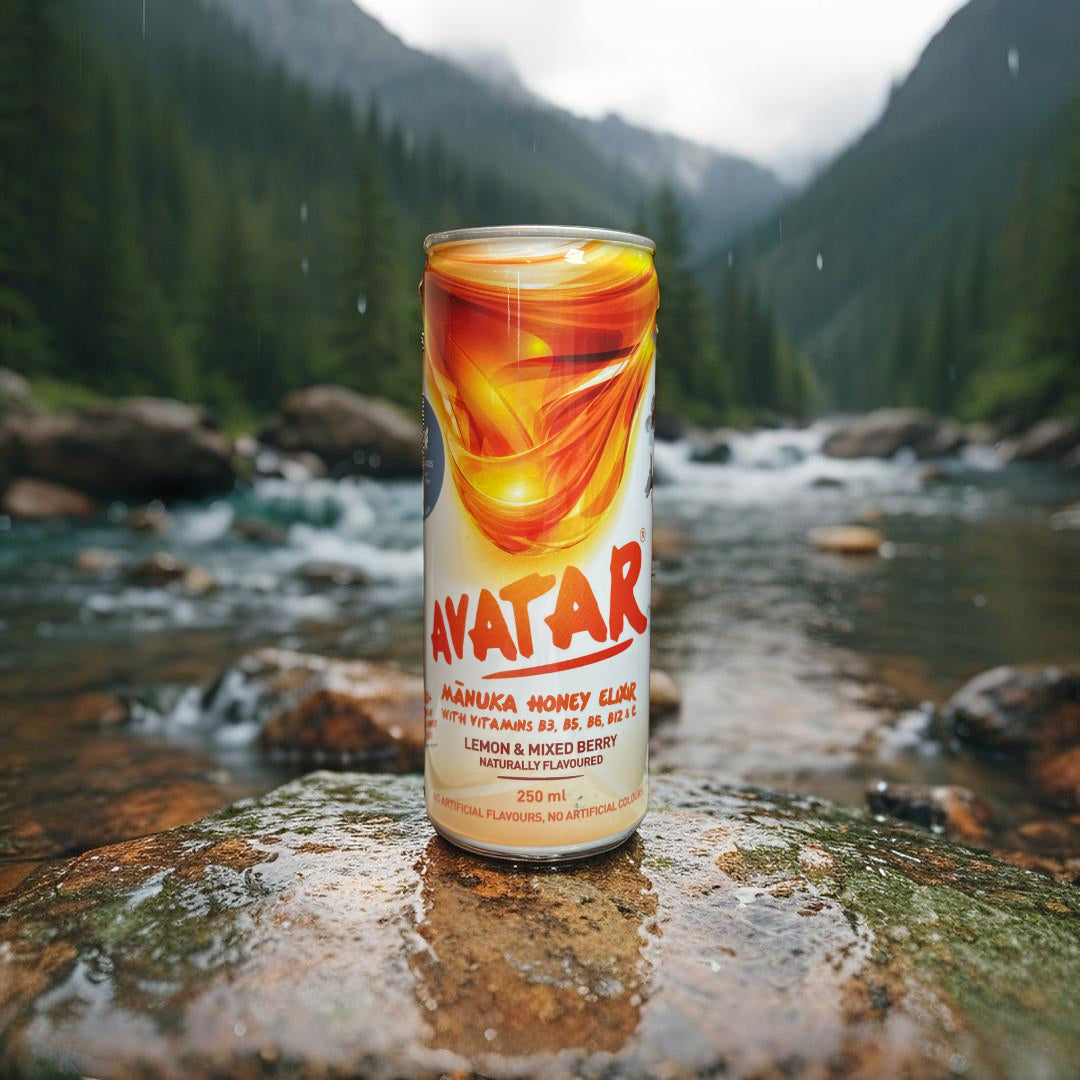
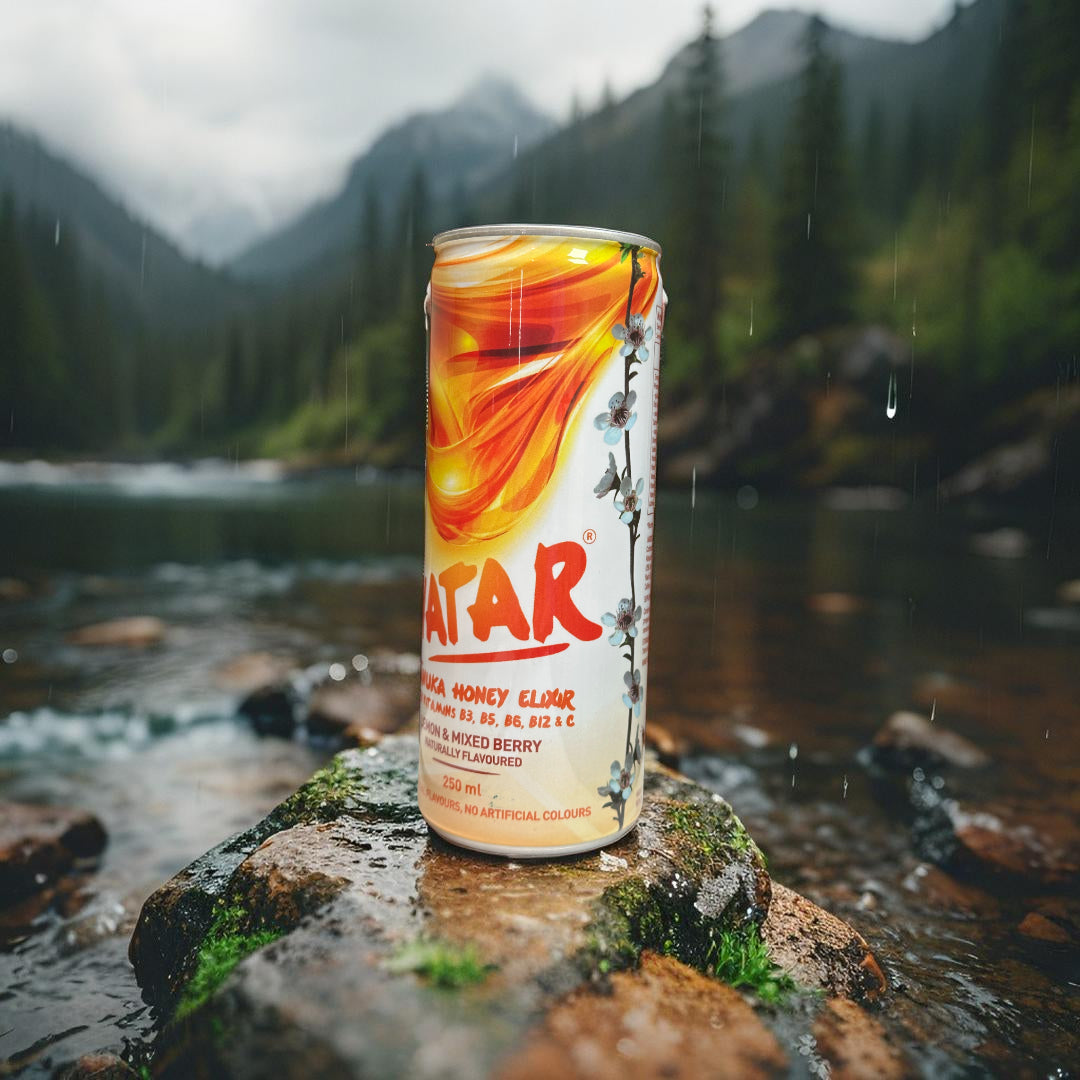
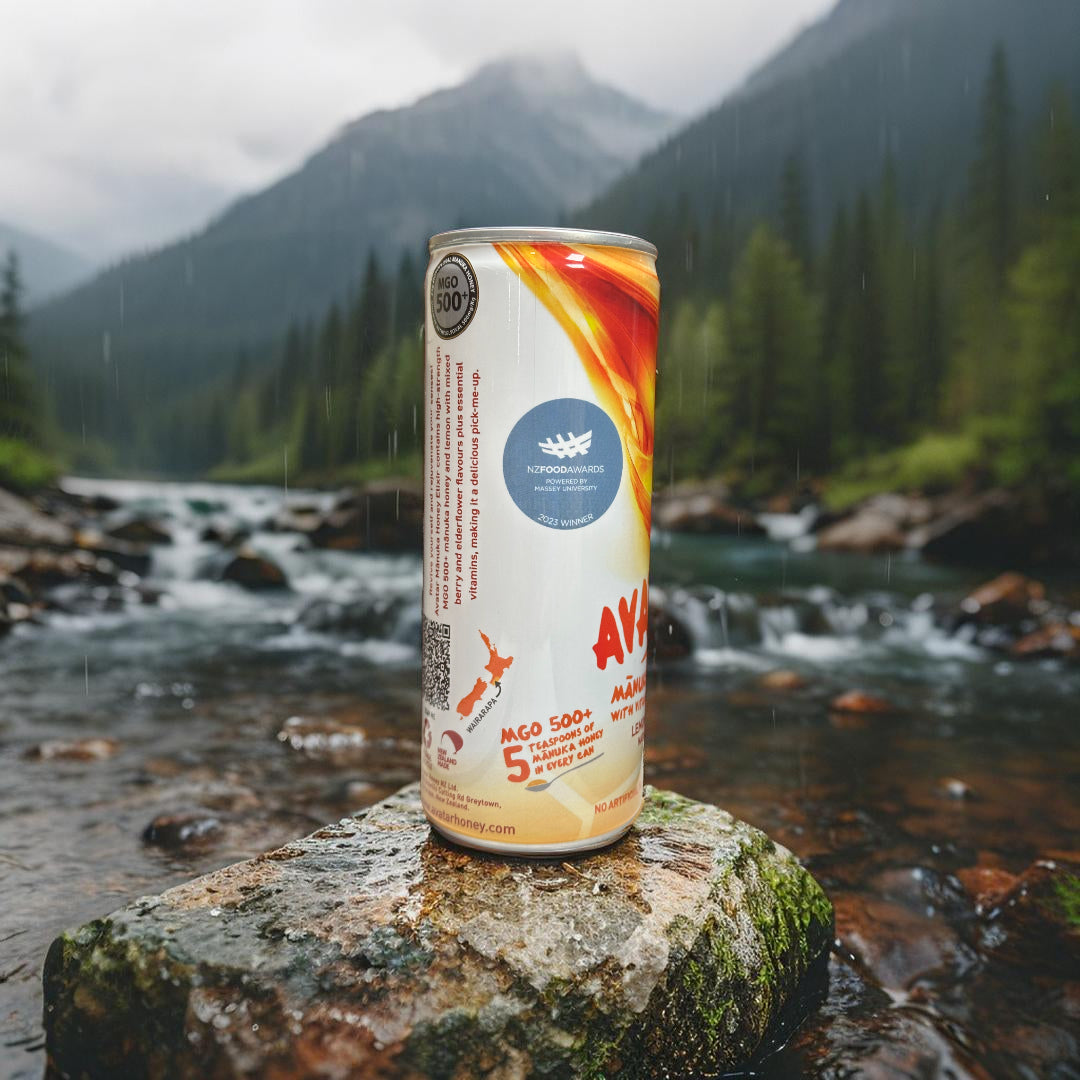
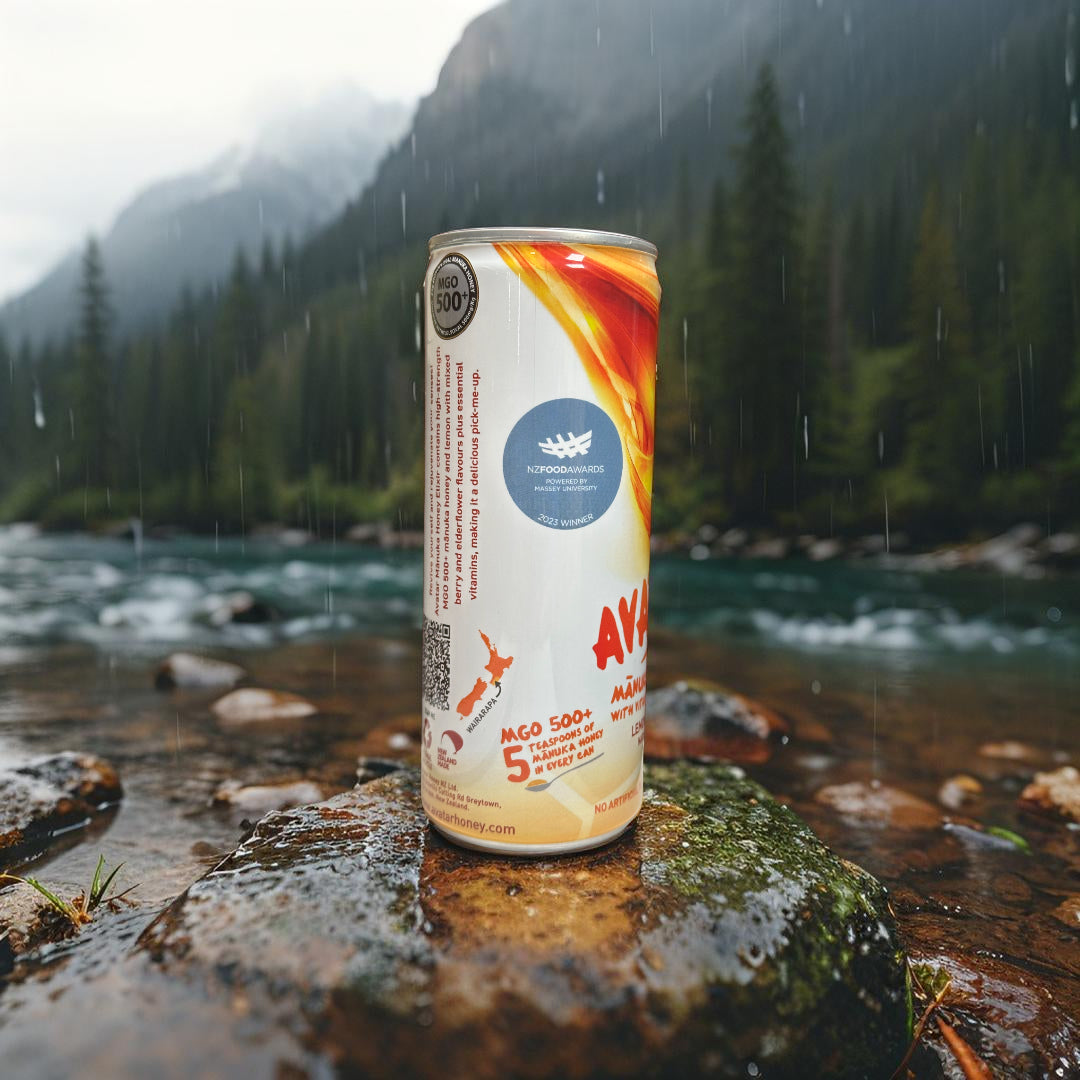
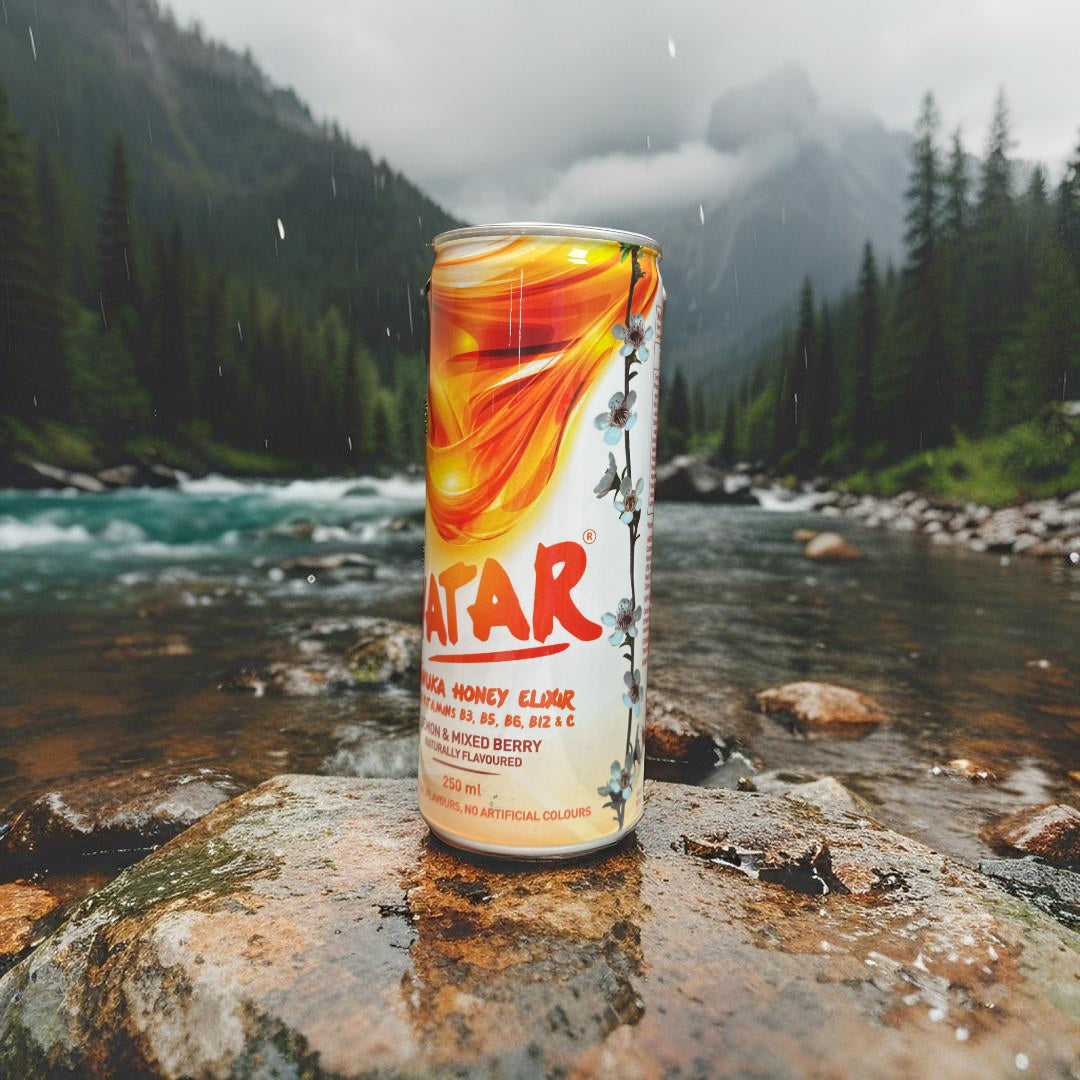
Avatar Elixir is a useful worked example because it is a premium New Zealand Manuka honey drink with natural energy drink cues, functional ingredients, and a more grown-up flavor profile.
- Serving size: Start by checking the can’s stated serving size and use that as your comparison point against other drinks.
- Caffeine amount: Find the listed caffeine amount on the label before deciding whether it suits the time of day and your caffeine preference.
- Caffeine source: Avatar Elixir uses clean caffeine, so you can identify caffeine clearly rather than relying only on front-label energy language.
- Sweetener type: The drink is made with certified MGO500+ Manuka honey, which gives you a clear sweetener and flavor cue instead of a generic sweet taste.
- Functional ingredients: B vitamins and vitamin C appear as part of the formulation. They add context to the drink, but they should not be read as a promise of a guaranteed outcome.
- Flavor cues: Lemon points to a bright citrus edge, elderflower adds a delicate floral note, and Manuka honey brings a rounded honey character.
- Carbonation: Lightly carbonated water suggests a fresh, lifted finish rather than a heavy soft drink feel.
Common mistakes to avoid
- Reading the front of the can only: Words like “natural,” “clean,” or “functional” are useful starting points, but the back label tells you what is actually inside.
- Skipping the serving size: A drink can look lower or higher in certain numbers if you miss whether the label is showing per serving or per can.
- Ignoring the caffeine amount: The caffeine source matters, but the total caffeine amount is what helps you compare one drink with another.
- Treating vitamins as a promise: Vitamins can be part of a thoughtful formulation, but a beverage label should not be read as a guarantee of focus, health, or performance.
- Missing the flavor ingredients: The ingredients list often tells you more about taste than the product name does.
You’re done when you can answer these questions
You have read the natural energy drink label properly when you can answer six simple questions without guessing:
- How big is the serving?
- How much caffeine is in it?
- Where does the caffeine come from?
- What sweetener is used?
- Which functional ingredients are included?
- What should the drink taste and feel like?
At this point, you can compare two similar looking cans with more confidence. You are not relying on marketing language alone. You are reading the serving size, caffeine, sweetener, ingredients, flavor cues, and format in context, which is the fastest way to choose a natural energy drink that fits the moment.
These answers help you compare natural energy drink labels quickly, using the details that matter most before you choose a can.
What should I check first on a natural energy drink label?
Check the serving size first, because every other number depends on whether the label is showing details per serving or per can. After that, scan the caffeine amount, caffeine source, sweetener type, functional ingredients, flavour cues, carbonation, and caution notes. This order keeps the label scan practical and helps you compare two similar-looking drinks fairly.
How do I compare caffeine in two natural energy drinks?
Compare caffeine by looking at the amount per serving or per can, then checking where the caffeine comes from. A label might mention coffee, tea, guarana, yerba mate, or clean caffeine. The source gives context, but the listed amount is the key comparison point when choosing a drink for work, study, travel, or later in the day.
What does clean caffeine mean on an energy drink label?
Clean caffeine usually means the drink presents caffeine in a simple, ingredient-led way rather than as part of a heavy stimulant blend. The phrase is useful only when the label also gives a clear caffeine amount and a clear ingredient list. Treat it as one part of the label, not as a guarantee of a specific feeling or result.
How can I tell what sweetener an energy drink uses?
You can tell the sweetener by reading the ingredients list, where ingredients are usually listed in descending order by weight. Look for honey, fruit juice, cane sugar, stevia, erythritol, artificial sweeteners, or similar wording. The sweetener shapes taste, texture, and the overall style of the drink, especially when comparing honey-led, juice-led, sugar-led, and sweetener-led options.
Are vitamins on an energy drink label the most important detail?
Vitamins are useful label details, but they are not the first thing to check. Start with serving size, caffeine amount, caffeine source, and sweetener type, then review added ingredients such as B vitamins, vitamin C, minerals, botanicals, or amino acids. Treat these ingredients as part of the drink's formulation rather than proof of a guaranteed wellness or performance outcome.
How would I read the Avatar Elixir label as an example?
Read Avatar Elixir by first checking the serving size and caffeine statement, then scanning the ingredients that define the drink. Its label highlights certified MGO500+ Manuka honey, lemon, elderflower, B vitamins, vitamin C, clean caffeine, and lightly carbonated water. That tells you it is honey-led, citrus-floral in flavour, lightly sparkling, and built as a premium New Zealand Manuka honey drink.
What should I do after reading an energy drink label?
After reading the label, match the drink to the occasion and your own preferences. Choose based on caffeine level, sweetness style, flavour, carbonation, and any label guidance that matters for you. For a shared fridge, office pantry, travel bag, mixer, or afternoon drink, a clear label helps you pick something that suits the moment without relying on front-of-can marketing.