



Quick answer: Heart palpitations from energy drinks can happen, especially with high-caffeine products around 300mg or more, large serving sizes, stimulant sensitivity, existing heart conditions, or drinking them on an empty stomach. Caffeine can raise heart rate and blood pressure in some people, and high-dose taurine combined with caffeine has been flagged in cardiac case studies. If palpitations are persistent, painful, associated with fainting, chest discomfort, shortness of breath, or feel unusual for you, speak with a doctor promptly.
Heart palpitations after an energy drink can feel frightening. You may notice a racing heartbeat, skipped beats, fluttering, pounding in your chest, or a sudden awareness of your pulse. For health-anxious consumers, the hard part is not knowing whether the sensation is harmless, caffeine-related, or a sign that something needs medical attention.
The honest answer is that energy drinks can trigger palpitations in sensitive people. High-dose caffeine and taurine can affect cardiac rhythm, especially when combined with stress, dehydration, alcohol, exercise, lack of sleep, or an empty stomach. Some people tolerate these drinks without obvious symptoms, while others feel tachycardia, ectopic beats, jitteriness, or a rise in blood pressure after one can.
This article explains which ingredients are most likely to be responsible, what to do if it happens, and how to think about lower-caffeine natural drinks if you have cardiac concerns. It is educational only and is not a substitute for medical advice.
Why Energy Drinks Can Cause Heart Palpitations
Energy drink palpitations usually happen because stimulant ingredients increase nervous system activity. Caffeine is the main driver, but serving size, added stimulants, taurine, sugar, dehydration, and personal sensitivity can all influence how your heart feels after drinking one.
Palpitations are not one single sensation. People often describe them as:
- Tachycardia: a faster-than-usual heart rate.
- Ectopic beats: extra or skipped beats that may feel like a thump or flutter.
- Pounding heartbeat: a strong pulse you can feel in your chest, throat, or neck.
- Irregular rhythm sensation: a feeling that the heartbeat is uneven or unpredictable.
High-caffeine energy drinks, especially products with around 300mg+ caffeine per can or serving, are more likely to cause symptoms in people who are sensitive to stimulants. This does not mean every person will react the same way. It means the margin for discomfort is smaller, especially if the drink is consumed quickly or alongside other caffeine sources like coffee, pre-workout powders, or strong tea.
The Main Ingredients Linked to Palpitations
The ingredients most associated with palpitations are caffeine, high-dose taurine when combined with caffeine, and additional stimulant compounds. Sugar and carbonation may also change how a drink feels in the body, but they are usually not the primary rhythm trigger.
Caffeine
Caffeine is a central nervous system stimulant. It can increase alertness, but it can also raise heart rate, increase adrenaline-like sensations, and temporarily elevate blood pressure in some people. When the dose is high, the effect can feel less like “energy” and more like internal alarm.
People vary widely in caffeine tolerance. A person who drinks coffee daily may feel little from a moderate dose, while someone who rarely uses caffeine may feel shaky or notice their heartbeat after a much smaller amount. Genetics, sleep, stress levels, medication use, and hydration status can all change the response.
Taurine
Taurine is an amino acid commonly used in energy drinks. It is not automatically dangerous, and it exists naturally in the body. The concern is more specific: high-dose taurine combined with caffeine has been flagged in cardiac case studies, particularly where symptoms involve rhythm changes or other heart-related events.
Case reports do not prove that taurine alone caused the event. They do, however, support a cautious approach when high taurine, high caffeine, and other stimulants appear together in one product. If you already experience palpitations, it is reasonable to avoid stacking these ingredients until you have discussed your symptoms with a qualified clinician.
Other Stimulants
Some energy drinks include added stimulant herbs or compounds. These may include guarana, yerba mate extract, green tea extract, or other caffeine-containing ingredients. The label may show one caffeine number, but the real stimulant feel can depend on the full formula.
Guarana is especially important because it naturally contains caffeine. If a product includes caffeine plus guarana, the overall effect may feel stronger than expected. If you are prone to palpitations, look beyond the front label and read the full ingredient list.
Sugar and Rapid Absorption
Sugar is not usually the main cause of rhythm changes, but it can contribute to a fast, intense energy feeling. A large amount of sugar on an empty stomach can feel physically uncomfortable for some people, especially when combined with caffeine.
Some people also misread anxiety-like sensations as heart danger, and others misread heart sensations as anxiety. Both can happen together. A racing pulse after a sugary, high-caffeine drink may be caused by several overlapping factors rather than one ingredient alone.
Who Is More Likely to Feel Palpitations?
People with stimulant sensitivity, existing cardiac conditions, anxiety around body sensations, or low caffeine tolerance are more likely to notice palpitations from energy drinks. Risk also increases when energy drinks are used in less forgiving situations, such as after poor sleep or before intense exercise.
Common risk factors include:
- Existing heart rhythm issues or a history of unexplained palpitations.
- High blood pressure or cardiovascular disease.
- Stimulant sensitivity, including feeling shaky after coffee or pre-workout products.
- Drinking energy drinks on an empty stomach, which may make effects feel stronger.
- Combining caffeine sources, such as coffee, energy drinks, and caffeine tablets.
- Dehydration, especially after exercise, alcohol, heat exposure, or illness.
- Poor sleep, which can make the nervous system more reactive.
- Some medications or supplements that may interact with stimulants.
Older adults should be especially careful. People searching for the best energy drink for seniors over 60 should prioritize low-to-moderate caffeine, simple ingredients, clear labeling, and medical compatibility over extreme stimulation. If someone has a heart condition, takes blood pressure medication, or has a history of arrhythmia, it is sensible to ask a doctor before using any caffeinated energy product.
What to Do If You Get Palpitations After an Energy Drink
If palpitations happen after an energy drink, stop taking more stimulants and pay attention to severity, duration, and associated symptoms. Most mild caffeine-related palpitations settle as the stimulant wears off, but persistent or concerning symptoms deserve medical advice.
General safety steps include:
- Stop consuming the drink. Do not finish the can to “see what happens.”
- Avoid more caffeine that day. This includes coffee, strong tea, pre-workout products, caffeine pills, and stimulant supplements.
- Sit down and rest. Physical activity can make a stimulant-driven racing heart feel worse.
- Hydrate gently. Water may help if dehydration is part of the picture, but do not overcorrect with excessive fluids.
- Note what you consumed. Write down the product, caffeine amount, serving size, timing, and whether you had it with food.
- Contact a healthcare professional if symptoms persist or worry you. This is especially important if palpitations are new, frequent, or intense.
Seek urgent medical help if palpitations come with chest pain, fainting, severe shortness of breath, confusion, weakness, or a feeling that something is seriously wrong. These symptoms should not be managed as a normal caffeine reaction.
How to Read an Energy Drink Label If You Are Palpitation-Prone
A safer label-reading approach starts with caffeine dose, serving size, and stimulant stacking. Marketing words like “clean,” “natural,” or “performance” do not tell you whether a drink is appropriate for a sensitive heart.
Check these details before choosing a drink:
- Caffeine per can: Look for the total amount, not just per serving.
- Number of servings: Some cans contain more than one serving, which can lead to accidental overconsumption.
- Added caffeine sources: Guarana, yerba mate, green tea extract, and coffee extract may contribute to the total stimulant effect.
- Taurine dose: Be cautious with high taurine formulas, especially when paired with high caffeine.
- Other stimulants: Avoid complicated blends if you already react strongly to caffeine.
- Sugar content: Consider whether a large sugar load makes you feel shaky or uncomfortable.
- Warnings: Follow label guidance around age, pregnancy, health conditions, and medication use.
For people who have had palpitations before, the best choice is often the most boring-looking label: moderate caffeine, no stimulant stack, transparent ingredients, and a serving size you can understand at a glance.
Are Natural Energy Drinks Safer for Heart Concerns?
Natural energy drinks are not automatically heart-safe, but low-to-moderate-caffeine natural drinks are generally a more cautious category than high-stimulant formulas. The word “natural” matters less than the actual caffeine dose and ingredient profile.
A natural drink with 250mg to 300mg caffeine can still trigger palpitations in a sensitive person. A lower-caffeine drink with simple ingredients may be easier to tolerate, but individual response still matters. If you have a known cardiac condition, you should treat any caffeinated drink as something to review carefully.
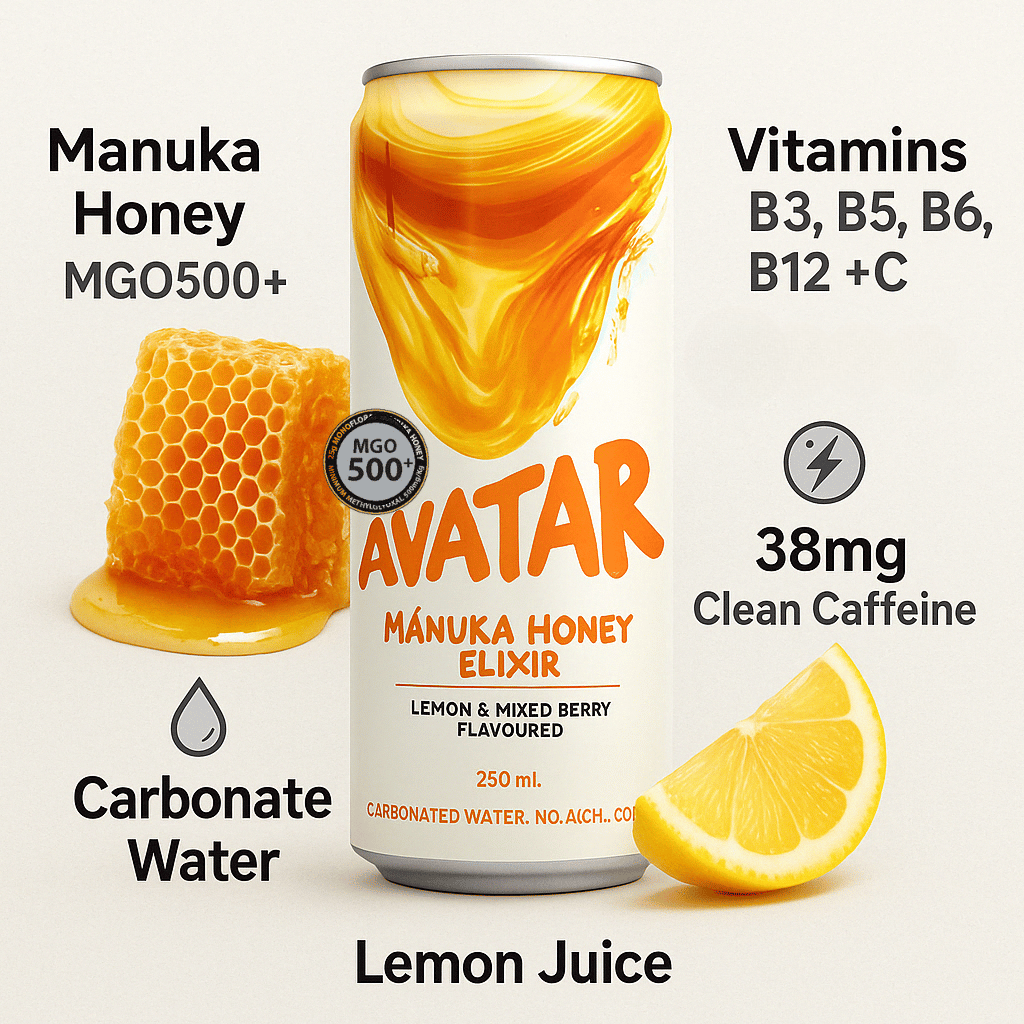
This is where formula transparency becomes useful. Avatar Elixir, for example, uses 38mg of caffeine per 250ml can, which places it in a much lower caffeine range than many high-stimulant energy drinks. Its formula is built around certified MGO500+ Mānuka honey, lemon juice, lightly carbonated water, vitamin C, and a B-complex including B3, B5, B6, and B12. The brand also states that it avoids artificial ingredients.
That does not make it a medical product, and it should not be used to treat palpitations or heart concerns. It simply illustrates the kind of lower-caffeine, simpler-label option that some cautious consumers may prefer over highly caffeinated cans. For people with cardiac concerns, the decision should still be guided by personal tolerance and professional medical advice.
Why Empty-Stomach Energy Drinks Can Feel Worse
Drinking an energy drink on an empty stomach can make caffeine effects feel sharper and more uncomfortable. Without food, the stimulant effect may feel faster, and symptoms like shakiness, nausea, anxiety, or a pounding heartbeat may be more noticeable.
This does not mean food “cancels out” caffeine. It means the overall experience may be less abrupt when your body is not dealing with caffeine, sugar, and carbonation alone. People who are sensitive often report that the same drink feels different depending on sleep, stress, meal timing, and hydration.
If you have already had palpitations from an energy drink, changing the timing may not be enough. A lower caffeine dose or avoiding energy drinks altogether may be more appropriate, especially until you have a clearer understanding of your heart health.
When to See a Doctor About Energy Drink Palpitations
You should speak with a doctor if palpitations are persistent, recurrent, severe, or associated with other symptoms. Even when caffeine seems like the obvious trigger, a clinician can help rule out rhythm issues, blood pressure problems, thyroid concerns, medication interactions, or other causes.
Medical advice is especially important if:
- Palpitations continue after the caffeine should have worn off.
- You have chest pain, fainting, dizziness, or shortness of breath.
- Your heartbeat feels irregular rather than simply fast.
- You have a known heart condition or high blood pressure.
- You are over 60 and newly experiencing palpitations.
- You take medication that may interact with caffeine or stimulants.
- Palpitations happen even when you have not consumed caffeine.
It can help to bring the can or ingredient label to your appointment. Details like caffeine amount, taurine content, serving size, and other stimulants may help your healthcare provider understand what happened.
A Practical Way to Choose Energy Drinks After Palpitations
After energy drink palpitations, the most cautious approach is to reduce stimulant load rather than search for a stronger or more complex formula. If you still want an occasional energy drink, choose one with transparent labeling and a caffeine level that respects your sensitivity.
A practical checklist looks like this:
- Choose low-to-moderate caffeine rather than 300mg+ formulas.
- Avoid combining energy drinks with coffee, pre-workout, or caffeine pills.
- Be cautious with high-dose taurine plus caffeine blends.
- Do not use energy drinks to push through illness, dehydration, or severe fatigue.
- Have caffeine with food if you know empty-stomach intake affects you.
- Stop using the product if palpitations return.
- Ask a doctor before using caffeinated drinks if you have heart concerns.
For wellness-focused consumers, the goal is not to find the most intense energy drink. The goal is to find the least disruptive option that fits your body, your health history, and your tolerance. Sometimes that may be a lower-caffeine natural drink. Sometimes it may be tea, food, hydration, rest, or no caffeine at all.
If you are worried about a racing or fluttering heartbeat after an energy drink, these FAQs explain the most likely ingredient triggers, common risk factors, and what to do next. You will also learn how to choose a lower-stimulant option if palpitations are a concern.
Can 300mg caffeine energy drinks cause heart palpitations in sensitive people?
Yes, high-caffeine energy drinks around 300mg or more can trigger palpitations in sensitive individuals. Caffeine can raise heart rate and blood pressure, and some people notice tachycardia or ectopic beats even after one large serving. Risk rises when caffeine is combined with other stimulants, dehydration, stress, or poor sleep.
Why does taurine with caffeine sometimes affect cardiac rhythm?
Taurine combined with caffeine has been flagged in cardiac case studies, so the combo can be a concern for some people. The practical issue is not "taurine is always bad," but that stacked ingredients can increase the chance you feel a rhythm change if you are stimulant-sensitive. If you have had palpitations before, it is reasonable to treat high-dose blends as higher risk.
How do I reduce palpitations after an energy drink safely?
The safest next step is to stop the stimulant and reduce other triggers while you monitor symptoms. Practical steps that commonly help include:
- Stop drinking the energy drink and avoid more caffeine that day.
- Hydrate and eat a light meal if you drank on an empty stomach.
- Avoid exercise, alcohol, and additional stimulants until you feel normal.
What symptoms mean I should see a doctor promptly?
Seek medical help promptly if palpitations are persistent, painful, or feel unusual for you. Red flags include palpitations with fainting, chest discomfort, shortness of breath, or severe dizziness. This is educational only, and a clinician is the right person to evaluate ongoing or alarming symptoms.
Is drinking energy drinks on an empty stomach more likely to cause palpitations?
Yes, an empty stomach can make stimulant effects feel stronger and faster. With less food buffering absorption, caffeine can hit harder, which may increase the chance of a racing heart or shaky feeling, especially if you are already stressed, dehydrated, or sleep-deprived. If you choose to use caffeine, taking it with food and water is often a more tolerable approach.
What is the best energy drink for seniors over 60 with palpitations concerns?
For many seniors, the best energy drink for seniors over 60 is typically a low-to-moderate caffeine option with a smaller serving size and fewer added stimulants. Look for clear labeling and avoid "stacked" formulas that combine very high caffeine with multiple stimulants, especially if you have a history of palpitations or high blood pressure. When in doubt, bring the ingredient label to your doctor or pharmacist and ask what fits your health profile.
How can I compare energy drink labels to avoid stimulant stacking?
Compare labels by focusing on total caffeine per container and the presence of multiple stimulant-like ingredients. A quick checklist:
- Caffeine per serving and servings per can (total dose matters).
- Taurine dose and whether it is paired with high caffeine.
- Other stimulants (for example, "energy blends") plus sugar or large portion sizes.
The Bottom Line
Heart palpitations from energy drinks are real for some people, and they are not something to dismiss. High-dose caffeine, especially around 300mg or more, can contribute to tachycardia, ectopic beats, and elevated blood pressure in sensitive individuals. High-dose taurine combined with caffeine has also appeared in cardiac case studies, which supports a cautious approach to heavily stimulated formulas.
If you have persistent palpitations, chest discomfort, fainting, shortness of breath, or symptoms that feel unusual for you, speak with a doctor. If you are simply trying to reduce risk, avoid high-stimulant blends, read labels carefully, and consider low-to-moderate-caffeine natural drinks when appropriate. Safety should come before energy, especially when your heart is the symptom you are worried about.