


Quick answer: Count a caffeinated mixer by multiplying its stated caffeine amount by the fraction of the stated volume you pour. Add caffeine from every other ingredient, then count refills separately. For a well-mixed batch, each glass gets the same fraction of the batch’s caffeine as its share of the liquid.
Keep the ingredient labels beside you before you start pouring. You’ll need a measuring jug or jigger marked in millilitres, a calculator, and somewhere to note the amounts. The aim is a clear caffeine total for the drink you actually serve, not a universal serving recommendation.
Calculate caffeine from label to glass
-
Read the caffeine amount and its volume basis
Find both the caffeine amount in milligrams (mg) and the volume that amount covers. A declaration may be per can, per serving, or per 100 ml. Check the serving size rather than assuming one serving means the whole container.
Write down those two figures for every caffeinated ingredient. Coffee, tea, chocolate ingredients and other mixers can all contribute. The FDA notes that decaf coffee and tea can still contain caffeine, and that caffeine quantities are not always disclosed.
If an ingredient contains caffeine but gives no quantity, don’t count it as zero. Ask the manufacturer for the amount and its serving basis. If you use an estimate for brewed coffee or tea, mark the final total as estimated too.
-
Calculate the caffeine in each measured pour
Use matching volume units throughout:
Caffeine added (mg) = stated caffeine (mg) × (volume poured ÷ volume covered by the statement).
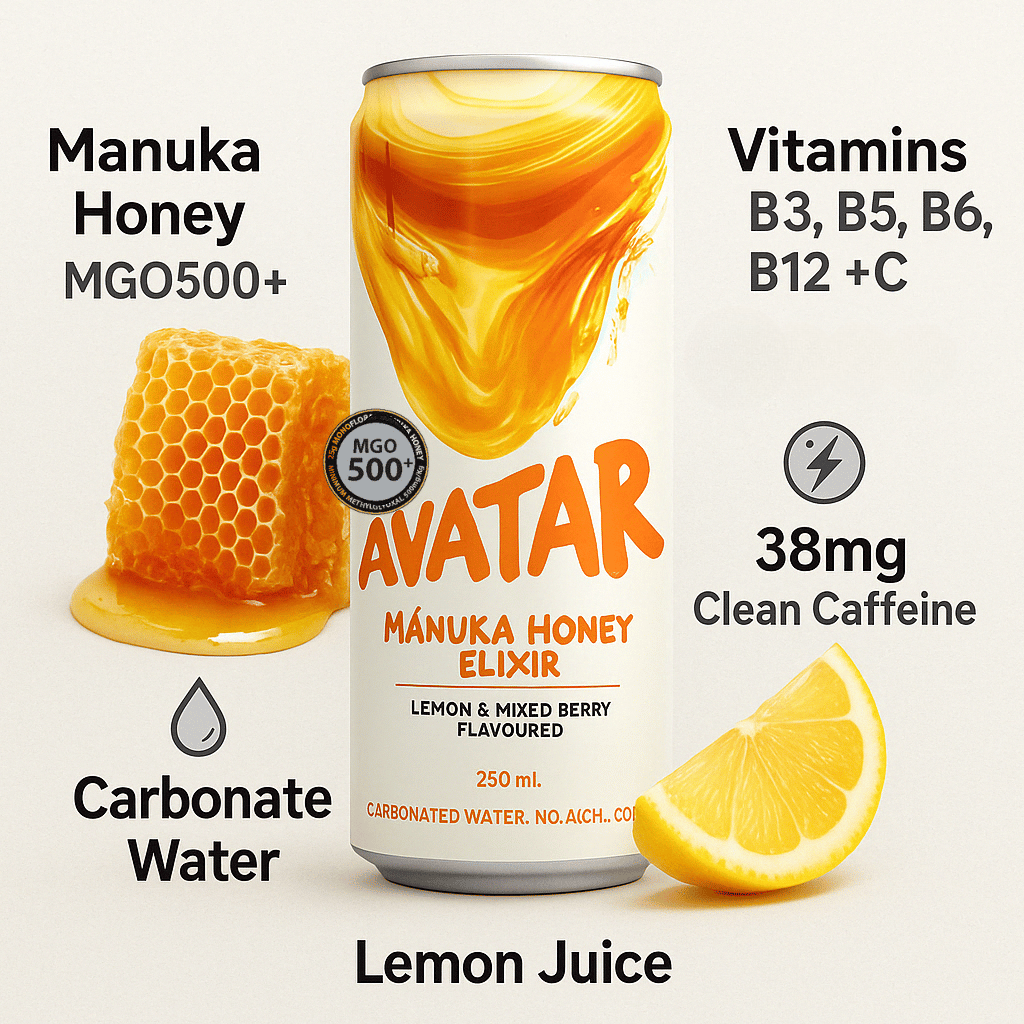
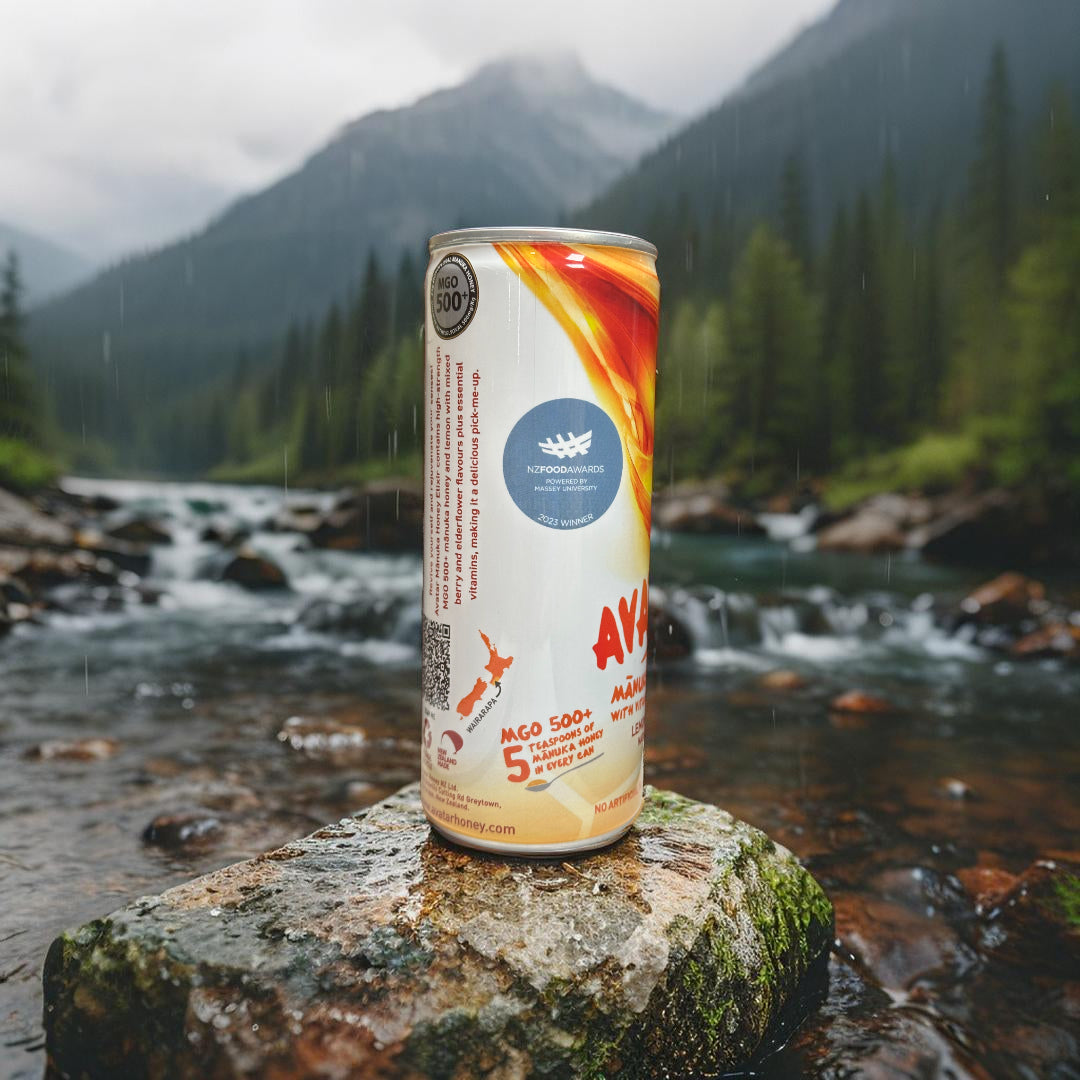
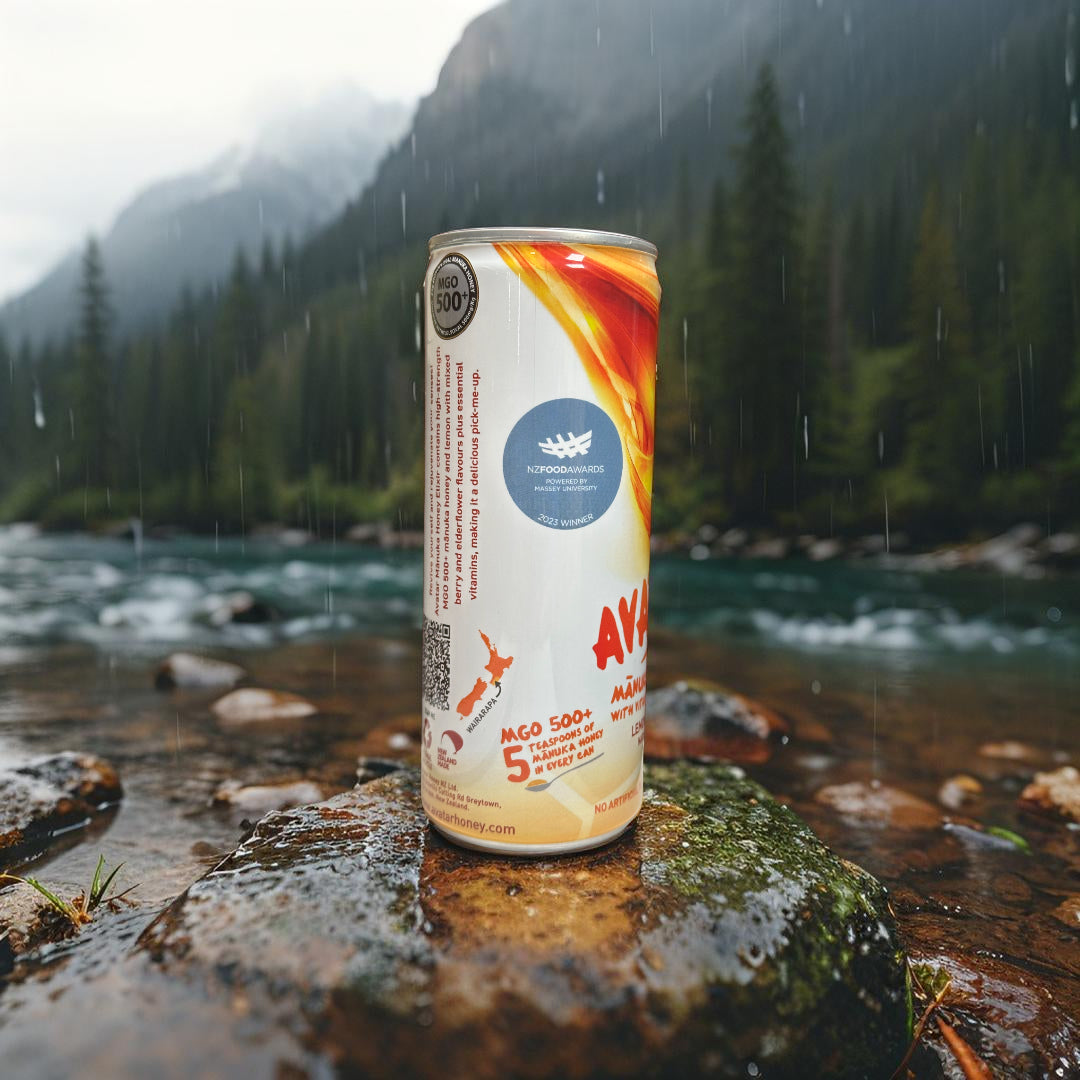
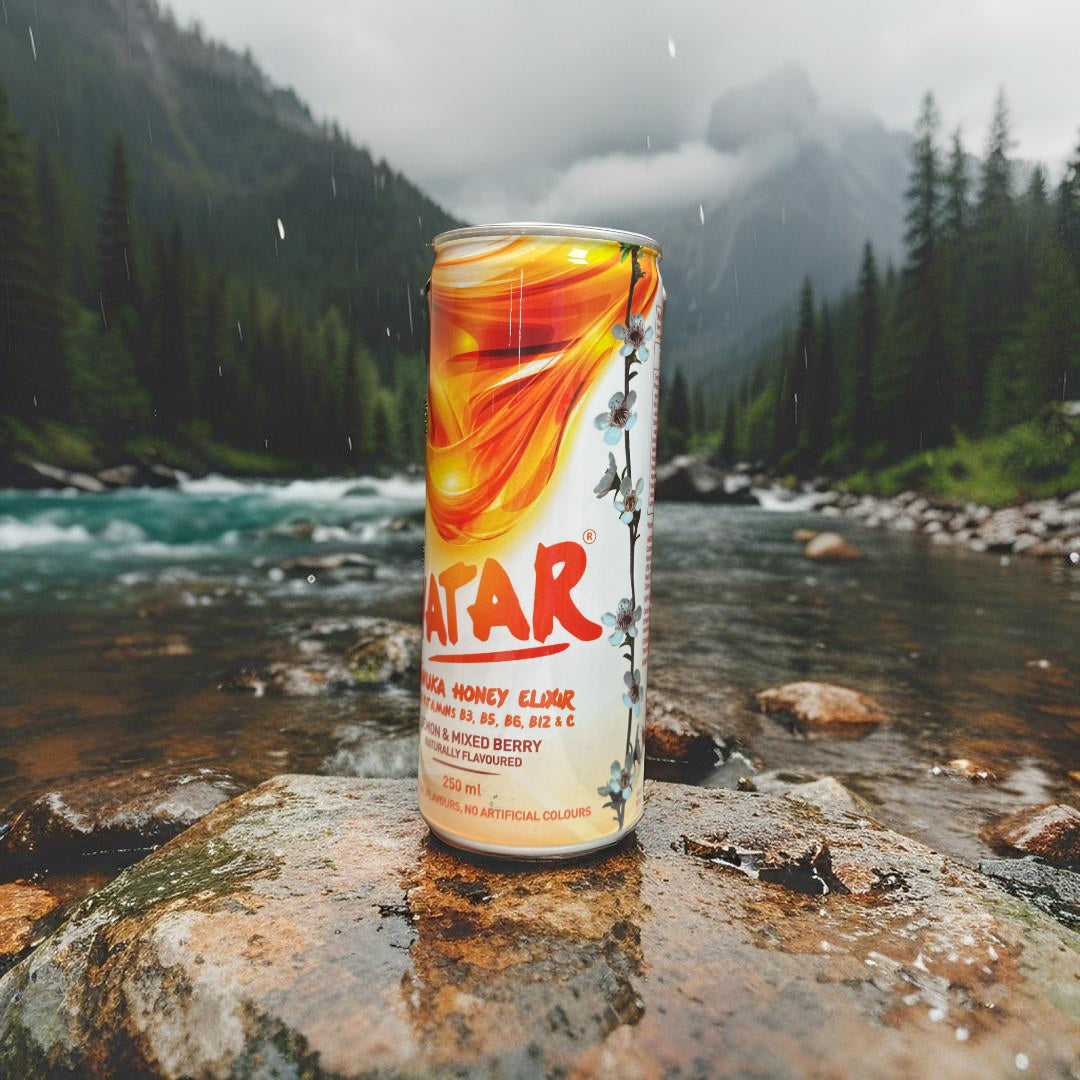
Our Avatar Mānuka Honey Elixir comes in a 250 ml can, with honey, lemon and elderflower flavours that suit a lightly sparkling mocktail. For an Avatar calculation, use the caffeine declaration on the current can in your hand. If it states caffeine per whole can, a 100 ml pour contributes 100 ÷ 250, or 0.4, of that amount. If it states caffeine per 100 ml, use that basis instead.
Hypothetical example 1: part of a 250 ml can
Suppose a fictional mixer’s label states 50 mg per 250 ml can. You pour 100 ml:
50 × (100 ÷ 250) = 20 mg caffeine.
Add 100 ml of caffeine-free sparkling water and the glass still contains 20 mg. Dilution changes the concentration, not the caffeine already poured. These fictional figures are teaching inputs, not Avatar’s caffeine specification.
-
Add the ingredients and allocate the total to each glass
For an individually made drink, add the caffeine contributed by each ingredient. For a shared batch, calculate the whole batch first, mix it evenly, and allocate caffeine according to the liquid volume each guest receives.
Hypothetical example 2: a mixer plus tea
Suppose a fictional mixer declares 60 mg per 300 ml, and a tea ingredient declares 20 mg per 100 ml. Your glass contains:
- 150 ml mixer: 60 × (150 ÷ 300) = 30 mg.
- 50 ml tea: 20 × (50 ÷ 100) = 10 mg.
Total per glass: 30 + 10 = 40 mg caffeine.
Hypothetical example 3: a batch divided unevenly
Suppose you combine two fictional 250 ml cans containing 50 mg each with 500 ml of caffeine-free liquid. The evenly mixed batch contains 100 mg caffeine in 1,000 ml.
Caffeine per glass = batch caffeine × (batch liquid poured ÷ total batch liquid).
- A 200 ml pour contains 100 × (200 ÷ 1,000) = 20 mg.
- A 300 ml pour contains 100 × (300 ÷ 1,000) = 30 mg.
- A 500 ml pour contains 100 × (500 ÷ 1,000) = 50 mg.
Dividing the caffeine by three guests would be wrong because their portions differ. This example assumes measured liquid portions, no leftovers and no separate caffeinated additions. Measure the batch liquid poured, not the glass’s capacity with ice in it.
-
Add refills to the running total
Record each additional pour, including small top-ups. Returning to hypothetical example 2, one identical refill adds another 40 mg, bringing the total across both drinks to 80 mg.
If a refill uses different proportions or a different volume, calculate it separately. Include coffee, tea or other caffeinated drinks consumed separately when keeping a broader running total. Extra water or melted ice does not subtract caffeine from what you have already poured.
-
Make the amount clear before serving
Tell guests the drink contains caffeine, identify the ingredients, and tie the calculated amount to a measured pour. Mark estimates clearly. Keep a caffeine-free alternative distinct so guests can choose without guessing.
A calculated total supports moderation and informed choice; it does not establish an amount suitable for everyone. The FDA notes that caffeine sensitivity varies between people.
For hosting etiquette, read Should Caffeinated Mocktails Be Labeled for Guests? If alcohol is involved, read Can You Safely Mix Caffeinated Drinks With Alcohol? Counting milligrams does not answer that separate safety question.
You’re done when each measured glass has a calculated or clearly identified estimated caffeine amount, refills are included, and anyone being served knows what is in their drink. If a caffeine quantity is unknown, keep that uncertainty visible rather than presenting an incomplete total as exact.
These practical details help when swapping mixers, preparing an iced batch, or checking caffeine information.
Can I keep the same caffeine total if I swap mixers?
No, replacing a mixer with the same volume of another drink does not necessarily preserve the caffeine total. Check the replacement's caffeine declaration and recalculate its contribution. If the replacement is caffeine-free, remove only the original mixer's contribution; any caffeine from tea, coffee or other ingredients still counts.
How can I keep batch calculations useful when serving over ice?
Measure each portion of the evenly mixed batch before adding it to a glass of ice. This keeps the measured pour tied to your calculated caffeine amount. Ice melting in a shared jug changes the batch's liquid volume, so the original caffeine-per-millilitre calculation no longer applies unchanged.
What if online caffeine information differs from my can?
Use the readable caffeine declaration on the can you are serving, including the volume it covers, rather than substituting an online promotional figure. For Avatar Mānuka Honey Elixir, base the calculation on that current label. If the declaration is unclear or conflicting information remains unresolved, ask us to confirm before presenting an exact total.