



Quick answer: Low sugar and no sugar energy drinks can both fit a clean label expectation, but neither is automatically better. No sugar usually lowers calories and sugar intake, while low sugar may offer a more familiar taste when the sweetener source and serving size are clearly disclosed.
Low sugar vs no sugar energy drinks is not a simple contest between “clean” and “not clean.” The more useful comparison looks at the whole formula: sweetener type, serving size, calories, taste, caffeine level, and how clearly the label explains what is inside.
For shoppers comparing clean label energy drinks, the central question is not only whether sugar is present. It is whether the sweetness system makes sense. A no sugar drink may rely on artificial or high-intensity sweeteners. A low sugar drink may use a small amount of fruit juice, honey, cane sugar, or another recognizable sweetener. A full sugar drink may taste familiar but deliver more sugar than some shoppers want in one serving.
This article compares low sugar, no sugar, and full sugar energy drinks in a balanced way. It focuses on taste, calorie tradeoffs, blood sugar context, artificial sweeteners, honey and natural sweeteners, and label transparency, without treating any single category as the automatic winner.
Clean Label Expectations Depend on More Than Sugar Content
A clean label energy drink is commonly understood as a drink with ingredients that feel recognizable, transparent, and purposeful. This is a consumer expectation rather than a single regulated definition. Because “clean” is interpreted differently across brands and shoppers, sugar content alone does not settle the question.
No sugar energy drinks often appeal to shoppers who want to avoid added sugar, reduce calories, or keep sweetness without using sugar. Low sugar energy drinks often appeal to shoppers who want some natural sweetness while keeping total sugar moderate. Full sugar energy drinks may appeal to shoppers who prefer traditional sweetness and do not mind a higher sugar contribution from the drink.
The clean label issue becomes more nuanced when the formula is examined. A no sugar can might contain several sweeteners, flavor modifiers, acidity regulators, and preservatives. A low sugar can might contain a short ingredient list with a small amount of honey or juice. The reverse can also be true. Some low sugar products use less familiar ingredients, while some no sugar products have clear, simple labels.
This is why “no sugar” should not be treated as automatically cleaner. It answers one question, which is whether the drink contains sugar. It does not answer whether the sweetener system is recognizable, whether the serving size is realistic, or whether the label is easy to understand.
Takeaway: Clean label comparison should start with the full ingredient panel, not only the sugar line on the nutrition facts panel.
Low Sugar, No Sugar, and Full Sugar Energy Drinks Compared
The main difference between low sugar, no sugar, and full sugar energy drinks is how each one balances sweetness, calories, and ingredient perception. Each category has tradeoffs, and those tradeoffs matter more than the label claim alone.
| Category | Typical sweetness approach | Calorie pattern | Taste pattern | Clean label considerations | Common tradeoff |
|---|---|---|---|---|---|
| No sugar energy drinks | Usually sweetened with non-sugar sweeteners, such as high-intensity sweeteners or sugar alcohols, depending on the formula | Often lower in calories than full sugar options | Can taste very sweet, light, or slightly different from sugar, depending on sweetener choice | No sugar does not automatically mean fewer or more recognizable ingredients | Lower sugar intake may come with sweeteners some shoppers prefer to limit |
| Low sugar energy drinks | May use a smaller amount of sugar, juice, honey, or a blend of natural and non-sugar sweeteners | Usually between no sugar and full sugar options, depending on serving size | Often closer to traditional sweetness when real sugar or honey is included | Can support clean label expectations when the sweetener source is clear | Still contributes sugar, so serving size and total intake matter |
| Full sugar energy drinks | Usually sweetened primarily with sugar, syrup, juice concentrate, or similar caloric sweeteners | Often higher in calories than low sugar and no sugar options | Typically familiar, rounded, and full-bodied | Ingredients may be recognizable, but sugar load can be higher | More sweetness and body may come with more added sugar per serving |
For shoppers comparing labels, the key pattern is that each category solves one problem while creating another consideration. No sugar solves the sugar question but raises the sweetener question. Low sugar reduces sugar while preserving some traditional sweetness, but the amount still matters. Full sugar may feel familiar and simple, but it can be less aligned with shoppers who want a lighter daily option.
Takeaway: Low sugar, no sugar, and full sugar energy drinks are best compared as different tradeoff profiles, not as a ranking from cleanest to least clean.
Taste Often Depends on the Sweetener System, Not Just the Sugar Level
Taste differences between low sugar and no sugar energy drinks usually come from the sweetener system. Sugar does more than make a drink sweet. It also affects body, mouthfeel, flavor balance, and how acidity is perceived.
No sugar energy drinks often use sweeteners that provide sweetness without contributing sugar. These sweeteners can taste clean and crisp in some formulas. In other formulas, they may leave an aftertaste or create sweetness that feels disconnected from the fruit, botanical, or acidic notes in the drink. This is not a universal flaw. It is a formulation issue.
Low sugar energy drinks can sometimes taste more rounded because even a small amount of caloric sweetener can support mouthfeel and flavor balance. Honey, fruit juice, cane sugar, or similar sweeteners may soften acidity and make citrus, berry, ginger, or tropical flavors feel more complete. However, low sugar drinks can also taste thin if the sweetness level is reduced without adjusting the rest of the formula.
Full sugar energy drinks usually have the most familiar sweetness profile. This is one reason they remain common. The tradeoff is that the same sweetness and body often come with more sugar and calories than some wellness-focused shoppers want from an everyday beverage.
What this means for flavor comparison
A shopper comparing natural energy drinks should not assume that no sugar will taste lighter in a better way, or that low sugar will always taste more natural. The ingredient list and flavor design matter. A no sugar drink can taste balanced when the sweetener, acidity, and flavor extracts work together. A low sugar drink can taste balanced when the amount and source of sweetness are clear and suited to the flavor profile.
Takeaway: Taste is shaped by the whole sweetness system, so the best label comparison looks at both sugar amount and sweetener source.
Calories and Serving Size Change the Meaning of “Low Sugar”
The calorie difference between low sugar and no sugar energy drinks is usually tied to whether the sweetener contributes energy. Sugar, honey, syrups, and fruit juices contribute calories. High-intensity sweeteners typically contribute little or no meaningful calories in the amounts used in beverages. Sugar alcohols and blended sweetener systems vary by formula.
No sugar energy drinks are often chosen by shoppers who want a lower-calorie option. This can be a reasonable preference, especially when the label is clear about sweeteners and serving size. Still, lower calories do not automatically make the product cleaner. It means the sweetness is coming from somewhere other than sugar.
Low sugar energy drinks may contain more calories than no sugar options, but the difference depends heavily on serving size and the amount of sweetener used. A smaller can with a modest amount of honey or juice may look very different from a larger can with multiple servings. This is why comparing only the front label can be misleading.
Serving size is especially important because energy drinks vary in can size and concentration. A drink may appear moderate at first glance, but the nutrition panel may define the values around a serving size that is smaller than the full container. When shoppers drink the full can, the full-can amount is the more practical comparison.
What this means for calorie tradeoffs
For shoppers focused on clean label energy drinks, calories are best understood as context rather than a moral score. A no sugar drink may be lower in calories. A low sugar drink may offer a clearer or more familiar sweetener source. A full sugar drink may provide a fuller taste but a higher calorie contribution. The sensible comparison depends on what the shopper values most in that drinking occasion.
Takeaway: Low sugar can be reasonable when the sweetener source and full-container serving size are easy to understand.
Blood Sugar Context Is Relevant, But Individual Response Varies
Blood sugar context matters when comparing low sugar, no sugar, and full sugar energy drinks, but it should be discussed carefully. Drinks that contain sugar, honey, syrup, or fruit juice provide carbohydrates that can affect blood glucose. Drinks labeled no sugar generally avoid sugar-based carbohydrates, although the overall formula should still be reviewed.
For the general consumer, the practical pattern is straightforward: full sugar options usually contribute more sugar than low sugar options, and no sugar options usually contribute little or no sugar. However, individual responses can vary based on the person, the serving size, what else is consumed, activity level, and health context.
Low sugar energy drinks may be a middle ground for shoppers who prefer some natural sweetness but do not want a full sugar drink. This does not make low sugar universally better. It means the drink may provide a smaller sugar contribution than a full sugar option, depending on the formula.
No sugar energy drinks may be appealing to shoppers limiting sugar intake. The tradeoff is that the sweetness may come from sweeteners that some consumers prefer to avoid or limit for personal taste, digestive, or ingredient preference reasons. Those concerns are not the same for every shopper and should not be generalized into fear-based claims.
People managing diabetes, blood glucose concerns, or medical conditions should use personalized guidance from a qualified health professional. Beverage labels can support informed choices, but they do not replace individual medical advice. If caffeine sensitivity is also part of the picture, articles on energy drink side effects can help frame the broader tradeoffs.
Takeaway: For blood sugar context, the sugar amount matters, but personal health needs and full serving size matter just as much.
Artificial Sweeteners Make “No Sugar” More Complex
No sugar energy drinks often rely on non-sugar sweeteners to deliver sweetness without sugar. This can include artificial sweeteners, naturally derived high-intensity sweeteners, sugar alcohols, or blends. The exact choice varies by brand and region.
The clean label discussion becomes more complex here because shoppers do not evaluate sweeteners only by calorie contribution. They also consider familiarity, taste, aftertaste, digestive comfort, sourcing, and whether the ingredient feels aligned with a wellness-oriented product.
Artificial sweeteners are commonly used because they can provide strong sweetness with little or no sugar. Some consumers are comfortable with that tradeoff. Others prefer drinks without sucralose, aspartame, acesulfame potassium, or similar ingredients because they want a simpler or more recognizable label. These preferences are often about ingredient philosophy as much as nutrition. For shoppers specifically comparing no artificial sweeteners, that distinction can be especially useful.
It is also important to avoid overstating concerns. Not every shopper who chooses no sugar is ignoring clean label expectations, and not every product with artificial sweeteners is automatically unsuitable. The more defensible view is that no sugar drinks require a second question: what replaced the sugar?
Natural non-sugar sweeteners are still part of the same question
Some no sugar or low sugar drinks use sweeteners that are marketed as natural. These may appeal to clean label shoppers, but “natural” does not remove the need for label clarity. A naturally derived sweetener can still have a distinctive aftertaste, a very high sweetness intensity, or a formulation role that shoppers may want to understand.
Takeaway: No sugar is a useful label claim, but it is incomplete unless the sweetener replacing sugar is clearly identified.
Honey and Natural Sweeteners Can Support Clean Label Expectations, With Limits
Honey, fruit juice, and other natural sweeteners can make low sugar energy drinks feel more transparent to shoppers who prefer recognizable ingredients. These sweeteners are familiar, easy to understand, and often associated with traditional food use.
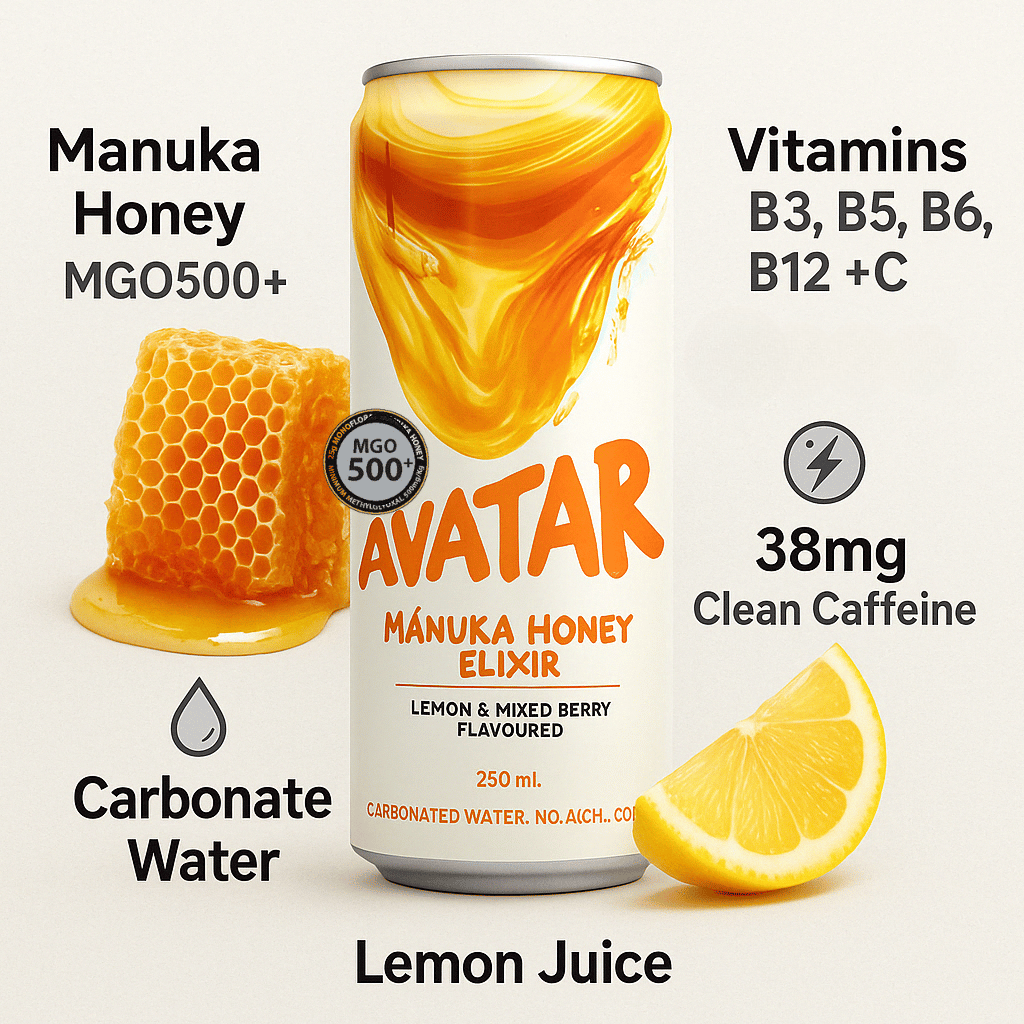
Honey is a good example of why low sugar can make sense in a clean label context. A drink with a small amount of honey may offer sweetness, body, and flavor balance while keeping total sugar lower than a full sugar energy drink. For shoppers who value recognizable ingredients, that can be an understandable tradeoff. The role of honey in energy support is also explored in honey as a pre-workout.
At the same time, honey is still a sugar-containing ingredient. It contributes carbohydrates and calories. A naturally sweetened energy drink is not automatically low in sugar, and a honey-sweetened drink is not automatically the best option for every person. The amount used, the serving size, and the rest of the formula remain important.
Fruit juice and juice concentrates follow a similar pattern. They can sound more familiar than artificial sweeteners, and they may contribute flavor as well as sweetness. But they still add sugar unless used in very small amounts. The clean label value depends on whether the brand clearly explains the sweetener source and does not hide meaningful sugar behind health-oriented language.
What this means when choosing naturally sweetened energy drinks
Naturally sweetened energy drinks are easiest to compare when the label makes three things clear: the sweetener source, the sugar amount per full container, and the role the sweetener plays in taste. When those pieces are visible, low sugar can be a reasonable clean label choice rather than a compromise.
Takeaway: Natural sweeteners can support a cleaner label impression, but only when the amount and serving size are transparent.
Label Transparency Is the Strongest Clean Label Signal
Label transparency is often the most reliable way to compare low sugar and no sugar energy drinks. Front-of-can claims are useful, but the ingredient list and nutrition panel provide the context needed to understand the claim.
A transparent low sugar label usually makes the sweetener source easy to find. It does not rely on vague wording while making the sugar amount hard to interpret. It also aligns the serving size with how the drink is actually consumed.
A transparent no sugar label usually identifies the sweeteners clearly. It does not depend only on the appeal of “zero sugar” while leaving shoppers uncertain about what creates the sweetness. For clean label shoppers, this distinction matters because no sugar and simple ingredients are not the same claim.
A transparent full sugar label can also be clear and honest. Some shoppers may choose full sugar occasionally because they prefer the taste and understand the tradeoff. The issue is not that full sugar is automatically unclear. The issue is whether the label allows an informed comparison against lower sugar alternatives.
Signals that make comparison easier
- Full-container nutrition clarity: The label makes it easy to understand what is consumed if the whole can is finished.
- Named sweeteners: The ingredient list clearly identifies sugar, honey, juice, stevia, monk fruit, sucralose, or other sweeteners used.
- No vague clean label language: Claims such as “natural” or “better-for-you” are supported by a clear ingredient panel.
- Consistent flavor logic: The sweetener source makes sense for the drink’s flavor, such as honey with citrus or juice with fruit-forward profiles.
- Moderate framing: The product does not imply that lower sugar alone makes the drink universally healthier.
Takeaway: The cleanest choice is usually the one with the clearest label, not necessarily the one with the lowest sugar number.
This FAQ clarifies how shoppers often compare low sugar and no sugar energy drinks when "clean label" is the goal. It focuses on sweetener systems, taste, calories, and what label transparency really tells you.
Is a no sugar energy drink automatically a cleaner label choice?
No, no sugar is not automatically "cleaner," because sugar-free formulas still need a sweetness system and that system varies widely. Many no sugar energy drinks use high-intensity sweeteners to replace sugar's taste and mouthfeel. A clean label expectation is often more about recognizable ingredients and clear disclosure than sugar grams alone.
How do low sugar and no sugar energy drinks taste different?
Low sugar energy drinks often taste more "round" or familiar, because small amounts of sugar or natural sweeteners can provide body and reduce aftertaste. No sugar energy drinks may taste very sweet with a lighter mouthfeel, depending on the sweetener used. Taste differences are commonly tied to the sweetener type, not just the sugar number on the label.
What should I compare on labels besides sugar grams?
The most useful comparison looks at the whole formula, not a single sugar claim on the front of the can. When comparing low sugar vs no sugar energy drinks, look for:
- Sweetener type (what creates sweetness, and how many are used)
- Serving size (per can vs per serving can change the picture)
- Calories (no sugar usually lowers calories, but not always to zero)
- Caffeine level and stimulant blend (often a bigger "feel" driver than sweetness)
- Ingredient clarity (plain language and full disclosure of sweeteners)
Why do some clean label energy drinks still include low sugar?
Some clean label energy drinks include low sugar to balance taste and transparency, using a small amount of a familiar sweetener rather than relying entirely on intense sweeteners. In practice, a low sugar approach can make it easier to understand what is sweetening the drink, especially when the label clearly states the source. The key factor is whether the sweetness system feels purposeful and disclosed, not whether it is zero.
How can I judge sweetener transparency in no sugar drinks?
Sweetener transparency comes from specificity, meaning the label should clearly name what sweetens the drink and how it is used. For no sugar energy drinks, it may help to check whether the ingredient list:
- Names each sweetener directly rather than hiding behind vague "flavors" language
- Shows whether there is a blend of sweeteners (common in sugar-free drinks)
- Makes the serving size easy to interpret, especially when a can has multiple servings
How do calories and serving size change the low sugar vs no sugar decision?
Calories and serving size can shift the comparison more than the sugar claim, because "per serving" numbers may not match what people actually drink. No sugar energy drinks often reduce calories, while low sugar options may still be moderate if the can size and sweetener amount are clearly stated. A practical approach is comparing per can totals for sugar and calories when the whole can is typically consumed.
Do honey and other natural sweeteners automatically make an energy drink clean label?
No, "natural sweetener" does not automatically equal clean label, because clean label is usually about the full ingredient system and how clearly it is communicated. Honey, fruit juice, or cane sugar can be used in small amounts to create a more familiar taste, but they still contribute sugar and calories. For shoppers comparing naturally sweetened energy drinks, the most useful signal is clear labeling of the sweetener source and the serving size.
Bottom Line: Which Clean Label Choice Makes More Sense?
Low sugar and no sugar energy drinks can both make sense for clean label shoppers, but for different reasons. No sugar may be the better fit for shoppers who prioritize minimal sugar and lower calorie intake. Low sugar may be the better fit for shoppers who want recognizable sweetness from honey, juice, or another clearly named source while keeping sugar more moderate than a full sugar drink.
The most balanced conclusion is that no sugar is not automatically cleaner, and low sugar is not automatically less disciplined. A no sugar energy drink should be evaluated by what replaces the sugar. A low sugar energy drink should be evaluated by how much sugar it contains, where that sweetness comes from, and whether the serving size is clear.
Full sugar energy drinks remain part of the comparison because they show the tradeoff most clearly: familiar sweetness and fuller taste often come with more sugar. For wellness-focused shoppers, that may make full sugar less suitable as an everyday choice, but not inherently unclear if the label is transparent.
For clean label decision-making, the most useful question is not “low sugar or no sugar?” It is: Does the drink clearly explain how it is sweetened, how much sugar it contains, and what the full serving contributes? When the answer is yes, shoppers can compare energy drinks with more confidence and less reliance on front-label assumptions.