


Key observation: A sustainable honey claim is useful only when it identifies a specific practice or benefit and provides evidence for it. Traceability, hive management, land stewardship, packaging and certification each answer different questions. Bee imagery, New Zealand origin and honey-quality testing do not, by themselves, establish a beverage’s overall environmental performance.
A honey drink can tell a compelling story through its ingredients: mānuka flowers, a beekeeper’s care, honey balanced with citrus, and a connection to a particular landscape. Those details can help explain its character. Environmental claims require a different kind of explanation.
For ingredient-conscious adults, the challenge is separating what a label establishes from what it merely suggests. “Sustainable honey” might refer to how hives are managed, where the honey comes from, habitat protection or packaging. Without a defined scope, shoppers cannot know which meaning applies.
The most useful distinction is between origin, practice and outcome. Origin identifies a source. A practice describes something a producer does. An outcome shows what that activity achieves. Each matters, but none should silently stand in for the others.
1. “Sustainable” needs a specific meaning before it can be assessed
A broad environmental claim can create a larger impression than the evidence supports. The US Federal Trade Commission’s Environmental Claims: Summary of the Green Guides discourages broad, unqualified environmental-benefit claims and calls for clear, specific qualifications.
Although the Green Guides are US marketing guidance, they provide a useful interpretive framework for shoppers: identify exactly what the claim covers. Is it the honey ingredient, the beekeeper’s operations, the can or the finished beverage?
The Guides also address implied claims conveyed through symbols and depictions. That matters for honey products because bees, flowers and green landscapes can suggest environmental benefits without stating them directly. Such imagery may accurately reflect an ingredient’s origin, but it is not evidence of habitat protection or lower environmental impact.
Consider a hypothetical beverage with a documented recycled-content claim for its outer carton. That information could substantiate a packaging statement. It would not establish that its honey production protects native species or that the entire drink is carbon neutral.
What this means when choosing: A narrow claim with clear evidence can be more informative than a sweeping “sustainable” label. Precision is not a weakness. It makes the claimed benefit understandable and open to scrutiny.
2. Traceability establishes provenance, not environmental outcomes
Traceability is the ability to connect a product or ingredient with records of its source and movement through production. For honey, meaningful detail can extend beyond a country name to a beekeeper, apiary site, harvest and processing records.
New Zealand Ministry for Primary Industries honey-export materials describe apiary records and harvest declarations. These illustrate the kinds of records behind provenance, rather than proving how any particular honey beverage is traced. Requirements for exported honey should not automatically be treated as requirements for a formulated drink.
The key distinction is between an origin statement and a documented connection. “New Zealand honey” identifies a country of origin. A connection between a beverage batch and its honey harvest offers more specific accountability. Neither alone establishes how the surrounding land was managed.
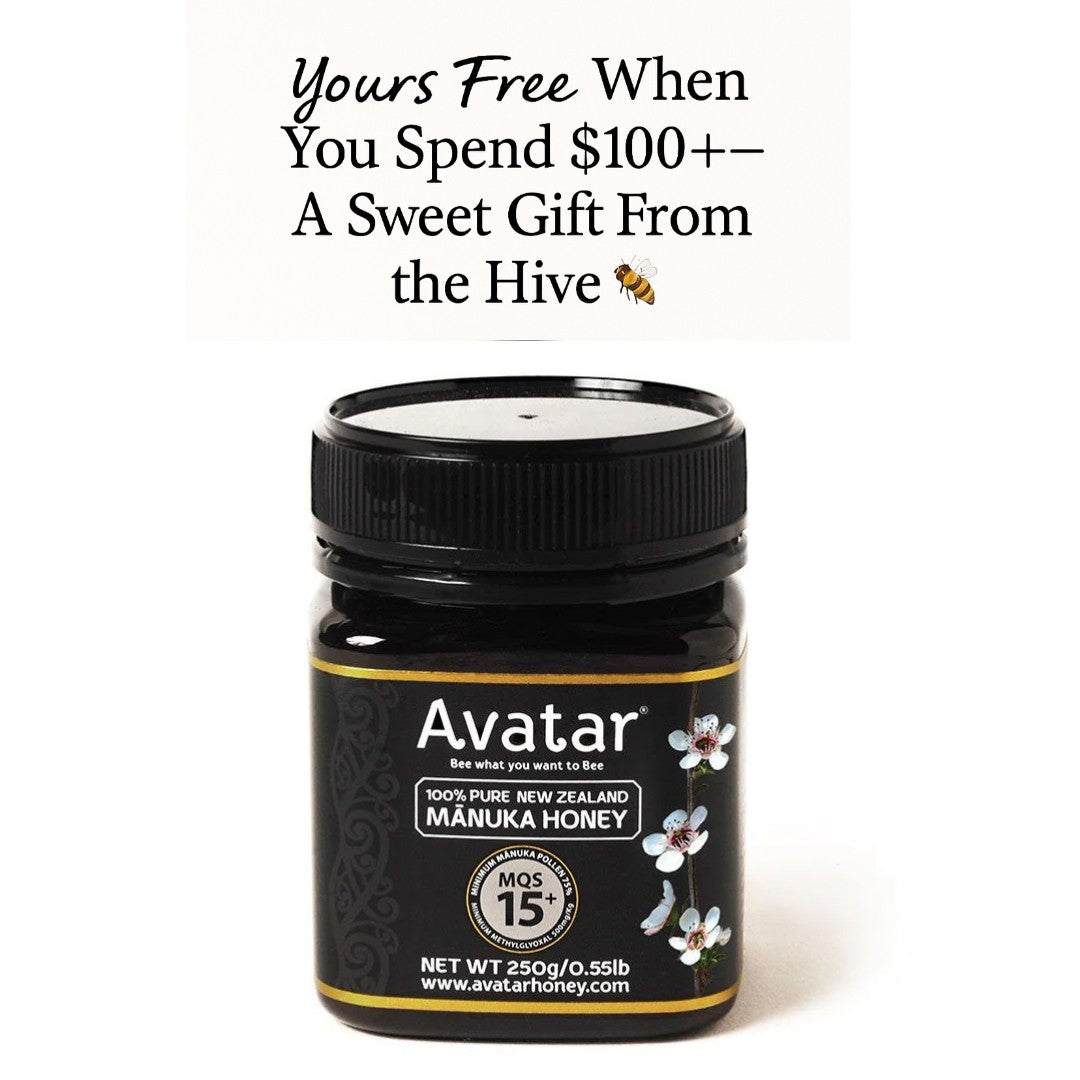
For our Avatar Elixir, Avatar Honey’s beekeeping background and the mānuka honey from our own New Zealand hives provide sourcing context. Our public information identifies Wairarapa. These details give shoppers a concrete starting point for questions, but they are not a substitute for batch-level records or evidence of environmental outcomes.
A useful question is: “Can the honey in this drink batch be connected to harvest and source records?” The answer can clarify provenance without requiring the producer to disclose every commercially sensitive detail.
Traceability also makes other claims easier to investigate. A habitat-protection claim is more meaningful when the relevant source area can be identified. Still, tracing honey to a place and demonstrating a benefit at that place remain separate tasks.
3. Hive management and wild-pollinator conservation are different questions
Managing honey bee colonies does not automatically demonstrate protection of wild pollinators. Colony care concerns managed bees; conservation also concerns native species, their habitats and their interactions with other organisms.
New Zealand’s Department of Conservation, in Honeybees on conservation land, identifies possible competition between introduced honey bees and native flower visitors, alongside pest and disease risks. Its report, Honeybees (Apis mellifera) on public conservation lands: a risk analysis, also acknowledges evidence gaps and circumstances in which honey bees may provide useful pollination services.
That context does not support either of two blanket conclusions: that adding hives necessarily saves wild pollinators, or that every apiary damages biodiversity. It points instead to the importance of location and management. It is ecological context, not evidence about Avatar Honey’s sites.
For a hive-management claim, relevant information could describe:
- Colony health and biosecurity: how health concerns and risks associated with moving bees are managed.
- Hive placement: how site conditions inform where colonies are located.
- Forage availability: how access to food across changing flowering conditions is considered.
These are categories of evidence, not proof that any particular producer follows a specified practice. A statement such as “we care for our bees” communicates an intention. An explanation of management practices gives that intention a clearer basis.
For shoppers, the useful question is not simply how many hives a business keeps. It is: “How are hive health, placement and available forage managed at the sites supplying this honey?”
4. Land stewardship needs evidence about the place and the activity
Honey sourced near native vegetation does not, by itself, establish active land stewardship. A source landscape and a conservation activity are different things.
The Department of Conservation’s risk analysis recommends attention to ecological values, pollinator habitat, continuity of food supply and monitoring of interacting plants and animals. This supports a site-specific approach to understanding environmental claims, rather than assuming one management model produces the same result everywhere.
A hypothetical native-planting claim illustrates the distinction. Records could show what was planted, where, when and who maintains it. Those records would support the claim that planting occurred. A further claim that the planting improved biodiversity would need evidence appropriate to that outcome.
Responsibility also matters. The beekeeper, landowner and another organisation may have different roles. A clear account identifies who carries out the work and how the honey source relates to it. Merely placing hives on land managed by someone else does not establish ownership of every environmental benefit associated with that land.
Terms such as “regenerative” need the same clarity. Without defined practices, geographic scope and evidence, the word leaves too much for the shopper to infer.
A neutral enquiry is: “What land-stewardship activities are documented for the honey’s source areas, and are any outcomes monitored?” Documented action is useful information even where longer-term outcomes remain uncertain. The important point is to describe each honestly, without converting an activity into a guaranteed result.
5. Packaging claims apply to particular materials and disposal systems
“Recyclable” and “made with recycled material” describe different attributes. The FTC’s Green Guides distinguish access to recycling facilities from the recovered material used in manufacture.
Recyclability concerns whether packaging can enter an appropriate recovery system, including whether that system is available. Recycled content concerns what went into making the packaging. Neither statement answers every question about production, transport or disposal.
A honey beverage also has more than one packaging component. The drink container, multipack packaging and shipping materials may have different compositions and disposal routes. A claim about one should not automatically extend to all of them.
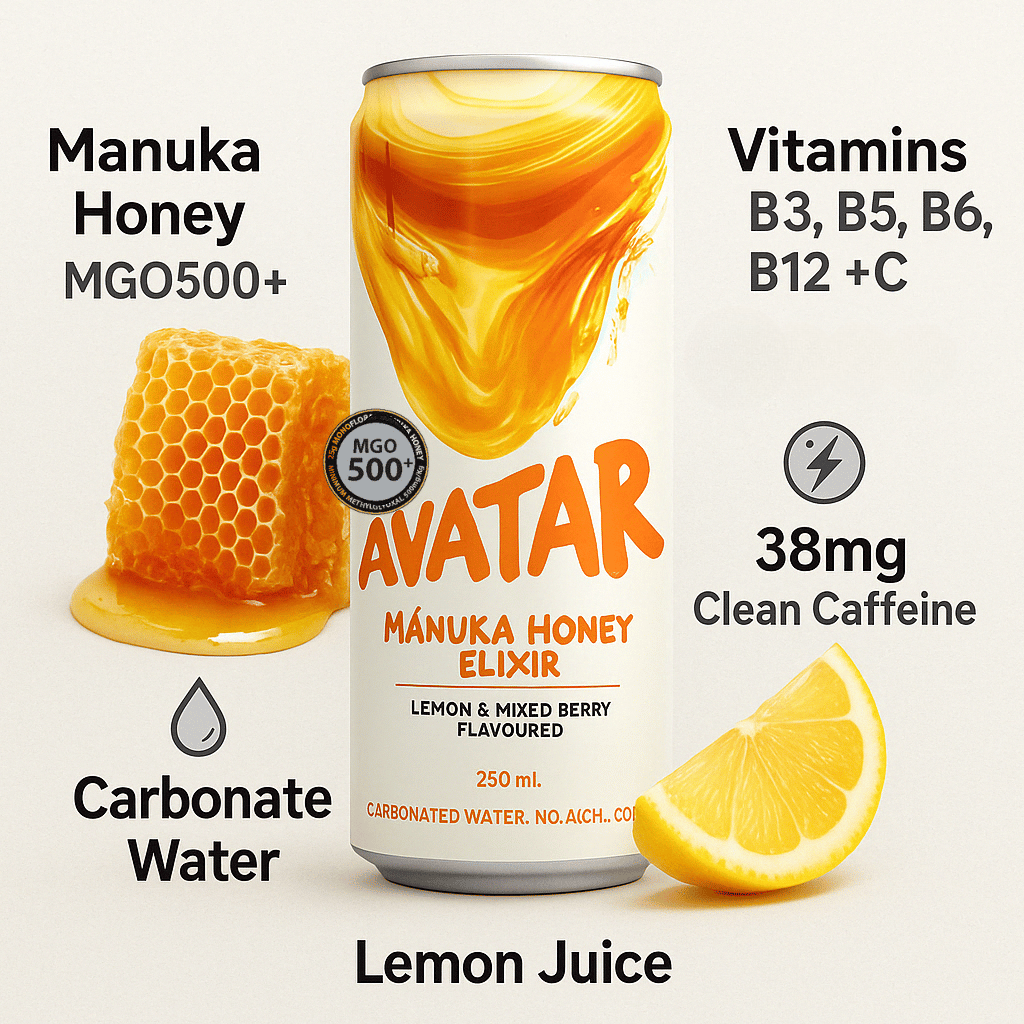
Our Avatar Mānuka Honey Elixir comes in a 250 ml can. That format identifies the container and serving size. It does not establish recycled content, local collection acceptance or an overall environmental advantage over another format.
Useful packaging evidence therefore identifies the component being described, the basis of any recycled-content statement and disposal information relevant to the customer’s location. A recycling instruction that works at the point of sale may not describe the system available where an overseas customer lives.
What this means when comparing drinks: Packaging can contribute to an environmental assessment, but it cannot resolve questions about honey sourcing or land management. Equally, a detailed honey-origin story does not answer questions about the package.
6. Certification tells you only what its scope covers
A certification is informative when its standard, subject and validity are clear. The FTC’s Green Guides explain that seals should communicate their basis, and that third-party certification does not remove the need to substantiate environmental claims.
The central question is what was assessed. Certification might concern an ingredient, a production site, a packaging material or a defined environmental attribute. Those boundaries determine what a shopper can reasonably conclude.
Our Avatar Elixir is made with certified MGO500+ mānuka honey. MGO refers to methylglyoxal content, as explained in our FAQ. That ingredient specification is not an environmental certification, and it does not assess the beverage’s full supply chain.
Recognition has boundaries too. Avatar Mānuka Honey Elixir, Lemon & Mixed Berry Flavoured, won the Beverage Award at the 2023 New Zealand Food Awards, as confirmed by awards organiser Massey University. That recognition should not be interpreted as proof of organic status, carbon neutrality or a particular conservation programme.
Our beekeeping background, New Zealand origin and MGO500+ honey ingredient provide meaningful product context. They should not be read as claims of organic or regenerative practices, carbon neutrality or specific conservation outcomes.
For an environmental certification claim, a useful question is: “Which standard applies, what product or activity does it cover, and what are its validity dates?” A recognisable logo can draw attention to a claim, but its defined scope gives the claim meaning.
If you would like clarification about our honey sourcing or environmental language, you can send a neutral question through Contact Us. Asking about a batch’s source records, a stated management practice or a particular packaging component is more precise than asking only whether a drink is sustainable. A contact route allows that conversation; it is not itself proof that a particular record or certification exists.
The strongest sustainable honey claims do not ask shoppers to fill in the gaps with a picture of a bee. They explain what is being claimed, where it applies and what supports it. That is the difference between an appealing environmental impression and information you can use.
These follow-up questions help you compare honey beverages and interpret gaps in environmental information.
Does missing environmental information mean a honey drink is unsustainable?
Missing information means the environmental claim cannot be assessed from that information alone, not that poor practices have been established. A producer may have records that are not published. The useful distinction is between an unsupported claim, an unanswered question and evidence of a particular environmental impact.
How can I compare drinks that highlight different environmental benefits?
Different benefits do not provide a like-for-like environmental ranking. One drink might document honey provenance while another specifies recycled content in its packaging. Each answers a separate question. A meaningful comparison needs evidence about the same attribute, covering comparable parts of each product, rather than treating either detail as proof of overall superiority.
Does a future environmental commitment count as evidence of progress?
A future commitment describes an intention, not completed progress. Evidence of progress would identify actions already taken and their relationship to the stated goal. Even then, a documented activity, such as planting native vegetation, does not automatically demonstrate a biodiversity improvement. The wording should distinguish the commitment, the work completed and any measured outcome.
What details should I include when asking about our drink's sourcing?
A useful enquiry identifies the drink, the claim you want clarified and any batch information available to you. For Avatar Elixir, you could ask through Contact Us whether source records relate to the honey in your particular purchase or to sourcing more generally. This makes the scope of the answer clearer without assuming that particular records are available.