


In a non-alcoholic drink description, “dry” usually suggests a less-sweet taste or finish, not necessarily little or no sugar. It is a sensory cue: a way of describing the impression a drink leaves. It is not, by itself, a complete nutritional description.
That distinction matters when you are choosing an alcohol-free drink or mixer online. A dry-tasting drink can contain sugar, while a sugar-free drink can taste sweet if it contains other sweeteners. Use the flavour description to understand the intended style, and the nutrition information to check the sugar content.
Is dry the same as bitter, acidic or astringent?
No. These words describe different aspects of drinking, although several can apply to the same drink. In particular, tasting less sweet and making your mouth feel dry are not the same thing.
- Perceived sweetness is how sweet a drink tastes to you. It describes your experience of the whole drink, rather than a measured amount of sugar.
- Bitterness is a distinct taste, familiar from tonic water or black coffee. A drink can be both sweet and bitter, so “bitter” does not mean “unsweetened”.
- Acidity contributes sourness or tartness, such as the sharpness associated with lemon juice. Tartness is different from bitterness, and a tart drink can still contain sugar.
- Astringency is a drying, rough or puckering sensation in the mouth, familiar from strongly brewed tea. It concerns mouthfeel, not simply how sweet something tastes.
“Dry” needs a little more interpretation. In a phrase such as “dry citrus mixer”, it generally points towards restrained sweetness. In “a drying sensation”, the writer may instead be describing astringency. The surrounding words help you tell which meaning is intended.
How should you read dry on an online menu?
Read “dry” alongside the other flavour words, rather than letting it stand in for the entire description. “Dry and bitter”, for example, gives you two separate clues, not two ways of saying the same thing.
These short menu descriptions are invented illustrations, not descriptions of actual products:
| Illustrative menu description | How to interpret it |
|---|---|
| “Dry grapefruit spritz with a bitter finish.” | Suggests restrained sweetness alongside a distinct bitter note. Neither word gives you the sugar content. |
| “Ginger mixer, lightly sweetened, with a dry finish.” | Describes some sweetness but a less-sweet lingering impression. “Lightly sweetened” still does not tell you the grams of sugar. |
| “Tea-based aperitif with a drying finish.” | May be describing astringent mouthfeel rather than low sweetness. It is worth looking for more detail about the taste. |
The useful question is: does the description tell you about sweetness, a particular taste, or texture? None of those, alone, answers a nutritional question.
What can Avatar Elixir’s ingredients tell you separately?
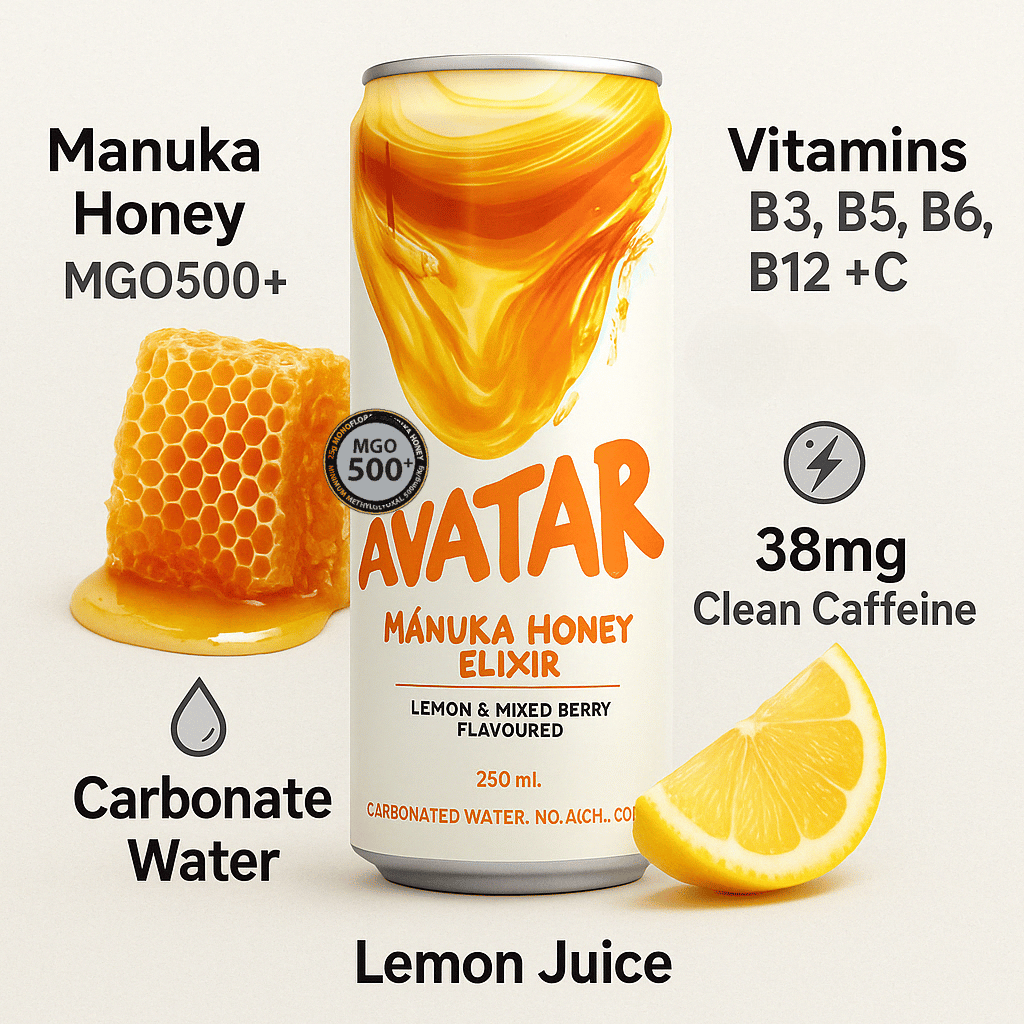
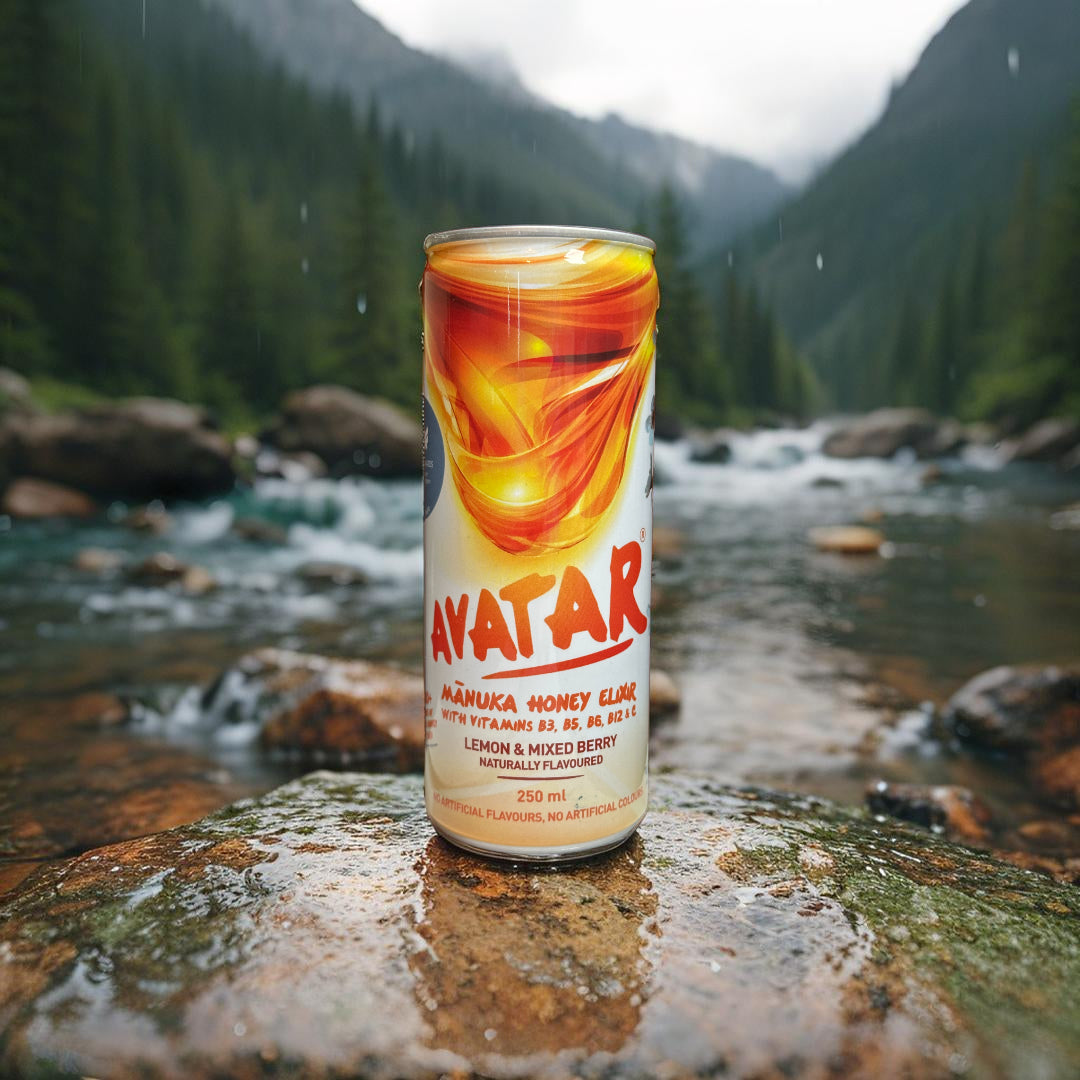
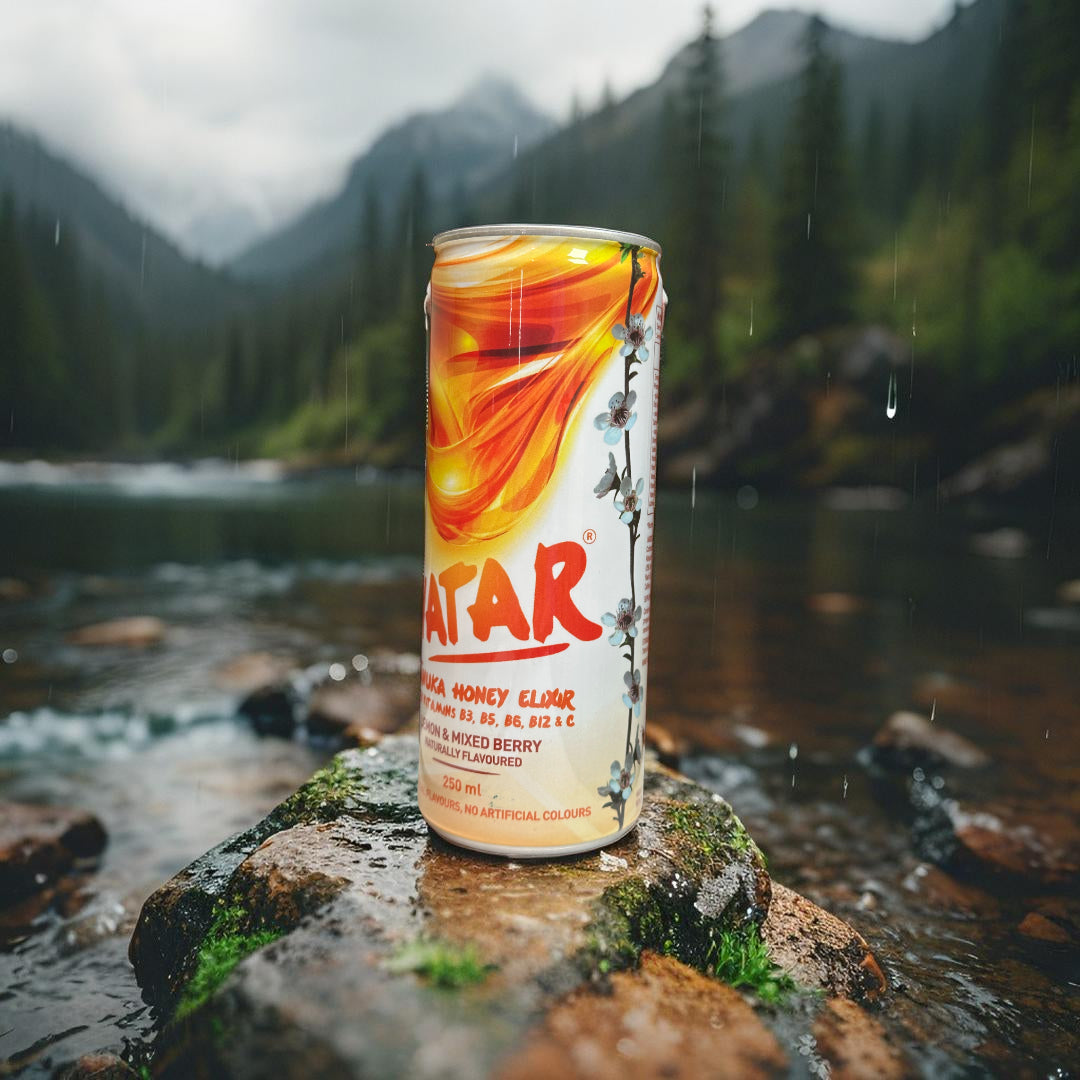
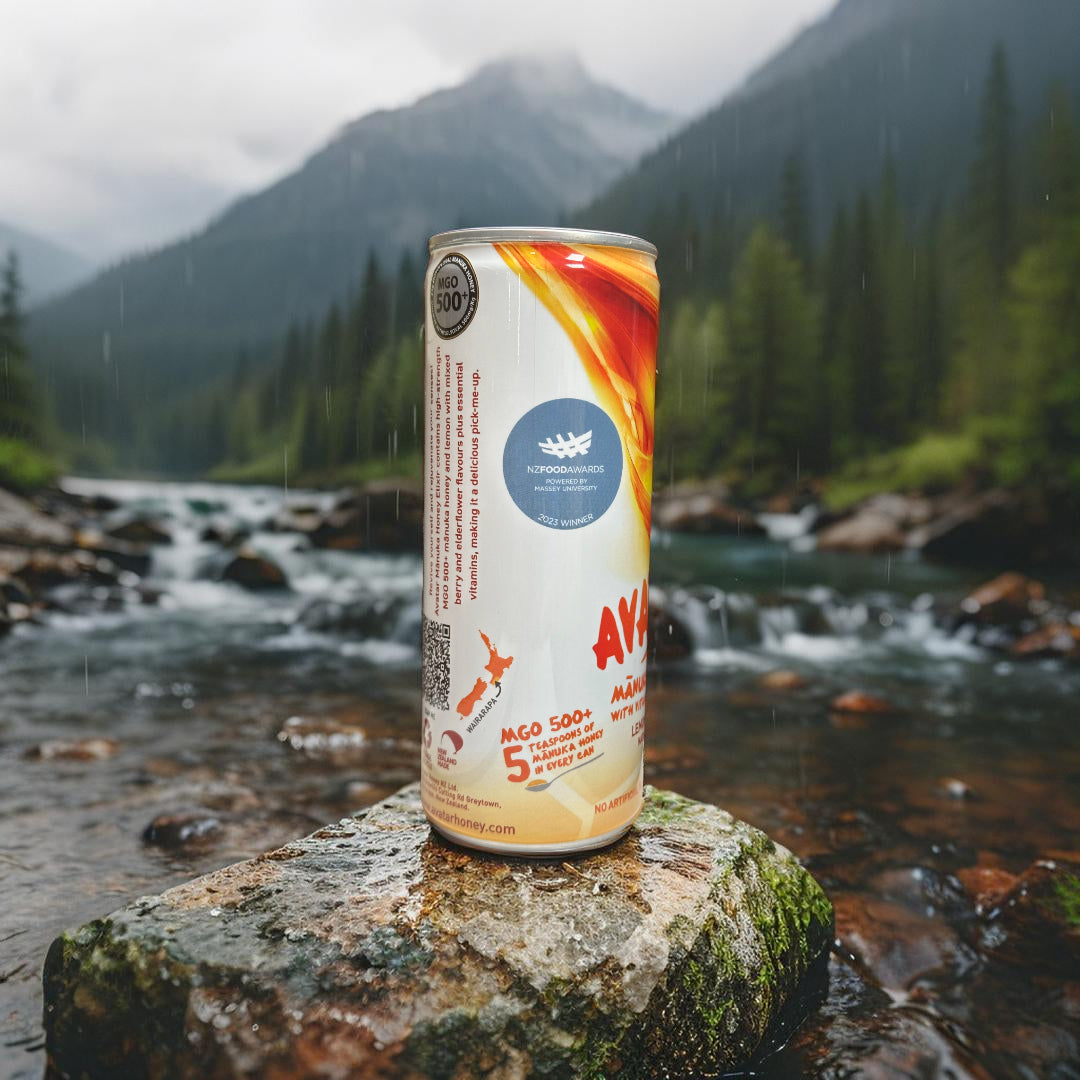
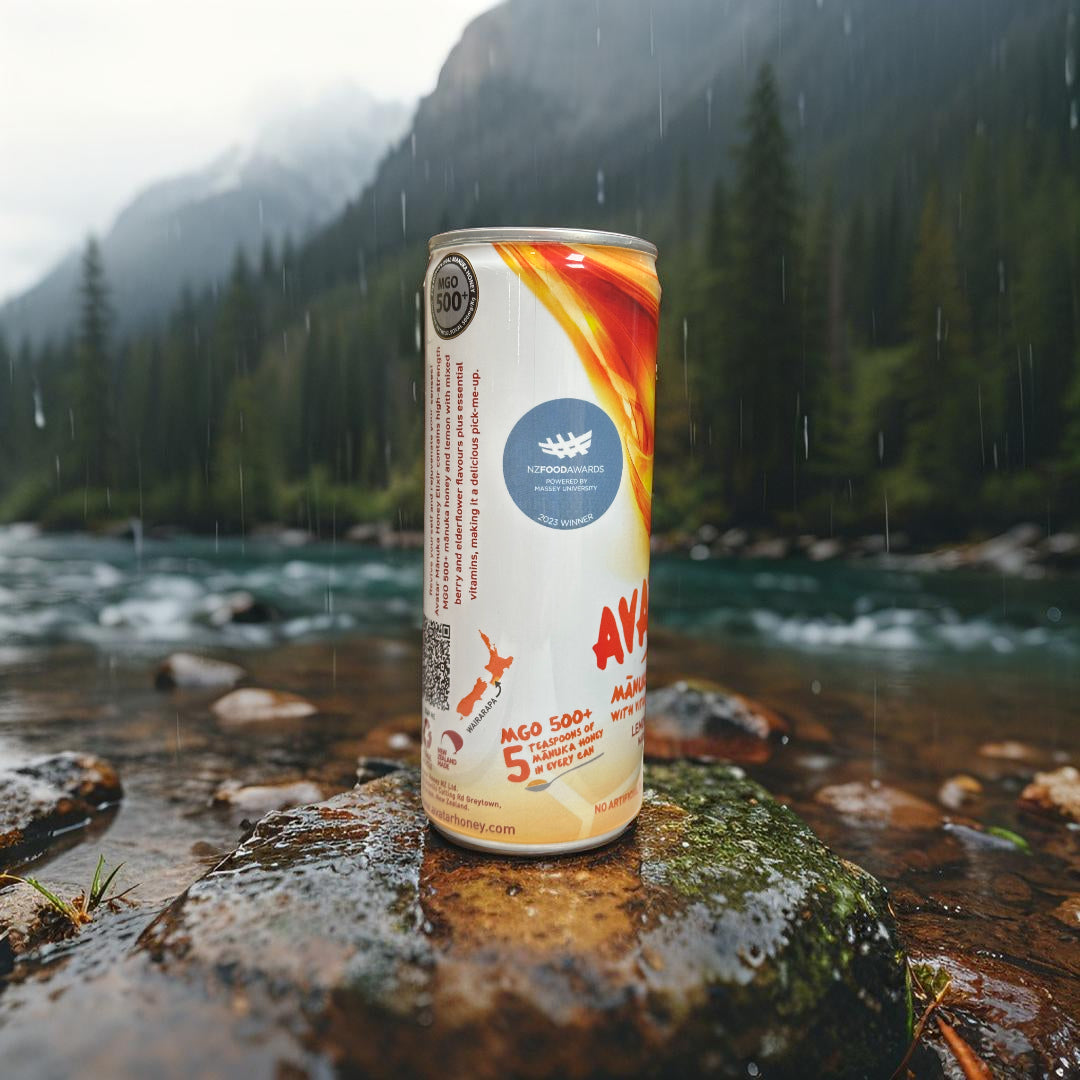
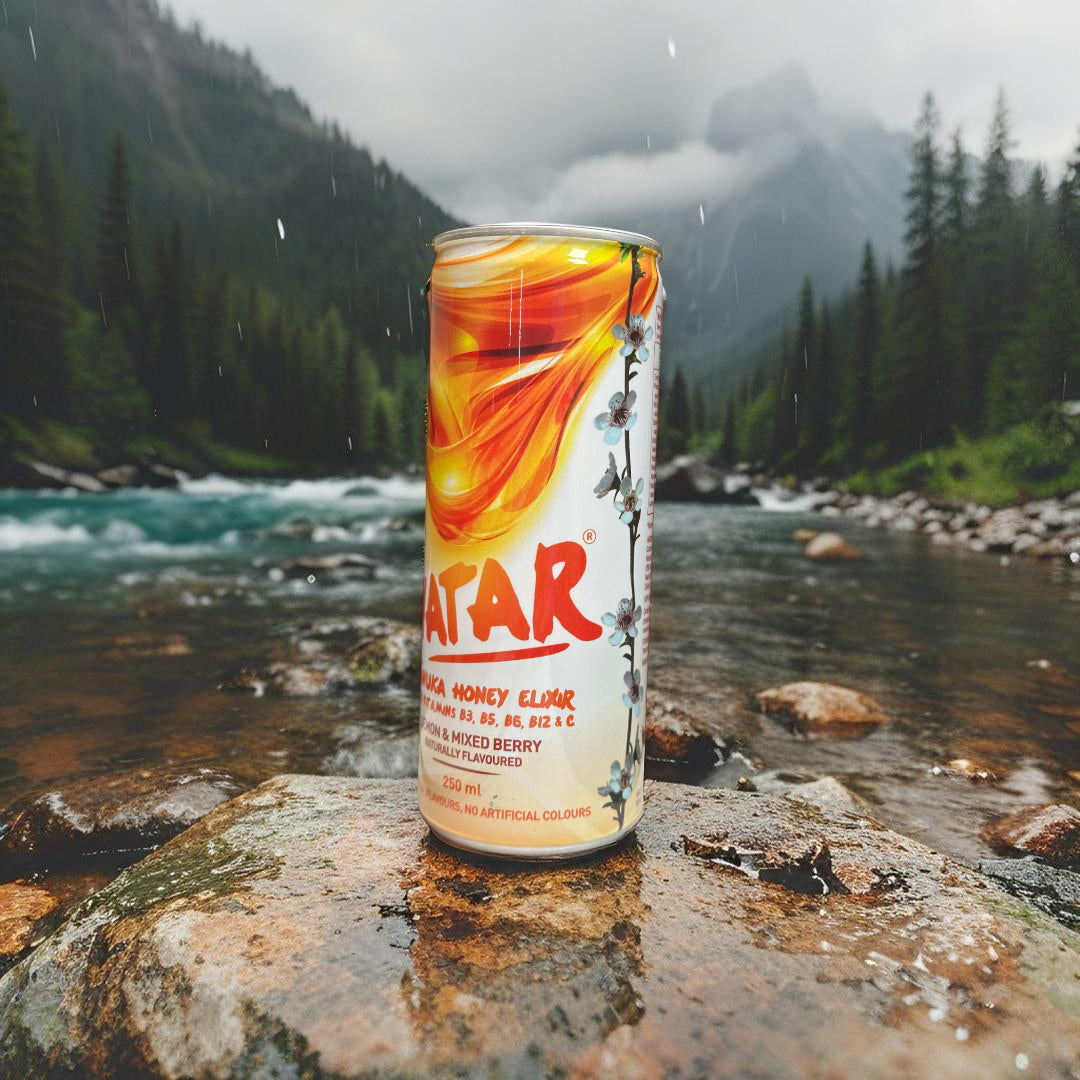
Our Avatar Elixir provides an ingredient-led example: MGO500+ Mānuka honey, lemon, elderflower and light carbonation describe different parts of the drink, rather than establishing a “dry” profile.
- Mānuka honey is a sweetening ingredient and contributes sugar.
- Lemon identifies a citrus ingredient, but does not tell you how tart the finished drink will taste to you.
- Elderflower points to a floral flavour note, not a sugar level.
- Light carbonation describes the bubbles, rather than the amount of sweetness.
Even when other flavours balance sweetness, the sugar contributed by honey is still present. A description of flavour balance cannot replace the nutrition information or tell you exactly how sweet you will find the drink.
There is another separate distinction to keep in mind: Avatar Elixir is alcohol-free and contains caffeine. Alcohol-free does not mean caffeine-free, just as dry does not mean sugar-free.
What should you check before choosing a dry-style drink?
Check the information that answers your actual preference: tasting notes for style, nutrition information for sugar, and ingredients for what goes into the drink.
- If you want less sweetness: look for fuller descriptions alongside “dry”. Bitter, tart, floral and astringent each suggest something different.
- If sugar content matters: compare the stated sugar amounts on the same volume basis, then check the serving you intend to drink. On a US Nutrition Facts label, look at Total Sugars and Includes Added Sugars.
- If the listing only offers tasting notes: ask for the nutrition label rather than estimating sugar content from words such as “dry”, “crisp” or “refreshing”.
One extra detail to check when choosing a mixer online.
Does a dry mixer mean the finished drink will taste dry?
Not necessarily. A mixer’s tasting notes describe the mixer, not every drink made with it. Other ingredients and their proportions affect the finished drink’s sweetness and overall flavour. When reading an online menu, check whether “dry” describes the mixer on its own or the complete alcohol-free serve.