


Quick answer: Describe a honey, citrus, elderflower, or sparkling drink by separating what you smell, taste, and feel. Useful terms include floral, citrusy, bright, rounded, dry, crisp, gently fizzy, full-bodied, balanced, and lingering. Choose words that report your own observation rather than flavours you think you are supposed to find.
You do not need professional training to describe a drink clearly. A practical flavour vocabulary simply helps you turn reactions such as “refreshing,” “too sweet,” or “interesting” into more specific observations.
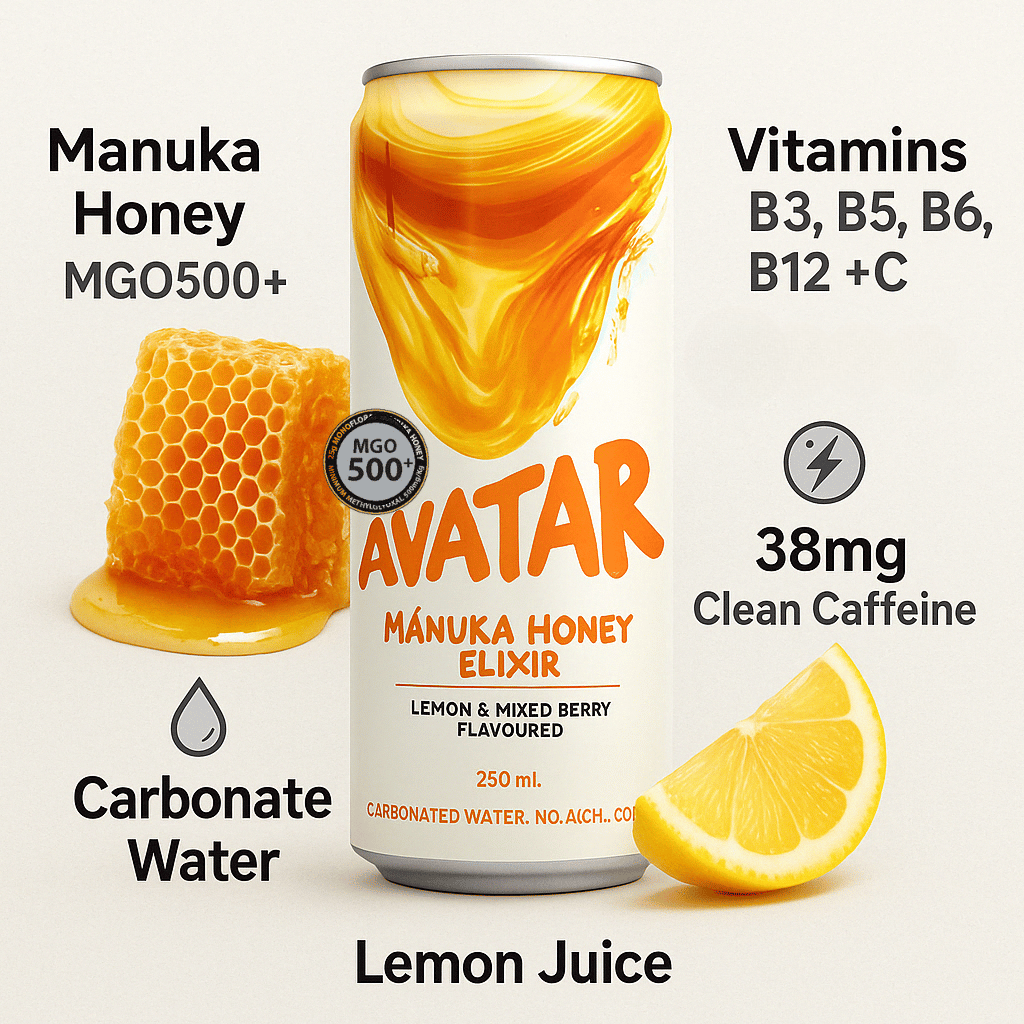
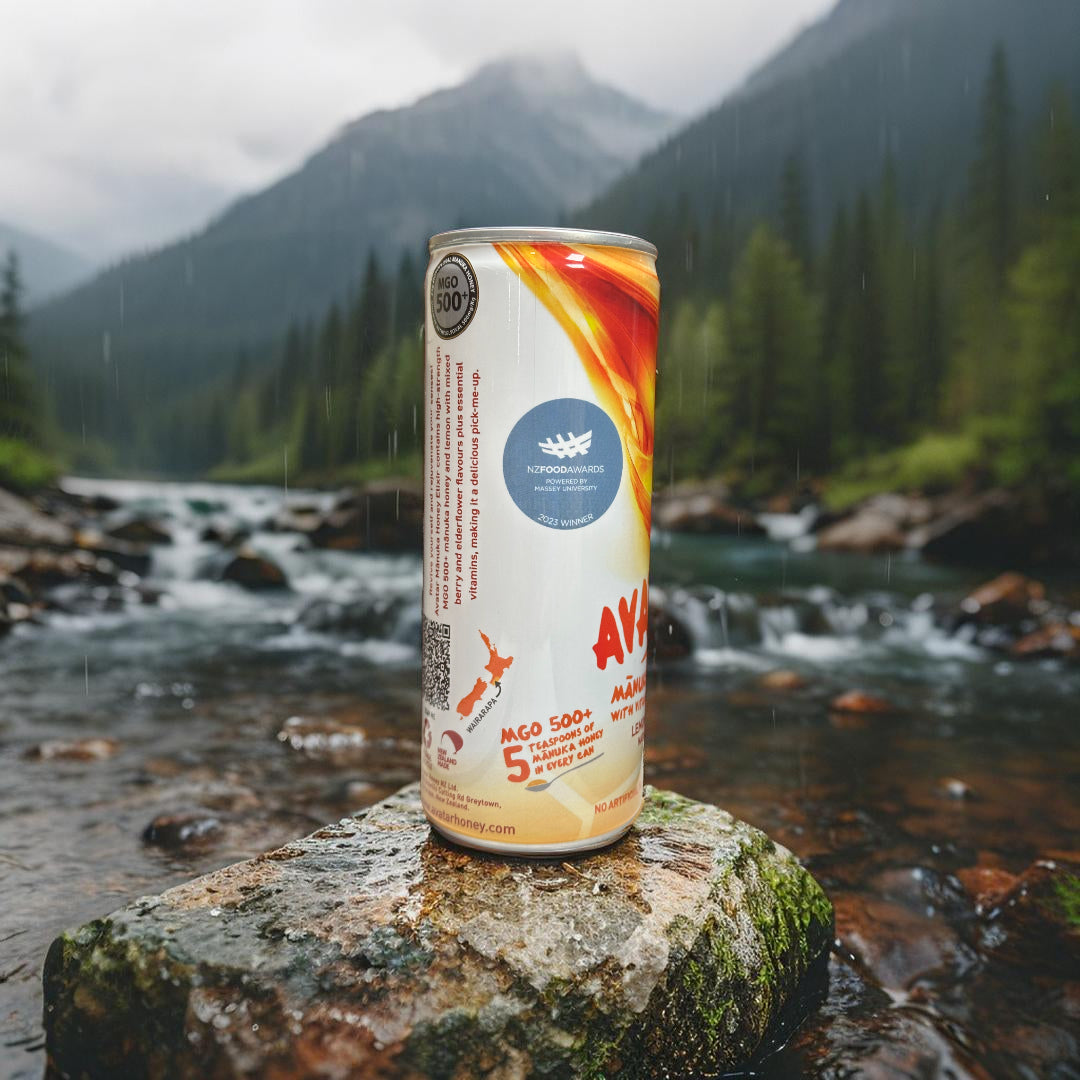
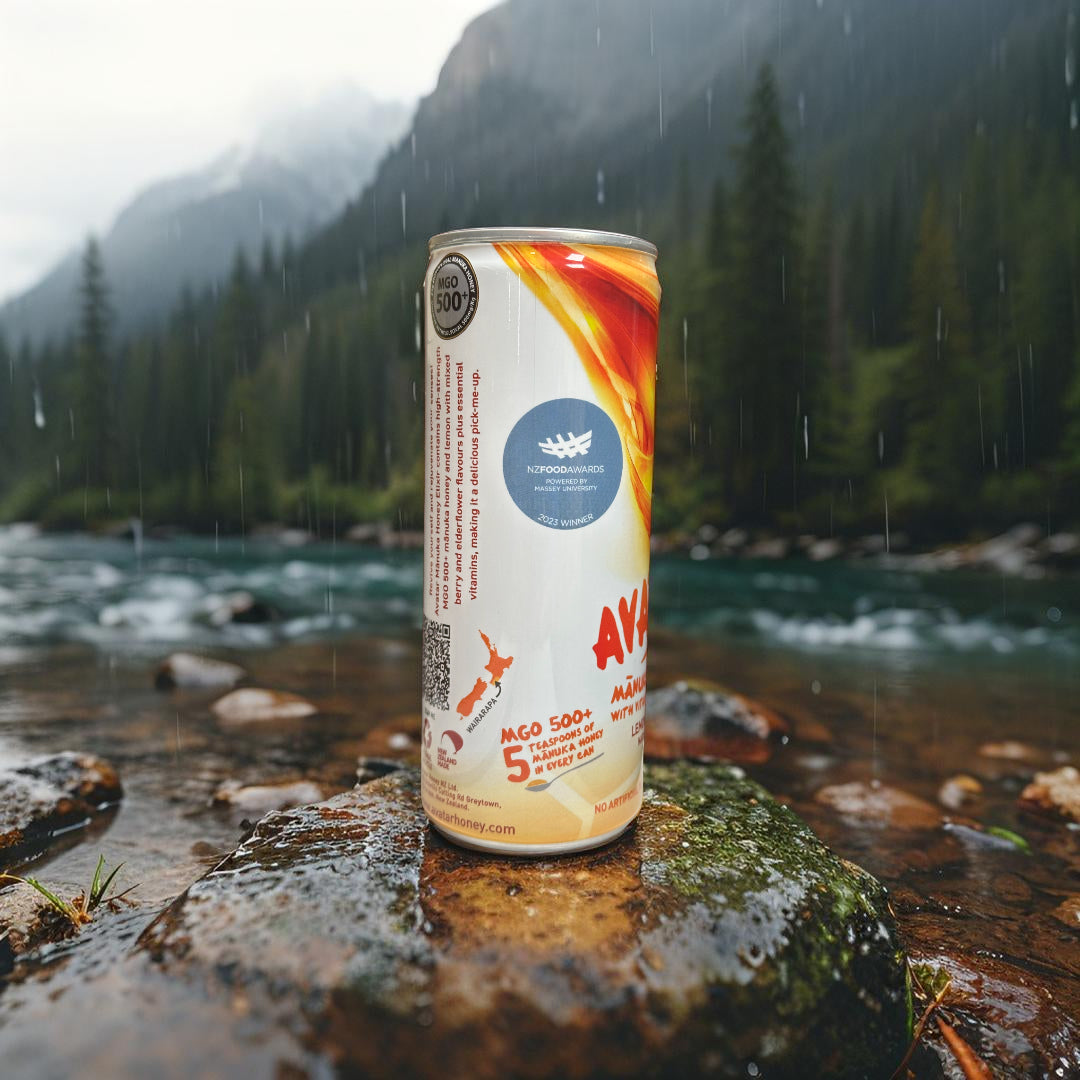
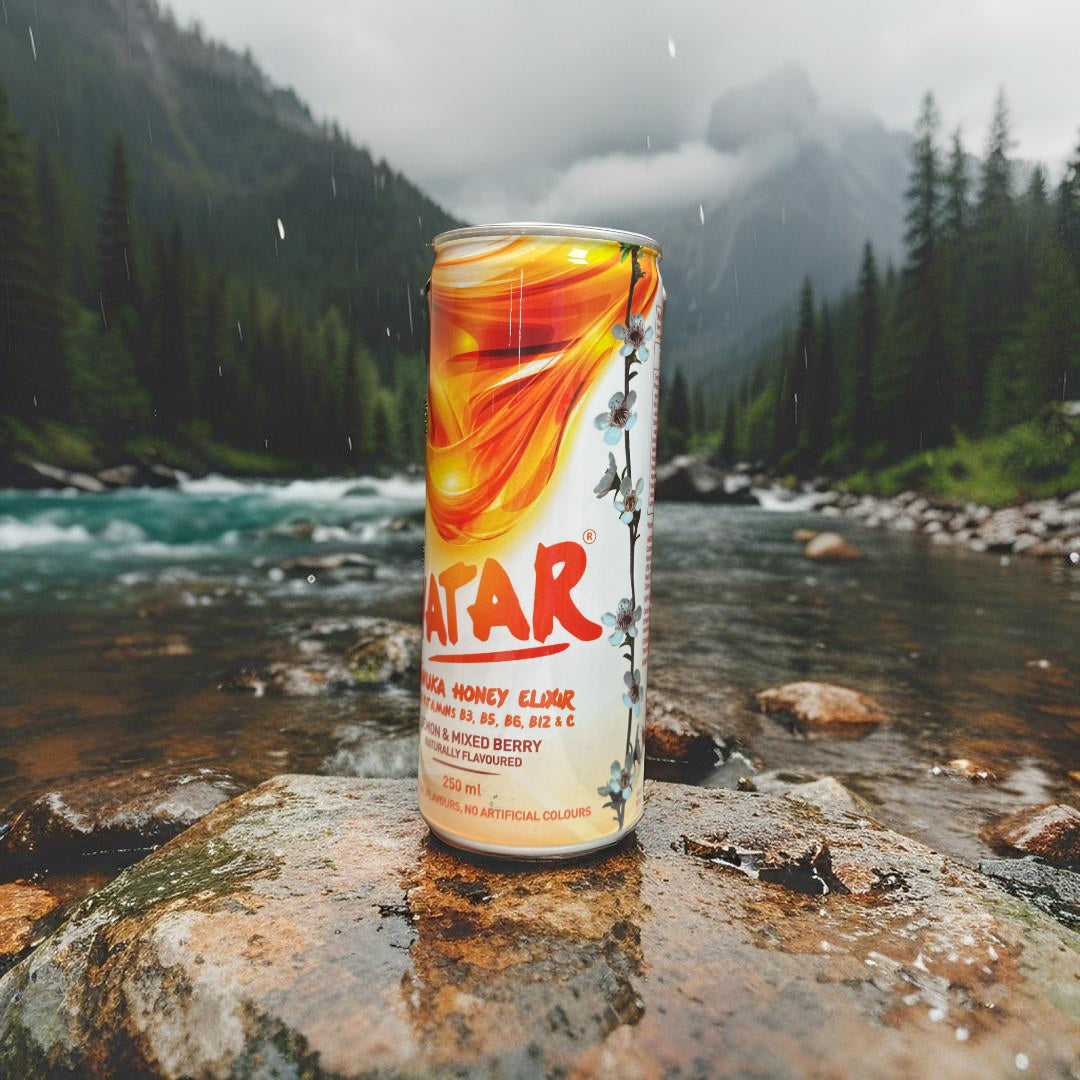
The key is to assess one feature at a time. Notice the aroma before considering sweetness, then separate acidity from bitterness, carbonation from body, and immediate flavour from the finish. You can practise with any honey, citrus, elderflower, or sparkling beverage. Avatar Elixir is one useful example because it brings together certified MGO500+ Manuka honey, lemon, elderflower, and lightly carbonated water, but every person may describe that combination differently.
A simple three-pass tasting method
A structured tasting does not require special glassware or a complicated scoring system. Pour the drink into a clean glass if you want to see the bubbles and release more aroma. Taste it at the temperature at which you would normally enjoy it, while remembering that a very cold drink can make aroma and sweetness seem less obvious.
- Smell: Bring the glass close without swirling aggressively. Note how strong the aroma is and whether it seems citrusy, floral, honeyed, fresh, delicate, or difficult to identify.
- First sip: Take a moderate sip and let it move across your mouth. Notice sweetness, acidity, bitterness, carbonation, and body before trying to name individual flavours.
- Finish: After swallowing, observe what remains. Record how long the impression lasts, whether it changes, and whether your mouth feels refreshed, coated, dry, or ready for another sip.
There is no required tasting note. If you smell elderflower but another person notices lemon first, both observations can be useful. The goal is accurate personal description, not agreement.
Aroma vocabulary: what you notice before sipping
Aroma is the smell that rises from the drink. It shapes flavour perception, so a beverage may appear more citrusy or floral even before it reaches your tongue.
- Delicate: Quiet and easy to miss. Ask whether you need to bring the glass closer to detect the aroma.
- Pronounced: Easy to notice immediately. Observe whether the aroma reaches you as soon as the drink is poured.
- Fresh: Clear and lively rather than dull or stale. Consider whether the aroma reminds you of recently cut citrus, flowers, or opened honey without forcing a precise comparison.
- Citrusy: Suggestive of citrus peel, juice, or zest. Note whether the general citrus character is more obvious than a specific fruit.
- Honeyed: Reminiscent of honey in aroma or warmth. This does not necessarily mean the drink tastes very sweet.
- Floral: Suggestive of blossoms or a light botanical aroma. Observe whether it feels gentle and integrated.
- Perfumed: Strongly aromatic in a way that may seem concentrated or fragrance-like. Use this when the floral impression sits above the drink rather than blending into it.
Floral versus perfumed is a useful contrast. Floral generally describes a blossom-like quality, while perfumed suggests that the aromatic character is more forceful or fragrance-led. Neither term is automatically praise or criticism. The distinction records intensity and integration.
Sweetness, acidity, and bitterness
Sweetness, acidity, and bitterness are separate taste dimensions. Identifying them individually makes your description more useful than calling a drink simply “nice” or “strong.”
Words for sweetness
- Lightly sweet: Sweetness is present but does not dominate the sip. Ask whether other elements remain easy to notice.
- Rounded: Sweetness softens sharper edges and gives the flavour a smooth contour. Notice whether the sip feels complete without becoming weighty.
- Rich: Sweetness appears concentrated or substantial. Observe whether it carries depth as well as sugar-like intensity.
- Heavy: Sweetness or body feels weighty and may linger as a coating sensation. Consider whether it reduces your desire for another sip.
- Dry: The drink leaves relatively little impression of sweetness, especially near the finish. Dry does not mean the beverage contains no sugar.
Rounded versus heavy separates shape from weight. A rounded drink can feel smooth and well connected while remaining lively. A heavy drink occupies more of the palate or leaves a stronger coating sensation.
Words for acidity
- Bright: Acidity makes the flavour feel lively and clearly defined. Notice whether it lifts the sip without causing discomfort.
- Tangy: Acidity is easy to identify and creates a mouth-watering effect. Ask whether this sensation is playful and noticeable rather than severe.
- Tart: The acidic character is firm and may briefly tighten the mouth. Observe where that tightening occurs.
- Sour: Acidity dominates or feels more intense than you prefer. Use this as a direct sensory observation, not as a synonym for all citrus flavour.
- Soft: Acidity is restrained and has gently defined edges.
Bright versus sour is especially helpful when tasting lemon drinks. Bright describes the lift and clarity acidity can provide. Sour describes intensity, usually when acidity becomes the main impression. A citrus drink can taste bright without tasting sour.
Words for bitterness
- Subtle: Bitterness is detectable but remains in the background.
- Pithy: Bitterness resembles the impression associated with the white pith beneath citrus peel. Ask whether it appears beside the citrus character.
- Clean: Bitterness arrives clearly and then leaves without becoming rough or distracting.
- Firm: Bitterness has a defined presence and helps counter sweetness.
- Lingering: Bitterness remains after other flavours have faded.
Bitterness is not automatically a flaw. In a honey and citrus drink, a small bitter edge may provide contrast. The practical question is whether it supports the other elements or takes over the finish.
Floral and elderflower vocabulary
Floral character describes blossom-like aroma or flavour. Elderflower is often used to bring an aromatic botanical dimension to drinks, but you do not need to identify a particular flower to describe what you perceive.
- Blossom-like: Suggestive of fresh flowers without naming a specific variety.
- Airy: Floral character feels light and does not add much apparent weight.
- Fragrant: The floral aroma is clear and readily noticeable.
- Botanical: Reminiscent of plant material, herbs, flowers, or stems rather than fruit alone.
- Integrated: Floral character blends with the honey, citrus, or other ingredients instead of standing apart.
- Dominant: Floral character becomes the main feature of the sip.
To assess elderflower character, first ask whether you notice anything floral. Then consider its intensity and relationship to the rest of the drink. “Delicate, floral, and integrated” communicates more than claiming an exact flower that you cannot confidently identify.
Honey character beyond sweetness
Honey character is not the same thing as sweetness. Honey can contribute aroma, flavour depth, texture, and a lasting impression. The type of honey and the complete drink recipe can influence how readily those qualities are noticed.
- Honeyed: A recognisable honey-like aroma or flavour is present.
- Warm: The honey character feels mellow or rounded rather than sharp. This describes flavour, not serving temperature.
- Deep: The impression has more weight or complexity than simple sweetness.
- Earthy: The flavour suggests soil, wood, or dried plant material rather than flowers or fresh fruit.
- Caramel-like: The sweetness seems browned or cooked rather than fresh and sugar-like.
- Clean: The honey impression is distinct without leaving a muddled aftertaste.
When practising with Avatar Elixir, begin with a neutral question: “Can I distinguish a honey character from general sweetness?” Its MGO500+ Manuka honey is a known ingredient, but that does not require every taster to perceive the same aroma, intensity, or flavour comparison.
Carbonation vocabulary: describing the fizz
Carbonation is the sensation created by bubbles in a drink. Describe both bubble intensity and texture, since two drinks can be equally sparkling while feeling quite different in the mouth.
- Lightly carbonated: Bubbles are present but gentle, with limited prickling.
- Fine: The bubbles feel small and closely textured.
- Soft: Carbonation adds lift without a sharp bite.
- Crisp: Bubbles create a clean, refreshing edge and then settle readily.
- Lively: Carbonation is energetic and easy to notice throughout the sip.
- Prickly: Individual bubbles create a distinct tingling sensation.
- Aggressively fizzy: Carbonation dominates the first sip or makes other flavours harder to assess.
- Flat: Little carbonation remains, whether by design or because the drink has been open.
Crisp versus aggressively fizzy distinguishes refreshment from force. Crisp carbonation gives the drink definition. Aggressive fizz occupies more attention and may obscure aroma, sweetness, or body until the bubbles settle.
Body, balance, and finish
Body is how light or substantial a drink feels in your mouth. It is a texture judgment, not a measure of flavour quality.
- Light-bodied: The drink moves quickly across the palate and leaves little coating sensation.
- Silky: The texture feels smooth and continuous.
- Rounded: The drink has smooth edges and moderate presence.
- Full-bodied: The drink feels substantial and occupies the palate for longer.
- Coating: A noticeable layer or texture remains after swallowing.
Balance describes how the main elements relate to one another. A balanced drink does not have to contain equal sweetness, acidity, bitterness, floral character, and carbonation. It means the elements feel proportionate for that particular style.
- Balanced: No element distracts from the whole.
- Sweet-led: Sweetness is the first or strongest structural feature.
- Acid-led: Brightness or tartness provides the main shape.
- Aroma-led: Floral, citrus, or honey aromas make the strongest impression.
- Well integrated: Individual elements are identifiable but connect smoothly.
- Contrasting: Opposing elements, such as sweetness and bitterness, remain distinct in an appealing way.
Finish is what you notice after swallowing. A finish can be short or lingering, clean or coating, and consistent or changing.
- Short: Most flavour disappears quickly.
- Clean: The flavour ends clearly without an unwanted residue.
- Refreshing: The finish leaves your mouth feeling ready for another sip.
- Lingering: One or more impressions remain for a noticeable period.
- Evolving: The dominant impression changes after swallowing, perhaps from sweet to citrusy or floral to bitter.
- Drying: The finish reduces the sense of moisture in the mouth.
A printable tasting grid
Use this grid to capture short observations rather than writing a polished review. One or two words in each row are enough. Leave a row blank if you do not notice that feature.
| Feature | Questions to ask | Your observation |
|---|---|---|
| Aroma | Delicate or pronounced? Citrus, floral, honeyed, or botanical? | ____________________ |
| Sweetness | Light, rounded, rich, heavy, or dry? | ____________________ |
| Acidity | Soft, bright, tangy, tart, or sour? | ____________________ |
| Bitterness | Absent, subtle, pithy, firm, or lingering? | ____________________ |
| Floral character | Airy, fragrant, integrated, perfumed, or dominant? | ____________________ |
| Honey character | Honeyed, warm, deep, earthy, or difficult to detect? | ____________________ |
| Carbonation | Soft, fine, crisp, lively, prickly, or forceful? | ____________________ |
| Body | Light, silky, rounded, full, or coating? | ____________________ |
| Balance | Which element leads? Do the parts feel integrated? | ____________________ |
| Finish | Short, clean, refreshing, lingering, or evolving? | ____________________ |
How to make your tasting notes more precise
Useful tasting notes separate observation from judgment. “Pronounced floral aroma, bright acidity, and soft fizz” tells you what happened. “Good” or “bad” tells you only whether the taster liked it.
- Start broad: Identify sweetness, acidity, bitterness, aroma, and texture before naming a specific flavour.
- Use contrasts: Decide whether the citrus is bright or sour, the sweetness rounded or heavy, and the fizz crisp or aggressive.
- Record intensity: Words such as delicate, moderate, pronounced, and dominant make basic descriptions more informative.
- Avoid borrowed notes: Do not write “caramel-like” or “earthy” simply because someone else used those terms.
- Retaste after a pause: A second sip may feel different once the initial chill and carbonation have settled.
- Allow uncertainty: “Floral, but difficult to identify” is a valid and precise note.
A strong description might read: delicate citrus aroma, rounded sweetness, bright acidity, fine carbonation, light body, and a clean finish. That is a vocabulary example, not a prescribed description of Avatar Elixir or any other drink.
Build a vocabulary that sounds like you
The best flavour vocabulary is specific enough to be useful and flexible enough to reflect your experience. Smell first, assess the first sip by structure and texture, then notice what remains in the finish. With repetition, you will become better at explaining not only whether you enjoy a drink, but why.
For honey, lemon, elderflower, and sparkling drinks, begin with a small set of contrasts: floral or perfumed, bright or sour, rounded or heavy, crisp or aggressively fizzy. Add terms only when they match a real observation. Clear tasting language is not about finding the “correct” answer. It is about paying attention and describing the glass in front of you.
These practical follow-ups help you compare drinks consistently and apply sensory language in everyday settings.
How can I compare two sparkling drinks fairly?
Serve both drinks at a similar temperature and use clean glasses of the same type. Take small alternating sips, pause briefly between them, and record each drink separately before deciding which you prefer. Compare specific features such as aroma intensity, acidity, bubble texture, body, and finish rather than judging the drinks only as a whole.
Should I taste a drink from the can or a glass?
A glass usually makes aroma and carbonation easier to assess because more of the drink is exposed to the air. Tasting from the original container is still useful when that is how you normally enjoy it. For a detailed note, try both and record whether the container changes what you notice.
Can tasting notes change as a drink warms or loses fizz?
Yes, temperature and carbonation can change which features attract your attention. A very cold drink may seem less aromatic, while softer carbonation can make sweetness, acidity, bitterness, and body easier to separate. Record the stage you are tasting, such as freshly poured, slightly warmer, or after the bubbles have settled.
How can I use this vocabulary when choosing a mixer?
Taste the mixer on its own first and identify what it is likely to contribute, such as bright acidity, rounded sweetness, floral aroma, or crisp carbonation. Then consider whether those features complement or compete with the other ingredients. For a honey, lemon, and elderflower drink such as Avatar Elixir, describe only the qualities you personally detect.