


Short answer: When “monofloral” appears on a New Zealand Manuka honey jar, it means the honey meets the official scientific criteria for monofloral Manuka honey under New Zealand’s export framework. In a beverage, the term can describe the honey ingredient, but it does not tell you how much honey the drink contains, how the finished drink tastes, or its overall quality.
If you see “monofloral Manuka honey” on a jar, what does that wording mean once the honey becomes one ingredient among water, citrus, botanicals, caffeine, or carbonation? The key is to separate the classification of the original honey from the character of the finished beverage.
What does monofloral Manuka honey mean?
Monofloral Manuka honey is New Zealand honey that meets the official scientific definition for honey predominantly associated with the Manuka plant. For export, the classification is based on a required combination of chemical markers and a DNA marker, not simply on where the beehives were placed or how the honey tastes.
The New Zealand Ministry for Primary Industries, commonly called MPI, maintains the export requirements used to distinguish monofloral Manuka honey from multifloral Manuka honey. Laboratory testing checks for five attributes: four chemical markers and one DNA marker associated with Manuka pollen.
The relevant marker profile and thresholds determine whether an exported honey qualifies as monofloral or multifloral Manuka honey. This gives “monofloral” a more precise meaning than marketing phrases such as “from Manuka country,” “made near Manuka flowers,” or “New Zealand honey.”
Monofloral does not necessarily mean that every drop of nectar came from one plant. Bees forage across landscapes rather than following strict crop boundaries. The classification means that the tested honey meets the scientific criteria established for the monofloral category.
How is multifloral Manuka honey different?
Multifloral Manuka honey also meets New Zealand’s scientific definition for Manuka honey, but its marker profile falls within the multifloral classification rather than the monofloral classification. It generally reflects honey gathered from a broader mixture of floral sources while retaining the attributes required for multifloral Manuka identification.
“Multifloral” should not be read as “fake Manuka” or as an automatic sign of poor quality. It is a different floral classification. Both terms concern the botanical signature of the honey and must be kept separate from questions about MGO grade, flavour, handling, traceability, and use in a finished drink.
For a US beverage shopper, the most useful distinction is simple:
- Monofloral Manuka honey meets the New Zealand export criteria for the monofloral category.
- Multifloral Manuka honey meets the New Zealand export criteria for the multifloral category.
- Neither term alone provides a complete assessment of a beverage made with that honey.
What do monofloral, multifloral, MGO, and certified mean on a label?
These terms answer different questions and should not be treated as interchangeable. Floral classification concerns the honey’s scientific marker profile, while MGO concerns a measured compound and “certified” depends on the specific certification being claimed.
| Term | What it means | What it does not tell you |
|---|---|---|
| Monofloral Manuka honey | The honey meets New Zealand’s scientific export criteria for the monofloral Manuka category. | It does not state the honey percentage in a beverage, guarantee a particular flavour, or establish the quality of the finished drink. |
| Multifloral Manuka honey | The honey meets New Zealand’s scientific export criteria for the multifloral Manuka category. | It does not mean the honey is artificial, and it does not automatically indicate how strong, sweet, or premium a beverage will taste. |
| MGO | MGO refers to methylglyoxal, a naturally occurring compound measured in Manuka honey. A grade such as MGO500+ describes a minimum measured level in the honey. | It does not identify the honey as monofloral by itself. It also does not reveal how much honey is used in a drink or predict the drink’s sweetness. |
| Certified | “Certified” should indicate that a stated attribute has been assessed or documented under a defined certification or testing process. | The word alone does not explain who certified the claim, what was assessed, or whether certification applies to the honey ingredient or the entire beverage. |
Does monofloral describe the honey or the finished beverage?
In most beverage contexts, monofloral describes the Manuka honey ingredient, not the finished drink. A sparkling drink made with monofloral Manuka honey remains a formulated beverage containing honey alongside its other listed ingredients.
This distinction matters because the official honey classification applies to honey as tested against New Zealand’s export requirements. Once that honey is blended into a beverage, the drink’s flavour and composition also depend on factors such as:
- the amount of Manuka honey used
- other sweeteners, if any
- acidity from lemon or other fruit ingredients
- botanicals such as elderflower
- carbonation and serving temperature
- the balance of water, flavouring ingredients, and functional ingredients
A precise label might say that a beverage is “made with monofloral Manuka honey,” provided the producer has documentation supporting that description of the honey ingredient. Calling the beverage itself “monofloral Manuka honey” could blur the distinction between pure honey and a formulated drink.
Does monofloral Manuka honey determine how a beverage tastes?
No. Monofloral classification does not determine the complete flavour, aroma, or sweetness of a beverage. It identifies the honey category, while the finished sensory experience comes from the entire recipe.
Manuka honey can contribute distinctive honeyed, herbal, earthy, or caramel-like notes, but those characteristics may be subtle when balanced with bright citrus, floral ingredients, clean caffeine, or sparkling water. The amount used and the surrounding ingredients matter as much as the classification when judging the finished flavour.
Monofloral also does not mean “sweeter.” Sweetness depends on the beverage formulation, including the total amount and type of sugars present. Likewise, an MGO number should not be used as a shortcut for predicting sweetness or flavour intensity.
Is MGO500+ the same as monofloral Manuka honey?
No. MGO500+ and monofloral refer to different properties of Manuka honey. MGO500+ is an MGO grade, while monofloral is a floral classification under New Zealand’s scientific export definition.
A honey’s MGO result does not, on its own, establish whether the honey meets the monofloral or multifloral definition. That classification requires the relevant set of chemical and DNA attributes. Conversely, the word “monofloral” does not provide an MGO grade.
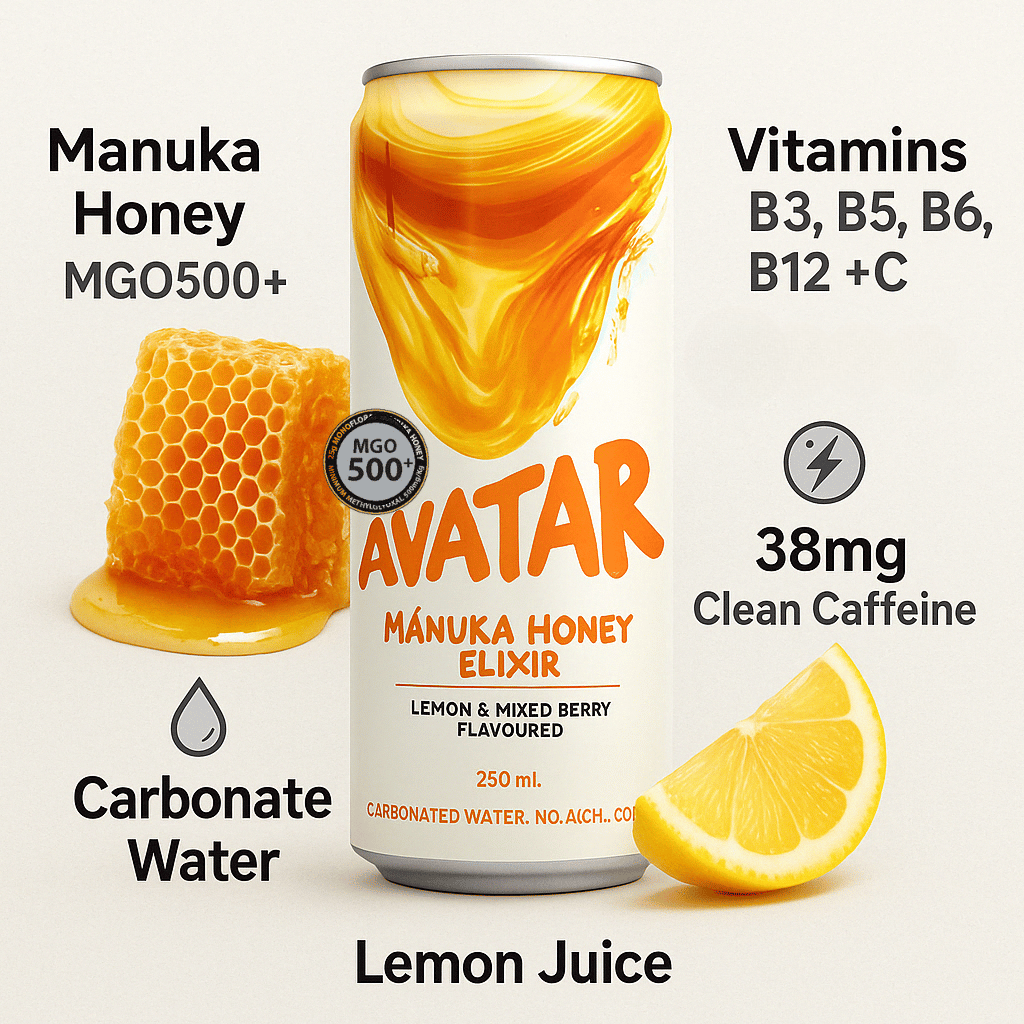
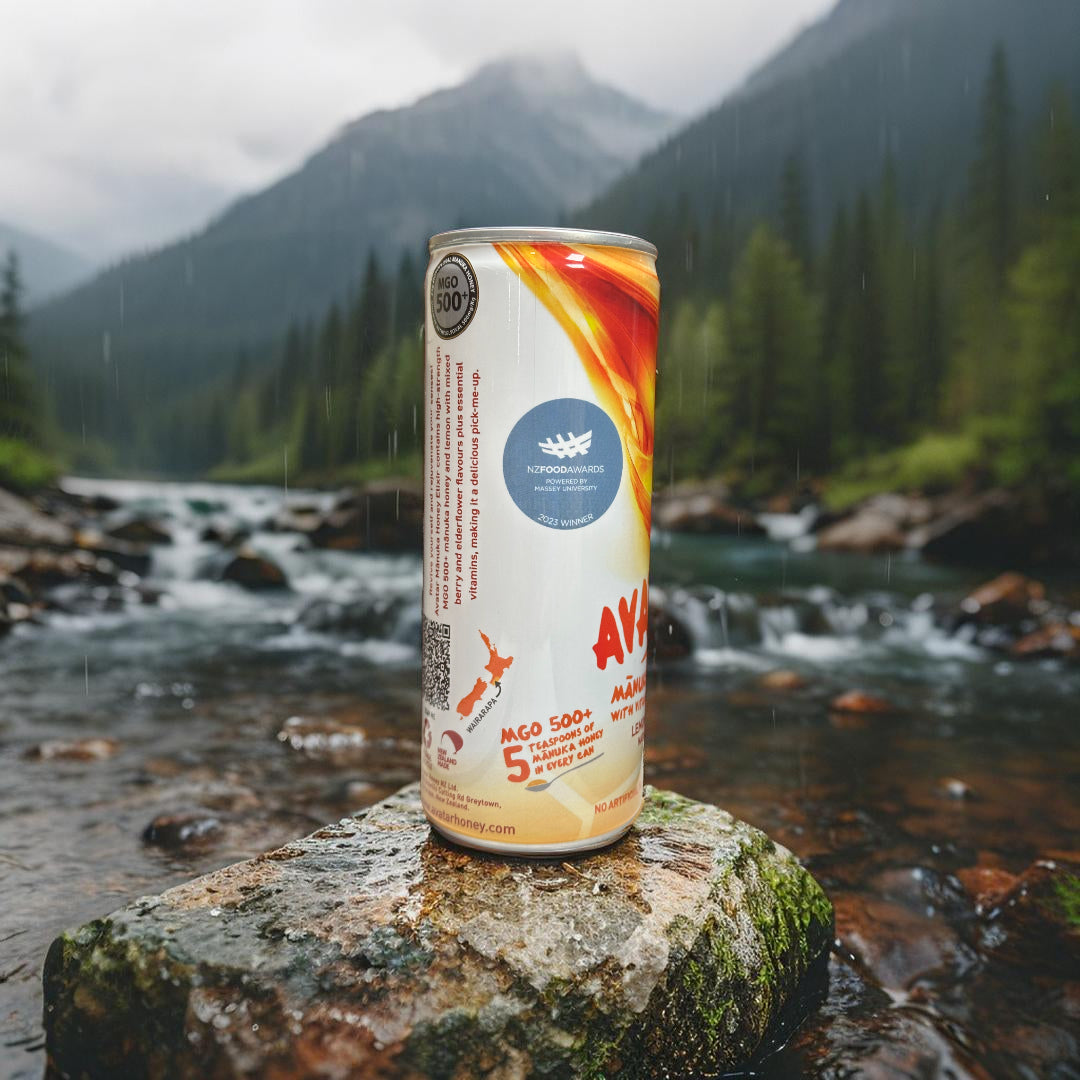
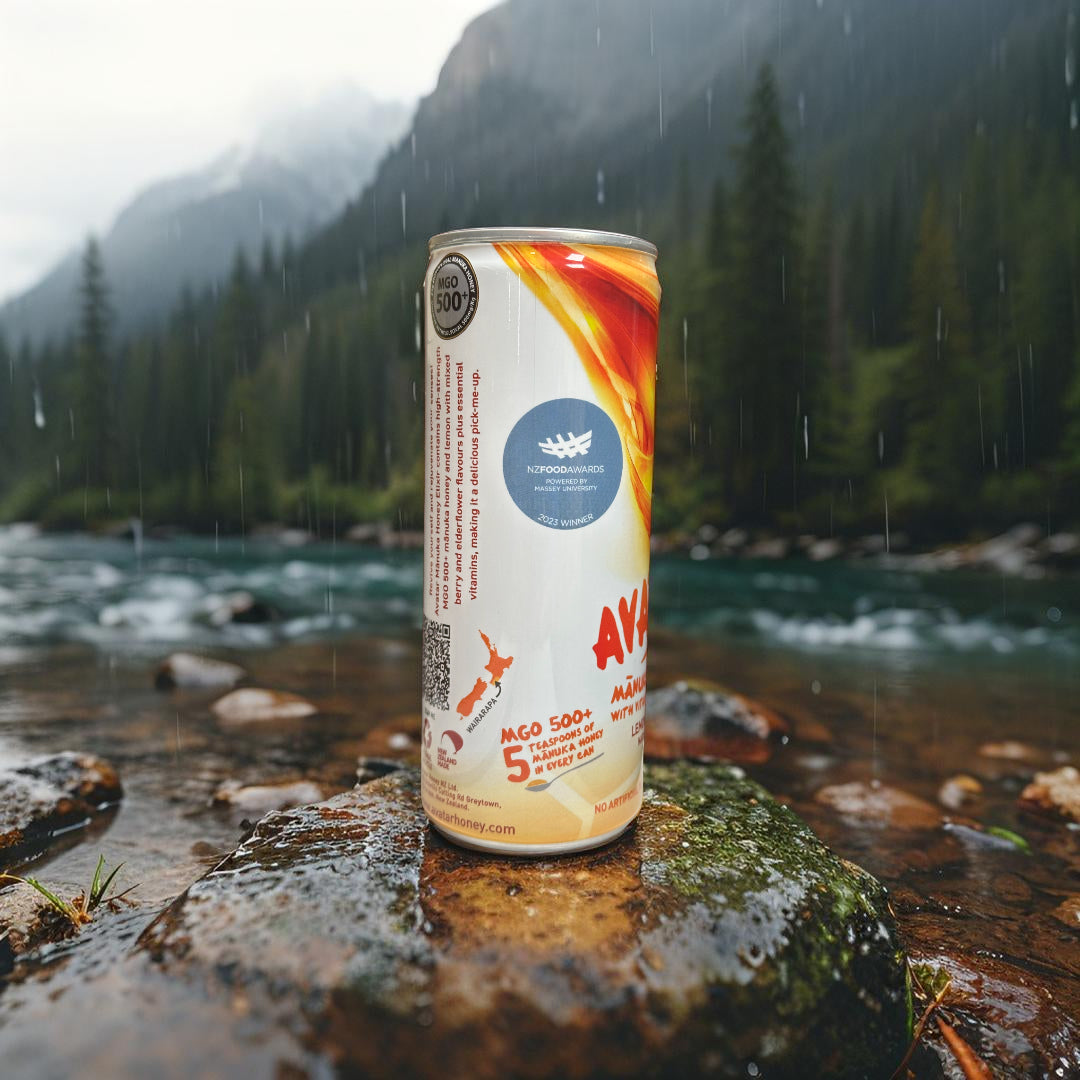
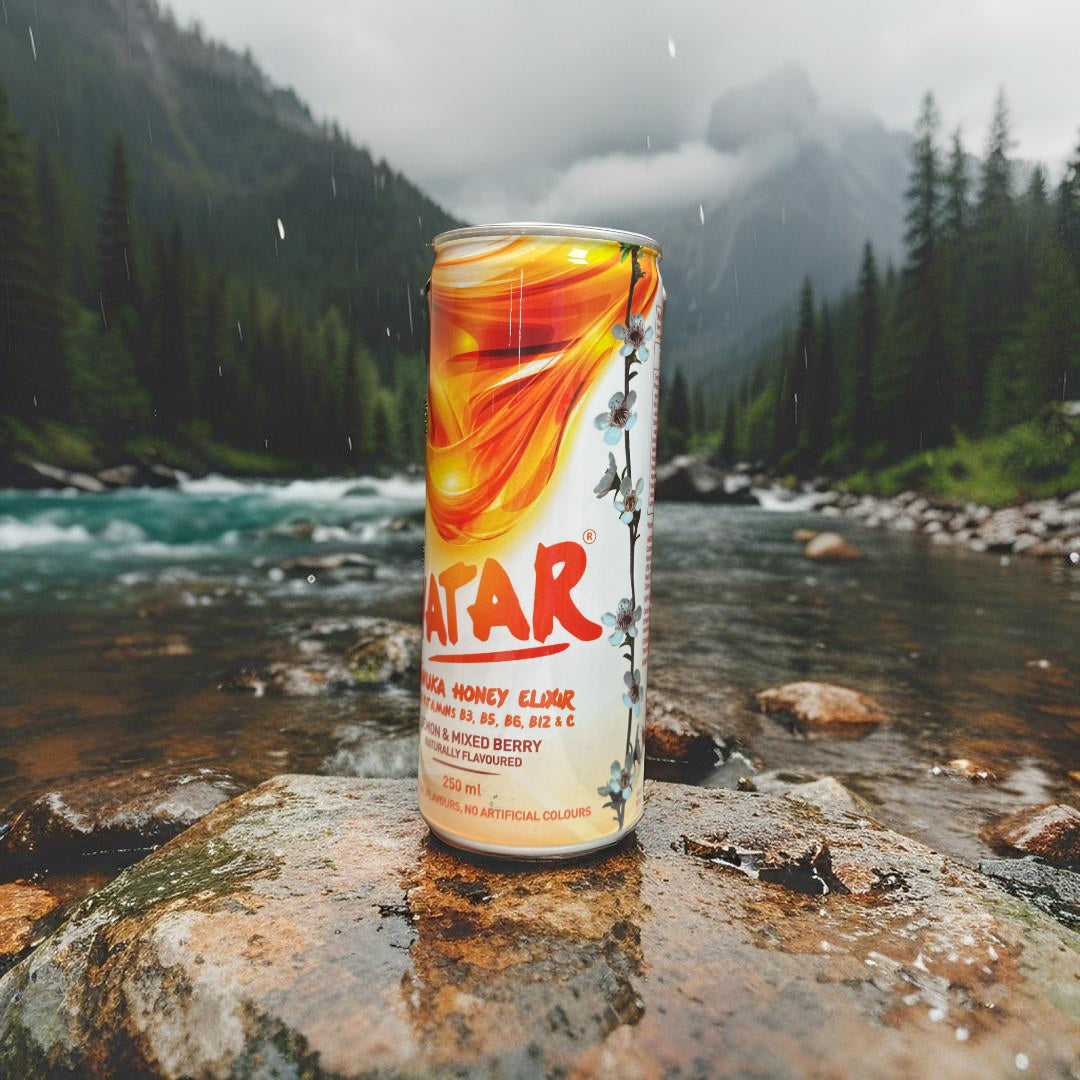
Avatar Elixir contains certified MGO500+ Manuka honey, together with lemon, elderflower, B vitamins, vitamin C, clean caffeine, and lightly carbonated water. That MGO description should not be converted into a monofloral claim unless current product documentation specifically verifies the floral classification of the honey ingredient.
This is a useful label-reading rule for any product: repeat only the claim that is actually documented. Do not assume that “high MGO,” “certified,” “New Zealand made,” and “monofloral” all mean the same thing.
What can beverage shoppers reasonably infer from the term?
A shopper can infer that a properly supported monofloral claim refers to the classification of the Manuka honey used. The shopper cannot infer the honey quantity, finished flavour, sweetness, nutritional profile, potency, or overall beverage quality from that term alone.
In practical terms, monofloral can provide useful information about ingredient identity. It becomes more meaningful when the producer also gives clear context about the actual drink, including its ingredient list, honey claim, flavour profile, caffeine content where relevant, and product traceability.
Broad New Zealand imagery, pictures of flowering Manuka, or phrases such as “premium honey energy” are not substitutes for precise label language. A clear claim tells you whether the product contains Manuka honey, whether an MGO grade applies, and whether any stated floral classification is supported for the honey ingredient.
How should you evaluate a Manuka honey beverage label?
Prioritize precise claims, traceability, ingredient context, and supporting evidence. Monofloral can be a meaningful classification, but it should be considered alongside the rest of the label rather than treated as a complete quality verdict.
- Check exactly what is being described. Look for wording that clearly applies “monofloral” or “multifloral” to the Manuka honey ingredient, rather than loosely applying it to the whole beverage.
- Keep floral classification separate from MGO. A monofloral claim and an MGO grade provide different information. One does not automatically prove the other.
- Look for ingredient context. Read the full ingredient list to understand what accompanies the honey, such as citrus, botanicals, caffeine, vitamins, sweeteners, or carbonated water.
- Ask whether the honey amount is disclosed. “Made with Manuka honey” confirms its presence when accurately labelled, but it does not necessarily state how much is used.
- Look for traceability. Batch information, clear producer details, and documentation behind specific honey claims are more useful than vague origin imagery.
- Question unsupported potency language. Terms implying exceptional performance or guaranteed wellness outcomes should not be inferred from “monofloral,” “MGO,” or “certified.”
- Judge the finished drink on its own merits. Consider flavour balance, sweetness, carbonation, caffeine, serving occasion, and overall ingredient transparency.
Final takeaway: Monofloral Manuka honey is an official scientific floral classification for qualifying New Zealand export honey. In a beverage, it describes the verified honey ingredient only when supported by appropriate documentation. It does not reveal the amount of honey used, replace an MGO grade, predict flavour, or guarantee the quality of the finished drink.
These follow-ups help shoppers interpret incomplete label claims and ask for evidence about the Manuka honey used in a beverage.
What if a beverage label only says "made with Manuka honey"?
That wording identifies Manuka honey as an ingredient, but it does not establish whether the honey is monofloral or multifloral. Unless the floral classification is stated and supported, do not infer it from New Zealand origin, an MGO grade, floral imagery, or premium wording.
What evidence should support a monofloral ingredient claim?
A producer should be able to support the claim with documentation that applies to the honey ingredient and connects it to the scientific criteria used for New Zealand export honey. Useful evidence includes clear supplier or producer records, relevant test or certification documentation, and batch traceability. Marketing language or Manuka flower imagery is not equivalent evidence.
How can I tell what "certified" covers on a beverage label?
Read the words around the claim and look for the certifying or testing context. "Certified MGO500+ Manuka honey," for example, describes a stated attribute of the honey ingredient. It does not automatically certify the entire beverage or establish a monofloral classification. If the scope is unclear, seek documentation identifying what was assessed and by whom.