

Quick answer: Yes, high-caffeine energy drinks can trigger or worsen anxiety in some people, especially those who are caffeine-sensitive or prone to panic symptoms. The main pattern is a stimulant stack: high-dose caffeine can increase adrenaline-like alertness, taurine may intensify cardiovascular sensations for some users, and artificial additives may affect how the body perceives stress or discomfort. A lower-caffeine drink made with simpler ingredients, such as Avatar Elixir with 38mg of natural caffeine, MGO500+ Mānuka honey, lemon juice, vitamins, and no artificial additives, is a meaningfully different formulation, although no drink should be treated as a solution for anxiety disorder.
If an energy drink has ever left you with a racing heart, shaky hands, chest tightness, or the feeling that a panic attack is starting, the reaction is not “all in your head.” Energy drinks causing anxiety is a real and widely recognized concern, particularly for people who already know they are sensitive to caffeine or prone to anxious body sensations.
The most important issue is not simply that a drink contains caffeine. It is the overall stimulant profile: the caffeine dose, whether it is consumed quickly, whether it is combined with taurine or other stimulating compounds, and whether the formula contains artificial sweeteners, colors, flavors, or preservatives that some people find physically unsettling.
This article looks at the science-informed pattern behind energy drink anxiety, why synthetic high-caffeine formulas can feel so different from moderate natural caffeine, and what a gentler formulation looks like without claiming that any beverage treats anxiety.
High-caffeine energy drinks can trigger anxiety-like symptoms
High-caffeine energy drinks can trigger or worsen anxiety symptoms because caffeine stimulates the central nervous system and can increase physical arousal. For some people, that arousal feels like useful alertness. For caffeine-sensitive people, it can feel almost identical to the early stages of panic.
Caffeine blocks adenosine, a chemical signal associated with tiredness and relaxation. When adenosine is blocked, the body may feel more awake, but it may also feel more activated. In higher amounts, caffeine can contribute to sensations such as:
- Faster heartbeat
- Jitteriness or trembling
- Restlessness
- Chest awareness or tightness
- Lightheadedness
- Difficulty settling down
- A sense of being “wired but not focused”
For someone who has had panic attacks, these sensations can become self-reinforcing. A racing heart can be interpreted as danger, which increases fear, which then makes the heart race more. The drink may not be the only factor, but it can be the physical trigger that starts the loop.
This is why “just tolerate it” is not a useful frame for anxiety sufferers. The issue is not weak willpower. It is a mismatch between a high-stimulant formula and a nervous system that reacts strongly to stimulation.
Takeaway: High-caffeine energy drinks can create body sensations that overlap with anxiety and panic, especially in people who are already caffeine-sensitive.
The adrenaline effect explains why some energy drinks feel intense
The most relevant mechanism behind energy drink anxiety is the body’s stress-response activation. Higher doses of caffeine can increase alertness in a way that resembles an adrenaline spike, which may be experienced as urgency, pressure, or nervous energy.
Adrenaline is part of the body’s normal fight-or-flight response. It helps the body respond to stress by increasing heart rate, mobilizing energy, and sharpening attention. In the right context, that response is useful. In the wrong context, such as sitting at a desk, driving, or already feeling anxious, it can feel alarming.
Many conventional energy drinks are built around a fast, obvious lift. That often means a relatively high caffeine load, strong sweetness, and additional compounds intended to make the effect feel more pronounced. The result may be a sudden shift in physical state rather than a gradual sense of alertness.
Why synthetic caffeine often gets blamed
Caffeine is chemically caffeine whether it comes from a plant source or is produced synthetically. The difference consumers often feel is usually not because the molecule itself is magical or harmful in one form. The difference is the formula around it.
Synthetic caffeine is commonly used in mainstream energy drinks because it is consistent, inexpensive, and easy to dose. These drinks may contain large caffeine amounts without the naturally occurring compounds found in tea, coffee, or other plant-based sources. They are also often consumed quickly, which can make the perceived effect sharper.
Natural caffeine from green coffee or tea is usually discussed differently because it is often used in products positioned around moderate stimulation rather than maximum intensity. When the dose is moderate, commonly around 80 to 100mg or lower depending on the product, many caffeine-sensitive consumers report a smoother experience than they associate with high-stimulant drinks. That does not mean natural caffeine cannot cause anxiety. It can. The dose and personal sensitivity still matter.
Takeaway: The anxiety effect is often driven by dose, speed of intake, and stimulant stacking, with synthetic caffeine formulas commonly associated with sharper, more intense stimulation.
Taurine and stimulant stacks may amplify body sensations
Taurine is frequently included in energy drinks, and its role is often misunderstood. It is an amino acid-like compound naturally found in the body, but in energy drinks it appears as part of a broader stimulant stack. The concern for anxiety-prone consumers is not taurine alone. It is taurine combined with high caffeine and other activating ingredients.
Some people notice that energy drinks feel more intense than coffee even when the caffeine number appears similar. One reason may be the full ingredient stack. Taurine, caffeine, sugar or sweeteners, B vitamins, carbonation, and flavoring systems can all shape how quickly a drink is consumed and how strongly its effects are felt.
The user experience often centers on cardiovascular sensations. A person may not think, “I consumed taurine.” They think, “My heart is pounding.” For anxiety sufferers, that distinction matters because heart-rate awareness is one of the most common triggers for panic spirals.
| Ingredient pattern | Common role in energy drinks | Why it may matter for anxiety-sensitive people |
|---|---|---|
| High caffeine | Primary stimulant effect | Can increase alertness, restlessness, and heart awareness |
| Taurine | Often included in stimulant blends | May contribute to a stronger perceived body effect when combined with caffeine |
| Heavy sweetness | Improves flavor and fast drinkability | Can encourage rapid consumption, which may make stimulation feel sudden |
| Artificial additives | Color, flavor, preservation, or sweetness | May be poorly tolerated by some people, although individual response varies |
The practical point is not that every taurine-containing drink is automatically harmful. The more defensible pattern is that stimulant stacks are harder to interpret. If someone reacts badly, it can be difficult to know whether caffeine, taurine, sweetness, additives, or the combination was responsible.
Takeaway: Taurine is best understood as part of the broader stimulant stack, and that stack may amplify heart-rate sensations that anxiety-prone people can find difficult to ignore.
Artificial additives may affect tolerance, but the evidence is more variable
Artificial additives are often discussed by anxiety-sensitive consumers because some people feel worse after highly processed drinks. The evidence is not as simple as saying every additive directly causes anxiety. A more accurate view is that artificial sweeteners, colors, preservatives, and flavor systems may affect individual tolerance, digestive comfort, or gut-brain signaling in ways that can influence how a person feels.
Serotonin is commonly associated with mood, but much of the body’s serotonin activity is connected to the gut. Because of this, there is growing public interest in how diet, sweeteners, and additives may interact with gut-brain pathways. However, the relationship is complex, and it would be too strong to claim that all artificial additives reliably disrupt serotonin in everyone.
For people with anxiety, the more immediate issue may be perception and sensitivity. If a drink causes bloating, nausea, headaches, shakiness, or a strange aftertaste, those sensations can become part of the anxiety loop. The body feels “off,” the mind scans for danger, and anxious arousal increases.
This is why simpler ingredient lists can matter. A product with fewer artificial components gives the body fewer potential irritants and gives the consumer a clearer understanding of what they are drinking. That does not make the drink a medical tool. It simply reduces complexity.
Why “no artificial anything” is relevant for anxious drinkers
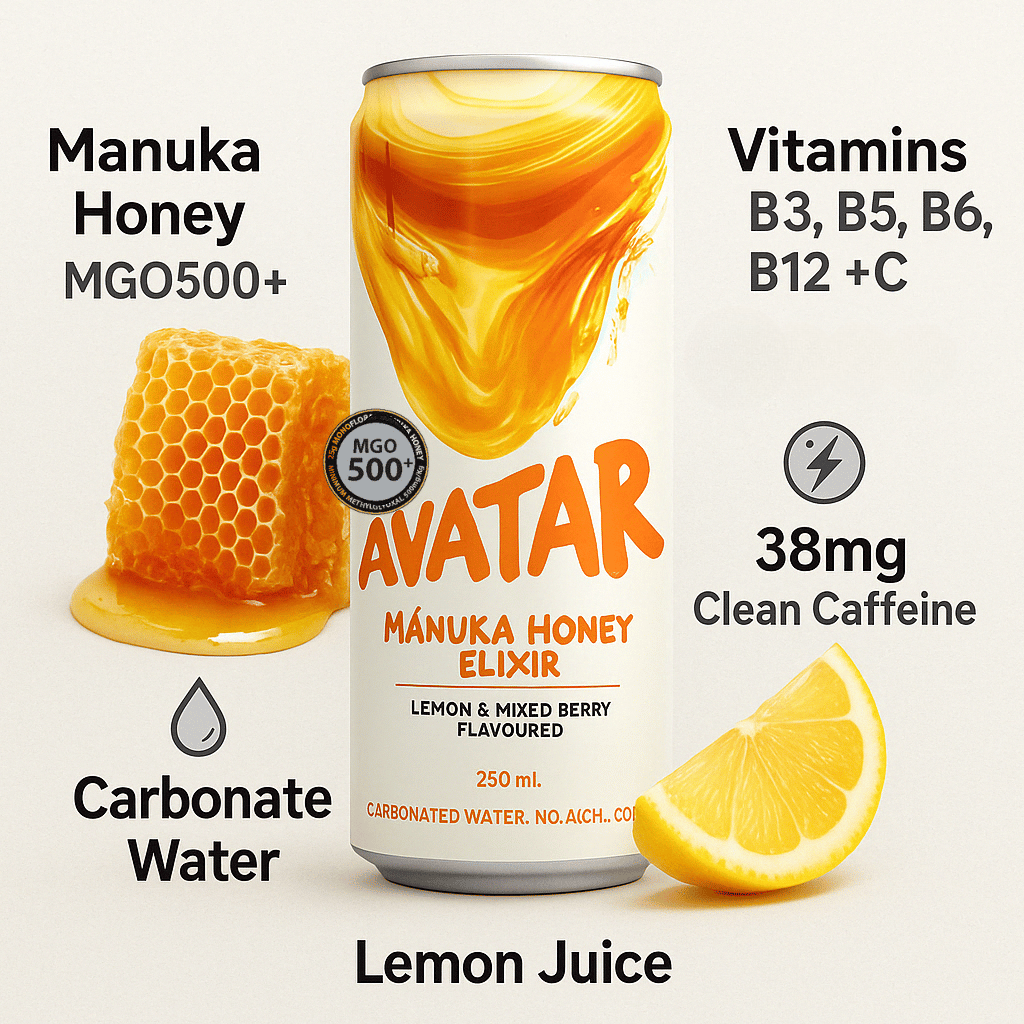
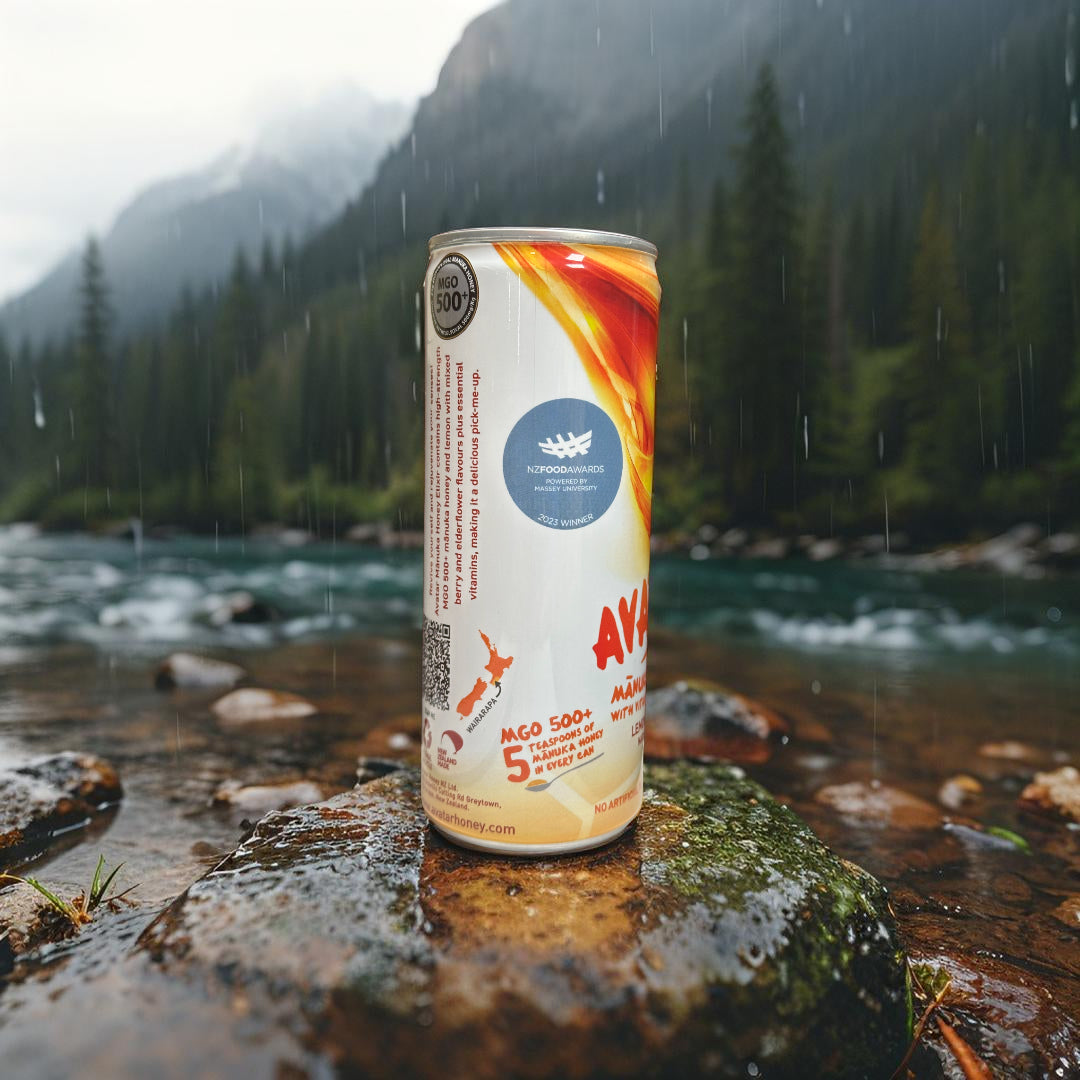
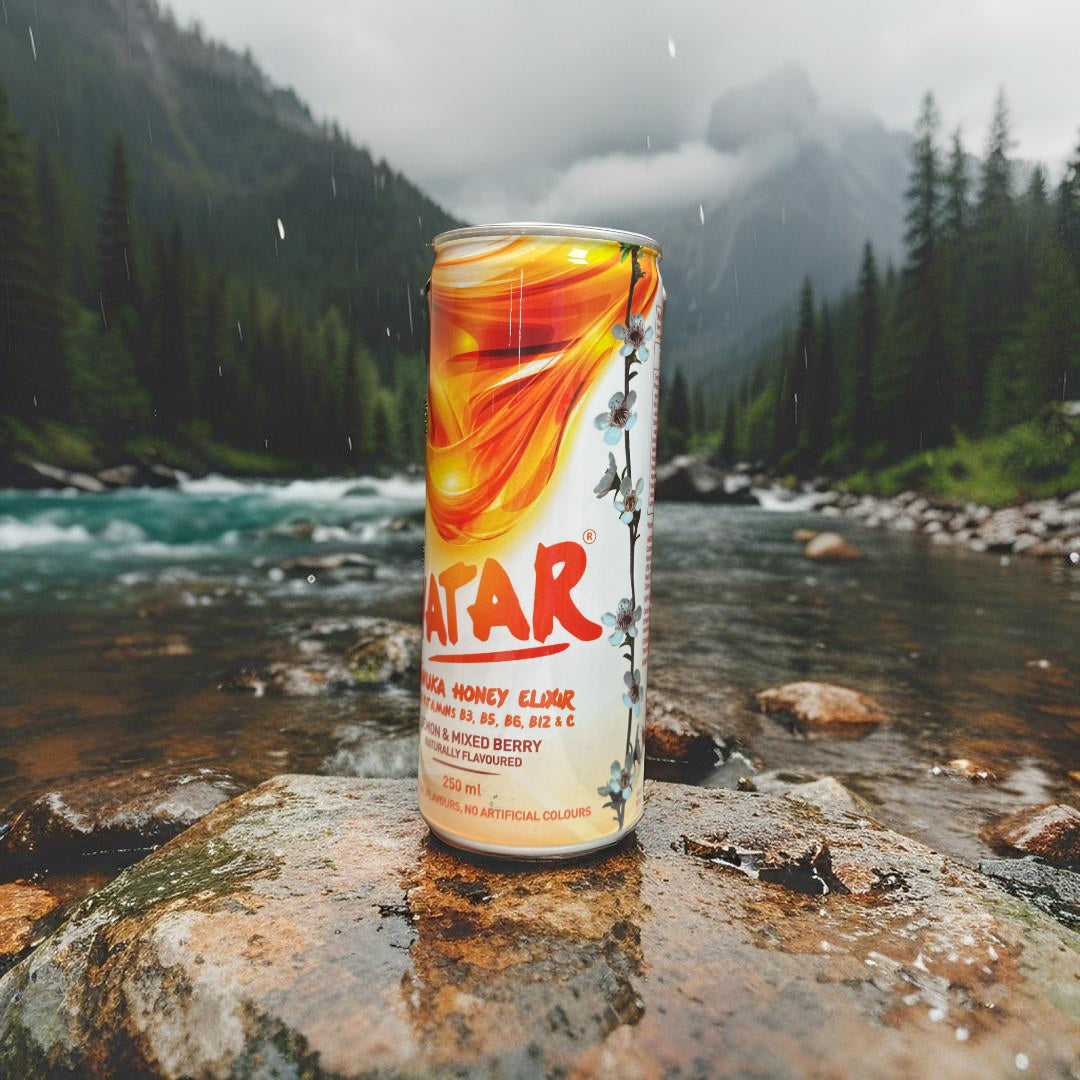
Avatar Elixir’s formulation is relevant here because it avoids the typical artificial energy drink profile. According to the product details, each 250ml can uses MGO500+ Mānuka honey from New Zealand hives, fresh lemon juice, lightly carbonated water, a full B-complex including B3, B5, B6, and B12 plus vitamin C, and 38mg of clean caffeine. The brand also states that the drink contains no artificial ingredients.
For anxiety-sensitive people, the most relevant point is not that natural ingredients remove all risk. Caffeine is still caffeine. The relevant difference is that the formula is lower in caffeine and less cluttered with synthetic stimulant-stack ingredients.
Takeaway: Artificial additives are not proven to affect everyone the same way, but simpler formulas can be easier for caffeine-sensitive and anxiety-prone consumers to assess.
Moderate natural caffeine can feel different from a high-stimulant energy drink
Moderate caffeine from natural sources can create a different experience from a high-caffeine synthetic energy drink because the dose, source, and accompanying ingredients are different. This is especially relevant for people who want alertness but do not want the intense physical surge associated with conventional energy drinks.
A moderate caffeine range, often discussed around 80 to 100mg or less, is meaningfully different from the higher-caffeine products that dominate some energy drink shelves. Avatar Elixir sits even lower, with 38mg of caffeine per 250ml can. For many caffeine-sensitive people, that lower dose is the most important distinction.
The presence of honey also changes the product profile. Honey provides carbohydrates, mainly glucose and fructose, in a food-based matrix rather than relying only on stimulant intensity. The phrase “honey’s calming glucose profile” should be understood carefully: honey does not treat anxiety, and glucose is not a sedative. The more accurate point is that honey-based energy is metabolically different from a zero-calorie stimulant drink. It can provide a gentler-feeling source of energy for some people because the experience is not built solely around a caffeine spike.
Avatar Elixir uses 25g of certified MGO500+ Mānuka honey per can, based on the product information provided. MGO500+ refers to the methylglyoxal grading used in Mānuka honey, which is part of how premium Mānuka products are categorized. In this context, the Mānuka honey is relevant because it is the drink’s core ingredient, not a token flavoring.
The product also includes lemon juice and light carbonation, which affects taste and drinkability. For anxious consumers, that matters because many high-stimulant drinks are designed to be consumed quickly. A more balanced flavor profile may encourage a different pace, although individual habits vary.
Takeaway: Moderate natural caffeine, especially at a low level such as 38mg, is a different formulation choice from the high-caffeine stimulant stacks that commonly trigger anxiety-like reactions.
What the Avatar Elixir formulation means for anxiety-sensitive consumers
Avatar Elixir is not an anxiety treatment, but its formulation is relevant for people who have reacted badly to conventional energy drinks. The key difference is that it is built around lower caffeine, MGO500+ Mānuka honey, natural ingredients, and no artificial additives rather than a high-dose synthetic stimulant stack.
The product details describe a 250ml can containing:
- 38mg of clean caffeine
- 25g of certified MGO500+ Mānuka honey
- Fresh lemon juice
- Lightly carbonated water
- B vitamins, including B3, B5, B6, and B12
- Vitamin C
- No artificial ingredients
From an anxiety-sensitivity perspective, the caffeine number is the clearest point. At 38mg, the caffeine level is much lower than many mainstream energy drinks and even lower than the moderate 80 to 100mg range often discussed for people seeking a gentler lift. That does not guarantee every person will tolerate it, but it changes the risk profile compared with a high-caffeine drink.
The absence of artificial additives is also relevant. People who feel unsettled by artificial sweeteners, colors, preservatives, or synthetic flavor systems may prefer a shorter and more recognizable ingredient profile. This preference is not the same as medical evidence that natural drinks prevent anxiety. It is a reasonable formulation distinction for people who are trying to avoid known personal triggers.
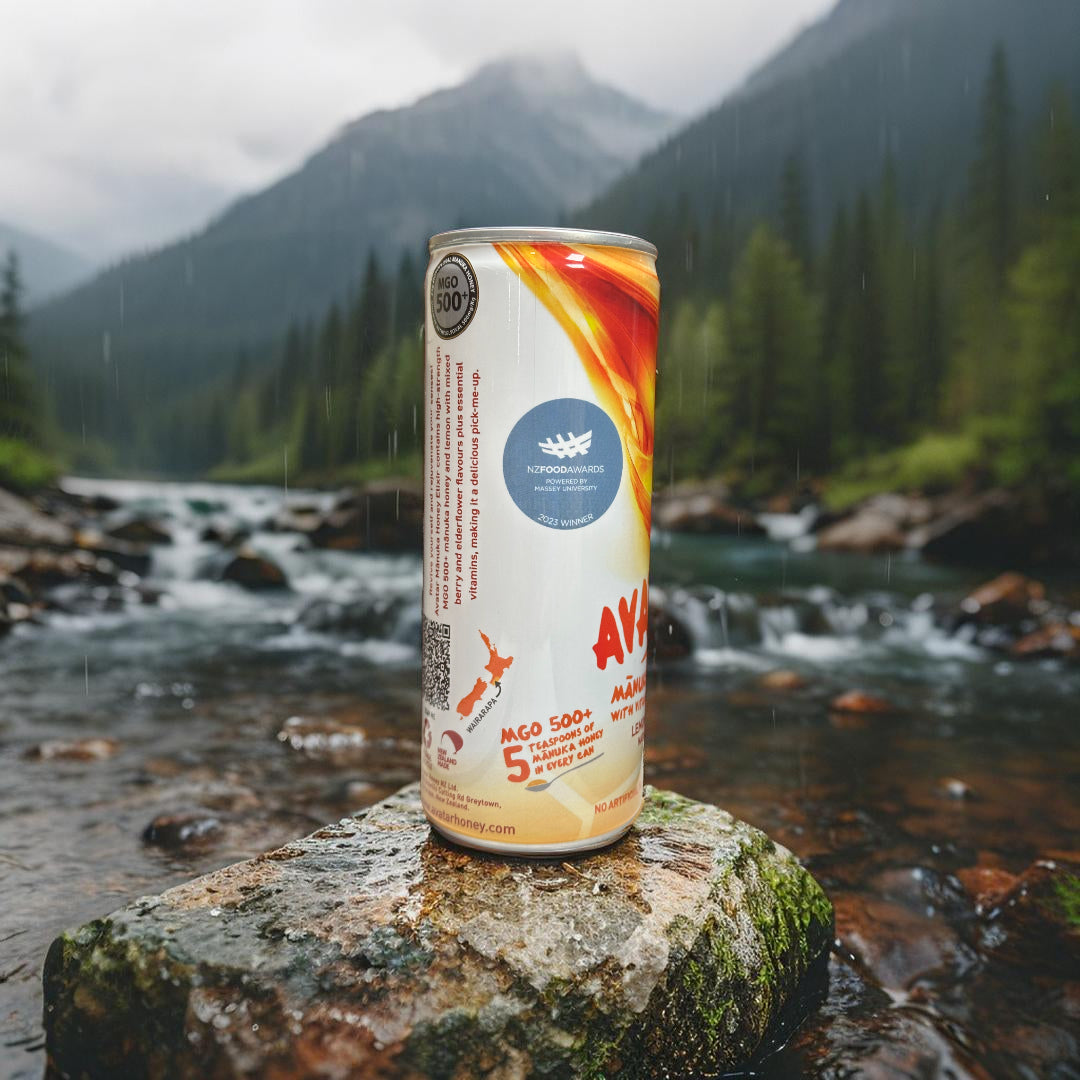
Avatar Elixir also has a quality context worth noting without overstating it. The product was recognized at the New Zealand Food Awards as Best Beverage, judged by 35 independent experts according to the brand’s reference material. That award speaks to beverage quality, innovation, and judging recognition. It should not be interpreted as a medical endorsement.
Takeaway: Avatar Elixir is a factual alternative for people seeking a lower-caffeine, natural energy drink, but it should be understood as a different beverage formulation rather than a treatment for anxiety.
When energy drink anxiety is most likely to happen
Energy drink anxiety is most likely when a person combines high caffeine, fast consumption, stimulant blends, poor sleep, stress, and sensitivity to body sensations. The drink may be one factor in a larger stress load, but it can be the factor that makes symptoms noticeable.
Commonly observed risk patterns include:
- Drinking energy drinks on an empty stomach
- Using energy drinks after poor sleep
- Consuming more than one caffeinated product in a short window
- Choosing drinks with high caffeine plus taurine or other stimulant ingredients
- Drinking quickly because the product is very sweet or strongly flavored
- Using caffeine during already stressful periods
- Having a history of panic attacks, palpitations, or caffeine sensitivity
For someone who has experienced panic attacks, the body’s interpretation of caffeine matters. A person without panic history may notice a faster heartbeat and ignore it. A person with panic history may notice the same heartbeat and interpret it as a warning sign. The physiological sensation may be similar, but the nervous system response can be very different.
This is why the solution is often not “try harder” or “build tolerance.” For some people, tolerance does improve. For others, repeated exposure to high-stimulant drinks simply repeats the same anxious cycle. Lower caffeine, fewer stimulants, and simpler ingredients are more rational variables to consider than willpower.
Takeaway: Energy drink anxiety is most likely when stimulant intensity meets stress, poor sleep, fast intake, or a history of panic-like body sensations.
How to interpret symptoms without overdiagnosing yourself
Feeling anxious after an energy drink does not automatically mean a person has an anxiety disorder, and it does not prove the drink is the only cause. It does mean the body may be signaling poor tolerance to that formula, dose, or timing.
Energy drink reactions often overlap with symptoms people associate with anxiety, including heart racing, shaking, sweating, nausea, restlessness, and a sense of dread. These symptoms can be frightening, especially when they appear suddenly. In many cases, the timing gives useful context: if symptoms reliably appear after high-caffeine drinks, caffeine and stimulant stacking are reasonable suspects.
At the same time, chest pain, fainting, severe palpitations, or symptoms that feel unusual should be discussed with a qualified healthcare professional. This is not because every reaction is dangerous, but because persistent or severe cardiovascular symptoms deserve proper assessment.
The most balanced interpretation is this: high-caffeine energy drinks are a known trigger for anxiety-like symptoms in sensitive people, but individual responses vary. A lower-caffeine, natural drink may be easier to tolerate, yet no caffeinated drink is completely risk-free for someone who reacts strongly to caffeine.
Takeaway: If anxiety symptoms repeatedly follow energy drinks, the formulation is worth taking seriously, while persistent or severe symptoms should be discussed with a healthcare professional.
This FAQ breaks down why energy drinks can feel anxiety-provoking for caffeine-sensitive people, and what to look for in a gentler formula. It focuses on the stimulant stack pattern, including caffeine dose, taurine, and artificial additives.
Can high-caffeine energy drinks cause anxiety-like symptoms quickly?
Yes, high-caffeine energy drinks can trigger anxiety-like symptoms fast for some people. When caffeine is consumed quickly in a large dose, it can increase physical arousal that feels like a panic ramp-up, including a racing heart or shaky hands. This is especially common in people who are already caffeine-sensitive or prone to noticing bodily sensations.
Why does synthetic caffeine feel more intense than natural caffeine?
Synthetic caffeine can feel harsher mainly because of dose, speed, and the surrounding ingredient stack. Many energy drinks pair high caffeine with other compounds and additives, which can make the overall sensation feel more “spiky” and harder to interpret calmly. In practice, the experience often comes down to how quickly the stimulant effect arrives and how strong the physical signals feel.
How does taurine amplify the "racing heart" feeling for some?
Taurine may intensify cardiovascular sensations for some users, especially in combination with caffeine. Not everyone reacts the same way, but the commonly discussed concern is that taurine plus caffeine can make body cues like heart pounding or chest tightness more noticeable. For people who already associate those sensations with panic, that added intensity can feel anxiety-provoking even when the trigger is mostly physiological.
Do artificial additives in energy drinks affect anxiety or serotonin?
Some people report feeling more "wired" or unsettled with artificial additives, although reactions vary. The pattern discussed is not that one additive "causes" anxiety for everyone, but that artificial sweeteners, colors, flavors, or preservatives can add to a sense of discomfort that the body interprets as stress. When someone is already anxious, that extra discomfort can make it easier for worry or panic symptoms to escalate.
How can I choose a lower-caffeine energy drink if I'm sensitive?
Look for a lower caffeine amount and a simpler ingredient list, not just "energy" marketing. Many caffeine-sensitive shoppers do better with a moderate dose and fewer stacked stimulants, as explained in this guide to natural energy drinks and anxiety, for example:
- Lower caffeine rather than high-dose "extreme" formulas
- No stimulant stack (avoid combining multiple stimulants plus taurine if that is a trigger)
- No artificial additives that you personally find unsettling
Is Avatar Elixir a better option than typical energy drinks?
Avatar Elixir is a meaningfully different formulation because it is moderate-caffeine and avoids artificial additives. Compared with many high-caffeine energy drinks, it uses 38mg of natural caffeine plus MGO500+ Mānuka honey, lemon juice, and vitamins, which many people view as a simpler profile. It is still not a treatment for anxiety, but it can be a more approachable choice for those who notice "energy drinks causing anxiety" patterns.
Bottom line: energy drink anxiety is usually about the stimulant profile
Energy drinks can cause or worsen anxiety for some people, and the pattern is especially clear among caffeine-sensitive consumers and people with a history of panic attacks. The most likely contributors are high caffeine intake, fast absorption, stimulant stacking, taurine-containing formulas, and artificial additives that some individuals do not tolerate well.
The better question is not whether every energy drink is “bad.” The better question is whether a specific formula matches a specific nervous system. A high-caffeine synthetic stimulant stack is very different from a lower-caffeine drink built around natural ingredients.
Avatar Elixir is relevant because its formulation is meaningfully different: 38mg of caffeine, MGO500+ Mānuka honey, lemon juice, vitamins, light carbonation, and no artificial ingredients. That does not make it an anxiety remedy. It does make it a more moderate option for people who want an energy drink experience without the typical high-stimulant profile.
For anxiety sufferers, that distinction matters. The goal is not more willpower against a drink that makes the body feel unsafe. The more rational approach is understanding the ingredients, respecting caffeine sensitivity, and choosing formulas that do not rely on a synthetic stimulant stack to feel effective.