


Short answer: Yes, a natural energy drink can fit into a low sugar drink routine if you judge it by serving size, total sugar, ingredient source, occasion, food pairing, and how often you drink it, rather than assuming “natural” automatically means low sugar.
A lower sugar routine does not have to mean a flat, flavourless routine. The real tradeoff for many adults is simple: a drink can be lower in sugar, but it still needs to taste satisfying, feel enjoyable, and suit the moment you are drinking it.
Naturally sweetened energy drinks sit in the middle of that decision. They may use ingredients such as fruit juice, honey, or botanical flavours instead of artificial sweeteners, but they can still contribute sugar. The practical question is not whether a drink is perfect. It is whether the serving size, sweetness level, caffeine, flavour, and drinking occasion make sense within the rest of your day.
Can a natural energy drink fit into a low sugar drink routine?
Yes, a natural energy drink can fit into a low sugar drink routine when it is treated as an intentional drink choice rather than an unlimited everyday default. The key is to check the total sugar per serving, understand where the sweetness comes from, and decide whether the drink suits the occasion.
“Natural” and “low sugar” are related ideas, but they are not the same thing. A drink can be made with recognisable ingredients and still contain sugar. A drink can also be very low in sugar while relying on artificial sweeteners or sugar alcohols. Neither option is automatically right or wrong for every person.
A practical low sugar drink routine is usually built around awareness. You might mostly drink water, sparkling water, tea, or coffee, then choose a more flavourful drink when you want energy, taste, refreshment, or a more grown-up alternative to a standard soft drink. In that context, a naturally sweetened energy drink can have a place if it earns its spot.
The best way to think about it is not “Can I have this?” but “Does this serve the moment well enough for the sugar it contains?” That question keeps the decision flexible, realistic, and non-judgmental.
What should you check first on the label?
The first thing to check is the total sugar per serving, because that tells you how much sugar you are actually drinking in one can or bottle. Serving size matters because some drinks look moderate until you realise the package contains more than one serving.
When comparing energy drinks, read the label in this order:
- Serving size: Confirm whether the full can or bottle is one serving.
- Total sugar: Look at the sugar amount per serving, not just the front-of-pack wording.
- Calories: This can give extra context, especially when drinks vary widely in size.
- Caffeine amount: Check whether the caffeine level suits your day and tolerance.
- Sweetener source: Note whether sweetness comes from sugar, fruit juice, honey, artificial sweeteners, stevia, sugar alcohols, or a blend.
- Flavour ingredients: Look for ingredients that contribute taste beyond sweetness, such as citrus, botanicals, ginger, herbs, or sparkling water.
Front labels can be helpful, but they can also be broad. Phrases such as “natural energy,” “clean energy,” “lightly sweetened,” or “no added sugar” do not all mean the same thing. The nutrition panel and ingredient list give the clearer picture.
How are no sugar, low sugar, and naturally sweetened drinks different?
No sugar, low sugar, and naturally sweetened drinks differ mainly in how they create sweetness and flavour. No sugar drinks usually avoid sugar entirely, low sugar drinks reduce the amount, and naturally sweetened drinks use ingredients such as honey or fruit-derived sweetness while still potentially containing sugar.
No sugar drinks
No sugar drinks are often designed for people who want sweetness without sugar. They may use artificial sweeteners, stevia, monk fruit, or other non-sugar sweeteners. Some people enjoy these because they deliver sweetness with little or no sugar. Others notice an aftertaste or prefer not to use certain sweeteners.
A no sugar energy drink can be useful when sugar reduction is the top priority. The tradeoff is that taste and mouthfeel can vary. Some no sugar drinks are crisp and clean, while others can taste thin, intensely sweet, or less food-like depending on the sweetener blend.
Low sugar drinks
Low sugar drinks usually contain some sugar, but less than a standard soft drink or traditional energy drink. They may use a smaller amount of sugar, a mix of sugar and non-sugar sweeteners, or a more restrained flavour profile.
This category can be practical for adults who want sweetness and flavour but do not want a very sweet drink. The important detail is the number on the label. “Low sugar” can feel like a clear promise, but the actual sugar amount and serving size still matter.
Naturally sweetened drinks
Naturally sweetened drinks use sweetness from ingredient-led sources such as honey, fruit juice, or other natural sugars. They may feel more rounded and familiar in flavour because the sweetness comes with aroma, texture, and ingredient character.
The tradeoff is that natural sugars are still sugars. A honey-sweetened energy drink, for example, may offer a more premium or natural flavour experience, but it should still be considered within your total drink routine. The value is not that natural sweetness disappears from the label. The value is that the sweetness can contribute to taste, balance, and drinking enjoyment in a more ingredient-led way.
When does a naturally sweetened energy drink make the most sense?
A naturally sweetened energy drink makes the most sense when you want both flavour and function, and you are choosing it for a specific occasion rather than sipping sweet drinks all day. It can be a good fit for work, study, travel, social moments, or long afternoons when water alone does not feel satisfying.
Occasion matters because the same drink can be a sensible choice in one moment and unnecessary in another. If you want something cold, lightly sparkling, and flavourful during a busy afternoon, a smaller or more balanced energy drink may be more enjoyable than a large sugary soft drink. If you are simply thirsty, water may be the better first choice.
Think of naturally sweetened energy drinks as occasion drinks. They can be part of a lower sugar routine when they replace higher sugar habits or when they are chosen deliberately for taste, refreshment, and caffeine. They become less useful if they are added on top of several other sweet drinks in the same day.
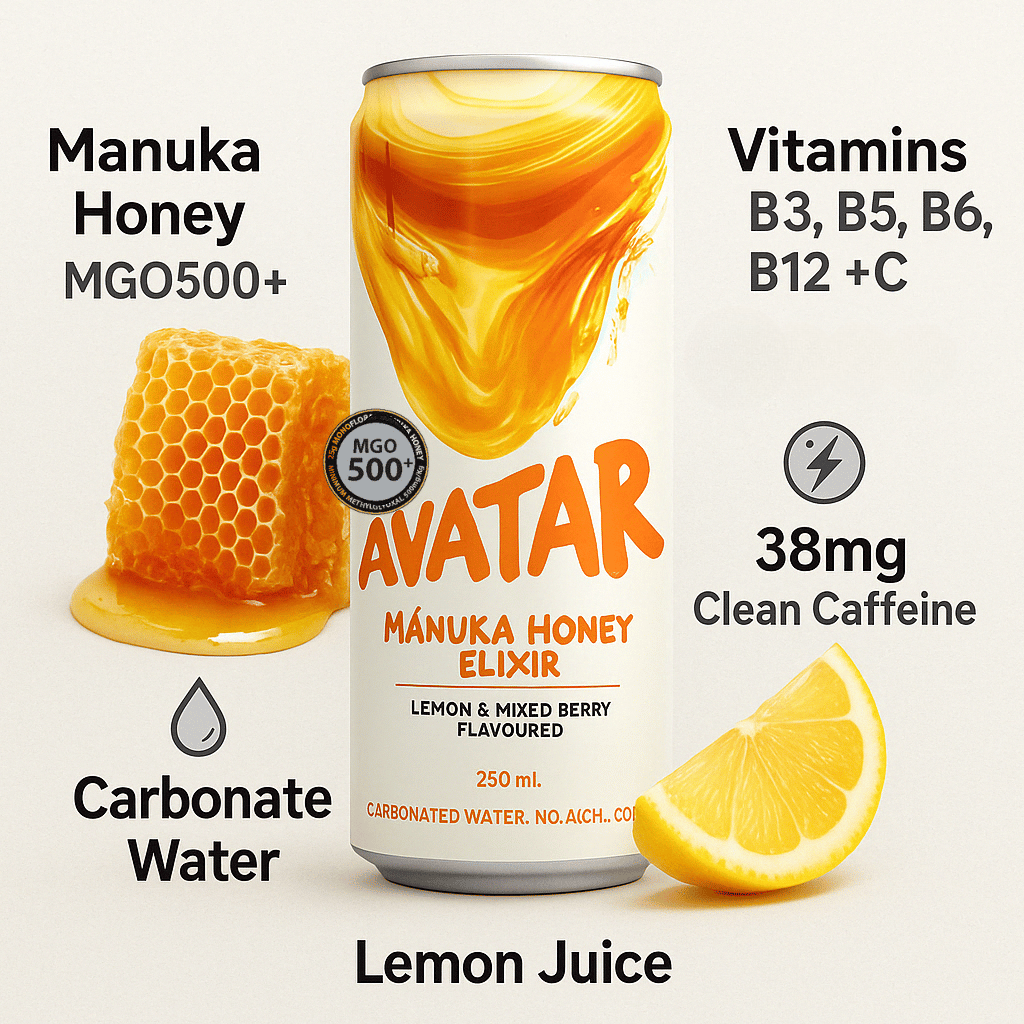
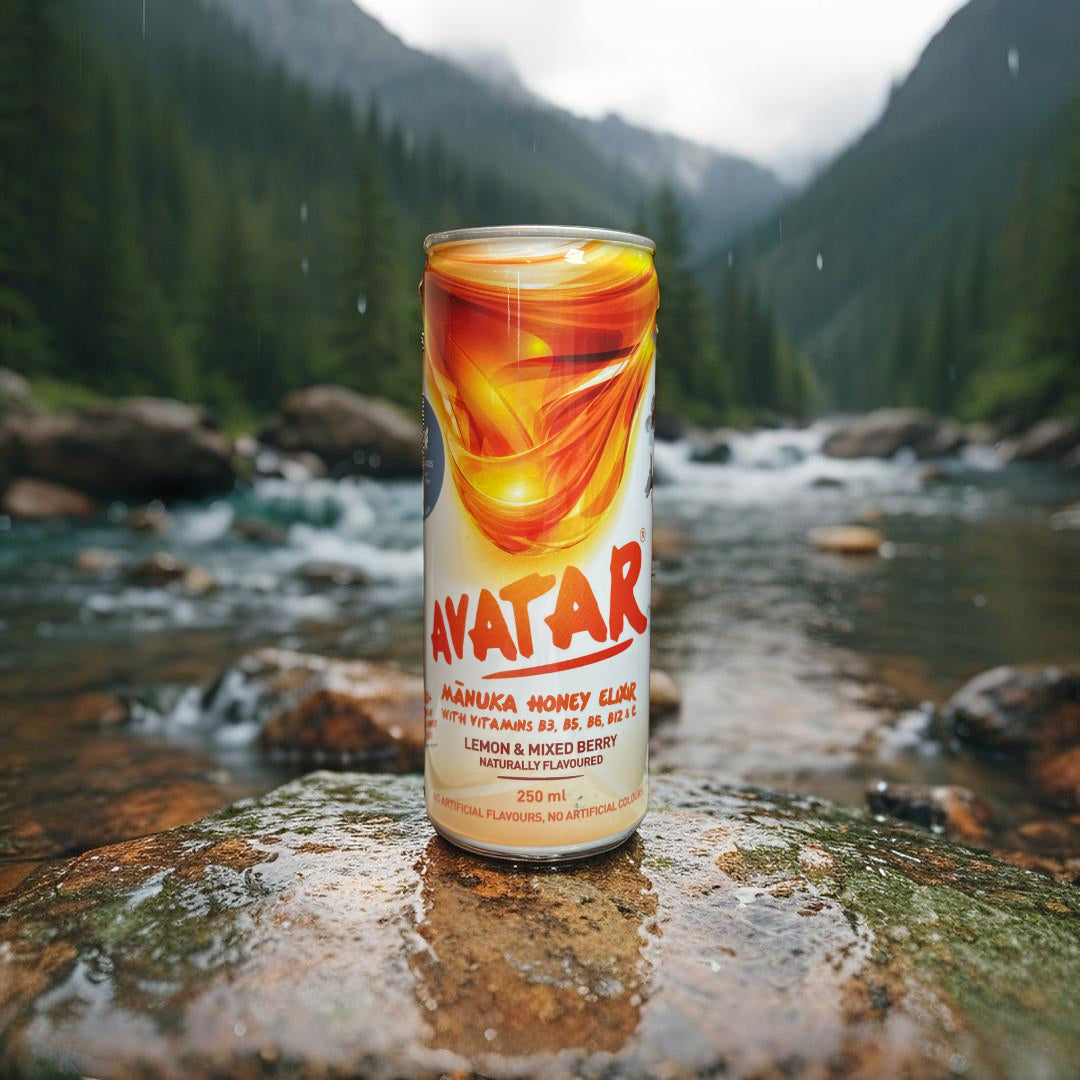
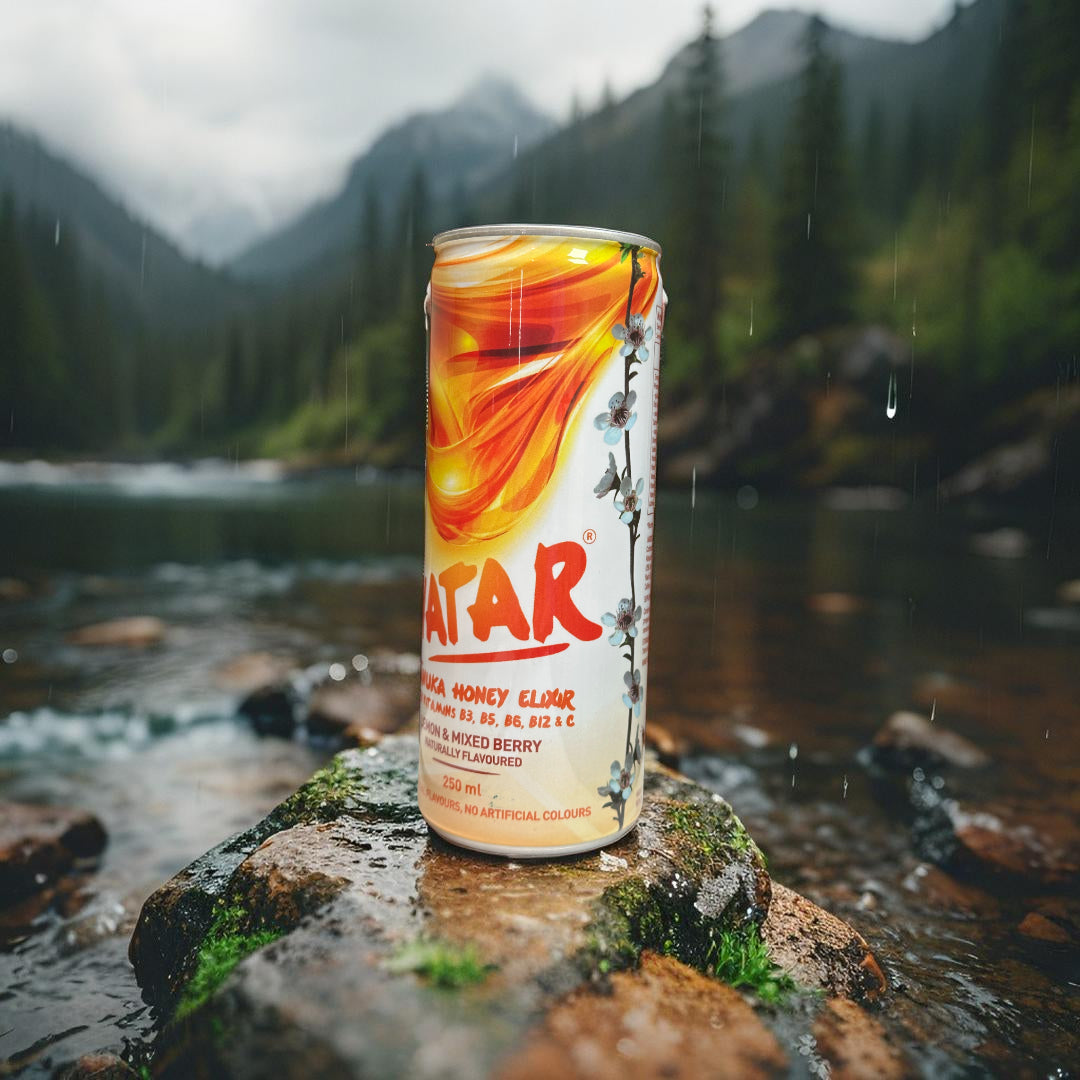
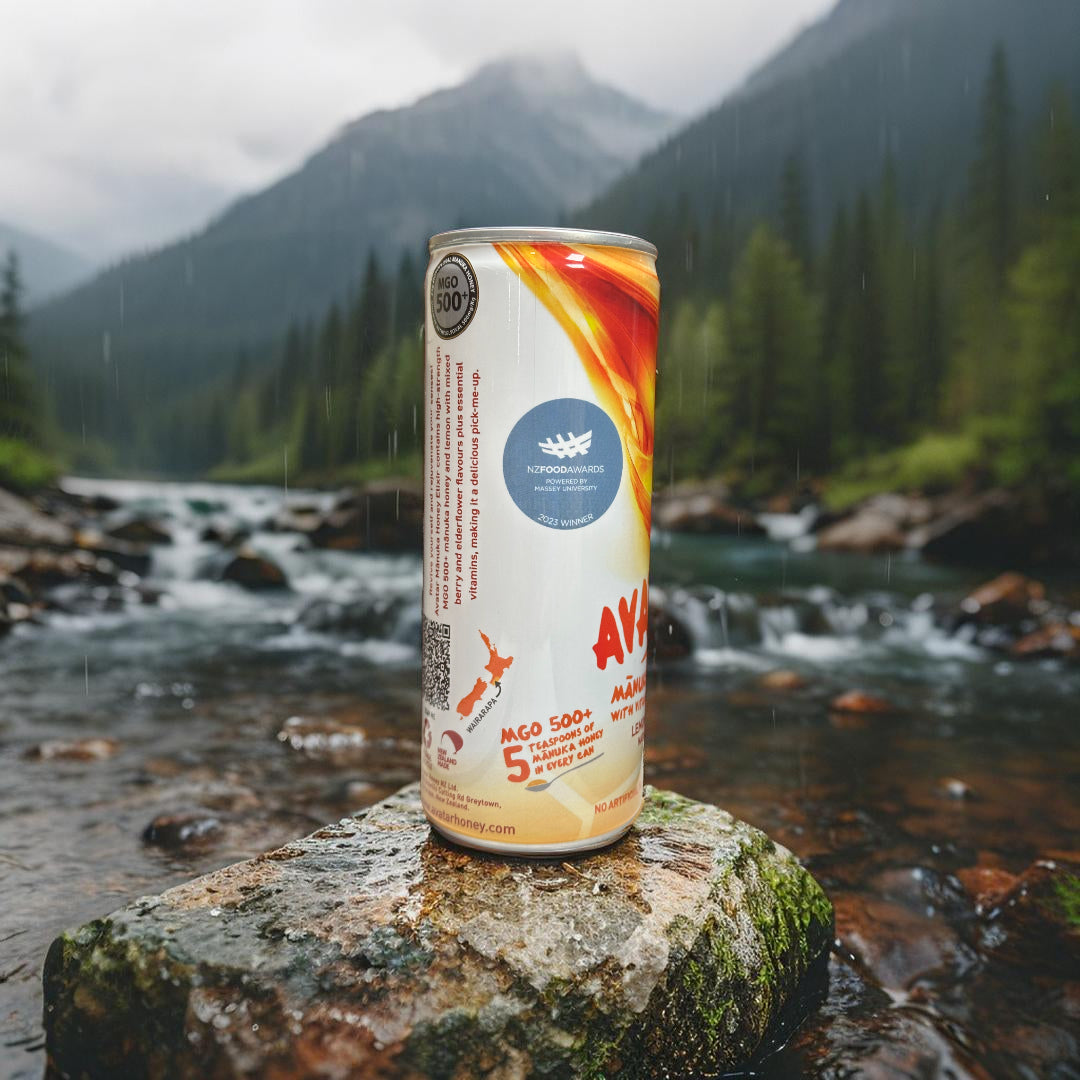
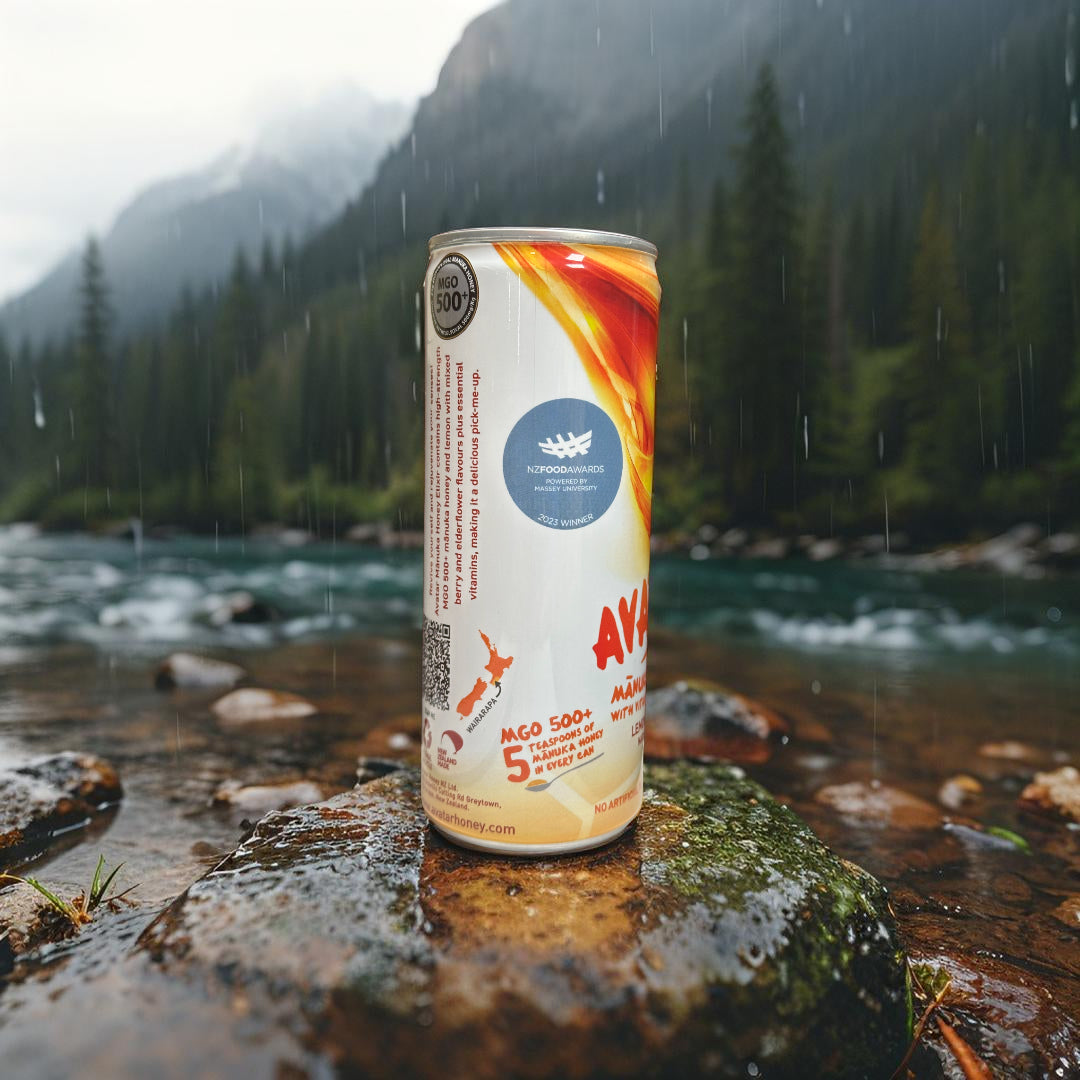
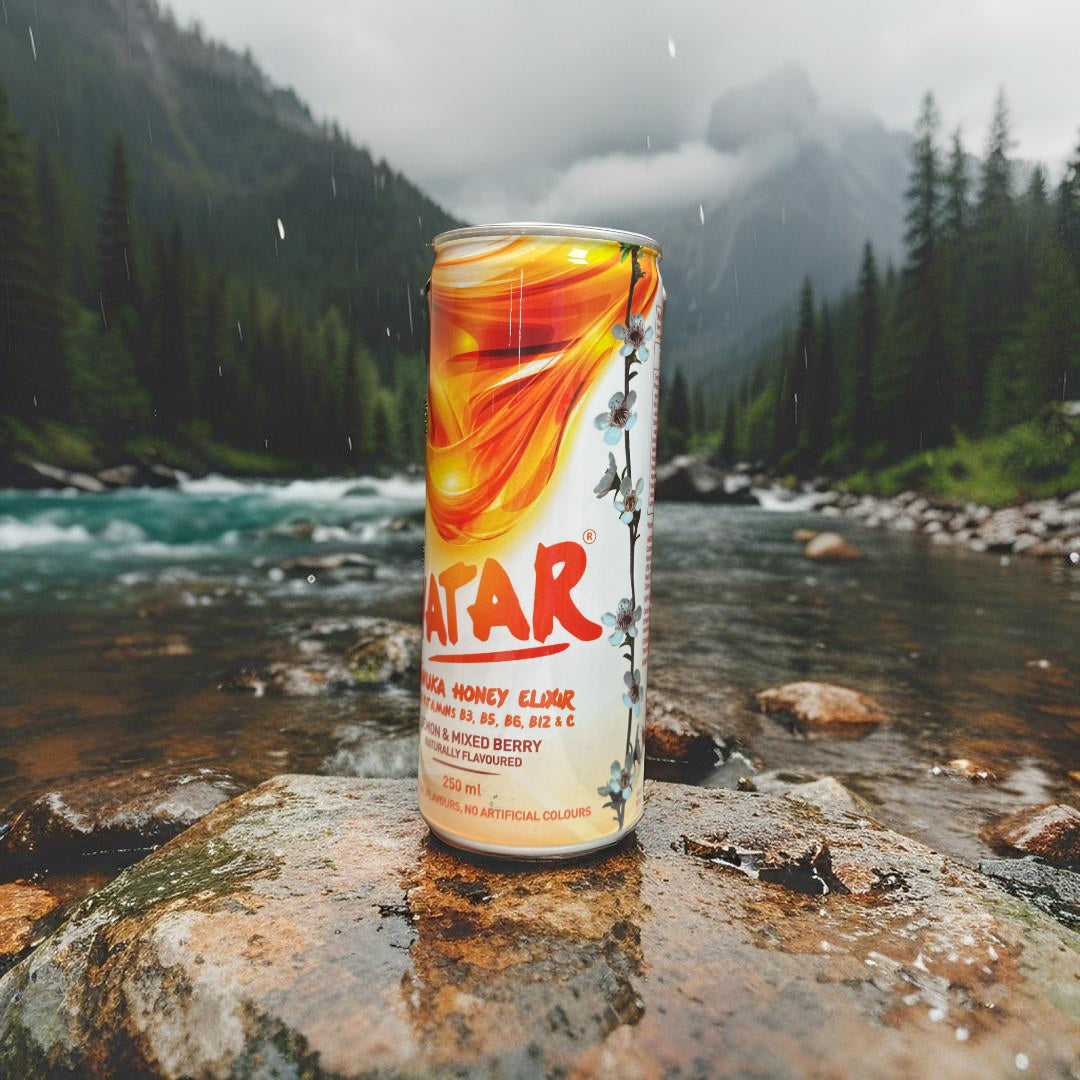
For example, Avatar Elixir is a Manuka honey based drink made with certified MGO500+ Manuka honey, lemon, elderflower, B vitamins, vitamin C, clean caffeine, and lightly carbonated water. Its sweetness is part of its flavour structure, alongside citrus brightness, floral elderflower, and gentle sparkle. That makes it a useful example of an ingredient-led energy drink where the question is not just “How sweet is it?” but “Does the sweetness support the flavour and occasion?”
How does food pairing affect a lower sugar drink routine?
Food pairing affects a lower sugar drink routine because a drink often feels more balanced when it is paired with a meal or snack rather than consumed as a standalone sweet hit. Pairing can also make a more flavourful drink feel intentional and satisfying.
This is not about turning an energy drink into a nutrition plan. It is about context. A naturally sweetened drink may feel different with lunch, a savoury snack, or a shared platter than it does when consumed quickly on an empty afternoon. Adults often enjoy flavour more when it has contrast.
Practical pairings for a naturally sweetened energy drink include:
- Savoury lunches: Citrus and honey notes can sit well beside salads, wraps, grain bowls, or light sandwiches.
- Afternoon snacks: Nuts, cheese, crackers, yoghurt, or fruit can make the drink feel like part of a proper break.
- Travel food: A lightly carbonated drink can feel fresher than a standard soft drink with airport or road trip meals.
- Social grazing: Honey, lemon, and botanical flavours can work well with small plates and non-alcoholic occasions.
A useful question is: “Am I drinking this because I want a satisfying flavour moment, or am I using sweetness as a habit?” That distinction helps keep naturally sweetened drinks in a thoughtful place within a lower sugar routine.
How often should you choose a natural energy drink in a low sugar routine?
How often you choose a natural energy drink depends on your overall routine, caffeine preferences, and how many other sweet drinks you consume. There is no universal frequency that suits everyone, so it is better to look at patterns across the day and week.
If your usual drinks are mostly unsweetened, an occasional naturally sweetened energy drink may fit comfortably. If your day already includes sweet coffee, juice, soft drinks, flavoured milks, or dessert-style beverages, adding another sweet drink may not support a lower sugar approach.
A simple frequency check is to ask:
- Is this replacing a higher sugar drink or being added on top?
- Have I already had other sweet drinks today?
- Do I want caffeine at this time of day?
- Will I enjoy the flavour enough for it to be worth choosing?
- Would a smaller serving or sharing the drink still satisfy the occasion?
This keeps the decision practical. A low sugar drink routine is not only about single labels. It is about repeated choices. The same naturally sweetened drink can fit well when chosen with awareness, and fit less well when chosen automatically without considering the rest of the day.
What makes a naturally sweetened energy drink feel satisfying without being too sweet?
A naturally sweetened energy drink feels satisfying without being too sweet when sweetness is balanced by acidity, aroma, carbonation, and a clean finish. Flavour balance can make a drink feel more complete, even when it is not heavily sweetened.
Sweetness alone can become tiring, especially in adult drinks. That is why citrus, botanicals, tea notes, ginger, herbs, and sparkle are often used to create structure. Lemon can sharpen the finish. Elderflower can add aroma. Carbonation can lift the palate. Honey can bring roundness and depth when used carefully.
This balance is especially important for people reducing sugar but not wanting a no-flavour approach. A drink does not need to taste plain to be part of a more mindful routine. It simply needs to deliver enough flavour from ingredients other than sugar.
Avatar Elixir is a relevant example because its Manuka honey sweetness is not working alone. Lemon adds brightness, elderflower adds a floral note, and light carbonation gives a refreshing finish. That kind of structure helps a natural energy drink feel more grown up and more considered than a drink built only around sweetness and caffeine.
What is the most practical way to decide if a drink fits your routine?
The most practical way to decide if a drink fits your routine is to use a simple checklist: serving size, total sugar, sweetener source, caffeine, occasion, food pairing, and frequency. If those points make sense together, the drink can be a reasonable part of a lower sugar routine.
Use this quick decision filter before buying or opening a can:
- Check the full serving: Make sure the sugar amount applies to the whole drink you plan to consume.
- Read total sugar: Do not rely only on words like “natural,” “clean,” or “light.”
- Identify the sweetness source: Decide whether you prefer honey, fruit-derived sweetness, no sugar sweeteners, or another approach.
- Consider the caffeine: Choose caffeine only when it suits your timing and personal preference.
- Name the occasion: Work, study, travel, social sipping, or a lunch break are clearer reasons than habit alone.
- Pair it thoughtfully: A savoury snack or meal can make a flavourful drink feel more balanced.
- Look at the pattern: One drink choice matters less than the overall rhythm of your week.
In short, a natural energy drink can fit into a low sugar drink routine when it is chosen with intention. The aim is not to remove enjoyment from drinks. It is to choose drinks that taste good, feel appropriate for the moment, and make sense alongside the rest of your routine.
These answers explain how naturally sweetened energy drinks fit into lower sugar drink choices.
Can natural energy drinks be part of a low sugar routine?
Yes, natural energy drinks can be part of a low sugar routine when you choose them intentionally and check the total sugar per serving. Natural ingredients do not automatically mean low sugar, because sweetness from honey, fruit juice, or other real-food sources still contributes sugar. The useful question is whether the drink suits the occasion, tastes satisfying, and fits with the rest of your day.
What makes naturally sweetened drinks different from no sugar drinks?
Naturally sweetened drinks use ingredients such as honey, fruit-derived sweetness, or botanical flavour blends, while no sugar drinks avoid sugar and usually rely on non-sugar sweeteners. No sugar options suit people who want sweetness with little or no sugar. Naturally sweetened drinks suit people who prefer ingredient-led flavour and are comfortable checking the sugar amount rather than avoiding sugar completely.
Is honey suitable in a lower sugar drink routine?
Honey is suitable in a lower sugar drink routine when it is used thoughtfully and the total sugar per serving fits your preferences. Honey is still a source of sugar, so it should not be treated as sugar-free. Its advantage in drinks is flavour quality, because it can bring rounded sweetness, aroma, and depth alongside citrus, botanicals, and carbonation.
How should I compare sugar on energy drink labels?
Compare energy drink labels by checking serving size first, then total sugar, caffeine amount, and sweetener source. A drink can look moderate until you notice the bottle or can contains more than one serving. The ingredient list also matters, because it shows whether sweetness comes from sugar, honey, fruit juice, artificial sweeteners, stevia, sugar alcohols, or a blend.
When does a naturally sweetened energy drink make the most sense?
A naturally sweetened energy drink makes the most sense when you want flavour, refreshment, and caffeine in a drink that feels more considered than a standard soft drink. It can suit work sessions, study breaks, travel, social occasions, or a more grown-up afternoon pick-me-up. It is best treated as an intentional choice rather than an unlimited daily default.
What should I choose if I dislike artificial sweeteners?
If you dislike artificial sweeteners, look for drinks that use restrained natural sweetness and flavour ingredients such as citrus, botanicals, honey, ginger, herbs, or sparkling water. Check the sugar amount rather than relying only on front-label phrases like natural or clean. This approach helps you avoid sweeteners you do not enjoy while still keeping sugar awareness in the decision.
How does Avatar Elixir approach sweetness and flavour balance?
Avatar Elixir is an example of an ingredient-led energy drink that uses certified MGO500+ Manuka honey with lemon, elderflower, B vitamins, vitamin C, clean caffeine, and lightly carbonated water. Its sweetness is part of the flavour structure rather than a no-flavour sugar replacement. For a lower sugar routine, the relevant step is to read the serving information and decide whether that flavour experience earns its place.