


Quick read:
- Honey named in a drink’s ingredient list establishes its declared presence, but not necessarily its quantity or how much sweetness it contributes.
- “Natural flavor” does not mean honey. A flavor ingredient may come from honey or evoke honey using other sources; the generic wording alone cannot tell you.
- Actual honey and flavorings can appear in the same drink. Compare ingredient declarations, clearly stated quantities, and the taste you prefer.
Imagine you are choosing between two honey-themed sparkling drinks. Turn them around, and their ingredient lists read like this:
- Hypothetical drink A: Carbonated water, honey, lemon juice, natural flavor.
- Hypothetical drink B: Carbonated water, cane sugar, lemon juice, natural flavor.
These are invented teaching examples, not Avatar ingredient lists. Drink A declares honey alongside natural flavor. Drink B declares cane sugar, with no honey listed as a separate ingredient. However, neither list explains the source of its natural flavor, including whether it contains honey-derived flavor material.
Neither tells you exactly how the drink tastes, either. The useful distinction starts with separating three questions: Is honey an ingredient? What supplies the sweetness? What creates the honey-like aroma?
Honey, honey-derived flavor, and honey-like flavor are different things
A honey-themed name can point towards an ingredient, a flavor experience, or both. It is not a complete recipe. Three distinctions make the label easier to read.
Honey as a food ingredient
Actual honey can contribute sweetness and its own characteristic flavor. In a properly labeled multi-ingredient food in the United States, honey is identified by its common or usual name in the ingredient statement. The FDA explains this in its Proper Labeling of Honey and Honey Products guidance.
Seeing “honey” or a more specific declaration such as “Mānuka honey” therefore gives you a direct ingredient check. It does not establish the amount unless the maker also provides that information.
Flavor ingredients derived from honey
A flavor material confirmed as derived from honey is not interchangeable with honey used as a sweetening food ingredient. Its purpose is flavor, and its presence does not establish a spoonful-sized quantity of honey in the drink.
The key word is confirmed. Unless the label or manufacturer identifies the source, “honey flavor” alone is not enough to establish honey origin. There is no need to guess an extraction method or recipe from the name.
Flavorings that evoke honey
A drink can have a honey-like flavor without honey being declared as a separate ingredient. Flavorings from other sources may create that impression. This can suit someone who wants a particular taste rather than honey itself.
It is also why aroma is not an ingredient test. A recognisable honey note does not tell you where that note came from, how much honey was used, or what supplies the drink’s sweetness.
Read “natural flavor” as a category, not a honey claim
Under the FDA’s flavor-labeling regulation, 21 CFR 101.22, “natural flavor” is a defined category involving qualifying source materials and processes. Its significant function is flavoring rather than nutrition. The rules allow natural flavors to be declared generically.
For a shopper, that means “natural flavor” does not identify honey, disclose honey grams, or name a sweetener. It also does not reveal the full composition of a flavor blend.
The wording on the front of a US-market drink has a separate job: describing its characterising flavor. Terms involving natural and artificial flavor depend on the flavor sources and how they relate to the named flavor. Under specified conditions, flavor from other natural sources can require an “artificially flavored” designation relative to the flavor being simulated.
The practical lesson is narrower than a full labeling rulebook: neither “all honey flavor comes from honey” nor “all honey-like flavor is artificial” is a reliable shortcut. When origin matters to your purchase, ask the manufacturer whether the flavor material is derived from honey.
Ingredient order offers clues, but not quantities
US ingredient lists generally place ingredients in descending order by weight, under 21 CFR 101.4. There is an exception for appropriately identified groups of ingredients present at 2% or less, which need not follow that order within the group.
Honey’s position can therefore offer a relative-weight clue. It cannot tell you:
- The grams of honey in a serving.
- How strongly the finished drink will taste of honey.
- Whether honey supplies most of the perceived sweetness.
- The source of a separately listed natural flavor.
Return to hypothetical drink A. Honey appearing before lemon juice tells you something about their relative weights in that example, but it does not reveal the balance of honey sweetness and citrus sharpness in the glass. A stated honey quantity answers a different, more specific question than ingredient order does.
Keep honey quantity separate from sugar information, too. Grams of honey are not the same as grams of sugar. Use the drink’s nutrition panel when comparing sugar amounts rather than converting an ingredient claim into a nutrition claim.
Avatar Elixir shows why honey and flavorings are not opposites
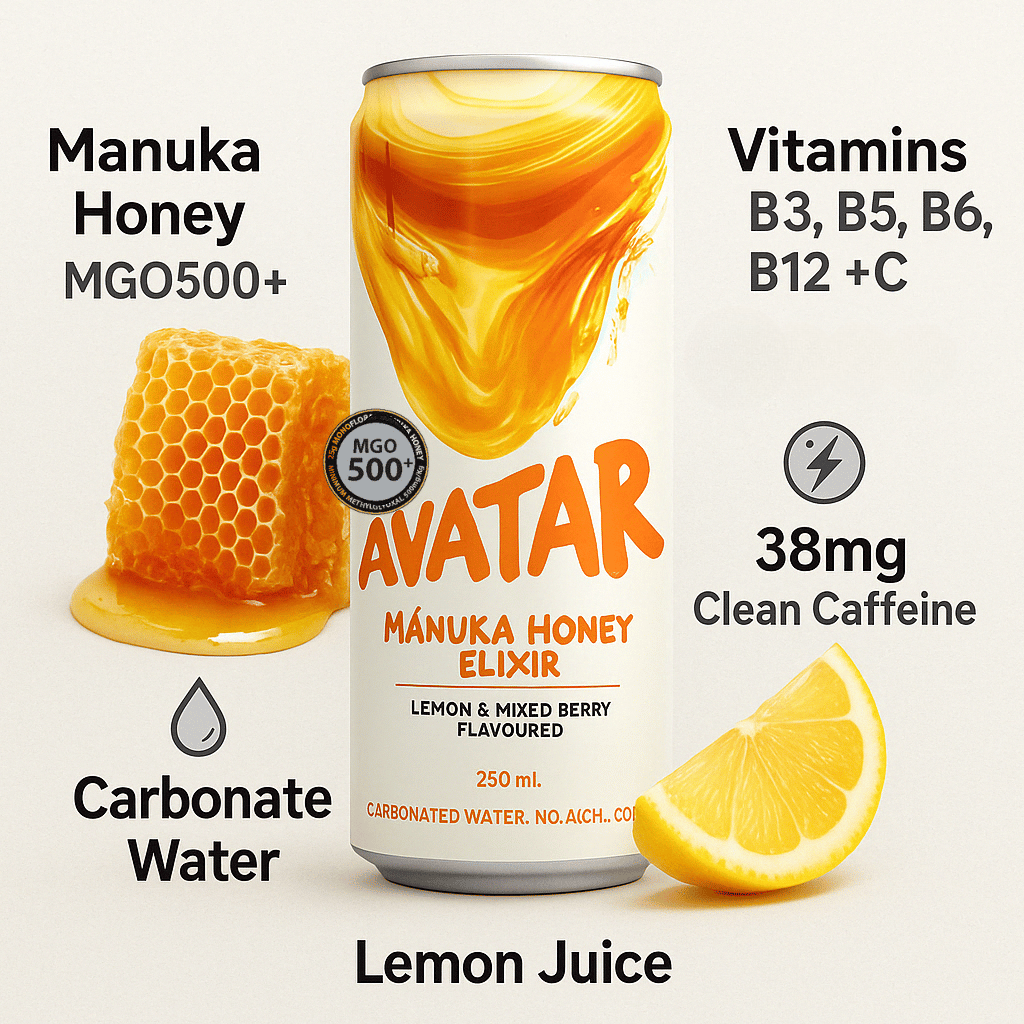
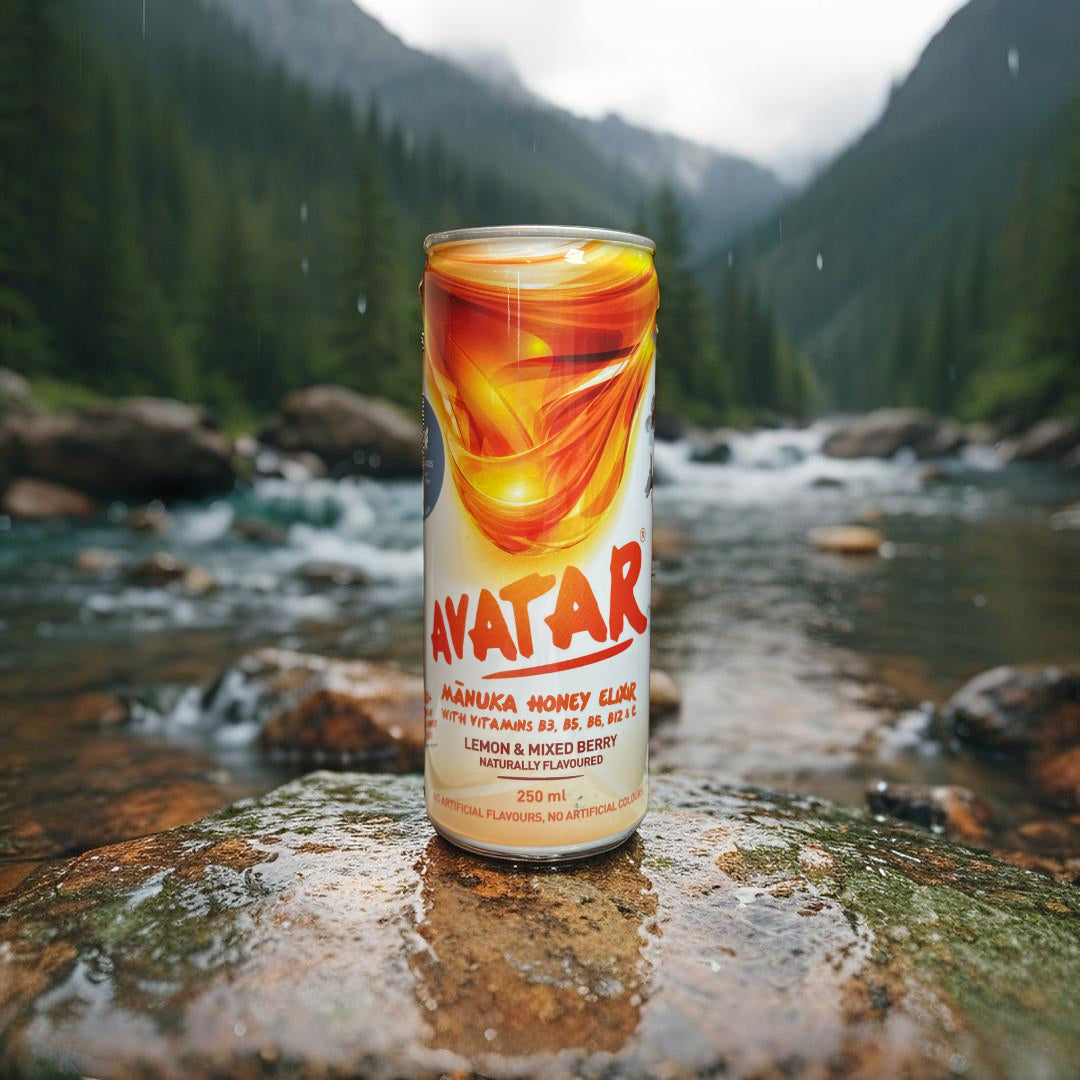
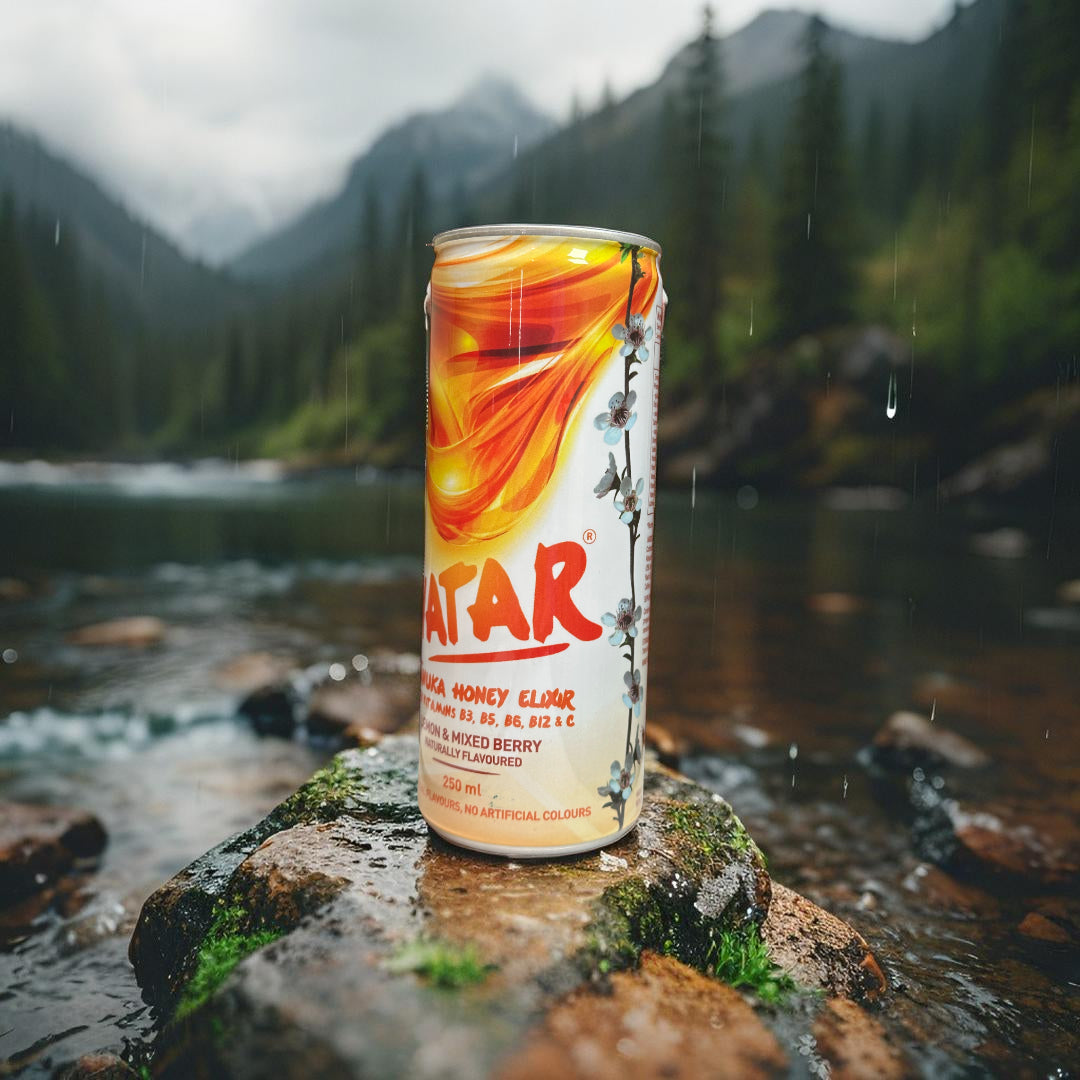
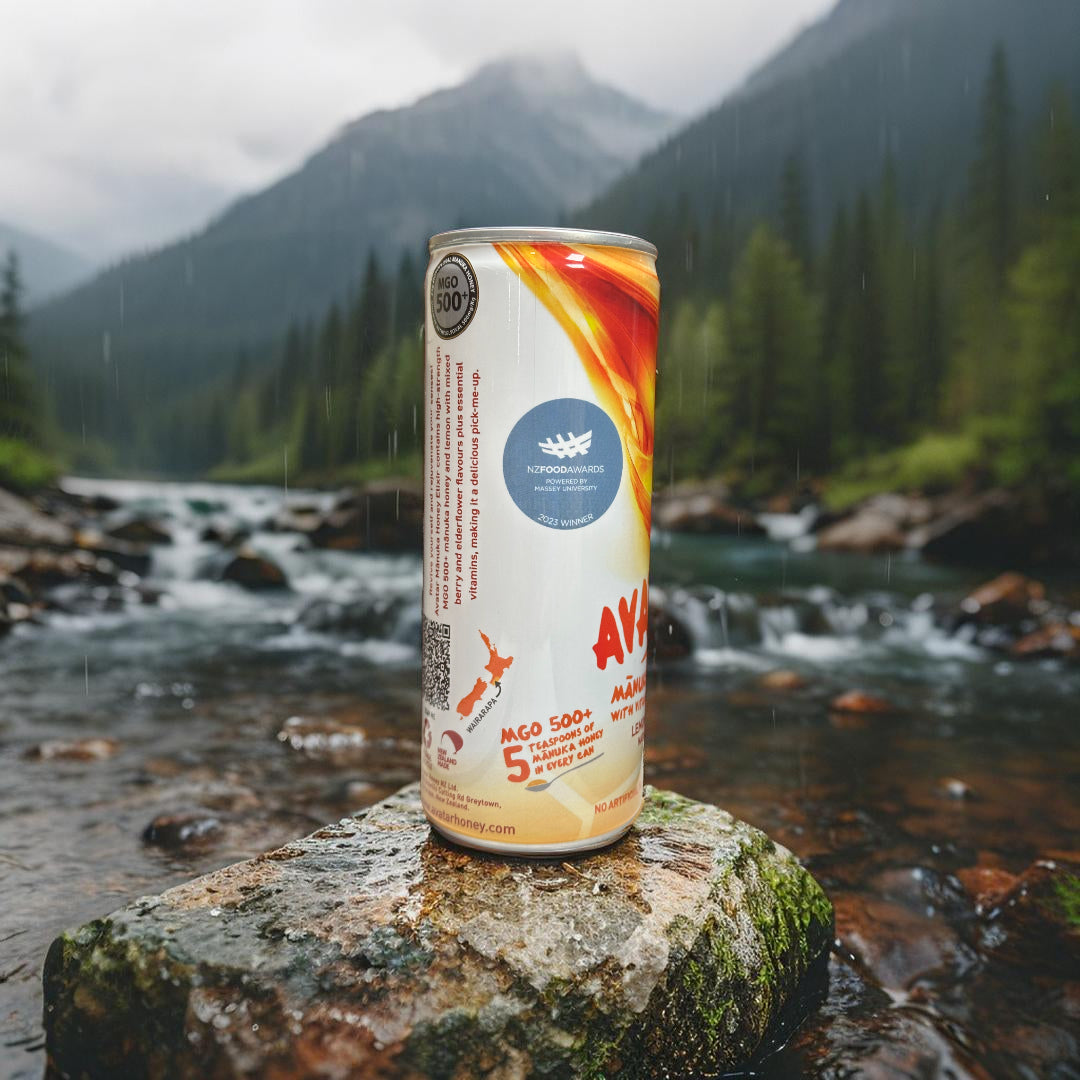
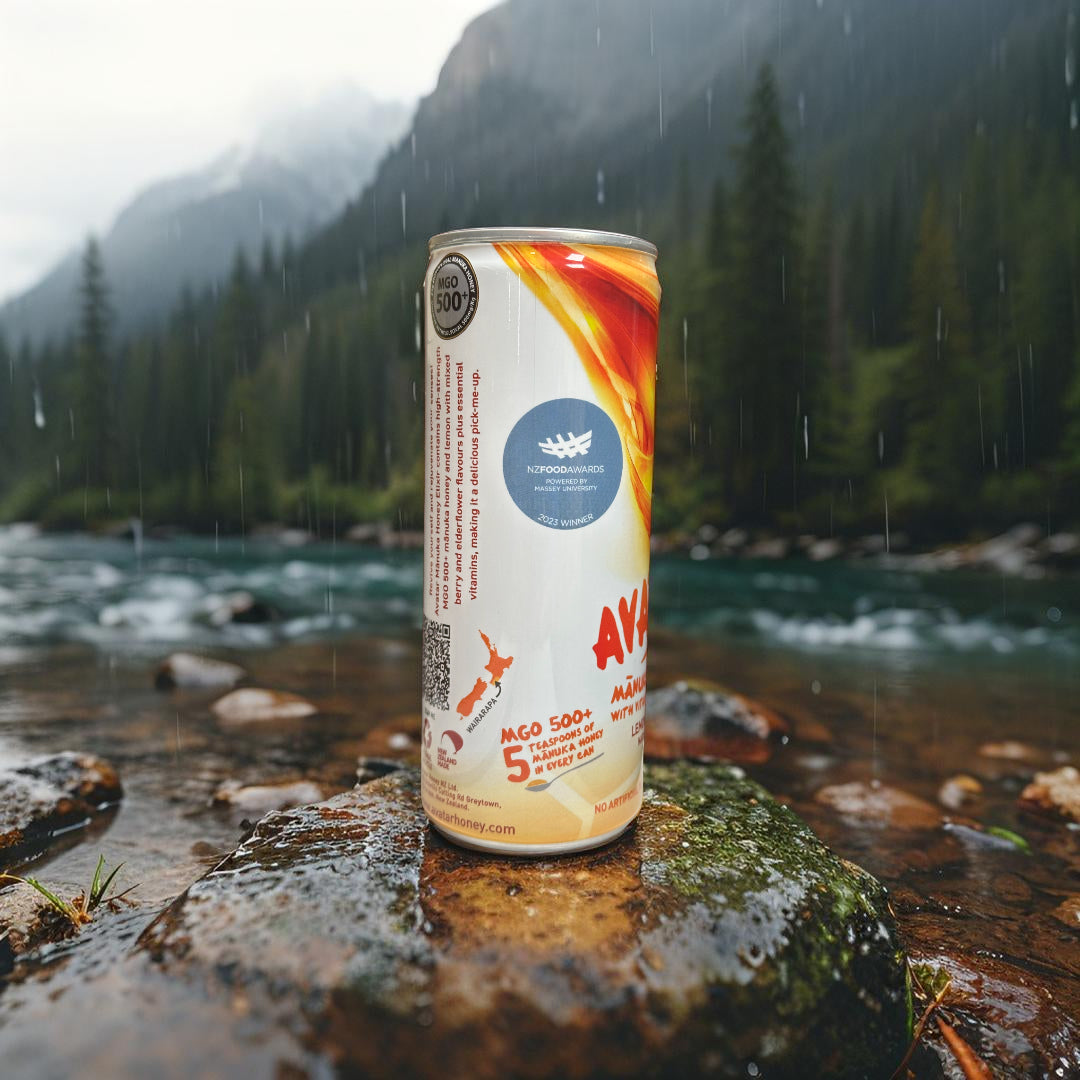
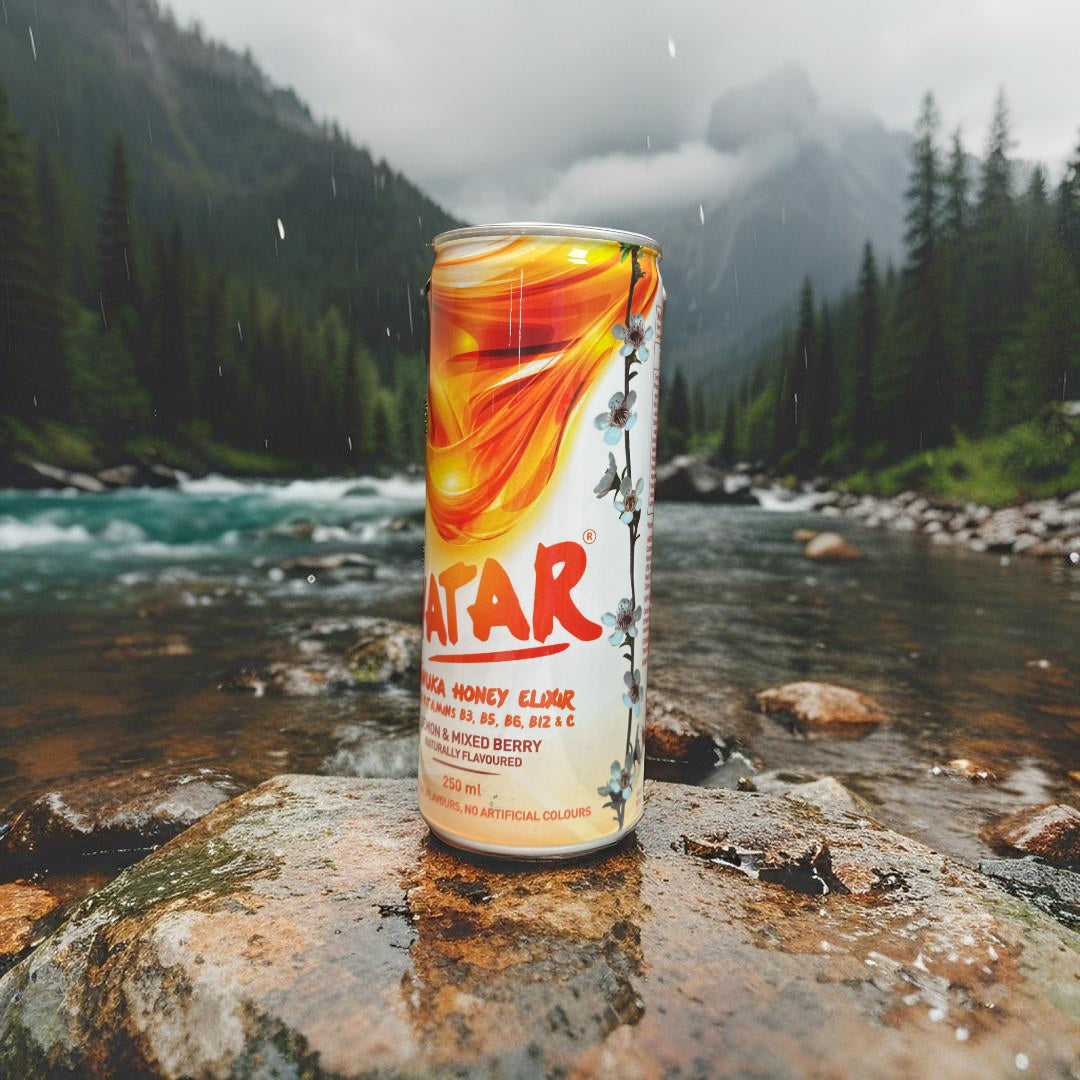
Our Avatar: Award Winning Elixir - Powered By Manuka Honey (12pk) provides a concrete example of a drink made with both. Its product description states 25g of MGO500+ Manuka honey, while the ingredient section lists monofloral MGO500+ Mānuka honey at 10% alongside carbonated water, lemon juice from concentrate, natural flavourings, vitamins, and caffeine.
Those details answer two useful shopping questions: honey is a declared ingredient, and its quantity is stated rather than left to be inferred from its position in a list. The natural flavourings do not cancel out the honey’s presence. Equally, the honey does not mean every flavor note comes from it.
We describe Avatar Elixir through honey sweetness, lemon, elderflower, mixed-berry notes, and light carbonation. That gives you a taste direction: a honey-led drink with fruit and floral character, rather than an expectation of honey and water alone. The ingredient declaration does not specify the sources within the natural flavourings, so it should not be read as identifying them as honey-derived.
The MGO500+ designation describes the honey ingredient, not a stated MGO concentration for the finished beverage. Likewise, the stated 25g is a honey quantity, not 25g of sugar.
Choose the ingredient story and taste you actually want
If actual honey is part of what you want to buy, prioritise a clear honey declaration and a transparent amount. Avatar Elixir is an option to explore when you also enjoy citrus, floral notes, and a lightly sparkling finish.
If your priority is simply a honey-like flavor, a flavored drink may fit your preference without meeting the same ingredient criteria. Neither choice establishes health superiority. The better match is the one whose recipe and taste description align with what matters to you.
Before putting a honey-themed drink in your basket, use this short checklist:
- Check presence: Is honey named in the ingredient list, or is the honey reference only part of the flavor description?
- Check transparency: Does the maker state a honey quantity and make its serving basis clear?
- Clarify flavor origin if it matters: Generic “natural flavor” wording cannot answer that question on its own.
- Choose your taste: Look for the sweetness, citrus, floral character, and carbonation you enjoy, without treating honey as an automatic health advantage.
These follow-ups help you compare honey quantities, clarify ingredient sourcing, and choose a drink that fits your preferences.
What should I ask a maker about an unclear honey flavor?
Ask whether the drink contains honey as a food ingredient, flavor material derived from honey, or flavorings from other sources. Then ask how much actual honey it contains per serving. Keeping those questions separate helps you get a useful answer rather than another description of how the drink tastes.
How do I compare honey amounts across different drink sizes?
Compare stated honey quantities on the same serving basis. Check whether each amount refers to a serving or the whole container, then compare equivalent drink volumes if both makers provide enough information. A larger honey amount in a larger bottle does not necessarily mean a more concentrated honey drink.
Is Avatar Elixir suitable if I want a caffeine-free honey drink?
Avatar Elixir contains natural caffeine, so it is not a caffeine-free choice. Its honey ingredient does not change that distinction. If avoiding caffeine is part of your shopping criteria, look for a drink explicitly identified as caffeine-free rather than relying on a honey-themed name.
Does a honey ingredient declaration independently verify its authenticity?
A honey declaration tells you what the maker identifies as an ingredient; it is not independent laboratory authentication. If honey origin or grade matters to your purchase, ask what documentation supports that specific claim. Ingredient presence, stated quantity, and evidence of origin answer different questions.