



Short answer: There is no universal waiting period between coffee and an energy drink. Check the caffeine amount in each serving, add it to every other caffeine source you have consumed that day, and consider your sensitivity, food intake, sleep and the time of day. If you still feel the effects of your coffee, feel uncomfortable, or expect the second drink to interfere with sleep, waiting longer or skipping it is the more sensible choice.
Spacing caffeinated drinks can help you make a more deliberate decision, but time alone does not determine whether another drink fits your day. Caffeine from coffee may still be affecting you when you open an energy drink, even if several hours have passed.
The practical question is not simply, “How long has it been?” It is, “How much caffeine have I already consumed, how do I feel, and how late is it?”
How long should you wait after coffee before having an energy drink?
You should wait long enough to assess how the coffee is affecting you, then review your total caffeine intake and the timing of your next drink. There is no fixed interval that is appropriate for every adult or every combination of drinks.
A small coffee and a large café coffee are not equivalent. Energy drinks also vary considerably in serving size and caffeine content. For a broader comparison, see our guide to coffee vs natural energy drinks. Two drinks consumed several hours apart may still produce overlapping effects because the body does not clear caffeine immediately.
Before choosing another caffeinated drink, check:
- The coffee serving: Note its size, style and any available caffeine information.
- The energy drink label: Confirm the caffeine amount per can or per serving, and check whether the container includes more than one serving.
- Other caffeine sources: Include tea, cola, chocolate drinks, pre-workout products and any other caffeinated foods or beverages.
- How you currently feel: If the coffee still feels noticeable, another caffeinated drink may intensify unwanted effects.
- Your next sleep period: A drink that suits the middle of the day may be a poor fit in the late afternoon or evening.
Spacing is therefore a decision tool, not a guarantee. A longer gap does not automatically make a second caffeinated drink suitable, particularly if the first serving was strong or you are sensitive to caffeine.
How do you calculate caffeine from coffee and energy drinks?
Add the disclosed caffeine from every drink and product you consume during the same day. Use the actual serving size rather than assuming that one cup, bottle or can always contains a standard amount.
- Write down the coffee serving. Use displayed nutrition information where it is available. If the café does not disclose caffeine, remember that the amount can vary with the beans, preparation method and serving size.
- Read the full energy drink label. Look for caffeine per serving and confirm how many servings are in the container.
- Add tea and other sources. Black tea, green tea, cola and some functional drinks can contribute to the same daily total.
- Include repeat servings. A second coffee, a refill or another can should be counted separately.
- Review the timing. Record roughly when you consumed each source so you can see whether drinks are clustered together or spread across the day.
For example, imagine you have a coffee in the morning and consider a 250 ml energy drink after lunch. The useful comparison is the caffeine disclosed for both servings, plus any tea, cola or other source consumed in between. The fact that the drinks have different names or ingredients does not stop their caffeine from contributing to the same total.
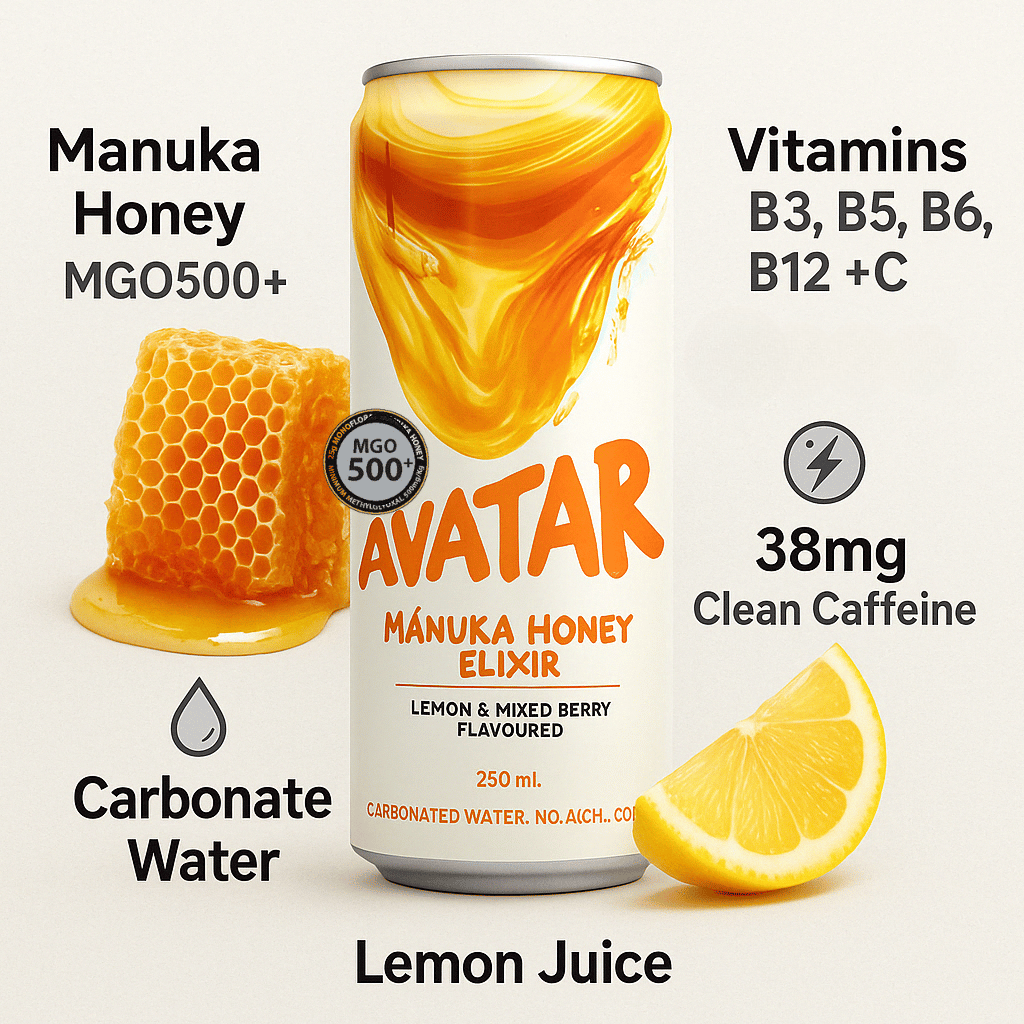
Avatar Elixir is one example of a 250 ml natural energy drink. If you choose it after coffee, its label should be checked in the same way as the label on every other caffeinated drink. Natural ingredients, Manuka honey, lemon or elderflower do not remove the need to account for its caffeine.
What does a same-day caffeine timeline look like?
A same-day timeline helps you compare the first drink, your present response and the proximity of the second drink to sleep. It is not a dosing schedule, and the clock times below are examples rather than universal recommendations.
Morning coffee, late-morning energy drink
Imagine having coffee at 7:30 am and considering an energy drink at 10:30 am. Three hours have passed, but that does not mean the coffee has stopped affecting you. Check the size and caffeine content of the coffee, consider whether you have eaten, and notice whether you already feel alert, restless or uncomfortable.
If you are still feeling a strong response to the coffee, the elapsed time is less important than that response. Waiting longer, choosing a non-caffeinated drink or skipping the second drink may be appropriate.
Morning coffee, energy drink around midday
Imagine having coffee at 8:00 am and considering an energy drink with lunch at 1:00 pm. The wider gap gives you more time to evaluate the first drink, but you should still total both sources. Food may change how the experience feels for some people, but eating does not cancel the caffeine already consumed.
Also consider why you want the second drink. If poor sleep is driving the decision, repeatedly adding caffeine may not resolve the underlying tiredness. Water, food, fresh air, movement or a break may be more suitable depending on the situation.
Morning coffee, late-afternoon energy drink
Imagine having coffee at 9:00 am and considering an energy drink at 4:30 pm. The drinks are farther apart, but the later timing may matter more than the gap. Caffeine can remain relevant for hours, and people differ in how readily it affects their evening wind-down and sleep.
If you have an early bedtime, are sensitive to caffeine or have already consumed several sources, the sensible decision may be to skip the late-afternoon drink. A long interval since breakfast does not guarantee that another caffeinated drink will suit your night.
Do food and sleep change how long you should wait?
Food and sleep can influence how a caffeinated drink feels, but they do not create a reliable waiting period. They should be considered alongside caffeine quantity, timing and personal sensitivity.
Having caffeine without food may feel uncomfortable for some adults. Eating before another drink may make the occasion feel different, but food should not be treated as a way to neutralise caffeine or justify stacking drinks close together.
Sleep also changes the context. After a short or disrupted night, you may be more inclined to reach for another caffeinated drink. However, feeling unusually tired can make it harder to judge whether another serving is genuinely useful, and caffeine later in the day may make it harder for some people to settle at night.
In practical terms, do not use food or fatigue as a substitute for checking the label and reviewing your full day of caffeine.
What signs suggest you should wait or skip the energy drink?
Wait or skip the second drink if you already feel overstimulated, uncomfortable or concerned about sleep. Your current response is an important part of the decision, even when your estimated caffeine total appears moderate.
Reasons to avoid adding another caffeinated drink can include:
- feeling jittery, shaky or unusually restless
- a racing or noticeably uncomfortable heartbeat
- feeling anxious, irritable or unable to settle
- stomach discomfort or nausea
- a headache that appeared after caffeine
- difficulty concentrating because you feel overstimulated
- being close enough to bedtime that caffeine commonly affects your sleep
- not knowing how much caffeine was in your earlier coffee
Do not treat these signs as a prompt to find a different caffeinated product. Water, a meal or snack, and a break may be more appropriate. If symptoms are severe, unusual or worrying, seek qualified medical assistance rather than relying on general beverage guidance.
Who should seek individual guidance about caffeine timing?
Anyone who is particularly sensitive to caffeine or has a relevant health concern should ask a qualified healthcare professional for advice tailored to their circumstances. General waiting-period advice cannot account for medical conditions, pregnancy, medicines or individual reactions.
A doctor, pharmacist or other appropriately qualified professional can help if caffeine seems to trigger troubling symptoms, regularly disrupts sleep, or may interact with a medicine or health condition. Product labels and general articles are useful for identifying caffeine sources, but they cannot determine a personalised amount or schedule.
What is the most practical rule for spacing coffee and an energy drink?
The most practical rule is to check first, add everything, assess how you feel and consider bedtime before opening the second drink. Do not rely on a fixed number of hours.
A simple decision sequence is:
- Confirm what you drank and how large the serving was.
- Check the energy drink’s caffeine information and serving size.
- Add all caffeine sources consumed that day.
- Consider food, sleep and your usual sensitivity.
- Notice whether the first drink is still producing unwanted effects.
- Consider how the timing may affect your next sleep period.
- If you are uncertain or uncomfortable, wait longer or choose a non-caffeinated drink.
There is no single waiting period that makes combining coffee and an energy drink appropriate for everyone. The better decision comes from considering the label, the total, the timing and your own response together.
These follow-up points clarify how to handle unknown caffeine amounts, unusual schedules and your response to earlier drinks.
What if you do not know how much caffeine was in your coffee?
Treat the caffeine amount as uncertain rather than assuming it was low. Ask the cafe or manufacturer whether information is available, and note the coffee's size and style. If you cannot make a reasonable estimate, still feel its effects or are unsure about adding another source, waiting longer or skipping the energy drink is the more cautious choice.
Should shift workers consider clock time or their planned sleep?
Shift workers should consider the timing of their next sleep period, not just whether the clock says morning or afternoon. Review the caffeine already consumed, how you currently feel and how close the second drink would be to planned rest. An energy drink that fits one work schedule may be poorly timed for another.
Can how you feel replace counting your total caffeine?
No, how you feel should not replace checking your total caffeine intake. Your current response is useful, but it does not reveal the exact amount consumed or remove the need to count coffee, energy drinks, tea and other sources. Use both the available caffeine information and your personal response when deciding whether to wait or skip another drink.