



Short answer: Students can sip water, lightly flavoured sparkling drinks, lower-caffeine options, herbal tea, milk-based drinks, and occasional clean caffeine drinks during exam week, while using coffee more deliberately instead of reaching for it every study block.
Exam week has a particular look: notes spread across the desk, tabs open on a laptop, snacks within reach, and a second or third coffee starting to feel less helpful than it did in the morning. At some point, another cup can feel heavy, jittery, or simply boring.
A better exam week drink plan is not about chasing extreme energy. It is about pacing caffeine, keeping water nearby, choosing flavour that makes study breaks feel refreshing, and pairing drinks with food so long revision days feel steadier. Coffee can still have a place, but it does not need to carry the whole week.
What should students sip during exam week besides coffee?
Students should rotate between water, food-friendly drinks, light sparkling options, herbal teas, and moderate caffeine drinks so they are not relying on coffee all day. A sensible drink rotation gives each part of the day a purpose: water for baseline hydration, caffeine when it is genuinely useful, flavour for a reset, and calmer drinks when study is winding down.
The main idea is simple: match the drink to the study moment. Morning revision may suit coffee, tea, or a clean caffeine drink. Afternoon fatigue often calls for water, food, and something refreshing before more caffeine. Evening review is usually better with non-coffee drinks, especially if sleep matters that night.
This approach also helps avoid the common exam week trap of using coffee as a default answer to every dip in energy. Sometimes the better answer is lunch. Sometimes it is a glass of water. Sometimes it is stepping away from the screen with a chilled sparkling drink that feels like a break without turning into another heavy caffeine hit.
What should students drink during morning revision?
Morning revision usually suits water first, then one planned caffeine drink if wanted. Starting with water and food before coffee or another caffeinated drink can make the first study block feel more balanced and less rushed.
A practical morning setup might include a bottle of water on the desk, breakfast or a snack with protein and slow-release carbohydrates, and one coffee, tea, or clean caffeine drink. This keeps caffeine as part of the routine rather than the entire routine.
What pairs well with morning study drinks?
Morning drinks work best with food that has some staying power. Toast with nut butter, yoghurt and fruit, eggs, oats, or a breakfast wrap can sit well with coffee, tea, or a lightly sparkling caffeine drink.
If coffee feels too sharp on an empty stomach, a gentler-feeling option may be more appealing. Some students prefer black or green tea, while others like a lightly carbonated drink with citrus or botanical flavour. The goal is not to replace breakfast with a beverage. It is to make the first study block feel more settled.
What should students sip during afternoon fatigue?
Afternoon fatigue is often a sign to pause, drink water, eat something useful, and then decide whether caffeine is still needed. Students do not always need another coffee at this point, especially if they have already had one or two earlier in the day.
A good afternoon drink choice should feel refreshing without being excessive. Chilled water, sparkling water, iced tea, diluted juice, or a premium sparkling option can help create a real break between revision blocks. If caffeine is included, it is worth choosing it deliberately and checking how late in the day it is.
This is where flavour matters. Lemon, honey, elderflower, mint, cucumber, berries, or a crisp sparkling texture can make a drink feel more interesting than plain water, without turning the break into a sugar-heavy or highly caffeinated habit.
Where does Avatar Elixir fit into an exam week study break?
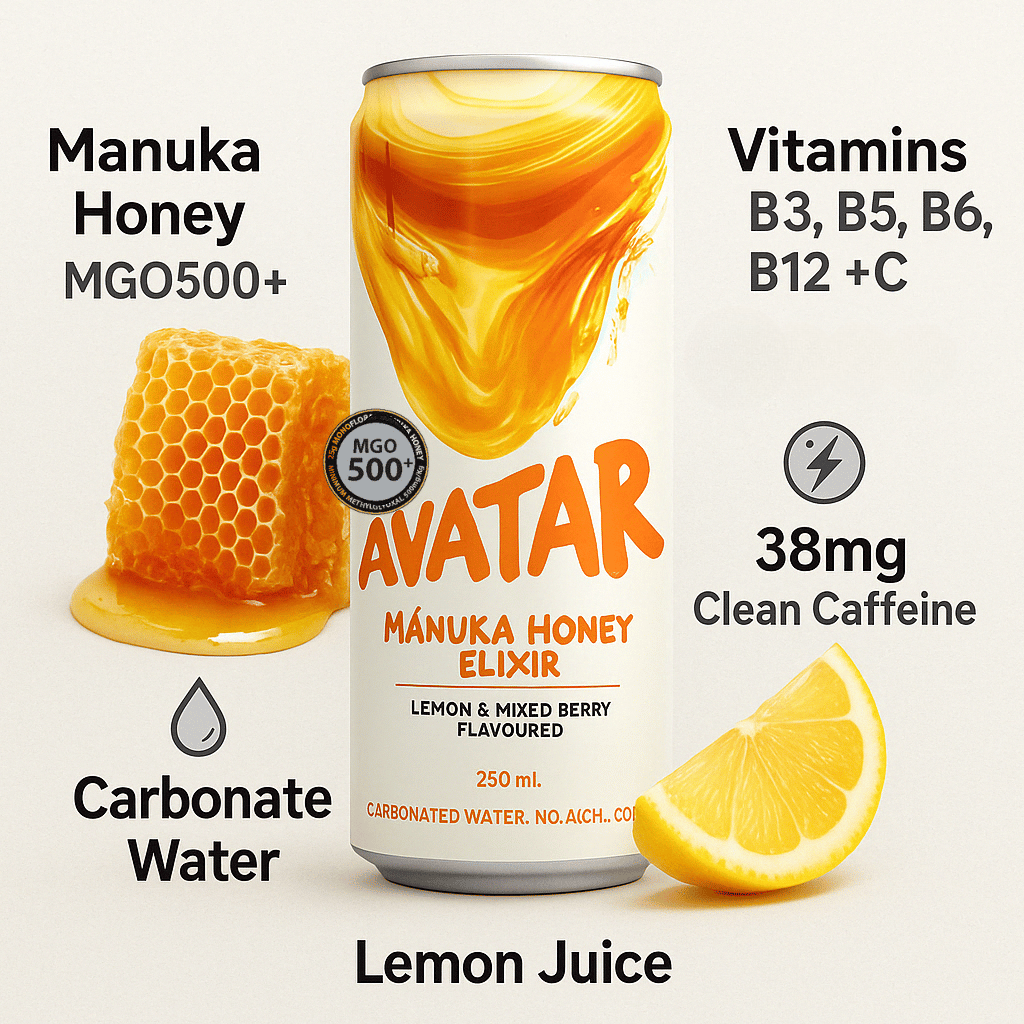
Avatar Elixir can fit as a premium sparkling option for a study break when a student wants something more special than plain water or a soft drink. It is made with certified MGO500+ Manuka honey, lemon, elderflower, B vitamins, vitamin C, clean caffeine, and lightly carbonated water, so it suits the moment when flavour, refreshment, and a moderate caffeine choice are all part of the plan.
For students who like to stock the fridge before a big week, Beekeeper's Apprentice 8pk can be a practical way to keep a chilled option ready for afternoon revision breaks or shared study sessions. It should still sit inside a balanced routine with water, meals, snacks, and rest, rather than replacing them.
What should students drink during evening review?
Evening review usually works best with non-coffee drinks, low-caffeine drinks, or caffeine-free options. If sleep is important that night, late coffee or strong energy drinks may not be the best fit for many students.
Good evening choices include water, warm herbal tea, sparkling water with lemon, a milk-based drink, or a lightly flavoured caffeine-free option. These drinks can help mark a slower pace for recap notes, flashcards, or reading without turning the evening into another high-stimulation block.
If a student still chooses a caffeinated drink in the evening, it is worth being honest about personal sensitivity. Some people can drink caffeine later and feel fine. Others notice it affects their wind-down routine. A practical rule is to keep evening drinks lighter and make sleep part of the exam strategy, not an afterthought.
What should students sip during breaks between study blocks?
Breaks between study blocks are a good time to choose drinks that feel refreshing and reset the palate, rather than automatically reaching for more coffee. Water, sparkling water, herbal iced tea, or a chilled premium drink can make the break feel intentional.
A proper break drink should be easy to enjoy away from the desk if possible. Standing outside for five minutes with a cold drink, stepping into the kitchen for tea, or having sparkling water with a snack can create a clearer separation between one study block and the next.
Food pairing is helpful here too. A drink break can sit alongside fruit, crackers and cheese, hummus and vegetables, a muesli bar, nuts, or a small sandwich. Pairing a drink with food often makes the break more satisfying than sipping caffeine alone.
How can students rotate drinks across a long revision day?
Students can rotate drinks by giving each part of the day a simple role: hydrate early, use caffeine with intention, refresh in the afternoon, and wind down in the evening. The table below gives a practical structure without being strict.
| Study moment | Drink idea | Food pairing cue | Why it fits |
|---|---|---|---|
| Before the first study block | Water, then coffee, tea, or a clean caffeine drink if wanted | Oats, toast, yoghurt, eggs, or fruit | Starts the day with hydration and avoids using caffeine as breakfast |
| Mid-morning revision | Water, herbal tea, or sparkling water | Fruit, nuts, or a small snack | Keeps the desk routine steady without adding caffeine every hour |
| After lunch | Water first, then iced tea or a lightly sparkling drink | Lunch with protein, grains, vegetables, or leftovers | Helps separate a real meal from the next study push |
| Afternoon slump | Chilled sparkling water, Avatar Elixir, or another moderate caffeine option if suitable | Crackers and cheese, hummus, a muesli bar, or a banana | Adds flavour and refreshment when another coffee feels like too much |
| Evening review | Water, herbal tea, warm milk drink, or caffeine-free sparkling option | Light dinner, toast, soup, or a simple snack | Supports a slower review pace without making the evening feel like a café shift |
This rotation is flexible. A student who loves coffee might still enjoy one in the morning. A student who is sensitive to caffeine might choose tea or caffeine-free drinks most of the day. The useful part is the pacing, not a perfect schedule.
How much caffeine should students have during exam week?
Students should treat caffeine as something to pace, not something to keep increasing whenever they feel tired. Coffee, tea, energy drinks, cola, chocolate, and some functional drinks can all contribute to total caffeine intake.
Because caffeine tolerance varies, students should read labels, notice how they personally respond, and avoid stacking several caffeinated drinks close together. A coffee plus an energy drink plus a strong tea can add up quickly, even if each drink feels normal on its own.
The most practical exam week habit is to decide when caffeine is actually useful before opening the drink. If the answer is “I am thirsty,” choose water. If the answer is “I need a break,” choose a refreshing drink and move away from the desk. If the answer is “I planned a focused morning block,” one considered caffeine drink may make more sense than three accidental ones.
What is the simplest drink plan for exam week?
The simplest exam week drink plan is water all day, one planned caffeine drink earlier, a refreshing option for the afternoon, and a caffeine-light or caffeine-free drink in the evening. This keeps the routine realistic and avoids making every study session depend on coffee.
For a practical setup, stock the fridge or desk area with a few different choices:
- Water: keep a bottle nearby for every study block.
- One main caffeine option: coffee, tea, or a clean caffeine drink earlier in the day.
- Something sparkling: sparkling water or a premium option like Avatar Elixir for a proper break.
- Something warm and calm: herbal tea or a milk-based drink for evening review.
- Food to match: simple snacks and meals so drinks are not doing all the work.
In short, the best drink choices for exam week are the ones that support the rhythm of the day. Use coffee when it fits, but give yourself more than one option. Water, food, flavour, and well-timed caffeine can make long study days feel more manageable without chasing extreme energy.
These answers cover practical drink choices for exam week, from coffee alternatives to study break options and fridge planning.
What can students drink during exam week besides coffee?
Students can drink water, sparkling water, herbal tea, iced tea, milk-based drinks, smoothies, diluted juice, and moderate clean caffeine drinks during exam week. The best approach is to rotate drinks across the day instead of using coffee for every study block. Water supports the baseline routine, food-friendly drinks suit meals and snacks, and lighter flavoured options make breaks feel more refreshing.
Is it better to rotate drinks instead of drinking coffee all day?
Yes, rotating drinks is usually a more balanced exam week habit than drinking coffee all day. A simple rotation gives each drink a job: water for regular sipping, coffee or tea for planned caffeine, sparkling or flavoured drinks for study breaks, and calmer non-coffee drinks for evening review. This helps students avoid making every dip in energy another caffeine moment.
What should students sip when afternoon study fatigue hits?
Students should start with water, food, and a proper pause when afternoon study fatigue hits, then decide whether caffeine is still needed. A refreshing option such as chilled sparkling water, iced tea, diluted juice, or a premium sparkling drink works well between revision blocks. Flavours like lemon, honey, elderflower, mint, or berries help the break feel more enjoyable without relying on another coffee.
Are clean caffeine drinks a good option for study breaks?
Clean caffeine drinks are a good option for study breaks when they are chosen deliberately and fit the time of day. They should sit alongside water, meals, snacks, and rest, not replace them. Avatar Elixir is one example of a premium sparkling option made with certified MGO500+ Manuka honey, lemon, elderflower, B vitamins, vitamin C, clean caffeine, and lightly carbonated water.
What drinks work best for evening revision before sleep?
Evening revision usually works best with non-coffee drinks or low-caffeine choices, especially when sleep still matters that night. Water, herbal tea, warm milk, caffeine-free iced tea, or a light sparkling water are sensible options for winding down study. The aim is to keep the drink pleasant and steady, not to turn a late review session into another high-caffeine block.
What snacks pair well with study drinks during exams?
Study drinks pair best with snacks that have some staying power, such as yoghurt and fruit, toast with nut butter, eggs, oats, cheese and crackers, nuts, or a simple wrap. Coffee, tea, or clean caffeine drinks feel more balanced when they are not taken on an empty stomach. Sparkling drinks pair nicely with lighter snacks, especially fruit, crackers, sandwiches, or shared study plates.
How should students stock the fridge before exam week?
Students should stock the fridge with a mix of water, easy snacks, meal basics, and a few drinks that make study breaks feel intentional. Keep chilled water, fruit, yoghurt, sandwich fillings, and one or two more interesting drink options ready. For a premium sparkling break, Beekeeper's Apprentice 8pk or Avatar Elixir gives students a fridge-ready option for afternoon revision or shared study sessions.