


Short answer: Check more than the front-of-can claim. If an energy drink says it is without taurine, aspartame, or sugar alcohols, read the ingredient panel for the caffeine source and amount, sweetener type, flavour system, acidity, carbonation, serving size, and the occasion it is designed for.
You are standing in front of the fridge, and several cans all seem to be saying the same thing: cleaner energy, better ingredients, no crash, natural flavour, smarter caffeine. The front of the can is useful, but the ingredient panel usually tells the clearer story.
For adults comparing cleaner energy drink choices, the most practical approach is not to treat one missing ingredient as the whole answer. A drink without taurine, aspartame, or sugar alcohols may still vary widely in caffeine level, sweetness, flavour, texture, and how it fits into work, study, travel, social occasions, or a long afternoon.
This guide explains what to check on the label when you want an energy drink without taurine, aspartame, or sugar alcohols, while still choosing something that tastes good and suits the moment.
What should you check first on an energy drink label?
Check the ingredient list, nutrition panel, caffeine amount, serving size, and sweetener type before relying on front-of-can claims. These four areas tell you what the drink actually contains and how it is likely to fit into your day.
A clean-looking design or a phrase like natural energy does not always mean the same thing from one drink to the next. One can may use sugar, another may use artificial sweeteners, another may use stevia, and another may use fruit juice or honey for part of its sweetness. The difference matters because it affects flavour, mouthfeel, and how the drink sits in your routine.
Start with these basic checks:
- Ingredient list: Look for taurine, sweeteners, caffeine source, flavourings, acids, colours, and preservatives.
- Caffeine information: Check how much caffeine is in the full can, not just per 100 ml.
- Nutrition panel: Compare sugars, total carbohydrates, and serving size.
- Sweetener line: Identify whether the drink uses sugar, honey, stevia, sucralose, aspartame, sugar alcohols, or a blend.
- Use occasion: Decide whether the drink suits work, study, travel, a social setting, or mixing into a mocktail or cocktail.
In short, read the drink as a whole formula rather than a single claim.
How do you confirm an energy drink is without taurine?
To confirm an energy drink is without taurine, look for the word taurine in the ingredient list. If it is not listed, the drink is not using taurine as a declared ingredient.
Taurine is commonly associated with traditional energy drinks. Some people choose drinks without it because they prefer a simpler label, want a different style of energy drink, or are looking for a more food-led beverage rather than a classic high-intensity energy formula.
The important point is that without taurine does not automatically tell you everything else about the drink. A taurine-free energy drink can still contain high caffeine, artificial sweeteners, strong flavours, or other added ingredients. It can also be a lighter, more natural-style drink. The label will show which direction the brand has taken.
When checking for taurine, also scan nearby ingredient language such as:
- Amino acid blends: These may include taurine or other amino acids.
- Energy blend: This may be a marketing phrase, so check what is actually listed underneath.
- Functional blend: This can mean many things, including vitamins, caffeine, botanical extracts, or other additions.
A clear ingredient list is easier to understand than a vague blend name. If you want an energy drink without taurine, the label should make that simple to verify.
How do you check for aspartame and other artificial sweeteners?
To check for aspartame, read the sweetener section of the ingredient list and look specifically for aspartame. If you are also avoiding artificial sweeteners more broadly, check for names such as sucralose and acesulfame potassium as well.
Aspartame is an artificial sweetener used in some low-sugar and zero-sugar drinks. It is not the only sweetener used in energy drinks, so a drink that is aspartame free may still use another non-sugar sweetener. That may be perfectly acceptable for some people, but not for others who are looking for a particular taste profile or a more ingredient-led drink.
Common sweetener terms to check include:
- Aspartame: An artificial sweetener some shoppers specifically avoid.
- Sucralose: Another common artificial sweetener in low-sugar drinks.
- Acesulfame potassium or Ace-K: Often used with other sweeteners.
- Stevia or steviol glycosides: A plant-derived sweetener with a distinct taste profile.
- Sugar, cane sugar, fruit juice, or honey: Caloric sweetening ingredients that also affect flavour and body.
The practical question is not only whether a drink is without aspartame. It is also what the drink uses instead. That replacement shapes sweetness, aftertaste, texture, and how the drink pairs with food or social occasions.
How do you spot sugar alcohols on an energy drink label?
To spot sugar alcohols, look for ingredient names such as erythritol, xylitol, sorbitol, maltitol, mannitol, and isomalt. These are usually listed in the ingredient panel and may also appear under carbohydrates in the nutrition panel depending on the label format.
Sugar alcohols are used in some reduced-sugar foods and drinks because they provide sweetness with fewer calories than sugar. They can also change mouthfeel, sometimes giving a cooling effect or a different finish compared with sugar, honey, juice, or stevia.
If you are choosing an energy drink without sugar alcohols, the label should be checked carefully because the front of the can may focus on zero sugar or low calorie rather than naming the sweetening system clearly. A drink can be free from sugar alcohols and still be sweetened in several ways.
Here is a simple scan pattern:
- Read the full ingredient list from start to finish.
- Look for words ending in -ol, such as erythritol or xylitol.
- Check whether the nutrition panel lists polyols or sugar alcohols.
- Identify what provides sweetness instead, such as sugar, honey, stevia, juice, or another sweetener.
A drink without sugar alcohols is easier to assess when the brand clearly explains its sweetening approach.
What should you check about the caffeine source?
Check both the amount of caffeine and the source of caffeine. A cleaner energy drink should make it easy to understand how much caffeine is in the can and whether it comes from added caffeine, coffee, tea, guarana, yerba mate, or another source.
Caffeine source can affect how a drink is positioned, but the amount still matters. A natural source does not automatically mean a low-caffeine drink. For everyday use, many adults prefer to know the total caffeine per can so they can compare it with coffee, tea, or other energy drinks they already consume.
Look for wording such as:
- Caffeine: Added caffeine, often listed directly.
- Natural caffeine: Usually indicates caffeine derived from a natural source, but the label should still state the amount.
- Green tea extract: May contribute caffeine, depending on the formula.
- Guarana: A botanical source that naturally contains caffeine.
- Yerba mate: A plant-based caffeine source used in some drinks.
If the can lists caffeine per 100 ml, calculate or check the amount for the full serving. A 250 ml can and a 500 ml can can feel very different in practice, even if the label language sounds similar.
What does the sweetness system tell you about the drink?
The sweetness system tells you how the drink creates flavour balance, mouthfeel, and finish. A drink without taurine, aspartame, or sugar alcohols can still taste very different depending on whether it uses honey, sugar, juice, stevia, or another sweetener.
Sweetness does more than make a drink taste sweet. It softens acidity, rounds out bitterness from caffeine or botanicals, and affects how refreshing the drink feels when chilled. In sparkling drinks, sweetness also helps balance carbonation and citrus.
When reading the label, ask these questions:
- Is the sweetness coming from a recognisable ingredient? Honey, juice, and sugar are easy to understand on a label.
- Is the drink using high-intensity sweeteners? These can create a sweeter taste with little or no sugar, but the finish may differ.
- Is the drink very low sugar or moderately sweet? This affects whether it feels like a sharp refresher, a soft drink alternative, or a more rounded sparkling beverage.
- Does the sweetness match the flavour? Lemon, berry, tropical, ginger, and floral flavours each need different balance.
There is no single best sweetener for every adult or every occasion. The useful label-reading habit is to identify the sweetener type, then decide whether it matches how you want the drink to taste and feel.
What should you check about flavour and carbonation?
Check whether the drink uses natural flavours, artificial flavours, juice, extracts, acids, botanicals, or a combination, then consider how much carbonation it has. Flavour and carbonation often determine whether a cleaner energy drink is enjoyable enough to become a repeat choice.
Energy drinks can be intensely flavoured, lightly flavoured, sharp, sweet, floral, citrus-led, or almost soda-like. A cleaner label does not always mean a calmer flavour. Some drinks without taurine, aspartame, or sugar alcohols still use bold flavour systems designed to taste like conventional energy drinks.
On the label, look for:
- Natural flavours: A broad term that may suit shoppers avoiding artificial flavouring.
- Artificial flavours: Listed when used, depending on local labelling rules.
- Fruit juice or extracts: These can add flavour, colour, sweetness, or acidity.
- Citric acid or other acids: These add brightness and tartness, especially in citrus drinks.
- Botanical notes: Ingredients such as elderflower, ginger, mint, or tea can add complexity.
Carbonation is also part of the experience. Light carbonation can feel crisp and refreshing without becoming too sharp. Strong carbonation can make a drink feel more like a classic soda or mixer. Still drinks may suit different occasions, especially when sipping slowly at a desk.
How should serving context affect your choice?
Serving context should affect your choice because the best energy drink for a study session may not be the best drink for a dinner table, travel day, afternoon reset, or social mixer. Check whether the can size, caffeine level, sweetness, and flavour intensity suit the moment.
A label-reading guide is most useful when it connects ingredients to real use. For example, a highly flavoured, high-caffeine drink might suit some long days but feel too intense with food. A lightly carbonated honey, citrus, and floral drink may feel more natural in social settings or as a premium alternative to a soft drink.
Consider these practical contexts:
- Work: Look for a caffeine level you understand and a flavour that is easy to sip without feeling too heavy.
- Study: Choose a drink that is clear about caffeine and not so sweet or sharp that it distracts you.
- Travel: Check can size, carbonation, and sweetness, especially if you want something refreshing rather than syrupy.
- Social occasions: Consider whether the flavour feels adult, balanced, and suitable on its own or over ice.
- Mixers and mocktails: Look for flavours that pair well with citrus, herbs, spirits, or alcohol-free bases.
The right drink is not only the one with ingredients removed. It is the one whose full formula fits the way you plan to drink it.
What is a simple checklist for choosing a cleaner energy drink?
A simple cleaner energy drink checklist should confirm what is absent, what is present, and whether the drink fits your serving occasion. This keeps label reading practical and avoids getting stuck on one ingredient.
Use this checklist in store or online:
- Check for taurine: Scan the ingredient list for the word taurine or any named energy blend that includes it.
- Check for aspartame: Look specifically for aspartame, then check whether other artificial sweeteners are used.
- Check for sugar alcohols: Look for erythritol, xylitol, sorbitol, maltitol, mannitol, isomalt, polyols, or similar terms.
- Check the caffeine amount: Confirm the caffeine per can, not only per 100 ml.
- Check the caffeine source: Identify whether the caffeine is added directly or comes from sources such as tea, guarana, or yerba mate.
- Check the sweetener type: Note whether the drink uses honey, sugar, juice, stevia, artificial sweeteners, or a blend.
- Check the flavour system: Look for natural flavours, artificial flavours, fruit, botanicals, acids, and extracts.
- Check the serving size: Compare the full can with how much you actually plan to drink.
- Check the occasion: Decide whether it suits work, study, travel, gifting, social sipping, or mixing.
This checklist works because it moves from avoidance to fit. It helps you confirm the drink is without taurine, aspartame, or sugar alcohols, then decide whether the rest of the label still makes sense for you.
How does Avatar Elixir fit this kind of label check?
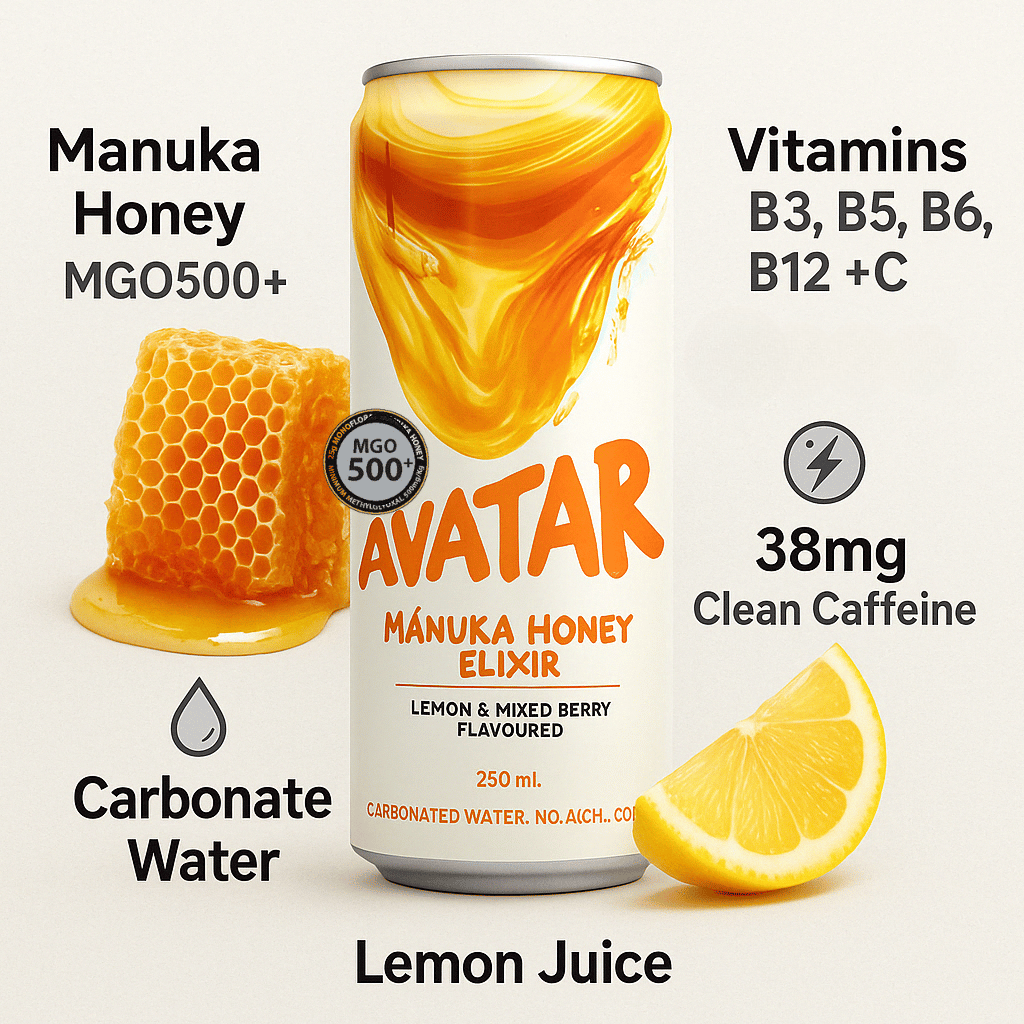
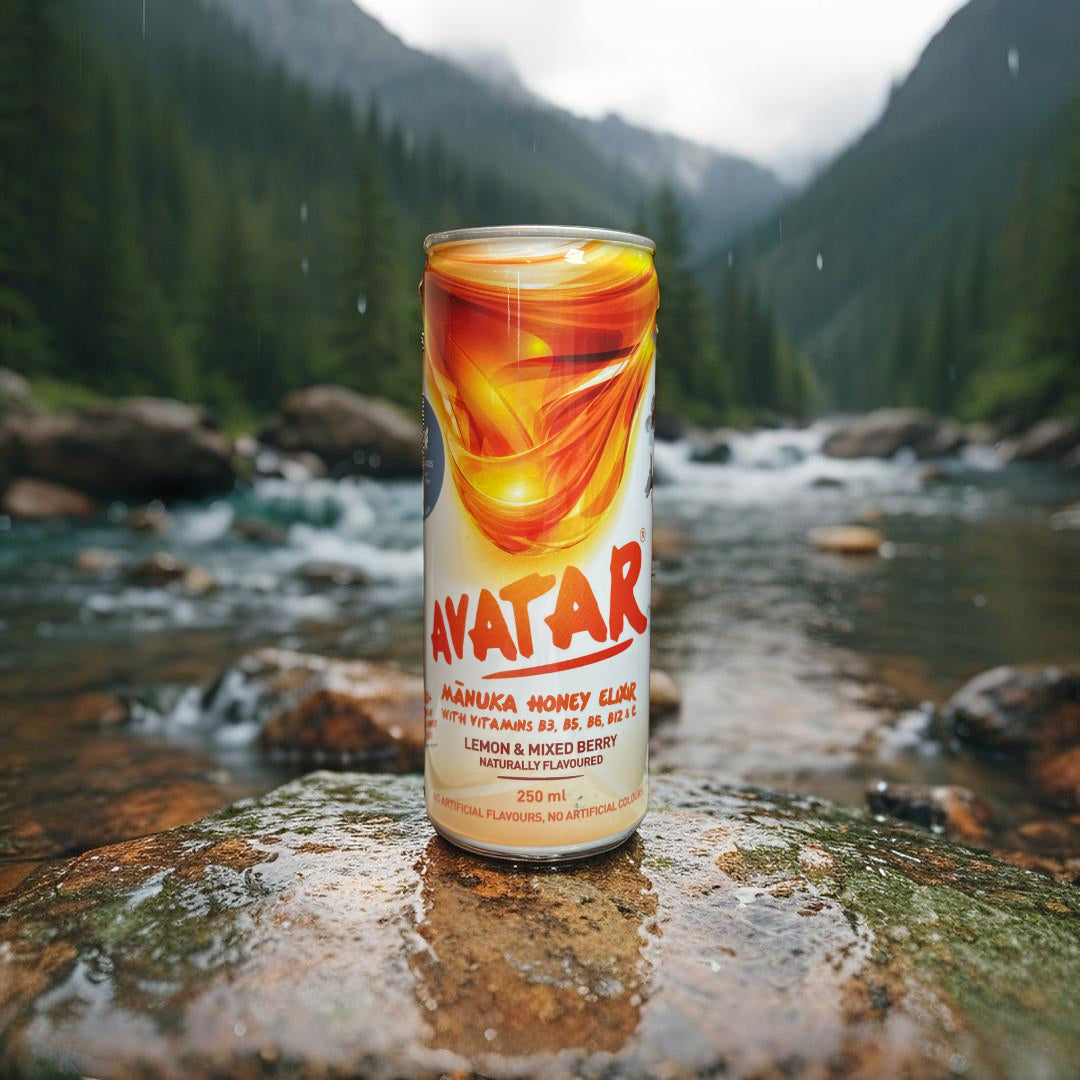
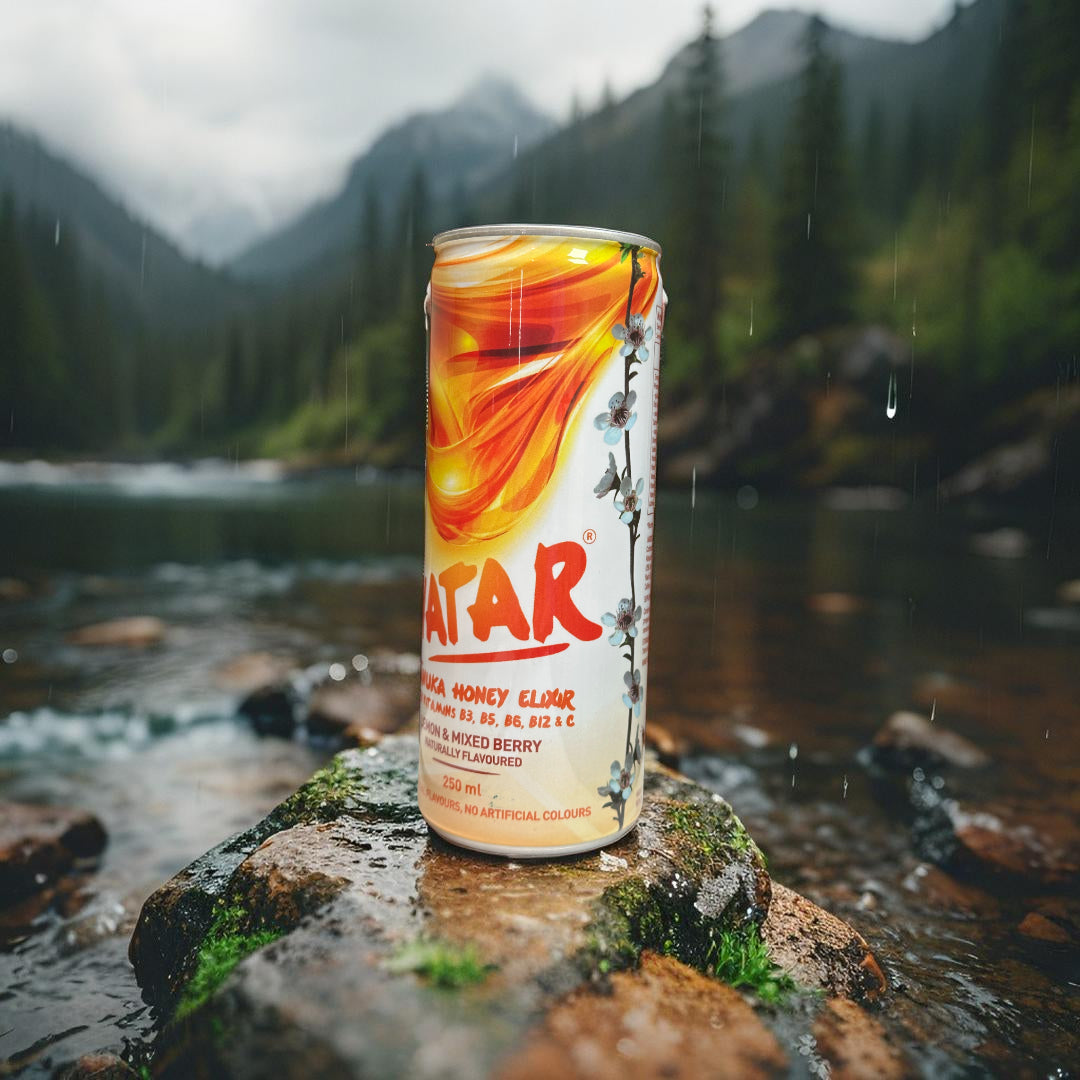
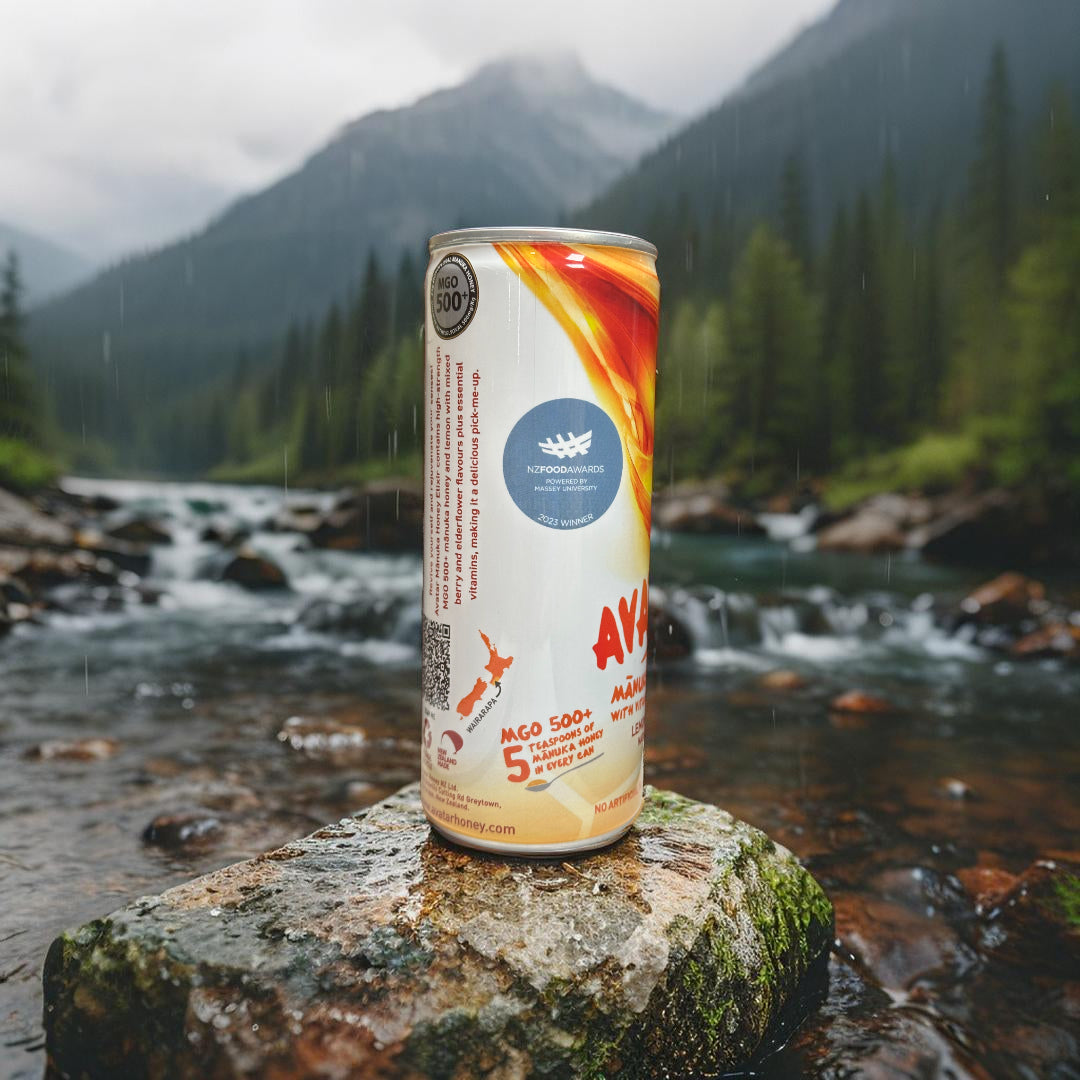
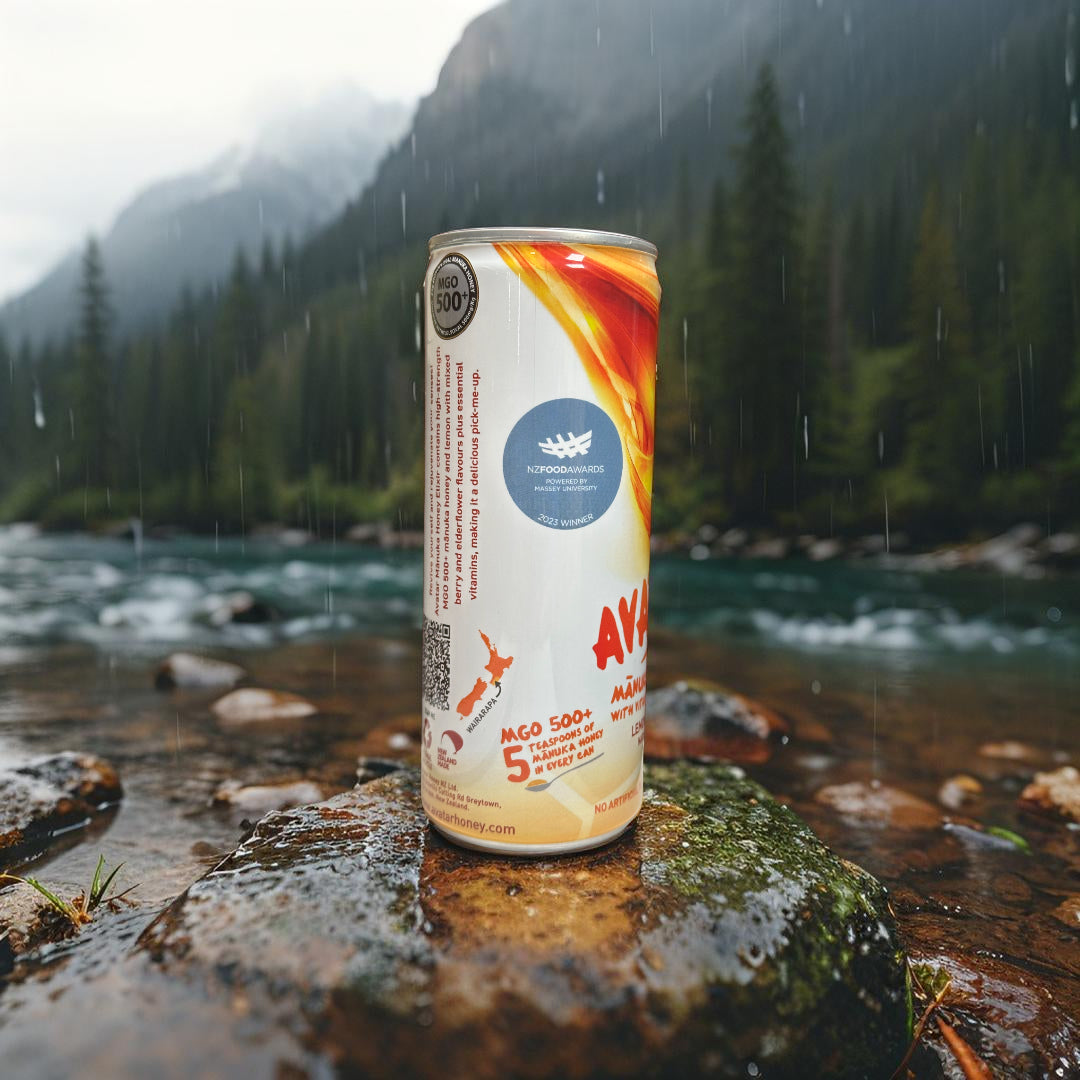
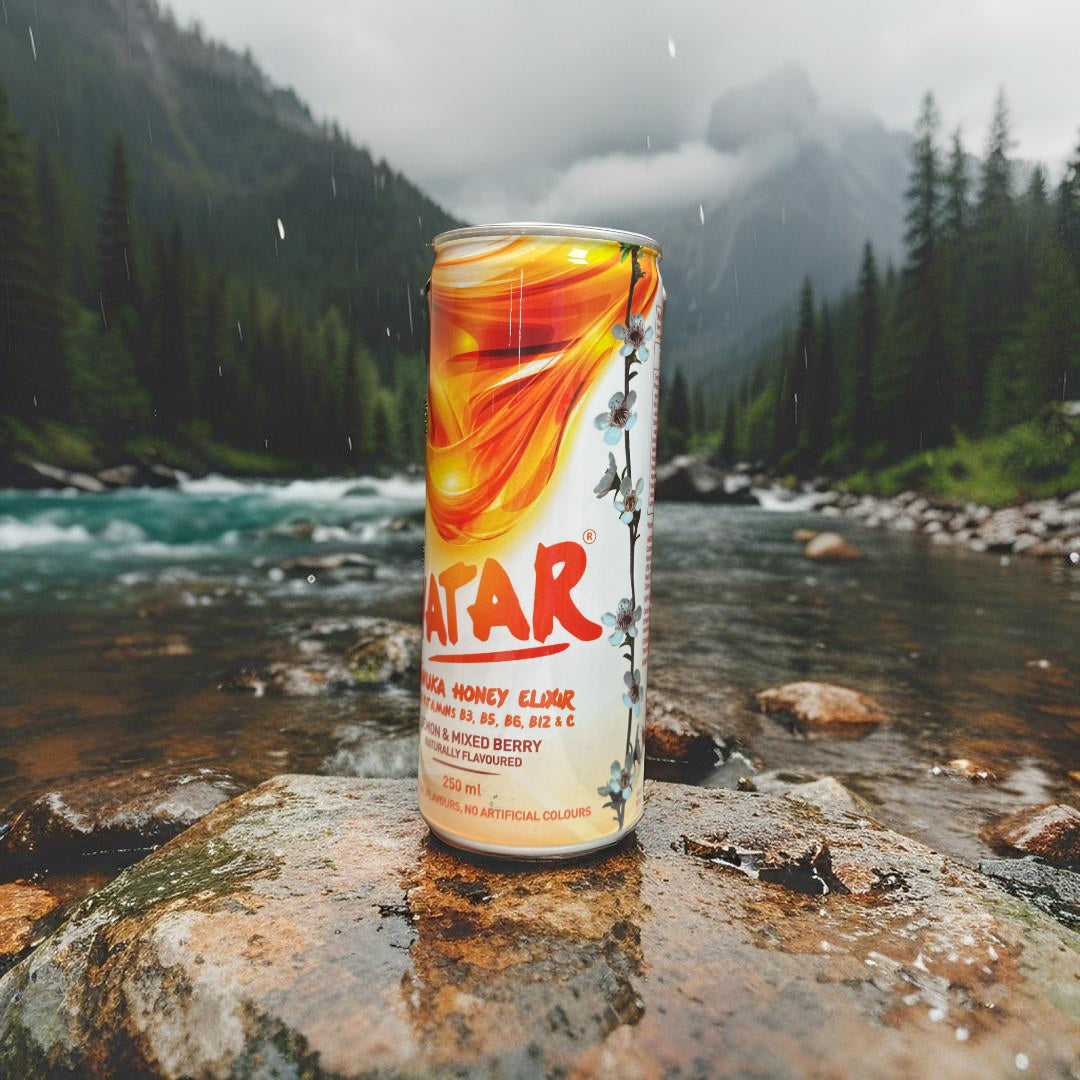
Avatar Elixir fits this kind of label check as an example of a premium New Zealand Manuka honey drink built around recognisable flavour and functional beverage ingredients: certified MGO500+ Manuka honey, lemon, elderflower, B vitamins, vitamin C, clean caffeine, and lightly carbonated water.
For adults comparing cleaner energy drinks, the useful point is the ingredient-led positioning. Instead of only focusing on what a drink leaves out, Avatar Elixir gives shoppers a clear flavour direction: honeyed, citrusy, floral, and sparkling. The Manuka honey brings a rounded sweetness, lemon adds brightness, elderflower adds a delicate botanical note, and light carbonation keeps the drink fresh.
That does not mean every shopper wants the same drink. Some people prefer zero-sugar options, some prefer stronger carbonation, and some want a different caffeine level or flavour profile. The label-reading approach remains the same: check what is absent, check what is present, and decide whether the full drink suits the occasion.
Avatar Elixir is especially relevant for readers looking for a more premium alternative to ordinary energy drinks, soft drinks, or artificial-tasting functional beverages. It can be considered for work, study, long days, travel, social occasions, gifting, or as a natural-style mixer, depending on personal preference and serving context.
What is the key takeaway when comparing energy drinks without taurine, aspartame, or sugar alcohols?
The key takeaway is that a cleaner energy drink should be judged by the whole label, not only by the absence of taurine, aspartame, or sugar alcohols. The best choice for you depends on caffeine amount, caffeine source, sweetener type, flavour system, serving size, and the occasion you are buying it for.
A practical label check gives you more confidence without making the process complicated. First confirm the ingredients you want to avoid. Then look at what replaces them. Finally, decide whether the drink sounds enjoyable, balanced, and suitable for how you will actually drink it.
If several cans all claim to be cleaner, choose the one whose ingredient panel is easiest to understand and whose flavour makes sense for the moment. That is usually a better guide than the loudest front-of-can promise.
These answers help you read cleaner energy drink labels with more confidence.
What should I check first in a cleaner energy drink?
Check the full ingredient list before trusting the front-of-can claim. A cleaner-looking energy drink should be assessed by its caffeine source and amount, sweetener type, flavour system, acidity, carbonation, serving size, and whether it fits the occasion you are buying it for. A drink without taurine, aspartame, or sugar alcohols still needs to make sense as a complete formula.
How do I know if an energy drink has no taurine?
You know an energy drink has no taurine by checking that taurine is not listed in the ingredient panel. Also look carefully at any energy blend, amino acid blend, or functional blend, because those terms need to be supported by a clear ingredient list. If taurine is not declared as an ingredient, the drink is not using taurine as part of its formula.
Does no aspartame mean no artificial sweeteners?
No, no aspartame does not always mean no artificial sweeteners. A drink can be aspartame-free and still use other sweeteners such as sucralose or acesulfame potassium. If you want to avoid artificial sweeteners more broadly, read the sweetener line instead of relying on a single aspartame-free claim.
How do I spot sugar alcohols on an energy drink label?
Spot sugar alcohols by looking for names such as erythritol, xylitol, sorbitol, and maltitol in the ingredient list or nutrition panel. These ingredients are commonly used to create sweetness with less sugar. Some shoppers avoid them because they prefer a different taste, mouthfeel, or label style, not because one ingredient alone defines whether a drink is good or bad.
Is clean caffeine different from regular energy drink caffeine?
Clean caffeine usually describes how caffeine is presented within the drink formula, not a separate type of caffeine with guaranteed different effects. For label reading, check the caffeine source, the amount per can, and how it sits alongside sweeteners, flavours, vitamins, and acids. A clean caffeine drink should be easy to understand from the label and suitable for the way you plan to use it.
What sweeteners fit a more ingredient-led energy drink?
Ingredient-led energy drinks commonly use sweeteners such as sugar, honey, fruit juice, stevia, or a clearly labelled blend. The best fit depends on whether you prefer a fuller sweetness, a lighter finish, or a lower-sugar profile. Avatar Elixir, for example, is positioned around certified MGO500+ Manuka honey, lemon, elderflower, vitamins, clean caffeine, and lightly carbonated water rather than a typical artificial energy drink profile.
What should I do after reading an energy drink label?
After reading the label, match the drink to the moment you want it for. Choose based on caffeine level, sweetness, flavour, carbonation, serving size, and whether it suits work, study, travel, social settings, or mixing into a mocktail or cocktail. The most useful cleaner energy drink is the one with ingredients you understand and a flavour profile you actually want to drink.