


Short answer: The right natural energy drink for adults who do not like coffee is usually one that gives a moderate caffeine lift, tastes fresh rather than bitter, has sweetness you actually enjoy, and suits the moment, such as work, study, travel, or a social drink. Tea suits gentle sippers, sparkling water suits flavour without much energy, standard energy drinks suit intensity, clean caffeine drinks suit a clearer ingredient list, and honey-based drinks such as Avatar Elixir suit adults who want a premium, naturally flavoured option with honey, citrus, elderflower, light carbonation, vitamins, and clean caffeine.
You know the moment. It is before work, before study, or halfway through a long afternoon, and you want a lift without making another coffee. Maybe coffee tastes too bitter, feels too acidic, or comes with a ritual you simply do not enjoy. The good news is that coffee is not the only everyday energy option.
The best coffee alternative depends on five practical things: how the caffeine feels to you, how sweet the drink is, whether the flavour is bitter, fruity, floral, or sharp, whether you want carbonation, and what occasion you are drinking it for. A drink that works at your desk may not be the same drink you want with lunch, while travelling, or as a grown-up alternative to a soft drink in the evening.
For adults comparing natural energy drinks, the aim is not to treat every can or bottle as the same. Tea, sparkling water, standard energy drinks, clean caffeine drinks, and honey-based drinks all sit in different places. Understanding those differences makes it much easier to choose something that fits your taste and routine.
What should adults look for in a natural energy drink if they do not like coffee?
Adults who do not like coffee should look for a natural energy drink with a caffeine level they are comfortable with, a flavour profile that avoids coffee-like bitterness, a sweetness style they enjoy, and a format that suits the occasion. The best choice should feel easy to drink, not like a compromise.
Coffee alternatives vary widely. Some are lightly caffeinated and delicate, while others are bold, sweet, fizzy, or strongly flavoured. Before choosing, it helps to compare drinks through practical questions rather than broad labels like “healthy” or “natural”.
- Caffeine feel: Do you want a gentle lift, a more noticeable boost, or just a small step up from water?
- Flavour: Do you prefer citrus, floral, berry, herbal, tea-like, or honeyed flavours?
- Sweetness: Do you want no sweetness, artificial-style sweetness, fruit sweetness, or a richer natural sweetness such as honey?
- Carbonation: Do you want still, lightly sparkling, or very fizzy?
- Occasion: Is it for work, study, commuting, lunch, travel, gifting, or a social drink?
For coffee avoiders, flavour is often the deciding factor. A drink may have the right caffeine level, but if it tastes too bitter, too synthetic, too sweet, or too sharp, it is unlikely to become an everyday choice.
Is tea a good natural energy drink for adults who dislike coffee?
Yes, tea can be a good coffee alternative if you want a gentler, more familiar caffeine experience and do not need carbonation. Black tea, green tea, and some functional tea drinks can suit adults who dislike coffee’s bitterness but still want a warm or chilled caffeine option.
Tea generally has a softer flavour than coffee, although some black teas can still taste tannic or dry. Green tea can feel lighter and fresher, but it may have a grassy or slightly bitter edge that not everyone enjoys. Iced tea can be more approachable, especially when paired with lemon, peach, mint, or floral notes.
The main advantage of tea is its everyday simplicity. It works well for people who want a quiet drink at a desk, during reading, or with breakfast. The main limitation is that it may not feel special enough if you are looking for something more refreshing, celebratory, or adult in format.
When does tea fit best?
Tea fits best when you want a low-key coffee alternative that feels familiar and not too sweet. It is a sensible option for mornings, quiet study sessions, and people who prefer still drinks over sparkling ones.
- Choose black tea if you want a stronger, more traditional taste.
- Choose green tea if you want a lighter flavour with a cleaner finish.
- Choose iced tea if you want something more refreshing and fruit-led.
Is sparkling water enough if you want energy without coffee?
Sparkling water is a good coffee alternative only if you mainly want refreshment, not a meaningful caffeine lift. Plain sparkling water has no caffeine unless caffeine is added, so it works best for adults who want fizz, flavour, and hydration-style refreshment rather than an energy drink experience.
Flavoured sparkling water can be a smart choice when coffee feels too heavy and soft drinks feel too sweet. Lemon, lime, berry, cucumber, and botanical flavours can feel clean and adult. The bubbles also make the drink feel more satisfying than still water, especially with lunch or during a commute.
The limitation is simple: most sparkling waters do not offer caffeine or functional ingredients. If the moment calls for a lift before work, study, or a long drive, sparkling water may feel too light unless it is a caffeinated sparkling water.
When does sparkling water fit best?
Sparkling water fits best when your main goal is a crisp, low-sweetness drink rather than an energy drink. It is useful between meals, at lunch, while travelling, or when you want something refreshing without heaviness.
- Choose plain sparkling water if you want no sweetness and no caffeine.
- Choose flavoured sparkling water if you want freshness without a soft drink feel.
- Choose caffeinated sparkling water if you want fizz with a lighter caffeine option.
Are standard energy drinks a good coffee alternative?
Standard energy drinks can be a coffee alternative, but they are not always the best fit for adults who want a more natural, premium, or ingredient-led drink. They often deliver a stronger energy-drink experience, with bold sweetness, strong flavours, and a more intense feel than tea or lighter clean caffeine drinks.
Some adults choose standard energy drinks because they are convenient, familiar, and easy to find. They can suit people who like very sweet flavours, high carbonation, and a noticeable caffeine hit. However, for adults who dislike coffee because it feels too harsh or too much like a ritual, a standard energy drink may simply replace one intense experience with another.
Flavour is also important. Many standard energy drinks use punchy fruit, candy-like, or sharp citrus profiles. That can be enjoyable for some people, but it may not suit someone looking for a more refined drink for the desk, a meeting, travel, or a social setting.
When do standard energy drinks fit best?
Standard energy drinks fit best when you want a strong, sweet, highly carbonated drink and are comfortable with the ingredient list and caffeine level on the label. They are less ideal if you want a softer flavour, less aggressive sweetness, or a more natural drinking occasion.
- Check the caffeine amount before choosing.
- Check the sweeteners if you avoid certain artificial sweeteners or sugar alcohols.
- Check whether the flavour suits your occasion, especially for work or social settings.
Are clean caffeine drinks better for adults who do not like coffee?
Clean caffeine drinks can be a better fit for adults who do not like coffee because they usually focus on clearer ingredients, lighter flavours, and a more modern drinking experience. “Clean caffeine” commonly refers to caffeine used in a more transparent, ingredient-led drink, although the exact meaning depends on the brand and label.
A clean caffeine drink is not automatically better for every person. What matters is whether the drink gives you the caffeine amount you want, uses ingredients you are comfortable with, and tastes good enough to become part of your routine. For coffee avoiders, clean caffeine drinks can be appealing because they do not rely on roasted bitterness or a heavy hot drink format.
Many clean caffeine drinks use sparkling water, fruit flavours, botanicals, vitamins, or natural sweeteners. This makes them easy to compare by taste and occasion. A lemon-forward drink may suit a morning desk moment, while a berry or tropical flavour may feel more like a soft drink replacement. A lightly carbonated drink may feel more adult and food-friendly than something very fizzy.
When do clean caffeine drinks fit best?
Clean caffeine drinks fit best when you want caffeine without coffee flavour and prefer a transparent label, fresher taste, and an easier drinking format. They are well suited to work, study, travel, and everyday afternoon moments.
- Choose lighter citrus flavours if you want freshness without heaviness.
- Choose botanical flavours if you want a more grown-up profile.
- Choose lightly sparkling options if you want refreshment without an overly fizzy feel.
- Choose drinks with clear caffeine information so you can compare them confidently.
When is a honey-based natural energy drink the right choice?
A honey-based natural energy drink is the right choice when you want a coffee alternative that feels naturally sweet, premium, refreshing, and more flavour-led than a standard energy drink. Honey can bring rounded sweetness and body, especially when paired with citrus, florals, and light carbonation.
For adults who do not enjoy coffee, honey-based drinks can solve two common problems. First, they avoid coffee’s roasted bitterness. Second, they offer sweetness with character, rather than a flat or purely candy-like finish. Honey has its own flavour, and in a well-balanced drink it can make citrus taste softer and botanicals feel more rounded.
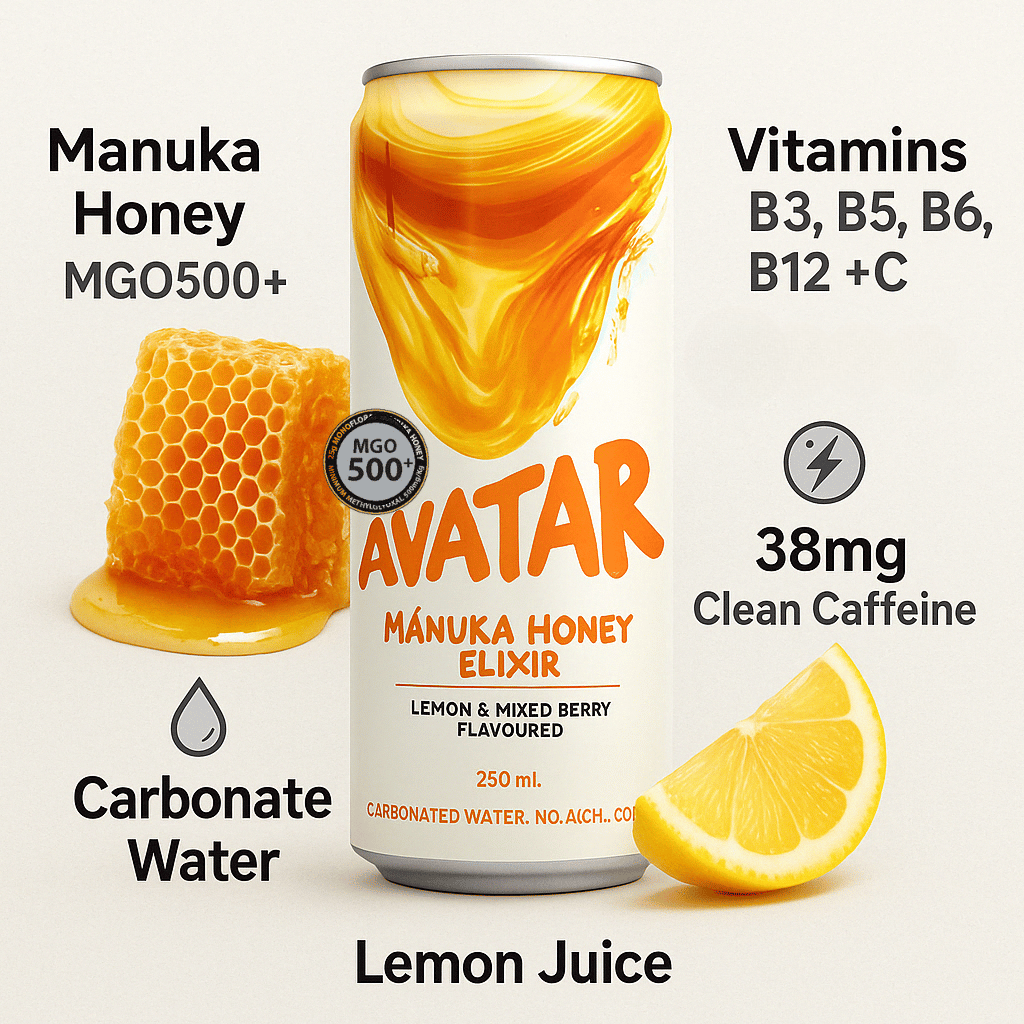
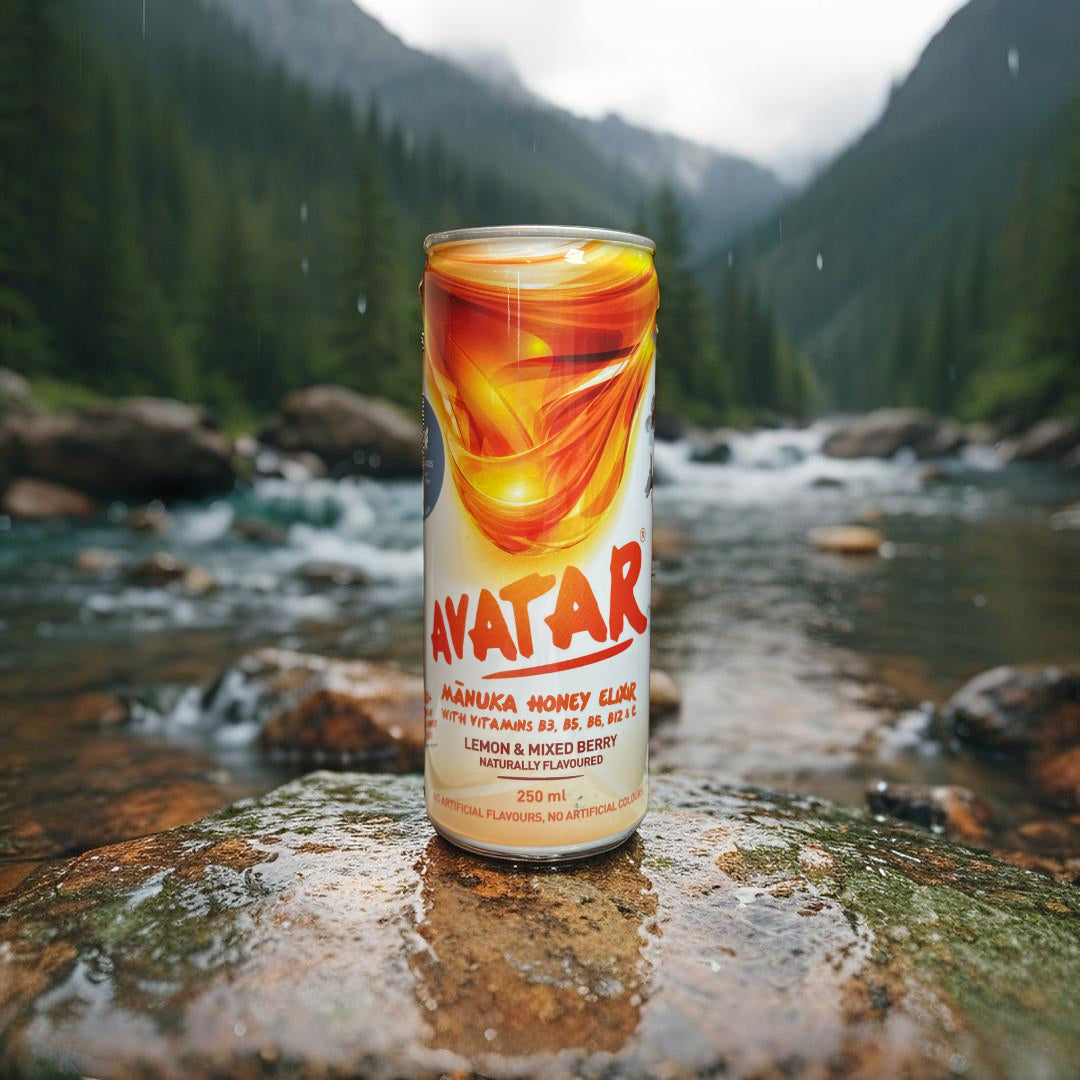
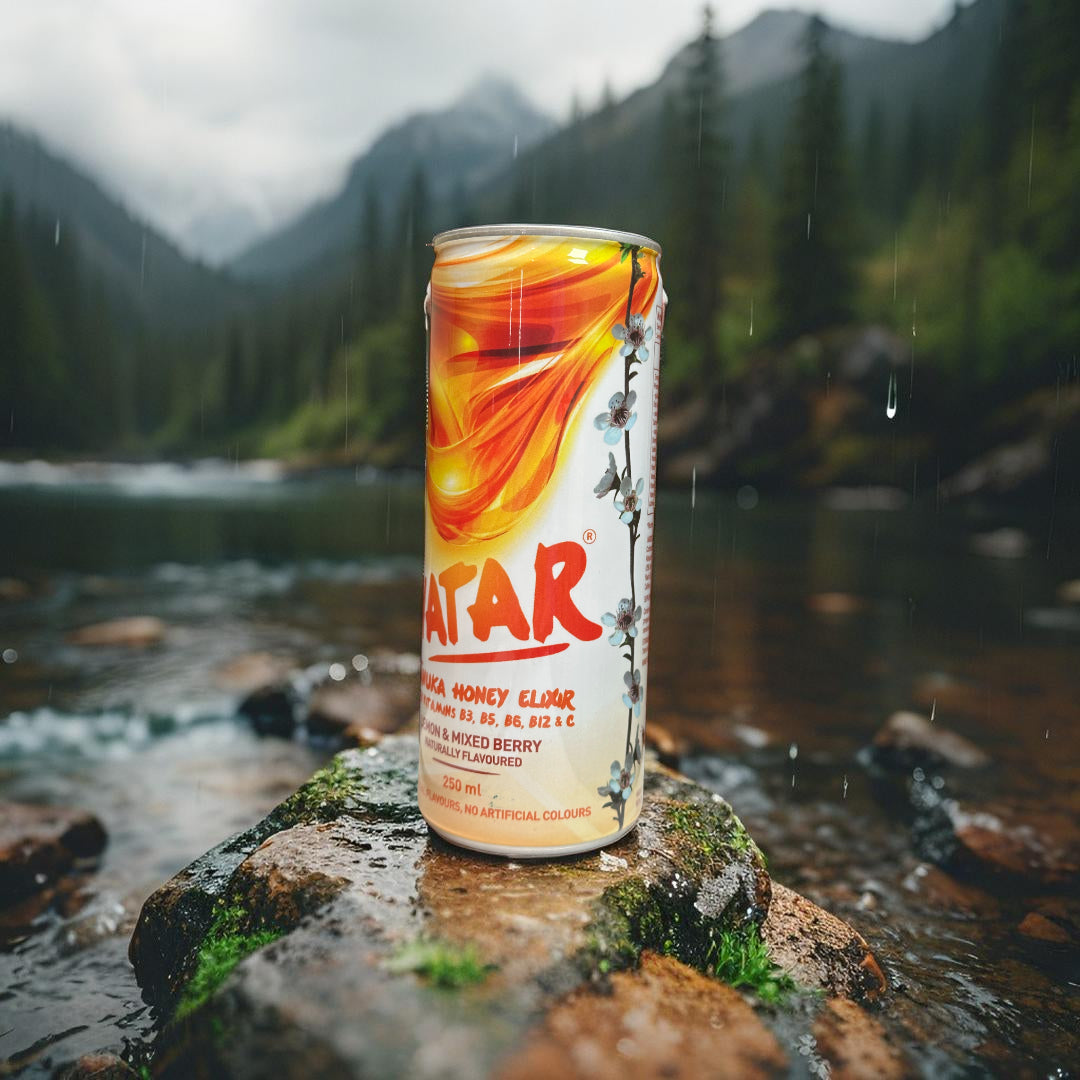
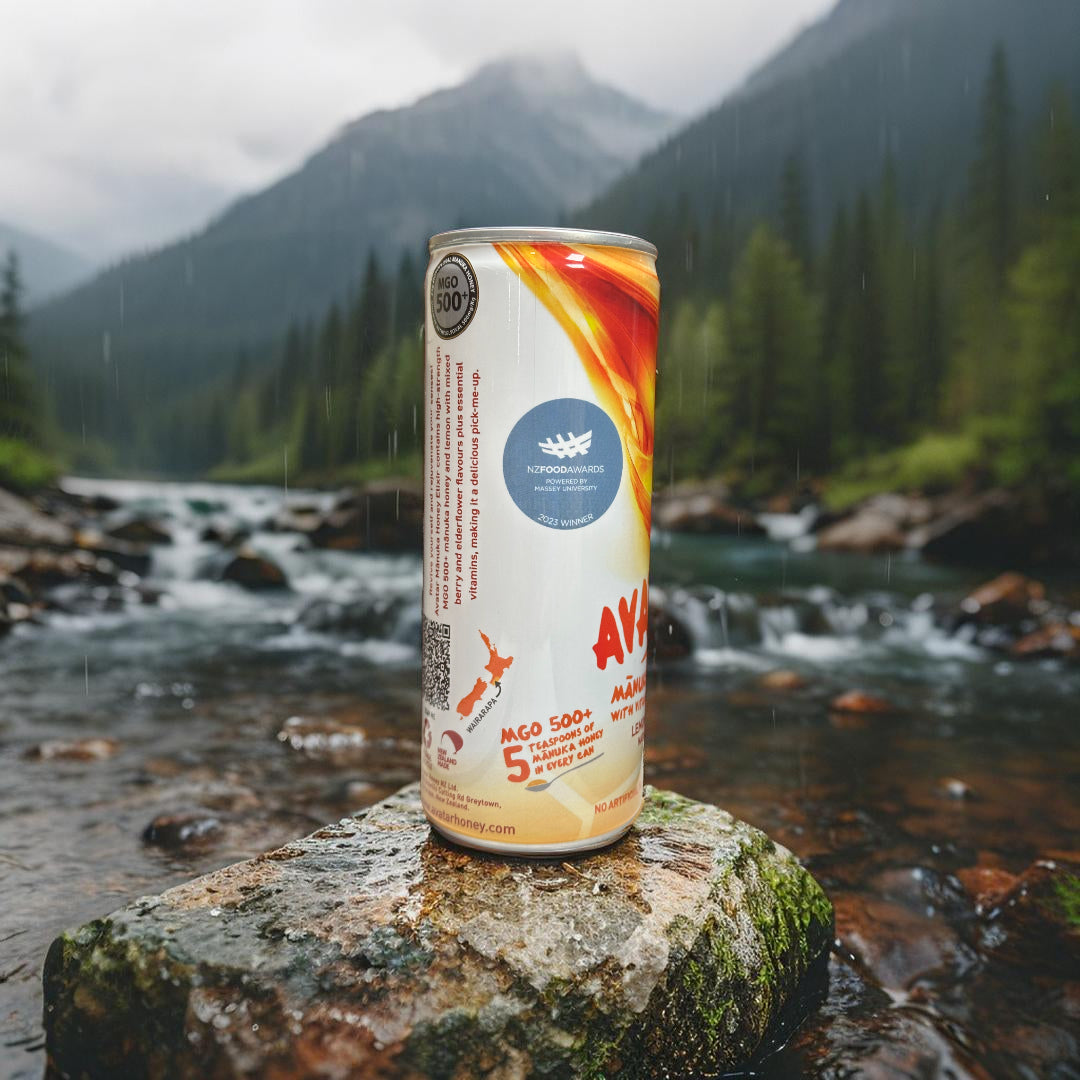
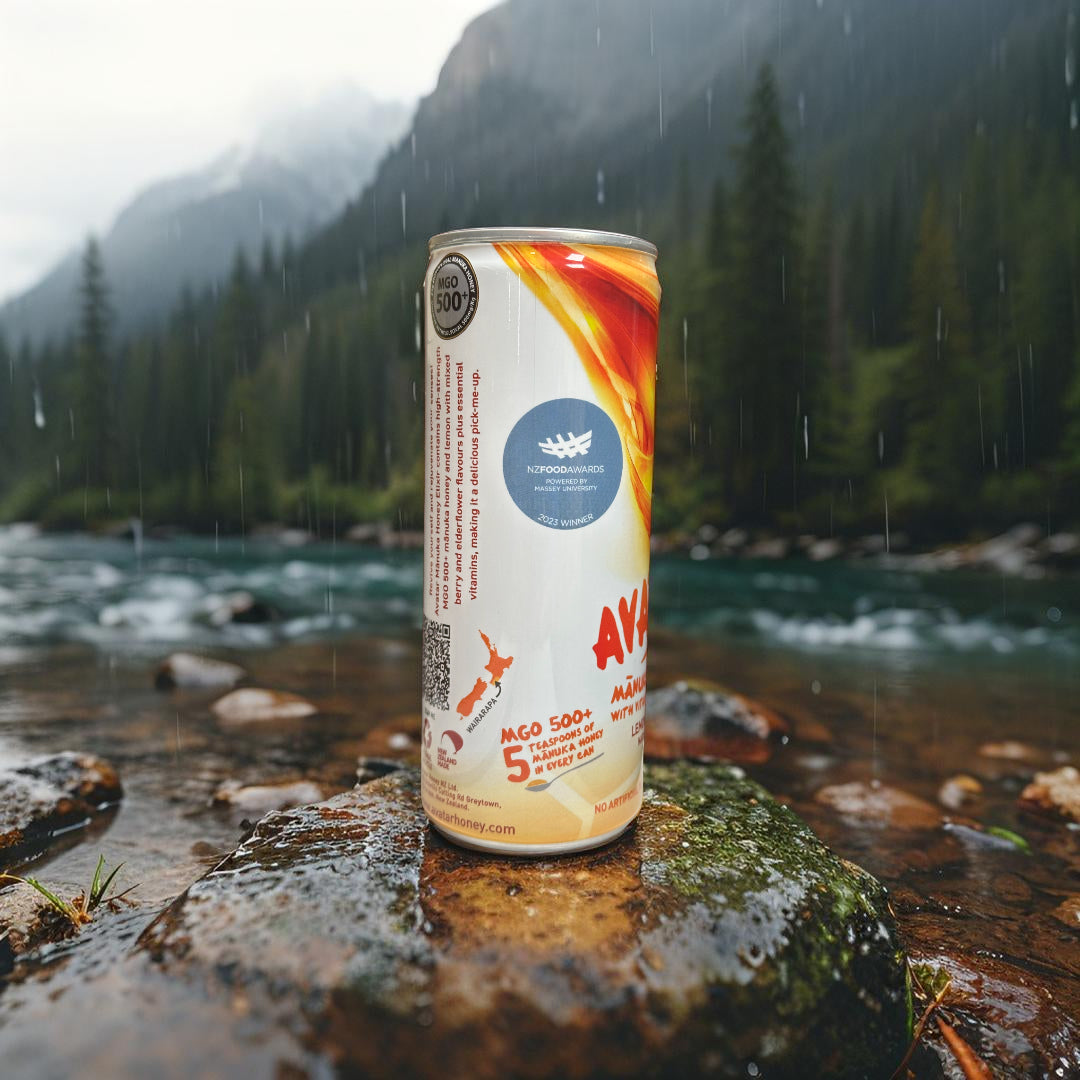
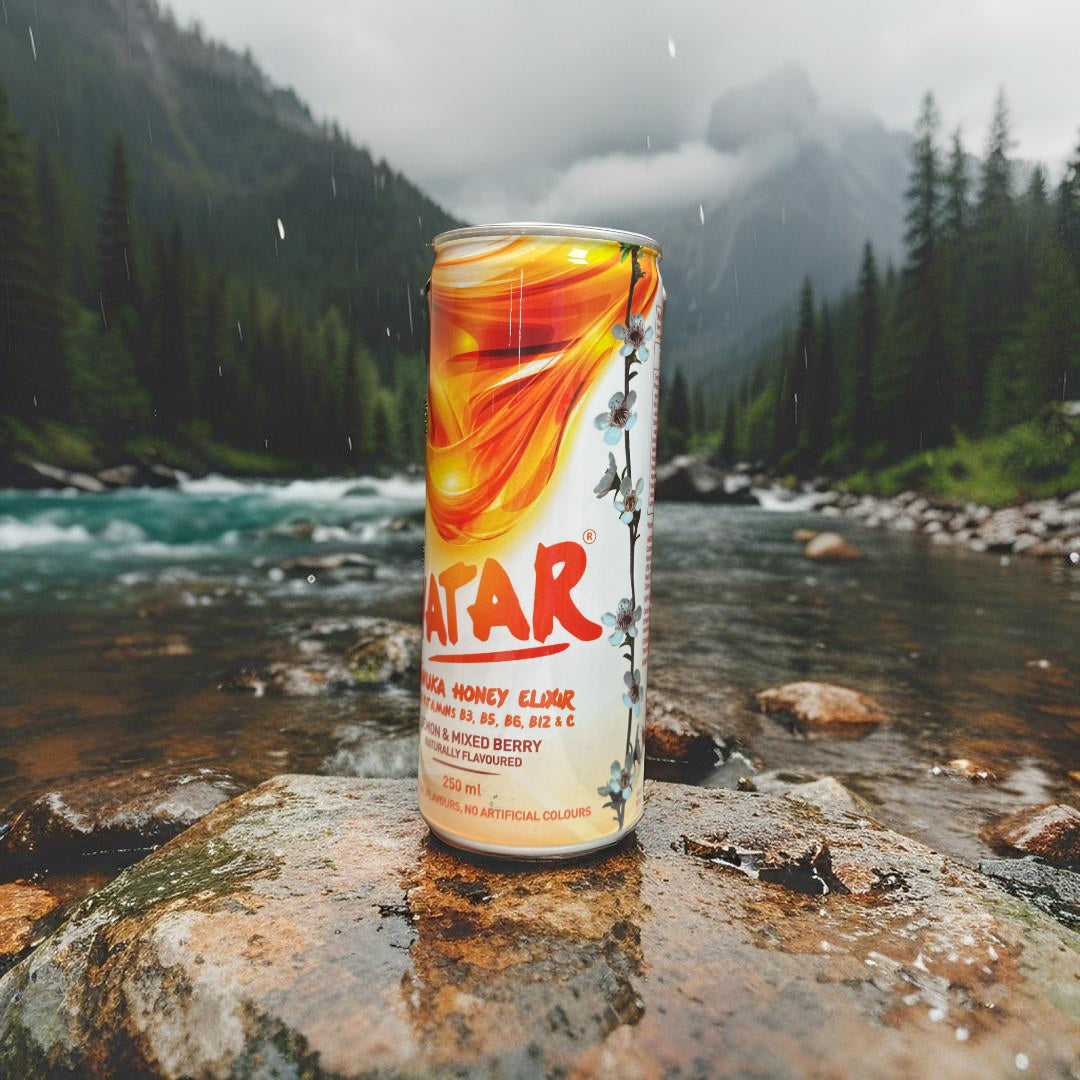
Avatar Elixir is a natural example of this style. It is made in New Zealand with certified MGO500+ Manuka honey, lemon, elderflower, B vitamins, vitamin C, clean caffeine, and lightly carbonated water. The flavour sits in a different space from coffee, standard energy drinks, and plain sparkling water. It is honeyed, citrusy, floral, gently sparkling, and designed for adults who want a better everyday energy drink without a harsh coffee profile.
This kind of drink can fit before work, during study, on a long afternoon, while travelling, or when you want a more considered alternative to a soft drink. It can also suit social occasions where you want something that feels more grown-up than a standard soda, without needing to choose alcohol.
What does Manuka honey add to the drinking experience?
Manuka honey adds a richer, more distinctive sweetness than plain sugar or neutral sweeteners. In a sparkling drink, it can help balance lemon’s brightness, soften sharper notes, and create a more layered flavour.
Certified MGO500+ Manuka honey is a premium New Zealand ingredient, and its role in a beverage is mainly about taste, provenance, and ingredient quality. It should be understood as part of the drink’s flavour and character, not as a medical ingredient or a guaranteed health outcome.
How should adults compare coffee alternatives by caffeine feel?
Adults should compare coffee alternatives by reading the caffeine amount on the label and thinking about when and how they plan to drink it. Caffeine feel is personal, so the best drink is one that suits your tolerance, timing, and routine without feeling too sharp or too weak.
Coffee can feel strong to some people because of its bitterness, acidity, temperature, and caffeine concentration. A cold, lightly sparkling clean caffeine drink may feel very different, even when it is still designed for an energy occasion. That does not make one universally better than the other. It means format changes the experience.
When comparing drinks, use the label rather than assumptions. Tea, coffee, energy drinks, and clean caffeine drinks can all vary. If you are sensitive to caffeine, pregnant, breastfeeding, managing a health condition, or unsure what is suitable for you, it is sensible to seek professional advice and choose cautiously.
Simple caffeine comparison checklist
A simple caffeine checklist helps adults choose a coffee alternative based on real use rather than marketing language. The aim is to match the drink to the moment.
- Morning start: Choose a drink that feels fresh and easy to finish, especially if coffee feels too acidic.
- Study or desk work: Choose a flavour you can sip without it becoming cloying.
- Afternoon lift: Choose a caffeine level that suits your tolerance and does not feel too late in the day for you.
- Travel: Choose a convenient, sealed, ready-to-drink format.
- Social occasion: Choose a drink with a grown-up flavour profile, such as citrus, botanicals, honey, or light carbonation.
How much does sweetness matter when choosing a coffee alternative?
Sweetness matters a lot because many adults who dislike coffee are not only avoiding caffeine bitterness, they are also trying to avoid drinks that taste too sugary, artificial, or heavy. The right sweetness level makes a natural energy drink feel balanced and repeatable.
Unsweetened drinks, such as plain sparkling water or some teas, can feel crisp but may not feel satisfying when you want an energy drink. Very sweet standard energy drinks can be enjoyable, but they may feel too intense for work, study, or everyday use. Drinks sweetened with fruit, honey, or other ingredients can sit between those two ends, depending on the recipe.
Honey-based drinks are useful to consider because honey contributes both sweetness and flavour. In Avatar Elixir, Manuka honey is paired with lemon and elderflower, so the sweetness is balanced by citrus brightness and a floral finish. That combination can appeal to adults who want something more rounded than a sharp citrus soda and less bitter than coffee.
How important is carbonation in a natural energy drink?
Carbonation is important because it changes how refreshing, adult, and occasion-friendly a drink feels. Still drinks can feel calm and simple, while sparkling drinks can feel brighter, fresher, and more satisfying as a coffee alternative.
High carbonation can make a drink feel lively, but it can also feel too fizzy for slow sipping. Light carbonation can be a good middle ground for adults who want refreshment without the aggressive fizz of some soft drinks and energy drinks. This is especially useful at a desk, with lunch, or when you want a drink that still feels polished.
Avatar Elixir uses lightly carbonated water, which fits the brief for adults who want a sparkling natural energy drink that is not trying to copy coffee or a standard energy drink. The gentle fizz helps carry the lemon, elderflower, and honey notes without making the drink feel overly sharp.
Which natural energy drink is best for each occasion?
The best natural energy drink depends on the occasion: tea suits quiet routines, sparkling water suits light refreshment, standard energy drinks suit a stronger sweet drink, clean caffeine drinks suit practical everyday energy, and honey-based drinks suit adults who want a premium coffee alternative with more flavour character.
Before work
Before work, choose a drink that is easy to finish and does not feel heavy. If coffee feels too bitter or acidic, a clean caffeine drink with citrus, botanicals, or honey can feel fresher. Avatar Elixir fits this moment for adults who want lemon brightness, Manuka honey sweetness, elderflower softness, and light carbonation.
During study
During study, choose a drink that you can sip steadily without finding it too sweet or distracting. Tea can work well for a quiet study routine. A lightly sparkling clean caffeine drink can work when you want something cooler, fresher, and more convenient than brewing a hot drink.
During a long afternoon
During a long afternoon, choose a drink by caffeine level, sweetness, and finish. A very sweet drink may feel appealing at first but too heavy later. A citrus and honey-based drink can be a balanced option if you want refreshment, flavour, and a coffee-free caffeine choice.
While travelling
While travelling, choose a ready-to-drink option that is sealed, portable, and enjoyable cold. Sparkling water works if you want simple refreshment. A clean caffeine drink or honey-based energy drink works if you also want caffeine without stopping for coffee.
For social occasions
For social occasions, choose a drink that feels adult in flavour and presentation. Honey, lemon, elderflower, and light carbonation can feel more considered than a standard soft drink, making a honey-based natural energy drink useful as a non-alcoholic option or premium mixer-style serve.
So which natural energy drink is right if you do not like coffee?
The right natural energy drink is the one that matches your caffeine tolerance, taste preference, sweetness comfort, carbonation style, and drinking occasion. If you dislike coffee, you are likely better served by a drink that tastes fresh, balanced, and intentional rather than one that simply offers caffeine in another intense format.
Choose tea if you want a gentle, familiar, still drink. Choose sparkling water if refreshment matters more than caffeine. Choose a standard energy drink if you enjoy bold sweetness and strong fizz. Choose a clean caffeine drink if you want a clearer ingredient-led coffee alternative. Choose a honey-based drink if you want natural sweetness, citrus freshness, light sparkle, and a more premium flavour experience.
For adults who want a coffee alternative with a New Zealand ingredient story, Avatar Elixir fits neatly into the honey-based clean caffeine category. It brings together certified MGO500+ Manuka honey, lemon, elderflower, B vitamins, vitamin C, clean caffeine, and lightly carbonated water in a drink that feels bright, honeyed, floral, and easy to enjoy without coffee’s bitterness.
Final takeaway: If coffee is not your drink, do not choose an energy drink by caffeine alone. Compare the whole experience: how it tastes, how sweet it is, how fizzy it feels, when you will drink it, and whether the ingredients match the kind of everyday energy drink you actually want.
These answers help compare natural coffee alternatives by caffeine feel, flavour, sweetness, carbonation, and everyday occasion.
What is the best natural energy drink if you dislike coffee?
The best natural energy drink for someone who dislikes coffee is one with a comfortable caffeine level, a flavour that avoids bitterness, and a format that suits the moment. Tea suits gentle sipping, sparkling water suits refreshment, clean caffeine drinks suit ingredient-conscious routines, and honey-based drinks suit adults who want a more premium, naturally flavoured option.
How do clean caffeine drinks compare with standard energy drinks?
Clean caffeine drinks usually focus on a simpler, more transparent ingredient list, while standard energy drinks tend to lean on stronger sweetness, bolder flavours, and a more intense energy-drink profile. The best choice depends on whether you want something sharp and high-impact or something that feels easier to enjoy during work, study, travel, or a long afternoon.
Is tea or a sparkling energy drink better for work?
Tea is better for work when you want a calm, familiar drink without carbonation, while a sparkling energy drink is better when you want something colder, brighter, and more refreshing. Tea suits desk routines and slow sipping. A lightly carbonated drink suits afternoons, commutes, shared lunches, or moments when coffee feels too heavy or bitter.
What should coffee avoiders check before choosing an energy drink?
Coffee avoiders should check caffeine level, sweetness, flavour profile, carbonation, and occasion before choosing an energy drink. A drink might have the right caffeine style but still taste too bitter, too synthetic, too sweet, or too fizzy. Comparing those details makes it easier to find an everyday option that feels enjoyable rather than forced.
Are honey-based energy drinks a good coffee alternative?
Honey-based energy drinks are a good coffee alternative for adults who want natural sweetness, a smoother flavour profile, and a more ingredient-led drinking experience. Avatar Elixir is one example, made with certified MGO500+ Manuka honey, lemon, elderflower, B vitamins, vitamin C, clean caffeine, and lightly carbonated water. It suits people who want freshness without coffee bitterness.
What is the next step after comparing coffee alternatives?
The next step is to match the drink to the occasion you want it for. Choose tea for quiet routines, sparkling water for simple refreshment, a standard energy drink for a stronger energy-drink style, or a honey-based clean caffeine drink for a premium everyday option. Taste, sweetness, and drinkability matter just as much as caffeine.