



Short answer: Vitamin C is added to functional drinks to provide an essential nutrient, support clearly defined nutritional roles, and sometimes help with the beverage formulation itself. Its presence does not make a drink medicinal, and it does not guarantee alertness, focus, immunity, or protection from illness.
Vitamin C is familiar, easy to identify on a Nutrition Facts label, and naturally associated with ingredients such as citrus. That makes it a practical addition to many functional beverages, including energy drinks, sparkling wellness drinks, and juice-based products.
To understand what vitamin C means in a particular drink, check the amount per serving, the percentage of Daily Value, the serving size, and the surrounding marketing language. These details are more useful than broad claims on the front of the package.
Why do drink makers add vitamin C to functional beverages?
Drink makers generally add vitamin C for nutritional value, formulation purposes, or both. It allows the beverage to provide a recognised essential nutrient while fitting naturally into citrus, fruit, honey, and botanical flavour profiles.
Vitamin C, also called ascorbic acid, has established roles in normal nutrition. It contributes to normal collagen formation, acts as an antioxidant within the body, helps with the absorption of non-heme iron, and supports normal immune function. These are nutritional roles, not promises that one drink will produce an immediate or noticeable result.
Depending on the recipe, vitamin C may also serve a technical role in the beverage. Ascorbic acid can be used as an antioxidant ingredient to help manage oxidation in some formulations. However, shoppers should not assume that every vitamin C drink uses it for this purpose. The reason for adding it depends on the product and formulation.
Vitamin C also makes sense from a flavour perspective. Its naturally tart character can sit comfortably alongside lemon, berries, tropical fruit, elderflower, and lightly sweetened ingredients. This can make it easier to include in a refreshing drink without creating the flavour impression of a tablet or supplement.
What does vitamin C on a drink label actually tell you?
Vitamin C on a US Nutrition Facts label tells you how much the product declares per serving and how that amount relates to the Daily Value. It does not, by itself, tell you how the drink will make you feel.
The label may show vitamin C in milligrams, as a percentage of Daily Value, or both. The percentage of Daily Value provides context by showing how much one labelled serving contributes to the daily reference amount used for nutrition labelling.
Read these details together:
- Serving size: Confirm whether the entire bottle or can is one serving.
- Amount per serving: Look for the declared quantity of vitamin C.
- Percentage of Daily Value: Use this to understand the amount in a broader daily nutrition context.
- Servings per container: A container with more than one serving can change the total amount consumed.
- Ingredient list: Look for terms such as vitamin C or ascorbic acid.
Front-of-pack phrases such as “contains vitamin C,” “with antioxidants,” or “supports wellness” should always be interpreted alongside the complete label. Certain nutrient-content terms have defined labelling conditions, so the Nutrition Facts panel remains the most useful place to compare products consistently.
Is vitamin C a source of energy like caffeine?
No. Vitamin C is not caffeine, a stimulant, or a direct source of dietary energy. It does not guarantee alertness, concentration, or a noticeable energy lift.
In a functional energy drink, caffeine and vitamin C have different roles. Caffeine is the ingredient associated with stimulant effects. Carbohydrates can provide dietary energy, while B vitamins and vitamin C participate in normal body processes. Listing these ingredients together does not mean they work in the same way.
This distinction matters when comparing drinks for work, study, travel, or a long day. If a product is positioned as an energy drink, check the caffeine information separately from the vitamin content. A prominent vitamin C claim should not distract from caffeine quantity, sugar content, serving size, or other ingredients that may be more relevant to your choice.
Does vitamin C guarantee immune protection or prevent illness?
No. Vitamin C is an essential nutrient with a recognised role in normal immune function, but a vitamin C drink cannot guarantee that you will avoid illness or recover faster.
There is an important difference between describing the normal nutritional function of a vitamin and suggesting that a beverage prevents, treats, or cures a health condition. Functional drinks are foods and beverages, not medicines simply because they contain vitamins.
Broad terms such as “immunity,” “defence,” “energy,” and “wellness” can also mean different things in marketing. Look for specific label information rather than interpreting these words as promised outcomes.
| Common impression or myth | What the label fact actually means |
|---|---|
| Vitamin C gives you energy. | Vitamin C is an essential nutrient, not caffeine or a stimulant. Its presence does not guarantee an energy lift. |
| A high percentage of Daily Value prevents illness. | The percentage shows how the declared amount relates to a daily nutrition reference. It is not a measure of disease protection. |
| More vitamin C always makes a drink better. | A larger declared amount does not automatically improve flavour, suitability, or the overall ingredient profile. |
| Vitamin C and caffeine provide the same benefit. | They are different ingredients with different functions. Caffeine is a stimulant, while vitamin C is a nutrient. |
| A “functional” drink must produce a noticeable effect. | Functional beverage is a broad marketplace description. It does not guarantee a specific experience or outcome. |
What affects vitamin C stability in a packaged drink?
Vitamin C can be affected by oxygen, light, heat, time, and storage conditions. The extent of any change depends on the complete formulation, processing method, packaging, and handling of the individual beverage.
General factors include:
- Oxygen: Exposure to air can contribute to oxidation, especially after a container is opened.
- Light: Prolonged light exposure may affect sensitive ingredients in some beverages.
- Heat: Repeated or extended exposure to high temperatures can reduce ingredient stability.
- Time: Nutrient levels and flavour quality can change gradually during storage.
- Packaging: The protection provided by a can, bottle, closure, and filling process can influence stability.
This does not mean a chilled can suddenly loses its vitamin C when it warms slightly, or that carbonation automatically destroys the nutrient. Stability is more complex than any single factor. The practical approach is to follow the storage directions, keep unopened drinks away from excessive heat and direct sunlight, and consume opened beverages within the period recommended by the maker.
The declared label quantity should apply to the product as labelled under its intended storage conditions. Shoppers cannot accurately calculate nutrient loss from appearance or taste alone.
How should you evaluate vitamin C in a functional drink?
Evaluate vitamin C as one part of the complete beverage rather than treating it as proof that the drink is healthy, energising, or appropriate for every occasion.
- Start with the serving size. Determine whether the nutrition information covers the whole container.
- Read the vitamin C amount and Daily Value. Use both figures to understand what the serving provides.
- Check caffeine separately. Vitamin C does not tell you whether a drink is caffeinated or how much caffeine it contains.
- Review the complete ingredient list. Consider sweeteners, fruit ingredients, botanicals, acids, flavours, and preservatives alongside the vitamins.
- Separate facts from implied outcomes. A nutrient amount is a label fact. Promises of guaranteed focus, immunity, or performance deserve caution.
- Check the current package. Formulas and labels can change, so the can or bottle in your hand is the most relevant reference.
A balanced comparison should also consider flavour, sweetness, carbonation, caffeine, container size, and when you plan to drink it. Vitamin C may be a useful feature, but it is rarely the only factor that matters.
How does vitamin C fit into Avatar Elixir?
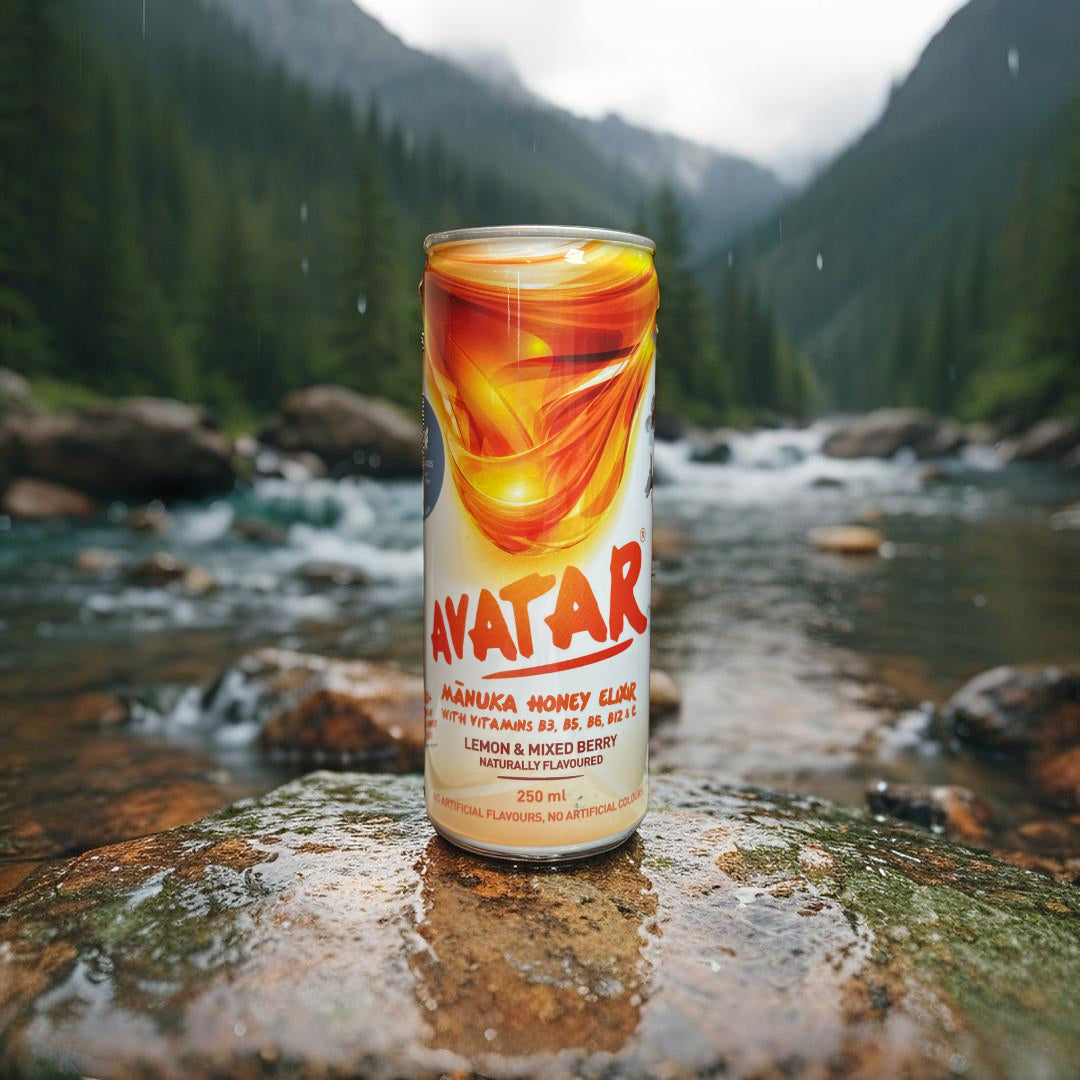
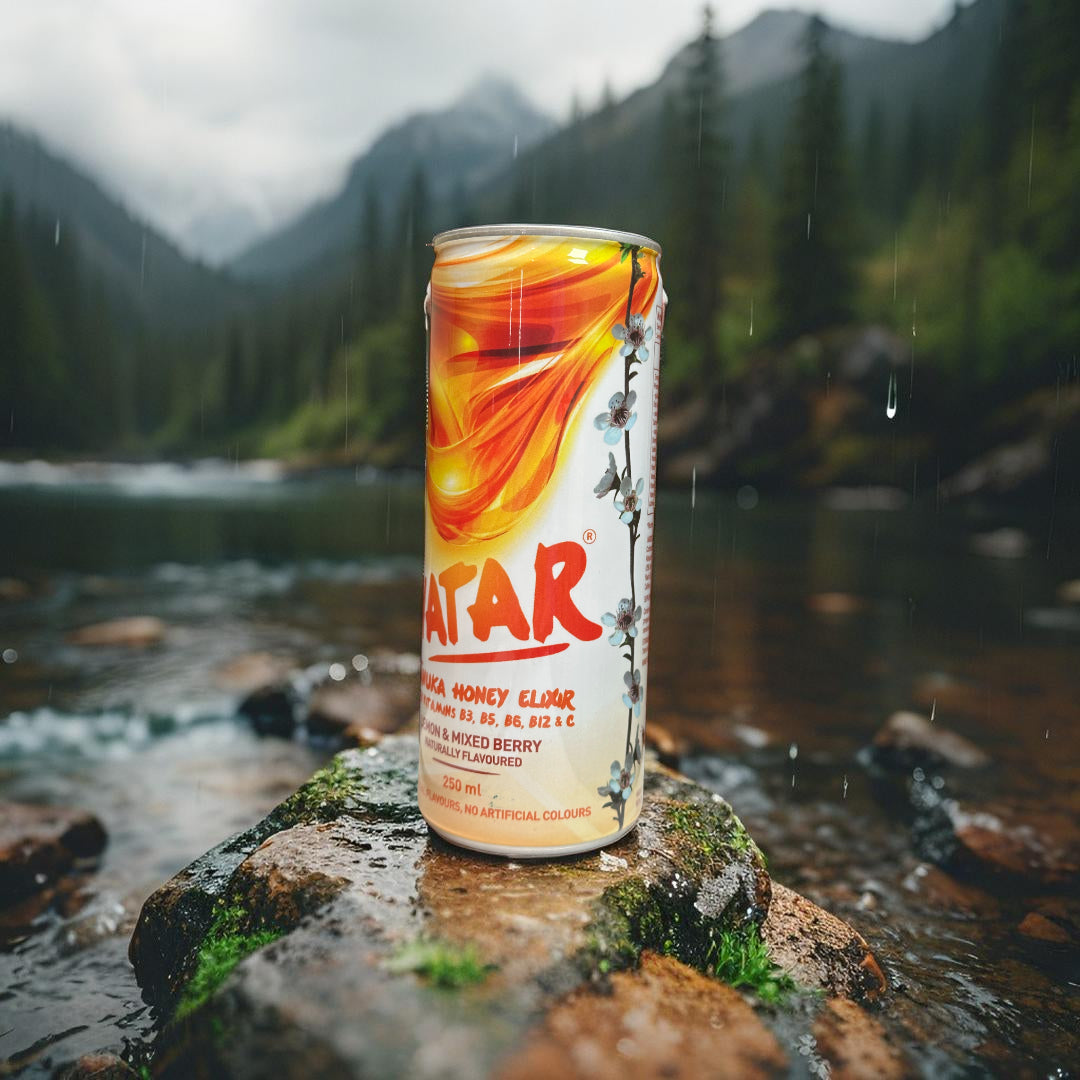
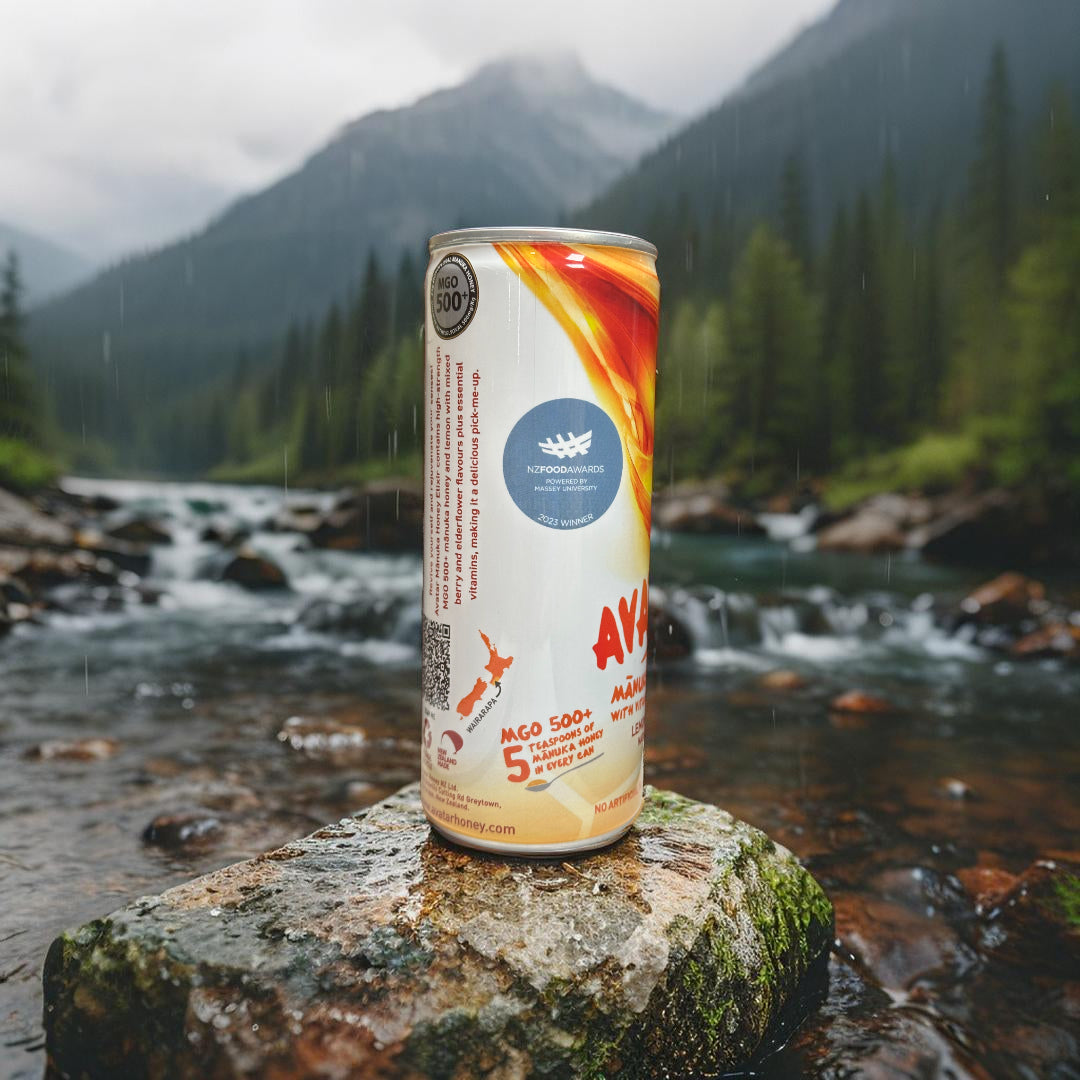
Avatar Elixir uses vitamin C as part of a broader functional beverage recipe rather than presenting it as a medicine. Current product information should be checked before stating a specific vitamin quantity.
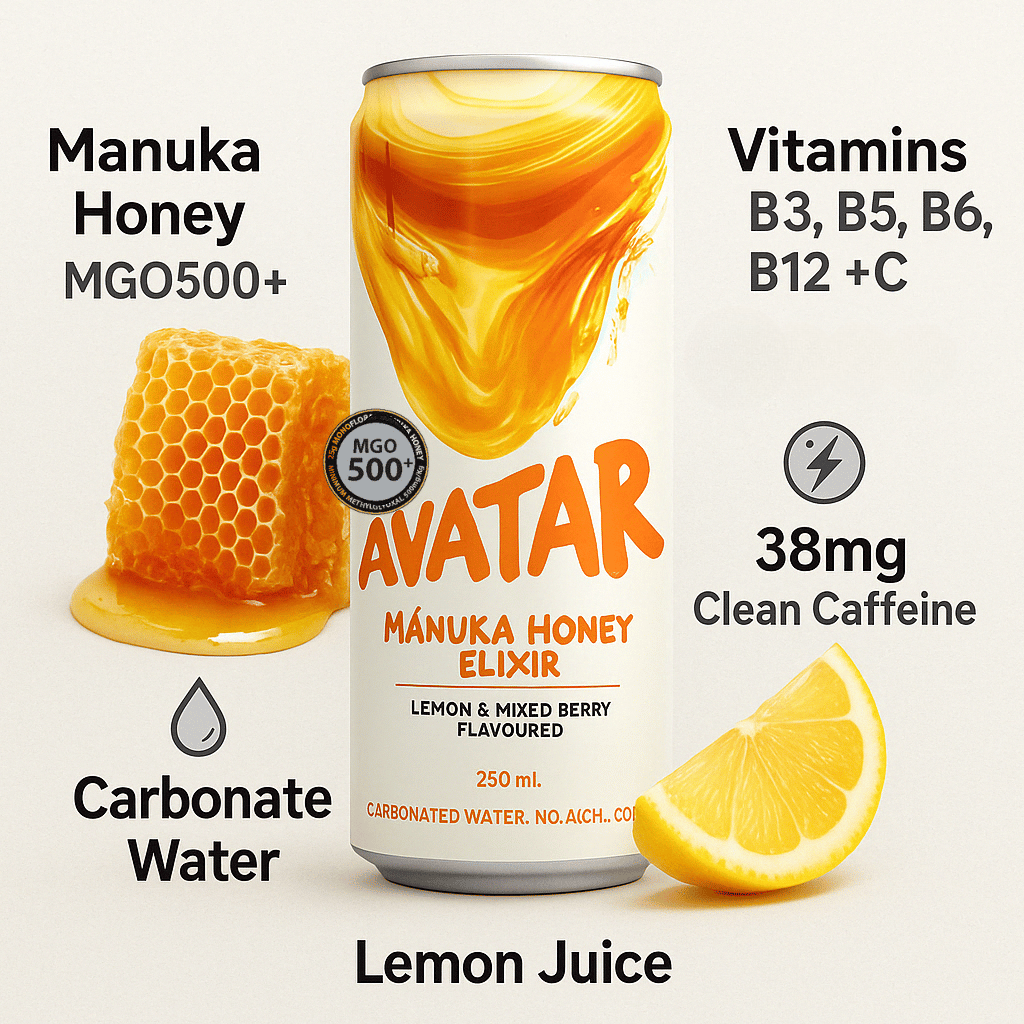
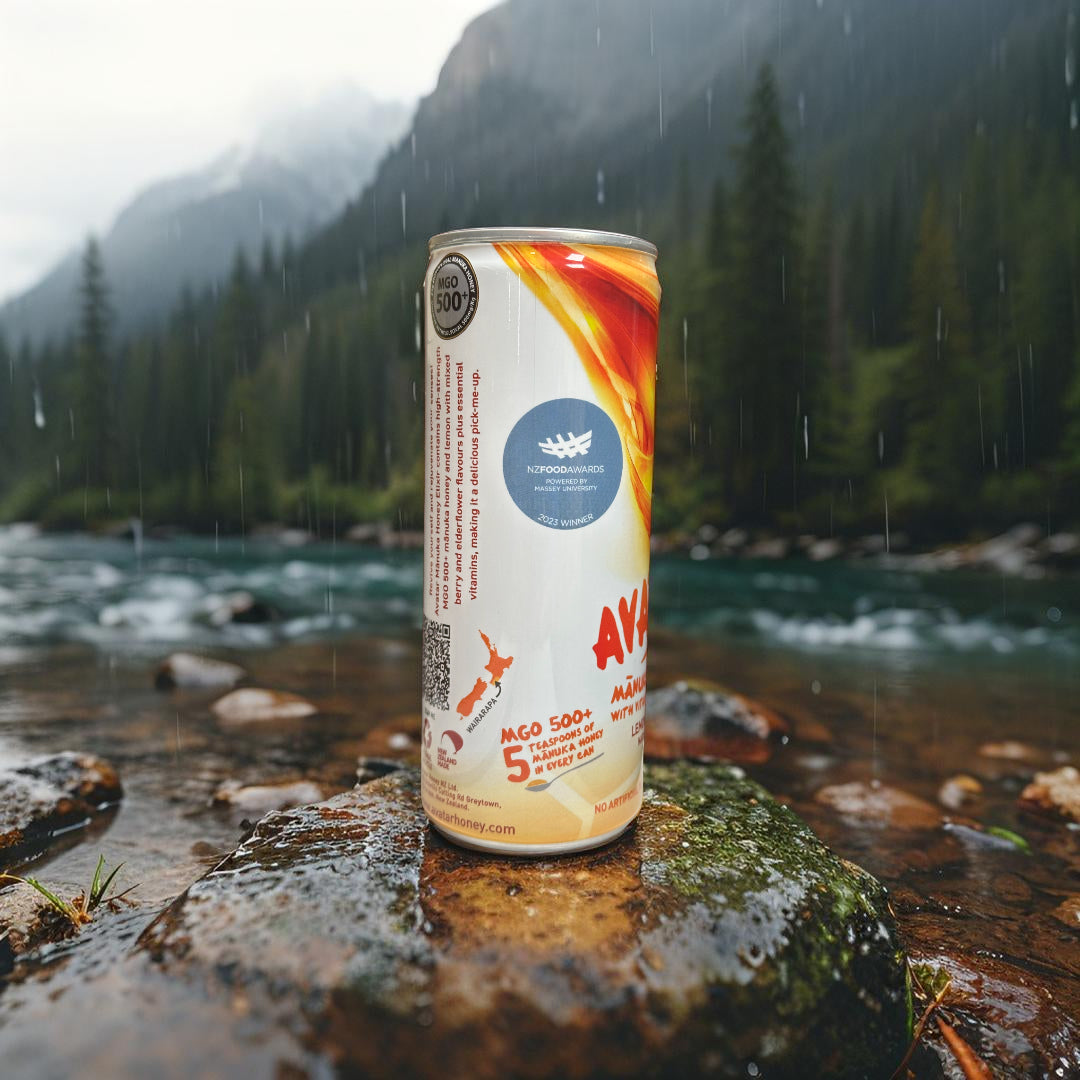
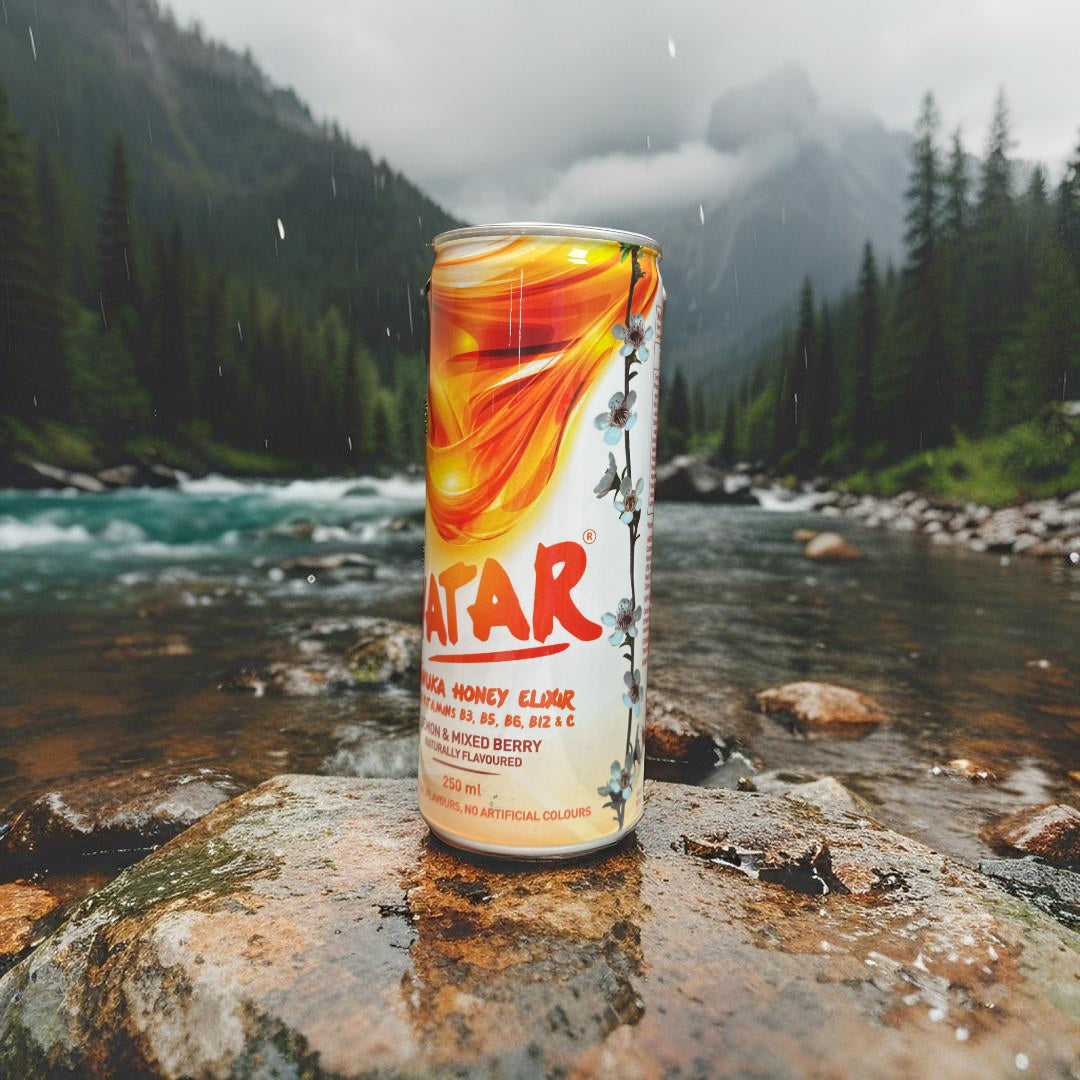
The product information lists vitamin C alongside B3, B5, B6, B12, certified MGO500+ Manuka honey, lemon, elderflower, clean caffeine, and lightly carbonated water. In that context, vitamin C is one clearly identified nutritional component within a honey, citrus, floral, and caffeinated drink.
The ingredient list also illustrates why shoppers should distinguish between roles. The clean caffeine relates to the drink’s caffeinated character. The vitamins provide labelled nutrients. The Manuka honey, lemon, and elderflower contribute to the ingredient story and flavour profile. None of these facts guarantees focus, performance, immunity, or a particular personal response.
For broader context on how these categories are organised, Functional Beverages Explained, the natural energy drink ingredient glossary, and the guide to B vitamins can help clarify how vitamins, caffeine, sweeteners, botanicals, and flavour ingredients differ.
What else should you know about vitamin C in drinks?
Vitamin C is best understood through the current label, the complete recipe, and realistic expectations. It can add nutritional value without turning an everyday beverage into a medical product.
Is ascorbic acid the same as vitamin C?
Ascorbic acid is a common form of vitamin C used in foods and beverages. The ingredient list may use “ascorbic acid,” while the Nutrition Facts panel identifies the nutrient as vitamin C.
Does carbonation destroy vitamin C?
No, carbonation does not automatically destroy vitamin C. Overall stability depends on factors such as oxygen exposure, processing, packaging, temperature, light, time, and the full beverage formulation.
Should vitamin C determine which functional drink you buy?
No. Vitamin C can be a useful nutritional feature, but it should be considered alongside caffeine, sugars or sweeteners, serving size, flavour, storage guidance, and the complete ingredient list.
What is the main takeaway?
Vitamin C is added to functional drinks because it is an essential nutrient that can fit naturally into modern beverage formulations. The most reliable way to interpret it is to read the amount per serving and percentage of Daily Value, then assess the rest of the drink separately.
Vitamin C is not caffeine, does not guarantee energy or focus, and should not be treated as protection from illness. A clear label can tell you what the drink contains. It cannot promise exactly how you will feel after drinking it.
These practical checks help you interpret vitamin C claims when comparing functional drinks and current product labels.
Does a lemon or citrus drink automatically contain vitamin C?
No. A lemon or citrus flavour does not automatically mean a drink provides a declared amount of vitamin C. Fruit ingredients, flavouring, and added vitamin C are not interchangeable label terms. Check the Nutrition Facts panel for the amount per serving and the ingredient list for vitamin C or ascorbic acid.
How do you compare vitamin C across different container sizes?
Compare the declared amount and percentage of Daily Value in the context of each product's serving size. Also check whether the container holds one or multiple servings. Two drinks can display similar percentages while using different serving sizes, so the full serving information matters.
What should you do if online information differs from the package?
Use the current can or bottle as the most relevant reference for the product you are drinking. Formulas and labels can change, and online information may not always reflect the package in hand. For Avatar Elixir, verify the current label before relying on a specific vitamin C quantity.