


Short answer: Ice can make a caffeinated drink taste weaker and reduce the caffeine concentration per sip as it melts, but it does not remove caffeine that was already in the drink. If you finish the entire drink, including the melted ice, you consume the same original total caffeine.
The key is what you mean by “weaker.” A drink poured over ice may become colder, less sweet, less acidic, less aromatic, and more diluted. Its bubbles may also soften. Those changes affect the drinking experience, but the caffeine itself does not disappear or become inactive.
Does melting ice reduce the total caffeine in a drink?
No, melting ice does not reduce the original total caffeine in a drink. It adds water, which spreads the caffeine through a larger volume of liquid.
For example, imagine pouring a caffeinated drink over ice and allowing enough ice to melt that the liquid volume increases. Each sip may then contain less caffeine than an equal-sized sip of the undiluted drink. However, if you consume all the original drink and all the meltwater, the total caffeine consumed remains unchanged.
This creates an important distinction:
- Total caffeine is the amount originally present in the drink.
- Caffeine concentration is the amount of caffeine in a given volume of liquid.
- Caffeine consumed is the amount contained in the portion you actually drink.
Ice changes concentration, not the original caffeine total. It changes caffeine consumption only if you leave some of the drink unfinished or pour less than the full serving.
Why can an iced caffeinated drink feel or taste weaker?
An iced drink can taste weaker because cold temperature and added water alter several sensory qualities at once. That change in flavour is not evidence that the caffeine has been removed.
Melting ice can affect the drink in these ways:
- Sweetness: Added water lowers the concentration of sugar, honey, or other sweet ingredients. Very cold serving temperatures can also make sweetness seem less prominent.
- Acidity: Citrus and other tart flavours become less concentrated, so the drink may taste softer or less sharp.
- Aroma: Colder drinks generally release aromas less readily than warmer drinks, which can make floral, honeyed, or citrus notes seem quieter.
- Carbonation: Pouring a sparkling drink over ice can release some carbon dioxide. Continued melting also spreads the remaining bubbles through more liquid.
- Body: Dilution can make a drink feel lighter and less full on the palate.
- Temperature: Ice keeps the drink colder, which may make it feel crisper even while its flavour intensity gradually decreases.
These effects are especially noticeable during slow sipping. The first few sips may be cold and flavourful, while the final portion may be flatter and more diluted after the ice has had time to melt.
How does ice affect Avatar Elixir’s flavour?
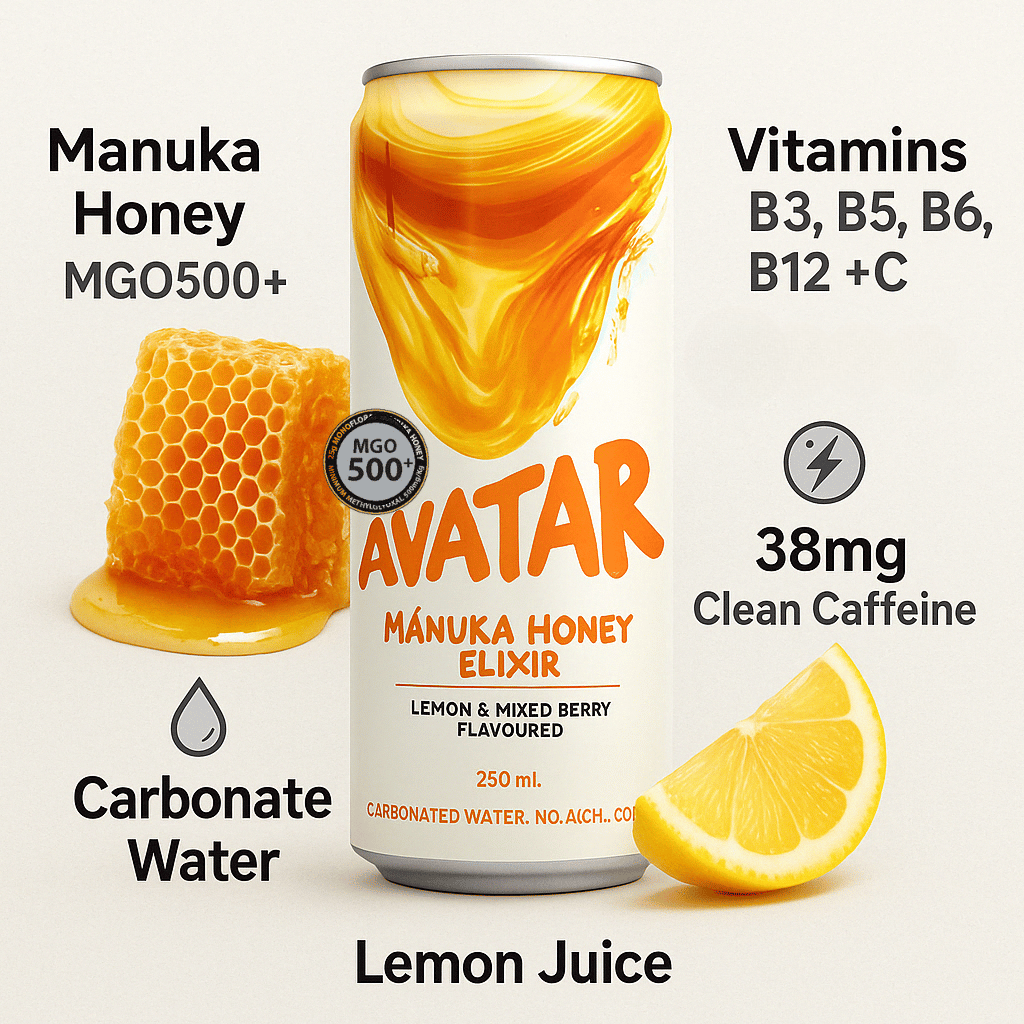
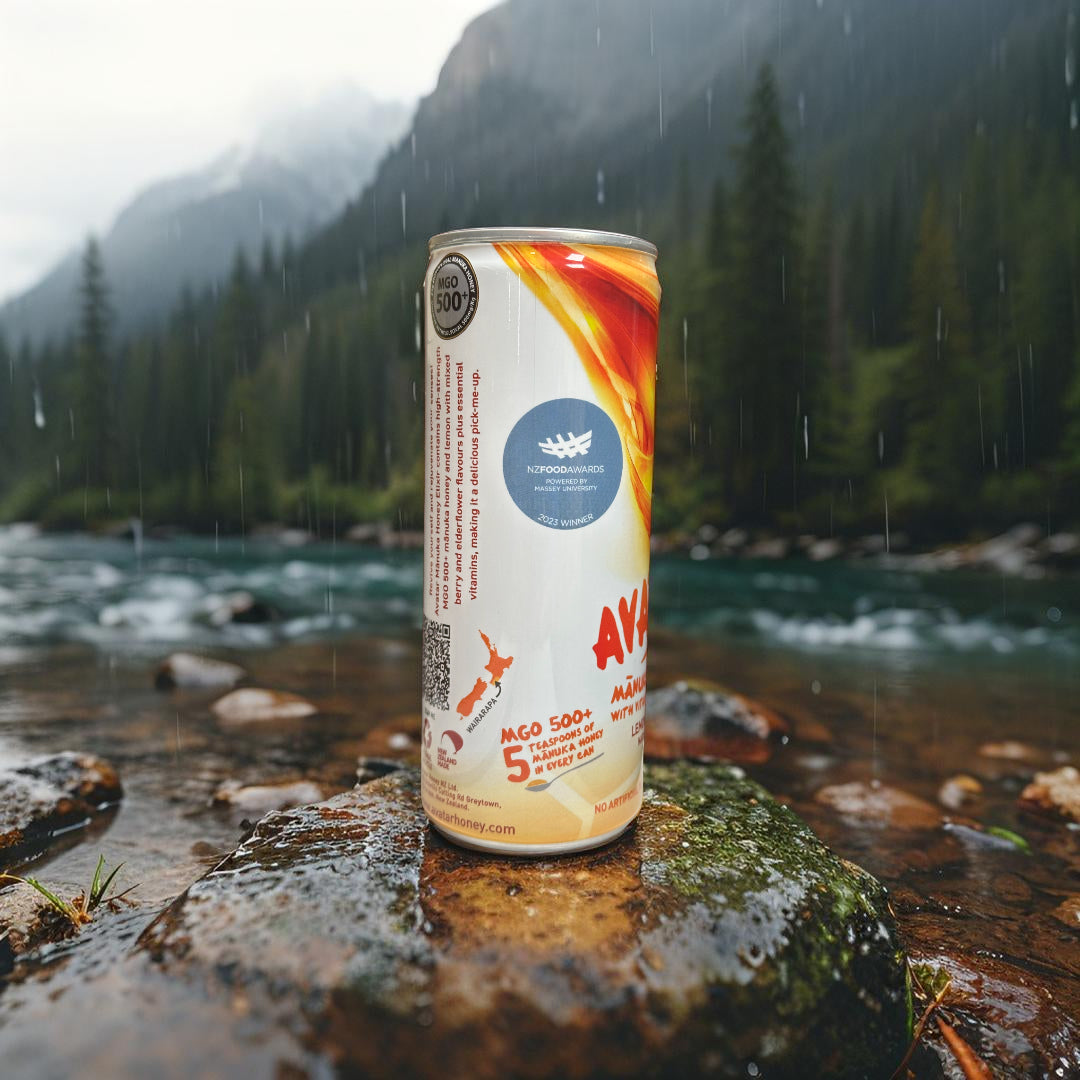
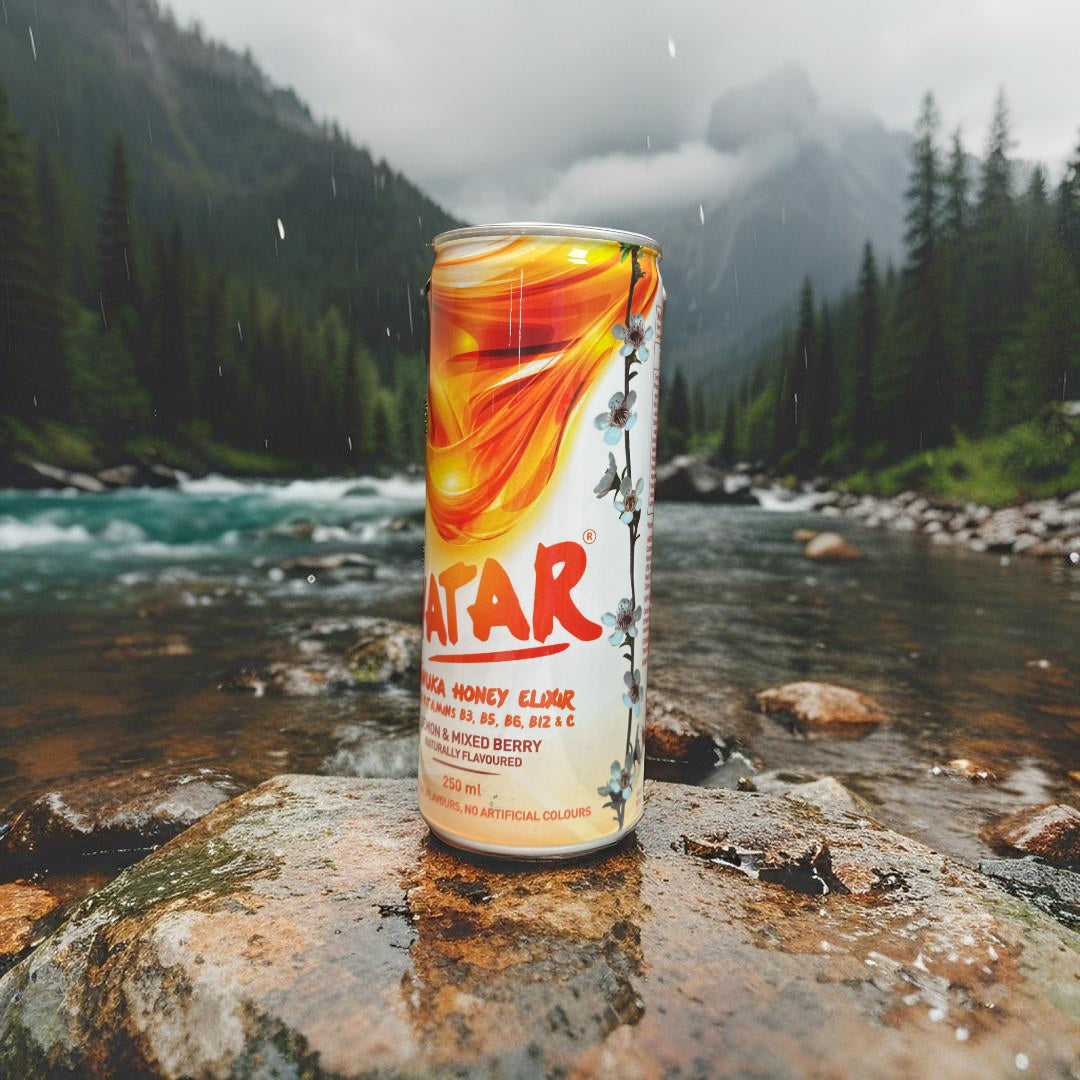
Ice can make Avatar Elixir lighter and more refreshing, but too much melting may soften its Manuka honey, lemon, elderflower, and lightly carbonated profile. It does not remove the caffeine already present in the poured amount.
Served well chilled with a large cube or a few solid cubes, Avatar Elixir can retain more of its original balance. The certified MGO500+ Manuka honey contributes a distinctive honey character, lemon adds brightness, and elderflower provides a floral note. A moderate amount of ice can create a crisp serving experience without immediately overwhelming those flavours.
Crushed ice creates a different result. Its greater exposed surface allows it to melt quickly, so the honey character may seem lighter, the lemon less defined, and the elderflower aroma more delicate as the drink sits. The carbonation may also feel softer after pouring and stirring.
This is a matter of serving preference rather than potency. Someone who wants the most concentrated flavour should chill the can and glass before pouring. Someone who prefers a longer, lighter drink may deliberately use more ice.
Which type of ice causes the least dilution?
Large, solid ice cubes generally melt more slowly than small cubes or crushed ice under similar conditions. A pre-chilled glass offers the least dilution because it cools the drink without adding water.
| Serving option | Typical melt rate | Drinking experience |
|---|---|---|
| One large cube | Slow | Keeps the drink cold while preserving flavour concentration for longer |
| Several small cubes | Moderate | Cools quickly, with gradually increasing dilution during sipping |
| Crushed ice | Fast | Creates a very cold, lighter drink but softens flavour and bubbles sooner |
| Pre-chilled glass with no ice | No meltwater | Preserves the drink’s original concentration while providing a colder serve |
Ice quality and conditions also matter. Thin, wet, or partly melted cubes add water sooner than hard-frozen cubes. A drink left in a warm room will dilute faster than one enjoyed promptly in a cool setting.
Does slow sipping change how much caffeine you consume?
Slow sipping does not change the original caffeine in the drink, but it can change its concentration and the amount you ultimately consume. As the ice melts, later sips may be more diluted than earlier ones.
If the melted drink is mixed reasonably evenly, each millilitre contains less caffeine than it did before dilution. You may take more sips to finish the larger volume, but finishing everything still delivers the caffeine from the original amount poured.
If you stop before finishing, you consume less caffeine because some of the original drink remains in the glass. The reduction comes from leaving part of the beverage unfinished, not because ice destroyed or neutralised caffeine.
This is also why a slowly sipped iced drink can seem gentler without necessarily containing less total caffeine. Cold temperature, softer flavour, a larger liquid volume, and a longer drinking period all change the experience, but they do not provide a reliable measure of caffeine intake.
Is adding ice the same as drinking only part of a serving?
No, adding ice and consuming only part of a serving are different. Ice adds caffeine-free water, while drinking a smaller portion leaves some of the original caffeine unconsumed.
If you pour the full serving over ice and finish it, the original total caffeine is consumed. If you pour half the serving and leave the rest in the can, you consume only the caffeine contained in the half you poured. If you pour the full serving but leave some diluted liquid in the glass, you also leave some caffeine behind.
For anyone monitoring caffeine intake, the useful questions are:
- How much caffeine does the product label state for the relevant serving or container?
- How much of the original beverage was poured?
- How much of the finished drink was actually consumed?
The amount of ice is not a dependable way to calculate or control caffeine intake. Product caffeine levels vary, so check the packaging rather than judging by flavour strength, glass size, or dilution.
What is the best way to serve a caffeinated canned drink over ice?
For a cold drink with limited dilution, chill both the can and glass first, use a small number of large cubes, and pour gently. Drink it before the ice has melted substantially if you want to preserve its intended flavour and carbonation.
- Refrigerate the unopened can until cold.
- Use a clean, pre-chilled glass.
- Add one large cube or a few firm cubes.
- Pour slowly down the side of the glass to reduce excessive foaming.
- Avoid vigorous stirring, particularly with a lightly carbonated drink.
- Enjoy it promptly if you prefer a brighter, more concentrated flavour.
Healthy adults vary in their sensitivity to caffeine. If you are sensitive to it, adding ice may soften the taste but should not be treated as a way to lower the caffeine in a full serving. Choose an appropriate product and portion, check the label, and account for other caffeinated drinks consumed during the day.
What is the final takeaway?
Ice makes a caffeinated drink more diluted, not caffeine-free. Melting lowers caffeine concentration per sip and can soften sweetness, acidity, aroma, body, and carbonation. It does not change the caffeine originally present.
If you finish the complete drink with its meltwater, you consume the original total caffeine. If you pour or drink only part of the beverage, you consume only the caffeine contained in that portion. For the coldest serve with the least flavour dilution, use a pre-chilled glass and large, slow-melting cubes.
These practical serving tips help limit dilution and preserve flavour when enjoying a caffeinated drink over ice.
Can I prepare Avatar Elixir over ice in advance?
It is better to pour Avatar Elixir over ice close to serving if you want to preserve its flavour and bubbles. Preparing it well in advance gives the ice more time to melt, which can soften the Manuka honey, lemon, and elderflower notes and make the light carbonation feel quieter. Keep the can and glass chilled, then pour gently when you are ready to drink.
Should I stir a lightly carbonated drink as the ice melts?
Avoid vigorous stirring because it can release more carbon dioxide and make a lightly carbonated drink taste flatter sooner. A brief, gentle swirl can distribute meltwater more evenly, but stirring does not change the original caffeine in the poured drink.
What setup works best if I plan to sip slowly?
Use a cold can, a pre-chilled glass, and one large, hard-frozen cube. A large cube typically melts more slowly than small cubes or crushed ice, helping the drink retain its flavour concentration for longer. If you want to avoid meltwater entirely, use the chilled glass without ice.