



Headline finding: Caffeine half-life is the time it takes the body to reduce the amount of caffeine present by half. Because this process repeats gradually, part of an afternoon or evening serving may remain around bedtime, even when the noticeable feeling of energy has faded.
For someone choosing a caffeinated drink later in the day, half-life is more useful as a timing concept than as a precise countdown. It explains why caffeine does not suddenly disappear after its most noticeable effects wear off.
Absorption, peak timing, metabolism, serving size and personal sensitivity all influence the experience. Average figures can help illustrate the pattern, but they cannot predict exactly how long caffeine will affect an individual. This distinction matters whether the drink is coffee, tea, a conventional energy drink or a clean-caffeine beverage such as Avatar Elixir.
What caffeine half-life actually measures
Caffeine half-life measures reduction, not complete elimination. If a hypothetical serving provides 100 mg of caffeine and a five-hour half-life is assumed for illustration, about 50 mg would remain after five hours. After another five hours, the amount would fall by half again to about 25 mg.
This repeated halving is the central idea:
- A half-life does not mean all caffeine is gone after that period.
- Each half-life reduces the remaining amount, rather than the original amount.
- Small residual amounts can remain for considerably longer than one half-life.
- The calculated amount does not show exactly how alert, relaxed or sleepy someone will feel.
The term can sound more exact than it is in everyday use. A commonly discussed average may describe a broad population pattern, but an individual evening can differ from that average. Half-life is therefore best understood as a model of gradual clearance rather than a personal deadline.
Takeaway: One half-life means half the caffeine remains, not that the serving has finished affecting the body.
How absorption, peak timing and clearance form a caffeine timeline
Caffeine is absorbed before it is gradually cleared. After a caffeinated drink is consumed, caffeine begins entering the bloodstream. Levels generally rise during the early period after drinking and often reach their highest point within roughly the first hour or two, although food, drinking pace and individual factors can alter the timing.
A noticeable lift may begin before the caffeine level reaches its peak. The experience can then change while caffeine is still present. Someone may stop consciously feeling energised even though the body has only cleared part of the serving.
The following timeline is a conceptual graphic, not a personal prediction:
| Time after drinking | General pattern | What it can mean for an evening drink |
|---|---|---|
| Shortly after the drink | Absorption begins | The caffeine level is rising, even if the effect is not yet obvious. |
| Early period | The caffeine level approaches its peak | The drink may feel most noticeable during this part of the timeline. |
| Several hours later | Metabolism has reduced the amount, but caffeine remains | The obvious lift may fade before the caffeine has been substantially cleared. |
| Around one illustrative half-life | About half the earlier amount remains | A meaningful portion of the serving may still be present near bedtime. |
| After additional half-lives | The remaining amount continues to halve | Clearance continues gradually rather than ending at a single cutoff point. |
The point of this timeline is not to identify one universally safe drinking hour. It shows why the clock time, intended bedtime and serving information need to be considered together.
Takeaway: An evening caffeine timeline includes a rise, a peak and a gradual decline, rather than a short burst followed by immediate clearance.
What an example half-life calculation shows
A simple calculation can reveal how much caffeine may remain under a chosen assumption. Consider a completely hypothetical drink containing 100 mg of caffeine. Assume, only for the purpose of demonstrating the maths, that the person has a five-hour caffeine half-life.
| Elapsed time | Illustrative caffeine remaining | Calculation |
|---|---|---|
| At consumption | 100 mg | Starting amount |
| 5 hours later | 50 mg | 100 divided by 2 |
| 10 hours later | 25 mg | 50 divided by 2 |
| 15 hours later | 12.5 mg | 25 divided by 2 |
If the hypothetical drink were finished at 5 pm, the model would leave about 50 mg at 10 pm and about 25 mg at 3 am. That does not mean those amounts will produce a specific sleep outcome. It simply illustrates why a late-afternoon serving may still contribute to the total caffeine present later that night.
The calculation also has important limitations. It assumes a fixed half-life, an exact serving amount and an even mathematical decline. Real metabolism varies, and a person’s response cannot be inferred from the remaining milligrams alone.
For Avatar Elixir, readers should check the current can label for caffeine and serving information rather than applying an assumed amount. Product formulations and pack information should always be taken from the label in hand.
Takeaway: Half-life calculations are useful for visualising residual caffeine, but they are illustrative models rather than personalised forecasts.
Why half-life is different from feeling energised
The presence of caffeine and the conscious feeling of energy are related, but they are not the same measure. Half-life describes what happens to caffeine in the body. It does not measure concentration, productivity, tiredness or perceived alertness.
The noticeable experience can be shaped by context. A person who is tired after a long day may notice a caffeinated drink differently from someone who is already alert. Food, hydration, expectations, accumulated sleep loss and the activity taking place can also influence how the experience is interpreted.
This creates two common sources of confusion:
- “I no longer feel it” does not mean no caffeine remains. The most obvious sensation may have faded while a portion of the serving is still present.
- “Caffeine does not make me feel wired” does not establish that timing is irrelevant. Some people report few noticeable sensations but may still choose to consider how late they consume it.
The reverse can also occur. A person may continue to feel alert because of work, conversation, bright surroundings or stress after caffeine levels have begun declining. The feeling alone cannot identify the amount remaining.
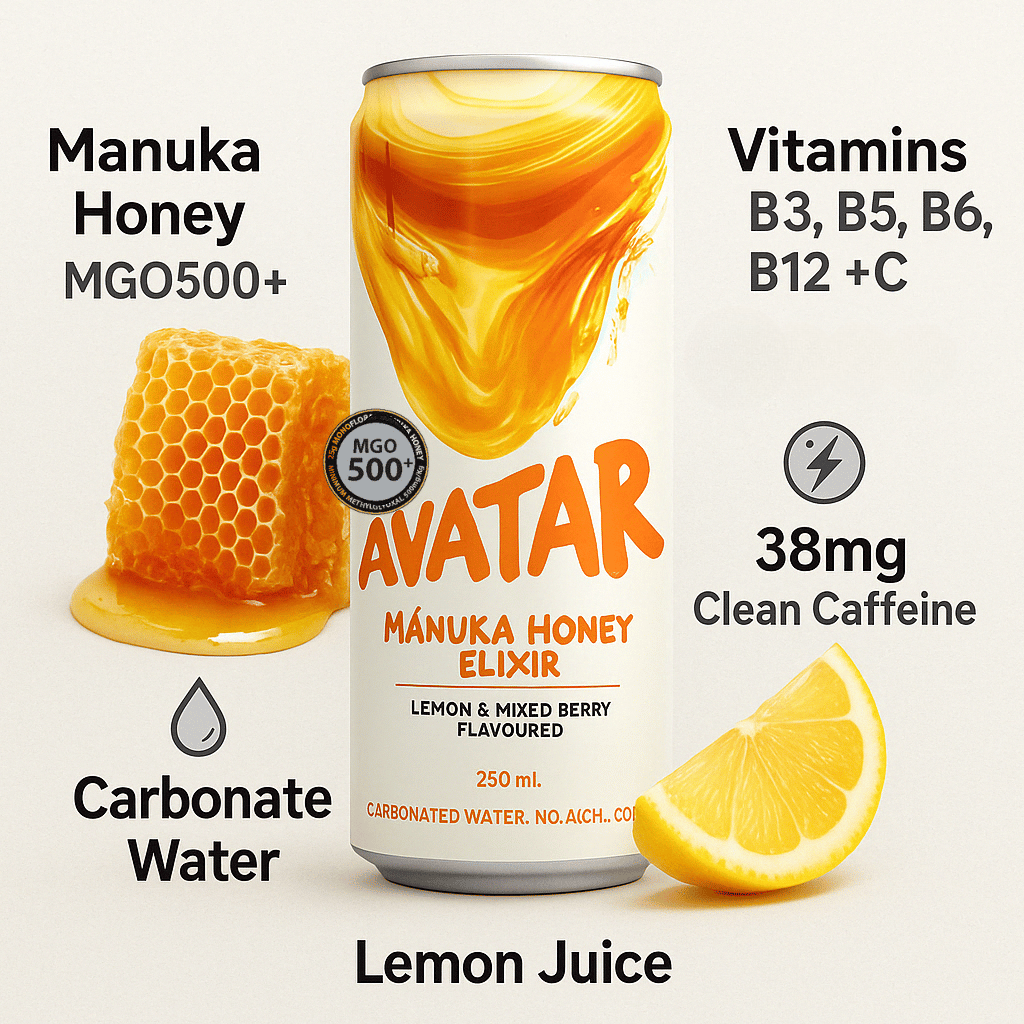
This distinction applies to every caffeine source. “Clean caffeine” generally refers to a simpler or more ingredient-conscious beverage context. It does not represent a different form of caffeine that automatically avoids timing considerations. Avatar Elixir combines clean caffeine with ingredients including certified MGO500+ Manuka honey, lemon, elderflower, B vitamins, vitamin C and lightly carbonated water, but its caffeine should still be considered when choosing an evening drinking time.
Takeaway: How long someone feels energised cannot be used as a reliable clock for how long caffeine remains.
Why an average half-life is not a personal guarantee
Caffeine metabolism varies between people and can vary with circumstances. This is why a single average should not be treated as an exact bedtime calculator.
Commonly discussed sources of variation include:
- Individual metabolism: People process caffeine at different rates.
- Habitual caffeine use: Regular use may change how noticeable a serving feels, although reduced sensation does not show that clearance is complete.
- Serving size and total daily intake: An evening drink can add to caffeine consumed earlier from coffee, tea, chocolate, energy drinks or other products.
- Food and drinking pace: Consuming a drink with a meal or sipping it over time can change the shape of the experience.
- Pregnancy: Caffeine considerations can change during pregnancy, making guidance from a qualified health professional appropriate.
- Medicines and health factors: Some medicines and individual health circumstances may alter caffeine response or metabolism.
- Sleep sensitivity: Some people notice late caffeine more readily than others, and sensitivity may not be consistent every day.
There is also a practical uncertainty in serving behaviour. A drink finished quickly creates a different intake timeline from the same drink sipped across an evening. Clock time alone can therefore be misleading unless it refers to when consumption began and ended.
Anyone who is pregnant, has a sleep disorder, uses medication that may interact with caffeine or experiences unusual sensitivity should seek individual guidance from a qualified health professional. General half-life explanations cannot resolve those personal questions.
Takeaway: Population averages explain the broad pattern of caffeine clearance, but individual and contextual factors determine how useful that pattern is for a particular evening.
What this means when choosing an evening drink
An evening caffeine decision is mainly a question of timing, amount, total intake and personal sensitivity. Half-life does not create one universal cutoff hour, but it does explain why drinking time should be considered relative to intended sleep time.
A calm decision check can include:
- Check the label. Confirm the caffeine amount per serving and whether the container contains one or multiple servings.
- Look at the clock. Consider how many hours remain before the intended bedtime, not simply whether it is technically afternoon or evening.
- Count earlier sources. Coffee, tea, chocolate and other caffeinated drinks can contribute to the day’s total.
- Consider the full drinking window. A beverage sipped slowly may extend caffeine intake later than the opening time suggests.
- Separate preference from clearance. Feeling calm or accustomed to caffeine does not mean it has already left the body.
- Use personal patterns cautiously. Previous experience can provide context, but it does not guarantee the same response on every occasion.
- Choose a non-caffeinated alternative when uncertain. For a late social drink, mixer or refreshment, caffeine-free options remove the half-life question.
For someone considering Avatar Elixir during a long workday, study session, journey or social occasion, its premium ingredient profile does not make caffeine timing irrelevant. The relevant information is the current label, the time of consumption and the person’s wider caffeine pattern. A naturally positioned or clean-caffeine drink can offer a different flavour and ingredient experience without bypassing the normal principles of caffeine clearance.
The central implication is straightforward: caffeine half-life helps explain why an evening serving may overlap with bedtime, but it cannot predict a specific person’s sleep or establish a universally suitable cutoff. It is a framework for making the timing visible.
Takeaway: Check the serving information, consider the hours before sleep and treat half-life as a planning aid rather than a promise.
These follow-up points clarify how serving size, food, daily variation and personal circumstances affect evening caffeine decisions.
Why can the same evening drink feel different on different days?
Caffeine can feel different because the surrounding context is not always the same. Food, drinking pace, accumulated tiredness, earlier caffeine intake, activity and personal sensitivity may shape the experience. A weaker or calmer sensation on one occasion does not establish that caffeine is being cleared more quickly.
Does consuming caffeine with food remove the timing concern?
No, consuming caffeine with food does not remove caffeine from the serving. Food may change the timing or character of absorption, but caffeine can still remain in the body for hours. The serving information, drinking window and intended bedtime remain relevant.
How can I estimate caffeine from part of a can?
Start with the current label's caffeine amount and serving information, then consider how much of the stated serving was actually consumed. Any residual-caffeine calculation remains illustrative because an assumed half-life is not a personal measurement. For Avatar Elixir, use the label on the can rather than an assumed caffeine amount.
When is professional guidance appropriate for caffeine timing?
Individual guidance is appropriate for pregnancy, medication questions, diagnosed sleep disorders or unusual caffeine sensitivity. A qualified health professional can consider personal circumstances that a general half-life estimate cannot capture. Unexpected or concerning reactions should not be assessed using an online calculation alone.