



Quick read:
- Find the caffeine per serving, then multiply it by the number of servings in the container to calculate caffeine per can.
- Use caffeine per fluid ounce only when you want to compare concentration across different can sizes.
- Pack quantity, can size, caffeine concentration, and total caffeine per can are separate numbers. Check each one before deciding which drink fits the occasion.
Comparing caffeine across canned drinks should be straightforward, but labels do not always present the information in the same way. One can may highlight caffeine per serving, another may state a total for the container, and a third may place a large can size beside a much smaller caffeine number.
The solution is not to choose whichever product displays the largest or smallest figure. It is to put both cans into the same measurement format. For most shoppers, that means identifying caffeine per serving, confirming servings per container, and calculating the total caffeine in the full can. If the cans are different sizes, caffeine per fluid ounce can add another useful point of comparison.
Start with caffeine per serving
Caffeine per serving tells you how much caffeine is associated with one labeled serving, not necessarily the whole can. This distinction matters when a container includes more than one serving.
Look for a statement that connects a caffeine amount, usually shown in milligrams or mg, to a defined serving. Then check whether the can contains one serving or multiple servings.
For example, imagine a hypothetical label that states:
- Serving size: 6 fluid ounces
- Servings per container: 2
- Caffeine: 45 mg per serving
If you drink one 6-fluid-ounce serving, the relevant amount is 45 mg. If you drink the entire can, you consume two labeled servings, so the relevant total is 90 mg.
This is why caffeine per serving is only the first number to find. You still need the serving count before you can understand the full container.
Calculate the total caffeine per can
Total caffeine per can is caffeine per serving multiplied by servings per container. Use this calculation whenever the label lists caffeine by serving rather than giving a clear total for the entire can.
| Label information | Calculation | Result |
|---|---|---|
| Caffeine per serving | Read the stated amount | 45 mg |
| Servings per container | Read the stated serving count | 2 servings |
| Total caffeine per can | 45 mg × 2 | 90 mg |
One worked example
Suppose you are comparing a 12-fluid-ounce can with a label showing 45 mg of caffeine per 6-fluid-ounce serving. The container holds two servings.
45 mg per serving × 2 servings = 90 mg per can.
If you plan to drink the entire can, 90 mg is the most useful number for comparing it with another full can. The prominently displayed 45 mg figure would create a misleading impression if you treated it as the container total.
If the label already states caffeine per container or caffeine per can, you do not need to multiply it again. Confirm the wording carefully so you do not accidentally double the stated amount.
Use caffeine per fluid ounce to compare concentration
Caffeine per fluid ounce shows how concentrated the caffeine is within the drink. It can be useful when two cans have different volumes, but it does not replace the total-per-can figure.
To calculate it, divide the total caffeine in the can by the can volume:
Total caffeine per can ÷ total fluid ounces = caffeine per fluid ounce.
Using the hypothetical 12-fluid-ounce can containing 90 mg:
90 mg ÷ 12 fluid ounces = 7.5 mg per fluid ounce.
This normalized figure makes concentration easier to compare. For example, a smaller can could have fewer total milligrams but more caffeine per fluid ounce. A larger can could have more total caffeine while being less concentrated.
Neither is automatically the better choice. The useful measure depends on what you are deciding:
- Use caffeine per serving if you plan to consume only the labeled serving.
- Use caffeine per can if you expect to finish the container.
- Use caffeine per fluid ounce if you want to compare concentration across different can sizes.
Why the largest number may not be the most useful
A larger caffeine number can describe a larger serving, a larger can, or a more concentrated drink. Without its unit and context, the number does not tell you which of those explanations applies.
Imagine one can lists 80 mg per container and another lists 60 mg per serving. The second number looks lower, but that conclusion may change if the container includes two servings. Conversely, a high caffeine-per-ounce figure may sound significant even when the can itself is very small.
Can volume can also attract attention because it is often displayed prominently in fluid ounces. A 16-fluid-ounce can is not necessarily higher in caffeine than a 12-fluid-ounce can. Fluid ounces measure liquid volume, while milligrams measure the amount of caffeine. You need both figures to calculate concentration, but one cannot stand in for the other.
Keep the units attached to every number as you compare. Writing down “90 mg per can” is much clearer than writing down “90.”
A checklist for comparing two cans
Use the same sequence for each product so differences in label format do not distort the comparison:
- Find the caffeine declaration. Record the amount in milligrams.
- Identify what the amount applies to. Is it per serving, per container, or per can?
- Check servings per container. Do not assume one can always equals one serving.
- Calculate the full-can total if needed. Multiply caffeine per serving by servings per container.
- Record the can volume. In the US, this will commonly be shown in fluid ounces.
- Normalize by volume if useful. Divide total caffeine by total fluid ounces to find caffeine per fluid ounce.
- Compare like with like. Put per-can totals beside per-can totals, or per-ounce figures beside per-ounce figures.
- Consider how you will actually drink it. A calculation based on the whole can is less relevant if you intend to have only part of it.
A simple note can keep the comparison clear: “Can A: total mg per can, mg per fluid ounce” and “Can B: total mg per can, mg per fluid ounce.” This removes much of the visual noise from different package designs.
Do not confuse pack quantity with caffeine per can
Pack quantity tells you how many cans you are buying, not how much caffeine is in each can. An 8-pack contains eight individual cans, while a 12-pack contains twelve. That difference does not establish caffeine per serving, caffeine per can, or caffeine concentration.
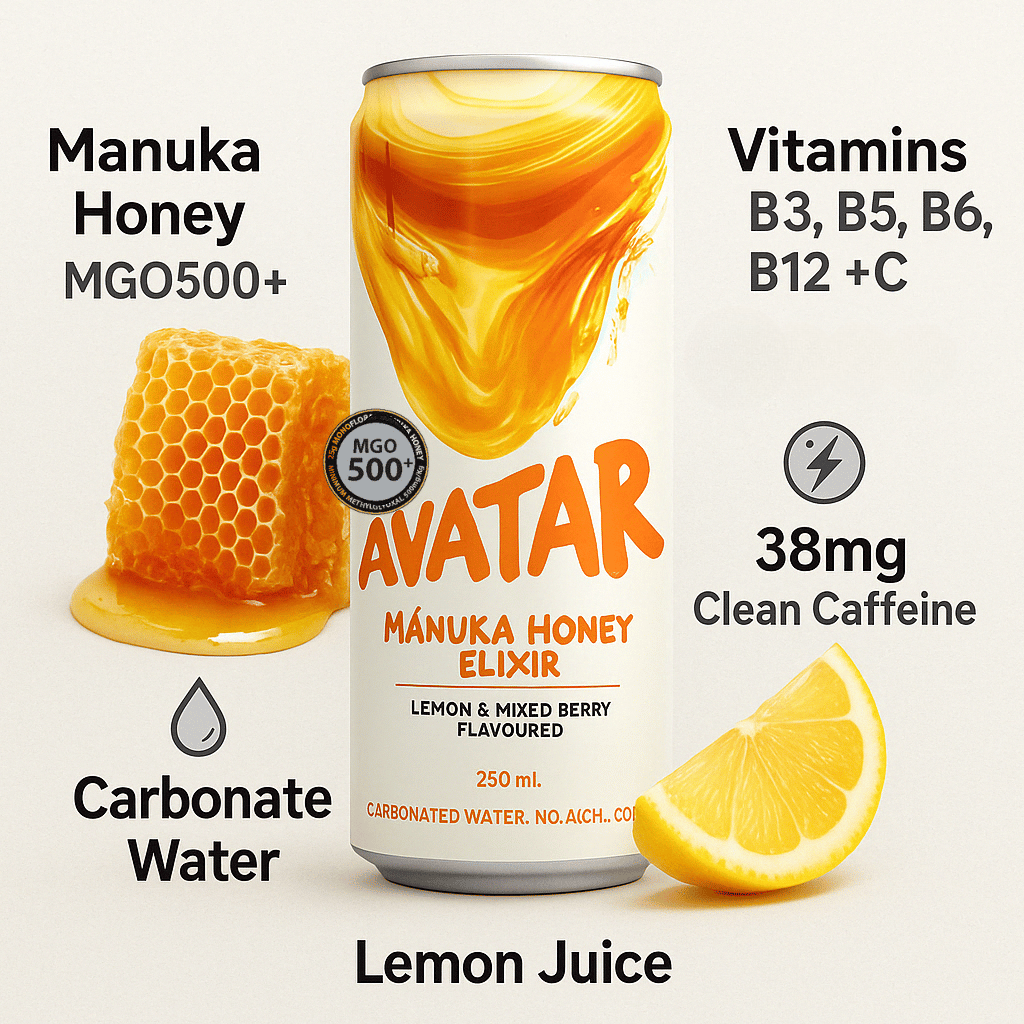
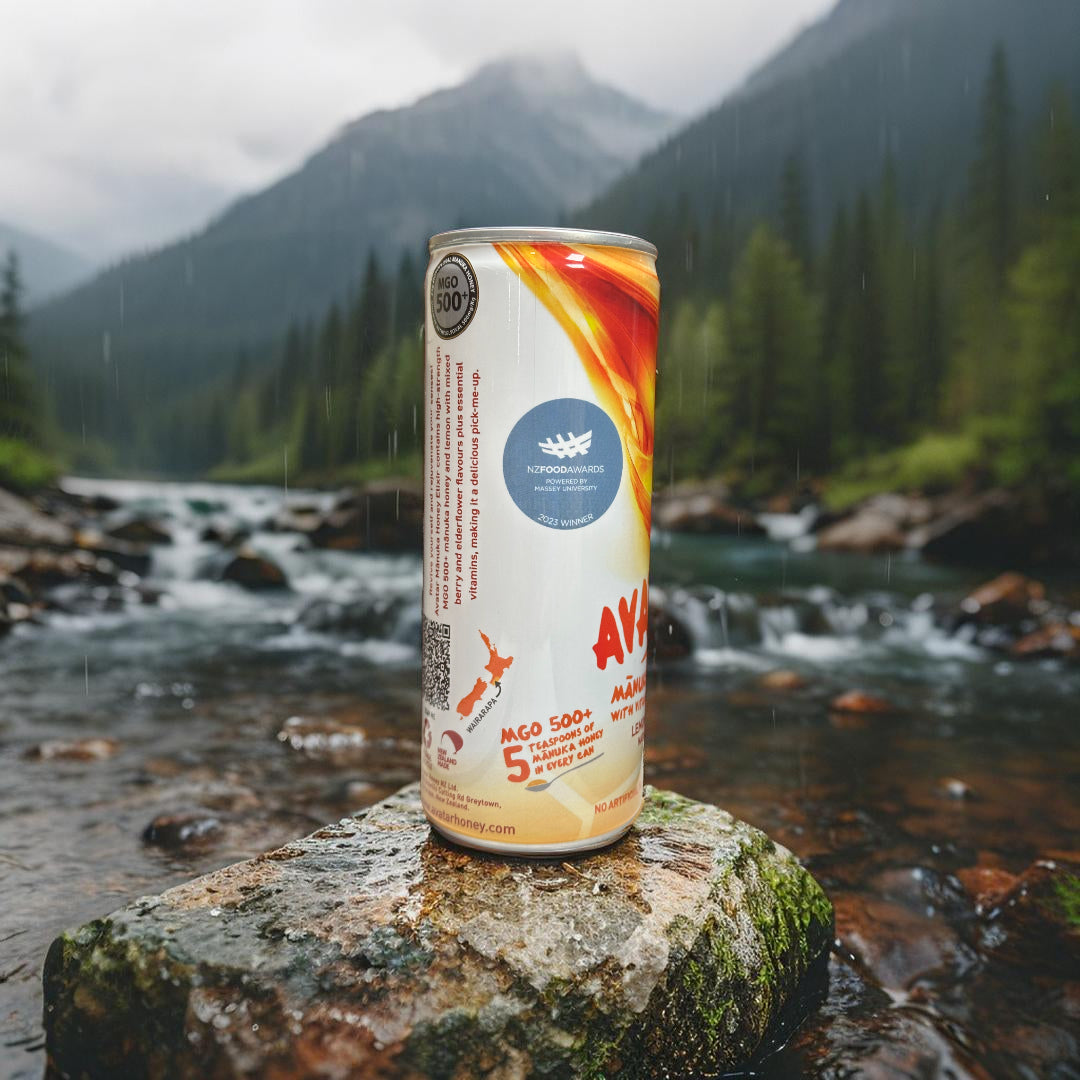
For example, the Avatar Elixir 8-pack and 12-pack describe purchasing formats. The pack count is unrelated to the caffeine amount in an individual can. For verified, product-specific information, read the current Avatar Elixir can label and note whether its caffeine declaration applies per serving or per container.
The same principle applies to any multipack. Compare the individual cans first. Then consider pack quantity separately when evaluating how many cans suit your household, workweek, gathering, or gifting plans.
Put the calculation into the context of your day
The label helps you quantify caffeine, but the number alone cannot decide whether a drink suits you. Your personal sensitivity, the time of day, other caffeinated drinks or foods you have consumed, and the occasion all remain relevant.
A can chosen for a long drive may be approached differently from a drink served with lunch or used in a social mixer. Coffee, tea, chocolate, and other caffeinated beverages can also contribute to your overall intake. Looking only at one can may give you an incomplete picture of the day.
It can be practical to consider:
- Whether you usually finish the entire container
- How caffeine tends to affect you personally
- When you plan to drink it
- What other caffeine you have already consumed or expect to consume
- Whether you want a smaller portion, a lower total, or a particular flavour and drinking experience
People vary in how they respond to caffeine. If you have medical concerns, are unsure whether caffeine is suitable for you, or need guidance based on your circumstances, seek advice from a qualified healthcare professional.
The clearest comparison uses matching units
To compare caffeine across cans without misreading the numbers, first identify caffeine per serving and servings per container. Multiply those figures when necessary to find the total caffeine per can. If the cans differ in size, divide the can total by its fluid ounces to compare caffeine concentration.
Keep the measures separate. Caffeine per serving describes a labeled portion, caffeine per can describes the full container, and caffeine per fluid ounce describes concentration. Pack count simply describes how many cans you are purchasing.
Once both drinks are expressed in matching units, you can move beyond the largest number on the package and choose according to the amount you expect to drink, the occasion, timing, personal sensitivity, flavour, and the rest of your day.
Label edge cases can make caffeine comparisons less obvious, especially with approximate servings, unclear declarations, ingredient-led descriptions, and mixed drinks.
How do I calculate caffeine when the label says "about two servings"?
Use the displayed serving count to make a label-based estimate. For example, 45 mg per serving multiplied by about two servings gives about 90 mg per can. Keep the word "about" with your result rather than presenting it as an exact total. If the label also provides a clear caffeine amount per container, use that figure for the full-can comparison.
What should I do if the caffeine declaration is unclear?
Do not assume that the most prominent number applies to the entire can. Read the current can label closely for wording such as "per serving," "per container," or "per can," then check the serving count. If the basis remains unclear, avoid calculating a full-can total from unsupported assumptions and seek verified product-specific information.
Does "clean caffeine" change how I compare the milligrams?
No. Ingredient-led descriptions such as "clean caffeine" do not change the comparison method. Match milligrams per serving with milligrams per serving, or milligrams per can with milligrams per can. Once the quantities use the same basis, you can separately consider ingredients, flavor, can size, and whether the drink suits your intended occasion.
Which caffeine figure matters when using a canned drink as a mixer?
The most relevant figure is the estimated caffeine in the portion you actually pour. If you have calculated caffeine per fluid ounce, multiply it by the number of fluid ounces used in the drink. When a full can is divided among several mixed drinks, the caffeine associated with each one depends on how the can is portioned.