


Quick read:
- Lemon juice from concentrate starts as juice, has some water removed, and is reconstituted with water for use at drinking strength.
- Not-from-concentrate juice skips that concentration step, but it can still be pasteurised, stored, and otherwise processed.
- Neither phrase alone tells you which finished drink tastes better or has the nutritional profile you want. The complete recipe and label matter more.
You pick up a lemon drink, turn it over, and spot “from concentrate” in the ingredients. Does that change how you feel about it? Perhaps you picture a less fragrant lemon, or assume the bottle marked “not from concentrate” must be the better choice.
Those words tell you something useful about the juice’s journey. They do not tell you everything about the drink. A sparkling lemon beverage is a recipe, with sweetness, acidity, aroma, water, and bubbles all contributing to what reaches your glass.
Understanding the two formats helps you read that label with curiosity rather than treating one processing step as a quality score.
What does lemon juice from concentrate mean?
Lemon juice from concentrate is juice from which some water has been removed, then restored through reconstitution. The starting ingredient is lemon juice, not an imitation of it.
Concentration reduces the amount of water being stored or transported with the juice. Reconstitution means adding water back to bring the concentrated juice towards its original, single-strength composition. “Single-strength” simply means juice that is not concentrated.
The Food and Agriculture Organization’s fruit-processing references describe methods including vacuum evaporation and fractional freezing. So the image of every concentrate being fiercely boiled in an open pot is misleading. Processing methods and conditions vary.
In a ready-to-drink beverage, concentrated lemon juice may be incorporated alongside the recipe’s water and other ingredients. The finished drink’s lemon intensity still depends on how much juice the recipe contains and how it is balanced. The word “concentrate” does not mean the drink in your hand is extra strong.
What does not from concentrate mean?
Not-from-concentrate lemon juice has not gone through a concentration-and-reconstitution step. It remains at single strength rather than having water removed and subsequently replaced.
That distinction can matter if you prefer a juice that avoids this particular processing stage. It does not, however, mean the juice was squeezed moments before bottling or left untreated.
FAO’s juice-processing guidance describes single-strength, pasteurised not-from-concentrate juice. Extraction, pasteurisation, storage, and packaging can all be part of its journey. “Not from concentrate” and “freshly squeezed” are therefore not interchangeable descriptions.
The strongest reason to choose either format is a preference informed by the actual product, rather than an assumption that one has been processed and the other has not.
What processing can change in a lemon drink
Aroma is more delicate than sourness
Lemon’s character includes both its tartness and its aromatic qualities. A drink can be distinctly sour without delivering the same fragrant impression you get when cutting a lemon.
Concentration can affect delicate aroma compounds. FAO describes evaporation systems that recover aromas for reincorporation into juice. That is a processing option, not a guarantee that every supplier uses it or that it perfectly recreates freshly squeezed juice.
Skipping concentration avoids that particular opportunity for aroma change. But the not-from-concentrate phrase still cannot reveal every effect of processing and storage. Nor can it predict how clearly the lemon will come through beside honey, botanicals, or other fruit ingredients.
Consistency depends on controlled ingredients and a repeatable recipe
Fruit naturally varies. Drink makers need to account for that variation if they want a recipe to remain recognisable from batch to batch.
Concentrated juice can be measured and reconstituted to a specified strength, giving makers a practical formulation tool. Not-from-concentrate juice can also be selected and standardised. Neither format has exclusive ownership of consistency, and consistency itself is not proof of better flavour.
For you, the useful question is whether the finished drink has the balance you enjoy: enough lemon brightness, sweetness that suits your palate, and an aroma that works with the other ingredients.
Nutritional quality needs more than a format claim
“From concentrate” does not mean all nutrients have been destroyed, and “not from concentrate” does not guarantee nutritional superiority.
Processing effects depend on the compound being measured, the method, and the storage conditions. Research on natural cloudy lemon juice examined pasteurisation, concentration, and frozen storage and found different responses across measured quality characteristics. That study involved a particular lemon cultivar and controlled conditions, not a comparison of finished drinks on a shop shelf.
For a ready-to-drink beverage, check the declared nutrient amounts, sugars, and serving size. The amount of lemon juice and any other ingredients also matter. A format phrase cannot establish vitamin C content or tell you whether two drinks are nutritionally equivalent.
What the label tells you, and what it cannot
A useful label separates facts from impressions. This small distinction can make comparing two lemon drinks much easier.
| Label information | What it tells you | What it does not establish |
|---|---|---|
| From concentrate | The juice has a concentration and reconstitution history. | That the finished drink tastes inferior. |
| Not from concentrate | The juice has not undergone concentration and reconstitution. | That it is freshly squeezed, untreated, or nutritionally superior. |
| Total juice percentage | The declared overall juice proportion. | The amount of each individual juice in a blend. |
| Ingredients and nutrition information | The listed ingredients and declared nutrient amounts. | Which drink you will prefer drinking. |
The FDA’s Food Labeling Guide treats juice format and juice percentage as separate matters. Under US labelling rules, properly reconstituted juice can count towards a product labelled as 100% juice. “From concentrate” does not automatically mean a low-juice drink.
Equally, a lemon-containing sparkling beverage is not necessarily 100% juice. US rules include specific requirements and limited exceptions for juice-percentage declarations, so these distinctions are a reading aid, not a universal labelling rule for every market.
How this applies to Avatar Elixir
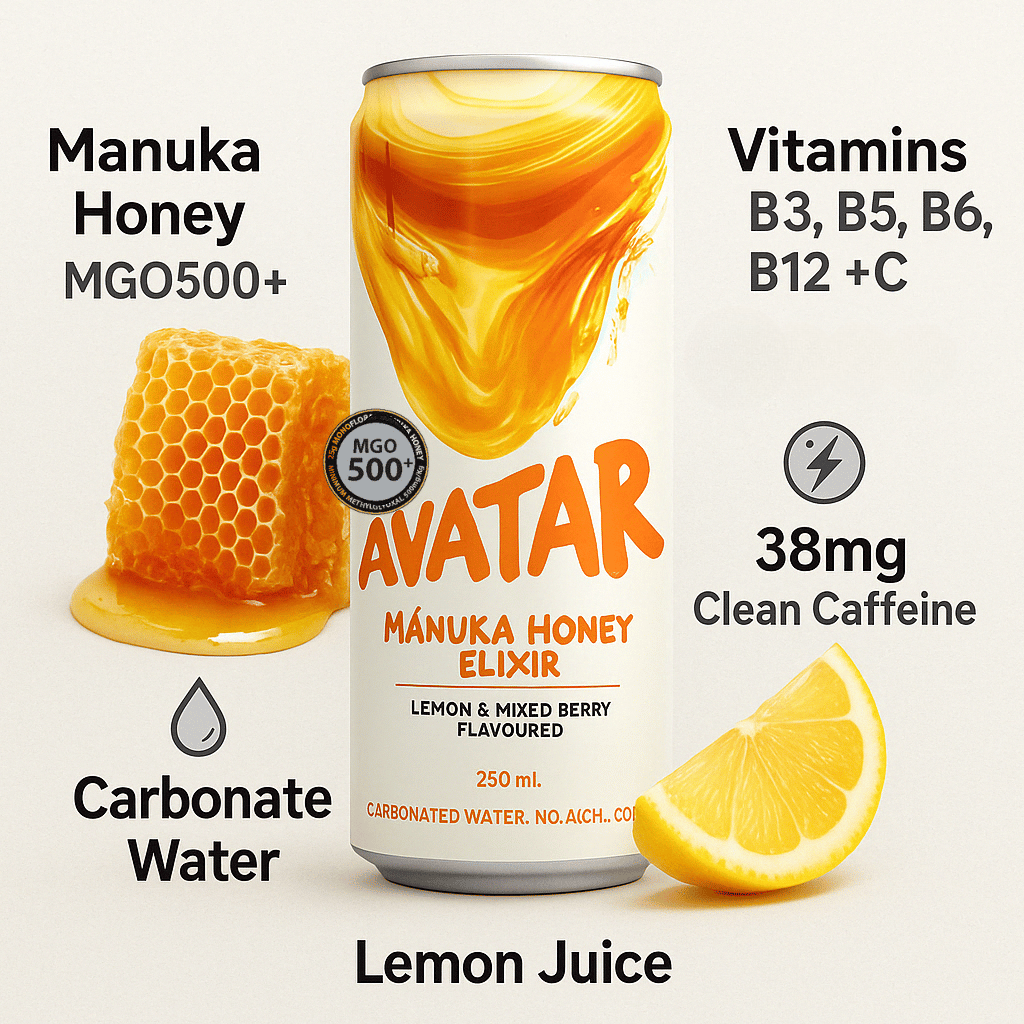
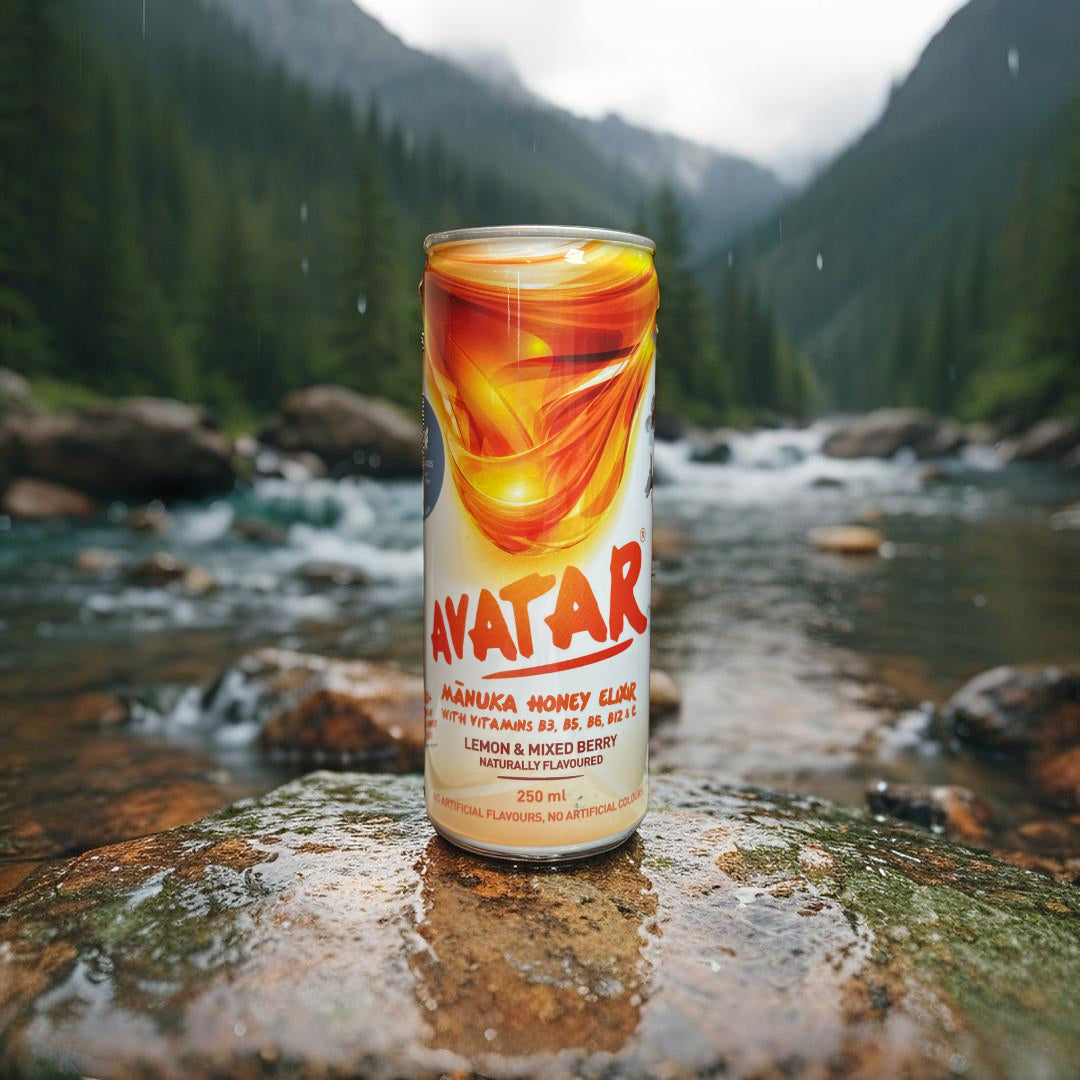
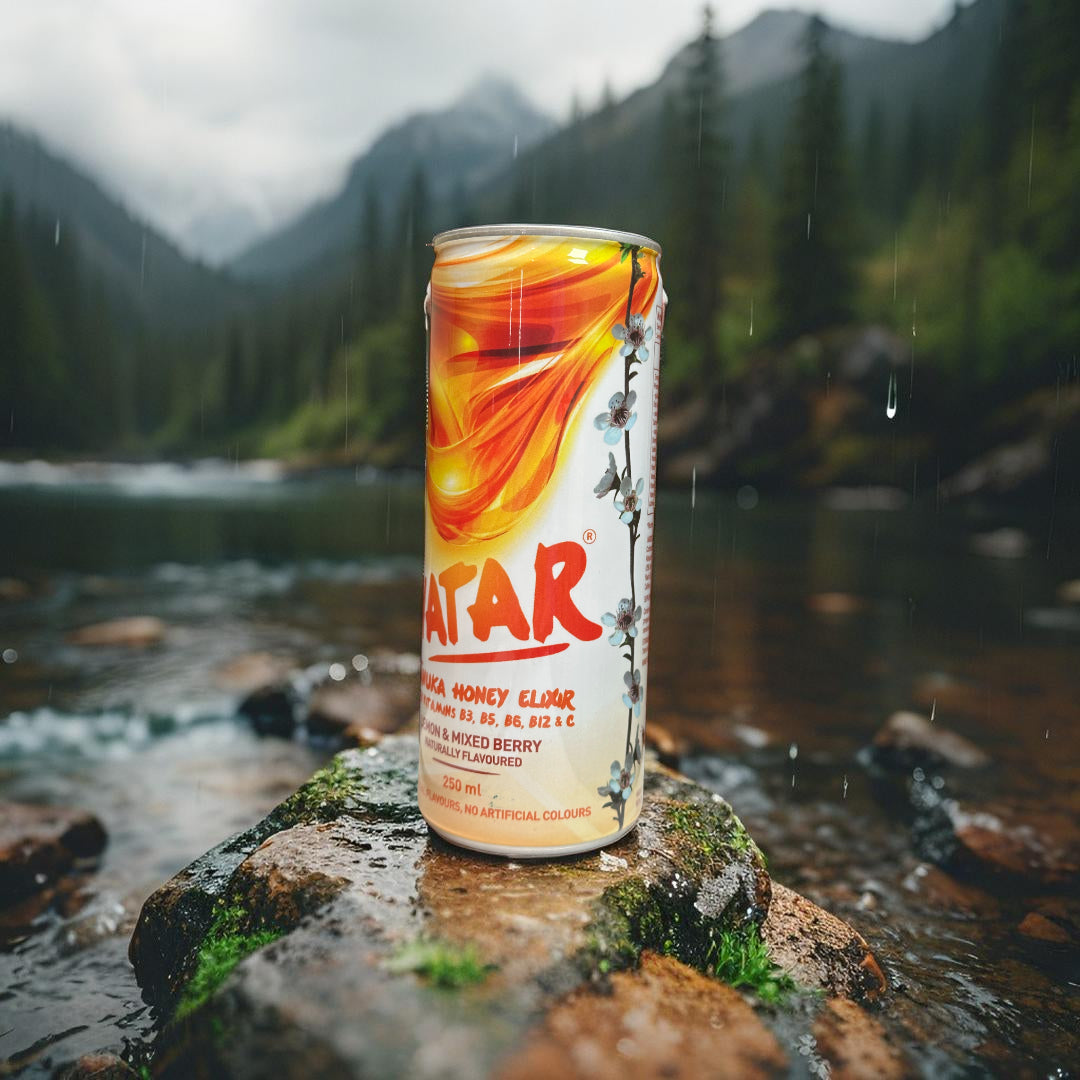
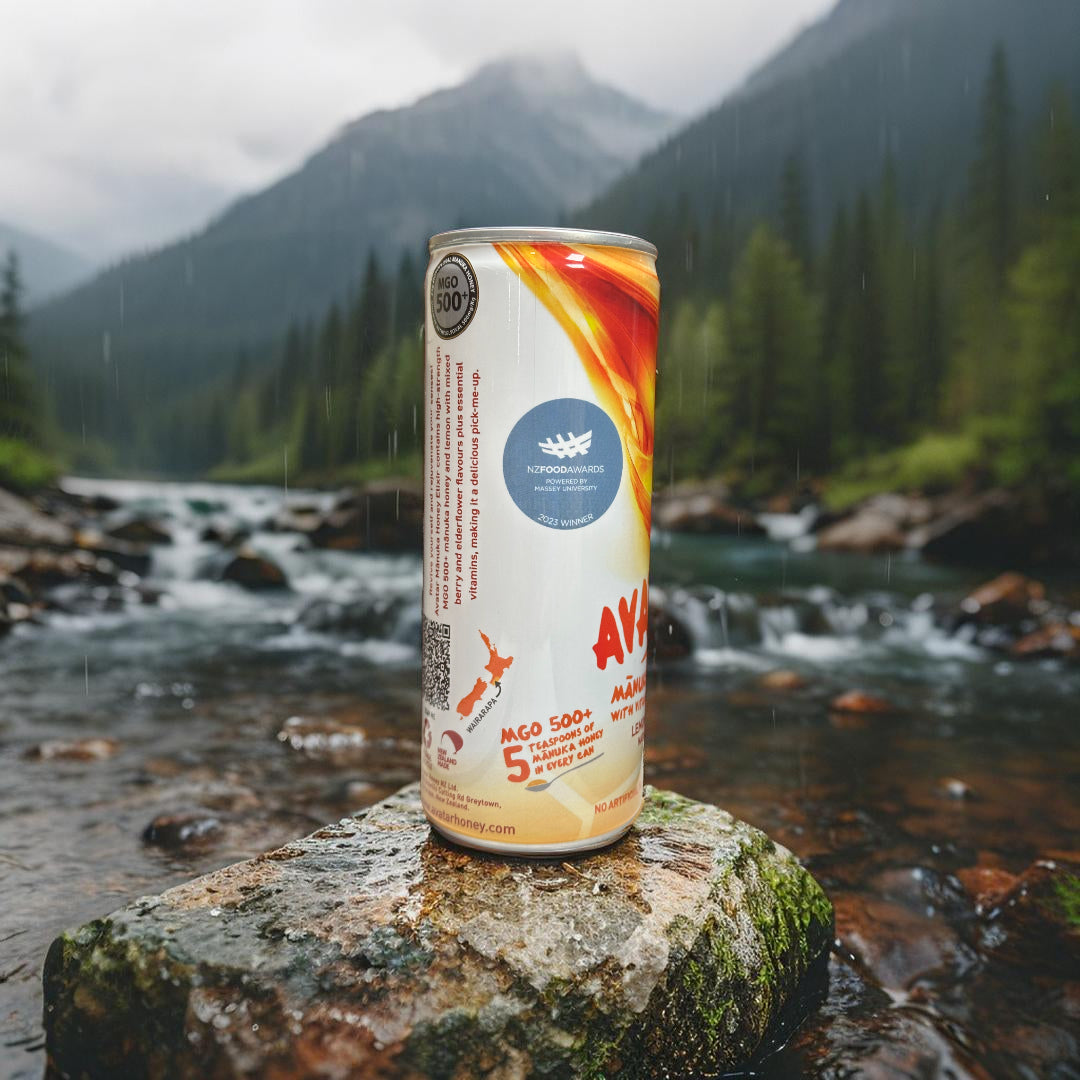
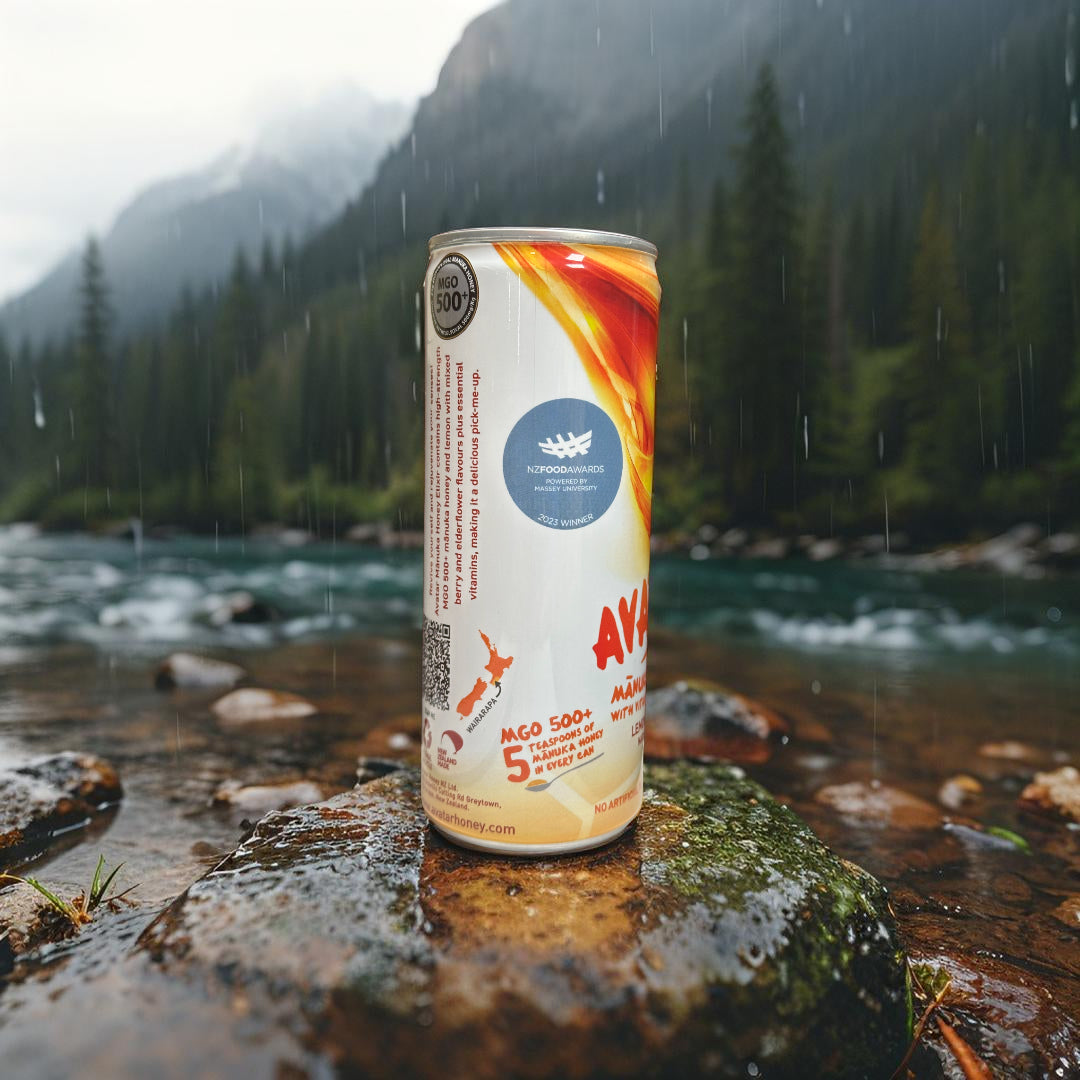
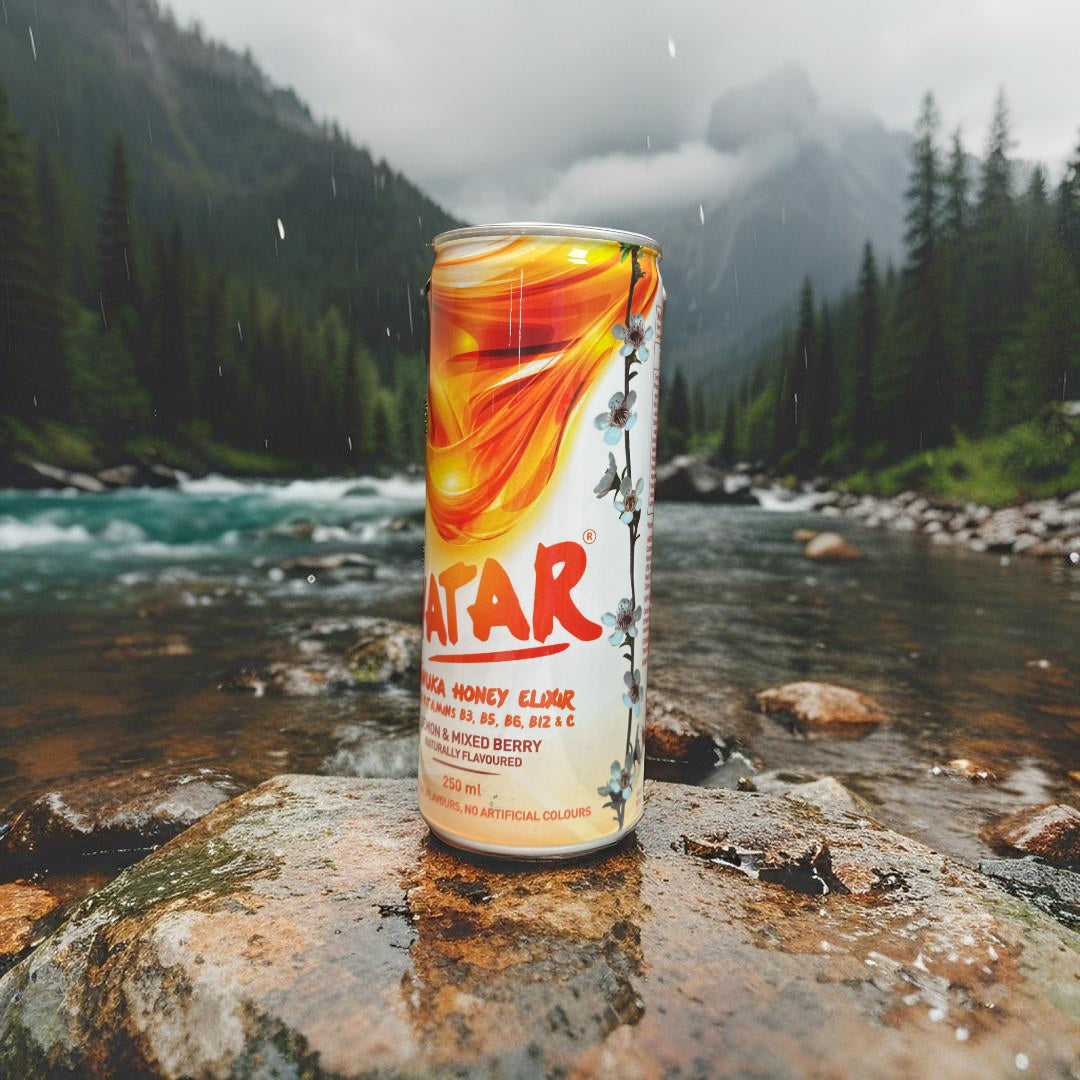
Our Avatar Elixir brings lemon together with certified MGO500+ Mānuka honey, elderflower, and lightly carbonated water, alongside B vitamins, vitamin C, and caffeine. It is a composed beverage, so its appeal rests on the ingredient combination rather than lemon alone.
The supplied product information for this article does not identify the lemon format. We are therefore using Avatar Elixir as a lemon-containing beverage example, without making a claim about fresh squeezing or concentrate use.
When considering a drink like this, think about the experience you want: honey sweetness, citrus brightness, floral notes, and a light sparkle. Those are useful flavour questions that a juice-format phrase cannot answer by itself. Our article on why honey, lemon, and elderflower work together in a sparkling drink explores that balance more closely.
Choose the drink, not just the phrase
When comparing lemon juice from concentrate with not-from-concentrate juice in drinks, use the format as one piece of information. Then check the juice content where declared, the full ingredient list, and nutrition information on a comparable serving basis.
If avoiding concentration matters to you, not from concentrate is a meaningful preference. If a drink made with concentrate has the flavour and composition you want, the phrase alone is no reason to dismiss it.
The better choice is the complete drink that fits your preferences. Let the label explain its ingredients, then let the recipe and your palate have their say.
A few practical label checks can help you compare lemon drinks and decide what matters to your choice.
Does lemon juice from concentrate mean sugar has been added?
No. "From concentrate" describes water removal and reconstitution, not the addition of sugar. A finished lemon drink may contain other sweetening ingredients, so check its ingredient list separately. Use the nutrition information to compare declared sugars rather than treating the juice format as a sweetness claim.
How do I compare lemon drinks sold in different sizes?
Compare their nutrition information on the same volume basis, then consider how much you intend to drink. If both labels provide values per 100 ml, those offer a straightforward comparison. Comparing one can with one bottle can be misleading when their serving sizes differ.
Does a more sour drink necessarily contain more lemon juice?
No. Sourness alone cannot tell you how much lemon juice a drink contains. Sweetness and the balance of other ingredients affect how tart the finished recipe seems. Check any declared lemon juice percentage for quantity, and consider citrus aroma separately when deciding whether you enjoy the flavour.
What should I ask a brand if lemon processing matters to me?
Ask whether its lemon juice is from concentrate or not from concentrate, and whether it can provide more detail about processing. If aroma is your priority, a useful follow-up is whether aromas are recovered and reincorporated during concentration. These details describe the ingredient's journey, but cannot guarantee which drink you will prefer.