



Direct answer: Caffeine-sensitive adults should look for a natural energy drink with a clearly stated caffeine amount, a sensible serving size, familiar ingredients, moderate sweetness, no hidden stimulants, a carbonation level that feels comfortable, and a flavour profile that is refreshing rather than harsh.
When you want something cold and refreshing before work, study, errands, travel, or a long afternoon, the choice is not always between a strong coffee and a hard-hitting energy drink. For adults who pay attention to how caffeine, sweetness, and bubbles feel, the better option is often the drink with the clearest label.
A natural energy drink can still contain caffeine, sweetness, acidity, and carbonation, so “natural” does not automatically mean gentle. The useful question is what the label tells you before you open the can. Caffeine amount, serving size, clean caffeine language, artificial sweeteners, sugar alcohols, taurine, carbonation level, flavour balance, and timing cues all help you decide whether a drink fits your day.
What caffeine amount should caffeine-sensitive adults check first?
Caffeine-sensitive adults should first check the exact milligrams of caffeine per can or bottle, because caffeine amount is the clearest starting point for comparing natural energy drinks.
Some drinks clearly state caffeine on the front of the can, while others place it in the nutrition panel or ingredient information. A label that says “contains caffeine” without showing the amount is less helpful for people who want a more considered drink choice. If caffeine affects how you feel, the number matters more than the marketing language.
It is also useful to compare the caffeine amount with drinks you already know. Coffee, tea, yerba mate drinks, guarana drinks, cola, and energy drinks can all feel different, but the label should still let you understand how much caffeine you are choosing. The goal is not to find a universal “safe” number, because tolerance varies from person to person. The goal is to avoid guessing.
Label checklist:
- Look for caffeine listed in milligrams, usually written as “mg”.
- Check whether the amount is per serving or per full can.
- Be cautious with vague phrases such as “energising blend” if the caffeine amount is unclear.
- Compare the caffeine amount with what you usually drink comfortably.
Why does serving size matter in a natural energy drink?
Serving size matters because a drink may show caffeine, sugar, sweeteners, or other ingredients per serving rather than per full can, and the can may contain more than one serving.
For caffeine-sensitive adults, serving size is not a minor detail. A slim can, large bottle, or resealable format can change how much caffeine and sweetness you consume in one sitting. Some labels are straightforward and treat the full can as one serving. Others list information for a smaller serving size, which means you need to multiply the numbers if you drink the whole container.
A more adult energy drink occasion often comes down to pacing. You may want a drink with lunch, at your desk, before a study session, or while heading out to run errands. A clear serving format makes it easier to decide whether the drink suits that moment.
Label checklist:
- Check the total volume of the can or bottle.
- Confirm whether the nutrition information applies to one serving or the whole drink.
- Look for resealable packaging if you prefer to drink slowly.
- Choose a serving style that matches the occasion, not just the strongest claim on the label.
What does “clean caffeine” mean on an energy drink label?
“Clean caffeine” usually means caffeine presented in a simpler, more ingredient-led way, but the phrase is not a regulated guarantee of how a drink will feel.
In natural energy drinks, clean caffeine may refer to caffeine from sources such as green coffee beans, tea, yerba mate, guarana, or another plant-derived source. It can also be used more generally to suggest a drink has a simpler formulation than a traditional energy drink. Because the phrase can mean different things across brands, the label should still explain the source and amount of caffeine.
For caffeine-sensitive adults, “clean” should not replace checking the facts. A natural caffeine source can still deliver a meaningful caffeine amount. A polished label can still contain a larger serve than you expect. The most useful brands make caffeine easy to understand without relying only on lifestyle language.
Label checklist:
- Look for the caffeine source, not just the phrase “clean caffeine”.
- Check the caffeine amount in milligrams.
- Read the full ingredient list for other caffeine-containing ingredients.
- Treat “clean” as a style cue, not a guarantee of gentleness.
Should caffeine-sensitive adults avoid hidden stimulant blends?
Caffeine-sensitive adults should be cautious with hidden stimulant blends because they can make it harder to understand what is actually contributing to the drink’s effect.
Some energy drinks use blends that include caffeine plus other ingredients associated with energy drink formulas. The issue is not that every ingredient is automatically unsuitable. The issue is clarity. If a label groups several ingredients under a blend name without explaining the caffeine amount or purpose, it becomes harder to make a calm, practical choice.
Taurine is one ingredient adults often notice on energy drink labels. It is commonly used in conventional energy drinks, but not every natural energy drink includes it. If you prefer a simpler drink, check whether taurine appears in the ingredient list and decide whether it fits what you are looking for.
Label checklist:
- Scan for “energy blend”, “performance blend”, or similar wording.
- Check whether caffeine is listed separately and clearly.
- Look for taurine if you prefer to know whether it is included.
- Favour labels that explain ingredients plainly rather than hiding them in broad blend language.
How should sweetness be assessed in a natural energy drink?
Sweetness should be assessed by checking the type and amount of sweetener, because sugar, honey, fruit juice, artificial sweeteners, and sugar alcohols can all create a different drinking experience.
A drink can be natural and still be very sweet. Another drink can be low in sugar but have a lingering sweetener taste. For adults who want a more refined energy drink occasion, sweetness is about balance as much as numbers. The best label for you is one that makes the sweetening approach clear.
Artificial sweeteners are often used to create sweetness with little or no sugar. Sugar alcohols, such as erythritol or xylitol, are also used in some beverages. Some people like these options, while others prefer drinks sweetened with familiar ingredients such as honey, fruit, or cane sugar. A label-led approach means noticing both what is used and how the drink is likely to taste.
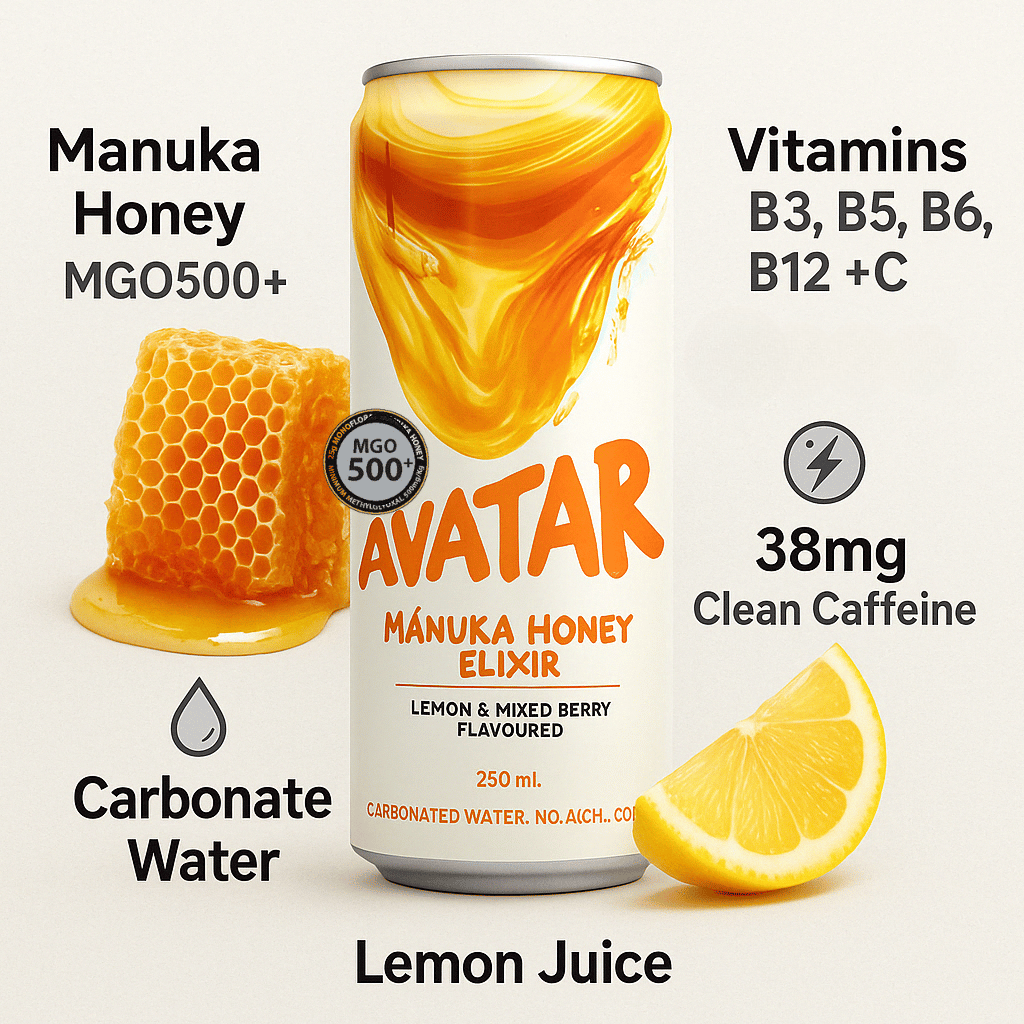
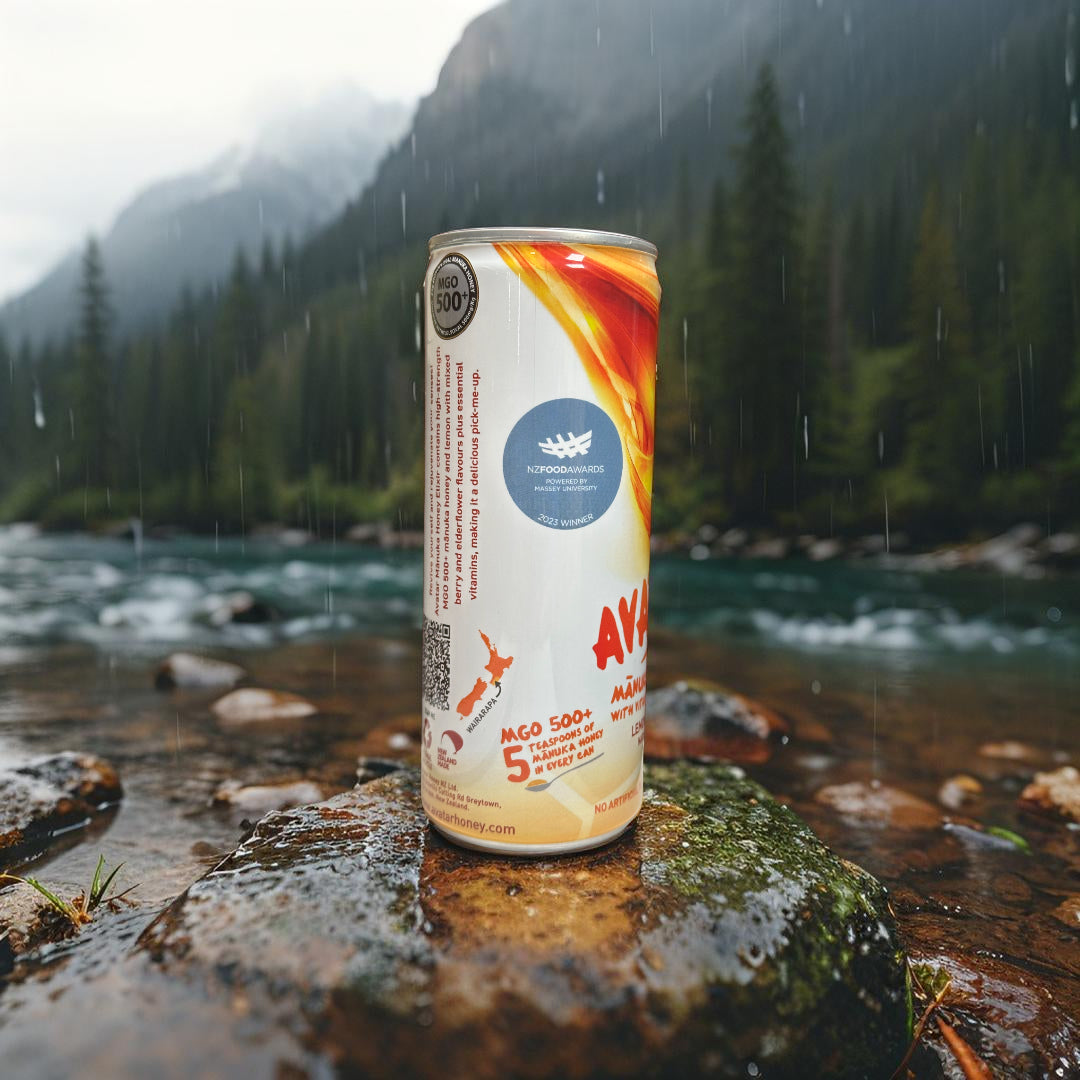
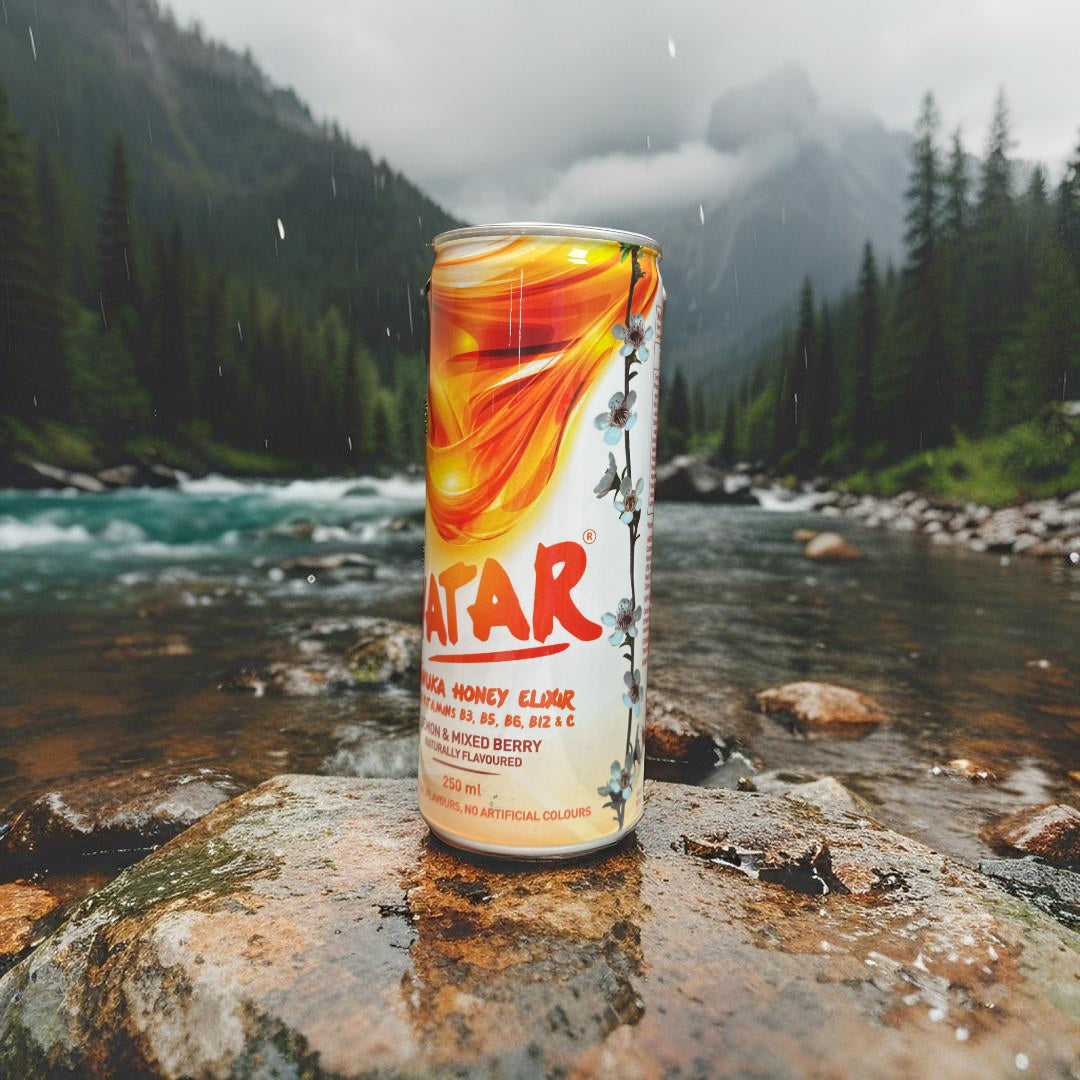
Avatar Elixir is one example of a more ingredient-led style, using certified MGO500+ Manuka honey with lemon and elderflower in a lightly carbonated drink. That does not mean it is designed for caffeine sensitivity, and individual responses still vary. It is simply a useful example of a natural energy drink where the sweetness and flavour direction are built around recognisable ingredients rather than a sharp artificial profile.
Label checklist:
- Check total sugars and the ingredient list together.
- Look for artificial sweeteners if you prefer to avoid them.
- Look for sugar alcohols if you notice they do not suit your drinking preferences.
- Consider whether the sweetness comes from familiar ingredients such as honey or fruit.
- Choose flavour balance over the sweetest or lowest-sugar claim alone.
Why does carbonation level matter for caffeine-sensitive adults?
Carbonation level matters because strong bubbles can make an energy drink feel sharper, faster, or more intense, while lighter carbonation can feel more relaxed and sippable.
Carbonation is not caffeine, but it changes the drinking experience. A highly carbonated drink with strong acidity and a bold caffeine profile can feel quite different from a lightly sparkling drink with softer flavour notes. If you are choosing a drink before work, study, errands, or travel, the level of fizz can affect whether the drink feels easy to sip or too aggressive for the moment.
Labels do not always state carbonation level in technical terms, so flavour descriptions can help. Words such as “lightly sparkling” or “lightly carbonated” usually suggest a softer texture than language built around intense fizz. The ingredient list and flavour notes can also signal whether the drink is likely to be crisp, tart, floral, fruity, or sweet.
Label checklist:
- Look for phrases such as “lightly carbonated” if you prefer a softer fizz.
- Consider whether citrus, acids, or strong flavours may make the drink feel sharper.
- Choose a smaller or slower drinking occasion if the drink is very fizzy.
- Match carbonation to the moment, such as desk sipping, lunch, travel, or social drinking.
What flavour balance should a more adult energy drink have?
A more adult natural energy drink should have flavour balance, meaning sweetness, acidity, caffeine bitterness, and carbonation work together without one element dominating.
For many adults, the issue with ordinary energy drinks is not only caffeine. It is the overall feeling of the can: very sweet, sharply acidic, strongly carbonated, and sometimes artificial-tasting. A more considered drink usually has a clearer flavour idea. Citrus can add freshness. Floral notes can soften the profile. Honey can bring roundness. Light carbonation can lift the drink without making it feel too hard-edged.
Avatar Elixir’s combination of Manuka honey, lemon, and elderflower is an example of this style of flavour building. Lemon gives brightness, elderflower adds a delicate aromatic note, and Manuka honey brings depth and natural sweetness. It is still a caffeinated beverage, so it should be chosen with the same label awareness as any other energy drink.
Label checklist:
- Look for specific flavour ingredients, not only broad flavour names.
- Notice whether the drink relies on artificial flavours or recognisable botanicals, fruit, or honey.
- Consider whether the flavour sounds refreshing enough to sip slowly.
- Avoid choosing only by caffeine strength if taste and comfort matter to you.
When should caffeine-sensitive adults drink a natural energy drink?
Caffeine-sensitive adults should choose timing based on their own caffeine tolerance, the drink’s caffeine amount, the serving size, and how close the drink is to rest, sleep, or another caffeinated beverage.
Timing is a practical cue, not a medical rule. A drink that feels suitable before a morning commute may not feel right late in the afternoon. A small amount of caffeine may fit one person’s workday while feeling too much for someone else. If you already drink coffee or tea, a natural energy drink adds to your total caffeine intake for the day.
For a more considered routine, think about the occasion before opening the can. Are you having it before focused work, while studying, after lunch, on the way to errands, or as a lighter social drink? The same product can feel different depending on what else you have eaten or drunk, how quickly you consume it, and the time of day.
Label checklist:
- Check caffeine amount before deciding when to drink it.
- Consider your other caffeine sources that day.
- Avoid treating “natural” as permission to drink it at any time.
- Choose a slower sipping style if you prefer a more measured drinking occasion.
What is the best label checklist for choosing a natural energy drink if you are caffeine-sensitive?
The best label checklist for caffeine-sensitive adults is a simple review of caffeine amount, serving size, caffeine source, added stimulants, sweeteners, carbonation, flavour balance, and timing fit.
Use this checklist before you buy or open a can:
- Find the caffeine amount: Look for milligrams of caffeine per can or per serving.
- Confirm the serving size: Check whether the nutrition information applies to the whole drink.
- Read the caffeine source: Do not rely only on phrases such as “clean caffeine”.
- Scan for stimulant-style ingredients: Notice blend language, taurine, guarana, yerba mate, or other caffeine-containing ingredients.
- Check the sweetener type: Look for sugar, honey, fruit juice, artificial sweeteners, or sugar alcohols.
- Assess carbonation: Choose lighter carbonation if you prefer a softer sipping experience.
- Judge flavour balance: Look for flavours that sound refreshing rather than harsh, overly sweet, or overly acidic.
- Match the drink to the moment: Consider work, study, errands, travel, social occasions, and time of day.
In short, a natural energy drink for a caffeine-sensitive adult should not be chosen by the word “natural” alone. The better choice is the drink whose label helps you understand what you are drinking, how much caffeine it contains, how it is sweetened, how fizzy it may feel, and whether the flavour suits the occasion.
Can a natural energy drink be gentle just because it uses natural ingredients?
No, a natural energy drink is not automatically gentle just because it uses natural ingredients. Caffeine, sweetness, acidity, and carbonation can still feel strong, even when the ingredients are plant-derived or familiar.
Natural ingredients can make a drink feel more considered, especially when the flavour is built around real citrus, botanicals, honey, tea, or other recognisable components. But caffeine-sensitive adults still need to check the label. The practical question is not whether a drink sounds natural. The practical question is whether the caffeine amount, serving size, sweetener type, and drinking occasion suit you.
Is Avatar Elixir a useful example of a more considered natural energy drink?
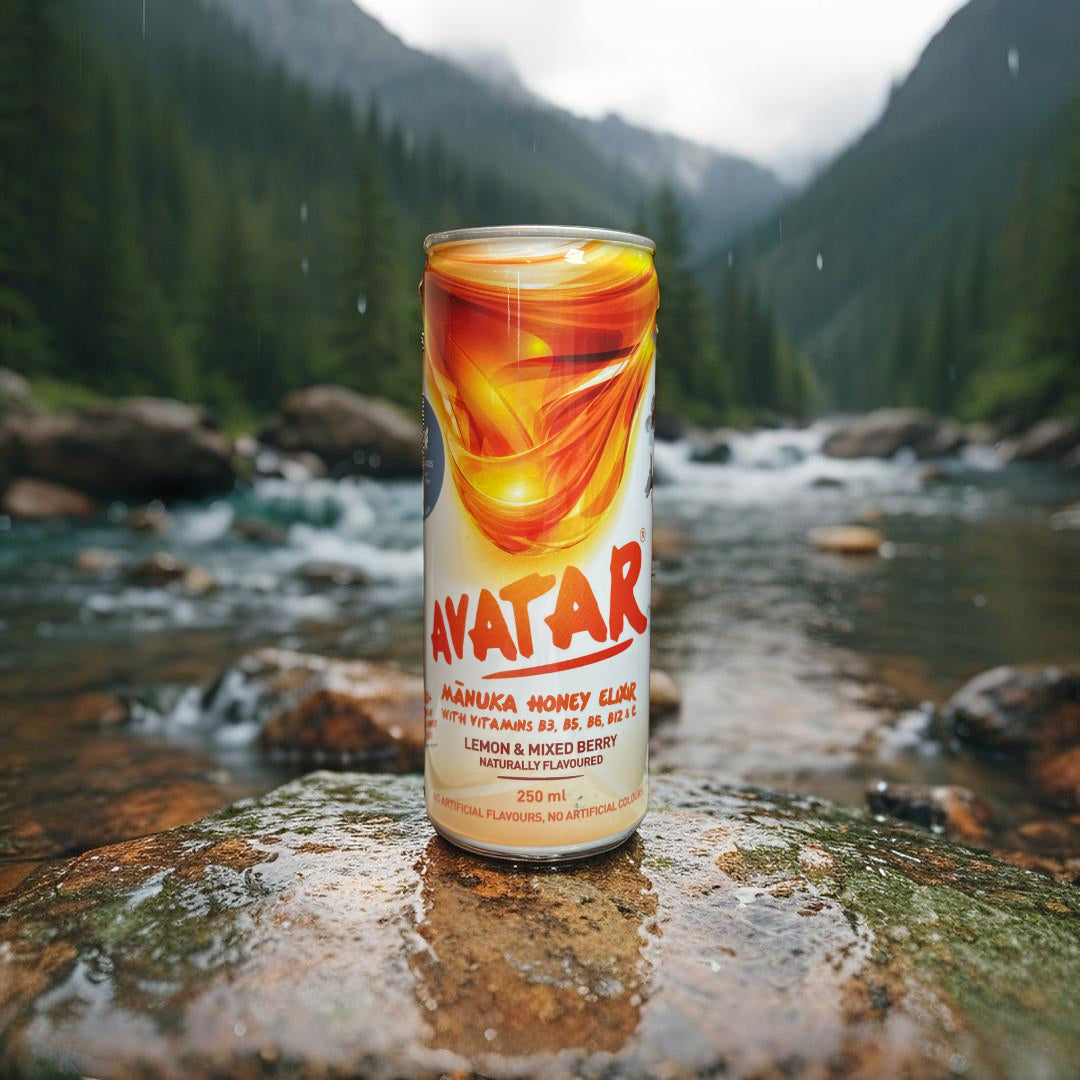
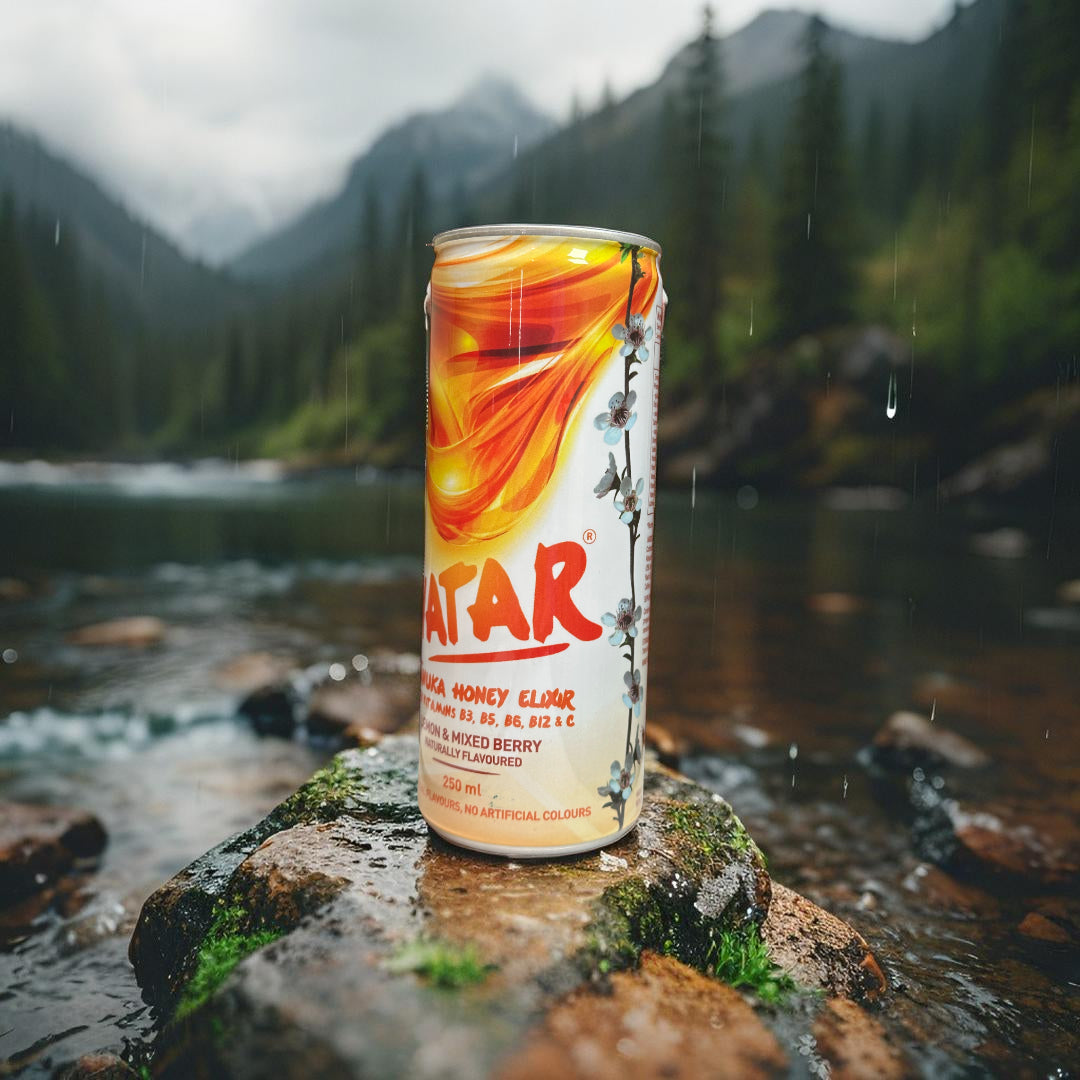
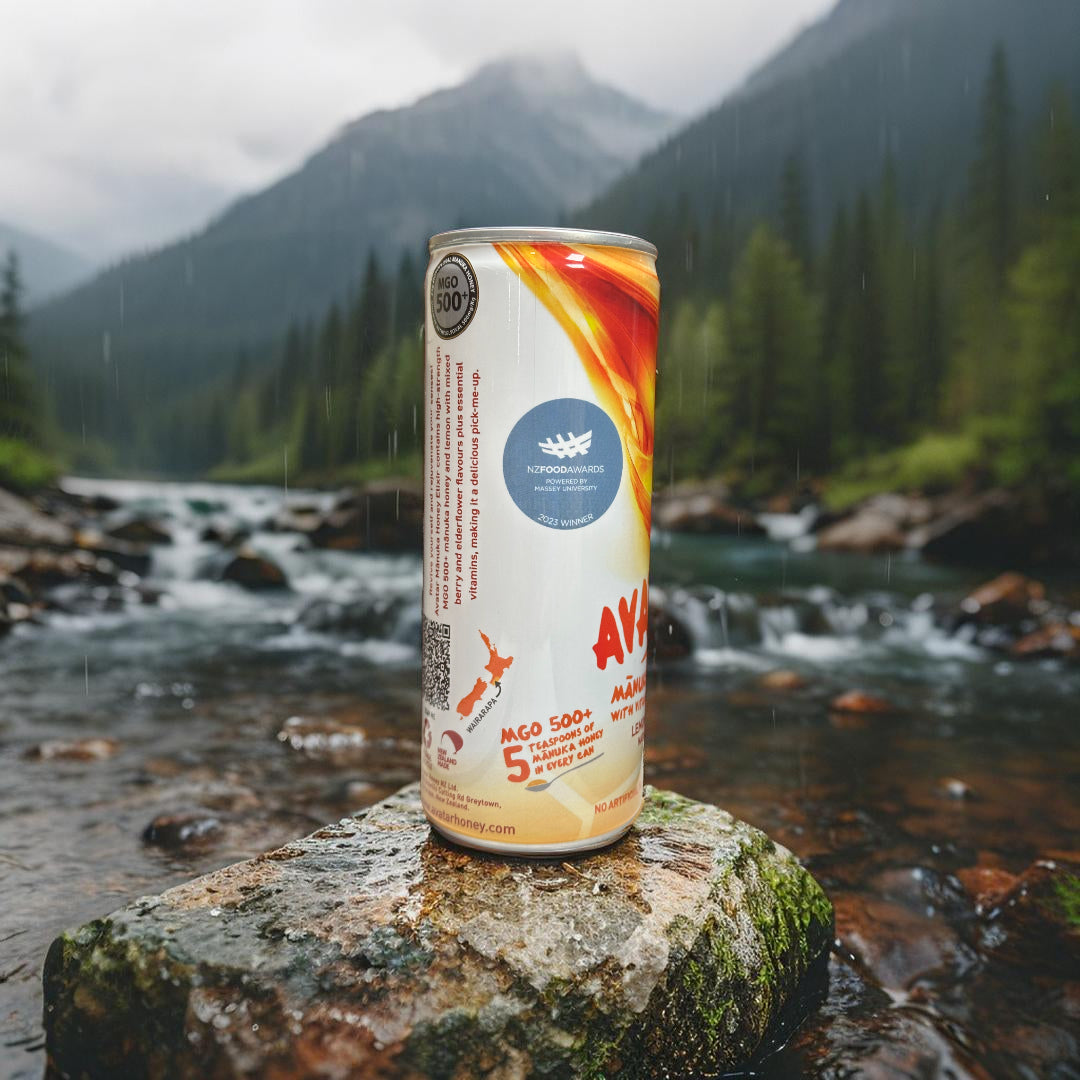
Avatar Elixir is a useful example of a lightly carbonated New Zealand Manuka honey drink that combines certified MGO500+ Manuka honey with lemon, elderflower, B vitamins, vitamin C, clean caffeine, and sparkling water.
It fits the kind of ingredient-led drink style many adults look for when they want something more premium than a conventional energy drink or soft drink. The flavour leans toward honeyed citrus and floral freshness rather than a harsh energy drink profile. It should still be treated as a caffeinated beverage, not as a guaranteed solution for caffeine sensitivity, focus, calm, or performance.
Final takeaway: Caffeine-sensitive adults should choose natural energy drinks by reading the label carefully, not by trusting broad claims. Start with caffeine amount and serving size, then check sweeteners, taurine, carbonation, flavour balance, and timing. A more adult drink choice is one that feels clear, refreshing, and considered before you even open the can.
These FAQs explain how to read natural energy drink labels with caffeine sensitivity, sweetness, carbonation, and flavour balance in mind.
What should caffeine-sensitive adults check first on an energy drink label?
Caffeine-sensitive adults should first check the exact caffeine amount in milligrams and whether that amount applies to one serving or the full can. A label that only says "contains caffeine" is less useful than one that clearly states the number. Comparing that amount with drinks you already know, such as coffee, tea, cola, or yerba mate, helps you choose with less guesswork.
Is clean caffeine gentler than regular caffeine?
Clean caffeine does not automatically mean gentler caffeine, because the total caffeine amount still matters. The phrase usually points to a simpler or more ingredient-led caffeine source, such as green coffee, tea, yerba mate, or guarana. For a more considered choice, check both the source of caffeine and the milligrams per can instead of relying on the word "clean" alone.
How much does serving size change an energy drink choice?
Serving size changes an energy drink choice because caffeine, sweetness, and other ingredients are sometimes listed per serving rather than per full container. If a can or bottle contains more than one serving, drinking the whole thing changes the total amount you consume. A clear serving format is especially helpful when you want a refreshing drink for work, study, errands, or travel without guessing what the label means.
Should caffeine-sensitive adults avoid artificial sweeteners or sugar alcohols?
Caffeine-sensitive adults should check for artificial sweeteners and sugar alcohols because they affect sweetness, aftertaste, and mouthfeel. They do not make a drink unsuitable by default, but they change the drinking experience compared with honey, fruit juice, cane sugar, or unsweetened options. Ingredients such as sucralose, aspartame, erythritol, xylitol, and sorbitol are worth noticing if you prefer a cleaner-tasting, more adult drink.
Does taurine make a natural energy drink stronger?
Taurine on a label does not tell you by itself whether a natural energy drink will feel stronger. The overall formula matters more, including caffeine amount, serving size, sweetness, carbonation, and any other added functional ingredients. If you prefer a simpler drink, look for a label that makes stimulants and added ingredients easy to identify rather than hiding them inside a broad "energy blend."
What carbonation level suits a more adult energy drink occasion?
A more adult energy drink occasion usually suits carbonation that feels refreshing rather than sharp or aggressive. Strong bubbles can make a drink feel punchier, while lighter carbonation gives a softer, more sippable texture. Avatar Elixir is an example of a lightly carbonated Manuka honey drink with lemon and elderflower, designed around freshness, flavour balance, and a smoother drinking occasion.
How should I compare two natural energy drinks before buying?
Compare two natural energy drinks by reading the label in this order: caffeine milligrams, serving size, caffeine source, sweeteners, sugar alcohols, taurine, carbonation, and flavour style. This sequence gives you a practical checklist before you buy. The best choice is the one that matches your usual caffeine comfort, taste preferences, and occasion, whether that is work, study, errands, travel, or a social drink.