


What this means for buyers:
- Energy drinks and protein shakes serve different purposes: a caffeinated drink suits an alertness-oriented choice, while a protein shake offers a convenient protein source.
- Caffeinated protein drinks combine both features. Check caffeine, protein, calories and serving size separately rather than choosing by the category name.
- If you are hungry enough to need a meal, start with food. Neither an energy drink nor a protein shake is a complete meal by default.
You are standing at the drinks fridge between commitments. There is a sparkling can, a bottled protein shake and a coffee-flavoured drink promising protein. All are convenient. They are not necessarily answers to the same need.
The useful question is not simply “Which is healthier?” It is “What am I buying this for?” A flavoured caffeinated drink, a source of protein and something to replace a missed lunch are three different requests. Knowing which one you have makes the label much easier to read.
Start with the need, not the name on the bottle
Energy drinks generally centre on caffeine and an alertness-oriented occasion. Protein shakes centre on providing protein. Neither category name tells you everything about the contents.
Calories, caffeine and protein are separate measures. The FDA explains that calories measure energy supplied by food and drink. They do not measure how alert a beverage might make you feel. Protein is a nutrient, while caffeine is a stimulant. A drink can contain all three, but one does not stand in for another.
| What you want | Where to start | What to check |
|---|---|---|
| A flavoured caffeinated drink | An energy drink or another clearly labelled caffeinated beverage | Caffeine per container, flavour, calories and whether caffeine suits the occasion |
| A convenient protein source | A protein shake, including a caffeinated version if wanted | Protein per container, ingredients, calories and any caffeine |
| Something substantial because you are hungry | Food or a suitable meal | Whether the choice meets your meal needs, rather than assuming a drink is enough |
Compare the whole drink on four separate points
A fair energy drink versus protein shake comparison uses the amount you actually expect to drink. Comparing one product’s small serving with another product’s entire bottle can give a misleading impression.
Caffeine: look beyond the nutrition table
Check the caffeine statement and ingredients, not just the product name. Some protein drinks contain caffeine, and a missing caffeine quantity does not establish that a drink is caffeine-free. The FDA notes that quantitative caffeine declarations are often voluntary, so you may need to ask the manufacturer if the amount is unclear.
Also consider other caffeinated drinks you have had that day and your own sensitivity. “Natural caffeine” describes an ingredient distinction; it does not guarantee a gentler response, fewer jitters or a particular focus outcome.
Protein: use the declared amount
If protein is the reason for your purchase, look for the amount declared on the nutrition panel for the portion you will consume. Do not infer it from a creamy texture, a milk-like appearance or words such as “energy” and “wellness”.
A protein shake earns its place through its protein content and convenience. An energy drink should not be assumed to provide a meaningful protein source unless its label supports that choice.
Calories: neither category wins by default
Calorie content depends on the formulation and container size. Sweeteners, protein, fats and other ingredients can all affect the comparison. A protein shake is not automatically a lower-calorie option, and an energy drink is not automatically a higher-calorie one.
The FDA specifically cautions that claims such as “no added sugars” or “fat-free” do not mean calorie-free. Choose using the actual panel, with your purpose in mind, rather than treating the lowest number as the best answer for every occasion.
Serving size: match the figures to your bottle or can
Check how many servings the package contains. Nutrition information may describe one serving rather than the entire container. The FDA also explains that a labelled serving size is not an intake recommendation.
If labels use different formats, compare like with like. Per-volume figures help compare concentration; whole-container totals help you understand what you will consume when you finish the drink.
Caffeinated protein drinks belong in the comparison
You do not always have to choose between caffeine and protein. Some drinks combine both, including coffee-based protein shakes. Premier Protein’s Café Latte Protein Shake is one manufacturer example with milk protein ingredients, coffee extract and caffeine.
That crossover can suit someone who wants a protein source and a caffeinated drink in one convenient bottle. It also means “protein shake” should never be treated as shorthand for “caffeine-free”.
Read both declarations independently. A protein amount does not tell you the caffeine amount, and coffee flavour alone does not tell you either. If you want protein without caffeine, choose a product whose information makes that clear.
Where our honey-based Avatar Elixir fits
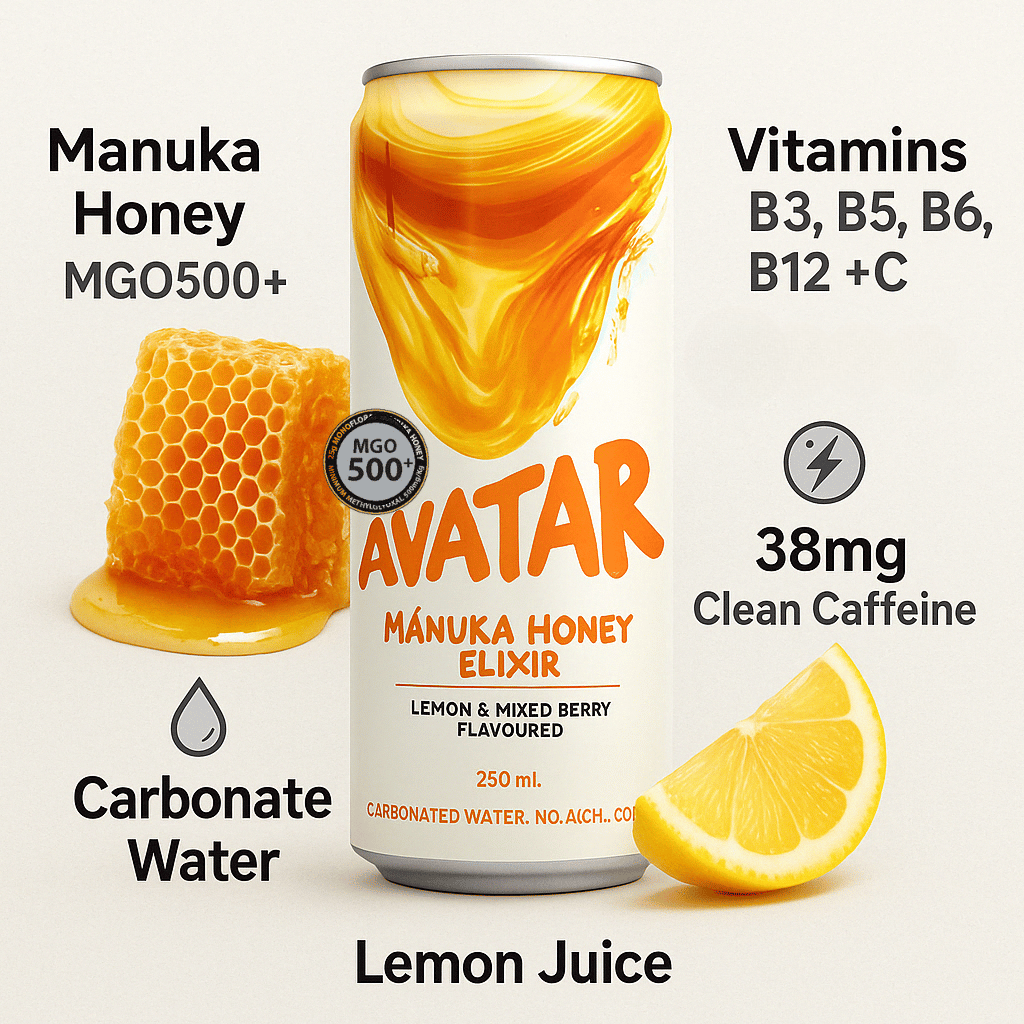
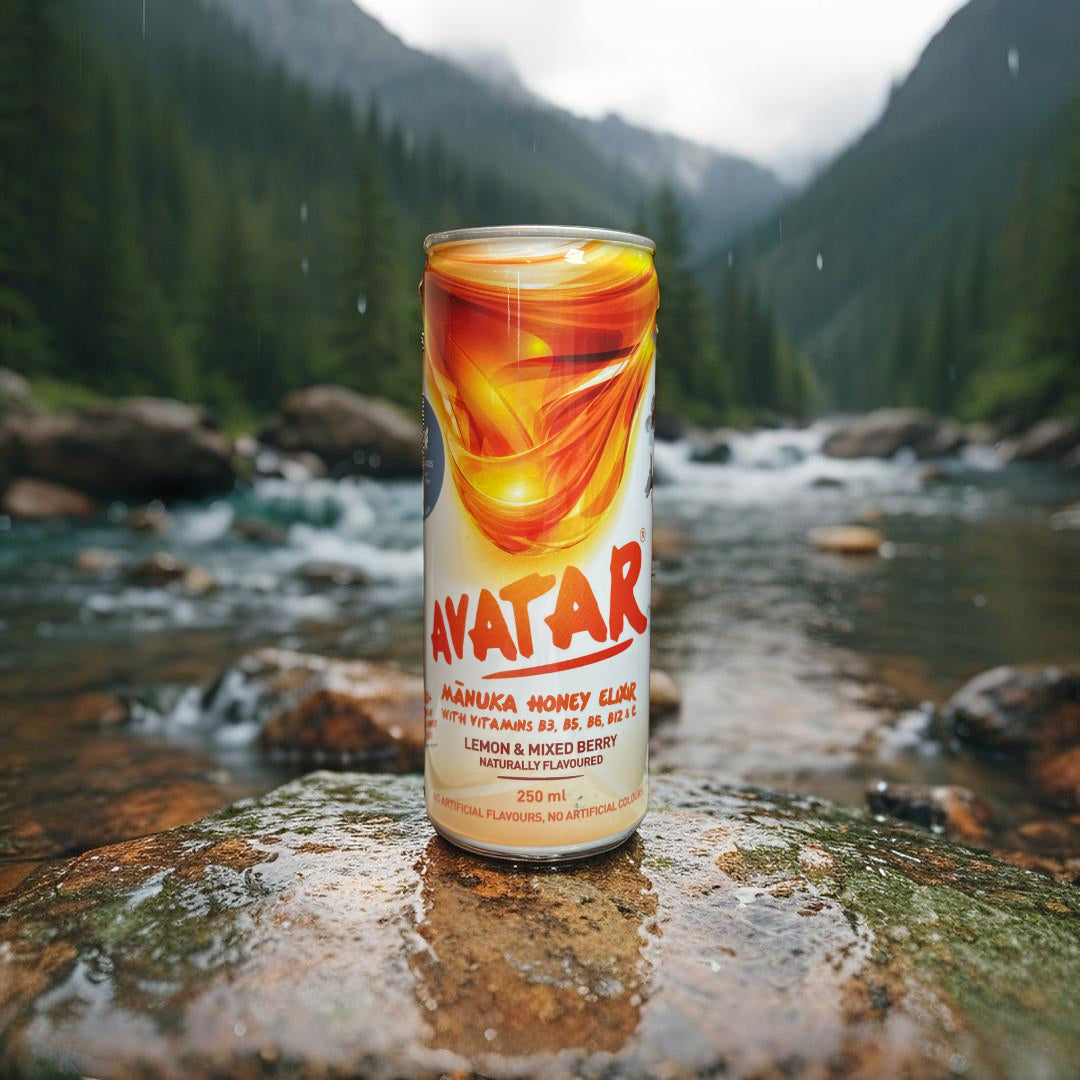
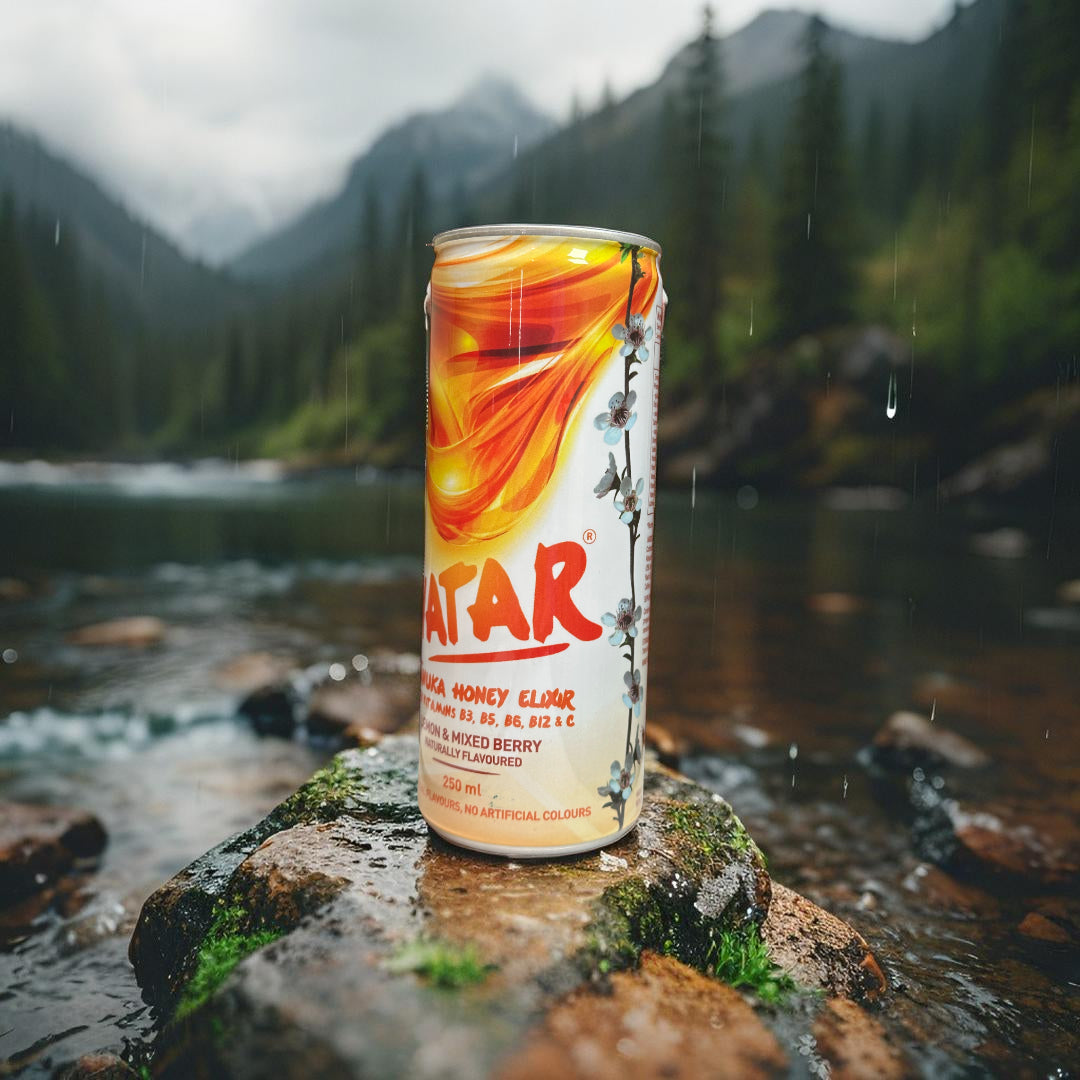
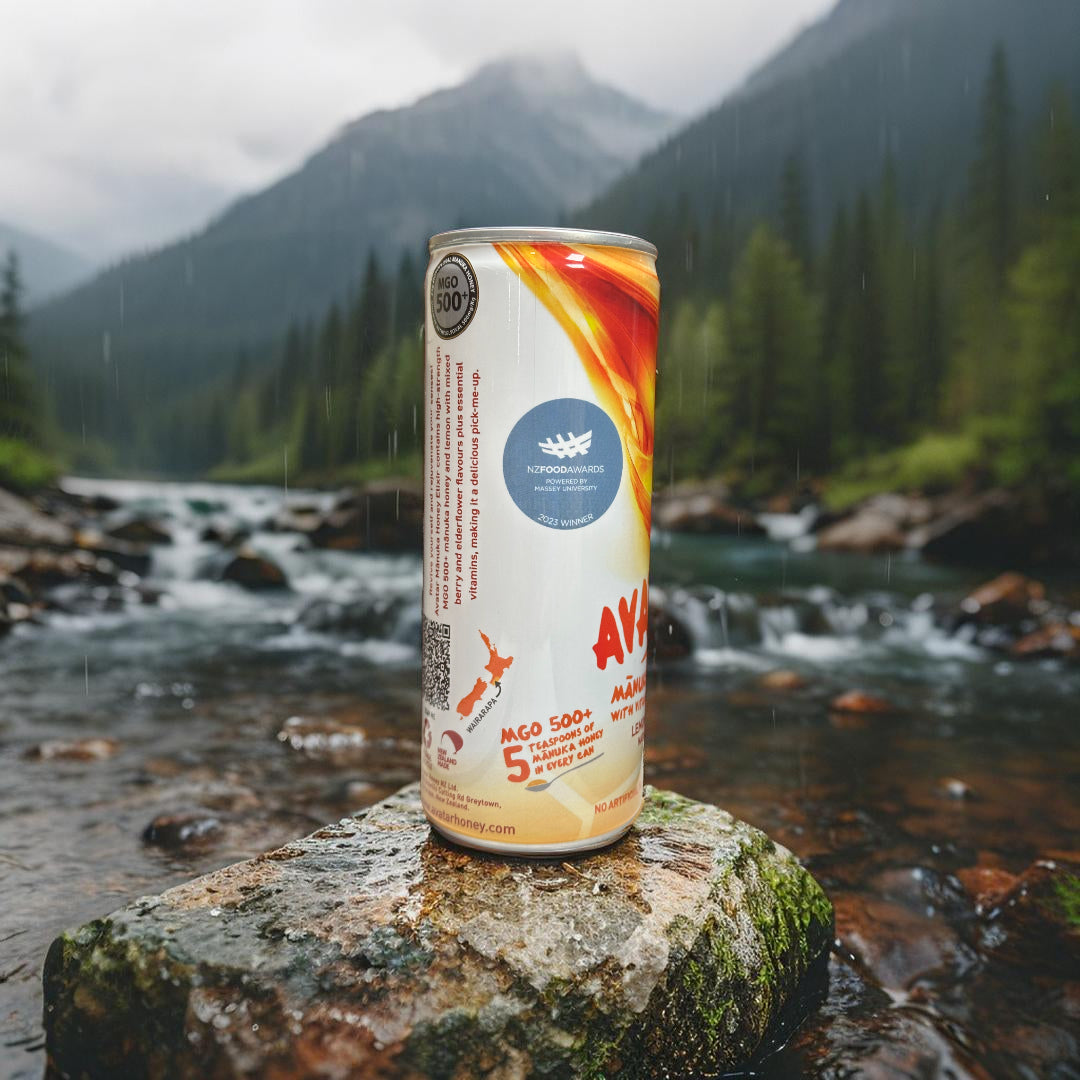
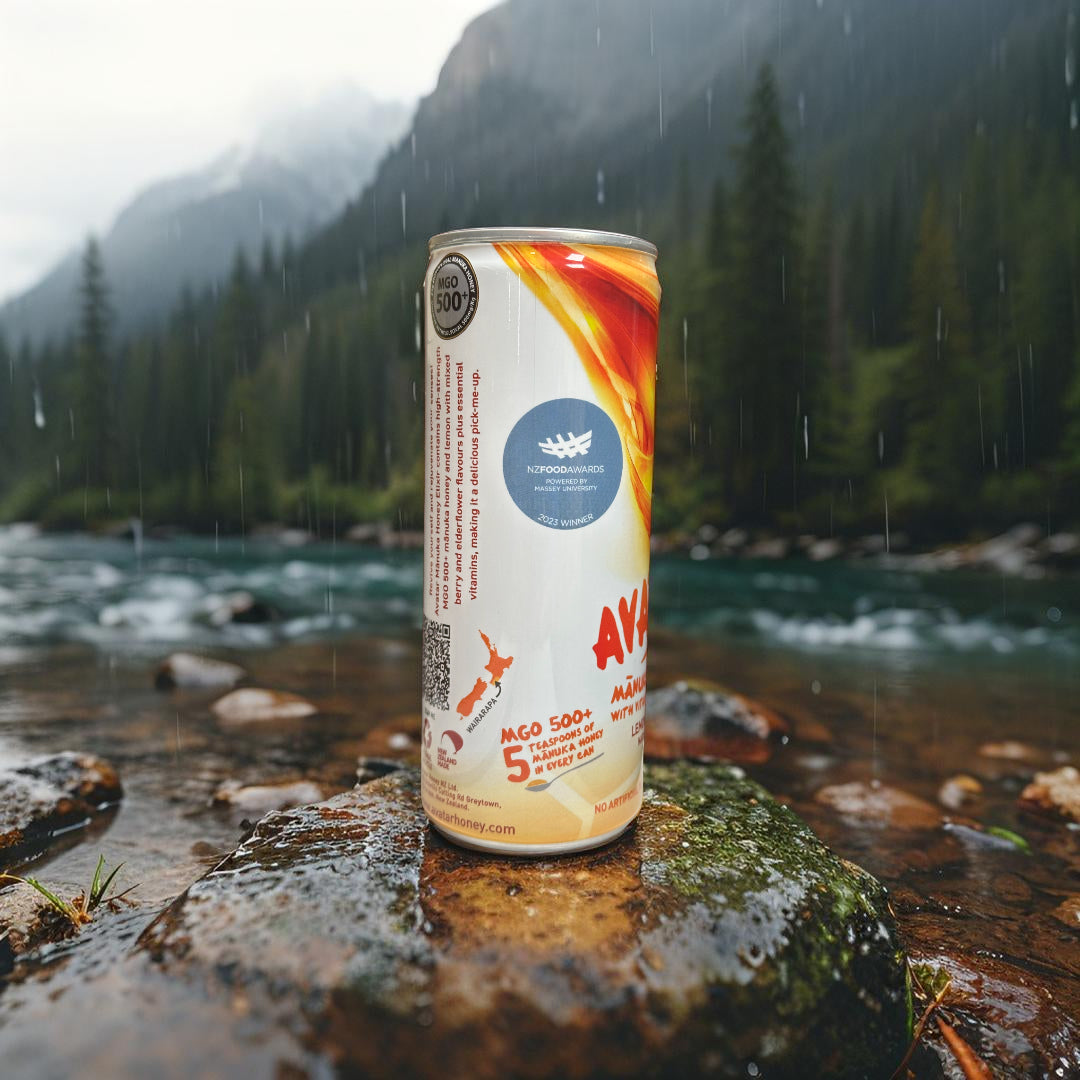
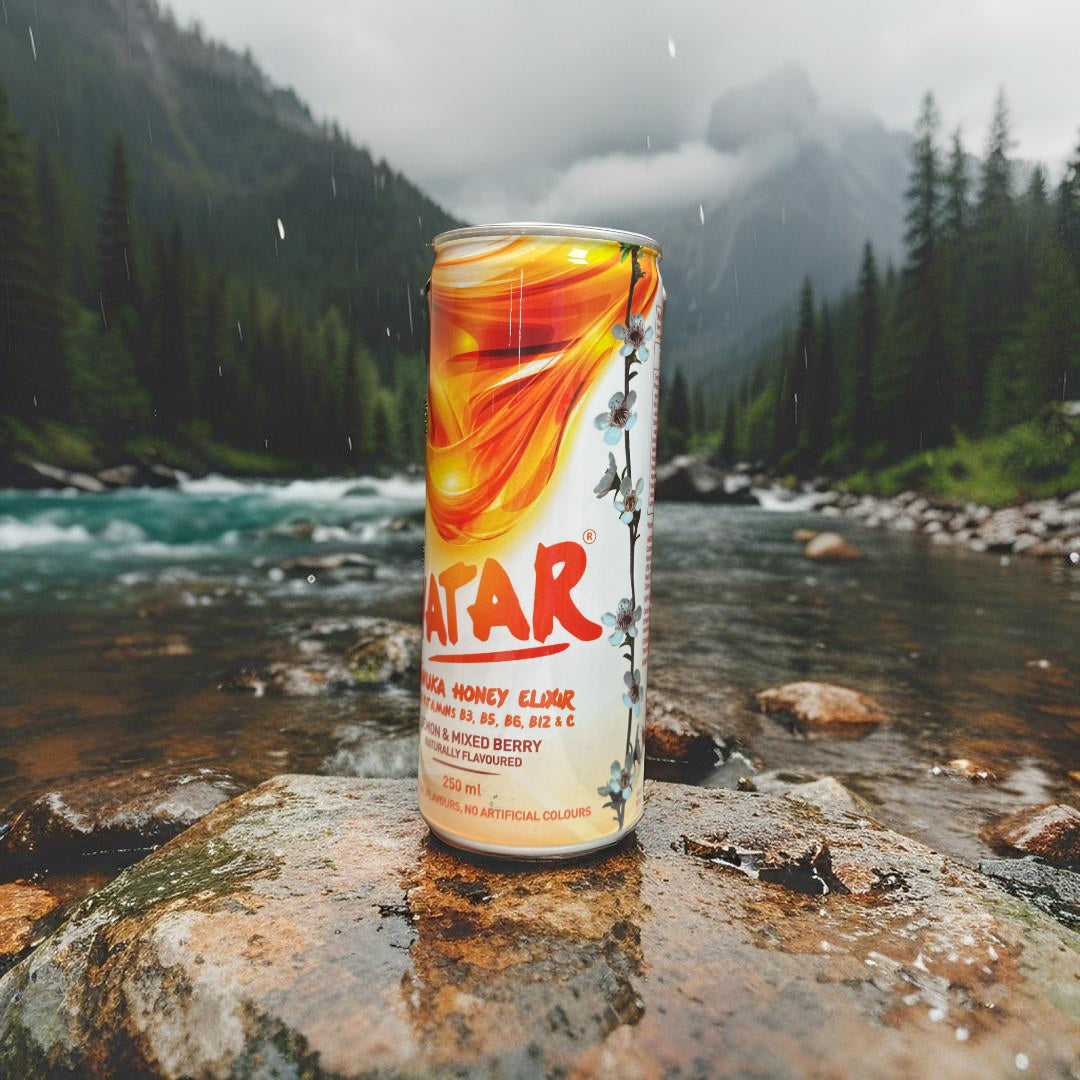
Our Avatar Elixir fits the flavoured caffeinated-drink side of this decision. Sold in a 250 ml can, it brings together certified MGO500+ Mānuka honey, caffeine, lemon, elderflower, B vitamins, vitamin C and lightly carbonated water.
Its appeal is ingredient-led: honey sweetness, citrus brightness, floral elderflower and a sparkling finish. If you want a cold caffeinated drink rather than a protein-focused shake, those flavour and format details give you a useful reason to consider it.
Honey does not replace protein. Honey sweetening also does not mean sugar-free or calorie-free. For a numerical comparison with a shake, use the current Avatar Elixir nutrition panel and caffeine declaration, checking the serving basis for protein, calories and caffeine rather than estimating from the ingredient list.
If your question is about a sports drink rather than a protein shake, our honey energy drink versus sports drink comparison covers that separate choice.
Convenience matters, but hunger changes the decision
A ready-to-drink can and a bottled shake both remove preparation from a busy day. A powdered shake is a different convenience proposition: you need liquid, a suitable container and time to mix it. Package size, storage instructions and how you plan to carry it also matter.
But convenience does not turn either category into a complete meal. A protein declaration alone does not establish nutritional completeness, and caffeine is not a substitute for breakfast or lunch. Some products are specifically formulated as meal replacements, but that is a separate claim to assess.
If you have missed a meal and are hungry, choose food or an appropriate meal first. You can then decide whether you also want a drink for flavour, caffeine or additional protein, without asking one bottle to do every job.
Choose for the need in front of you
The best choice is the one that matches your purpose and whose label supports it. Choose a flavoured caffeinated drink when that is what you want, a protein shake when protein is the priority, or a clearly labelled crossover when you want both. Make room for food when hunger is the real issue.
For a honey-led, lightly sparkling option, explore Avatar Elixir’s product details and current availability. Keep the same simple buying habit whichever drink you choose: check the whole container, separate caffeine from nutrition, and buy for the occasion you actually have.
These practical checks help you compare drink labels, plan what to carry and account for more than one beverage.
How do I compare per-serving figures with per-volume figures?
Convert both labels to the amount you expect to drink. Divide your drink volume by the volume used on the label, then multiply the listed nutrient amount by that result. Repeat for protein and calories separately. Check the caffeine declaration's serving basis too, as it may differ from the nutrition panel.
What should I check if I want both drinks in one day?
Check whether the protein drink also contains caffeine, then account for caffeine from both drinks and any other caffeinated beverages that day. Protein content does not offset caffeine. Whether that combination suits you depends on the amounts and your own sensitivity, so a missing caffeine quantity is worth clarifying rather than guessing.
What label information should I request before choosing Avatar Elixir?
Ask for a readable current nutrition panel and caffeine declaration for the version you are buying. Our Avatar Elixir comes in a 250 ml can, but can size alone does not establish protein, calories or caffeine quantity. Confirm whether each figure applies to a serving or the whole can so you can compare it fairly with a shake.
How should I choose a drink to carry without a fridge?
Use the product's storage instructions to decide whether it suits your day without refrigeration. A can or bottle's appearance does not establish its storage requirements. Check instructions for both unopened and opened packaging, and choose a size you expect to finish if storing leftovers would be inconvenient.