



Short answer: A natural energy drink may feel noticeable during or after you finish it, often within the first part of the hour. There is no universal kick-in time because food, sipping pace, caffeine tolerance, sleep, body differences, and other caffeine consumed that day can all change what you notice.
The word “natural” does not create a separate caffeine clock. If a natural energy drink contains caffeine, your body begins absorbing it after you drink it. However, absorption is not the same as suddenly feeling more alert. The subjective effect may appear gradually, feel subtle, or be difficult to distinguish from changes in mood, tiredness, hydration, and expectations.
For practical planning, avoid relying on an exact minute. Give yourself time to drink the beverage at a comfortable pace, then pay attention to how you respond before deciding whether to consume more caffeine.
When does a natural energy drink usually start to feel noticeable?
A caffeinated natural energy drink can start to feel noticeable during or after drinking it, but the timing varies too much to promise a precise result. Someone who drinks it quickly may notice a change sooner than someone who sips it throughout a meeting, commute, or study session.
The sensation is not always a dramatic “kick.” It may be a gradual change in how awake you feel. On another day, the same drink may seem less noticeable because you slept differently, ate a different meal, or had coffee earlier.
| Stage | What may be happening | What you might notice |
|---|---|---|
| While drinking | Caffeine intake has begun, although the full serving may not have been consumed. | You may notice the flavour, freshness, carbonation, or the simple effect of taking a break before any clear caffeine effect. |
| Shortly after drinking | Caffeine is being absorbed, with timing influenced by food and drinking pace. | Some people begin to feel more awake, while others notice little yet. |
| During the first part of the hour | More of the consumed caffeine has had time to enter circulation. | Alertness may become more noticeable, although the change can remain gradual or subtle. |
| After that | The effect continues to depend on the serving, personal sensitivity, previous caffeine, and sleep. | You may feel a sustained effect, a mild effect, or no obvious change at all. |
This is a practical sequence rather than a guaranteed timetable. The product label is the best place to confirm whether a drink contains caffeine and how much it provides per serving.
What is the difference between caffeine absorption and feeling alert?
Caffeine absorption is a physical process, while feeling alert is a personal perception. Caffeine can be entering your system before you consciously notice any difference.
People often describe a drink as “kicking in” when they recognise a change in wakefulness, energy, or readiness to begin a task. That moment is subjective. It can be affected by what the person was doing, how tired they were, whether they expected a strong sensation, and whether they consumed the drink slowly.
This distinction also explains why a lack of an immediate feeling does not necessarily mean the caffeine has done nothing. It is unwise to quickly add another coffee or energy drink simply because the first beverage did not produce an obvious jolt. Check the caffeine content and consider everything else you have consumed that day.
What can make a natural energy drink take longer to feel noticeable?
A recent meal, slow sipping, regular caffeine use, limited sleep, and individual body differences can all change when or whether a natural energy drink feels noticeable. These factors can overlap, so no single variable predicts the result perfectly.
- Recent food: Drinking a caffeinated beverage with or after food may make the experience feel more gradual than consuming it on an empty stomach. Meal size and composition can also vary widely.
- Sipping pace: A drink consumed over a long commute or work session delivers its caffeine progressively. The perceived effect may be less sudden than it would be if the same serving were finished quickly.
- Caffeine tolerance: A regular coffee or energy drink consumer may notice less from a familiar amount than someone who rarely consumes caffeine.
- Sleep: Caffeine does not replace sleep. When you are very tired, its effect may feel different or less useful than expected.
- Body differences: People process and experience caffeine differently. Sensitivity, metabolism, medications, pregnancy, and health circumstances may all be relevant.
- Other caffeine that day: Coffee, tea, chocolate, energy drinks, pre-workout products, and some other products can contribute to total caffeine intake.
If caffeine affects you strongly, causes unpleasant symptoms, or is a concern because of your circumstances, seek individual guidance from an appropriate health professional rather than relying on a general timing estimate.
Does drinking an energy drink quickly make it kick in faster?
Drinking a caffeinated beverage quickly delivers the serving over a shorter period, so the effect may seem more concentrated. That does not mean drinking it quickly is necessary or preferable.
A concentrated energy shot and a lightly carbonated 250 ml drink also create different drinking occasions. A shot is commonly swallowed in a few mouthfuls, while a sparkling drink may be enjoyed gradually with lunch, at a desk, or before a social commitment. Sipping pace changes the timing of intake even if two beverages contain a similar type of caffeine.
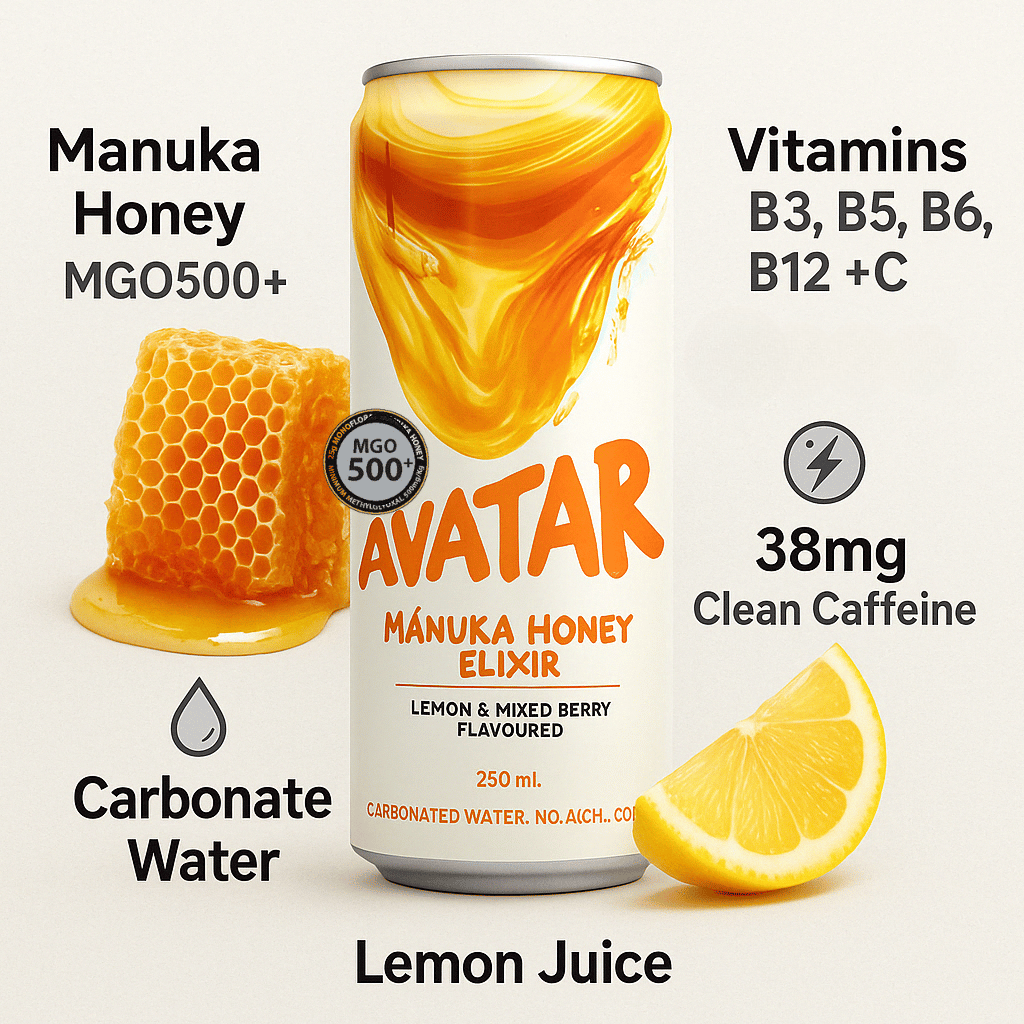
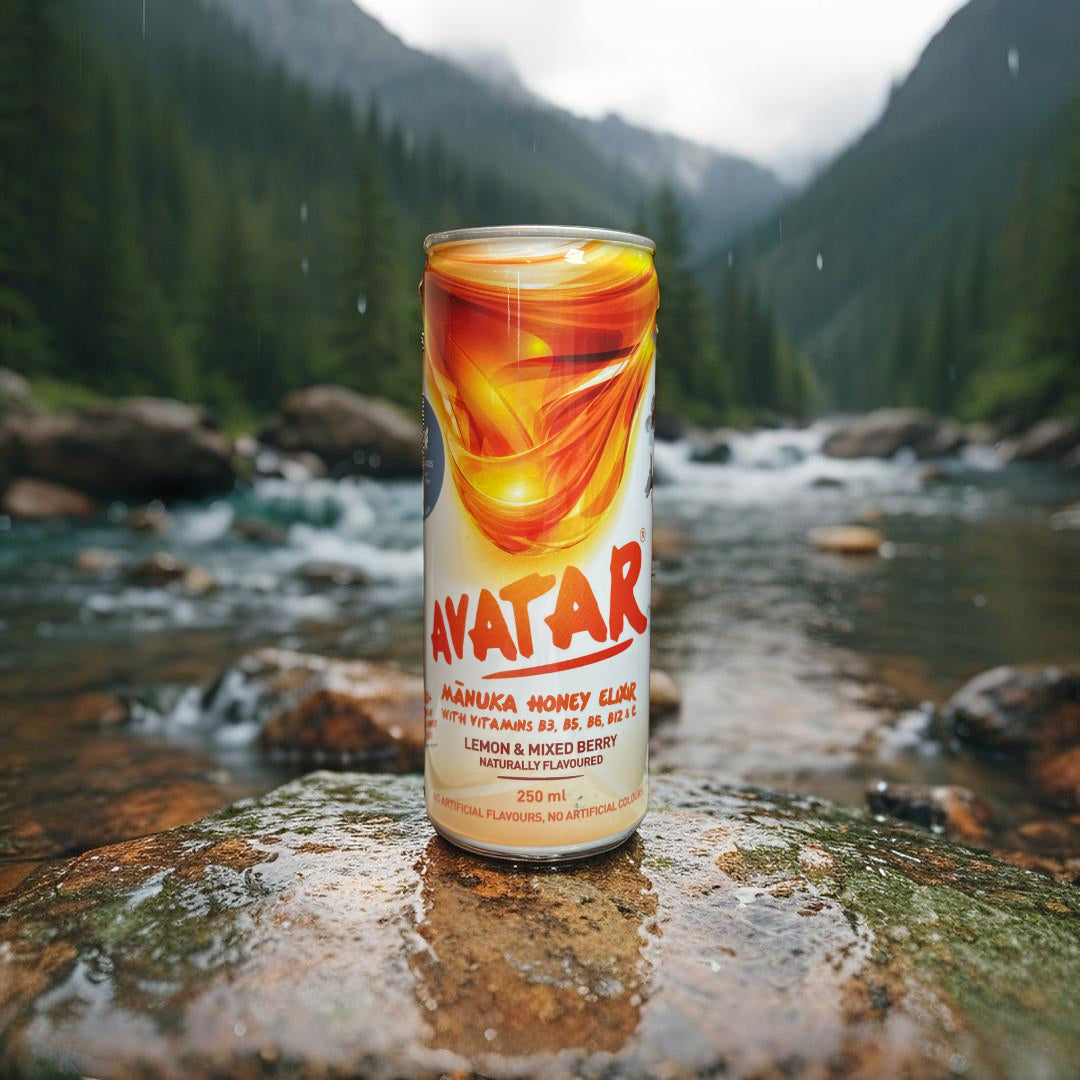
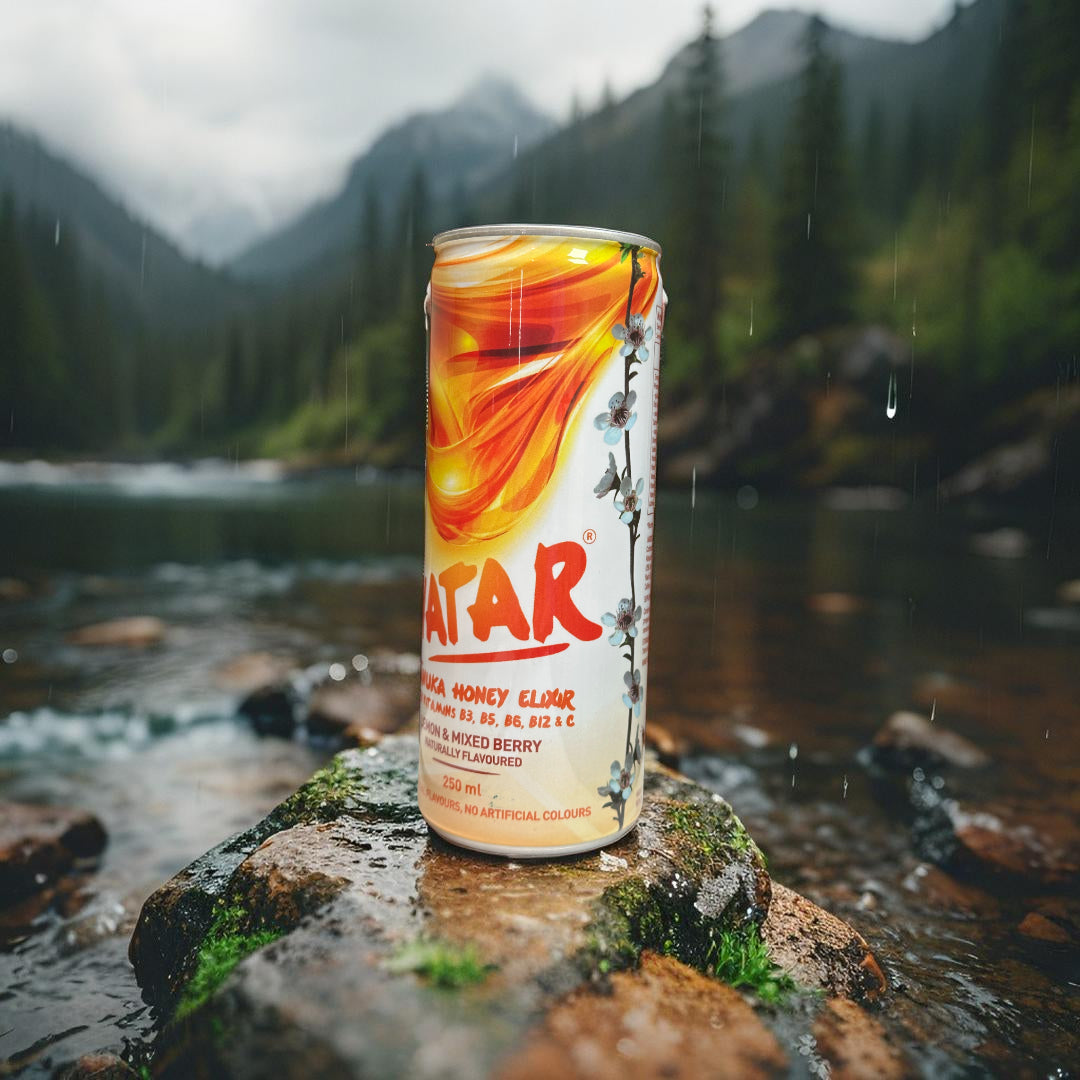
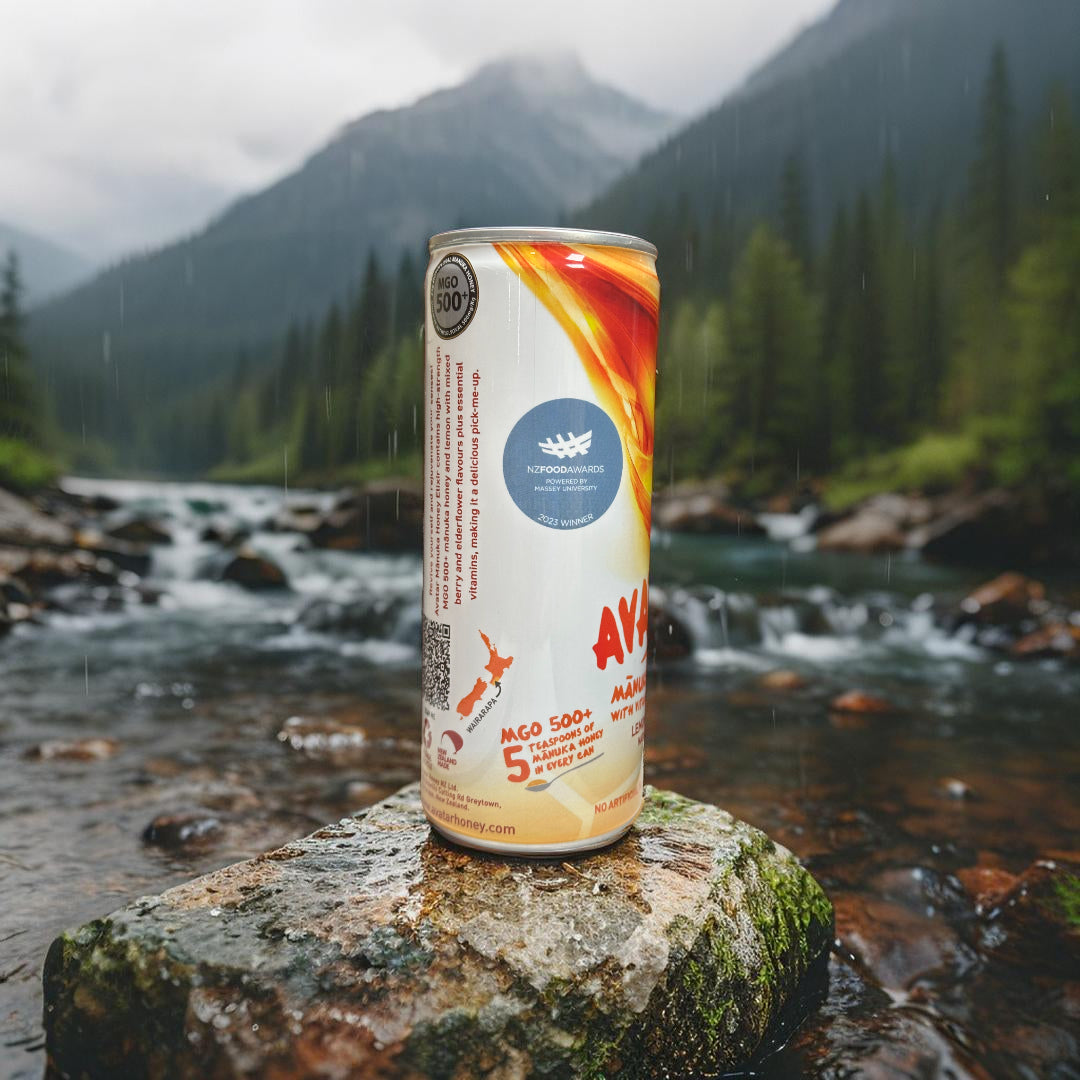
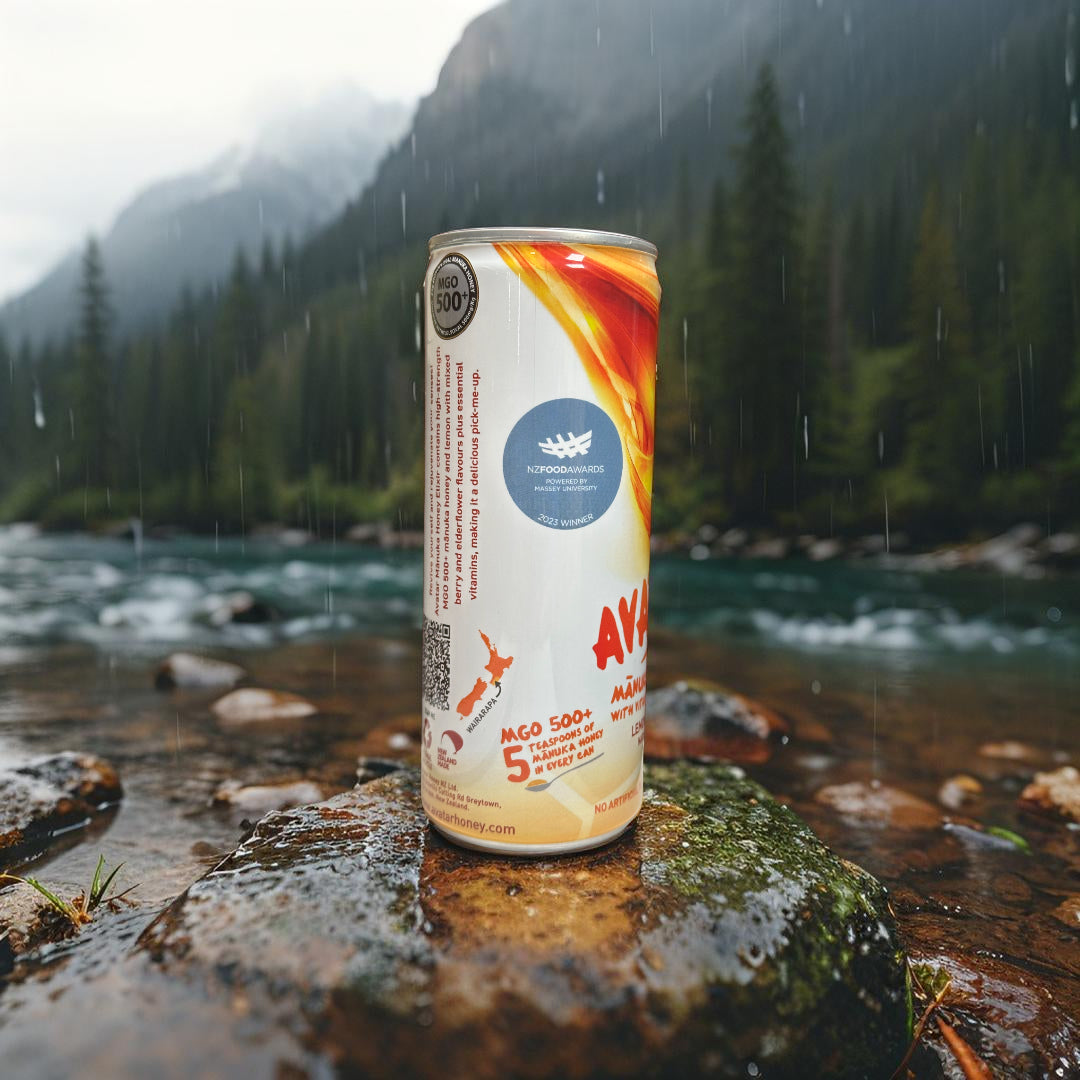
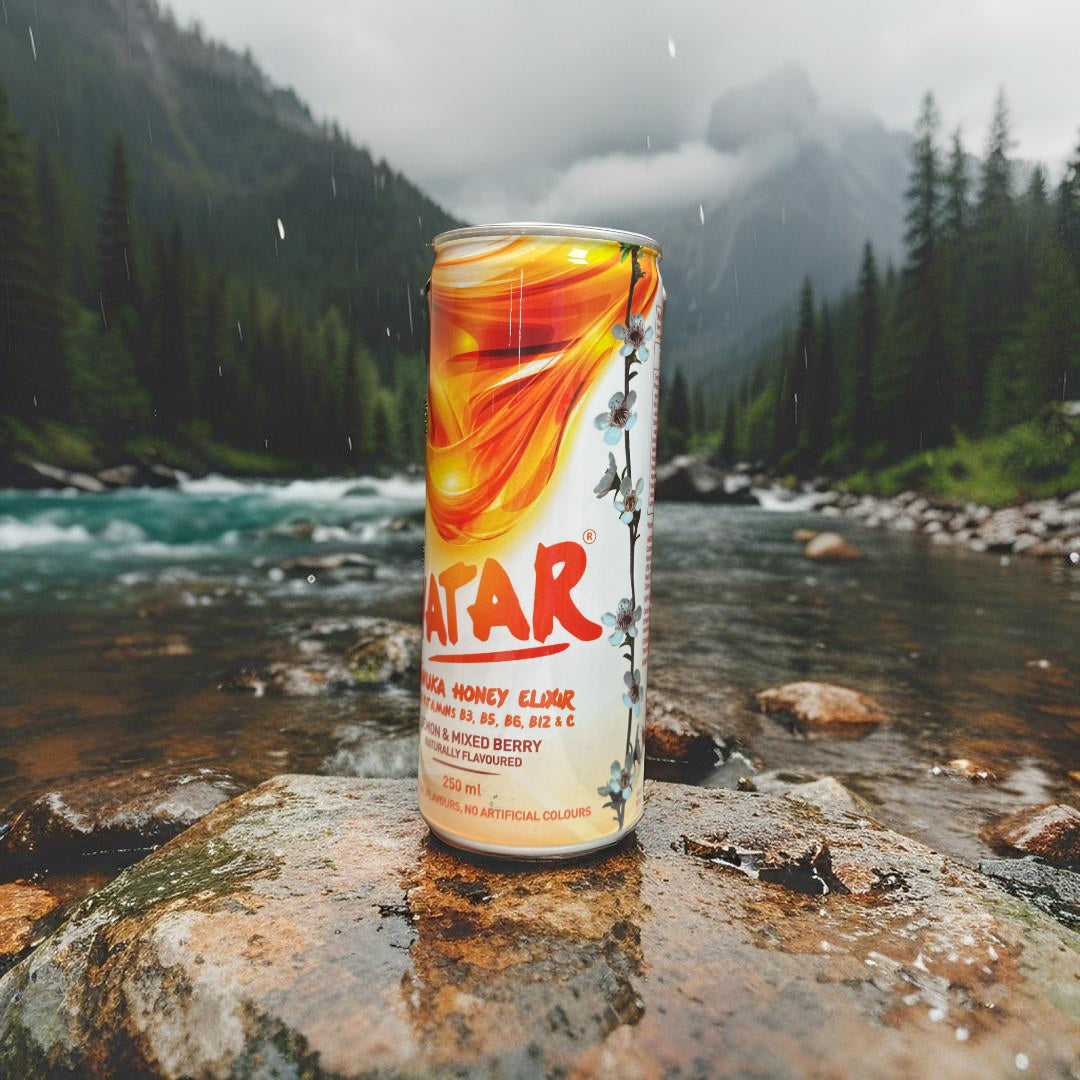
Avatar Elixir, for example, is a 250 ml Manuka honey drink made with clean caffeine, certified MGO500+ Manuka honey, lemon, elderflower, B vitamins, vitamin C, and lightly carbonated water. Its bright citrus, floral elderflower, honey character, and light fizz make it the kind of drink someone may choose to sip rather than treat like a concentrated shot.
The ingredients and format shape the drinking experience, but they do not create a guaranteed kick-in time. The relevant practical questions remain how much caffeine the serving contains, how quickly you drink it, and how you personally respond.
When should you open a natural energy drink before work, study, or travel?
Open it with enough time to drink it normally before the period when you want to feel awake, rather than waiting until the exact moment a demanding task begins. Because timing is variable, a buffer is more practical than targeting a precise minute.
- Check the label first. Confirm the caffeine per serving and note whether the container represents one serving.
- Count earlier caffeine. Include coffee, tea, energy drinks, and other caffeinated products already consumed that day.
- Consider food. Think about whether you have just eaten and whether you know that caffeine feels different for you with or without a meal.
- Choose a realistic sipping window. A drink opened before a commute or study block may take time to finish.
- Wait before adding more caffeine. A subtle or delayed sensation is not a reliable reason to stack another caffeinated drink immediately.
For a morning at work, this might mean opening the drink as you settle in rather than expecting it to transform your first difficult task instantly. For study, it may fit better at the start of setting up notes than halfway through a timed session. For travel or a social occasion, consider both the caffeine and the time of day, particularly if you plan to sleep later.
Can you predict your personal kick-in time?
You cannot predict it perfectly, but you can learn how a particular drink tends to fit your routine by keeping the conditions reasonably consistent. Treat the result as a personal observation, not a fixed rule.
When trying a caffeinated natural energy drink, note the approximate time you begin and finish it, whether you have eaten, and what other caffeine you have consumed. Also consider how well you slept. Comparing radically different days will not tell you much about the beverage itself.
Try it first in an ordinary, low-pressure setting rather than before an exam, long drive, important presentation, or late-night commitment. Do not use perceived alertness as proof that you are safe to drive or continue when fatigued. If you are sleepy while driving, stop and address the fatigue safely.
What is the most useful takeaway?
A natural energy drink does not have one reliable kick-in time. Caffeine absorption begins after consumption, but the moment you feel more alert depends on food, sipping pace, tolerance, sleep, body differences, and caffeine already consumed.
Use the label, your own sensitivity, and the full day’s caffeine intake to guide your choice. Allow time for a 250 ml sparkling drink to be sipped naturally, and do not chase an immediate sensation by consuming another caffeinated product too quickly. The most realistic expectation is a potentially gradual, individual response rather than a guaranteed burst of focus or performance.
These follow-ups clarify how drink format, sensation, and carbonation relate to caffeine timing.
Does light carbonation make caffeine feel noticeable faster?
Light carbonation does not provide a reliable basis for predicting when caffeine will feel noticeable. The drink's caffeine content, how quickly it is consumed, recent food, personal sensitivity, and earlier caffeine are more useful considerations. Carbonation may shape the drinking experience, but it should not be treated as proof of a faster effect.
Does a stronger caffeine sensation mean better focus?
No. A stronger subjective sensation does not guarantee better focus, performance, or readiness for a task. Feeling alert is personal and can be influenced by sleep, expectations, tolerance, and context. It is also not evidence that someone is safe to drive or continue when fatigued.
How should I compare a sparkling energy drink with an energy shot?
Compare caffeine per serving, serving size, and likely drinking pace, rather than assuming one format has a fixed kick-in time. A shot is often consumed quickly, while a 250 ml lightly carbonated drink such as Avatar Elixir may be sipped. That pace can make the experience feel more gradual, even though individual response still varies.